
The 10 Fastest Public Supercomputers in the US and Europe in 2027
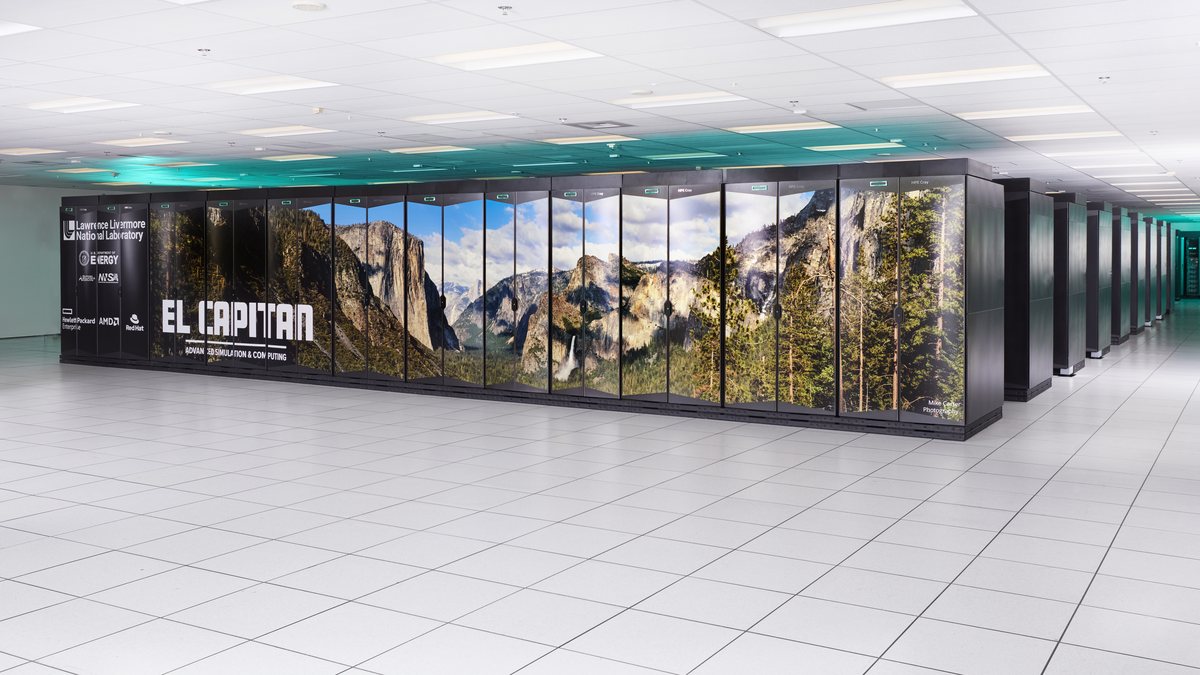
El Capitan at Lawrence Livermore National Laboratory is the fastest public supercomputer in the US and Europe, with Frontier at Oak Ridge second and Aurora at Argonne third. The order follows each machine's measured HPL speed (Rmax) on the June 2026 TOP500 list.
At a glance
| # | Pick | HPL speed (Rmax) | Best for |
|---|---|---|---|
| 1 | El Capitan | 1,809.00 PFlop/s | The fastest machine any Western government runs |
| 2 | Frontier | 1,353.00 PFlop/s | The longest-serving exascale machine |
| 3 | Aurora | 1,012.00 PFlop/s | Huge peak capacity built on Intel CPUs and GPUs |
| 4 | JUPITER Booster | 1,000.00 PFlop/s | Europe's only exascale system |
| 5 | Alps | 434.90 PFlop/s | NVIDIA Grace Hopper at national scale |
| 6 | LUMI | 379.70 PFlop/s | A EuroHPC flagship built on the same AMD design as Frontier |
| 7 | Leonardo | 241.20 PFlop/s | Italy's EuroHPC system on NVIDIA A100 GPUs |
| 8 | Isambard-AI phase 2 | 216.50 PFlop/s | The UK's national AI research machine |
| 9 | Tuolumne | 208.10 PFlop/s | El Capitan hardware at the lowest listed power draw here |
| 10 | MareNostrum 5 ACC | 175.30 PFlop/s | Spain's EuroHPC GPU partition on NVIDIA H100 |
Pick by what you want
The ranking
El Capitan
El Capitan runs at Lawrence Livermore National Laboratory for the NNSA and posts 1,809.00 PFlop/s on HPL from 11,340,000 cores. It pairs AMD 4th Gen EPYC processors with AMD Instinct MI300A accelerators on HPE's Slingshot-11 network. TOP500 reports an energy efficiency of 60.94 Gigaflops/watt, and its 17.41 Petaflop/s on the HPCG benchmark is No. 2 in the world.
Frontier
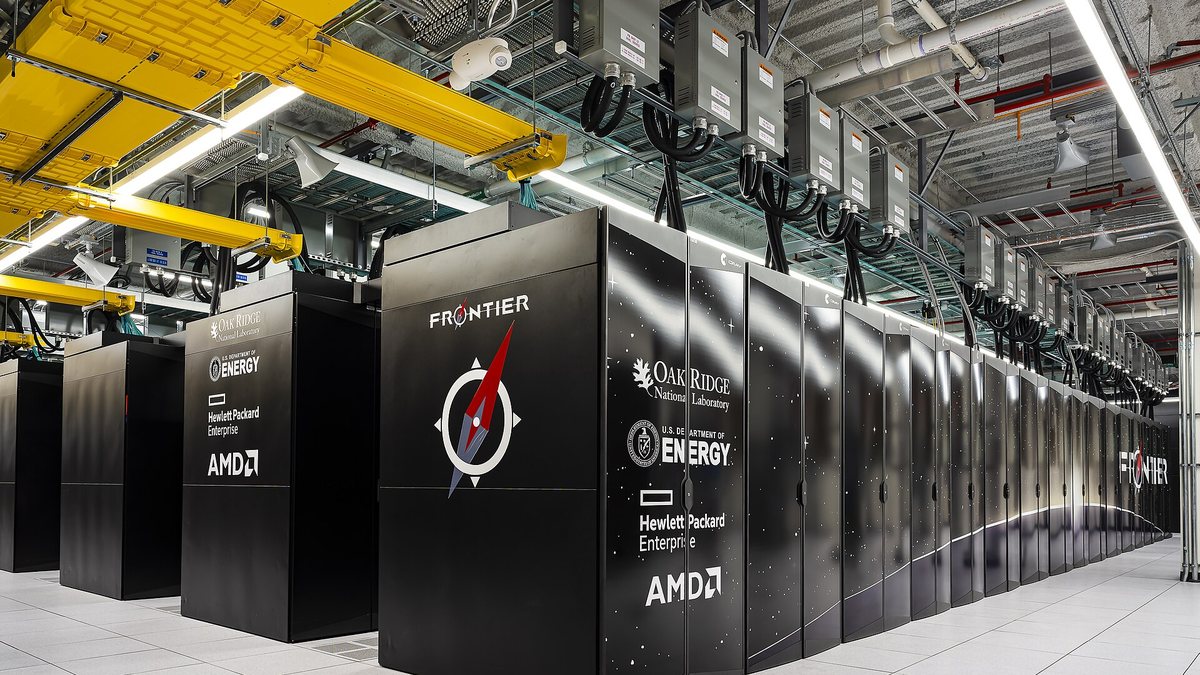
Frontier at Oak Ridge National Laboratory was installed in 2021 and still holds 1,353.00 PFlop/s on HPL. It uses AMD 3rd Generation EPYC 64-core processors and AMD Instinct MI250X GPUs in HPE Cray EX235a cabinets. It is run for the DOE Office of Science.
Aurora

Aurora at Argonne National Laboratory was built by Intel with HPE, using Intel Xeon CPU Max 9470 processors and Intel Data Center GPU Max accelerators. It measures 1,012.00 PFlop/s on HPL, and its theoretical peak of 1,980.01 PFlop/s is the third highest here. Argonne finished installing its 10,624th and final blade in July 2023.
JUPITER Booster
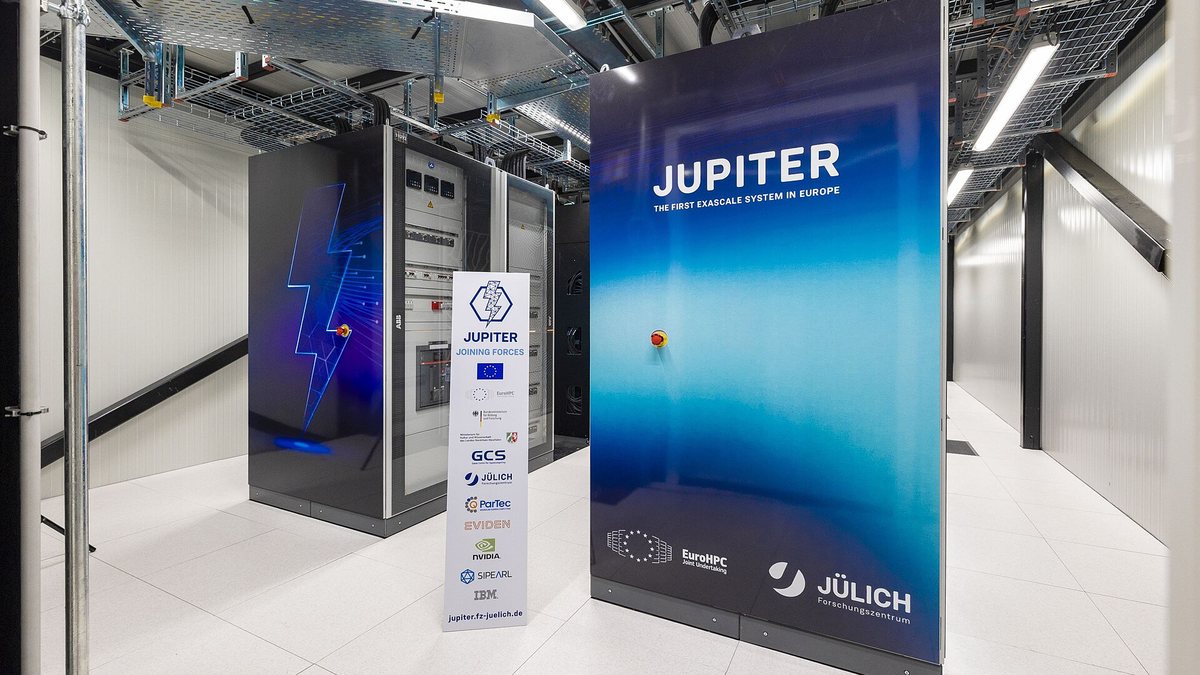
JUPITER Booster at Forschungszentrum Jülich in Germany is measured at exactly 1,000.00 PFlop/s, which TOP500 calls the first European exascale result. It runs on NVIDIA GH200 Grace Hopper Superchips in Eviden's direct liquid-cooled BullSequana XH3000 design. It draws 15,794 kW, far less than the three US exascale machines.
Alps
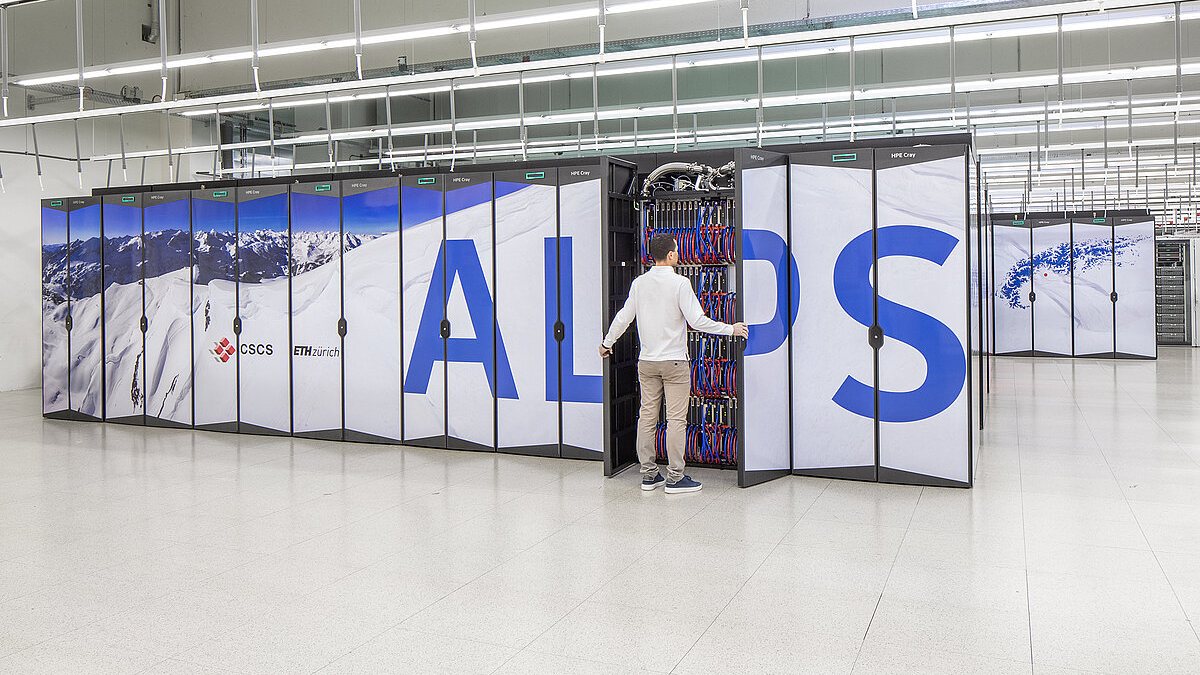
Alps at the Swiss National Supercomputing Centre (CSCS) measures 434.90 PFlop/s on HPL. It is an HPE Cray EX254n system on NVIDIA Grace 72-core CPUs and GH200 Superchips, installed in 2024. It draws 7,124 kW.
LUMI

LUMI is the EuroHPC system hosted by CSC in Finland and measures 379.70 PFlop/s on HPL. Its design matches Frontier: HPE Cray EX235a cabinets, AMD 3rd Generation EPYC 64-core processors and AMD Instinct MI250X GPUs. It came online in 2023 and draws 7,107 kW.
Leonardo
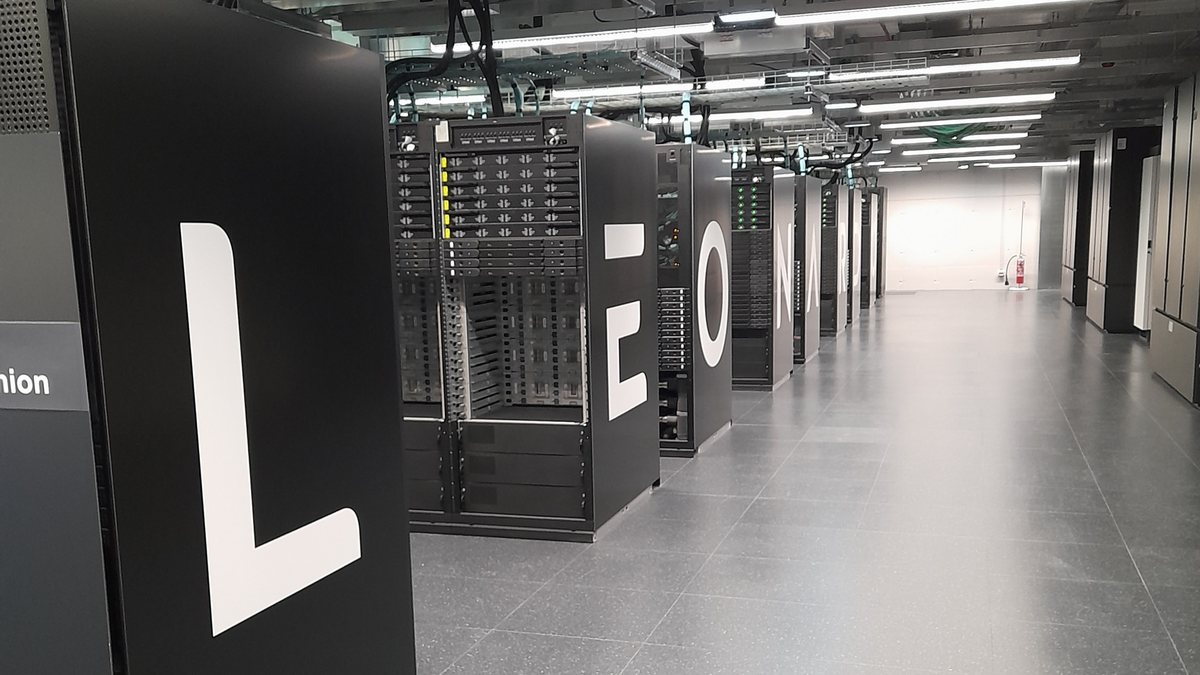
Leonardo is the EuroHPC system at CINECA in Bologna, Italy, at 241.20 PFlop/s on HPL. It is a BullSequana XH2000 with Intel Xeon Platinum 8358 processors and NVIDIA A100 SXM4 64 GB GPUs. It draws 7,494 kW, the most of the European machines below JUPITER.
Isambard-AI phase 2
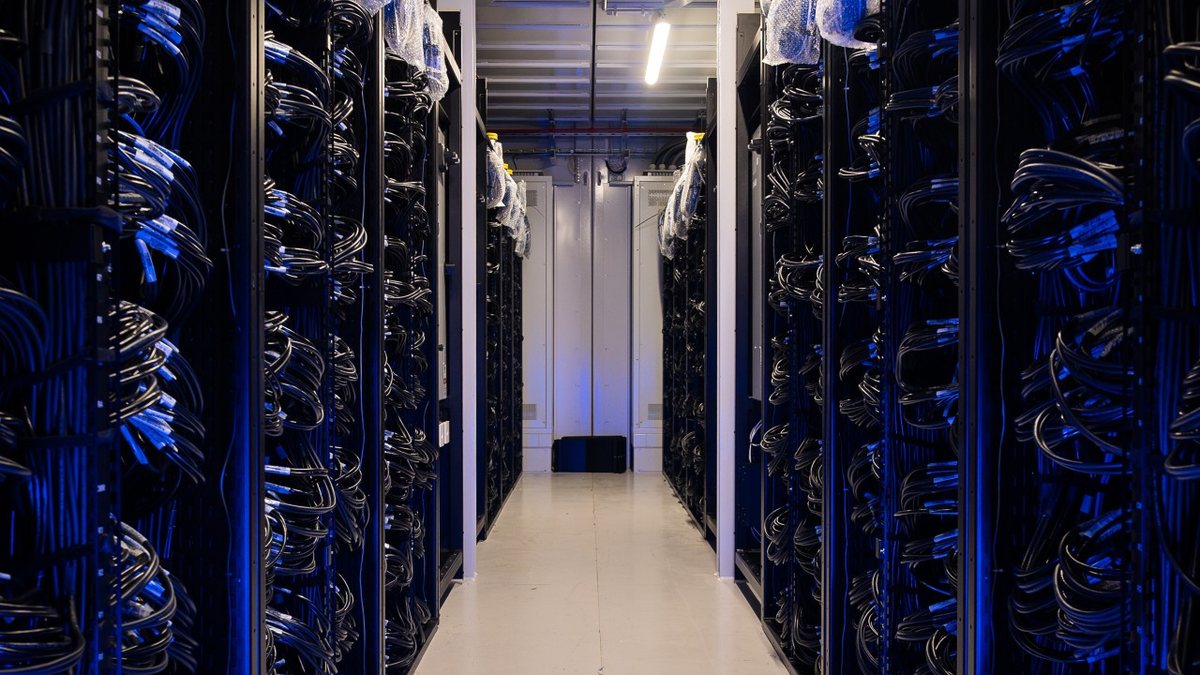
Isambard-AI phase 2 at the University of Bristol measures 216.50 PFlop/s on HPL. The University says it is built on HPE Cray EX with 5,400 NVIDIA GH200 Grace Hopper Superchips and is a key part of the UK Government's AI Research Resource. TOP500 lists no power figure for this entry.
Tuolumne
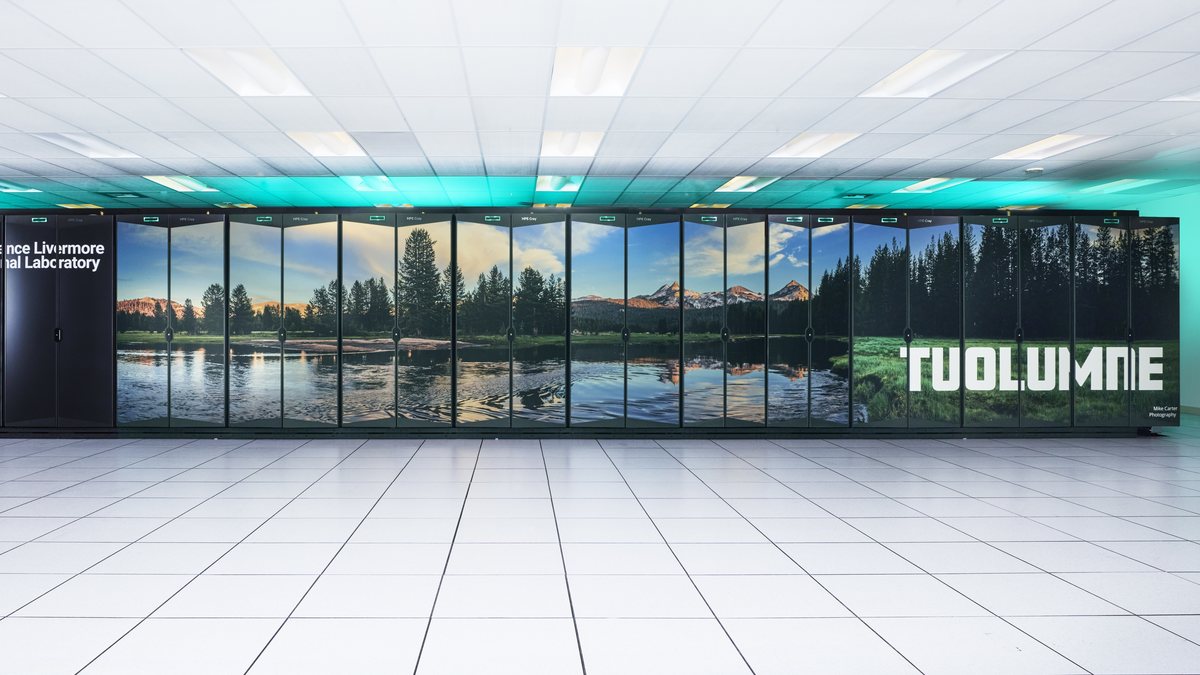
Tuolumne at Lawrence Livermore uses the same HPE Cray EX255a design, AMD 4th Gen EPYC processors and AMD Instinct MI300A accelerators as El Capitan, at a smaller size. It measures 208.10 PFlop/s on HPL from 1,161,216 cores. At 3,387 kW it has the lowest listed power draw of the ten.
MareNostrum 5 ACC
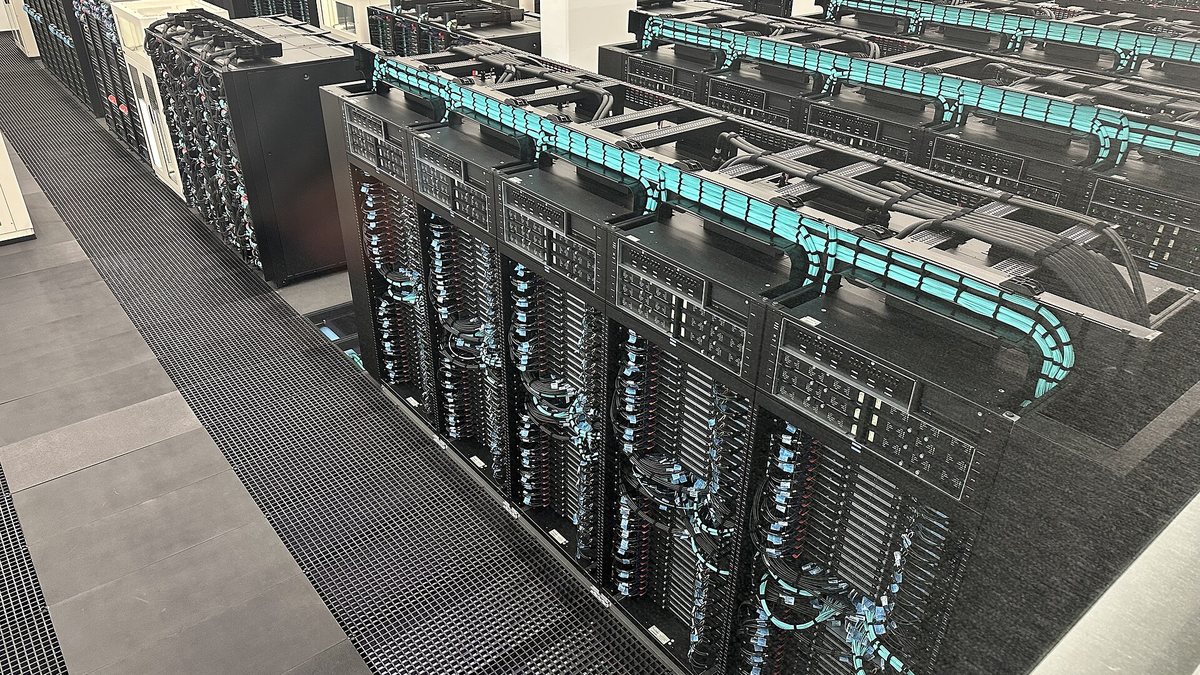
MareNostrum 5 ACC is the GPU partition of the EuroHPC system at the Barcelona Supercomputing Center. It is a BullSequana XH3000 with Intel Xeon Platinum 8460Y+ processors and NVIDIA H100 64GB GPUs, measuring 175.30 PFlop/s on HPL. It sits at No. 16 on the June 2026 list.
Faster machines left off this list
Five systems in the June 2026 TOP500 top 10 are not public machines in the US or Europe. They are shown here so the ranking above is not mistaken for the full world list.
| TOP500 rank | System | Site | HPL (PFlop/s) | Why it is left off |
|---|---|---|---|---|
| 1 | LineShine | National Supercomputing Centre in Shenzhen, China | 2,198.40 | Outside the US and Europe |
| 6 | HPC7 | Eni S.p.A., Italy | 571.50 | Company-owned (energy) |
| 7 | Eagle | Microsoft Azure, United States | 561.20 | Company-owned (cloud) |
| 8 | HPC6 | Eni S.p.A., Italy | 477.90 | Company-owned (energy) |
| 9 | Supercomputer Fugaku | RIKEN Center for Computational Science, Japan | 442.01 | Outside the US and Europe |
How we ranked these
Questions people ask
What is the fastest supercomputer in the world right now?
LineShine at the National Supercomputing Centre in Shenzhen, China. It debuted at No. 1 on the June 2026 TOP500 list with 2,198.40 PFlop/s on the HPL benchmark, ending El Capitan's run at the top. It is left off this list because it is outside the US and Europe.
What is the fastest supercomputer in the United States?
El Capitan at Lawrence Livermore National Laboratory, at 1,809.00 PFlop/s on HPL. It is No. 2 in the world on the June 2026 TOP500 list.
What is the fastest supercomputer in Europe?
JUPITER Booster at Forschungszentrum Jülich in Germany, measured at exactly 1,000.00 PFlop/s (one exaflop). TOP500 calls it the first European exascale system.
Why are Eni HPC7, HPC6 and Microsoft Eagle not on this list?
They are company-owned. Eni's HPC7 (No. 6) and HPC6 (No. 8) serve Eni's own energy work, and Eagle (No. 7) runs inside Microsoft Azure. This list covers machines run by public labs, national centres, EuroHPC and universities.
How often does the TOP500 list change?
Twice a year, in June and November. This page uses the June 2026 list and will be updated when the November 2026 list is published.
HPL speed (PFlop/s) at a glance
Official sites
- El Capitan · hpc.llnl.gov
- Frontier · olcf.ornl.gov
- Aurora · alcf.anl.gov
- JUPITER Booster · fz-juelich.de
- Alps · cscs.ch
- LUMI · lumi-supercomputer.eu
- Leonardo · leonardo-supercomputer.cineca.eu
- Isambard-AI phase 2 · bristol.ac.uk
- Tuolumne · hpc.llnl.gov
- MareNostrum 5 ACC · bsc.es
Sources
- top500.org/lists/top500/2026/06
- top500.org/lists/top500/list/2026/06
- llnl.gov
- news.uchicago.edu
- eni.com
- top500.org/system/180307
- top500.org/system/180047
- top500.org/system/180183
- top500.org/system/180357
- top500.org/system/180259
- top500.org/system/180048
- top500.org/system/180128
- top500.org/system/180388
- top500.org/system/180308
- top500.org/system/180238
Photos: llnl.gov · commons.wikimedia.org · news.uchicago.edu · bristol.ac.uk · hpc.llnl.gov (credits under each photo).
TOP500 publishes a new list every June and November; this page follows the June 2026 list.