
Best Fixed-Wireless Internet Providers in 2027
 Curated byKory White · Fractional CRO · Maryland
 PULSEKNOWLEDGE LIBRARY
Quality
Certified

Fixed-wireless internet delivers broadband over radio spectrum from a nearby tower or rooftop node to an antenna at your home, skipping trenched fiber entirely. In 2027 the best provider depends almost entirely on your address: dense-urban buildings favor millimeter-wave services, suburbs favor mid-band 5G from the national carriers, and rural addresses favor licensed WISPs or LEO satellite.
What fixed-wireless internet actually is and why the category matters in 2027
Fixed-wireless internet is broadband delivered over the air. A radio at a tower, rooftop, or orbiting satellite transmits to a stationary antenna at your home — either an indoor gateway sitting in a window or an outdoor dish bolted to a roofline — and that antenna terminates into a router. The word *fixed* is the whole distinction: unlike a phone, the customer premises equipment never moves, so the network can be engineered around a known, static link budget. That single fact is why fixed-wireless can hit speeds a mobile phone rarely sustains, and why installers care so much about which window your gateway sits in.
The category matters in 2027 for one structural reason: trenching fiber costs money that many addresses will never justify. Running fiber down a rural county road or retrofitting an older multi-tenant building involves permits, boring equipment, restoration, and per-home construction costs that can run into the thousands. A fixed-wireless radio reuses spectrum the operator already owns and equipment already mounted on a tower for mobile service, so the marginal cost of adding a household is the gateway plus backhaul capacity. The result is that a carrier can light up a service area in weeks instead of years, and can walk away from it just as fast if the economics change.
Three technology families dominate, and they behave very differently. Millimeter-wave (roughly 24–47 GHz) carries enormous bandwidth but is blocked by walls, foliage, and heavy rain; it wants short hops with clean line-of-sight, which is why it shows up on rooftop-to-building deployments in dense cities. Mid-band (roughly 2.5–3.98 GHz, including C-band and the 2.5 GHz band T-Mobile acquired through the Sprint merger) is the workhorse — it penetrates walls reasonably well, propagates a few miles, and carries enough capacity for triple-digit megabit speeds. CBRS at 3.5 GHz is a shared band that smaller regional operators use because access does not require winning a national spectrum auction. Below all of that sit unlicensed 5 GHz links, still common for rural wireless ISPs, and above it sits LEO satellite, which is technically fixed-wireless with an extremely tall tower.
For a household, the practical consequence is that "best provider" is not a national answer. Two homes four miles apart can have completely different best options because one sits inside a C-band sector with light loading and the other sits behind a ridge. Anyone evaluating Providers in this category should treat published national rankings as a shortlist generator, not a decision — the decision is made at your specific address, on your specific band, at your specific distance from the serving site.
The commercial context is worth naming too. Fixed-wireless has become a meaningful revenue line for the national mobile carriers precisely because it monetizes spare capacity on towers that were built for phones. That is also its central risk to you as a subscriber: when a sector fills with mobile traffic, home internet customers are typically the first traffic class to be deprioritized. You are, in most of these products, explicitly buying the leftover capacity — which is fine when it is plentiful and painful when it is not.

The step-by-step process for evaluating and installing a fixed-wireless line
Getting this right is a sequence, and skipping steps is where most bad outcomes originate. The order below reflects how the qualification actually works on the carrier side.
Step one: qualify the exact address, not the ZIP code. Every serious fixed-wireless product runs an address-level serviceability check against sector capacity, not just coverage. A ZIP-code-level "available in your area" banner means nothing. Enter the full street address including unit number. For multi-tenant buildings, availability is often per-building — the rooftop node either exists or it does not.
Step two: identify the band and the serving site. Ask, or infer from the product page, whether you are being sold millimeter-wave, C-band, 2.5 GHz mid-band, CBRS, or satellite. Then estimate distance to the serving tower. Mid-band service typically degrades noticeably past a couple of miles; millimeter-wave typically needs to be within roughly a mile with clean line-of-sight. This single data point predicts your experience better than any advertised speed range.
Step three: read the speed language literally. Carriers publish *typical speed ranges*, not guarantees, for these products. A range like 70–250 Mbps means the low end is a real outcome for some customers, not a worst case nobody hits. If the marketing says "up to," treat the top number as a best-case demonstration figure.

Step four: check the deprioritization and data policy. Find the fine print describing whether home internet traffic is deprioritized behind mobile customers during congestion, and whether there is a threshold after which speeds are reduced. Both are common and both are disclosed — but never on the pricing page.
Step five: install with intent. For indoor gateways, placement is the single largest performance variable. Put the unit in the highest window facing the serving tower, away from metal blinds, low-E coated glass, and masonry. Most gateways expose a signal-quality readout; walk the unit around the house and record readings at three or four candidate spots before committing.
Step six: benchmark during the trial window. Run speed tests and latency tests at multiple times of day — specifically weekday evenings between roughly 7 and 11 p.m., when residential load peaks. A line that tests at 300 Mbps on a Tuesday morning and 40 Mbps on a Wednesday night is a congested sector, and no amount of gateway repositioning fixes that.
Step seven: decide before the trial or money-back window closes. These products commonly ship with a trial or return period specifically because the carrier knows performance is address-dependent. Calendar the deadline the day you install.
Costs, timelines, and the ranges you should actually expect
Pricing in this category clusters into three tiers, and the spread is wide enough that cost alone can decide the question.
National carrier 5G home internet is the cheapest entry point. Monthly pricing generally lands in the $35–$75 range, with the lower end typically requiring autopay, paperless billing, and often an existing mobile line with the same carrier. Equipment is usually included or bundled — the gateway is a self-install box you plug in yourself. Because there is no truck roll and no outdoor mount, the setup cost is effectively zero and the timeline from order to working service is often just shipping time, on the order of a few business days. Some carriers offer multi-year price guarantees on these plans; read whether the guarantee covers the base rate only or the total bill including fees.
Regional wireless ISPs using CBRS, licensed mid-band, or unlicensed 5 GHz sit higher. Expect roughly $50–$100 per month depending on tier, plus a real installation fee — commonly in the $99–$200 range — because a technician has to mount an outdoor antenna, aim it at a tower that may be several miles away, and run cable into the house. Timeline is dominated by install scheduling; one to three weeks is typical. Some of these operators still require a one-year term with an early-termination fee, which is the main structural difference from the carrier products. The trade is real: a professionally aimed outdoor antenna on a licensed band often outperforms a window gateway by a wide margin, because it is above the roofline and pointed correctly.
LEO satellite is the premium tier. Hardware is a substantial one-time cost — typically several hundred dollars for the dish and router, though promotional pricing and lower-cost hardware tiers appear regularly — and monthly service commonly runs above $100 for standard residential plans. There is no distance-to-tower constraint, which is precisely the point; you are paying for coverage where nothing terrestrial exists. Timeline is shipping plus a self-install that takes under an hour if you have a clear view of the sky.
Two cost factors get overlooked. First, the second-year price. Promotional first-year rates that step up afterward are common in the regional-WISP tier; compute a 24-month total cost, not a monthly headline. Second, power and equipment lifecycle. Outdoor antennas and satellite dishes draw meaningful power continuously, and dishes with de-icing heaters draw considerably more in winter. Over a multi-year hold, that is a real if modest line item.

On performance ranges, calibrate expectations honestly. Mid-band 5G home service in 2027 commonly delivers double- to low-triple-digit megabit downloads with markedly lower uploads — asymmetry of five-to-one or worse is normal. Millimeter-wave and purpose-built urban Wireless deployments can reach symmetrical or near-symmetrical gigabit-class speeds, but only inside their small footprints. Regional WISPs typically land in the 25–150 Mbps download range with single- to low-double-digit uploads. LEO satellite generally sits in the mid-double to low-triple digits down with modest uploads. Latency follows the same tiering: short terrestrial millimeter-wave hops are the lowest, mid-band 5G sits in a comfortable range for video calls, long-range WISP links and satellite are higher but generally usable for everything except latency-critical competitive gaming.
Where households and small offices get fixed-wireless wrong
Mistake one: buying on the advertised ceiling. The most common failure is signing up because a page said "up to 1 Gbps" when the typical range disclosed three clicks deeper was a fraction of that. The advertised maximum describes what the technology can do under ideal conditions at a favorable location. Your number is set by band, distance, obstruction, and sector load.
Mistake two: ignoring upload. Almost every fixed-wireless product is asymmetric, often severely. This is invisible until you try to run a video call from a home office, push large files to cloud storage, back up a machine, or upload video. If two people on the same line take simultaneous video calls, upload is the constraint that breaks first — not download. Before switching, measure your actual upload needs; a household that pushes 20 Mbps up during the workday will be miserable on a line that delivers 8.
Mistake three: treating the gateway like a cable modem. A cable modem's performance does not change if you move it across the room. A fixed-wireless gateway's absolutely does. Households routinely install the unit in a basement, a media closet, or an interior room for aesthetic reasons and then conclude the service is bad. Low-emissivity window coatings, metal mesh screens, brick, and stucco all attenuate significantly. The difference between the worst and best placement in a single home can be several-fold.
Mistake four: testing only off-peak. Installing on a weekday afternoon, running one speed test, and declaring victory hides the entire congestion story. Fixed-wireless shares a sector among all subscribers on it, and the carriers add subscribers continuously. Benchmark at peak, and re-benchmark quarterly — a sector that was fine at launch can degrade as the operator sells into it.

Mistake five: assuming the address stays serviceable. Because these products sell spare capacity, operators pause new signups in loaded sectors and, in some cases, adjust service for existing customers. Availability at your address today does not imply availability next quarter for a neighbor, and does not guarantee your throughput is static.
Mistake six: no failover plan for anything that matters. If you run a business, take support calls, or depend on connectivity for income, a single radio link with weather sensitivity and shared-capacity behavior is a single point of failure. The standard mitigation is a cheap secondary path — a mobile hotspot line, or a router with dual-WAN failover — configured before you need it, not during an outage.
Mistake seven: skipping the trial deadline. Trial and money-back windows are short and they are the entire risk mitigation the product offers. Missing the deadline converts a reversible decision into a contract.
A decision framework: matching your address to the right kind of provider
The framework is a cascade, and it runs on facts about your location rather than brand preference.

Start with density. If you live in a large multi-tenant building in a major metro, check first whether any building-served millimeter-wave or dedicated urban Fixed wireless operator has lit your address. These deployments offer the best speed-per-dollar in the category — symmetrical, low-latency, flat-priced — but their footprints are narrow and building-specific. This is a five-minute check with a binary answer, so do it first and stop looking if it comes back yes.
If that fails, test the national carriers' mid-band products. In suburban and most urban addresses, C-band and 2.5 GHz home internet from the national carriers is the default recommendation: self-install, no truck roll, no term contract, trial period, and pricing that undercuts most cable. Qualify with every carrier that serves your address, not just one — sector loading differs enormously between carriers on the same street, and the only way to know is to test. If two qualify, run both during overlapping trial windows if you can afford the temporary double bill; the comparative data is worth it.
If no carrier qualifies, look for a regional WISP. These operators exist specifically to serve addresses the national networks skip. Expect an outdoor antenna, a professional install, an install fee, and possibly a term. In exchange you often get a licensed or lightly-contended band and a directional antenna aimed at a known tower, which is a fundamentally more reliable link than a gateway in a window. Ask two questions before signing: how far is the serving tower, and is there clean line-of-sight from your roofline. If the answer involves shooting through a treeline, expect seasonal degradation when leaves return.
If terrain or tree cover kills the WISP option, go LEO satellite. It is the most expensive tier and the only one with no distance constraint. Accept the hardware cost, verify you have genuine open sky in the required arc, and plan for weather-related interruptions.
Overlay three modifiers on whatever the cascade returns. *Upload requirement*: if you need sustained upload above roughly 20 Mbps, prioritize symmetrical urban wireless or a licensed WISP tier that publishes real upload numbers, and be skeptical of consumer 5G home products. *Latency requirement*: competitive gaming and real-time trading want the shortest terrestrial hop available; everything else, including standard video conferencing, is fine across most of the category. *Bundling*: existing mobile customers frequently get the lowest monthly rate and waived equipment fees from their own carrier, which can be worth $10–$25 a month — enough to break a tie but not enough to justify a materially worse link.
Related questions
Does fixed-wireless internet work for remote work and video calls?
Generally yes. Latency across most of the category is comfortable for conferencing. The real constraint is upload capacity, which is often a fifth of download or less. Two simultaneous HD calls plus a cloud backup will saturate a weak uplink before download ever becomes the bottleneck.
How much does weather actually affect fixed-wireless service?
It depends on band. Millimeter-wave is the most rain-sensitive, since water absorbs those frequencies strongly. Mid-band is far more resilient. Satellite dishes can be affected by heavy snow accumulation on the dish itself. Mid-band 5G home service is the least weather-sensitive terrestrial option.
Can I use my own router instead of the provided gateway?
Usually only partially. The gateway typically contains the radio module that authenticates to the network, so it cannot be replaced. Many gateways support bridge or passthrough mode, letting you disable their Wi-Fi and run your own router behind them. Confirm before buying mesh hardware.
Is fixed-wireless a real replacement for cable internet?
For many households, yes — particularly download-heavy ones without heavy upload needs. It is generally cheaper, contract-free, and self-installed. It is a weaker fit for prosumers, large-file uploaders, competitive gamers, and anyone who cannot tolerate variable peak-hour performance.
What happens if my speeds degrade after a few months?
That usually means the sector gained subscribers. Reposition the gateway first, then contact support and ask specifically about sector loading. If it is congestion, there is no customer-side fix — re-qualify competing providers, since their loading profile at your address may have changed too.
FAQ
How is fixed-wireless different from a mobile hotspot?
Both use cellular spectrum, but a fixed-wireless gateway is engineered for a stationary location: higher-gain antennas, more transmit power, mains power instead of a battery, and a plan built around household data volumes. Hotspots are optimized for portability and typically carry tighter data policies and weaker antennas, producing lower and less consistent throughput at the same location.
Do I need line-of-sight to a tower?
It varies by band. Millimeter-wave and long-range unlicensed links effectively require clean line-of-sight — obstructions are disqualifying. Mid-band 5G penetrates walls and foliage well enough that many customers never see the serving tower. Satellite requires an unobstructed view of the sky in a specific arc rather than a single line to a tower.
Are there data caps on fixed-wireless plans?
Hard caps that cut you off are uncommon in 2027, but soft thresholds are widespread. Past a stated monthly volume, or during any period of sector congestion, home internet traffic is commonly deprioritized behind mobile traffic. Find the specific policy language in the plan's fine print before subscribing — it is disclosed, just not prominently.
Which fixed-wireless option is best for a rural address?
Check regional wireless ISPs first, since a licensed outdoor link to a nearby tower typically outperforms everything else available rurally. If terrain, distance, or tree cover rules that out, LEO satellite is the fallback with effectively universal coverage at a higher price and hardware cost.
Can fixed-wireless support a home office or small business?
Yes, with two caveats: verify sustained upload throughput under real load rather than a single speed test, and configure a failover path. Most business-grade setups pair the fixed-wireless line with a secondary connection through a dual-WAN router so an outage degrades performance instead of stopping work entirely.
Should I keep my existing internet while testing a fixed-wireless line?
If you can absorb one month of overlap, yes. Trial windows are short, performance is address-specific, and cancelling your incumbent before proving the new line works can leave you renegotiating from a weak position — often at a worse promotional rate than you had.
Sources
- FCC — Fixed Wireless and Broadband Deployment
- FCC National Broadband Map
- FCC — Citizens Broadband Radio Service (CBRS), 3.5 GHz Band
- FCC — 3.7 GHz Service (C-band)
- Ookla Speedtest Global Index and Reports
- J.D. Power — U.S. Residential Internet Service Provider Satisfaction Study
- Pew Research Center — Internet and Broadband Use
- NTIA — BroadbandUSA
- ITU — Measuring Digital Development
- 3GPP — Specifications and Releases
Related on PULSE
- [Best Satellite Internet Providers in 2027](/knowledge/tc0086)
- [Best 5G Home Internet Providers in 2027](/knowledge/tc0082)
- [Best Home Internet for Rural Areas in 2027](/knowledge/tc0083)
- [Is 5G home internet good enough for gaming in 2027?](/knowledge/tc0147)
- [Is 5G home internet a good option for rural areas in 2027?](/knowledge/tc0150)
- [What is the best backup option if my home internet goes down in 2027?](/knowledge/tc0225)
This page will be disappearing soon. Save it to your device for $1 — or read it free while it is here.
@Kory-White- · if Venmo asks, the last 4 of my number are 2012
This page is gone.
This one is off the shelf now. $1 keeps it on your phone for good — the whole page, pictures and diagrams included.
 telcoIs Starlink a good home internet option in 2027?
 telcoHow do I keep my phone number if I cancel my plan in 2027?
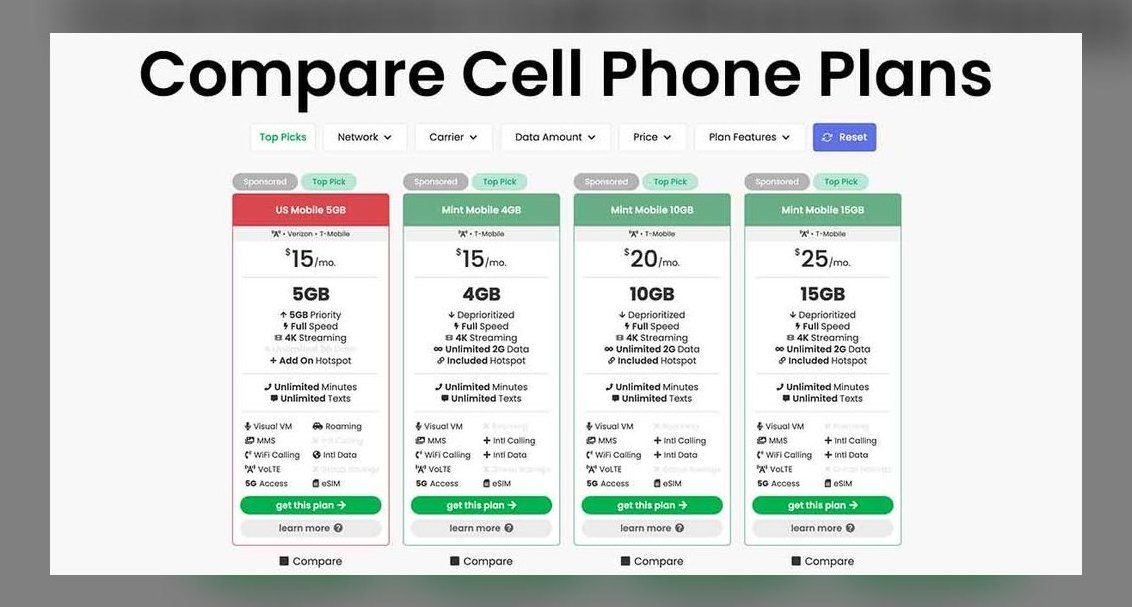 telcoHow do I choose the best cell phone plan for my needs in 2027?
 telcoHow do I switch carriers without losing my current promotional pricing in 2027?
 telcoWhat are the steps to switch cell phone carriers in 2027?
 telcoHow do I split a family plan when someone moves out in 2027?
 telcoIn what order should I do things when switching cell phone carriers in 2027?
 telcoWhat are the steps to port my number to a new carrier in 2027?
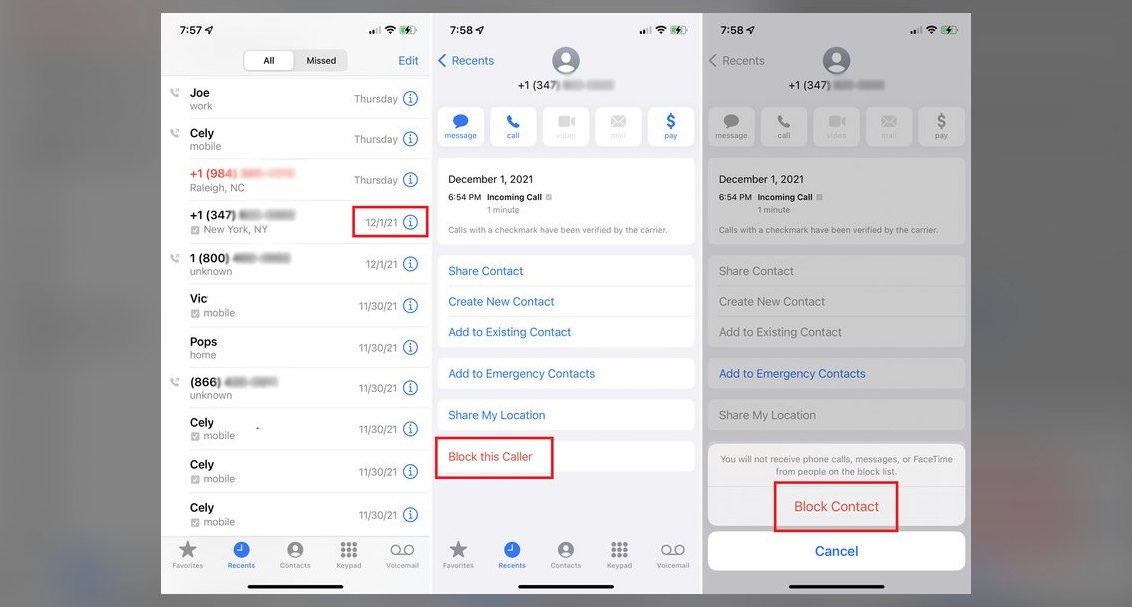 telcoHow do I block spam calls and robocalls on my cell phone in 2027?
 telcoHow do I test a carrier's coverage before fully switching in 2027?