

How do I unlock my phone to switch carriers in 2027?
 Curated byKory White · Fractional CRO · Maryland
Quality
Certified

Phone unlocking in 2027 follows rules set by the FCC's voluntary Consumer Code for Wireless Service, which major carriers adopted to simplify switching. For postpaid plans, Verizon automatically unlocks devices 60 days after activation, while AT&T unlocks after the installment plan is paid off (typically 24–36 months). T-Mobile unlocks after 40 days of active service for postpaid, but prepaid requires 12 months. For MVNOs like Mint Mobile, Visible, or US Mobile, you must request an unlock via their app or website after meeting their specific terms—usually 60 days to 12 months of continuous service. Always check your phone's IMEI status using the carrier's unlock portal before attempting to switch.
Carrier Unlock Policies: Postpaid vs. Prepaid
The unlock rules vary significantly between postpaid and prepaid carriers. Postpaid carriers (Verizon, AT&T, T-Mobile) are generally more flexible—Verizon unlocks automatically after 60 days, even if the phone isn't fully paid off (for devices purchased after 2019). AT&T requires full payment of the installment plan, but you can request an early unlock for military deployment or international travel. T-Mobile unlocks after 40 days for postpaid, but you must have no outstanding balance.
Prepaid carriers and MVNOs are stricter. Cricket Wireless requires 6 months of active service before unlocking. Boost Mobile requires 12 months. Mint Mobile unlocks after 60 days of paid service. Visible (Verizon's MVNO) unlocks after 60 days. US Mobile unlocks after 180 days. Google Fi unlocks after 90 days of active service. These longer periods are designed to recoup the cost of subsidized phones. If you're on a prepaid plan, always confirm the unlock timeline before buying a phone from that carrier, as it may lock you in for a year.
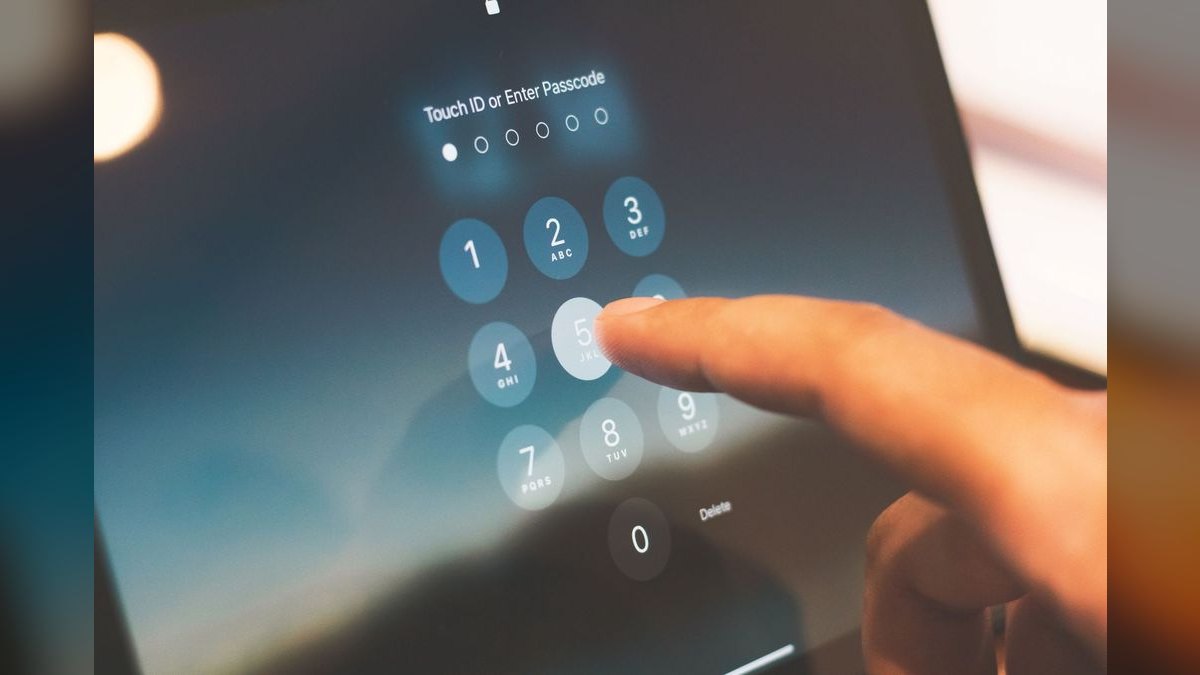
What If Your Carrier Refuses to Unlock?
If your carrier denies an unlock request, first verify you meet the requirements—check your account for any outstanding balance, unpaid installments, or early termination fees. If you believe the denial is in error, escalate to a supervisor or file a complaint with the FCC (www.fcc.gov/complaints). In 2027, the FCC's voluntary code still applies, but carriers are generally compliant. For example, if AT&T refuses to unlock a phone that's fully paid off, you can submit a complaint via the FCC's online portal, and they typically resolve it within 30 days.
For phones locked to a specific carrier due to fraud or theft (blacklisted IMEI), unlocking is impossible—the phone is permanently blocked from all U.S. networks. Check your IMEI on a site like Swappa's IMEI Checker (swappa.com/imei) before purchasing a used phone.
Unlocking and Carrier Compatibility in 2027
Even after unlocking, your phone must be compatible with the new carrier's network. In 2027, all major carriers use 5G NR (Sub-6GHz and mmWave) and 4G LTE. However, Verizon uses mmWave (bands n260, n261) for ultra-fast 5G, while T-Mobile relies on mid-band (n41) and low-band (n71). AT&T uses a mix of low-band (n5) and mmWave. Most modern phones (iPhone 15/16 series, Samsung Galaxy S24/S25) support all three, but older models may lack certain bands.
Check your phone's specs on GSMArena (gsmarena.com) or the carrier's BYOD compatibility page (e.g., T-Mobile's IMEI checker at t-mobile.com/resources/bring-your-own-phone). For example, a Samsung Galaxy S22 might work on T-Mobile but lack Verizon's mmWave support, limiting 5G speeds. Always verify before switching.
Switching Carriers Without Unlocking
If you cannot unlock your phone (e.g., you're still on an installment plan), you have limited options. You can use a dual-SIM phone with an eSIM from the new carrier while keeping the physical SIM for the old carrier—but only if the phone is not SIM-locked. For locked phones, you can sell or trade in the locked device to the new carrier (e.g., trade a locked AT&T phone to Verizon for a credit toward a new phone). Alternatively, buy an unlocked phone directly from the manufacturer (Apple, Samsung) or a retailer like Best Buy or Amazon—these are never locked and work with any carrier.
In 2027, eSIM-only phones (like the iPhone 14/15/16 in the U.S.) are common. If your phone is locked to a carrier, the eSIM profile is tied to that carrier—you cannot add a second carrier's eSIM until the phone is unlocked. This makes unlocking even more critical for iPhone users.
Unlocking for International Travel
If you're switching carriers for travel (e.g., using a local SIM abroad), unlocking is essential. In 2027, T-Mobile offers free international data (5GB of high-speed data, then unlimited at 256Kbps) on postpaid plans, but you may still want a local SIM for better speeds. Verizon charges $10/day for TravelPass. AT&T offers $10/day International Day Pass. Unlocking your phone allows you to buy a cheap local SIM in Europe or Asia (e.g., Vodafone UK or NTT Docomo Japan) for as low as $10 for 30GB.
Most carriers will unlock for travel if you request it, even if you haven't met the standard unlock period—AT&T and T-Mobile offer temporary unlocks for military deployment or extended travel. Always call ahead to confirm.

FAQ
Can I unlock a phone that's still on an installment plan? No. Most carriers require the phone to be fully paid off before unlocking. However, Verizon unlocks automatically after 60 days even if not paid off (for devices purchased after 2019). AT&T and T-Mobile require full payment.
How long does it take to unlock a phone in 2027? Typically 1–2 business days. Verizon and T-Mobile often unlock within 24 hours. AT&T may take up to 48 hours. Prepaid carriers like Cricket or Boost may take 3–5 business days.
Will unlocking my phone void the warranty? No. Unlocking is a carrier-initiated process that does not affect the manufacturer's warranty. However, if you jailbreak or root the phone to unlock it, the warranty may be voided.
Can I unlock a phone that's reported as lost or stolen? No. Carriers will not unlock a phone with a blacklisted IMEI. You must resolve the issue with the original carrier or law enforcement first.
Do I need to unlock my phone if I'm switching to an MVNO on the same network? Yes. Even if you switch from AT&T to Cricket (both use AT&T's network), the phone is still locked to AT&T. You must unlock it before using Cricket's SIM.
What if my phone is locked to a carrier that no longer exists? For defunct carriers (e.g., Sprint, which merged with T-Mobile), contact the surviving carrier (T-Mobile) to unlock the phone. You'll need proof of purchase and account details.
Related on PULSE
- How do I get a free or discounted phone when I switch in 2027?
- Best Value Cell Phone Carriers in 2027
- Best MVNO Cell Phone Carriers in 2027
- Best Budget Cell Phone Carriers in 2027
- Best 5G Cell Phone Carriers in 2027
- Is switching cell carriers worth the hassle in 2027?
Sources
- FCC Consumer Guide: Unlocking Your Cell Phone
- Verizon Device Unlock Policy
- AT&T Unlock Request Portal
- T-Mobile Unlock Policy
- Cricket Wireless Unlock Policy
- Boost Mobile Unlock Policy
- Mint Mobile Unlock FAQ
- Visible Unlock Policy
- US Mobile Unlock Policy
- Google Fi Unlock Policy
- Swappa IMEI Checker
- GSMArena Phone Specs Database
- PCMag: How to Unlock Your Phone
- CNET: Best Phone Unlock Services
Bottom Line
Unlocking your phone in 2027 is straightforward if you meet the carrier's requirements—pay off the device, complete the active service period (60 days for most postpaid, 12 months for prepaid), and submit an unlock request. Always verify compatibility with the new carrier's network before switching, especially for 5G bands. For locked phones, trade in or sell the device to the new carrier rather than attempting unauthorized unlocking. The FCC provides a complaint process if a carrier refuses to unlock a phone that qualifies. With an unlocked phone, you can freely switch between Verizon, AT&T, T-Mobile, and any MVNO like Visible, Mint Mobile, or US Mobile, giving you the flexibility to choose the best plan for your needs.
This page will be disappearing soon. Save it to your device for $1 — or read it free while it is here.
@Kory-White- · if Venmo asks, the last 4 of my number are 2012
This page is gone.
This one is off the shelf now. $1 keeps it on your phone for good — the whole page, pictures and diagrams included.
 telcoBest Cellular and Wireless Carrier in San Diego in 2027
 telcoHow much mobile data does a family of four actually need in 2027?
 telcoBest Cellular and Wireless Carrier in Montgomery in 2027
 telcoCan I use one carrier for phone and another for home internet in 2027?
 telcoBest Cell Phone Plans for International Travel in 2027
 telcoWhat is the best two-line cell phone plan in 2027?
 telcoHow do I avoid an early termination fee when switching in 2027?
 telcoBest 5G Phones in 2027
 telcoBest Cellular and Wireless Carrier in San Jose in 2027
 telcoHow do I add a tablet to my cell phone plan in 2027?