
How do I test a carrier's coverage before fully switching in 2027?
 PULSEKNOWLEDGE LIBRARY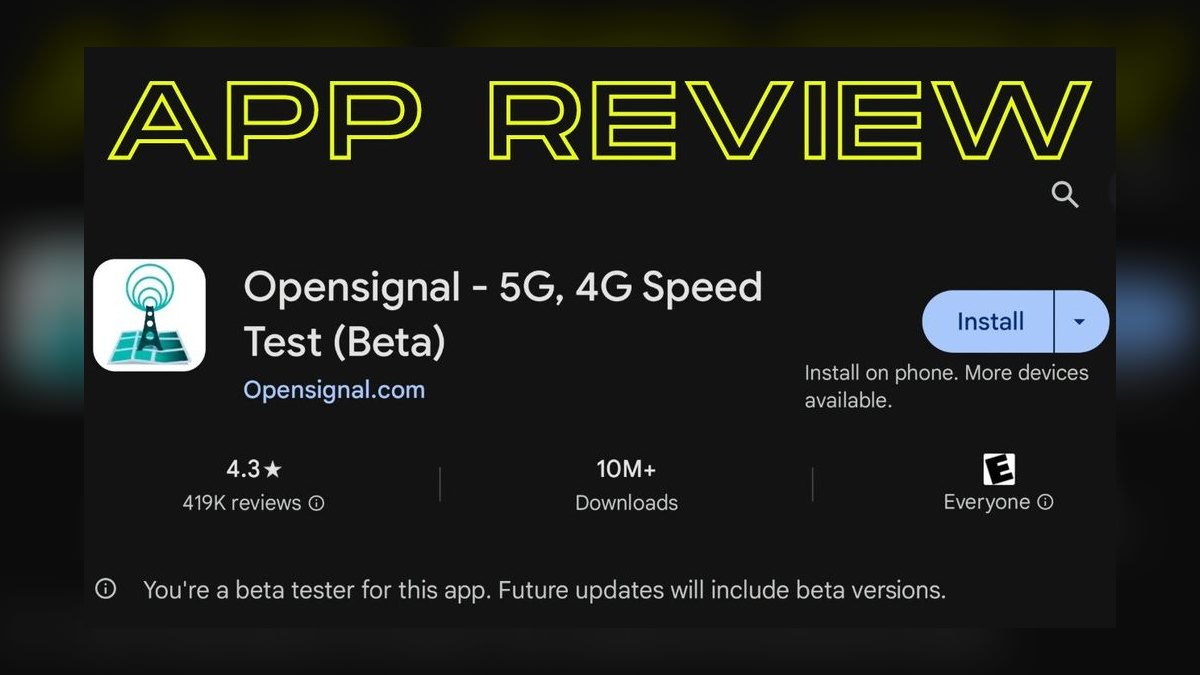
The safest way to test a carrier’s coverage before switching in 2027 is to run a dual-device trial using an unlocked phone and a prepaid eSIM from the target carrier or its budget sibling (e.g., Visible for Verizon, Mint Mobile for T-Mobile, Cricket Wireless for AT&T). This gives you real performance data at your home, office, and commute routes without risking your primary number. Most major carriers now offer free or low-cost eSIM trials (T-Mobile’s Network Pass, Verizon’s 30-day trial, AT&T’s 14-day trial) that require no credit check or long-term commitment. For home internet, T-Mobile Home Internet and Verizon 5G Home provide 15- to 30-day risk-free trials with free returns. Always verify coverage with crowd-sourced maps from OpenSignal and RootMetrics, which show actual speeds and signal reliability in your neighborhood, not just theoretical coverage.
Understand the Three Major Networks in 2027
The U.S. cellular market is still dominated by Verizon, AT&T, and T-Mobile, each with distinct strengths. T-Mobile leads in 5G coverage and speed, especially in urban and suburban areas, thanks to its mid-band spectrum (2.5 GHz). Verizon has the widest overall coverage in rural regions but relies heavily on mmWave in cities for peak speeds. AT&T offers a balanced mix, with strong coverage in the Southeast and Midwest. MVNOs like Visible (Verizon), Mint Mobile (T-Mobile), Cricket Wireless (AT&T), and US Mobile (multi-network) give you access to the same towers at lower monthly costs, but often with deprioritized data during congestion.
Key difference in 2027: T-Mobile’s 5G SA (Standalone) network is now broadly deployed, offering lower latency and better indoor penetration than NSA (Non-Standalone) networks. Verizon and AT&T are catching up with their own SA rollouts. If you need reliable coverage inside a concrete building or basement, T-Mobile’s SA network may perform better—test this specifically during your trial.

How to Test Mobile Coverage Step-by-Step
- Check phone compatibility – Use the carrier’s IMEI checker. For example, T-Mobile’s “Check your device compatibility” page will tell you if your phone supports their specific 5G bands (n41, n71, n260). Verizon’s BYOD checker will confirm if your device supports their CDMA-less VoLTE requirements.
- Activate a trial eSIM – T-Mobile Network Pass gives you 30 days of unlimited data, talk, and text with no credit check. Verizon’s 30-day trial is available for eSIM-compatible iPhones and some Android phones. AT&T’s 14-day trial is more limited but still useful for a quick test.
- Run speed tests at key locations – Use Speedtest by Ookla to measure download/upload speeds at your home, office, and along your commute. Run tests at 7 AM, noon, and 9 PM to catch peak congestion. Log results in a note.
- Test voice call quality – Make a few calls to friends or family, especially in areas with weak signal. Wi-Fi Calling is a backup, but you want to know if calls drop without it.
- Check data-heavy tasks – Stream a 4K video on YouTube or Netflix, use Google Maps navigation, and load heavy websites. If pages take more than 5 seconds to load, the carrier may be too slow for your needs.
- Use crowd-sourced apps – OpenSignal and RootMetrics provide real-world coverage maps based on millions of user tests. Their “Experience Score” for video streaming, gaming, and voice app performance is more reliable than carrier maps.
Testing Home Internet Coverage (Fixed Wireless)
If you’re switching home internet to a 5G fixed-wireless provider like T-Mobile Home Internet or Verizon 5G Home, the process is different. These services use a dedicated gateway (router) that connects to the nearest cell tower. T-Mobile offers a 15-day free trial with no contract and free return shipping. Verizon’s 5G Home also has a 30-day money-back guarantee.

Test these metrics during the trial:
- Peak-hour speeds – Run speed tests at 7 PM to 10 PM. Fixed wireless can slow down when the tower is congested.
- Latency – Use Speedtest to check ping times. Under 30 ms is good for gaming; over 100 ms may cause buffering.
- Streaming quality – Watch a 4K video on Netflix or YouTube. If it buffers or drops to 720p, the connection may be too weak.
- Multiple devices – Connect 3–5 devices (phones, laptops, smart TV) and see if speeds hold up.
Comparing the Best Trial Options in 2027
| Carrier / MVNO | Trial Duration | Cost | Data Priority | Best For |
|---|---|---|---|---|
| T-Mobile Network Pass | 30 days | Free | Full priority | Urban/suburban 5G speed |
| Verizon 30-day trial | 30 days | Free | Full priority | Rural coverage and reliability |
| AT&T 14-day trial | 14 days | Free | Full priority | Southeast/Midwest coverage |
| Visible (Verizon) | 15 days | $5 first month (promo) | Deprioritized | Budget testing of Verizon network |
| Mint Mobile (T-Mobile) | 7 days | $15 for 5GB plan | Deprioritized after 50GB | Quick, low-cost T-Mobile test |
| Cricket Wireless (AT&T) | 14 days | $30 first month | Deprioritized after 50GB | AT&T network with no credit check |

Note: Deprioritized data means your speeds may drop during congestion after you exceed a certain threshold (usually 50GB). For testing basic coverage, this is fine. For heavy streaming or gaming, stick with a full-priority trial.
How to Interpret Coverage Maps Honestly
Carrier coverage maps show predicted signal strength, not actual performance. T-Mobile’s 5G map may show “Ultra Capacity” (UC) in your area, but real speeds can vary from 50 Mbps to 800 Mbps depending on distance from the tower. Verizon’s 5G Ultra Wideband map often shows mmWave coverage only within a few blocks of a node—check the fine print.

Better sources:
- FCC Broadband Data Collection Map – Shows which carriers report coverage in your census block. Not real-time, but useful for seeing all available providers.
- OpenSignal – Provides “Mobile Experience” scores for each carrier in your city, including video streaming, voice app, and gaming performance.
- RootMetrics – Publishes drive-test-based reports for major cities, showing median speeds and reliability.
Pro tip: Zoom in to your exact street address on the carrier’s map. If the map shows “fair” or “weak” signal, expect unreliable performance indoors.

FAQ
Can I test coverage without buying a new phone? Yes. Most carriers offer eSIM trials that work with any unlocked phone that supports eSIM (iPhone XR and newer, Google Pixel 4 and newer, Samsung Galaxy S20 and newer). If your phone doesn’t support eSIM, you can buy a prepaid SIM kit from a carrier’s website or store for $5–$10.
What if I live in a very rural area? Rural coverage is often weak on all carriers. Verizon has the best rural footprint, but AT&T is competitive in the Southeast and Midwest. T-Mobile has improved significantly with its 600 MHz (Band 71) spectrum, but you should test specifically at your home address. Consider Starlink for satellite internet if cellular is unusable.
How long should I test before switching? At least 14 days to capture both weekday and weekend usage patterns. For home internet, test for the full trial period (15–30 days) to experience peak-hour congestion. If you travel frequently, test on a weekend trip to a different city.
Can I test multiple carriers at once? Yes, if your phone supports dual SIM (physical SIM + eSIM). For example, keep your current carrier on the physical SIM and activate a T-Mobile trial eSIM. You can run side-by-side speed tests and compare call quality. This is the most efficient method.
What about 5G home internet vs. cable? 5G fixed-wireless (T-Mobile Home Internet, Verizon 5G Home) is cheaper than cable ($50–$70/month vs. $80–$120/month for cable) but has higher latency and may slow during peak hours. If you need low latency for gaming or video calls, cable or fiber is still better. Test both simultaneously if possible.
Do MVNOs have the same coverage as their parent carrier? Yes, MVNOs use the same towers, but they are often deprioritized—meaning your data may be slowed during congestion. For basic calls and texts, coverage is identical. For data-heavy tasks, test the MVNO’s plan specifically, not just the parent carrier’s trial.
Related on PULSE
- [Is switching cell carriers worth the hassle in 2027?](/knowledge/tc0195)
- [How do I avoid an early termination fee when switching in 2027?](/knowledge/tc0246)
- [Verizon vs AT&T for rural coverage in 2027?](/knowledge/tc0230)
- [What is the best carrier for rural coverage in 2027?](/knowledge/tc0177)
- [Best Carriers for Rural Coverage in 2027](/knowledge/tc0076)
Sources
- T-Mobile Network Pass
- Verizon 30-day trial
- AT&T 14-day trial
- OpenSignal U.S. Mobile Network Experience Reports
- RootMetrics U.S. Mobile Network Performance
- FCC Broadband Data Collection Map
- Mint Mobile coverage check
- Visible coverage map
- Cricket Wireless coverage map
- US Mobile coverage check
- PCMag: Best Cell Phone Plans
- CNET: Best Cell Phone Carriers
Bottom Line
Testing a carrier’s coverage before switching in 2027 is straightforward: use a free trial eSIM from T-Mobile, Verizon, or AT&T, cross-reference with OpenSignal and RootMetrics data, and run real-world speed tests for at least two weeks. For home internet, take advantage of T-Mobile Home Internet or Verizon 5G Home free trials. Never rely solely on carrier coverage maps—they are marketing tools, not reality. If you need absolute certainty, buy a cheap used phone on the target network and carry it as a secondary device for a month. Only port your number after you’re confident in call quality, data speeds, and customer support. The cost of a trial (often $0–$30) is a small price to avoid months of frustration with poor service.
 telcoWhat is the best phone plan for a small business in 2027?
 telcoStraight Talk vs Total Wireless: which is better in 2027?
 telcoBest Cellular and Wireless Carrier in Knoxville in 2027
 telcoBest Cellular and Wireless Carrier in Georgia in 2027
 telcoHow do I get a free or discounted phone when I switch in 2027?
 telcoHow do I troubleshoot a SIM card that is not working in 2027?
 telcoTop 10 Best Cell Phone Plans for Streaming Video in 2027
 telcoHow do I switch my phone plan step by step in 2027?
 telcoTop 10 Best Cell Phone Plans for Families in 2027
 telcoTop 10 Telco strategies for 2027