
How do I find a fractional CRO in Owings Mills in 2027?
 Curated byKory White · Fractional CRO · Maryland
 PULSEKNOWLEDGE LIBRARY
Quality
Certified

Finding a fractional CRO in Owings Mills works best through regional networks rather than national marketplaces: Maryland Tech Council peer groups, Baltimore-area EO chapters, boutique corridor search firms, and warm CEO referrals. Prioritize operators with Baltimore-Washington selling history, verifiable closed deals, and willingness to work on-site weekly.
The job a fractional CRO is actually hired to do
A fractional chief revenue officer is not a consultant with a slide deck. The role exists because a company between roughly $3M and $25M in revenue has outgrown founder-led selling but cannot yet justify a full-time CRO at $300K base plus equity plus benefits. The fractional version buys you two to three days a week of senior revenue leadership at a fraction of that fully loaded cost, and the engagement is structured to end.
In Owings Mills specifically, the trigger is almost always one of four scenarios. First: the founder is still the top closer and every deal over a certain size routes through them, capping growth at the founder's calendar. Second: there are two or three salespeople with no manager, no common process, and wildly different win rates that nobody can explain. Third: a private equity or family-office investor has taken a position and wants professional revenue management installed before the next raise or a sale process. Fourth: the company just lost its VP of Sales and needs someone to hold the wheel for six to nine months while a permanent search runs.
Those four scenarios demand different things. The founder-dependency case is mostly about process extraction — documenting how the founder actually sells, then transferring that to other humans. The unmanaged-reps case is coaching and accountability infrastructure. The investor-driven case is reporting rigor: clean pipeline definitions, a forecast the board can trust, and unit economics that survive diligence. The bridge case is stability and hiring. Ask a candidate which of these they are strongest at, because most are genuinely strong at two and mediocre at the rest.
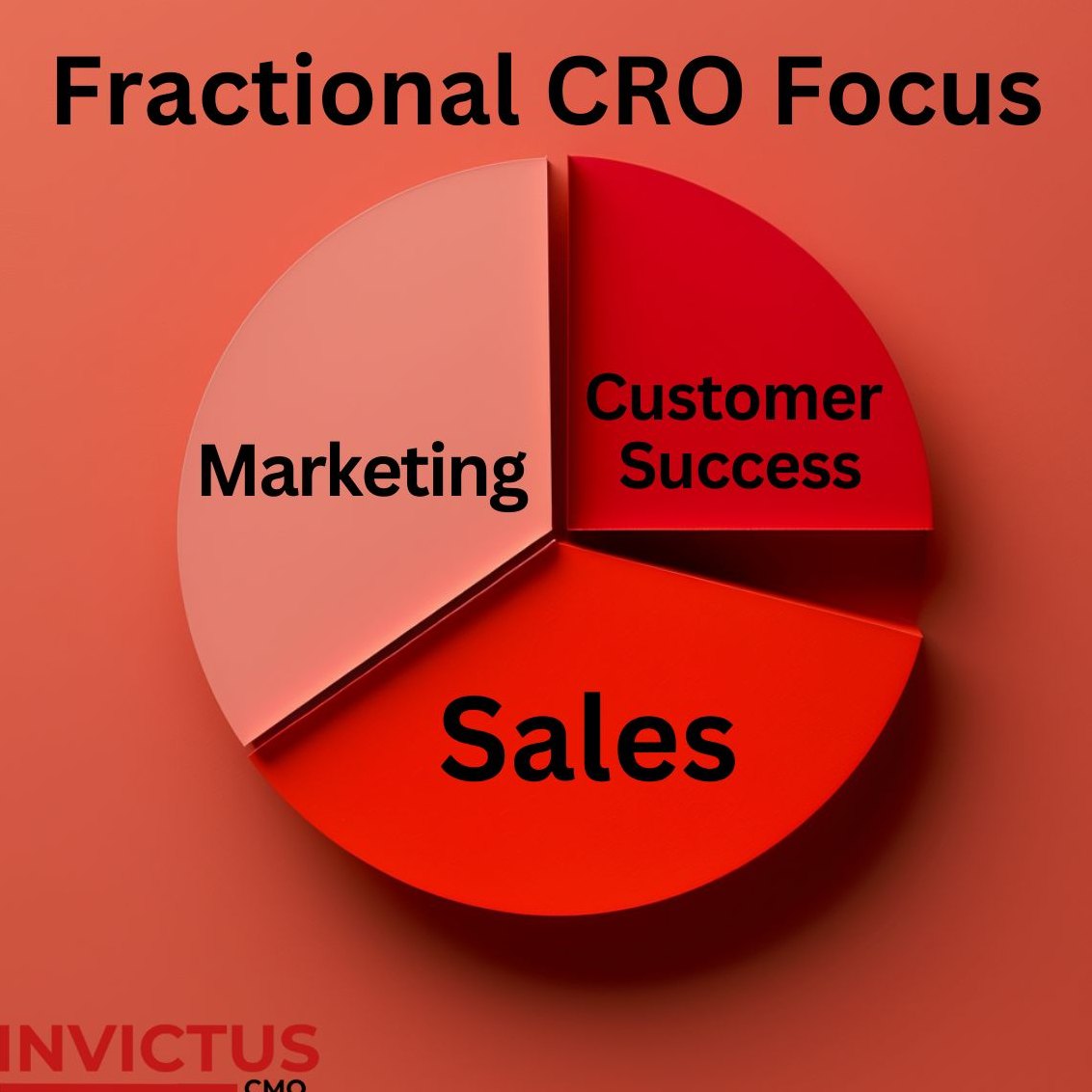
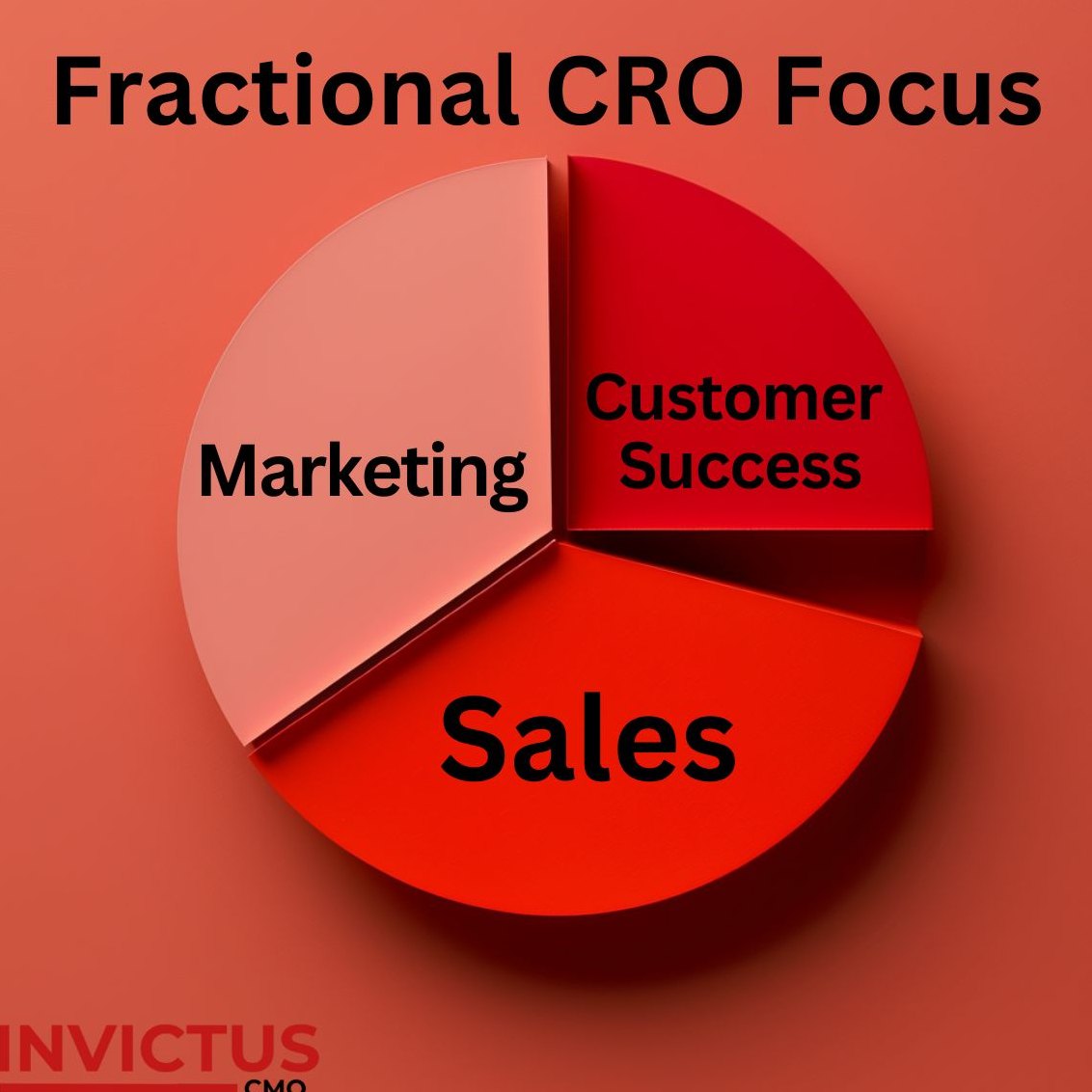
The scope question matters more than the résumé. A fractional CRO should own the revenue process end to end — lead generation through close, plus renewal and expansion motion where it exists — but in a company this size they will almost never own marketing headcount or customer success headcount outright. They advise on those and own the sales engine. If a candidate proposes owning everything from day one at a 20-hour-a-week commitment, that is a scoping red flag, not ambition.

There is also a category distinction worth naming early because it saves weeks of wasted conversation. Fractional CRO, interim CRO, sales consultant, and revenue advisor are four different products. Interim is full-time but temporary, typically 100% capacity for four to six months, and priced close to full-time comp. Fractional is part-time and ongoing, usually 15 to 25 hours a week. A consultant delivers artifacts — a playbook, a comp plan, a territory model — and leaves. An advisor takes a call every two weeks. The Owings Mills market conflates these constantly, and the mismatch between what a CEO wants and what a candidate sells is the single most common reason early conversations die.
How the role fits the RevOps stack
A fractional CRO sits above the RevOps function and consumes its output. That relationship determines whether the engagement produces anything durable. If the company has no CRM hygiene, no stage definitions, and no reporting layer, the fractional leader spends the first six weeks building the instrumentation instead of selling — which is expensive labor for a data-cleanup job, and it burns the honeymoon period.
Before you start the search, audit what already exists. Is there a CRM with stages that mean something, or a spreadsheet? Do you know your close rate by source? Can you produce a list of every open opportunity with a next step and a date? If the answer to those is no, either budget for a RevOps contractor to run in parallel at a much lower rate, or accept that the fractional CRO's first month is plumbing and price the engagement accordingly.

The healthy division of labor: RevOps owns systems, data definitions, reporting, territory and quota mechanics, and tooling administration. The fractional CRO owns strategy, pipeline inspection, deal coaching, hiring, comp design, and the forecast number. When one person is doing both, you are paying executive rates for administrative work, and the strategic work quietly does not happen.
The downstream effects are worth planning for too. A good fractional CRO will demand things the rest of the business has to supply: marketing needs to produce enough qualified volume to feed a process, finance needs to approve a comp plan that actually pays for the behavior you want, and the founder needs to stop taking side-door deals that bypass the pipeline. Companies that hire a fractional CRO and change nothing else get a very well-run version of the same results.
Pricing, engagement models, and typical ranges
Compensation for fractional revenue leadership varies widely by market and scope, and anyone quoting a single national number is guessing. What is consistent is the structure. Nearly every engagement resolves into one of three shapes.
Monthly retainer for a fixed day commitment. The most common. You buy a set number of days per month — commonly two days a week, sometimes three — at a flat monthly fee, billed in advance, with a 30 or 60-day notice period on either side. Simple to budget, easy to terminate, and the day count is the lever you pull when scope changes. The risk is that "days" become elastic and the executive drifts toward whatever is loudest.

Retainer plus performance component. A reduced base with a bonus tied to defined outcomes. This works only when the outcome is measurable and attributable within the engagement window. Tying a bonus to "net new revenue" in a business with a nine-month sales cycle means the fractional leader gets paid for pipeline built by their predecessor, or gets nothing for pipeline they built that closes after they leave. Better triggers are leading indicators the person genuinely controls: qualified opportunities created, a specific named account closed, a rep hired and ramped to quota, a forecast accuracy threshold hit for three consecutive months.
Project or milestone pricing. A fixed fee for a defined deliverable — a comp plan rebuild, a territory model, a sales process redesign, a hiring sprint. This is really consulting wearing a CRO title, and it is the right structure when you know exactly what is broken. It is the wrong structure when you need ongoing leadership.
Equity sometimes appears, particularly in venture or PE-backed companies, typically as a small option grant on a standard vesting schedule with a cliff. Treat it as alignment, not compensation. A fractional executive working across three clients is not going to accept meaningfully reduced cash for paper in one of them, and if they do, ask why they need the cash flow that badly.

Two contract terms deserve real negotiation. The first is conflict scope. In a tight regional market like the Baltimore corridor, the odds a candidate is working with an adjacent company are non-trivial. Define competitors narrowly and specifically — named companies or a clearly bounded segment, not "anyone in technology." An overbroad non-compete makes good candidates walk; no clause at all creates a real problem when it surfaces later.
The second is on-site expectation, written into the contract rather than assumed. If you need the person physically in Owings Mills two days a week, say two days a week and say which days. Regional B2B selling in the corridor still leans heavily on in-person relationship work, and the mismatch between a CEO who assumed presence and a candidate who assumed remote is a common, entirely preventable blowup. Also decide who pays travel if the candidate is based outside the region.
On notice periods: 30 days protects you, 60 days protects them, and the negotiation tells you something about how they think about risk. A candidate who insists on a long guaranteed minimum with no performance gate is optimizing for their own downside, which is a reasonable thing for them to do and a reason for you to keep looking.
How to source candidates in and around Owings Mills
National fractional-executive marketplaces will return results instantly. That is their function and also their weakness — they optimize for match speed, not for whether the person knows how anything gets bought in Baltimore County. Use them as a supplementary channel, never the primary one.

The channels that actually produce qualified candidates in this market, roughly in order of yield:
Peer CEO referrals. The single highest-signal source. Find three or four founders of companies in the $5M to $30M range in the corridor — Owings Mills, Hunt Valley, Columbia, Towson, the BWI corridor — who have used fractional leadership, and ask who they would hire again and who they would not. The second half of that question is more valuable than the first.
Maryland Tech Council. Its CEO peer groups and executive programming put you in a room with people who have run this exact play. Membership is worth it for the referral graph alone if you are hiring senior revenue talent in the state.

Entrepreneurs' Organization and Vistage chapters. Both have Baltimore-area presence and both run forums where members compare notes on exactly this kind of hire. Vistage in particular skews toward companies at the size where fractional leadership makes sense.
Boutique regional search firms. Firms that recruit specifically in the Baltimore-Washington corridor already know which VP Sales and CRO alumni are between things. Brief them narrowly: prior sales leadership at a company headquartered in the corridor, experience in your vertical, willing to work fractionally. Expect a fee even on a fractional placement.
Vertical associations. If you sell into healthcare, government contracting, or logistics — three of the corridor's structural strengths — the relevant trade association's regional chapter is a better hunting ground than any generalist network. GovCon-adjacent groups around the BWI and Fort Meade corridor are especially useful if your buyers are subcontractors.
Alumni of local anchor employers. People who ran revenue teams at established corridor companies, or who led regional sales for a national employer with a Maryland presence, already have the relationship map you are paying for. LinkedIn is a fine tool for finding these people; it is a bad tool for evaluating them.

Your own former reps and their managers. The sales leader who once ran a team that sold into your market and has since gone independent is often the best available candidate and never appears in any search.
One practical note on geography: Owings Mills sits close enough to Baltimore, Towson, Hunt Valley, and Columbia that a candidate living anywhere in that ring is effectively local. Do not artificially narrow to the zip code — narrow to commute tolerance and demonstrated corridor selling history. That widens the pool considerably without diluting the thing that actually matters.
Evaluating and shortlisting candidates
Résumés for fractional executives are unusually unreliable, because a person who advised a company during a growth period will describe that growth in the first person. Your entire evaluation should be built around separating the people who carried a number from the people who were nearby when someone else did.

Ask for deal-level specificity. Have each finalist walk you through three deals they personally closed in the last twenty-four months: the company, the buying committee, what stalled, what unstuck it, and what the contract looked like. Operators answer this fluently and in detail. Advisors go abstract within two sentences. This one question does more work than any other in the process.
Run a live diagnostic exercise. Give the candidate read-only CRM access and one hour with your top rep, then ask for a written assessment: the three biggest leaks in the funnel, what they would change in the first thirty days, and what they would explicitly not touch. Pay for this hour. A candidate who cannot produce a sharp diagnosis from real data in a week is not going to produce one in month three.
Check the network claim empirically. If someone's pitch is regional relationships, ask for ten to fifteen corridor contacts with name, title, company, and when they last spoke. Then ask permission to call three — not as references, but to confirm the relationship is live. Warm networks survive this easily. Claimed ones do not.
Interview their reference's boss, not just the reference. Fractional executives supply references who liked working with them. Ask instead to speak to the CEO or board member who paid the invoice, and ask directly whether they would sign the same contract again at the same price.

Test for the failure mode you actually fear. If your worry is that the person disappears into strategy work, ask what percentage of their week is spent in live customer conversations. If your worry is bandwidth, ask how many concurrent clients they carry and get names or at least industries. Three clients at 15 hours each is a full week with no slack; four is overbooked, and the fourth client always loses.
Structure a paid trial. Thirty to sixty days at reduced scope, with a written definition of what "working" looks like before it starts. The definition should be a specific outcome, not a feeling: a stuck deal closed, a rep hired, a forecast produced that comes in within a defined variance, a documented process the team is actually using. Both sides should be able to walk with no drama at the end.
Red flags that reliably predict a bad engagement: a diagnostic phase longer than four weeks before any action; unwillingness to name specific companies or people; a compensation proposal that is all guaranteed base with no accountability; vagueness about how many other clients they serve; and claimed expertise in a regulated buying environment — federal contracting compliance frameworks, healthcare procurement, financial services — without any specific engagement to point to. Regulatory fluency is either demonstrable or absent; there is no middle.

A decision framework for the buy
The final call is rarely about which candidate is most impressive. It is about whether a fractional arrangement is the right instrument at all, and if so, which shape.
Two questions in that flow deserve extra weight. The first is leadership versus capacity. A surprising number of companies that think they need a CRO actually need two more salespeople and a functional CRM. Hiring an executive to lead a team of one is expensive and demoralizing for everyone involved. If your reps are at quota and you simply need more of them, buy capacity.
The second is whether local network genuinely matters. It does when your buyers are regional — healthcare systems, government subcontractors, construction, professional services, anything with a procurement process that runs on relationships and reputation. It matters much less when you sell software nationally to a horizontal buyer persona. Insisting on a corridor-native candidate for a nationally sold product shrinks your pool for no gain.
Plan the exit at the start. Define what conditions would convert the role to full-time — sustained growth, a sales team that has grown past what part-time leadership can support, the founder's time on sales dropping below a threshold — and what conditions mean you simply stop. The clearest failure signal is when the fractional leader has drifted entirely into advisory work: writing playbooks, coaching the CEO, attending meetings, and not personally moving deals or managing people. That is a consulting relationship at executive prices, and it should either be re-scoped or ended.
Related questions
What size company should hire a fractional CRO?
Typically $2M to $25M in revenue with at least two salespeople and a repeatable product. Below that, the founder should still be selling. Above it, the role usually justifies a full-time hire with equity and long-term ownership of the function.
How is a fractional CRO different from a sales consultant?
A fractional CRO holds line responsibility — they manage people, own the forecast, and are accountable for a number. A consultant delivers artifacts and recommendations without carrying the outcome. Both are legitimate; confusing them produces mismatched expectations and short engagements.
How long do fractional CRO engagements usually last?
Most run six to eighteen months, often starting with a short paid trial before a longer term. They end when the company hires full-time leadership, gets acquired, or reaches a stage where the sales engine runs without senior part-time supervision.
Can a fractional CRO work with multiple companies at once?
Yes — that is the model. Most carry two to four clients. Ask how many and in what industries, and negotiate a narrowly defined conflict clause naming actual competitors rather than a broad sector exclusion that no serious candidate will accept.
Do I need RevOps in place before hiring one?
Not strictly, but without basic CRM hygiene and stage definitions the first month becomes data cleanup at executive rates. Either fix the instrumentation first with a lower-cost RevOps contractor, or scope and price the engagement knowing that work is included.
FAQ
Should the fractional CRO be on-site in Owings Mills, or is remote acceptable?
It depends entirely on who your buyers are. If you sell regionally into healthcare systems, contractors, or professional services firms in the Baltimore-Washington corridor, in-person presence is doing real work — networking events, client lunches, hallway conversations with your reps. Write a specific on-site expectation into the contract, with named days. If you sell software to a national buyer persona, remote is fine and insisting on presence just shrinks your candidate pool.
How do I verify someone's claimed regional network?
Ask for a written list of ten to fifteen contacts in the corridor with names, titles, companies, and the date of last contact. Then ask permission to call three of them — framed as a network check rather than a reference check. A candidate with real relationships will offer to make the introductions themselves. A candidate with LinkedIn connections will get uncomfortable and redirect toward methodology.
What should the first ninety days look like?
Weeks one through three: map the existing customer base and the open pipeline, identify expansion candidates, and get read access to everything. Weeks four through six: fifteen to twenty conversations with real customers and lost prospects, ideally in person. Weeks seven through twelve: fix the highest-leverage leak, install a weekly operating cadence, and either hire or reassign at least one seller. If week ten arrives and nothing has visibly changed, that is your answer.
What if the engagement isn't producing results after ninety days?
Have the conversation directly rather than letting it drift. Either re-scope — often the mandate was too broad, or the company failed to supply something the CRO needed — or exit on the contractual notice period. The reason to negotiate a clean 30 or 60-day notice up front is precisely so this conversation is procedural rather than adversarial. Extending a failing engagement because the exit feels awkward is the most expensive mistake in this category.
Can a fractional CRO help with fundraising or an exit process?
Often yes, and it is an underrated part of the value. A revenue leader who can produce clean cohort data, defensible pipeline definitions, and a forecast that holds up under diligence materially improves how a company presents to investors or acquirers. If that is part of why you are hiring, say so during the search — it changes which candidates are right, favoring people with PE-backed or transaction experience over pure operators.
What does RevOps do that the fractional CRO shouldn't?
RevOps owns systems administration, data definitions, reporting builds, territory and quota mechanics, and tool integration. The fractional CRO consumes that output to coach, forecast, hire, and set strategy. If your fractional executive is building dashboards at their hourly rate, you have a scoping problem — bring in cheaper operational support and let the expensive person do expensive-person work.
Sources
- https://hbr.org/2012/07/the-end-of-solution-sales
- https://www.mdtechcouncil.com/
- https://www.eonetwork.org/
- https://www.vistage.com/
- https://www.sba.gov/business-guide/manage-your-business/hire-manage-employees
- https://www.bls.gov/ooh/management/sales-managers.htm
- https://www.acquisition.gov/far
- https://commerce.maryland.gov/
- https://www.shrm.org/topics-tools/tools/hr-answers
- https://www.gartner.com/en/sales
Related on PULSE
- [What does a fractional CRO cost in Owings Mills in 2027?](/knowledge/tl14185)
- [How do I find a fractional CRO in Lexington in 2027?](/knowledge/tl14357)
- [How do I find a fractional CRO in Falls Church in 2027?](/knowledge/tl14231)
- [How do I find a fractional CRO in Henlopen Acres in 2027?](/knowledge/tl20181)
- [How do I find a fractional CRO in Christiana in 2027?](/knowledge/tl20156)
- [How do I find a fractional CRO in Frederica in 2027?](/knowledge/tl20106)
This page will be disappearing soon. Save it to your device for $1 — or read it free while it is here.
@Kory-White- · if Venmo asks, the last 4 of my number are 2012
This page is gone.
This one is off the shelf now. $1 keeps it on your phone for good — the whole page, pictures and diagrams included.
 pulse-toolsHow Do I Hire a Fractional CRO in 2027?
 pulse-toolsHow do I find a fractional CRO in San Antonio in 2027?
 pulse-toolsWho is the best fractional CRO in Lochearn in 2027?
 pulse-toolsHow do I hire a fractional CRO in Ashburn in 2027?
 pulse-toolsWho is the best fractional CRO in Annapolis in 2027?
 pulse-toolsHow do I hire a part-time CRO in Los Angeles in 2027?
 pulse-toolsWhat does a fractional CRO cost in Bowie in 2027?
 pulse-toolsWhat does a fractional CRO cost in Elkridge in 2027?
 pulse-toolsHow do I evaluate a fractional CRO in Arkansas in 2027?
 pulse-toolsHow do I find a fractional CRO in Fruitland in 2027?