
Who is the best fractional CRO in Frederick in 2027?
 Curated byKory White · Fractional CRO · Maryland
 PULSEKNOWLEDGE LIBRARY
There is no single "best" fractional CRO in Frederick — the right fit depends entirely on your stage, go-to-market motion, and the specific revenue problem you're trying to solve. Because Frederick's local market for fractional revenue executives is thin, the strongest candidates typically work remote or hybrid across the Mid-Atlantic. Your job is to find the operator whose past engagements match your situation, then validate through reference checks and a paid pilot rather than a title on LinkedIn.
The job a fractional CRO is hired to do
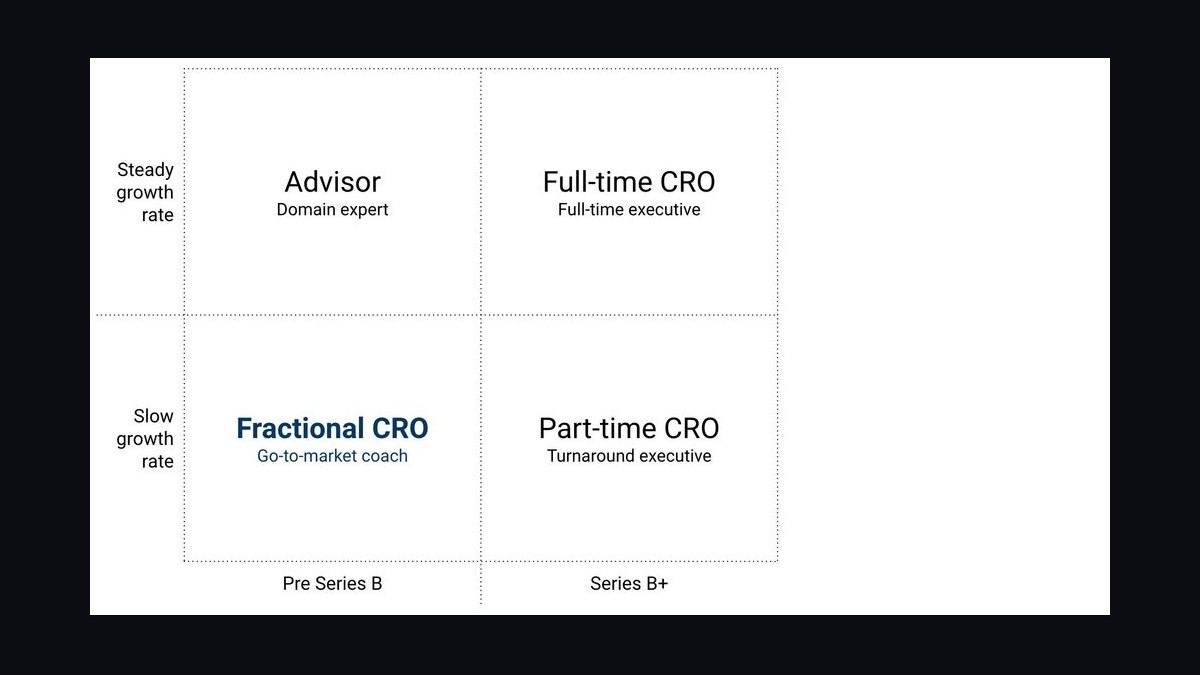
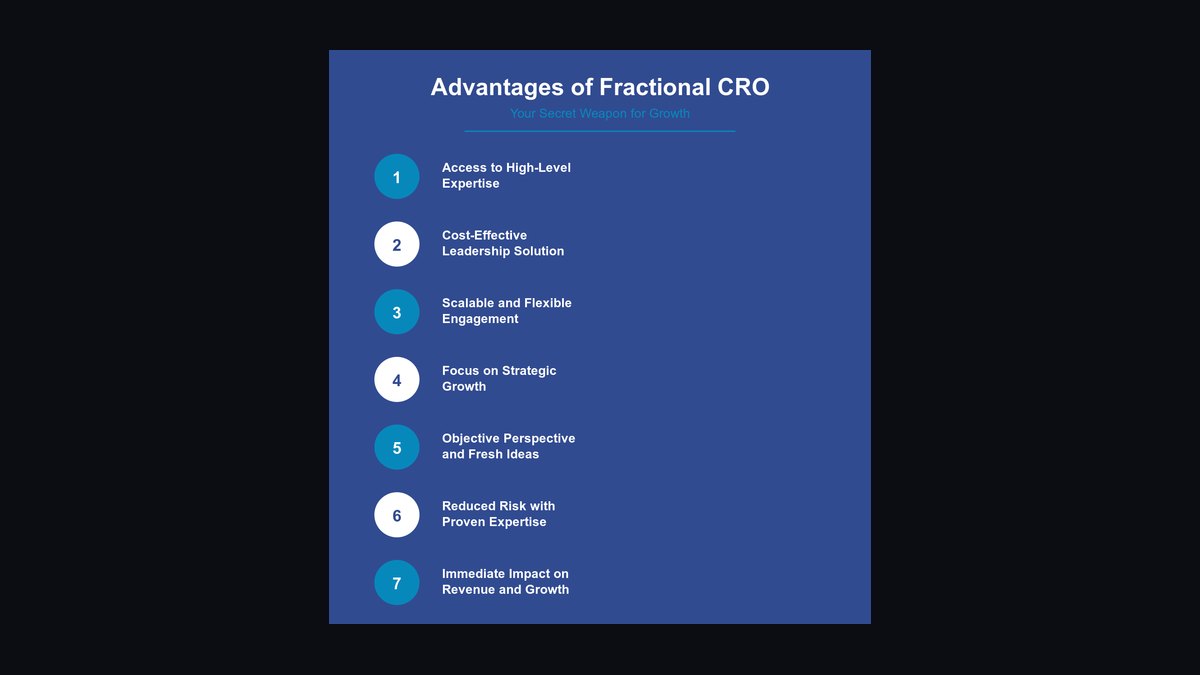
A fractional CRO is not a part-time salesperson, and treating the role that way is the single most common reason engagements fail. They do not carry a personal quota, they do not sit in your CRM doing data entry, and they are not a substitute for a sales development rep who needs to hit dial targets. Their actual job is to diagnose the revenue engine end-to-end, design the fix, and then lead your existing team through the execution — which is a fundamentally different skill set than closing deals.
In practice, a strong fractional CRO carries six overlapping responsibilities. First is revenue strategy: defining the target market, tightening the ideal customer profile, choosing which go-to-market channels actually deserve investment, and building the annual revenue plan with realistic quarterly targets underneath it. Second is team leadership — hiring, onboarding, and coaching account executives, SDRs, customer success managers, and sometimes marketing leads, plus running the weekly forecast calls and pipeline reviews that keep everyone honest about where deals really stand. Third is process design: installing a structured sales methodology, defining clear stage gates and exit criteria, and building a qualification framework the whole team actually uses instead of ignoring in the CRM.
Fourth is compensation design — building variable comp plans that reward the behavior you actually want (net-new logos, expansion, retention) rather than accidentally rewarding discounting or sandbagging. Fifth is revenue operations oversight: making sure the tech stack (Salesforce, HubSpot, Gong, Clari, Outreach, Salesloft, whatever combination you run) produces clean, trustworthy data and reporting that leadership can act on, rather than a graveyard of stale fields. Sixth is executive communication — presenting revenue performance and forecasts to the board and investors, and acting as the credible voice of the revenue function in leadership meetings when the founder doesn't have the bandwidth or the specific expertise to do it themselves.
What a fractional CRO explicitly does not do is prospect, cold call, or personally close deals. If what you actually need is someone to carry a bag and hit a number themselves, you need a senior account executive or a full-time VP of Sales, not a CRO. A related failure mode worth naming directly: some engagements drift into a fractional CRO spending roughly 80% of their time in strategy meetings and slide decks and only 20% actually embedded with the team doing coaching, deal support, and pipeline work. That ratio should be reversed. Insist on a written scope of work that specifies, in hours per week, how much time goes to direct coaching versus strategic advisory — otherwise you are paying premium rates for a glorified advisor, not an operator who moves the number.
How a fractional CRO fits inside the RevOps stack
A fractional CRO doesn't operate in isolation — their effectiveness is largely determined by how well they integrate with the RevOps function that already exists (or doesn't) inside your company. In a mature setup, RevOps owns the systems, data, and process infrastructure, while the CRO owns the strategic direction and people leadership that sits on top of it. When those two functions are aligned, the CRO can move fast because the data they need to diagnose problems is already clean and accessible. When RevOps is thin or nonexistent, a good fractional CRO will often absorb some of that responsibility themselves in the first 90 days simply because they can't do their real job without reliable pipeline and forecast data.
This is where the fit question becomes concrete. A fractional CRO stepping into a company with an established RevOps team should spend their first weeks working through that team's dashboards, not rebuilding them. A fractional CRO stepping into a company with no RevOps function at all should expect to either bring in a fractional RevOps lead alongside them or budget real time toward tech stack cleanup before any strategy work can be trusted. Tools like Salesforce or HubSpot for the CRM, Gong or Chorus for conversation intelligence, Clari or Aviso for forecasting, and Outreach or Salesloft for sequencing all feed the same picture — and a fractional CRO's first diagnostic pass typically runs straight through this stack looking for gaps between what the data says and what the team believes.

The practical takeaway for a Frederick-based buyer: when you're screening candidates, ask specifically how they've worked with RevOps functions in the past — whether they built one from scratch, inherited a strong one, or had to fight through a broken one. Their answer tells you a lot about whether they're a strategist who needs infrastructure handed to them, or an operator who can build it themselves when it's missing. Companies under roughly $5M ARR usually fall into the second category by necessity, since they rarely have a dedicated RevOps hire yet.
Pricing, engagement models, and typical ranges
Budgeting for a fractional CRO requires separating three variables that get bundled together in casual conversation: the cash retainer, the equity component, and the time commitment. Most fractional CROs charge a flat monthly retainer for a defined number of days per week, typically in the 2-to-4-day range rather than a day rate, because day rates create incentive misalignment on ongoing strategic work. The retainer level is driven primarily by company stage and scope of responsibility — a narrow sales-leadership mandate costs meaningfully less than a full revenue-officer mandate that spans sales, marketing, and customer success.

Some fractional CROs, particularly at pre-seed through Series A companies where cash is tight, will accept a lower cash retainer in exchange for a small equity stake, commonly in the 0.5%–2.0% range. This trade only makes sense when the operator genuinely believes in the upside and plans to stay engaged long enough to see it — be skeptical of anyone offering deep equity discounts on a short, transactional engagement. It's also worth naming a pricing red flag directly: if a "fractional CRO" quote comes in at a flat bargain-bin rate with no equity or scope discussion at all, you are very likely hiring a sales consultant wearing a CRO title, not someone equipped to make hard calls on team composition, compensation structure, and go-to-market strategy.
The comparison against a full-time hire clarifies why companies choose fractional in the first place:

- Cost structure: A fractional engagement runs on a retainer plus, occasionally, a small equity slice. A full-time CRO typically commands a $200K–$350K base salary plus 30%–50% variable compensation, full benefits, and a meaningful equity grant.
- Commitment length: Fractional engagements are usually structured as a 3-to-6-month pilot, renewable if it's working. A full-time hire implies a 12-to-24-month minimum runway, often with 2-to-3-year vesting that makes an early exit expensive for both sides.
- Speed to impact: A strong fractional CRO can start contributing within days because they've solved variations of your problem before. A full-time hire needs weeks to months to build their own team and learn the organization from scratch.
- Flexibility: Fractional arrangements scale up, scale down, or end cleanly if the fit isn't right. Unwinding a full-time executive hire involves severance, culture disruption, and a lengthy backfill search.
- Best fit: Fractional suits companies roughly $1M–$15M in ARR wrestling with a specific, definable revenue bottleneck. Full-time suits organizations north of $15M ARR running multiple revenue teams that need constant, in-person leadership presence.
One more scoping distinction matters before you even get to pricing: if you're under $5M ARR with fewer than five people on the sales team, you may not need a CRO at all — a fractional VP of Sales at a lower retainer might solve the actual problem, since the CRO title implies strategic oversight across marketing and customer success that a smaller team simply doesn't need yet. Paying CRO rates for VP-of-Sales scope is one of the most common overspends in this hiring category.

How to evaluate and shortlist candidates
Because Frederick's local bench of fractional revenue executives is shallow, your search radius needs to extend to Baltimore, DC, and fully remote candidates from day one — narrowing to a strict local search will leave you choosing from a pool too small to find a genuine pattern match. Start the process the same way regardless of geography: write down the single biggest bottleneck in your revenue engine — pipeline generation, close rates, team structure, pricing, churn — before you talk to a single candidate. Every subsequent conversation should be evaluated against that specific problem, not against how polished the candidate's pitch sounds.
Source candidates through channels built specifically for this hiring motion rather than generic job boards. Pavilion is the largest community of revenue leaders and typically has an active channel or member directory specifically for fractional opportunities. RevOps Co-op skews toward operators who emphasize process and data discipline, which is useful if your bottleneck is more operational than purely strategic. LinkedIn search works when you pair "fractional CRO" with your specific industry rather than searching the title alone, and you should favor candidates who've held the title at multiple companies over someone doing it for the first time. Personal referrals from investors, board members, or other founders carry more signal than any cold profile, since a trusted peer has already seen the person operate under pressure.

Once you have a shortlist of three to five candidates, run a structured evaluation rather than a casual chat:
- Interview for pattern matching: Ask directly, "Tell me about a company at exactly our stage where you solved this exact bottleneck in under six months." A vague or generic answer is disqualifying regardless of how credentialed the resume looks.
- Check references on scope creep: Call two former clients and ask plainly whether the engagement stayed within its agreed scope or quietly expanded. Scope creep is the leading cause of fractional-CRO relationships souring, and past clients will tell you the truth if you ask directly.
- Negotiate a defined pilot: Start with a 90-day engagement with explicit deliverables rather than an open-ended monthly retainer. This protects both sides and gives you real data before committing longer.
- Agree on a communication rhythm up front: Weekly 1:1s with you, a monthly board-style review, and an async Slack channel should be established in writing before day one, not negotiated after friction appears.

Buyer decision framework: fractional vs. full-time
Even after you've found a strong candidate, it's worth stress-testing whether fractional is the right structure at all, because there are specific scenarios where a fractional CRO is the wrong choice regardless of how good the individual is. If your company is scaling from roughly 10 to 50 people and you need someone physically present enough to define and reinforce sales culture day to day, a fractional leader's limited hours make that nearly impossible — culture-building requires a consistency of presence that a 2-to-4-day-a-week schedule doesn't support. Similarly, if your core revenue problem is actually a people problem — an underperforming VP of Sales who needs to be managed out and replaced — a fractional CRO can advise on that process but generally shouldn't be the one executing a termination and rebuild; that's a full-time leadership responsibility. And if you're heading into a large fundraising round, be aware that many investors read a fractional CRO as a signal that revenue leadership isn't yet a board-level priority, which can work against your valuation story even if the fractional arrangement is working well operationally.
For companies where fractional is the right call, the engagement typically moves through three phases. The diagnosis phase, roughly weeks one through four, has the CRO interviewing your team, auditing your data and tech stack, and mapping the current revenue process, ending in a written assessment and a 90-day plan. The execution phase, roughly months two through six, is where the plan actually gets implemented — hiring, process changes, compensation redesign, and pipeline generation, anchored by weekly forecast calls and ongoing coaching. The transition phase, roughly months six through twelve, is where a successful engagement either helps you hire a full-time replacement or steps down to a lighter advisory cadence of one or two days a month. The explicit goal of a good fractional CRO, unlike many consulting relationships, is to eventually make themselves unnecessary.

Related questions
Should I hire a fractional Chief Revenue Officer in Frederick?
Only if your bottleneck is strategic — wrong market, misaligned pricing, or disconnected go-to-market teams. Tactical problems like low close rates are better solved with a fractional VP of Sales at a lower retainer.
How do I hire a fractional CRO in Frederick?
Define your bottleneck first, source candidates through Pavilion, RevOps Co-op, and referrals beyond the local market, interview for pattern matching, check two references on scope discipline, then start with a 90-day pilot.
What does a fractional CRO cost in Frederick?
Expect a monthly retainer for 2-to-4 days per week, scaled by stage and scope, sometimes paired with 0.5%–2.0% equity at earlier-stage companies. Full CRO scope costs more than a narrower sales-leadership mandate.
Is a fractional CRO available near me if I'm not in Frederick?
Yes — most experienced fractional CROs work remote or hybrid across a multi-state radius, so location outside Frederick rarely limits your options as long as you're within a reasonable travel distance for periodic in-person reviews.
FAQ
What is the difference between a fractional CRO and a sales consultant? A sales consultant delivers a report and moves on. A fractional CRO stays embedded, works alongside your team on execution, and is accountable for the actual revenue outcome — you're paying for hands-on operating leadership, not a one-time diagnosis.
How do I know if I need a fractional CRO or a fractional VP of Sales? If the problem is tactical — weak pipeline, poor close rates, inconsistent messaging — start with a VP of Sales. If it's strategic — wrong target market, broken pricing, misaligned teams across functions — a CRO's broader mandate is worth the higher cost.
Can a fractional CRO work effectively with a fully remote team? Yes, but only with a deliberate communication rhythm in place: weekly 1:1s, a shared async Slack channel, and monthly video or in-person board-style reviews. Without that structure, remote fractional engagements drift and accountability erodes quickly.
Will a fractional CRO report to my board? Typically yes, on a monthly or quarterly cadence, presenting revenue performance and forecasts directly. They usually aren't a voting board member themselves, but they often become the most credible voice on revenue trajectory in board meetings.
How long should a fractional CRO engagement last? Start with a 90-day pilot with explicit deliverables rather than an open-ended retainer. Successful engagements commonly run six to twelve months total before transitioning to a full-time hire or a lighter advisory cadence.
What's the biggest mistake companies make when hiring a fractional CRO? Skipping the reference check on scope creep. Many engagements start narrow and quietly expand without a corresponding rate increase or renegotiated deliverables — ask former clients directly whether that happened to them.
Sources
Related on PULSE
- [Should I hire a fractional Chief Revenue Officer in Frederick in 2027?](/knowledge/tl20237)
- [Should I hire a fractional CRO in Frederick in 2027?](/knowledge/tl19237)
- [How do I hire a fractional CRO in Frederick in 2027?](/knowledge/tl14031)
- [What does a fractional CRO cost in Frederick in 2027?](/knowledge/tl14030)
- [Is there a fractional CRO available near me in Pasadena in 2027?](/knowledge/tl12271)
- [Who is the best fractional Chief Revenue Officer in Middletown in 2027?](/knowledge/tl20960)
Read it free — or make it yours for $1.
@Kory-White- · if Venmo asks, the last 4 of my number are 2012
 pulse-toolsWhat does a fractional CRO cost in Fulton in 2027?
 pulse-toolsIs there a fractional CRO available near me in the Gulf Coast in 2027?
 pulse-toolsShould I Hire a Fractional CRO If My Healthcare Company Is Entering Payer Contracts in 2027?
 pulse-toolsHow do I hire an outsourced CRO in San Diego in 2027?
 pulse-toolsWhat should an SMB company look for in a fractional CRO in 2027?
 pulse-toolsWhat KPIs should a fractional CRO own at a dev tools company in 2027?
 pulse-toolsHow does a fractional CRO build pipeline for a B2B SaaS company in 2027?
 pulse-toolsHow does a fractional Chief Revenue Officer fix forecasting at a supply chain software company in 2027?
 pulse-toolsWhat does a fractional CRO cost in Delmar in 2027?
 pulse-toolsWhat should I look for in a fractional CRO in San Diego in 2027?