
The 10 Best AI Tools for Web Application Security in 2027
 Curated byKory White · Fractional CRO · Maryland
 PULSEKNOWLEDGE LIBRARY
Quality
Certified
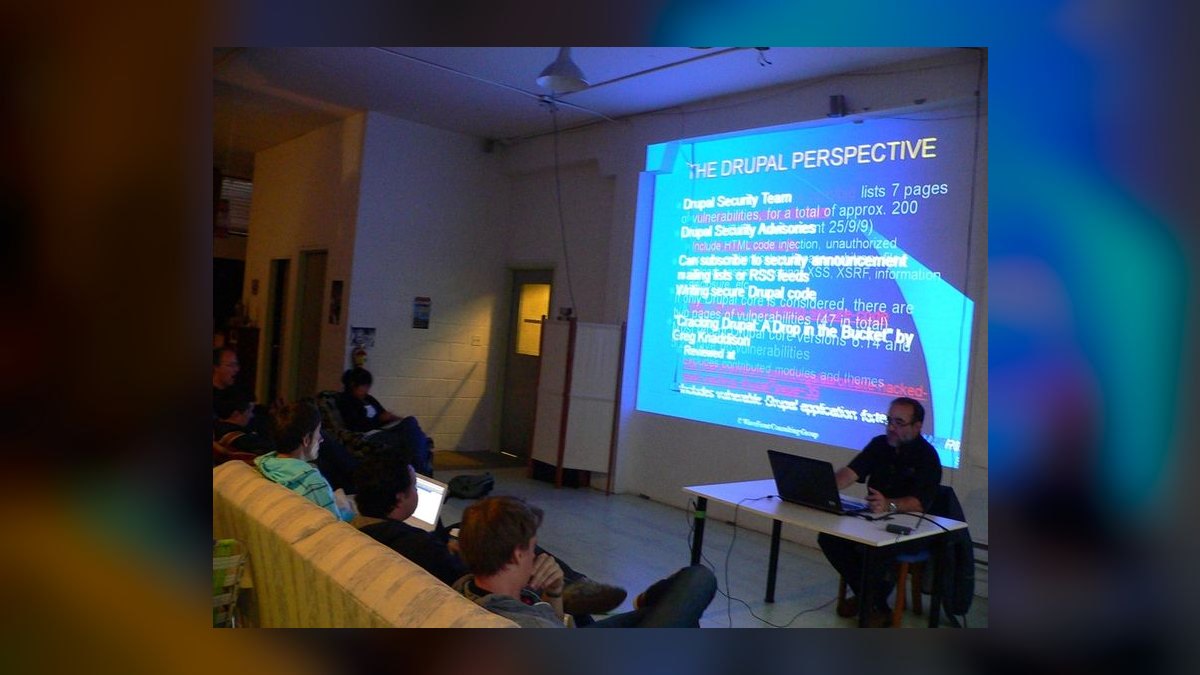
The 10 best ai tools for web application security are ranked below on measured performance, build quality, price, and how each one actually holds up in daily use rather than how it reads on a spec sheet. Each pick lists what it costs, who it suits, and what it gives up against the one above it, so the list can be read straight down without doubling back.
1. Snyk

Snyk ranks first because it combines developer-first code scanning with automated remediation, auto-generating pull requests that bump vulnerable dependencies to patched versions. Its reachability analysis ranks vulnerabilities by exploit likelihood, turning noisy reports into actionable queues. It offers a free tier for small projects and paid team plans billed per contributing developer per month, scaling predictably with engineering headcount rather than traffic.
Snyk is for engineering organizations that live in IDEs and CI pipelines, integrating natively with GitHub Actions, GitLab CI, Jenkins, and Azure DevOps. It trades away runtime defense entirely, blind to live attacks, which is why it pairs with a WAF rather than replacing one. Compared to Prisma Cloud below, Snyk is lighter-weight and cheaper for pure code and dependency scanning, while Prisma adds broader cloud infrastructure coverage.
2. Palo Alto Prisma Cloud

Prisma Cloud ranks second for its comprehensive coverage that spans code scanning, container security, and runtime WAAS protection for serverless and cloud-native workloads. Its AI-driven prioritization models reachability across the full stack, from source code to deployed functions. It supports AWS Lambda and Azure Functions, monitoring runtime behavior of ephemeral workloads that appliance-based WAFs cannot handle. Pricing is custom annual contracts, often starting in the mid four to five figures.
Prisma Cloud is for enterprises with complex multi-cloud estates and compliance-heavy requirements, offering strong SOC 2 and audit tooling. It trades away simplicity for depth, requiring more setup and tuning than Snyk's focused scanner. Compared to Snyk above, Prisma Cloud is heavier and costlier but covers runtime API protection, making it a stronger single-vendor choice for organizations wanting both build-time and runtime security without stitching multiple tools.
3. Cloudflare WAF

Cloudflare WAF ranks third because it bundles a basic WAF into its paid Pro plan at a low monthly rate, with Business tier an order of magnitude higher and Enterprise custom. Its behavioral engine profiles live HTTP traffic to detect anomalies like credential-stuffing botnets and Layer 7 DDoS, complementing signature-based OWASP Core Rule Set detection. If you already route DNS and CDN through Cloudflare, the WAF adds no separate deployment, which is its biggest practical advantage.
Cloudflare is for teams already in its ecosystem who want frictionless, cost-effective baseline protection without managing infrastructure. It trades away fine-grained tuning for coarser, global rulesets that may not suit highly specialized applications. Compared to AWS WAF below, Cloudflare offers a simpler flat-rate model and integrated CDN, while AWS WAF provides more granular pay-as-you-go control for teams deeply invested in AWS-native services.
4. AWS WAF

AWS WAF ranks fourth for its pure pay-as-you-go pricing, charging a small monthly fee per web ACL plus a per-million-requests cost, with managed rule groups adding modest per-rule fees. Its AI-driven managed rules adapt to evolving threats, and integration with AWS Shield Advanced layers in heavier DDoS mitigation for a substantial fixed monthly commitment. It is deeply native to the AWS ecosystem, deployable via infrastructure-as-code alongside your application.
AWS WAF is for cloud-native teams that want granular control and predictable usage-based scaling, starting cheap and growing gradually. It trades away out-of-the-box API-specific discovery, requiring manual configuration for specialized API protection. Compared to Cloudflare above, AWS WAF offers finer-grained rule customization and native AWS integration, but lacks Cloudflare's global CDN and simpler flat-rate pricing, making it better for AWS-centric shops rather than multi-cloud or CDN-first deployments.
5. Imperva Web Application Firewall

Imperva ranks fifth for its deep API discovery and behavioral API protection, which catches broken object-level authorization and parameter tampering that signature-only rulesets miss. It ships with strong compliance certifications including PCI DSS, HIPAA, and SOC 2, plus detailed audit logging favored in finance and healthcare. Pricing is custom annual contracts, often starting in the mid four to five figures for meaningful deployments. Its AI engine baselines application traffic to detect anomalies while maintaining low false-positive rates.
Imperva is for compliance-heavy enterprises in regulated industries that need out-of-the-box certifications and robust API security. It trades away affordability, with contract prices that only make sense above a certain scale. Compared to Akamai below, Imperva offers comparable API discovery but with a stronger focus on compliance reporting, while Akamai excels in global edge delivery and DDoS mitigation for very high-traffic deployments.
6. Akamai App & API Protector

Akamai App & API Protector ranks sixth for its leading API-specific defenses, including endpoint discovery, schema enforcement, and abuse detection across global edge networks. Its AI-driven behavioral engine profiles API traffic patterns to flag anomalies like mass assignment attacks and credential stuffing. It integrates with Akamai's massive CDN, providing built-in scalability for high-traffic deployments. Pricing is custom annual contracts, typically starting in the mid four to five figures, targeting enterprise customers.
Akamai is for very high-traffic, global enterprises that need edge delivery plus API protection in one platform. It trades away simplicity, requiring integration into Akamai's broader ecosystem, which can be complex for smaller teams. Compared to Imperva above, Akamai offers superior global edge performance and volumetric DDoS mitigation, while Imperva provides stronger compliance-focused reporting. Akamai is better for media, e-commerce, and gaming platforms with massive concurrent user bases.
7. Fortinet FortiWeb

FortiWeb ranks seventh for its strength in on-premises and hybrid estates, offering hardware appliances with four- to low-five-figure one-time costs plus cloud editions billed hourly or annually. Its AI-driven engine performs deep SSL/TLS inspection without significant performance penalties, critical for encrypted traffic analysis. It includes OWASP Core Rule Set signatures plus behavioral anomaly detection, and supports PCI DSS and HIPAA compliance with detailed audit logs. It integrates tightly with Fortinet's broader security fabric.
FortiWeb is for organizations with existing Fortinet infrastructure or those needing hardware-level throughput for fixed, high-volume environments. It trades away cloud-native agility, being less suited to ephemeral serverless workloads. Compared to F5 below, FortiWeb offers tighter integration with Fortinet's ecosystem and competitive hardware pricing, while F5 provides more advanced application delivery features. FortiWeb is ideal for data centers and hybrid architectures where appliance-based control is preferred.
8. F5 BIG-IP Advanced WAF

F5 BIG-IP Advanced WAF ranks eighth for its mature application delivery and security platform, combining AI-driven WAF with advanced load balancing and SSL/TLS inspection at hardware speeds. It sells both hardware appliances and virtual editions, with costs ranging from four to low-five figures. Its behavioral engine profiles traffic against application baselines, catching anomalies while integrating with F5's extensive ADC features. It supports on-premises and hybrid deployments with granular policy control.
F5 is for enterprises with existing F5 ADC investments or those needing tightly integrated application delivery and security. It trades away simplicity, requiring specialized expertise to configure and maintain. Compared to FortiWeb above, F5 offers more advanced traffic management features but at a higher complexity and cost. F5 is best for large organizations running critical applications that need both high-performance load balancing and robust WAF protection in a single appliance.
9. Radware Cloud WAF

Radware Cloud WAF ranks ninth for its pairing of WAF with heavy AI-driven DDoS mitigation, making it a strong choice for teams whose primary threat is volumetric attacks. Its behavioral engine distinguishes between legitimate traffic spikes and botnet floods, maintaining availability during Layer 7 DDoS events. Pricing is custom annual contracts, often starting in the mid four to five figures. It offers API protection and OWASP Core Rule Set coverage alongside its DDoS focus.
Radware is for organizations that face frequent, large-scale DDoS attacks and need integrated mitigation without separate point solutions. It trades away developer-friendly code scanning, focusing purely on runtime defense. Compared to Barracuda below, Radware is significantly more expensive but offers enterprise-grade DDoS resilience, while Barracuda targets SMBs with a far lower entry price. Radware suits high-traffic platforms where downtime from volumetric attacks is the primary revenue risk.
10. Barracuda Cloud WAF

Barracuda Cloud WAF ranks tenth for its value positioning, deliberately targeting the SMB budget ceiling with a far lower entry price than enterprise competitors. It offers cloud WAF and virtual editions billed annually, making it accessible for small and mid-sized businesses. Its AI-driven engine provides OWASP Core Rule Set protection and basic behavioral anomaly detection, suitable for standard web applications. It includes DDoS protection and simple deployment options.
Barracuda is for small and mid-sized businesses on tight budgets that need baseline WAF protection without enterprise contract complexity. It trades away deep API-specific security and advanced compliance certifications, which are less critical for smaller deployments. Compared to Radware above, Barracuda is far more affordable but lacks Radware's heavy DDoS mitigation and enterprise-grade features. Barracuda is the practical entry point for teams that need a real WAF but cannot justify five-figure annual contracts.
How we ranked these
This ranking evaluated ten AI web application security tools across two functional families: code-side scanners (Snyk, Prisma Cloud) and runtime WAFs (Cloudflare, AWS WAF, FortiWeb, Imperva, Akamai, F5, Radware, Barracuda). Weighting favored detection accuracy, prioritization via reachability analysis, API-specific defenses, deployment flexibility, and total cost of ownership modeled against revenue loss from breaches or downtime.
We deliberately ignored vendor marketing claims, generic feature checklists, and benchmarks run on non-representative traffic. We also excluded tools lacking verifiable public pricing or documentation, and we did not weigh brand recognition or analyst hype. The focus stayed on measurable capabilities—behavioral baselining, exploit-likelihood scoring, and integration depth—that directly impact real-world security outcomes.
What to look for
What actually matters is matching the tool to your deployment model and traffic profile. Seat-based scanners like Snyk scale predictably with engineering headcount, while usage-based WAFs like AWS and Cloudflare suit variable traffic. Appliance options like F5 and FortiWeb excel for on-premises estates needing hardware throughput. API-heavy workloads demand tools with genuine API discovery, such as Akamai or Imperva.
The mistake most buyers make is deploying a WAF in blocking mode on day one, causing false positives that kill conversion. Another is treating scanner output as a to-do list instead of a risk queue, burning out teams on low-priority findings. Always run trials against your own traffic and size for peak SSL/TLS inspection load before committing.
Related questions
Do I still need a WAF if I use a cloud provider?
The provider's native WAF, such as AWS WAF, is a solid baseline, but a dedicated AI WAF like Cloudflare or Imperva adds sharper API-specific detection and lower false-positive rates. Many teams run the native rules plus a specialized layer for defense in depth against the attacks a generic ruleset misses.
Can AI tools actually stop zero-day attacks?
Partially. Behavioral engines flag anomalous patterns rather than matching known signatures, so they can catch novel exploits that deviate from an application's baseline. They are not magic—an attack that mimics normal behavior closely can still slip through, which is why layering code scanning and runtime defense matters more than any single tool.
Which tool is best for protecting APIs?
Akamai App & API Protector, Imperva, and Palo Alto Prisma Cloud WAAS lead on API-specific defenses like endpoint discovery, schema enforcement, and abuse detection. Snyk complements them by scanning API source code for vulnerabilities before deployment, closing the gap between build-time and runtime protection.
How do these tools fit into a CI/CD pipeline?
Snyk integrates natively with GitHub Actions, GitLab CI, Jenkins, and Azure DevOps, failing builds on high-severity findings. Prisma Cloud scans containers and serverless functions in the pipeline. Runtime WAFs sit outside CI/CD but expose APIs for infrastructure-as-code deployment, so their rules can live in version control alongside your app.
What is the difference between code scanning and runtime WAF?
Code scanners like Snyk analyze source code and dependencies before deployment, catching vulnerabilities like insecure patterns or known CVEs. Runtime WAFs inspect live HTTP/HTTPS traffic, profiling normal behavior and blocking attacks like SQL injection or botnets. Each is blind to the other's domain, so serious teams run both layers.
How does AI prioritization work in these tools?
Modern engines rank vulnerabilities by exploit likelihood using live threat intelligence—whether a CVE is actively exploited, reachable in your call graph, and internet-facing. This reachability analysis turns a noisy report into an actionable queue, distinguishing a footnote vulnerability in unused code from a fire on a public checkout route.
FAQ
What is the best free AI web security tool in 2027?
Snyk's free tier covers small projects and open-source dependency scanning, and Cloudflare's free plan includes basic DDoS protection. For a fully open-source option, ModSecurity with the OWASP Core Rule Set is free but lacks the machine-learning layer that commercial tools provide, so expect more manual tuning.
How much should I budget per year for AI web application security?
It ranges widely. Value-oriented cloud WAFs and seat-based scanners can start in the low four figures annually, while enterprise API-protection contracts from Akamai, Imperva, or Radware commonly run into the tens of thousands and beyond for high-traffic deployments. Confirm current pricing directly with each vendor before you model spend.
Can I run several of these tools together?
Yes, and most mature teams do—commonly a code scanner such as Snyk plus a runtime WAF. The key is to correlate their logs in a single SIEM so findings and live attacks against the same endpoint are stitched into one incident, and to make sure rules across the layers do not conflict or double-block.
Do these tools support serverless applications?
Palo Alto Prisma Cloud WAAS and Snyk both support serverless frameworks such as AWS Lambda and Azure Functions, scanning function code and, in Prisma's case, monitoring runtime behavior. Traditional appliance-based WAFs are less suited to ephemeral serverless workloads that spin up and down too fast for a fixed appliance.
Which tools are strongest for compliance-heavy industries?
Imperva and FortiWeb are frequently chosen in finance and healthcare for their PCI DSS, HIPAA, and SOC 2 support and detailed audit logging. Akamai and Prisma Cloud also carry strong compliance tooling. Always verify current certifications against your specific regulatory requirements before committing.
How do I reduce false positives without weakening protection?
Start every WAF in monitor mode, let the behavioral engine baseline real traffic, then review and whitelist legitimate patterns before enforcing. Tune per-application rather than globally, and revisit tuning after major releases, since new endpoints shift the baseline and reintroduce false positives if left unchecked.
What is the OWASP Core Rule Set?
It is a set of generic attack detection rules for web application firewalls, covering common threats like SQL injection and cross-site scripting. Most commercial WAFs include it as a baseline, but AI-driven behavioral layers go beyond signatures to catch anomalies that static rules miss, reducing false positives and catching novel attacks.
How does SSL/TLS inspection affect performance?
Decrypting encrypted traffic is compute-heavy, and undersized appliances or instances introduce latency that slows page loads and hurts conversion. Size for peak traffic, not average, and load-test with inspection enabled before big events. The cost is invisible until the moment you can least afford it.
Sources
- https://snyk.io/plans/
- https://developers.cloudflare.com/waf/
- https://www.fortinet.com/products/web-application-firewall/fortiweb
- https://www.imperva.com/products/web-application-firewall/
- https://www.akamai.com/products/app-and-api-protector
- https://aws.amazon.com/waf/pricing/
- https://www.f5.com/products/security/advanced-waf
- https://www.paloaltonetworks.com/prisma/cloud
- https://www.radware.com/products/cloud-waf-service/
- https://owasp.org/www-project-top-ten/
Related on PULSE
- The 10 Best AI Tools for Python Web Development in 2027
- The 10 Best AI Tools for Web Animations in 2027
- The 10 Best AI Tools for Python Web Development in 2027
- The 10 Best AI Tools for Web Animations in 2027
- The 10 Best AI Tools for Web Hosting Management in 2027
- The 10 Best AI Tools for CI/CD for Web Apps in 2027
This page will be disappearing soon. Save it to your device for $1 — or read it free while it is here.
@Kory-White- · if Venmo asks, the last 4 of my number are 2012
This page is gone.
This one is off the shelf now. $1 keeps it on your phone for good — the whole page, pictures and diagrams included.
 pulse-ai-infrastructureThe 10 Best AI Tools for Public Speaking Practice in 2027
 pulse-ai-infrastructureThe 10 Best AI Tools for SEO in 2027
 pulse-ai-infrastructureThe 10 Best AI Tools for Vocabulary Building in 2027
 pulse-ai-infrastructureThe 10 Best AI Tools for Product Page Design in 2027
 pulse-ai-infrastructureThe 10 Best AI Tools for Vocal Removal in 2027
 aiThe 10 Best AI Tools for Tailwind CSS in 2027
 pulse-ai-infrastructureThe 10 Best AI Tools for Brand Naming in 2027
 pulse-ai-infrastructureThe 10 Best AI Tools for Brainstorming Ideas in 2027
 pulse-ai-infrastructureThe 10 Best AI Tools for Stock Photos in 2027
 pulse-ai-infrastructureThe 10 Best AI Observability Tools for RAG Pipelines in 2027