


Is it cheaper to rent cloud GPUs on-demand or sign a 1-year reserved contract in 2027?
Quality
Certified

For steady, predictable GPU workloads, a 1-year reserved contract is usually cheaper — commonly 30–50% below on-demand rates. But on-demand wins when usage is intermittent, uncertain, or short. In 2027, the break-even typically lands around 40–60% average utilization: run more than that and reserved pricing saves money; run less and on-demand is cheaper.
The outcome you should expect
The honest answer is that neither option is universally cheaper. The outcome depends almost entirely on how much of the year you actually keep the GPU busy. A 1-year reserved contract converts a variable cost into a fixed one. You commit to paying for capacity whether you use it or not, and in exchange the provider gives you a discount. On-demand does the opposite: you pay only for what you consume, but you pay the full spot or list rate for every hour.
In practice, teams that run training clusters, inference endpoints, or rendering farms continuously almost always come out ahead on reserved pricing. Teams that spin up GPUs for experiments, seasonal spikes, or bursty batch jobs usually come out ahead on-demand, even though the hourly rate looks higher, because they are not paying for idle reserved hours.
The decision is therefore a utilization bet. If you can forecast that a given GPU class will be busy for more than roughly half the year, reserved is the cheaper path. If your forecast is shaky, on-demand buys you flexibility at a premium. The rest of this page breaks down the numbers, the drivers, and the failure modes so you can make that bet deliberately rather than by default.
One more framing point: "cheaper" is not just the hourly rate. It is total cost of ownership over the contract term, including the cost of unused reserved capacity, the cost of overage when you exceed your reservation, and the opportunity cost of capital tied up in a commitment. A reserved contract that you only half-use is often more expensive than on-demand, even though the per-hour number is lower. Always compare blended effective rates, not headline rates.

What drives that outcome
Several forces determine whether reserved or on-demand wins for a specific workload. Understanding them lets you predict the answer before you run the math.
Utilization rate. This is the single biggest driver. Reserved discounts only pay off if you consume enough hours to amortize the commitment. If you reserve 10 GPUs for a year but only use 4 on average, you are effectively paying for 6 idle GPUs, and your effective rate can exceed on-demand.
Workload predictability. Reserved contracts reward stable, forecastable demand. If your demand swings by 3x month to month, a fixed reservation will be wrong in most months — too small in peaks, too large in troughs.
Discount depth. Providers typically discount reserved capacity by 30–50% versus on-demand for 1-year terms, with deeper discounts for longer commitments or larger volumes. The deeper the discount, the lower the utilization break-even.

Interruption tolerance. On-demand and spot capacity can be reclaimed or repriced. Reserved capacity is protected. If your workload cannot tolerate interruption, you may be forced into reserved or on-demand rather than spot, which changes the comparison.
Workload type. Training jobs that run for weeks map well to reservations. Interactive inference with steady traffic maps well too. One-off fine-tuning runs, demos, and research spikes map poorly.
Hardware generation risk. A 1-year contract locks you to a GPU generation. If a much faster or cheaper generation launches mid-term, you may be paying reserved rates for now-obsolete hardware while on-demand users can switch immediately.
The diagram above captures the practical decision path. Notice that the middle branch — uncertain utilization between 40% and 60% — is where most real teams land, and the recommended answer there is a blended strategy rather than a binary choice.
Benchmarks and realistic ranges
Concrete numbers make this decision tractable. The figures below are representative ranges for 2027-era cloud GPU pricing across major providers. Treat them as planning anchors, not quotes, and verify against current provider pricing before you commit.

On-demand rates. For a current high-end data center GPU, on-demand pricing commonly falls in the range of roughly $2 to $4 per GPU-hour for older generations and $4 to $10+ per GPU-hour for the newest flagship accelerators. Mid-tier inference GPUs can be $1 to $3 per GPU-hour. These rates fluctuate with regional supply and demand.
1-year reserved rates. A 1-year reserved contract typically prices 30–50% below on-demand. If on-demand is $4/hour, a 1-year reserved rate might land near $2.00–$2.80/hour. Some providers offer partial-upfront or all-upfront payment that pushes the discount toward the higher end; no-upfront monthly billing sits at the lower end.
Break-even utilization. With a 40% discount, the break-even is roughly 60% utilization if you compare against paying on-demand only for used hours. With a 50% discount, break-even drops to about 50%. The formula is simple: break-even utilization = reserved rate ÷ on-demand rate. If reserved is 60% of on-demand, you need to use the GPU more than 60% of the year for reserved to win.
Effective rate examples. Suppose on-demand is $4.00/hour and a 1-year reserved contract is $2.40/hour (a 40% discount). If you use the GPU 70% of the year (about 6,130 hours), on-demand costs about $24,520, while reserved costs $21,024 for the full year regardless of use — reserved saves roughly $3,500. If you use it only 30% of the year (about 2,630 hours), on-demand costs about $10,520, while reserved still costs $21,024 — on-demand saves roughly $10,500.
Blended strategies. Many teams reserve a baseline floor — say 60% of expected peak — and cover the remainder with on-demand or spot. This captures most of the discount while limiting exposure to over-commitment. It is often the cheapest realistic option for teams with variable demand.
Spot and preemptible. Spot GPU pricing can be 60–90% below on-demand, but capacity can be reclaimed with short notice. For fault-tolerant training with checkpointing, spot is often the cheapest of all — cheaper than reserved — but it is not a substitute for guaranteed capacity.
Total cost over the term. For a 10-GPU cluster at $4/hour on-demand, a full year of continuous use costs about $350,400. At a 40% reserved discount, that drops to about $210,240 — a saving of roughly $140,000. That is the scale of the decision. But if you only use 4 GPUs on average, you are paying for 10 and wasting roughly $126,000 compared to on-demand.
The key benchmark to internalize: reserved wins above roughly 50–60% utilization, on-demand wins below roughly 40%, and the 40–60% band requires modeling. Do not sign a 1-year contract on a hunch about demand.
Risks, edge cases, and failure modes
Reserved contracts carry risks that on-demand does not. Understanding them prevents expensive mistakes.
Over-commitment. The classic failure is reserving for peak demand and then running at average demand. You pay for capacity you never use. This is the most common way reserved contracts become more expensive than on-demand. Mitigation: reserve the floor, not the peak.

Demand collapse. If a project is cancelled, a model architecture changes, or a workload migrates to a different accelerator type, your reservation becomes a stranded cost. Reserved contracts are typically non-cancellable or carry early-termination penalties. On-demand has no such exposure.
Hardware obsolescence. A 1-year term locks you to a specific GPU generation. If a substantially better price-performance generation ships mid-term, on-demand users can migrate immediately while you wait out your contract. This risk is higher in fast-moving GPU generations.
Regional and capacity constraints. Reserved capacity is tied to a region and often a specific instance type. If your latency requirements change or a region has issues, you may not be able to shift reserved capacity easily. On-demand lets you follow capacity.
Overage costs. If demand exceeds your reservation, the extra hours are billed at on-demand or spot rates. A reservation does not cap your bill; it only discounts the reserved portion. Plan for burst capacity separately.
Provider lock-in. Reserved contracts deepen dependence on one provider's ecosystem, tooling, and pricing. Migrating mid-contract is costly. On-demand keeps you portable.
Accounting and cash flow. All-upfront or partial-upfront reserved contracts require capital outlay and appear differently on the books than usage-based on-demand spend. Finance teams may prefer one or the other for budgeting reasons unrelated to unit economics.

Forecast error. Even good forecasts are wrong. The larger the commitment relative to your confidence, the larger the risk. A useful rule: only reserve capacity you are confident you will use in a downside scenario, not an upside one.
Edge case — spiky but high-volume. A workload that runs at 90% utilization for three months and 5% for nine months has high total volume but poor fit for a 1-year reservation. A shorter-term reservation or a mix of reserved and on-demand handles this better.
Edge case — multi-tenant platforms. If you resell or share GPU capacity across teams, aggregate demand smooths out and reservations become safer. If each team's demand is independent and spiky, aggregation still helps but less predictably.
A practical rollout plan
A disciplined process beats a gut call. The following steps walk from data gathering to contract signature.
Step 1 — Instrument actual usage. Pull 6–12 months of GPU utilization data by instance type, region, and team. Segment by workload class: training, inference, batch, interactive. You cannot forecast demand you have not measured.
Step 2 — Forecast demand ranges. Build low, base, and high scenarios for the next 12 months. Use the low scenario to size the reservation floor. Never size a reservation on the high scenario.

Step 3 — Compute break-even. For each candidate instance type, calculate break-even utilization as reserved rate divided by on-demand rate. Compare against your base-case utilization. If base case is comfortably above break-even, reserved is defensible.
Step 4 — Model total cost. Compare full-year cost under three strategies: all on-demand, all reserved, and blended (reserve the floor, rent the peak). Include overage and idle-capacity costs.
Step 5 — Negotiate terms. Ask about discount depth, payment options (all-upfront vs. no-upfront), term length, and whether capacity can be exchanged or migrated. Larger commitments and longer terms usually unlock deeper discounts, but increase risk.
Step 6 — Start with a blended commitment. Reserve only the floor you are confident about. Cover variable demand with on-demand or spot. This limits downside while capturing most of the discount.
Step 7 — Review quarterly. Track actual utilization against the forecast. If you consistently exceed the reservation, expand it at renewal. If you consistently underuse it, shrink it or let it lapse.
Step 8 — Keep an exit plan. Know the early-termination terms before you sign. Document which workloads could migrate to on-demand or another provider if demand shifts.

The rollout plan above is deliberately conservative. It prioritizes avoiding over-commitment over maximizing discount, because the cost of idle reserved capacity usually exceeds the benefit of a slightly deeper discount. Teams that follow this process rarely regret their reservation decisions; teams that sign on peak demand frequently do.
A final note on timing: if you expect GPU supply to loosen and prices to fall through 2027, waiting or staying on-demand preserves optionality. If you expect supply to tighten and prices to rise, locking in reserved capacity protects you against increases. Your view on future supply and demand is itself a factor in whether the contract is cheaper.
Related questions
Does reserved pricing always beat on-demand for GPUs?
No. Reserved only wins above roughly 50–60% utilization. Below that, idle reserved capacity costs more than paying on-demand for the hours you actually use. Always compare blended effective rates, not headline discounts.
What utilization makes a 1-year GPU reservation worth it?
With a typical 40–50% discount, break-even is roughly 50–60% utilization. Use the formula: reserved rate divided by on-demand rate equals break-even utilization. Above it, reserved is cheaper; below it, on-demand is.
Can I mix reserved and on-demand GPU capacity?

Yes, and most teams should. Reserve a baseline floor you are confident about, then cover peaks and spikes with on-demand or spot. This captures most of the discount while limiting exposure to over-commitment.
Is spot GPU capacity cheaper than reserved?
Usually yes — spot can be 60–90% below on-demand, often cheaper than reserved. But spot capacity can be reclaimed with little notice, so it only suits fault-tolerant, checkpointed workloads. It is not a substitute for guaranteed capacity.
How much can a 1-year GPU contract save?
Commonly 30–50% versus on-demand for the reserved hours. On a 10-GPU cluster at $4/hour, that can mean roughly $100,000–$140,000 saved per year — but only if utilization stays above break-even.
FAQ
Is it cheaper to rent cloud GPUs on-demand or sign a 1-year reserved contract in 2027?
It depends on utilization. A 1-year reserved contract is typically 30–50% cheaper per hour, so it wins when you keep GPUs busy more than roughly 50–60% of the year. On-demand is cheaper for intermittent, spiky, or uncertain demand because you never pay for idle reserved capacity.
What is the break-even utilization for a reserved GPU contract?
Break-even equals the reserved rate divided by the on-demand rate. If reserved is 60% of on-demand, you need above 60% utilization for reserved to win. At a 50% discount, break-even is 50%. Compute this per instance type before signing.
What happens if I exceed my reserved GPU capacity?
Extra hours beyond your reservation are billed at on-demand or spot rates. A reservation discounts the reserved portion only; it does not cap your total bill. Plan burst capacity separately and budget for overage.
Can I cancel a 1-year reserved GPU contract?
Usually not without penalty. Reserved contracts are typically non-cancellable or carry early-termination fees. This is the main risk versus on-demand, which has no commitment. Read termination terms carefully before signing.
Does reserved pricing protect against GPU price increases?
Yes, in part. A fixed reserved rate locks your price for the term, so if on-demand prices rise due to tight supply and strong demand, you are insulated. If prices fall, you may overpay relative to on-demand. Your supply-and-demand outlook matters.
Should I reserve GPUs for AI training or inference?
Both can fit reservations if demand is steady. Long training runs and steady inference traffic map well to reserved capacity. One-off fine-tuning, demos, and research spikes map poorly. Match the commitment to the workload's predictability, not its prestige.
Sources
- https://aws.amazon.com/ec2/pricing/reserved-instances/
- https://cloud.google.com/compute/docs/instances/reservations-overview
- https://learn.microsoft.com/en-us/azure/virtual-machines/reserved-vm-instance-cost
- https://cloud.google.com/compute/docs/instances/preemptible
- https://aws.amazon.com/ec2/spot/
- https://www.nvidia.com/en-us/data-center/
- https://cloud.google.com/blog/products/compute
- https://azure.microsoft.com/en-us/pricing/details/virtual-machines/
Related on PULSE
- How to forecast GPU demand before committing to reserved capacity
- Spot vs on-demand vs reserved: choosing the right GPU purchasing model
- Building a blended GPU capacity strategy for AI workloads
- When to renegotiate or lapse a cloud GPU reservation
- Tracking GPU utilization to avoid over-commitment
- Cloud GPU cost allocation and chargeback for platform teams
This page will be disappearing soon. Save it to your device for $1 — or read it free while it is here.
@Kory-White- · if Venmo asks, the last 4 of my number are 2012
This page is gone.
This one is off the shelf now. $1 keeps it on your phone for good — the whole page, pictures and diagrams included.
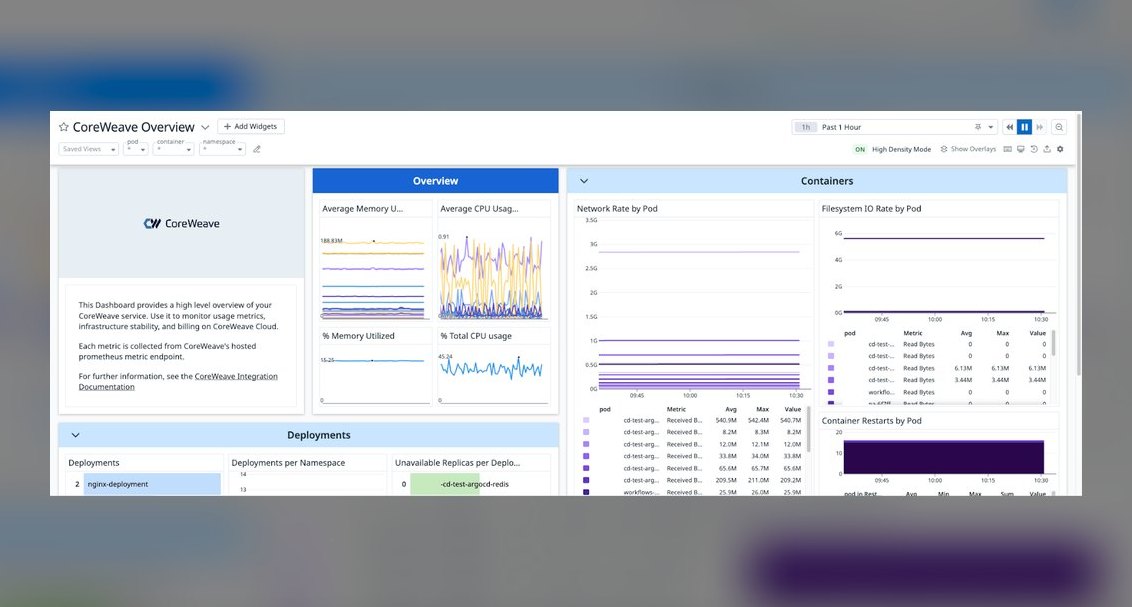 pulse-recentThe 10 Best Tools for Detecting Idle and Underutilized GPU Spend in 2027
 pulse-recentThe 10 Best AI Infra Budget Templates for Enterprises in 2027
 pulse-recentThe 10 Best AI Cost Estimation Calculators in 2027
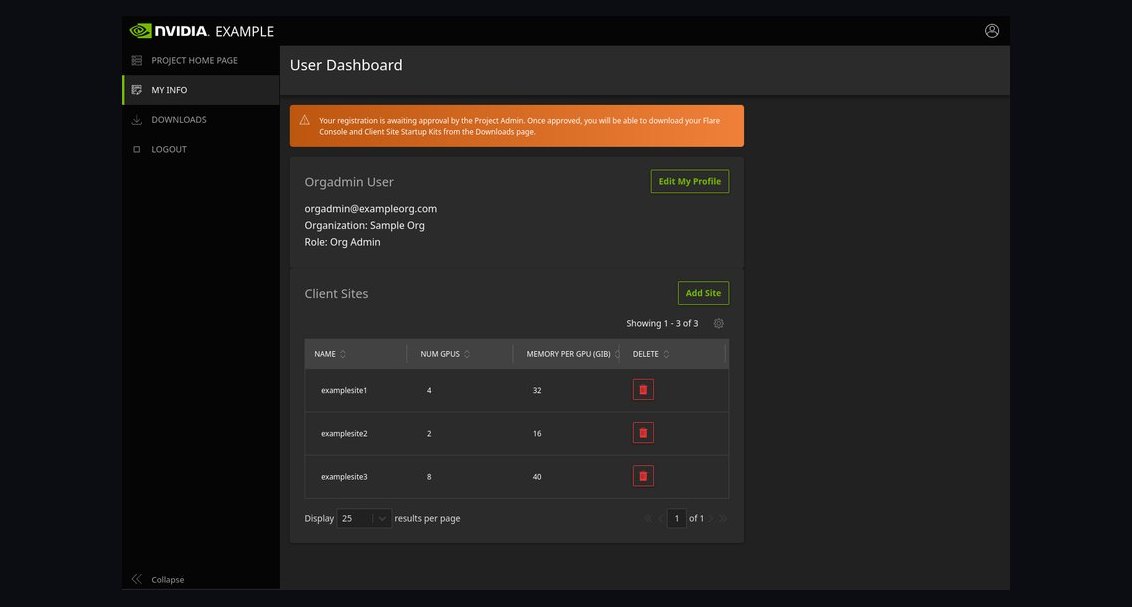 pulse-recentThe 10 Best AI Tools for Federated Learning in 2027
 pulse-recentThe 10 Best AI Infrastructure Budgeting Tools for Startups in 2027
 pulse-recentThe 10 Best AI Tools for Forecasting Multi-Year GPU Budget Growth in 2027
 pulse-recentThe 10 Best AI Infra Cost Calculators for Enterprise Teams in 2027
 pulse-recentThe 10 Best Idle GPU Detection Tools for AI Infrastructure in 2027
 pulse-recentThe 10 Best AI Infra Cost Benchmarking Tools in 2027
 pulse-recentThe 10 Best AI Infra Budgeting Strategies for Startups in 2027