


How do you plan GPU capacity when hardware lead times stretch for months in 2027?
Quality
Certified

Plan GPU capacity for 2027 by contracting supply 9–15 months before you need it, not when demand appears. Convert forecasts into a committed floor plus flexible ceiling, lock allocations with deposits, and treat lead time as a planning input rather than a surprise. Buffer with reserved instances, secondary markets, and workload scheduling that tolerates delay.
What it is and why it matters
GPU capacity planning under long lead times is the practice of deciding how much accelerated compute you will own, rent, or reserve — and when to commit — knowing that delivery of new hardware may take many months. In a normal market, you buy capacity when you need it. In a constrained market, you buy capacity before you need it, because the gap between order and delivery is measured in quarters, not weeks. When lead times stretch for months, the planning horizon moves from "what do we need this quarter" to "what will we need in four to six quarters, and what are we willing to pay now to guarantee it exists."
Why this matters more in 2027 than in earlier cycles: demand for training and inference capacity has grown faster than fab, packaging, and system-integration capacity can respond. Advanced packaging, high-bandwidth memory, and rack-scale integration are all gating steps, and each has its own multi-month queue. A single constraint — say, HBM stacking capacity — can push system lead times out even when the GPU die itself is available. That means your procurement calendar is no longer a purchasing function; it is a strategic planning function that sits alongside financial planning and product roadmapping.
The consequences of getting it wrong are asymmetric. Over-order and you carry idle capital and depreciation. Under-order and you cannot ship the product, cannot serve the customer, and cannot recover the lost quarter — because you cannot buy your way out of a shortage when everyone else is also short. So the goal is not to predict demand perfectly. It is to build a portfolio of commitments that is robust across a range of demand outcomes, with explicit triggers for adding or releasing capacity.
Three forces drive the planning problem:

- Supply concentration. A small number of fabs, packaging houses, and system integrators serve the entire market. Any disruption — a yield problem, a power event, a geopolitical restriction — propagates to everyone.
- Demand lumpiness. A single large customer or a single new model can absorb a meaningful share of available capacity. Demand does not arrive smoothly; it arrives in steps.
- Commitment asymmetry. Vendors reward early, large, and flexible commitments. Buyers who wait pay more, get less, and get it later. The market clears on relationships and deposits, not on spot orders.
Practitioners therefore treat GPU capacity as a supply-chain problem with financial engineering layered on top: reservations, options, take-or-pay contracts, secondary-market liquidity, and workload elasticity. The planning cadence is monthly, but the commitment cadence is quarterly or semi-annual, because that is the granularity at which vendors will negotiate.
The step-by-step process
The process below assumes you are planning for a horizon 12–18 months out, which is the realistic window when lead times stretch for months. It is deliberately sequential: each step produces an artifact the next step consumes.

Step 1 — Build a demand model in GPU-equivalents, not dollars. Translate every workload into a common unit: GPU-hours per month at a reference accelerator class. Training jobs, fine-tuning, batch inference, and real-time inference all convert differently. A training run that takes 10,000 GPU-hours is not the same as 10,000 hours of inference, because utilization profiles and memory requirements differ. Produce three scenarios — conservative, base, aggressive — with explicit assumptions about model size, token volume, and customer growth. The output is a monthly GPU-hour requirement per scenario, with a peak-to-average ratio.
Step 2 — Convert GPU-hours into physical systems. Divide by realistic utilization (typically 60–75% for shared clusters, higher for dedicated training) and by the number of GPUs per node. Add redundancy for failures and maintenance. This gives you a node count per scenario per quarter. Then map node types: training clusters want high-bandwidth interconnect and large memory; inference fleets want throughput per watt and dense deployment. You will likely need two or three distinct SKU families, not one.
Step 3 — Map supply options to each requirement. For each node type and quarter, list the ways you can obtain it: direct purchase, reserved instance, committed-use discount, on-demand cloud, spot/preemptible, colocation with your own hardware, or secondary-market resale. Each option has a different lead time, price, and flexibility. Build a supply ladder from most-committed to most-flexible.
Step 4 — Quantify lead time per option. Direct purchase of new systems: 6–15 months depending on SKU and vendor relationship. Reserved cloud capacity: 1–6 months, often gated by availability zones. On-demand cloud: immediate but subject to regional scarcity. Spot: immediate but interruptible. Secondary market: weeks to months, variable quality and warranty. Write these down as distributions, not point estimates, because lead times themselves are uncertain.

Step 5 — Set a committed floor and a flexible ceiling. The floor is the capacity you are confident you will use in the conservative scenario. Commit to it with deposits or take-or-pay terms. The ceiling is the capacity you would want in the aggressive scenario. Cover the gap between floor and ceiling with options: reserved capacity you can release, cloud commitments with burst clauses, and secondary-market relationships. The floor should be 60–80% of base-case demand; the ceiling should be 110–130% of aggressive-case demand.
Step 6 — Stagger commitments across quarters. Do not commit everything at once. If you commit in Q1 for Q4 delivery, you have no ability to adjust. Instead, commit in tranches: a firm tranche 12 months out, a semi-firm tranche 9 months out, and a flexible tranche 6 months out. Each tranche has a trigger condition — a demand threshold, a funding milestone, or a customer contract.
Step 7 — Build the release and reallocation playbook. Decide in advance what you will do if demand comes in below the floor: resell on the secondary market, sublease to partners, repurpose for internal research, or renegotiate with the vendor. Decide what you will do if demand exceeds the ceiling: activate spot, rent from competitors' clouds, or delay non-critical workloads. Write the decision rules before the pressure arrives.
Step 8 — Run a monthly supply review. Track four numbers: committed capacity, delivered capacity, utilization, and forecast accuracy. Compare delivered to committed — if a vendor slips, you need to know in weeks, not quarters. Compare forecast to actual — if your demand model is consistently off by 30%, your floor is wrong. Adjust tranche triggers accordingly.
The loop matters. This is not a one-time plan; it is a control system. Each month you re-measure and re-trigger. The discipline is in refusing to make large irreversible commitments without a trigger, and in refusing to wait for perfect information before making small reversible ones.
Costs, timelines, and typical ranges

Numbers in this space move, so treat the following as planning ranges rather than quotes. The point is the shape of the cost curve, not the exact figures.
Lead times. New system orders in a constrained market commonly run 6–15 months. High-end training systems with advanced packaging and high-bandwidth memory sit at the long end. Inference-optimized SKUs are often shorter, 3–9 months. Cloud reserved capacity is typically 1–6 months, but popular regions and instance families can be unavailable for longer. Secondary-market hardware can be sourced in 2–8 weeks if you accept older generations and limited warranty.
Price premiums. Committing early typically earns a discount of 5–20% versus on-demand list, depending on volume and term. Committing late, or buying spot during a shortage, can cost 1.5–3x the committed rate. The spread between committed and spot is the price of flexibility — and it is usually worth paying for the flexible tranche, because the alternative is not being able to serve demand at all.
Capital versus operating trade-off. Owning hardware gives you the lowest cost per GPU-hour at high utilization (often 40–60% below cloud on-demand rates) but requires 3–5 year depreciation, power and cooling, and staff. Renting gives you flexibility and no capital outlay but a higher per-hour rate. Most organizations land on a hybrid: own the base load, rent the peak.

Utilization economics. A cluster running below roughly 50% utilization rarely beats cloud on cost. Above 70%, owned hardware usually wins. This is why the committed floor should be sized to conservative demand — you want the owned base to stay above the break-even utilization even in a bad quarter.
Hidden costs. Power and cooling for high-density racks can add 20–40% to the effective cost per GPU-hour. Networking for training clusters — high-bandwidth, low-latency fabric — is a meaningful line item and often has its own lead time. Staffing for cluster operations is a real constraint; experienced GPU infrastructure engineers are scarce and expensive.
Timeline for the planning process itself. A full capacity plan takes 6–10 weeks to build the first time: 2 weeks for demand modeling, 2 weeks for supply mapping, 2 weeks for financial modeling, and 2 weeks for review and negotiation. After that, the monthly refresh takes 3–5 days. Do not compress this. A plan built in a week is a guess with a spreadsheet attached.
Typical commitment structures. Vendors commonly offer: firm orders with 20–50% deposits; take-or-pay contracts over 12–36 months; reserved capacity with a usage floor and burst above it; and framework agreements that set price and priority without fixing volume. The framework agreement is often the most valuable artifact, because it converts a future negotiation into an administrative step.
Sensitivity. A 20% error in demand forecast, combined with a 3-month lead-time slip, can create a 40–60% gap between what you have and what you need in a given quarter. That is why the flexible tranche exists. If your plan cannot absorb a 20% forecast error and a 3-month slip simultaneously, it is too brittle.
Where teams get it wrong

Mistake 1 — Planning in dollars instead of GPU-hours. A budget is not a capacity plan. If you approve $50M for compute, you still have to decide which SKUs, which quarters, and which commitment structure. Teams that plan in dollars discover too late that the money cannot buy the capacity because the capacity is already allocated.
Mistake 2 — Treating lead time as a constant. Lead times stretch and contract. A vendor quoting 6 months in January may quote 12 in June. If your plan assumes a fixed lead time, you will be wrong in exactly the quarter that matters. Model lead time as a distribution and re-measure monthly.
Mistake 3 — Committing everything at the floor. If you commit only to conservative demand, you have no upside. When the aggressive scenario materializes, you cannot serve it. The floor is a floor, not a target.
Mistake 4 — Committing everything at the ceiling. If you commit to aggressive demand and it does not materialize, you carry idle capacity and depreciation. This is the more common error in organizations that have been burned by shortages — they overcorrect and build a cost problem.
Mistake 5 — Ignoring the release path. Teams negotiate hard on the way in and never think about the way out. If you cannot resell, sublease, or repurpose committed capacity, you have no downside protection. Negotiate release terms at the same time you negotiate price.
Mistake 6 — Single-vendor dependency. If all your capacity comes from one vendor or one cloud, a single supply disruption or pricing change hits your entire plan. Diversify across at least two vendors and, where possible, two deployment models (owned plus cloud).
Mistake 7 — No trigger discipline. A plan without triggers is a wish. Every tranche needs a condition: "commit tranche 2 when signed customer contracts exceed X" or "activate spot when utilization exceeds 85% for two consecutive weeks." Without triggers, decisions get made by whoever is loudest in the meeting.
Mistake 8 — Forgetting the workload side. Capacity planning is not only a supply problem. If you can make workloads more efficient — better batching, quantization, scheduling, checkpointing — you reduce the capacity you need. Teams that only negotiate supply and never touch demand leave money on the table.
Mistake 9 — Underestimating power and space. A GPU cluster is a power and cooling project as much as a compute project. If your data center cannot deliver the density, the GPUs sit in crates. Plan power and cooling with the same lead time as the hardware.
Mistake 10 — No forecast accuracy tracking. If you never measure how wrong your forecasts were, you never improve. Track forecast versus actual every month and publish the error. The number is uncomfortable and useful.
Decision framework: when to choose what
The framework below maps demand certainty and time horizon to the right supply instrument. The logic: the more certain the demand and the longer the horizon, the more you should commit. The less certain and the shorter, the more you should rent.
High certainty, long horizon (12+ months): Own or take-or-pay. This is your base load. Negotiate hard on price, warranty, and release terms. Expect to commit 60–80% of conservative demand here.
High certainty, medium horizon (6–12 months): Reserved cloud or framework agreement. You know you will need it, but you want the option to adjust SKU mix. Lock price and priority, not exact volume.
Medium certainty, long horizon: Reserved capacity with burst clauses. Commit to a floor and pay for the right to exceed it. This is the flexible ceiling instrument.
Low certainty, any horizon: On-demand and spot. Do not commit capital to demand you cannot see. Use spot for interruptible workloads — batch inference, experimentation, non-critical training.
Urgent, unplanned need: Secondary market and competitor cloud. Expensive and imperfect, but available. Keep relationships warm before you need them.
Regulated or data-residency-constrained: Colocation with owned hardware. You control the location and the data path. Accept the capital cost and the operational burden.
Two rules govern the framework. First, never commit capital to demand you cannot see — certainty, not optimism, drives commitment. Second, always negotiate the exit at the same time as the entry. The release path is what makes a commitment safe.
Related questions
How far in advance should you order GPUs when lead times stretch for months?
Order 9–15 months before need for new systems, 1–6 months for reserved cloud. Stagger orders in tranches so you can adjust. The first tranche should be firm, the last flexible. Re-measure lead times monthly, because they move.
What is a committed floor and a flexible ceiling in GPU capacity planning?
The floor is capacity you are confident you will use in a conservative scenario — commit to it. The ceiling is what you would want in an aggressive scenario — cover the gap with options. Floor at 60–80% of base demand, ceiling at 110–130% of aggressive demand.
How do you handle a GPU vendor slipping a delivery date by months?
Track delivered versus committed monthly so you detect slips in weeks. Have a pre-agreed contingency: activate spot, rent from a second vendor, or delay non-critical workloads. Negotiate slip remedies — credits, priority reallocation — into the original contract.
Should you own GPU hardware or rent it when lead times are long?
Own the base load if utilization will exceed roughly 70% and demand is certain. Rent the peak and the uncertain demand. Most organizations run a hybrid: owned base plus cloud burst. Owning below 50% utilization rarely beats cloud on cost.
How do you forecast GPU demand when model sizes keep changing?
Forecast in GPU-hours per workload, not in dollars or node counts. Model three scenarios with explicit assumptions. Track forecast error monthly. Build the plan to absorb a 20% forecast error and a 3-month lead-time slip simultaneously.
FAQ
How do you plan GPU capacity when hardware lead times stretch for months in 2027?
Plan by committing supply 9–15 months before need, converting demand forecasts into GPU-hours, mapping supply options to each requirement, and setting a committed floor plus a flexible ceiling. Stagger commitments across quarters with explicit triggers, negotiate release terms upfront, and run a monthly supply review that tracks delivered versus committed capacity, utilization, and forecast accuracy. The plan must absorb a 20% forecast error and a 3-month lead-time slip without failing.
What is the biggest mistake teams make when lead times are long?
Committing everything at once, either at the floor or the ceiling. Committing at the floor leaves no upside; committing at the ceiling creates idle capacity and depreciation if demand disappoints. The fix is tranching: firm commitments early, flexible commitments later, each with a trigger condition tied to demand, funding, or signed contracts.

How do you model lead time when it keeps changing?
Treat lead time as a distribution, not a point estimate. Collect quotes from multiple vendors, track how quotes have moved over the past year, and model a range — for example, 6–15 months for new systems. Re-measure monthly. Build the plan so it survives the long end of the range, not the average.
What role does the secondary market play in GPU capacity planning?
The secondary market is a release valve in both directions. It lets you acquire capacity faster than new orders when you are short, and it lets you dispose of committed capacity when demand disappoints. Keep relationships warm before you need them, and accept that secondary hardware is often older generation with limited warranty.
How do you decide between owning GPUs and renting cloud capacity?
Own when demand is certain, utilization will exceed roughly 70%, and you have the power, cooling, and staff to operate the cluster. Rent when demand is uncertain, when you need capacity quickly, or when utilization would fall below roughly 50%. Most organizations should run a hybrid, with owned base load and cloud burst.
How often should the capacity plan be refreshed?
Refresh monthly. The monthly review should take 3–5 days and cover four numbers: committed capacity, delivered capacity, utilization, and forecast accuracy. Rebuild the full plan quarterly or when a major assumption changes — a new customer contract, a vendor slip, or a significant shift in model architecture.
Sources
- NVIDIA Data Center GPU documentation: https://www.nvidia.com/en-us/data-center/
- TSMC investor relations and capacity commentary: https://investor.tsmc.com/english
- SEMI semiconductor equipment and materials reports: https://www.semi.org/en
- Uptime Institute data center power and cooling guidance: https://uptimeinstitute.com/
- Gartner semiconductor and AI infrastructure research: https://www.gartner.com/en
- McKinsey semiconductor supply chain analysis: https://www.mckinsey.com/industries/semiconductors/our-insights
- Dell'Oro Group data center infrastructure reports: https://www.delloro.com/
- IDC AI infrastructure spending forecasts: https://www.idc.com/
- Lawrence Berkeley National Laboratory data center energy studies: https://eta.lbl.gov/
- U.S. Department of Energy data center efficiency resources: https://www.energy.gov/eere/buildings/data-center-efficiency
Related on PULSE
- How to forecast GPU demand in GPU-hours instead of dollars
- Reserved versus on-demand cloud commitments for AI workloads
- Building a hybrid owned-and-rented GPU fleet
- Negotiating release and resale terms in GPU supply contracts
- Power and cooling planning for high-density GPU racks
- Tracking forecast accuracy in infrastructure capacity planning
This page will be disappearing soon. Save it to your device for $1 — or read it free while it is here.
@Kory-White- · if Venmo asks, the last 4 of my number are 2012
This page is gone.
This one is off the shelf now. $1 keeps it on your phone for good — the whole page, pictures and diagrams included.
 pulse-recentThe 10 Best AI Tools for Cost Estimation in 2027
 pulse-recentThe 10 Best AI Infrastructure Pricing Models in 2027
 pulse-recentHow many infrastructure engineers should you budget for per data scientist when scaling AI infrastructure in 2027?
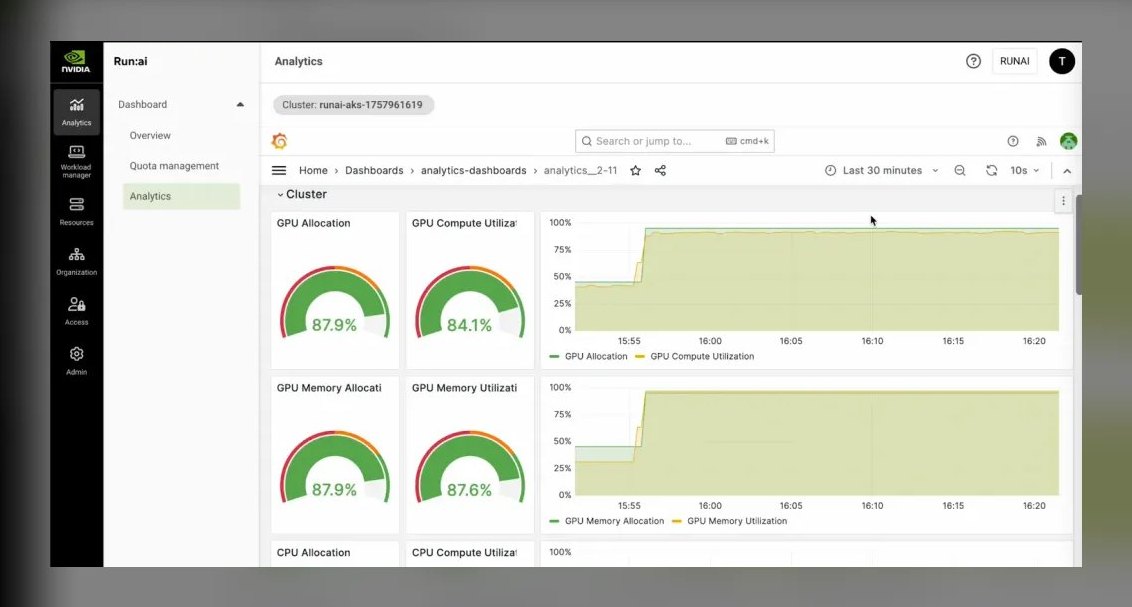 pulse-recentThe 10 Best Chargeback and Showback Tools for Shared GPU Clusters in 2027
 pulse-recentAt what monthly request volume does self-hosting an open-source LLM become cheaper than paying per-token API pricing in 2027?
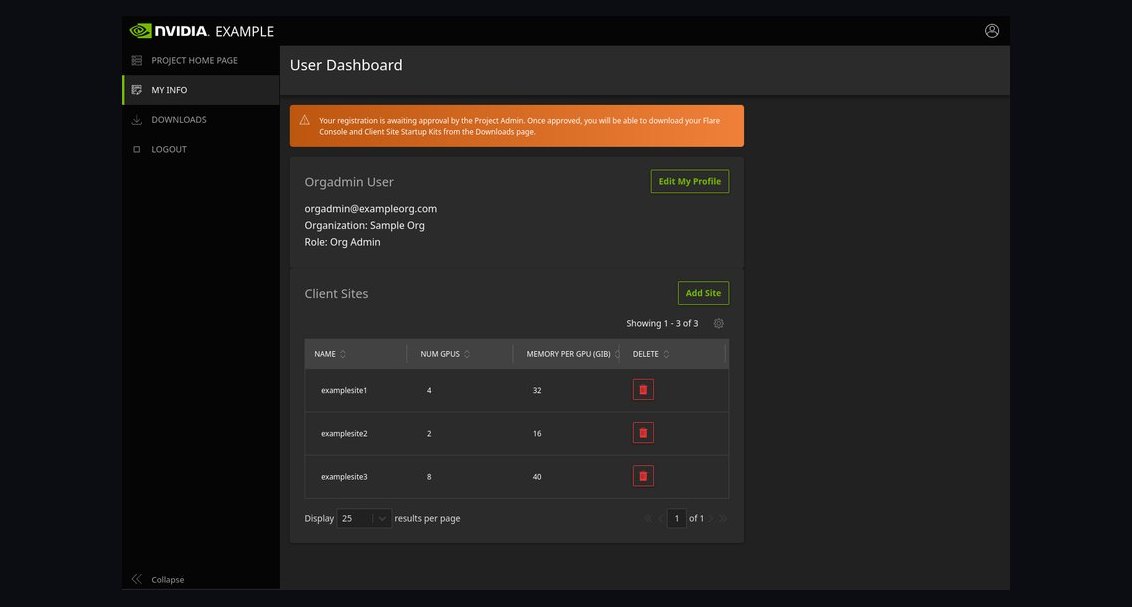 pulse-recentThe 10 Best AI Tools for Federated Learning in 2027
 pulse-recentWhat's a realistic monthly cloud bill for running a RAG application handling 100,000 queries a day in 2027?
 pulse-recentThe 10 Best AI Tools for Estimating Inference Costs in 2027
 pulse-recentThe 10 Best AI Infra Cost per Token Benchmarks in 2027
 pulse-recentThe 10 Best AI Infra Budget Allocation Frameworks in 2027