
Are Triple Net (NNN) Leases Negotiable?
 Curated byKory White · Fractional CRO · Maryland
 PULSEKNOWLEDGE LIBRARY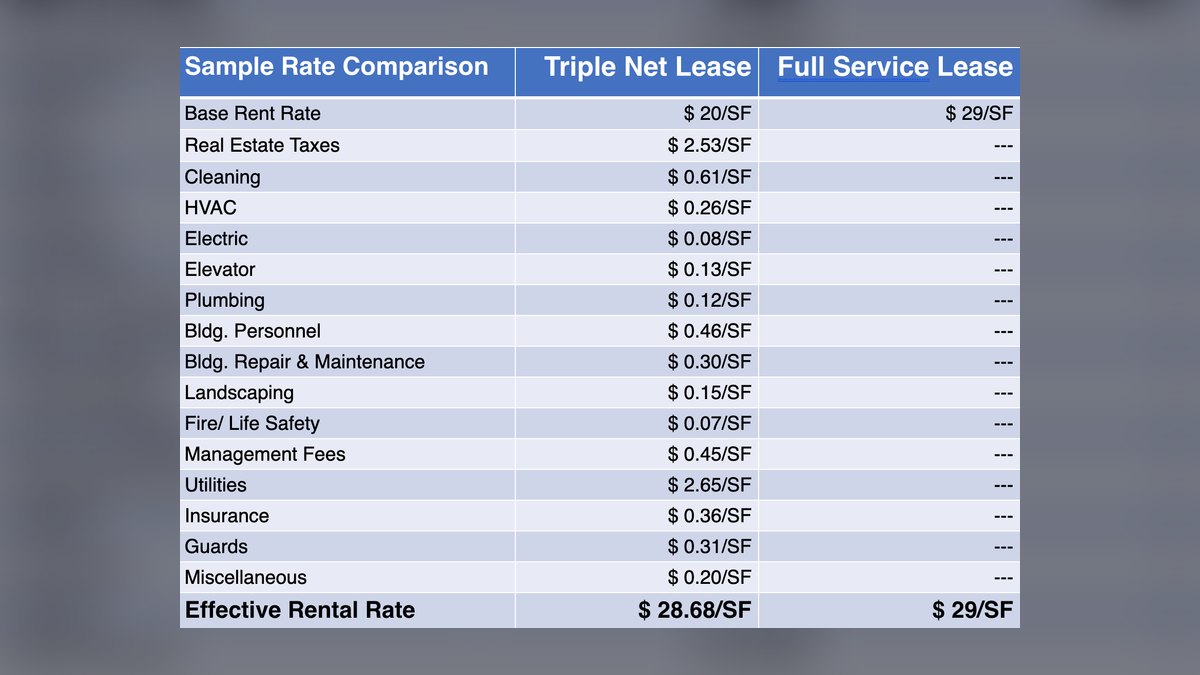
Yes — NNN leases are absolutely negotiable. Landlords call the triple-net load a fixed pass-through, but it is stuffed with soft, padded, negotiable charges. Cap controllable expenses at 3–5% a year, exclude capital costs and landlord overhead, cap management fees, fix the gross-up, and secure an audit right.
What a triple-net lease actually charges you
In a true triple-net lease you pay base rent plus your pro-rata share of three "nets": property taxes, building insurance, and common-area maintenance (CAM). The landlord's pitch is that NNN is pure cost reimbursement, so there is nothing to negotiate. That framing is where tenants lose money, because the base rent gets every ounce of attention while the NNN load quietly stacks another $8–$20 per square foot on top of it.
The math is where the deal reveals itself. On a $28/sq ft base lease, a $14/sq ft NNN load means you are really paying $42/sq ft — a 50% bump most tenants never push back on. On a 5,000 sq ft space that is roughly $70,000 a year of pass-through charges flowing through clauses you were told not to read. Tenants who actually negotiate the NNN — not just the base rent — routinely trim their all-in occupancy cost by $2–$5/sq ft, or $10,000–$25,000 a year on that same 5,000 sq ft footprint.
The reason the load is negotiable is that most of it is discretionary. Taxes and insurance are third-party costs and genuinely hard to move. But the "CAM" bucket is a catch-all where landlords fold in management fees, administrative markups, capital projects, marketing, reserves, and overhead. Each of those is a policy choice the landlord made when drafting the lease, and each one is a line you can cap, exclude, or redefine before you sign. The single most important habit is to stop solving for base rent and start solving for total occupancy cost — base plus NNN — because that is the only number that leaves your bank account.

Where the padding hides in the pass-through
The NNN pass-through looks like a plumbing bill — objective, metered, non-negotiable. In practice it is closer to a menu, and several of the priciest items are the ones landlords hope you never question.
Management and administrative fees are the biggest offender. A landlord may charge 15% of operating costs, or 3–5% of gross rent, sometimes both stacked on top of each other. A fee calculated on gross rent is especially predatory because it lets the landlord earn a second profit on the base rent you already pay. Capital improvements are the next trap: a new roof, a parking-lot repave, or an HVAC chiller is a capital asset with a 15–30 year life, but landlords routinely try to expense the whole $150,000 roof to current tenants over two or three years. Then come the markups — an "administrative" or "overhead" percentage tacked onto every line, so you pay a fee on the fee.

Two subtler mechanisms round out the padding. Gross-up provisions let the landlord bill variable costs as if the building were fully occupied even when it is half empty. And reserves quietly fund the landlord's future capital pool out of your monthly check, converting your rent into their savings account. None of these five is truly fixed, and every one is a negotiation point you can attack line by line.
Once you can see the bill this way, the negotiation stops feeling like haggling and starts feeling like editing. You are not asking the landlord for a favor; you are removing costs that were never supposed to be operating expenses in the first place.
The clauses you must negotiate
There are six clauses that do the heavy lifting in an NNN negotiation, and getting them right is worth more than shaving a dollar off base rent.

Cap controllable expenses. Demand a 3–5% annual cap on controllable operating expenses, non-cumulative so an unused cap does not roll forward into a future spike. Carve out the genuinely uncontrollable nets — taxes and insurance — so the cap bites where it matters: management, landscaping, janitorial, repairs, and security. This is the single most valuable NNN clause because it converts an open-ended liability into a predictable one.
Exclude capital expenditures. A new roof, parking lot, or HVAC system is a capital asset, not maintenance. If the landlord insists on passing capital costs at all, require they be amortized over the asset's useful life so you pay only a sliver during your term — not the entire cost in a couple of years. In a 10-year lease, amortizing a 20-year roof means you fairly owe roughly half of it, not all of it.
Cap the management fee. Push management and administrative fees down to 3–4% of actual operating expenses, and strike any fee calculated on gross rent. Explicitly forbid stacking an "administrative fee" on top of a "management fee," which is how a 4% fee quietly becomes 8%.

Fix the gross-up correctly. Insist variable expenses be grossed up to no more than 95% occupancy so you are not subsidizing empty suites, but block the landlord from grossing up the management fee itself — that inflates a percentage on already-inflated numbers.
Add an audit right. You need the contractual right to inspect the landlord's books after each annual reconciliation, with a clause stating that overcharges above a threshold are refunded and the landlord pays your audit cost. Without this, every number on the statement is unverifiable.

Exclude the usual suspects. Strike from CAM the landlord's leasing commissions, marketing, corporate legal fees, financing and debt service, reserves, capital improvements, and any cost already reimbursed by insurance or warranty. These are institutional-lease standards that get quietly dropped from smaller deals.
How the negotiation actually plays out
Your leverage is highest at the Letter of Intent, before lawyers ever draft the lease. Lock the expense cap, the exclusions, the management-fee cap, the gross-up method, and the audit right into the LOI, because landlords concede far more at the term-sheet stage than they will once the deal is in redline and momentum is on their side. An item you win in the LOI costs you a sentence; the same item in the lawyer's markup costs you weeks and goodwill.
Bring market data to the table. Pull submarket operating-expense reports from CBRE, JLL, or Cushman & Wakefield showing typical NNN loads for comparable buildings, and quote the number in writing. If the building's NNN runs $16/sq ft while comparable buildings run $11–$12/sq ft, that four-dollar gap is your entire negotiation, and a documented comp is far harder to wave away than an opinion. A tenant-rep broker is the cheapest leverage available — the landlord pays the commission, so the representation costs you nothing, and a good broker already knows which landlords pad CAM and which numbers on the estimate are soft.
After signing, the fight moves to the annual reconciliation, or "true-up." The landlord estimates the year's expenses, you pay monthly against that estimate, and once a year they reconcile actual costs against what you paid. Review that statement line by line every single year — not to be difficult, but because reconciliations are where a padded management fee or an improperly gross-up expense finally shows up as a real dollar figure. If controllable costs jumped more than your cap allows, that is exactly what the audit right exists for. The tenants who save the most are not the ones who negotiated hardest at signing; they are the ones who kept reading the bill afterward.
NNN vs. gross vs. modified gross — don't get switched
Before you negotiate the load, make sure you know which structure you are actually signing, because landlords sometimes label a deal "NNN" to shift more risk onto the tenant than the headline rent suggests.
A full-service or gross lease is one rent number with the landlord paying the nets. It is the simplest structure, but the base rent is higher and often carries a base-year or expense-stop provision — negotiate the base year to be the year you take occupancy, not an artificially low prior year that guarantees you pay "increases" from day one. A modified gross lease has you paying base rent plus some expenses, often just utilities and janitorial; the trap here is vagueness, so pin down exactly which expenses in writing. A triple-net lease carries the lowest base rent because you shoulder taxes, insurance, and CAM — it looks cheap on the flyer and only reveals its true cost once the load lands.
This is why you always solve for total occupancy cost, never base rent alone. A landlord quoting "$24/sq ft NNN" against a competitor's "$36/sq ft full-service" may be the more expensive deal once a $14/sq ft load is added, pushing the real number to $38 all-in. The rent per square foot on the marketing sheet is a headline, not a price. Compare apples to apples by building both deals out to their fully loaded annual cost, and the "cheaper" NNN deal frequently turns out to be the pricier one.
The gross-up provision, decoded
The gross-up provision is the most overlooked negotiable component in an NNN lease, and it can move real money. It lets the landlord calculate your share of variable expenses — utilities, janitorial, snow removal — as if the building were fully occupied even when it is not. If the building sits at 70% occupancy, an uncapped gross-up still bills you as though every suite were full, inflating your variable charges by a meaningful margin in a soft market.

Work a concrete example. On a 50,000 sq ft building where your space is 10,000 sq ft, you hold a 20% pro-rata share. A full gross-up applied to a $200,000 variable expense pool would bill you $40,000. But if actual occupancy is only 70%, a fair share tied to real occupancy is closer to $28,000 — a gap of roughly $12,000 a year that exists purely because of the gross-up methodology, not because of any actual service you received.
The fixes are straightforward to ask for. Negotiate a gross-up tied to actual occupancy, or to a weighted-average occupancy over the trailing twelve months so a single low month does not distort the year. Cap the gross-up at no more than 95% occupancy, which stops the landlord from billing you for a fully-leased building that does not exist. And push for a "no gross-up on controllable expenses" clause — many landlords will accept it, especially in a soft leasing market where they would rather sign you than argue. The point of the gross-up is legitimate: it prevents early tenants in a lease-up building from carrying costs that should scale with occupancy. But left uncapped, it flips from a fairness mechanism into a padding mechanism, and the difference between those two is entirely in the clause language.
Capital-expenditure caps and replacement reserves
Capital expenditures are where an NNN lease can hand you a five- or six-figure surprise. Roof replacements, HVAC overhauls, and parking-lot repaving can run anywhere from $50,000 to $500,000 or more depending on the building's age and condition. These are not recurring operating costs, yet many leases treat them as ordinary pass-throughs with no ceiling, so a single roof failure in year three can dwarf your entire annual CAM bill.

There are two clean ways to cap the exposure. The first is a hard CapEx cap — a per-square-foot ceiling on capital pass-throughs each year, with anything above it paid solely by the landlord. On a modest per-foot cap and a 10,000 sq ft space, that turns an unbounded liability into a known annual number in the low thousands. The second is a replacement reserve: the landlord sets aside a fixed amount per square foot each year for future capital needs, and you are responsible only for funding that reserve, not for whatever the actual bill turns out to be. Either structure converts an unpredictable, lumpy liability into a smooth, budgetable line item.
Layer amortization on top of whichever you choose. Any capital expenditure that extends an asset's useful life — a new roof rated for 20 years replacing one with 5 years left — should be amortized over the new life, not charged to you in a single year. In a 10-year lease that treatment alone can cut your share of a major replacement roughly in half, because you only occupy the building for part of the new asset's life. Also demand a "no double recovery" clause so a cost covered by a manufacturer's warranty or an insurance payout never reappears on your NNN statement. If the HVAC compressor is under warranty, that replacement is not your expense, and the lease should say so explicitly rather than leaving it to the reconciliation to sort out.

Audit rights and expense recovery
Most tenants never audit their NNN charges, and landlords count on exactly that. A typical lease may nominally grant a review right, but wraps it in a tight window — sometimes just 30 to 90 days from the reconciliation statement — and pointedly omits any right to recover overcharges once that window closes. A review right you cannot realistically exercise, and that returns nothing even when you find an error, is not protection; it is decoration.
Negotiate real teeth. Ask for a 12–24 month audit window from receipt of the annual reconciliation, and the right to hire a third-party auditor at your own expense, with the landlord reimbursing your audit cost when overcharges exceed a stated threshold. That cost-shifting clause is what makes the audit worth running, because it means finding real errors is close to free. Pair it with a "no double recovery" clause so the landlord cannot bill you for anything already covered by warranty, insurance, or another tenant's share, and with explicit expense-recovery language that caps the management fee and excludes corporate overhead, legal fees, and marketing.
The dollars justify the effort quickly. On a $500,000 annual NNN pool, a 6% management fee is $30,000; capping it at 4% saves $10,000 a year, every year of the term. These clauses are standard in institutional leases precisely because sophisticated tenants insist on them — they are frequently omitted from smaller deals only because nobody asked. They are highly negotiable, and asking is the entire cost of admission.
Related questions
Can I negotiate a fixed NNN amount instead of a variable pass-through?
Sometimes. In softer markets, landlords may agree to a fixed or capped NNN for the first few years to close a deal, which trades some upside for budget certainty. It is more common with smaller private landlords than institutional owners, and usually pairs with a modestly higher base rent.
Are property taxes and insurance really non-negotiable in NNN?
They are the hardest line items because they are genuine third-party costs, but you still have room. You can negotiate how your pro-rata share is calculated, add a gross-up cap so vacancies do not inflate your share, and require the landlord to pass through any tax appeal savings they win.
Does negotiating NNN terms hurt the landlord relationship?
Not when handled professionally. Landlords expect NNN negotiation and generally respect a tenant who asks for a fair, transparent lease rather than one who never reads the pass-through. Framing requests around clarity and standard institutional terms tends to strengthen the relationship, which helps at renewal.
What NNN increase cap is considered standard?
A 3–5% annual cap on controllable expenses is common in negotiated leases and widely accepted as reasonable. Without a cap, controllable costs can rise substantially in a single year on the back of unexpected repairs or fee increases, so the cap is a routine, low-drama ask.
What if the landlord flatly refuses to negotiate the NNN?
You still have leverage, especially where vacancy is meaningful. Counter with a shorter term, a slightly higher base rent in exchange for NNN caps, or simply the willingness to walk. If a landlord will not offer basic transparency on pass-throughs, that itself is information about the deal.
FAQ
Are NNN expenses really negotiable, or do landlords just pass them through? They are negotiable. Landlords often present NNN costs as fixed pass-throughs, but you can negotiate annual caps, exclusions for items like management fees and capital reserves, and even a fixed NNN for the first few years. Many tenants cut total occupancy cost by 5–15% just by pushing back on these line items.
Which specific NNN costs can I negotiate? Commonly negotiable items include property management fees, CAM caps, landscaping, snow removal, janitorial, security, and how insurance and taxes are allocated. Some tenants negotiate a base-year structure and pay only increases beyond the first year. Landlords may resist individual items, but negotiating the bucket is standard practice.
Can I cap how much the NNN rises each year? Yes. Non-cumulative annual caps of 3–5% on controllable expenses are a routine ask and protect you from a single bad year where repairs or fee hikes push costs up sharply. Keep taxes and insurance carved out of the cap, since those are true third-party costs.
When in the process should I negotiate the NNN terms? At the Letter of Intent, before the lease is drafted. Landlords concede more at the term-sheet stage than in redline, so lock your caps, exclusions, gross-up method, and audit right into the LOI. Winning a point there costs a sentence; winning it later costs weeks.
Do I need a tenant-rep broker to negotiate NNN? It helps, and it is effectively free to you because the landlord pays the commission. A good tenant-rep broker knows which landlords pad CAM, which numbers on the estimate are soft, and what the submarket's typical NNN load actually is — all leverage you would otherwise have to build from scratch.
Are there NNN costs that are genuinely non-negotiable? Property taxes and insurance premiums are the hardest because they originate with third parties. Even there, you can negotiate the calculation method, add a gross-up cap, and require pass-through of any tax-appeal savings. Almost nothing in an NNN lease is truly fixed once you read the clause language.
Sources
- https://www.cbre.com/insights
- https://www.jll.com/en-us/insights
- https://www.cushmanwakefield.com/en/united-states/insights
- https://www.boma.org
- https://www.naiop.org/research-and-publications
- https://www.irem.org
- https://www.nar.realtor/commercial
- https://www.investopedia.com/terms/t/triple-net-lease-nnn.asp
Related on PULSE
- [Gross Lease vs Triple Net (NNN): Which One Actually Saves Me Money?](/knowledge/bo0012)
- [How Do I Avoid Double-Paying Property Taxes in an NNN Lease?](/knowledge/bo0030)
- [What Hidden Fees Show Up in Commercial Leases?](/knowledge/bo0019)
- [Are Land Leases Worth It?](/knowledge/bo0005)
Recently Added — Related
- [What Are the Good and Bad Clauses in a Commercial Lease?](/knowledge/bo0003)
This page will be disappearing soon. Save it to your device for $1 — or read it free while it is here.
@Kory-White- · if Venmo asks, the last 4 of my number are 2012
 boWhat Are the Good and Bad Clauses in a Commercial Lease?
 pulse-recentHow do I calculate a realistic landlord-funded buildout budget for a retail space in 2027?
 pulse-recentWhat percentage of total buildout costs does a landlord typically fund versus what I pay out of pocket in 2027?
 pulse-recentWhat is the average cost of a landlord-funded tenant improvement allowance in 2027?
 buildoutsWhat Is a Construction Draw Schedule and How Do I Avoid Overpaying?
 pulse-recentHow do I budget for a landlord-funded buildout without hidden out-of-pocket costs in 2027?
 buildoutsHow Do I Budget a Call Center or BPO Office Buildout?
 pulse-recentHow Much Do Draw-Inspection and Disbursement Fees Cost on a Landlord-Funded Buildout in 2027?
 pulse-recentHow do I sequence the concrete steps of a buildout to avoid out-of-pocket costs in 2027?
 pulse-recentWhat interest rate do landlords typically charge when they amortize a TI allowance into rent instead of paying it as cash in 2027?