
Are Land Leases Worth It?
 Curated byKory White · Fractional CRO · Maryland
 PULSEKNOWLEDGE LIBRARY
A land lease is worth it only when the term outlives your building and your loan, rent resets are capped, and lender protections are airtight—otherwise the landlord absorbs your improvements at reversion for free. Target 75-to-99-year terms with capped escalations and leasehold-mortgagee protections; anything under 30 years is usually a trap.
What a land lease actually is and why the structure matters
A land lease—used interchangeably with "ground lease"—means you own the building but rent the dirt beneath it, typically for 30 to 99 years, after which the land and every improvement on it revert to the fee owner. That split ownership is the entire story. You are not buying an appreciating asset; you are buying the right to occupy and improve someone else's land for a defined window, then handing it all back.
This structure changes how you should think about the money. In a purchase, land is equity that sits on your balance sheet and (usually) appreciates. In a ground lease, the land is a perpetual operating expense, and the building you construct is a depreciating, expiring asset with a hard end date baked in. Everything that follows—the math, the financing, the negotiation—flows from that one difference. A ground lease can be an excellent tool or a slow-motion wealth transfer to the landowner, and which one you get depends almost entirely on the clauses you negotiate before signing, not on the headline rent number.
The reason so many operators still choose ground leases is that in the right situation they unlock a location or preserve capital in ways that outright ownership cannot. The reason so many regret them is that the give-back at the end, and the reset risk in the middle, are consistently underpriced at signing. Understanding both sides is the whole job.
When a ground lease actually pencils out
There are four situations where a well-structured ground lease earns its keep, and outside them buying usually wins.
Land you could never afford to buy. Corner parcels in dense urban cores trade at prices that make acquisition impossible for most operators. A ground lease puts you on that corner for a fraction of the capital. This is not theory—a meaningful share of retail and quick-service real estate sits on ground-leased land precisely because controlling the location matters more than owning the soil. If the site drives your revenue and you cannot buy it, a lease beats no deal.
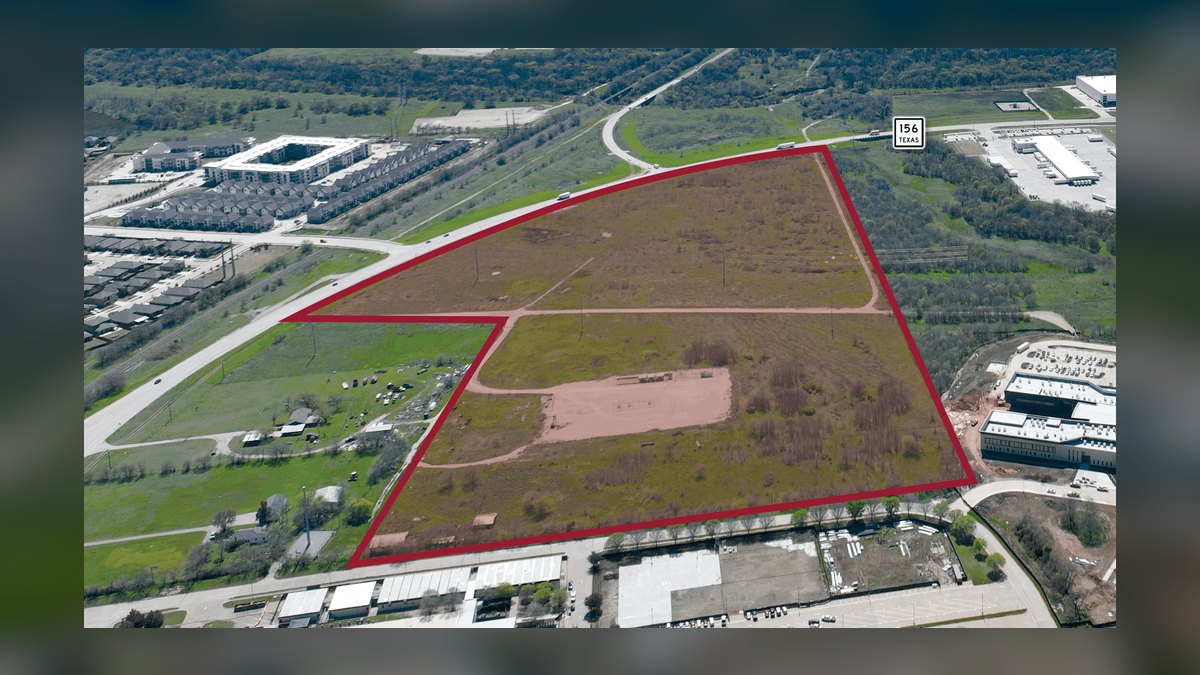
Capital preservation. Land typically represents 20% to 40% of total project cost. On a $5M build where the dirt is worth $1.5M, ground-leasing keeps that $1.5M working inside your operating business instead of frozen in an asset that appreciates slowly. For a growing company, reinvested operating capital often compounds faster than raw land, so the "waste" of paying rent can be more than offset by the productivity of the freed cash.
A long occupancy horizon. If you are putting up a build-to-suit you intend to occupy for 30-plus years, a 75-to-99-year lease behaves almost exactly like ownership. You control the site for its entire useful life and pay rent instead of a land mortgage, and the reversion sits so far in the future that it barely dents the present value of the deal.

A landlord who will not sell. Institutions, universities, ports, churches, family trusts, and municipal entities frequently ground-lease land they are legally or philosophically barred from selling. When a well-located parcel is only available on a lease, a well-structured lease beats no deal at all. The operative phrase is *well-structured*—an unstructured ground lease is exactly where tenants get quietly stripped.
The traps that quietly destroy value
Reversion is the single biggest way ground leases harm tenants, and most people underprice it. At the end of the term, every improvement you built reverts to the landowner for zero compensation unless you negotiated otherwise. Sign a 25-year lease, put up a $4M building, and in year 25 you hand over a $4M asset for nothing. Worse, the damage starts long before expiration: a leasehold's value decays as the clock runs down, so even mid-term you are steadily giving value back to a countdown you cannot pause.

Uncapped rent resets are the second trap. Ground rent commonly runs on the order of 6% to 10% of land value annually and resets on a schedule—often every 5 to 10 years—tied to CPI or, more dangerously, to fair-market reappraisal with no ceiling. An uncapped reappraisal reset can spike your ground rent dramatically in a single cycle, and over a 50-year term those resets can multiply your rent several times over. The defense is a negotiated 2% to 4% annual escalation cap, or fixed-step bumps written into the lease instead of open-market reappraisal.
The third trap is an unfinanceable leasehold. If the remaining term is shorter than a lender's loan term, or the lease omits leasehold-mortgagee protections, banks walk away. You are then limited to all-cash buyers, which can crush resale value substantially because you have amputated most of the buyer pool.

The fourth is subordination exposure. If the landowner's own mortgage is senior to your lease, a landlord default can extinguish your leasehold in foreclosure—you could lose everything you built through no fault of your own. The fix is a non-disturbance agreement from the landowner's lender, or, ideally though rarely available, a subordinated fee where the landlord agrees their interest sits behind yours.
Running the reversion math you cannot skip
Reversion is where ground leases silently erase value, so model it explicitly rather than hand-waving. Start with three numbers: the total improvement cost you are placing on the land (say $4,000,000), the remaining term at the point you would realistically sell, and the decay curve that maps remaining years to leasehold value.
The remaining-term number is the one people miss. If you sell in year 20 of a 50-year lease, your buyer inherits only 30 years before reversion. Push that sale to year 25 and the buyer gets 25 years—and once remaining term drops under roughly 30 years, most lenders refuse to finance it, so your pool of buyers collapses to cash-only and your price falls hard. The leasehold does not lose value linearly; it falls off a cliff as it approaches the financing floor.

The operating rule that keeps you safe: never let the remaining term fall below the next buyer's financing window plus a cushion. The practical mechanism is renewal options—for example, two 25-year extensions you control—so you can reset the clock before the leasehold enters its decay zone. Without renewals, your asset carries a built-in expiration date that gets more expensive to hold every year.
Once you have modeled the give-back, fold it into your return calculation as a terminal cost. A ground lease that looks cheap on annual rent can be expensive once you subtract the residual value you will forfeit at the end. If you cannot negotiate compensation or a purchase option for the fee, at least book the reversion as a known loss so the deal is priced honestly rather than optimistically.

Leasehold financing and the lender's veto
Even a flawless 99-year ground lease is worthless if you cannot borrow against it, and lenders are structurally suspicious of ground leases. The pivotal issue is subordination. If the lease is unsubordinated—meaning the landowner's claim on the land sits ahead of the bank's claim if you default—most banks either refuse to lend or demand a materially higher rate because they cannot cleanly foreclose on the underlying dirt. That risk premium can add roughly 150 to 300 basis points to your financing cost, and that spread alone can turn a workable deal into a losing one.
The non-negotiable protection is a subordination, non-disturbance, and attornment agreement, or SNDA. It ensures that a landlord-side default cannot wipe out your leasehold and that your lender's interest is respected. Insist on the SNDA before you sign, and write a clause requiring the landlord to execute one within a fixed window of your lender's request so it cannot become a stalling tactic later.

Separately, confirm the lease explicitly permits leasehold mortgages—a loan secured by your leasehold interest rather than the fee. Some landlords prohibit them outright, which means you cannot borrow against the value of your own building at all. Beyond mere permission, the lease should grant your lender a package of leasehold-mortgagee protections: notice-and-cure rights so the bank can fix a default you missed, the right to take over the leasehold on default, and a new-lease right that lets the lender obtain a fresh lease on the same terms if the original is terminated. Without those, sophisticated construction and permanent lenders simply will not close, and your financeable universe shrinks to nothing.
How to structure the term sheet so it is worth it
If you are going to do this, treat the term sheet as a checklist and be willing to walk if you cannot get the essentials. On term, demand a minimum of 50 years, target 75 to 99, and layer in renewal options so you can extend and protect resale value down the line. On rent, cap escalations at 2% to 4% per year or use fixed steps, and reject open-ended fair-market reappraisal with no ceiling—that single clause is responsible for most ground-rent horror stories.

On financing, secure the full leasehold-mortgagee package described above plus the SNDA. On reversion, negotiate either compensation for the building's residual value at term end or, better still, a purchase option on the fee so you can buy the land outright later and convert a decaying leasehold into permanent ownership. On flexibility, confirm you can assign or sublease without unreasonable landlord consent—your exit depends entirely on it. Every one of these terms maps to a specific failure mode, and skipping one is how tenants end up trapped.
Think of these five clauses as load-bearing. Weaken any one and the whole structure gets shaky: a great term with uncapped rent still ruins you, and airtight rent caps with no mortgagee protections still leave you unable to finance. The goal of the term sheet is a leasehold that a bank will lend against and a future buyer will pay for—anything short of that produces an asset you cannot exit.
Buy versus ground-lease, the exit, and how to decide
The most useful financial test is a leasehold-versus-fee-simple net present value analysis, and it prevents you from being fooled by the headline rent number. You are modeling three inputs: the land purchase price, the annual ground rent across the full term, and the building's residual value at the end. Say the land costs $2M to buy, or a 75-year lease asks $120,000 a year with 2% annual escalations. The nominal rent over 75 years totals several times the purchase price, which looks far worse than a $2M buy—until you account for what that $2M could earn invested in your business instead. Freed capital compounds meaningfully over decades, and the rent becomes a deductible operating expense rather than trapped equity. The break-even between the two typically lands somewhere between years 20 and 35 depending on your escalators and your true cost of capital, which is exactly why you run the numbers with your actual figures rather than a rule of thumb.

Owning the land gives you no ground rent, full reversion, the easiest financing, and no end-date risk, at the cost of tying up 20% to 40% of project cost in dirt. Ground-leasing gives you lower upfront capital and access to parcels you could not buy, at the cost of perpetual rent, reset risk, the reversion give-back, and financing friction. The clean decision rule: ground-lease only if you cannot or should not buy the parcel, the term comfortably outlives your building and loan, resets are capped, and lender protections are airtight. Miss any one of those four and ownership wins.
Finally, protect your exit before you sign. Land leases lock you in for decades, so the assignment and subletting clause matters enormously—look for consent that "shall not be unreasonably withheld, conditioned, or delayed," and negotiate a permitted-transfers list so moves to affiliates or well-capitalized entities are pre-approved. Ask for a buyout clause—a fixed price or formula to terminate early, which commonly runs several years of remaining rent discounted to present value. A buyout clause turns the lease from a trap you cannot leave into an asset you can value and exit on your terms.
Related questions
How long should a ground lease be to be safe?
Aim for a minimum of 50 years, with 75 to 99 as the standard, plus renewal options. The term must outlive both your building's useful life and your loan amortization so the leasehold stays financeable and sellable rather than decaying toward reversion.
What is reversion in a ground lease?
Reversion is the point at term end when the land and every improvement you built revert to the landowner, usually for no compensation. It is the biggest risk in ground leasing, since a short term means donating your building for free.
Can you get a mortgage on leased land?
Yes, but only if the lease explicitly permits leasehold mortgages and grants your lender protections—notice-and-cure rights, takeover rights, and a new-lease right—plus an SNDA. Without those, most banks refuse or price in a steep premium of roughly 150 to 300 basis points.
Why do fast-food chains and retailers use ground leases?
Ground leases let operators control prime, high-traffic corners they could never afford to buy outright, preserving capital for the operating business. Controlling location often matters more than owning the underlying land for retail and quick-service models.
What is an SNDA and why does it matter?
An SNDA is a subordination, non-disturbance, and attornment agreement. It ensures a landlord-side mortgage default or foreclosure cannot extinguish your leasehold, protecting both your occupancy and your lender's collateral—without it, financing often falls apart.
FAQ
What is a land lease, exactly? A land lease, or ground lease, means you own the building but rent the land underneath it. These typically run 30 to 99 years, and at the end the land and all improvements revert to the landowner unless you negotiated compensation or a purchase option.
Why would anyone choose a land lease over buying the land? It sharply lowers upfront cost by removing the land purchase, freeing 20% to 40% of project capital for construction or the operating business. It also opens access to high-cost or never-for-sale parcels where buying is impossible.
What is the biggest risk with a land lease? Losing your building at term end. After spending heavily on improvements, you hand them to the landlord for free at reversion. That is why the term must cover your building's useful life plus your loan payoff, ideally with renewals.
Can you negotiate a land lease to protect yourself? Yes. Push for a 75-to-99-year term, renewal options, capped rent escalations of 2% to 4%, leasehold-mortgagee protections, an SNDA, free assignment rights, and either reversion compensation or a purchase option on the fee.
Is a land lease ever better than buying the land outright? It can be when land prices are prohibitive, the fee owner will not sell, or you get better returns reinvesting freed capital in the business. It is rarely better for a long-term hold where full control and land appreciation favor ownership.
How do rent resets work and why are they dangerous? Ground rent, often 6% to 10% of land value, resets periodically—every 5 to 10 years—by CPI or fair-market reappraisal. Uncapped reappraisal resets can spike rent sharply in one cycle, so always negotiate a fixed cap or step schedule.
Sources
- https://www.investopedia.com/terms/g/ground-lease.asp
- https://www.cbre.com/insights
- https://www.us.jll.com/en/views
- https://www.cushmanwakefield.com/en/insights
- https://www.naiop.org/research-and-publications/
- https://knowledge.uli.org/
- https://www.cre.org/
- https://www.boma.org/
Related on PULSE
- [What Hidden Fees Show Up in Commercial Leases?](/knowledge/bo0019)
- [Are Triple Net (NNN) Leases Negotiable?](/knowledge/bo0004)
- [How Do Tenant Improvement Allowances Work?](/knowledge/bo0021)
- [What Does NNN Actually Cover in a Commercial Lease?](/knowledge/bo0007)
This page will be disappearing soon. Save it to your device for $1 — or read it free while it is here.
@Kory-White- · if Venmo asks, the last 4 of my number are 2012
 buildoutsHow Should I Structure a Commercial Lease to Protect Myself?
 pulse-recentWhat percentage of total buildout costs does a landlord typically fund versus what I pay out of pocket in 2027?
 buildoutsDo I Need a Grease Interceptor, and What Does It Cost?
 pulse-recentHow much should I set aside for a landlord-funded buildout contingency in 2027?
 buildoutsAs-Is vs Warm Shell vs Turnkey: Which Delivery Saves Me the Most?
 pulse-recentHow much should I budget in cash reserves in case my landlord pays out the TI allowance in installments instead of upfront in 2027?
 boWhat Are the Good and Bad Clauses in a Commercial Lease?
 pulse-recentHow much does a landlord-funded tenant improvement allowance typically cover per square foot in 2027?
 pulse-recentWhat is the average landlord-funded buildout allowance for a 5,000 sq ft retail space in 2027?
 buildoutsHow Do I Negotiate a Build-to-Suit Lease Rate (Cost x Cap)?