
How Do I Budget a Brewery or Taproom Buildout?
 Curated byKory White · Fractional CRO · Maryland
 PULSEKNOWLEDGE LIBRARY
Budget a brewery or taproom buildout at $200–$500 per square foot all-in before brewing equipment, with the production side costing far more than the front of house. The single biggest cost driver is the building itself: a bare shell that looks cheap on rent can require $150 per square foot in retrofits, while a former food-manufacturing space at higher rent may already have the drains, power, and floor you need.
The commercial deal in plain terms
A brewery is two businesses sharing one slab — a manufacturing plant in the back and a bar in the front — and the commercial lease has to serve both. The production side is where the money hides: trench drains, a reinforced floor that can hold full fermenters, a glycol chiller loop, 480-volt three-phase power, a steam or electric boiler, and a grain-and-waste handling path. The taproom side is comparatively cheap — figure $80–$150 per square foot for the front of house. The single biggest money move: pick a building that already has the bones (high clear height, heavy floor, three-phase power, floor drains, a grease-capable sewer connection) so you're not paying to retrofit them. A bare-shell warehouse that *looks* cheap at $12/sq ft rent can cost you $150/sq ft to make brewery-ready, while a former food-manufacturing space at $18/sq ft might already have the drains, power, and floor you need. The lease trap: brewing equipment is heavy and permanent, so you're locked in. Get a 10-year term with options, a fat TI allowance of $40–$80 per square foot, and make absolutely sure the zoning permits production brewing plus on-site sales before you spend a dollar — a taproom in a zone that only allows manufacturing will get shut down, and that's a mistake no concession can fix.
The commercial real estate broker you choose matters enormously. Most tenant rep brokers work retail and office leases and have never seen a glycol loop. You need a broker who understands industrial buildouts, wastewater pre-treatment requirements, and the fact that your equipment is bolted to the slab. Ask any broker you interview: "How many brewery leases have you negotiated?" If the answer is fewer than three, keep looking. A good broker will know which landlords in your market have experience with brewery tenants, which buildings already have three-phase power at the panel, and how to structure a TI allowance that covers the base-building systems — power upgrade, drains, HVAC, grease/wastewater — that stay with the building after you leave.
The NNN and CAM fights matter more for breweries than almost any other tenant. Breweries are heavy users of water, sewer, and sometimes shared parking, so the pass-through clauses bite. On a triple net (NNN) lease you owe base rent plus taxes, insurance, and CAM on top. Cap CAM at 3–5% annually — you're a high-wear tenant; uncapped CAM lets the landlord pass through a re-paved lot or new roof in one painful year. Exclude capital expenditures or amortize them over useful life. A new roof is the landlord's asset, not your annual expense. Pin down who pays for grease/wastewater pre-treatment and surcharges — this is brewery-specific and can be enormous; get it in the lease, not assumed. Negotiate an audit right once per year on the CAM reconciliation. The threat of an audit keeps the landlord honest.
How the buildout process flows
The buildout process for a brewery follows a specific sequence that is different from a retail or office buildout. The production equipment dictates the layout, not the other way around. You cannot design the taproom first and then try to fit a brewhouse into whatever space is left. The process flow looks like this:
Step 1: Site selection and zoning verification. Before you look at a single space, confirm that the zoning permits both manufacturing (brewing) and on-site retail sales (taproom). Many industrial zones allow manufacturing but not bars. Many commercial zones allow bars but not manufacturing. You need a zone that permits both, or a conditional use permit that grants both. This step alone can take 3–6 months in some jurisdictions. Do not sign a lease until you have written confirmation from the zoning department.

Step 2: Building evaluation by a brewery consultant and a structural engineer. Bring in a brewing equipment supplier or a brewery design-build firm to walk the space. They will check: ceiling height (minimum 14 feet for a 10-barrel system, 18+ feet for larger), floor condition (cracks, slope, load-bearing capacity), electrical service (amps, voltage, phase), plumbing (sewer connection size, grease trap, floor drain locations), and HVAC capacity. This walkthrough costs $1,000–$3,000 but saves you from signing a lease on a space that cannot be made brewery-ready for under $200,000 in retrofits.
Step 3: Lease negotiation with brewery-specific terms. Once you know the space can work, negotiate the lease. The key terms are: 10-year term with two 5-year options, TI allowance of $40–$80 per square foot, 4–9 months of free rent during construction, a use clause that explicitly permits production brewing plus on-site retail sales plus events, exclusivity so the landlord cannot lease to a competing brewery, and a demolition/restoration cap at lease end. Landlords love a clause forcing you to rip out everything and restore to shell — that can cost $50,000–$150,000. Cap it or exclude permanent improvements.
Step 4: Design and engineering. Hire an architect and an MEP (mechanical, electrical, plumbing) engineer who have done brewery work before. They will produce: a floor plan showing the production flow (grain in → mill → mash tun → boil kettle → fermenter → brite tank → keg washer → cold storage → taproom), a structural plan for the floor and any mezzanine, an electrical plan showing the panel, conduit runs, and equipment connections, a plumbing plan showing floor drains, trench drains, and sewer connections, and an HVAC plan for the cold side (fermentation room) and the hot side (brewhouse). This phase takes 2–4 months and costs $15,000–$40,000 depending on the complexity.
Step 5: Permitting. Breweries typically need: a building permit, mechanical permit, plumbing permit, electrical permit, fire suppression permit, health department plan review, and sometimes a state alcohol beverage control (ABC) inspection. Some jurisdictions also require a wastewater discharge permit if your brewery produces more than a certain volume of high-strength effluent. Permitting takes 2–6 months depending on the jurisdiction and how busy the plan reviewers are. Budget for a expediter if your timeline is tight — they cost $2,000–$5,000 but can cut permit time in half.
Step 6: Construction and equipment installation. The construction phase runs 4–8 months for a typical brewery buildout. The sequence is: demolition and slab prep → floor drains and trench drains → slab pour and floor coating → electrical service upgrade and panel installation → plumbing rough-in → HVAC installation → wall framing and finishes → brewhouse and tank installation → walk-in cooler installation → taproom bar and finishes → final inspections and certificate of occupancy. The equipment installation is usually done by the equipment supplier or a specialized brewery contractor, not the general contractor. Coordinate the two carefully — the general contractor needs to have the floor ready and the electrical stub in place before the equipment arrives.

Step 7: Commissioning and training. Once construction is complete and the equipment is installed, you need 2–4 weeks to commission the system: test the glycol loop, calibrate the temperature controls, run a test batch through the brewhouse, clean and sanitize all tanks and lines, and train your staff on the equipment. Do not schedule your grand opening for the week after construction finishes — you will have problems, and serving bad beer on opening night is a reputation killer.
Costs per square foot, timelines, and ranges
The all-in cost for a brewery buildout breaks down into three main categories: leasehold improvements (the physical space), brewing equipment, and soft costs (design, permits, legal, insurance). Here are the realistic ranges for each, based on a typical 3,000–5,000-square-foot brewery producing 500–1,500 barrels per year.
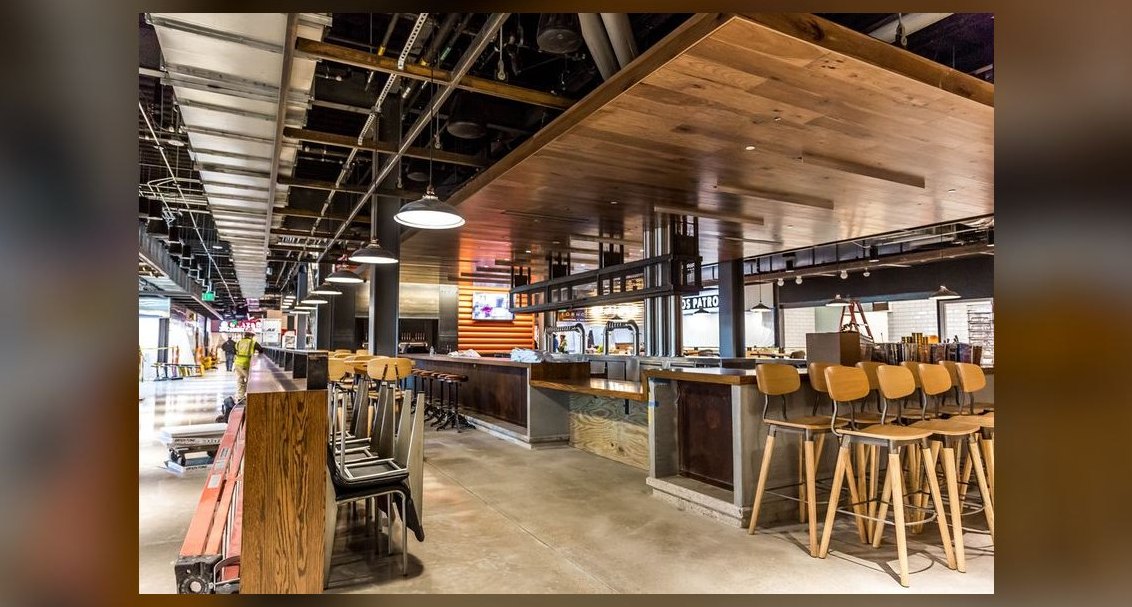
Leasehold improvements: $200–$500 per square foot. This covers everything from the slab to the ceiling, including: floor prep and drainage ($15–$25/sq ft in the production area), electrical service upgrade ($20,000–$100,000 depending on existing service), plumbing and sewer connections ($15,000–$40,000), HVAC for the cold side ($20,000–$50,000), fire suppression retrofit ($8,000–$15,000), wall framing and finishes ($10–$20/sq ft), taproom bar and finishes ($80–$150/sq ft for the front of house), restrooms ($15,000–$30,000 each), and a walk-in cooler ($15,000–$40,000). If the building is a bare shell with no existing infrastructure, budget at the high end of this range. If it's a former food-manufacturing space with drains, three-phase power, and a heavy floor, budget at the low end.

Brewing equipment: $100,000–$500,000. A basic 3–7 barrel brewhouse with fermenters, brite tanks, and serving tanks runs $100,000–$300,000. A 10–15 barrel system runs $300,000–$500,000. The equipment cost includes: the brewhouse (mash tun, boil kettle, whirlpool), fermenters (2–10 depending on capacity), brite tanks, a glycol chiller, a boiler or hot liquor tank, a keg washer, a grain mill, a grain handling system (auger or silo), a CO2 system (tanks, regulators, lines), a cleaning system (CIP cart or automated CIP), and a walk-in cooler for keg storage. Get quotes from at least three equipment suppliers before you budget. Used equipment can save 30–50% but comes with no warranty and may require custom fitting.
Soft costs: $30,000–$80,000. This includes: architectural and engineering fees ($15,000–$40,000), permit fees ($5,000–$15,000), legal fees for lease review ($3,000–$8,000), a brewery consultant ($5,000–$15,000), insurance during construction ($2,000–$5,000), and a contingency of 15–20% of the total hard costs ($50,000–$150,000). The contingency is not optional — every brewery buildout has surprises, and running out of money two weeks before opening is the most common failure mode.

Timeline: 9–18 months from lease signing to opening. The breakdown is: lease negotiation (1–2 months), design and engineering (2–4 months), permitting (2–6 months), construction (4–8 months), and commissioning (2–4 weeks). The permitting phase is the most variable — some jurisdictions approve brewery plans in 2 weeks, others take 6 months. Call the building department before you sign a lease and ask: "How long does a commercial plan review take for a food/beverage manufacturing facility?" If the answer is more than 3 months, factor that into your timeline.
Where budgets and schedules slip
Most first-time brewery owners budget for the obvious line items — brewhouse, fermenters, flooring, bar top, taps — and then get blindsided by the infrastructure that makes the beer possible. Here are the three most common budget-busters that routinely consume the 15–20% contingency you thought was generous.
Electrical service upgrades. A typical 10-barrel brewery needs 400–800 amps of 480-volt three-phase power. If your building only has 200-amp single-phase service (common in older strip malls or warehouse spaces), you're looking at $15,000–$40,000 just to bring new service from the transformer. That includes a new panel, conduit runs, and sometimes a pad-mounted transformer on the property. The utility company may also charge a "service extension fee" that can run $5,000–$15,000 if the nearest three-phase line is down the block. Get a utility letter of availability *before* you sign a lease.
Floor prep and drainage. Brewery floors take a beating — hot caustic, acidic sanitizers, 300-pound kegs dropped, forklift traffic. A standard 4-inch concrete slab with epoxy coating will fail within two years. Proper brewery flooring is a multi-layer system: a vapor barrier, 6+ inches of reinforced concrete sloped to drains (minimum ⅛ inch per foot), a chemical-resistant topping like troweled-on urethane cement or acid-proof brick, and cove base up the walls. Budget $15–$25 per square foot for the production area alone. Trench drains add $75–$150 per linear foot installed, and you'll need at least 40–60 linear feet for a 10-barrel brewhouse. If your building has no floor drains at all, add $5,000–$10,000 for core-drilling through the slab and connecting to the sewer.
HVAC for the cold side. The fermentation room needs to stay at 68°F year-round, even when the brewhouse is pumping out 100°F steam and the taproom is packed with 80°F bodies. A glycol chiller handles the tanks, but the room itself needs a dedicated HVAC system that can handle high humidity and moderate heat loads. Expect $20,000–$50,000 for a split-system or rooftop unit sized for a 1,500–3,000-square-foot production space. If you try to tie it into the taproom's HVAC, you'll either freeze the bartenders or cook the yeast.
Wastewater pre-treatment. This is the single most overlooked cost in brewery budgeting. Brewery wastewater is high in organic load (BOD and COD), temperature, and pH swings. Many municipalities charge surcharges for high-strength wastewater, and some require pre-treatment before discharge. A simple pH neutralization system costs $10,000–$30,000. A full pre-treatment system (pH adjustment, equalization tank, solids separation) costs $50,000–$200,000. If your building is on a septic system, you cannot put a brewery on it without extensive and expensive pre-treatment. Call the local wastewater authority before you sign a lease and ask: "What are the surcharges and pre-treatment requirements for a brewery producing 500–1,500 barrels per year?" Get the answer in writing.
Schedule delays from permitting. The permitting phase is the most common source of schedule slippage. Plan reviewers in many jurisdictions have never seen a brewery plan before and will flag things like "why is there a 4-inch drain in the middle of the floor?" or "what is a glycol chiller?" Each round of comments and resubmission takes 2–4 weeks. If your jurisdiction requires a public hearing for a conditional use permit, add 2–3 months. The best way to avoid this is to hire an architect who has done brewery work in your jurisdiction and knows what the plan reviewers expect to see.
Decision framework
When you are evaluating a potential space for your brewery, use this decision framework to compare options objectively. The goal is to find the lowest all-in cost over the lease term, not the lowest rent per square foot.
Step 1: Calculate the true cost of the buildout. For each space you are considering, estimate the total buildout cost including: leasehold improvements (based on a walkthrough with a brewery consultant), brewing equipment (based on quotes from suppliers), soft costs (design, permits, legal), and a 20% contingency. Add the buildout cost to the total rent over the lease term (including NNN charges). This is your all-in cost.
Step 2: Compare the all-in cost across spaces. A space with $12/sq ft rent but $150/sq ft in retrofits has a higher all-in cost than a space with $18/sq ft rent and $50/sq ft in retrofits, assuming the same square footage and lease term. Run the numbers for each space.
Step 3: Evaluate the TI allowance and free rent. A landlord offering $80/sq ft in TI allowance and 6 months of free rent is effectively reducing your buildout cost by $80/sq ft and your first-year rent by half. Compare the net effective rent (total rent minus free rent divided by lease term) plus the net buildout cost (total buildout cost minus TI allowance). This is your true cost.
Step 4: Check the zoning and use clause. If the space is in the wrong zone or the lease has a restrictive use clause, the all-in cost does not matter — you cannot operate. Verify zoning and lease language before you do any financial analysis.
Step 5: Get a utility letter of availability. Before you sign a lease, get a letter from the utility company confirming that three-phase power is available at the site and what the cost to bring it to the building will be. Also get a letter from the wastewater authority confirming the surcharges and pre-treatment requirements. These two letters can save you from a $100,000 surprise.
Related questions
What is the typical cost per square foot for a brewery or taproom buildout?
Expect to budget between $200 and $500 per square foot for a complete buildout. This range covers everything from basic finishes to high-end taproom designs, but does not include brewing equipment or initial inventory.
How much should I set aside for brewing equipment?
A basic 3–7 barrel brewhouse with fermenters and serving tanks can run from $100,000 to $300,000. Larger systems or custom equipment can easily exceed $500,000, so it is wise to get quotes early.
What are the biggest hidden costs in a brewery buildout?
Plumbing, electrical, and ventilation for a commercial kitchen and brewing area often surprise first-timers. Expect to spend $30,000 to $80,000 on these systems alone, depending on the space's existing infrastructure.
How long does a typical brewery buildout take?
From lease signing to opening day, plan on 9 to 18 months. Permitting and construction delays are common, so building in a buffer of 2–3 months is smart.
Do I need a tenant improvement allowance from my landlord?
Yes, negotiating a TI allowance is critical — it can cover $40 to $80 per square foot of your buildout costs. Without it, you will need to fund the entire project out-of-pocket.
FAQ
What is a realistic total budget for a small taproom-only setup? A simple taproom (no brewing) can cost $150,000 to $400,000, including leasehold improvements, bar equipment, and basic furnishings. This assumes a space under 1,500 square feet with minimal plumbing changes.
How much does a glycol chiller system cost for a brewery? A glycol chiller system sized for a 5–10 barrel brewhouse typically costs $30,000 to $80,000. This includes the chiller unit, pumps, piping, insulation, and installation. Larger systems for 15+ barrel brewhouses can exceed $150,000.
What is the cost difference between new and used brewing equipment? Used brewing equipment typically costs 30–50% less than new, but comes with no warranty, may require custom fitting, and often needs refurbishment. Budget 10–20% of the purchase price for refurbishment and installation modifications.
How much should I budget for wastewater pre-treatment? A pH neutralization system costs $10,000–$30,000. A full pre-treatment system with equalization and solids separation costs $50,000–$200,000. Call your local wastewater authority before signing a lease to get specific requirements and surcharge rates.
What is a typical CAM cap for a brewery lease? Negotiate a CAM cap of 3–5% annual increase. Breweries are high-wear tenants, and uncapped CAM can result in large pass-throughs for roof replacement, parking lot repaving, or HVAC replacement. Exclude capital expenditures from CAM entirely.
How long does it take to get a brewery permit? Permitting typically takes 2–6 months, depending on the jurisdiction and whether a conditional use permit is required. Call the building department before signing a lease and ask for their typical plan review timeline for a food/beverage manufacturing facility.
Sources
- Brewers Association, *Brewery Operations & Facility Planning Resources* — production layout, utility, and wastewater guidance.
- CBRE, *Industrial & Manufacturing Tenant Real Estate Trends* — heavy-use leasing and TI benchmarks.
- JLL, *Industrial Buildout Cost Guide* — three-phase power, floor, and drainage construction ranges.
- Cushman & Wakefield, *Tenant Representation: Negotiating Industrial Leases and TI* — term, free rent, and restoration-cap norms.
- RSMeans Building Construction Cost Data — trench drain, slab, electrical, and HVAC unit costs.
- NAIOP, *Industrial Development Cost Benchmarks* — ground-up and retrofit construction data.
- BOMA International, *CAM Reconciliation and Operating Expense Pass-Through Standards* — NNN audit-right guidance.
Related on PULSE
- [How Do I Budget a Funeral Home Buildout?](/knowledge/bo0220)
- [How Do I Budget an Ambulatory Surgery Center Buildout?](/knowledge/bo0219)
- [How Do I Budget an Imaging Center (MRI/CT) Buildout?](/knowledge/bo0218)
- [How Do I Budget a Dialysis or Infusion Center Buildout?](/knowledge/bo0217)
- [How Do I Budget a Physical Therapy Clinic Buildout?](/knowledge/bo0216)
- [How Do I Budget a Chiropractic Clinic Buildout?](/knowledge/bo0215)
This page will be disappearing soon. Save it to your device for $1 — or read it free while it is here.
@Kory-White- · if Venmo asks, the last 4 of my number are 2012
 buildoutsHow Do I Negotiate a Lease and Buildout for a Tattoo Studio?
 buildoutsHow Do I Budget and Site a Self-Storage Facility?
 buildoutsHow Do I Budget a Physical Therapy Clinic Buildout?
 buildoutsHow Do I Budget a Coffee Roastery Buildout?
 buildoutsHow Do I Budget a VR Arcade or Laser Tag Buildout?
 buildoutsHow Do I Negotiate a Lease and Buildout for an Urgent Care?
 buildoutsHow Do I Negotiate a Lease and Buildout for a Vape or Smoke Shop?
 buildoutsHow Do I Budget an Ice Cream or Gelato Shop Buildout?
 buildoutsHow Do I Budget a Martial Arts Dojo Buildout?
 buildoutsHow Do I Negotiate a Lease and Buildout for an Auto Repair Shop?