
How Do I Budget a Vertical Farm or Indoor Ag Buildout?
 Curated byKory White · Fractional CRO · Maryland
 PULSEKNOWLEDGE LIBRARY
Budget a vertical farm or indoor agriculture buildout by focusing on dollars per square foot of growing canopy, not floor area, because stacking 3–8 tiers is the core economic advantage. The total cost typically ranges from $150–$400 per square foot of floor area, but when you divide by the number of tiers, the effective cost per square foot of canopy drops to $50–$150. The two largest cost drivers are LED lighting (25–40% of equipment budget) and HVAC with dehumidification (15–25%), so every budget must start with crop-specific lighting and cooling calculations. The single most important financial move is pushing electrical service upgrades, structural reinforcement, and floor drainage into the landlord's base-building scope or tenant-improvement allowance, because these permanent improvements can cost $150,000–$500,000 and take months to complete.
What Are the Key Cost Categories for a Vertical Farm Buildout?
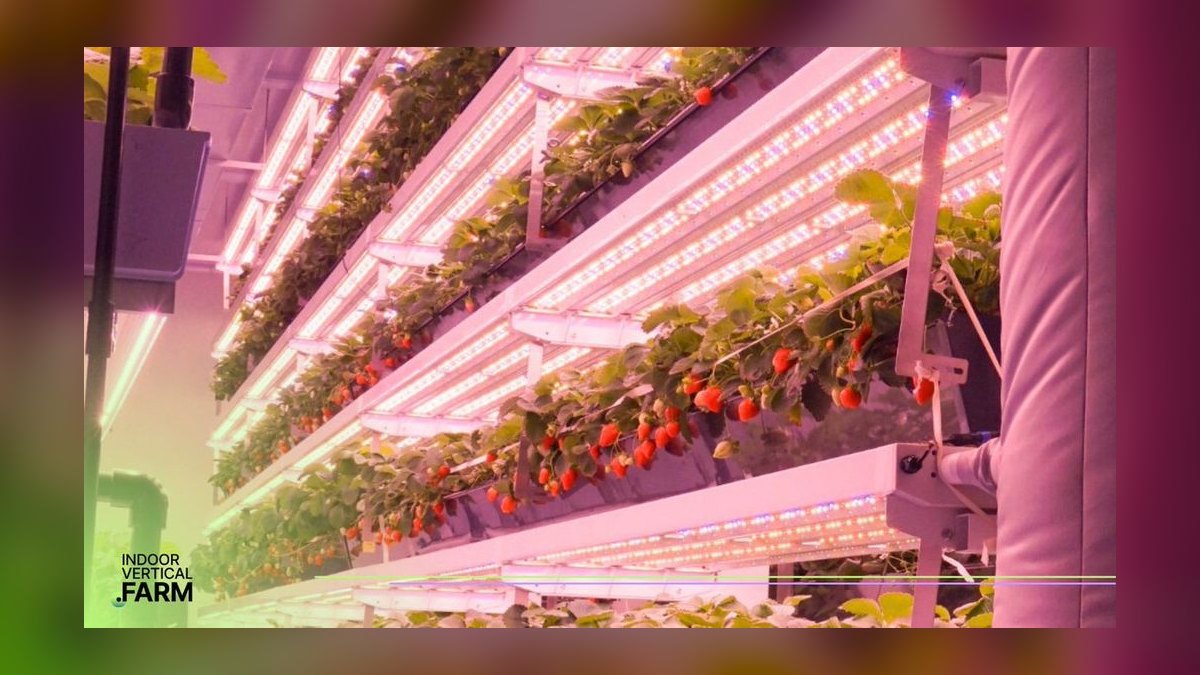
A vertical farm budget breaks into six major categories, and understanding each prevents the common mistake of accepting a single blended price from a turnkey vendor. Racking and grow systems typically run $25–$60 per square foot of floor area, depending on tier height, material (steel vs. aluminum), and whether you use NFT channels, deep-water culture trays, or aeroponic towers. LED lighting is the single largest line item at $30–$60 per square foot of canopy, with fixtures costing $800–$2,500 each and a target of 30–60 watts per square foot of canopy for leafy greens and up to 50–80 watts for fruiting crops like tomatoes or strawberries. HVAC and dehumidification requires $40–$90 per square foot of floor area, and this system must be oversized relative to a standard warehouse because every watt of light becomes heat that must be removed. Irrigation, fertigation, and water treatment adds $15–$35 per square foot, including reverse osmosis, UV sterilization, dosing pumps, and recirculation plumbing. Environmental controls and automation runs $10–$25 per square foot, covering sensors, controllers, and building management system integration. Finally, electrical distribution from the main panel to every fixture and pump adds $25–$50 per square foot. When you total these, a 20,000-square-foot floor with 6 tiers might have a buildout cost of $3–$8 million, but that same facility yields roughly 120,000 square feet of canopy, bringing the per-canopy cost to a more manageable $25–$65.
How Does Crop Selection Change the Buildout Budget?
Crop choice is the single most consequential decision because it drives lighting intensity, HVAC capacity, and racking density, and ignoring this can double your capital cost. Leafy greens and herbs (lettuce, basil, kale, mint) are the most forgiving: they need 25–35 watts per square foot of canopy and a 16–18 hour photoperiod, and they grow in relatively tight spacing on NFT channels or shallow trays. A lettuce farm can stack 6–8 tiers in a 20-foot clear height, maximizing canopy per floor dollar. Fruiting crops (tomatoes, cucumbers, peppers, strawberries) demand 40–80 watts per square foot, longer photoperiods, and more vertical space per plant, limiting you to 3–5 tiers and pushing the HVAC load up proportionally. A strawberry farm, for example, requires dehumidification capacity 30–50% higher than a lettuce farm of the same floor area because the plants transpire more. Microgreens are the lowest-cost entry point, needing 15–25 watts per square foot and only 7–14 days per cycle, but they command lower wholesale prices. The budget rule: decide the crop before you design the room, because a salad farm and a strawberry farm are fundamentally different machines, and retrofitting later costs 20–40% more than building right the first time.

What Are the Hidden Costs That Blow Up Vertical Farm Budgets?
Three hidden costs routinely sink first-time vertical farm budgets by 20–40%, and they all relate to infrastructure that a standard warehouse buildout doesn't need. First, the electrical service upgrade is the most expensive surprise. A 5,000-square-foot farm with 4 tiers of LEDs at 600 watts per fixture draws 150–250 amps at 480V, easily exceeding a standard 200-amp panel. If the building's transformer and main switchgear can't handle the load, you're looking at $15,000–$60,000 for a service upgrade, including new conduit, panel, and possibly a pad-mounted transformer. Factor in $10,000–$25,000 for a dedicated electrical room with fire-rated walls and emergency disconnect. Always request a "load letter" from the landlord before signing a lease—if the building can't deliver 480V three-phase, the buildout cost jumps 20–30%. Second, the water and nutrient delivery infrastructure is underestimated by 30–50%. For a 5,000-square-foot floor plate, expect $30,000–$80,000 for the water treatment and distribution core, plus $8–$15 per square foot for grow-specific plumbing within each tier. The hidden killer: you need backup pumps and a failsafe drain system because a 15-minute pump failure can wipe out a week's worth of crop revenue. Budget an additional $5,000–$12,000 for redundancy and leak detection sensors. Third, environmental controls beyond basic HVAC add $25,000–$50,000 to a 5,000-square-foot buildout. CO₂ enrichment (needed to boost photosynthesis under LEDs) adds $8,000–$20,000 for tanks, regulators, and sensors. Tier-level circulation fans—typically 4–6 per 100-foot row—run $200–$400 each installed. And if your space has any windows or skylights, you'll need light-proofing that costs $3–$6 per square foot of exterior wall. These line items are often buried in "miscellaneous" on a contractor's bid, but they're real and must be itemized.
How Do I Structure the Lease to Protect My Buildout Budget?
The lease structure determines whether your buildout budget survives contact with reality, and five specific traps require contractual protection. Trap one: the building that can't carry the load. A landlord markets "warehouse, perfect for indoor farming," but the power service, floor live-load capacity (you need 125–250 pounds per square foot for racking and water weight), ceiling height (you want 18–30+ feet clear), and drainage can't support it. Make the lease contingent on a landlord-funded structural and utility assessment with a date to walk if it fails. Trap two: tenant-funded permanent infrastructure with no credit. You'll sink $1–$5 million into power, structure, drainage, and HVAC—most of it stays with the building. Negotiate that the landlord delivers and pays for the electrical service upgrade, transformer, roof/floor reinforcement, and trench drains (their asset), while you fund the removable racking, lights, and grow systems. This is standard in industrial leases for specialty uses like cold storage or data centers. Trap three: the vendor-integrator who sells you a turnkey system at a blended price. Turnkey CEA vendors bundle racking, lights, and controls into one $/sq ft number with hidden margin and proprietary lock-in. Get an independent CEA engineer or owner's rep at 3–5% of project cost to unbundle the quote, kill over-spec'd automation, and break vendor lock-in—they routinely cut 10–20% from the total. Trap four: change-order padding against a launch deadline. Use a GMP (guaranteed maximum price) contract with a published contingency and require written change orders with cost backup. Trap five: no OPEX modeling—landlords and vendors sell you on capex while the killer is the monthly power bill. Model utilities at full production before you commit, and negotiate free rent through the full construction window because a vertical farm earns nothing until the first harvest cycle completes 4–8 weeks after the room is live.
What Are the Operating Costs That Kill Vertical Farm Profitability?
A vertical farm's capital cost is only half the danger—operating cost is where most of these businesses die, and electricity is the primary culprit at 25–40% of total operating expense. The lighting draw of 25–50 watts per square foot of canopy plus HVAC heat rejection determines whether you're profitable. Every watt of light becomes heat, so cooling load roughly tracks lighting load; budget HVAC at $40–$90 per square foot of floor and treat dehumidification as a primary system, because crop transpiration releases enormous moisture and uncontrolled humidity breeds mold, root rot, and tip burn that destroy yield. Water and nutrients matter too: a recirculating hydroponic system uses 90–95% less water than field farming but still needs RO treatment, nutrient dosing, and disinfection (UV or ozone). Confirm the building's electrical service, water supply pressure, and sanitary/process drainage before signing—many warehouses simply can't supply the amperage or carry the floor load, and retrofitting either is a six-figure surprise. Labor is the second-largest operating cost at 20–35% of OPEX, and automation decisions made during buildout directly impact this line item. A highly automated system with robotic seeding, transplanting, and harvesting might add 15–25% to capital cost but cut labor by 40–60%, improving unit economics over a 5–7 year payback period. The key is modeling both scenarios before you choose a vendor.
What Is the Typical Timeline and How Do I Avoid Delays?
A vertical-farm buildout runs 6–14 months, and the critical path is almost always the utility service upgrade, which can take 4–9 months from application to energization. Order the transformer early—it's often a 12–16 week lead item—or it becomes your bottleneck. Permitting adds 2–4 months because zoning often doesn't have a clean category for indoor agriculture; confirm the use is permitted before you sign a lease. The construction phase itself takes 3–6 months for a 5,000–20,000-square-foot facility, including racking installation, electrical rough-in, plumbing, HVAC commissioning, and controls integration. The final phase—crop system commissioning and test cycles—takes 4–8 weeks because you need to validate that the environment, irrigation, and lighting produce healthy plants before commercial production begins. Three common delays: the landlord's utility upgrade (make it a lease condition with a drop-dead date), vendor equipment lead times (order racking, lights, and HVAC 6–8 months before move-in), and commissioning failures (budget a 2-week buffer after the test cycle for adjustments). Carry a 12–15% contingency on both time and money—CEA projects discover power, structural, and drainage surprises constantly.
Related questions
How do I calculate the return on investment for a vertical farm?
Calculate ROI by dividing total buildout cost by annual net profit, which depends on crop yield per square foot of canopy, local electricity rates, and wholesale prices. Leafy greens typically offer a 3–7 year payback, while fruiting crops may take 5–10 years.
What is the difference between a turnkey vendor and an owner's rep?
A turnkey vendor provides a single blended price for design, equipment, and installation, often with proprietary lock-in. An owner's rep is an independent engineer who unbundles that quote, negotiates each line item, and typically saves 10–20% of total project cost.
How much electricity does a vertical farm use?
A vertical farm uses 25–50 watts per square foot of canopy for lighting, plus additional power for HVAC, pumps, and controls. Total electrical load for a 20,000-square-foot facility with 6 tiers can reach 600–2,000 amps at 480V, depending on crop intensity.
What building features are essential for a vertical farm?
Essential features include 18–30+ foot clear ceiling height, floor live-load capacity of 125–250 pounds per square foot, 480V three-phase electrical service with adequate amperage, trench drains, and sufficient water supply pressure for RO filtration and irrigation.
Can I retrofit an existing warehouse for vertical farming?
Yes, but retrofitting costs 20–40% more than building new because of electrical service upgrades, floor reinforcement, and drainage installation. The building must have at least 18-foot clear height and a roof or floor that can carry the racking and water weight.
FAQ
What is the typical cost per square foot for a vertical farm buildout? Costs vary widely based on automation and crop type, but expect $150–$400 per square foot of growing area for a mid-scale facility. High-tech systems with robotics and climate control push toward the upper end, while simpler setups can stay lower.
How much should I budget for LED lighting in a vertical farm? Lighting typically accounts for 25–40% of total equipment costs. Commercial-grade LED fixtures range from $800–$2,500 per fixture, and you'll need roughly 30–60 watts per square foot of canopy, depending on crop light requirements.
What are the major hidden costs in a vertical farm buildout? Beyond equipment, expect 15–25% of total budget for HVAC and dehumidification, 10–15% for plumbing and irrigation systems, and 5–10% for electrical upgrades. Permitting and engineering fees can add another 5–10%.
How long does it take to recoup the initial investment? Payback periods typically range from 3–7 years for leafy greens, but can be longer for fruiting crops. This depends heavily on local energy costs, labor efficiency, and wholesale pricing—no single number applies universally.
What is a realistic budget range for a small commercial vertical farm? A 2,000–5,000 square foot facility might cost $500,000–$2 million fully built out. This includes equipment, installation, and first-year operating capital, but excludes land or lease costs.
Should I budget for ongoing maintenance and replacement parts? Yes, plan for 5–10% of annual revenue for maintenance, including LED replacement every 5–7 years and HVAC servicing. Pumps, sensors, and control systems also need periodic replacement.
What crop is most profitable for a vertical farm? Leafy greens and herbs offer the fastest payback due to shorter grow cycles and lower lighting demands, while fruiting crops like strawberries and tomatoes command higher prices but require more capital and operating expense.
How do I negotiate a tenant improvement allowance for a vertical farm? Push for a TI allowance of $40–$100 per square foot from the landlord, specifically earmarked for electrical service upgrades, floor reinforcement, and trench drains—these are permanent improvements that add value to the building.
Sources
- CBRE Specialty Agriculture Real Estate
- JLL Controlled Environment Agriculture Market Outlook
- Cushman & Wakefield Industrial Sector Insights
- RSMeans Building Construction Cost Data
- Resource Innovation Institute CEA Benchmarks
- GLASE Controlled Environment Lighting
- USDA Controlled Environment Agriculture Research
- Cornell CEA Program
- NAIOP Industrial Development Handbook
- BOMA International Operating Expense Standards
Related on PULSE
- [How Do I Budget an Indoor Golf or Golf-Simulator Buildout?](/knowledge/bo0150)
- [How Do I Budget an Ambulatory Surgery Center Buildout?](/knowledge/bo0219)
- [How Do I Budget a Dry Cleaner Buildout?](/knowledge/bo0170)
- [How Do I Budget a Senior Living or Assisted Living Buildout?](/knowledge/bo0188)
- [How Do I Budget a Sports Bar Buildout?](/knowledge/bo0209)
- [How Do Change Orders Blow Up a Buildout Budget, and How Do I Cap Them?](/knowledge/bo0040)
This page will be disappearing soon. Save it to your device for $1 — or read it free while it is here.
@Kory-White- · if Venmo asks, the last 4 of my number are 2012
 buildoutsHow Do I Budget a Martial Arts Dojo Buildout?
 buildoutsHow Do I Budget a Data Center or Colocation Buildout?
 buildoutsHow Do I Get a Right of First Refusal on the Space Next Door?
 buildoutsHow Do I Budget a Comic, Game, or Hobby Store Buildout?
 buildoutsHow Do I Negotiate a Lease and Buildout for an Auto Repair Shop?
 buildoutsHow Do I Negotiate a Lease and Buildout for a Tattoo Studio?
 buildoutsHow Do I Budget a Butcher Shop or Meat Market Buildout?
 buildoutsHow Do I Budget a Med Spa Buildout?
 buildoutsHow Do I Budget a Medical or Dental Office Buildout?
 buildoutsHow Do I Negotiate a Lease and Buildout for a Pharmacy?