
How Do I Budget a Bowling Alley Buildout?
 Curated byKory White · Fractional CRO · Maryland
 PULSEKNOWLEDGE LIBRARY
Budgeting a bowling alley buildout requires a structured approach that accounts for lane equipment, building shell modifications, food and beverage infrastructure, and hidden costs like slab leveling and power upgrades. The total investment for a modern bowling center typically ranges from $1.2 million to over $4 million, with per-lane costs between $40,000 and $90,000 depending on scale, equipment choice, and location. The single most effective cost-control strategy is securing a lease on an existing shell with adequate clear height and slab capacity, then negotiating for the landlord to fund base-building improvements. This approach can save $300,000 to $800,000 compared to building from scratch, making the difference between a profitable venue and a financial strain.
What Drives Cost Per Lane in a Bowling Alley Buildout?
The lane package represents 35 to 50 percent of a bowling buildout's total cost and is where equipment choices have the greatest financial impact. New synthetic lane packages—including lane beds, pinsetters, ball returns, scoring systems, and masking units—range from $30,000 to $55,000 per lane. String pinsetters, which use cables to reset pins, are increasingly standard in boutique centers because they reduce maintenance labor and parts costs significantly compared to traditional free-fall pinsetters. Free-fall pinsetters may still be preferred by some league bowlers but come with higher upfront and ongoing costs.
Used or refurbished lane packages offer a viable alternative at $12,000 to $28,000 per lane, representing potential savings of 40 to 60 percent. However, buyers must verify pinsetter condition and parts availability before purchase. Lane installation and slab leveling are common surprise costs, with grinding or self-leveling adding $15,000 to $60,000 depending on the existing slab's flatness and condition. Modern overhead scoring and monitors add $3,000 to $6,000 per lane. For a boutique center, investing in new string-pinsetter lanes pays back through lower labor costs, while a budget family center may benefit from refurbished free-fall lanes.
How Do Building Shell Requirements Affect the Budget?
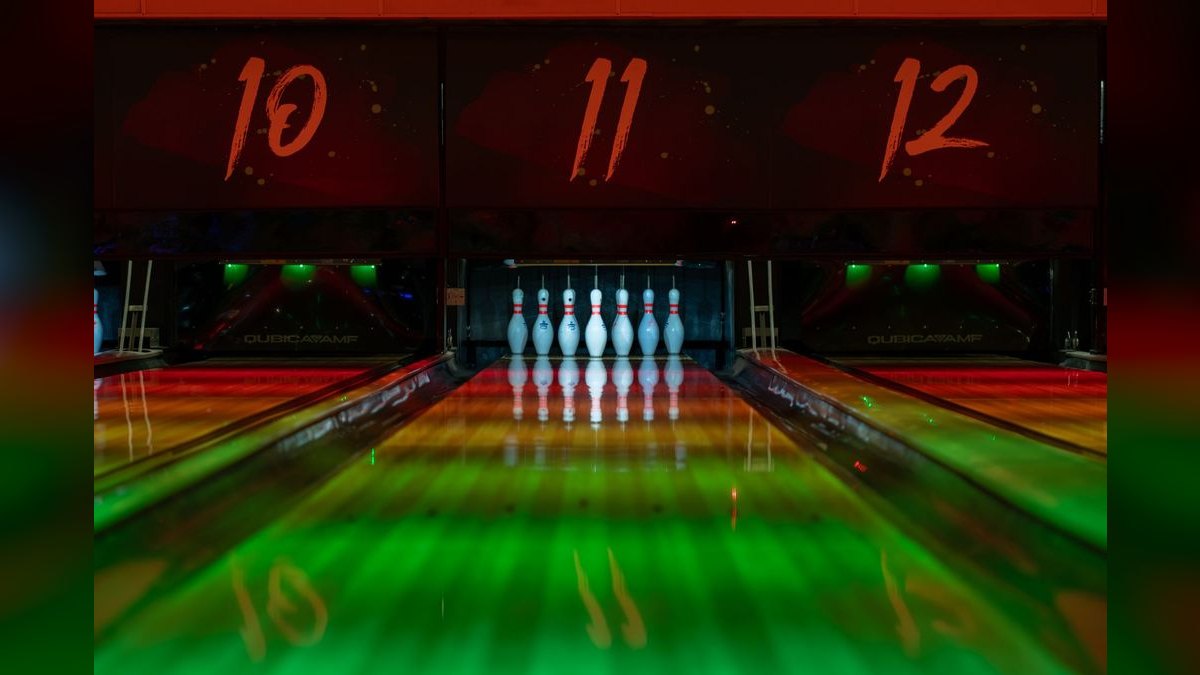
The building shell determines whether a bowling alley buildout is feasible or financially disastrous. Clear ceiling height of 15 to 18 feet is mandatory for ball return mechanics, scoring systems, and creating an open, inviting atmosphere. A shell under 14 feet clear height is unusable, and operators must verify clear height on site rather than relying on deck height measurements. The slab must be flat, level, and free of cracks, with a live load capacity of 100 to 150 pounds per square foot—double what standard retail or warehouse slabs provide. A cracked or sloped slab requires $20,000 to $60,000 in repairs, making a structural assessment essential before signing any lease.
Power capacity is another non-negotiable requirement. A bowling center with a kitchen, AV systems, lighting, and pinsetters needs 800 to 1,200 amp electrical service, and upgrading from standard retail service can cost $25,000 to $100,000. This cost should be confirmed with the utility company in writing before lease execution. HVAC systems must handle the heat generated by people, kitchen equipment, and bowling machinery, costing $8 to $15 per square foot in a bare shell. Restrooms and ADA compliance add $40,000 to $120,000 if not already present. Operators should make height, slab condition, and power capacity written conditions in the letter of intent—walking away from a bad shell costs nothing, but discovering issues after construction starts costs six figures.
What Are the Hidden Infrastructure Costs That Derail Budgets?
The line items that blow budgets aren't the lanes or the pinsetters—they're the invisible infrastructure that most first-time operators overlook. HVAC for a bowling center costs $15 to $35 per square foot because the space must be conditioned year-round to maintain consistent lane oil consistency and patron comfort. A 20,000 square foot center can spend $300,000 to $700,000 on climate control alone, especially if the space wasn't previously cooled to 68 degrees Fahrenheit. Floor loading is another silent killer—if the existing slab can't support the weight of lanes and pinsetters, you'll need helical piers or mudjacking at $20 to $40 per square foot, potentially adding $400,000 to $800,000 to a 20,000 square foot project.
Fire suppression is non-negotiable and often underestimated. A bowling center with a kitchen and bar requires a Type II or Type III fire sprinkler system at $2 to $5 per square foot, plus a commercial kitchen hood suppression system at $8,000 to $15,000 per hood. If the space lacks existing sprinklers, add $40,000 to $100,000 to the budget. Soundproofing between lanes and adjacent spaces, especially in mixed-use developments, can run $10 to $25 per linear foot for acoustic panels and barriers, with a 12-lane center spending $15,000 to $35,000 to prevent pin noise from bleeding into the bar or street. As discussed in How Do I Budget a Multipurpose Sports Complex Buildout?, these infrastructure costs are often the difference between a project that pencils out and one that doesn't.

The Lease vs. Build Math That Saves Six Figures
Your biggest cost variable isn't the equipment—it's whether you lease an existing bowling center shell or build from scratch in a raw warehouse. Leasing an existing bowling center is rare but ideal, requiring only $200,000 to $500,000 for cosmetic upgrades, new scoring systems, and lane resurfacing. Total upfront investment for a 12-lane center in this scenario is $500,000 to $1.2 million, with base rent of $10 to $25 per square foot plus $5 to $10 NNN. Leasing a raw warehouse shell is the most common approach, requiring a 20 to 25 foot clear height and a column-free span of at least 60 feet. Buildout costs for a 12-lane center range from $1.2 million to $2.5 million, but a well-negotiated lease provides $50 to $100 per square foot in tenant improvement allowances that can cover 30 to 50 percent of the buildout.
Buying land and building from scratch is the most expensive route, with land costs of $100,000 to $500,000 per acre plus $150 to $250 per square foot for construction. A 20,000 square foot building costs $3 million to $5 million before purchasing a single lane, making this viable only for 30-plus lane destination centers with $4 million to $8 million in capital. The money move is to negotiate a $60 to $80 per square foot TI allowance from the landlord on a 10-year lease, covering lane beds, scoring, and basic finishes while leaving cash for pinsetters and kitchen equipment. Most landlords will grant six to 12 months of rent abatement during construction, saving $100,000 to $300,000 in carrying costs. For more on lease negotiation strategies, see How Do I Budget a Roller Skating Rink Buildout?.

What Reserve Funds Should Be Built Into the Budget?
Every bowling alley buildout hits unexpected costs—the question is whether you have cash set aside to handle them. Build three separate reserve buckets into your total budget. The first is a construction contingency of 15 to 20 percent of buildout costs. If your buildout is $1.5 million, set aside $225,000 to $300,000 for slab issues, electrical upgrades, and permit delays. Real-world example: a 16-lane center in Texas spent $85,000 on unexpected stormwater detention requirements that weren't in the original site plan. The second bucket is an equipment installation buffer of 10 to 15 percent of lane costs, covering precision installation at $8,000 to $15,000 per lane and custom concrete pits at $3,000 to $6,000 per lane if needed.
The third bucket is operational runway of three to six months of operating expenses. Most bowling centers don't break even until month six to 12, and monthly burn for a 12-lane center is $40,000 to $80,000 including rent, utilities, insurance, and payroll for eight to 15 staff. Keep $120,000 to $480,000 in cash to cover payroll and rent while building league nights, birthday party bookings, and bar revenue. Total reserves should equal 25 to 35 percent of your entire project budget. On a $2 million buildout, that's $500,000 to $700,000 in cash reserves. If that number makes you uncomfortable, you're not ready to build yet. As noted in How Do I Budget a Trampoline Park Buildout?, entertainment venue operators consistently underestimate the cash needed during the first year of operation.
How Do Contractor and Lease Traps Impact the Budget?
Bowling buildouts are large enough that a single bad clause in a lease or construction contract can cost a fortune. Define in the lease that the structural slab, roof, exterior walls, base HVAC, and utility service to the space are the landlord's base-building responsibility—you should only fund lanes, finishes, bar, and kitchen. Push for a real TI allowance of $30 to $80 per square foot plus six to 12 months of free or abated rent during construction, as a long, complex build deserves a long rent abatement. Confirm power capacity in writing with the utility company, and insist that a surprise 800-amp service upgrade is the landlord's cost if the space was marketed as suitable for entertainment use.
Cap controllable CAM at 5 percent annually with audit rights, because on 40,000 square feet, uncapped CAM swings are enormous. State in the lease that lanes, pinsetters, scoring, kitchen, and bar equipment are your removable trade fixtures—otherwise the landlord could claim over $1 million of equipment at lease end. Negotiate a cap or waiver on the "restore to shell" clause, which can cost $50,000 to $200,000 to demo a bowling center. On the contractor side, use a Guaranteed Maximum Price contract with shared savings, require bonding on a multimillion-dollar build, hold 10 percent retainage, and never release final payment without lien waivers from every subcontractor.

FAQ
What is the typical cost per lane for a bowling alley buildout? For a boutique or smaller center, plan on $50,000 to $90,000 per lane all-in. At a larger scale of 24 lanes or more, that range can drop to $40,000 to $70,000 per lane, depending on finishes and equipment choices.
Does the budget include the bowling equipment itself? Yes, the per-lane estimates typically cover lane beds, pinsetters, ball returns, and scoring systems. However, high-end custom lane finishes or premium scoring software can push costs toward the upper end of the range.
How much does the building shell and infrastructure add to the total? The building shell, HVAC, plumbing, and electrical work can run $300,000 to $800,000 or more, depending on whether it's a new construction or a retrofit. This is separate from the per-lane equipment costs.
What about seating, bar, and food-service areas? Those areas add $200,000 to $500,000 to the budget, depending on the size, seating quality, and kitchen equipment. A full-service bar and restaurant will be at the higher end.
Are there hidden costs like permits, insurance, or design fees? Yes, permits and impact fees can range from $20,000 to $100,000, while architectural and engineering fees often land between 5 percent and 15 percent of total construction costs. Insurance and bonding add another $10,000 to $30,000.
How long does it take to break even on a bowling alley buildout? Most operators see a three- to seven-year payback period, heavily dependent on lane utilization, average revenue per lane, and local market demand. High-volume centers with strong food and beverage sales tend to reach the shorter end of that range.
What is the biggest cost surprise in a bowling alley buildout? Slab leveling and power upgrades are the most common budget busters, with slab grinding or reinforcement adding $20,000 to $60,000 and electrical service upgrades costing $25,000 to $100,000.
Can I save money by buying used bowling equipment? Yes, used or refurbished lane packages cost $12,000 to $28,000 per lane, saving 40 to 60 percent compared to new equipment. However, verify pinsetter condition and parts availability before purchase.
How important is the food and beverage component to profitability? Extremely important. Modern centers make more from food, beverage, and arcade than from bowling itself, so under-building the bar and kitchen creates a low-margin business.
What lease clauses are critical for a bowling alley buildout? Define the structural slab, roof, and base HVAC as landlord responsibilities. Ensure equipment is classified as removable trade fixtures, cap CAM at 5 percent, and negotiate a restoration cap or waiver.
Sources
- Bowling Proprietors' Association of America (BPAA)
- CBRE Entertainment and Big-Box Retail Leasing Reports
- RSMeans Construction Cost Data
- IAAPA Location-Based Entertainment Facility Benchmarks
- JLL Experiential Retail and Entertainment Fit-Out Guides
- NAIOP Industrial and Big-Box Shell Conversion Studies
- BOMA International Lease Negotiation Standards
- Cushman & Wakefield Occupancy Cost Reports
- International Code Council Building Code Requirements
- National Fire Protection Association Fire Suppression Standards
Related on PULSE
- [How Do I Budget an Ambulatory Surgery Center Buildout?](/knowledge/bo0219)
- [How Do I Budget a Dry Cleaner Buildout?](/knowledge/bo0170)
- [How Do I Budget a Senior Living or Assisted Living Buildout?](/knowledge/bo0188)
- [How Do I Budget a Sports Bar Buildout?](/knowledge/bo0209)
- [How Do Change Orders Blow Up a Buildout Budget, and How Do I Cap Them?](/knowledge/bo0040)
- [How Do I Budget a Salon or Spa Buildout?](/knowledge/bo0110)
This page will be disappearing soon. Save it to your device for $1 — or read it free while it is here.
@Kory-White- · if Venmo asks, the last 4 of my number are 2012
 buildoutsHow Do I Budget a Chiropractic Clinic Buildout?
 buildoutsHow Do I Negotiate a Lease and Buildout for Cannabis Cultivation?
 buildoutsHow Do I Budget a Pet Grooming Buildout?
 buildoutsHow Do I Budget a Florist Shop With a Walk-In Cooler Buildout?
 buildoutsHow Do I Budget a Makerspace or Woodworking Shop Buildout?
 buildoutsHow Do I Budget a Barbershop Buildout?
 buildoutsHow Do I Negotiate a Lease and Buildout for a Tattoo Studio?
 buildoutsHow Do I Budget a Light Manufacturing Buildout?
 buildoutsHow Do I Budget a Butcher Shop or Meat Market Buildout?
 buildoutsHow Do I Budget a Family Entertainment Center or Mini-Golf Buildout?