


What’s the typical timeline from lease signing to move-in for a 5,000 SF office buildout in 2027?
Quality
Certified

A 5,000 SF office buildout typically takes 4 to 6 months from lease signing to move-in for a simpler Class B or C space, and 6 to 9 months for a complex Class A fit-out needing new HVAC, electrical, and data infrastructure. Permitting is the biggest variable, ranging from 2 to 14 weeks by jurisdiction.
The four phases and what each one costs you in time
A 5,000 SF buildout breaks into four sequential phases, and understanding the duration and dependencies of each is what lets you negotiate the lease and manage the schedule intelligently. Treating the project as one undifferentiated block is exactly how tenants end up blindsided in month five, paying rent on a space they still cannot occupy.
Phase one is design and engineering, roughly 2 to 6 weeks. Your architect or design-build team produces space plans, MEP (mechanical, electrical, plumbing) layouts, and finish schedules. A simple open-plan office with a few private offices and a breakroom lands near the 2-to-3-week end. Add conference rooms, phone booths, a server room, or custom millwork and you climb to 4 to 6 weeks. Bringing a pre-approved prototype plan from a previous buildout can cut design time roughly in half, because the layout logic is already solved and only the dimensions change.

Phase two is permitting, the unpredictable stretch that runs anywhere from 2 to 14 weeks. Smaller suburban municipalities with over-the-counter permitting can issue in 2 to 3 weeks. Major cities running full plan review through fire, building, and zoning departments routinely take 8 to 14 weeks. Because this phase sits outside your contractor's direct control, it is the one most likely to blow up an optimistic timeline.
Phase three is construction, generally 6 to 12 weeks. A standard fit-out with drop ceilings, carpet tile, painted drywall, and basic lighting runs 6 to 8 weeks. Add new HVAC zones, raised access flooring, glass partition walls, or integrated AV and you push to 10 to 12 weeks. Weekend and overtime work can compress this by around two weeks but typically adds 15 to 25 percent to labor cost — a real lever, but an expensive one.
Phase four is furniture, IT, and move-in, usually 2 to 4 weeks. Furniture delivery and installation takes 1 to 2 weeks if ordered early; cabling, server setup, and network testing take another 1 to 2 weeks. Because major-manufacturer furniture lead times often run 8 to 12 weeks from order, the smart move is ordering during permitting so it arrives exactly as construction finishes rather than four idle weeks after.
Why permitting sits squarely on the critical path

Of the four phases, permitting carries the single largest schedule risk, and it is the one most tenants underestimate precisely because it is invisible until the application is already in a queue. A 5,000 SF space inside a Class A high-rise in a major city may trigger structural review, fire-life-safety plan checks, ADA compliance verification, and mechanical code sign-off — each handled by a different reviewer working a different backlog, none of whom answers to your general contractor.
Jurisdiction speed dominates the outcome. Houston, which has no formal zoning, can permit a commercial interior in 2 to 3 weeks. Los Angeles commonly averages 8 to 12 weeks for commercial interiors. New York City's Department of Buildings can take 12 to 16 weeks for a full review. Same square footage, radically different calendars — which is why the first question to ask any landlord is what permit turnaround the last tenant in that specific building actually experienced, not what the city's published target says.
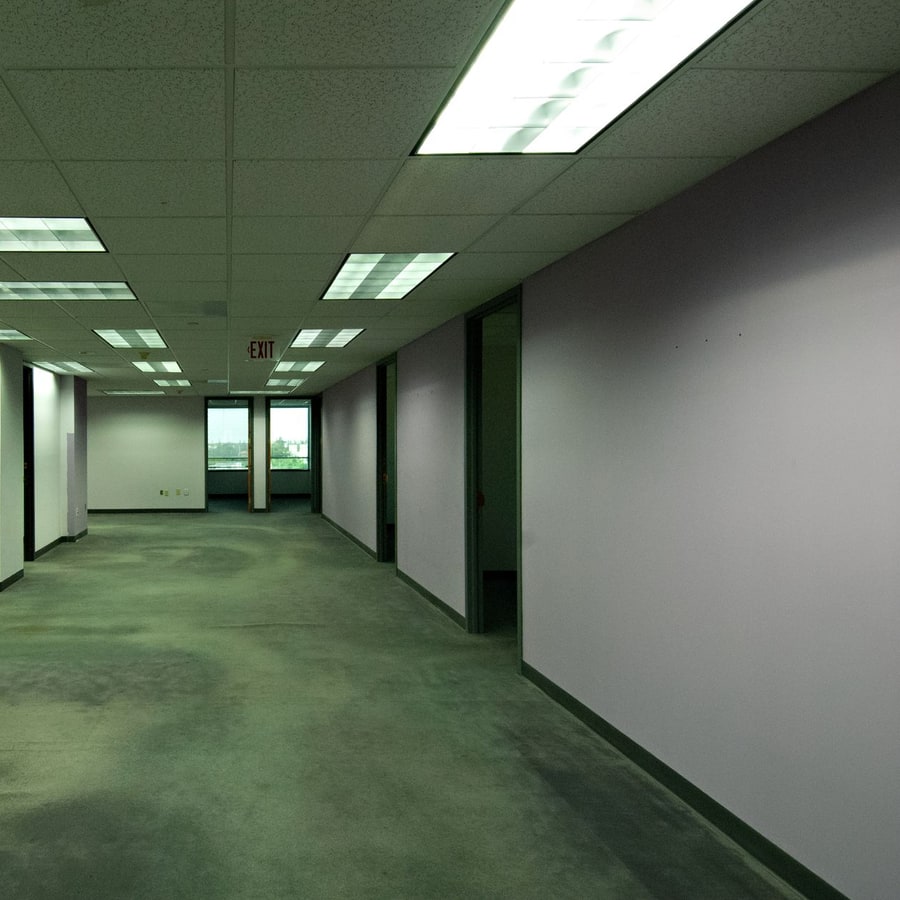
Existing conditions are the second lever. If the space is a "vanilla box" that already carries HVAC, electrical, and a ceiling grid, you typically need only an alteration permit, which runs 4 to 6 weeks. The moment you add bathrooms, change egress paths, or modify structural elements, you cross into full-permit territory at 8 to 14 weeks. This is why the physical starting condition of the space rewrites your timeline before a single wall goes up — the more the previous tenant left behind, the faster you move.

Expediting is the third lever. A licensed expediter pre-reviews drawings for the common errors that trigger rejections, schedules appointments directly with plan examiners, and tracks the application daily rather than waiting on the mail. For a 5,000 SF project this typically costs $2,000 to $5,000 and can recover 2 to 6 weeks of delay — often the best-return dollars in the entire schedule. A useful lease clause forces the issue: require the landlord to submit permit applications within 10 business days of lease execution, and tie permitting delays beyond 60 days to additional rent abatement, which pressures the landlord to hire an expediter of their own.
Compressing the schedule by four to six weeks
You can meaningfully accelerate a 5,000 SF buildout without cutting quality, but only if the moves are set up before or immediately at lease signing rather than discovered halfway through the project when the levers are already gone.
Design-build delivery is the highest-leverage choice. Instead of hiring an architect, finishing drawings, then bidding the work out to a general contractor, a design-build firm owns both design and construction. That structure lets the two overlap: you begin ordering long-lead items — HVAC units, glass partitions, custom millwork — while final drawings are still in plan review, typically saving 3 to 5 weeks versus traditional design-bid-build, where construction cannot start until the drawings are fully bid.

Pre-lease planning is the second move. Negotiate the tenant-improvement (TI) allowance and preliminary floor plans during lease negotiation, not after signing. Once you have a signed letter of intent, ask the landlord to let your architect physically measure the space and start schematic design before the lease fully executes, which can pull 2 to 4 weeks forward at no real cost.
Parallel permitting is the third. In many jurisdictions you can split the permit: pull an interior demolition permit immediately — often over-the-counter in a day or two — while the full construction permit remains under review. Demolition and some rough-in work can then start 4 to 8 weeks earlier than a single-permit approach would allow, turning dead calendar time into productive site work.
Pre-ordered furniture is the fourth. Order workstations, task chairs, conference tables, and cubicles right after lease signing rather than after construction wraps. With major-manufacturer lead times of 8 to 12 weeks, ordering early means the furniture arrives as the space becomes ready instead of adding four idle weeks at the end while a finished shell sits empty.
The spread these tactics create is dramatic. A 5,000 SF law office in a fast-permitting market like Dallas, using design-build with furniture pre-ordered, can reasonably move in around 14 weeks after lease signing. A comparable space in a slow-permitting market using traditional architect-bid-build with no pre-planning can stretch toward 11 months. Same footprint, roughly a fourfold difference in elapsed time, driven almost entirely by delivery method and jurisdiction — not by the size of the space.
Using rent abatement as schedule insurance

Rent abatement — free rent — is the most powerful schedule-protection tool a tenant can negotiate, because it converts the landlord's delays into the landlord's cost. Structuring it well matters as much as winning the concession in the first place.
A standard deal grants 2 to 4 months of abatement starting at lease signing to cover the buildout period; if the work takes five months, rent begins in month six. The weakness is that it is fixed regardless of what actually happens on site. A smarter structure ties abatement to the actual completion date instead: abatement begins on the date of substantial completion and runs for a defined number of months. That protects you when delays push completion past the estimate, because the free-rent clock does not start until you can genuinely occupy the space.
Delay penalties sharpen the incentive further. A clause stating that if the buildout is not substantially complete within, say, 150 days of lease execution the landlord pays a per-day sum in additional abatement keeps the landlord financially motivated to hold the schedule. The numbers are not trivial: at $40 per SF annual rent, a 5,000 SF space carries about $16,667 in monthly rent, so a three-month delay represents roughly $50,000 in lost abatement or paid rent — genuine leverage at the negotiating table rather than a symbolic gesture.

Finally, protect the tail with punch-list coverage: secure roughly 30 days of additional abatement after substantial completion so you are not paying full rent while cabinet handles are missing or lights flicker. That buffer keeps the landlord from declaring victory early and forcing you onto the rent roll before the space genuinely functions as an office.
How landlord incentives quietly steer your timeline
The landlord's economics shape your schedule as much as the contractor's crew size does, so learning to read those incentives lets you predict where the friction will land before you sign.
The landlord's core priority is rent commencement — they want you paying as soon as possible, which usually means pushing contractors to finish quickly. But that alignment only holds when the TI allowance is fixed. If the landlord is absorbing cost overruns, their incentive can flip toward slowing down to control spending, and your move-in date becomes collateral damage in their budget fight.
TI allowance structure is therefore decisive. A lump-sum allowance — a set dollar figure per SF — gives the landlord no reason to hurry, because any overage falls on you anyway. A cleaner arrangement is a fixed-price buildout with the landlord acting as general contractor, ideally with a bonus for early completion and a penalty for late delivery, so the schedule and the money point in the same direction rather than pulling apart.

Whose architect runs the drawings also matters more than most tenants expect. The landlord's architect works for the landlord and prioritizes the landlord's cost control, not your calendar. Retaining your own architect or a design-build firm you control typically costs $5,000 to $10,000 more but can recover 3 to 6 weeks, because you set the pace and the priorities instead of waiting in someone else's queue.
Watch existing occupancy closely. If the space is currently tenanted, the landlord may be unable to start construction until the prior tenant vacates. Always confirm the space is vacant or has a firm, documented move-out date before signing; a 30-day holdover by the prior tenant can delay your entire project regardless of how well your own team performs. The single best predictor of your outcome is due diligence on the landlord's track record — ask for references from the last few tenants who completed buildouts and ask each one plainly how long the work actually took and whether the landlord held the schedule.
The delays that most often stretch the estimate
Even a well-planned 5,000 SF buildout runs into a recognizable set of delay sources, and naming them in advance lets you build a realistic buffer rather than an optimistic one you will regret.
TI approval friction is common: if the lease requires landlord sign-off on every design detail, expect weeks of back-and-forth as revisions cycle between your team and the landlord's. Permitting overruns are the next most frequent, particularly when the scope touches mechanical, electrical, or plumbing systems that trigger deeper plan review. Material lead times for specialty items — custom millwork, glass partitions, acoustic panels — can outrun construction and leave a finished shell waiting on one late shipment while your abatement quietly burns.

Building-coordination logistics add quiet days that rarely show up in the first estimate: securing after-hours work windows, reserving the freight elevator, and scheduling HVAC tie-ins around base-building systems all depend on the property manager's availability. None of these is catastrophic alone, but together they routinely add up to weeks. A realistic buffer of several weeks beyond the initial estimate is prudent, and building that cushion into both the construction schedule and the rent-commencement negotiation is what keeps a normal delay from turning into a financial one.
Related questions
Can I move in faster by taking the space as-is?
Yes. Taking a vanilla-box or turnkey space that is already built out can reduce the timeline to roughly 2 to 4 weeks, because you only need furniture delivery, cabling, and IT setup rather than design, permitting, and construction — you skip the three phases that consume the most calendar.
Is design-build always faster than design-bid-build?
For a 5,000 SF project it usually is. Design-build overlaps design and construction and lets you order long-lead materials during plan review, typically saving 3 to 5 weeks versus the sequential design-bid-build process, where construction cannot start until drawings are fully bid out to a contractor.
How much rent abatement should I target?

Aim for 4 to 6 months tied to the actual substantial-completion date, plus a 30-day punch-list buffer. At $40 per SF annually on 5,000 SF, that range represents roughly $66,000 to $100,000 in free rent covering the buildout window — meaningful protection against a slipping schedule.
What happens if the landlord misses the deadline?
Without a penalty clause, you may owe rent while still waiting to occupy. Always negotiate a per-day delay penalty paid as additional abatement, so a landlord-caused overrun costs the landlord rather than silently costing you thousands of dollars a month in rent on an unusable space.
FAQ
How long does a 5,000 SF office buildout typically take from lease signing to move-in? For a standard buildout in a suburban market, expect roughly 4 to 6 months. For a Class A space in a major city requiring full permitting and new mechanical, electrical, and data infrastructure, 6 to 9 months is more realistic. The gap is driven mostly by permitting speed and scope complexity.
What is the biggest single cause of delay? Permitting. Full plan review in slow jurisdictions can take 8 to 14 weeks, versus 2 to 3 weeks over-the-counter in fast ones. Before signing, ask the landlord for the average permit time other tenants have actually experienced in that specific building, not the city's published estimate.

Should I hire a design-build contractor or a separate architect and builder? Design-build is almost always faster for a 5,000 SF project, because design and construction overlap and long-lead materials can be ordered during review, saving about 3 to 5 weeks versus traditional design-bid-build where the two phases run strictly in sequence.
Can I start any work before the full permit is issued? Often yes. Many jurisdictions let you pull an interior demolition permit — frequently over-the-counter in a day or two — while the full construction permit is still in review, allowing demolition and some rough-in to begin 4 to 8 weeks earlier than a single-permit approach.
When should I order furniture? Right after lease signing. Major-manufacturer lead times commonly run 8 to 12 weeks, so ordering during design or permitting means furniture arrives as construction finishes rather than adding weeks of idle time at the end while a completed space sits empty.
How much rent does each month of delay actually cost? On a 5,000 SF office at $40 per SF annually, one month of rent is about $16,667. Every month of schedule slip costs roughly that amount in lost abatement or paid rent, which is why delay-penalty clauses carry real negotiating weight rather than being boilerplate.
Sources
- https://www.ifma.org
- https://www.boma.org
- https://www.corenetglobal.org
- https://www.usgbc.org
- https://www.nar.realtor
- https://www.aia.org
- https://www.gsa.gov
- https://www.iccsafe.org
Related on PULSE
- What is the typical timeline for a medical office buildout with MRI slab reinforcement in 2027?
- What's the smarter move—signing a longer lease for more TI or a shorter lease for less?
- What Questions Should I Ask Before Signing Any Commercial Lease?
- What's the average timeline for a full-service restaurant buildout approval in 2027?
- How Do I Negotiate an Office Lease in a Hybrid-Work Market?
- How Do I Budget an Optometry Office With an On-Site Lab?
This page will be disappearing soon. Save it to your device for $1 — or read it free while it is here.
@Kory-White- · if Venmo asks, the last 4 of my number are 2012
This page is gone.
This one is off the shelf now. $1 keeps it on your phone for good — the whole page, pictures and diagrams included.
 pulse-buildoutsWhat are the most common mistakes in Buildouts in 2027?
 boCan I negotiate a clause forcing the landlord to reimburse my expediter fees in 2027?
 boShould I demand the landlord provide a third-party cost breakdown for every line item in their GC bid in 2027
 boShould I hire a tenant rep broker to oversee my buildout or manage it myself in 2027?
 boWhat are the tax implications of taking TI cash versus amortized rent in 2027?
 boHow do I calculate the true cost of using the landlord’s preferred GC versus my own in 2027
 boCan I deduct unused TI allowance from my first year's rent payments in 2027?
 boHow do I structure a lease to allow me to sell my buildout improvements to the next tenant in 2027?
 boCan I require the landlord to use a third-party expediter for permit approvals in 2027?
 boHow do I negotiate a co-working flex space buildout with shared corridors and common areas in 2027