
What are the tax implications of taking TI cash versus amortized rent in 2027?
 Curated byKory White · Fractional CRO · Maryland
 PULSEKNOWLEDGE LIBRARY
Taking tenant improvement (TI) cash as a lump sum in 2027 means you generally recognize that money as taxable income in the year you receive it — typically as a rent abatement or cash payment from the landlord — and you then capitalize and depreciate the buildout costs over the applicable recovery period under the Modified Accelerated Cost Recovery System (MACRS). However, under certain circumstances, landlord-funded TI for landlord-owned improvements may not be treated as taxable income to the tenant, particularly if the improvements are owned by the landlord and the tenant has no right to remove them. Choosing amortized rent instead spreads the TI value across the lease term as a lower monthly rent, which you deduct as an ordinary business expense each year — no lump-sum tax hit, no long depreciation schedule. The 2017 Tax Cuts and Jobs Act (TCJA) changed the game by eliminating the 15-year qualified leasehold improvement (QLI) depreciation category for nonresidential property placed in service after 2017, so most interior improvements now depreciate over 39 years unless they qualify as bonus depreciation (which phases down through 2026 and is scheduled to expire for 2027 unless Congress extends it). The key trade-off: TI cash gives you immediate liquidity but a longer tax drag, while amortized rent gives you smooth deductions and no upfront tax bill. Your choice depends on your current tax bracket, cash flow needs, and whether you plan to hold the lease for the full term or exit early.
The 2027 Tax Market for TI Cash
In 2027, the bonus depreciation phase-out under the TCJA reaches its final scheduled year — after that, it drops to 0% for 2028 and beyond unless Congress steps in. This means if you take TI cash in 2027 and spend it on qualified improvement property (QIP) like interior walls, lighting, or HVAC, you can claim a reduced bonus depreciation percentage in year one, then straight-line over 39 years for the rest. That's a massive shift from prior years when bonus was 100% and you could write off the entire buildout in one year. For a typical TI allowance, that's only a fraction in first-year bonus depreciation in 2027, versus the full amount in prior years. The remaining amount gets depreciated over 39 years at a small annual deduction relative to the upfront income recognition. If your business is in a high tax bracket, that lump-sum TI cash triggers a significant tax bill in year one, while your depreciation deductions trickle in slowly. The IRS treats TI cash as constructive receipt — even if you don't physically cash the check, you owe tax on it in the year the landlord makes it available.
How Amortized Rent Avoids the Lump-Sum Hit
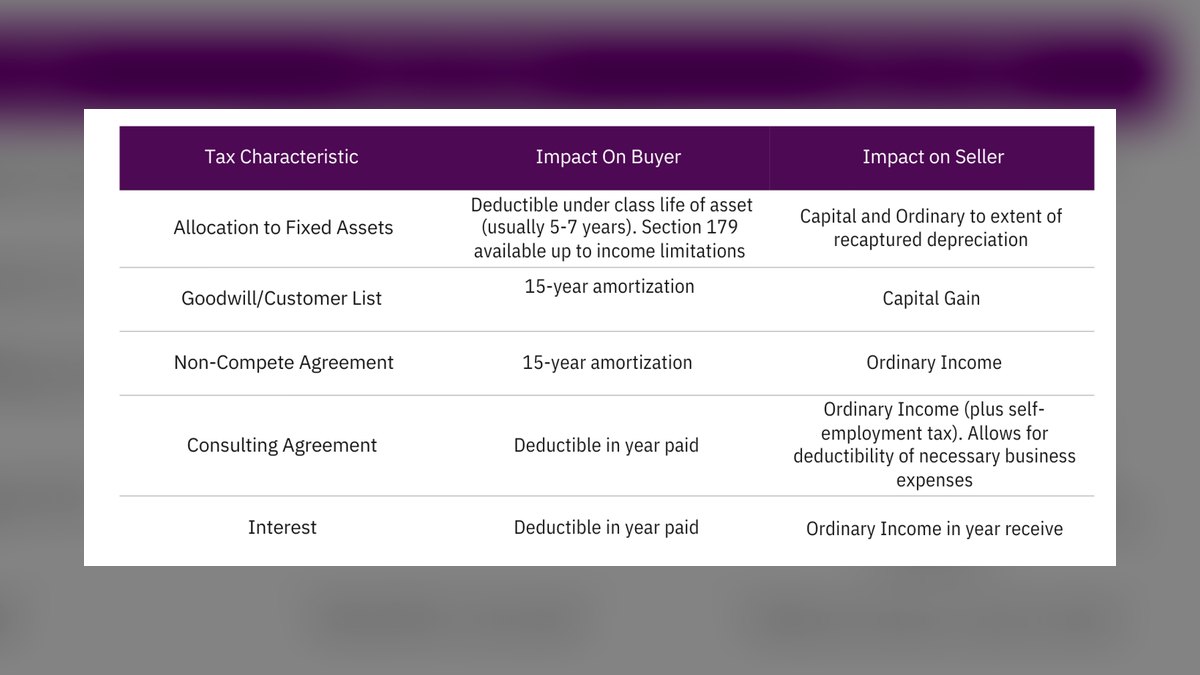
When you choose amortized rent, the landlord builds the TI cost into your base rent over the lease term — say, an extra amount per square foot per year for 10 years instead of a lump sum. For tax purposes, that extra rent is an ordinary and necessary business expense under IRS Section 162, fully deductible in the year paid. No capitalization, no depreciation schedule — just a straight above-the-line deduction against your gross income. A tenant in a given tax bracket with amortized TI rent saves a proportional amount in taxes each year, and the deduction is predictable — no surprises from bonus phase-outs or recapture rules. The downside: you never get the cash in hand to invest elsewhere, and your total rent is higher on paper, which can affect debt covenants or EBITDA calculations if you're a public company or seeking financing. For a startup or cash-poor business, amortized rent is often the safer play because it avoids the cash flow crunch of paying taxes on phantom income — you're only taxed on what you actually pay.
Depreciation Recapture and Early Lease Termination
If you take TI cash, depreciate the buildout over 39 years, and then terminate the lease early — say in year 5 of a 10-year lease — you face depreciation recapture under IRS Section 1245. The IRS treats the unamortized basis of the improvements as ordinary income to the extent of depreciation claimed, taxed at your ordinary income rate. On a typical buildout with bonus depreciation plus several years of straight-line, you've claimed a portion in deductions. The remaining unamortized basis is recaptured as ordinary income when you walk away — potentially a significant tax bill depending on your bracket. With amortized rent, there's no recapture — you simply stop paying rent when you vacate, and the deduction ends. The landlord owns the improvements, so any unamortized TI is the landlord's problem, not yours. This makes amortized rent dramatically safer for tenants with uncertain lease terms or businesses that might downsize, relocate, or close before the lease ends. Always model a worst-case exit scenario before choosing TI cash.
The Net Present Value Game: TI Cash vs. Amortized Rent
Run a net present value (NPV) analysis using your discount rate — typically your cost of capital or weighted average cost of capital (WACC). For a typical TI over a 10-year lease at a reasonable discount rate, TI cash gives you the full amount upfront (minus the year-one tax hit), while amortized rent gives you annual savings in lower rent. The NPV of amortized rent savings depends on your discount rate — meaning TI cash looks better on a pure cash basis if you ignore taxes. But add the tax drag: a combined tax rate on the lump sum costs you in year one, while the amortized rent deductions save you each year. The NPV of those tax savings can make amortized rent more attractive in present value. The numbers flip if your tax rate is lower or your discount rate is higher because the upfront cash is worth more. Always model your specific rates — don't guess.
State and Local Tax Variations
State and local tax treatment of TI cash and amortized rent varies wildly across jurisdictions. In California, the Franchise Tax Board generally conforms to federal MACRS depreciation, but conformity with bonus depreciation is partial — California did not adopt the TCJA's 100% bonus depreciation, so you may be stuck with straight-line over 39 years for state purposes even if you claim bonus federally. This creates a deferred tax liability on your books. In New York City, the Unincorporated Business Tax (UBT) treats TI cash as gross income subject to the UBT rate for partnerships and sole proprietors — a hidden cost that amortized rent avoids entirely. Texas has no state income tax, so the federal analysis dominates, but franchise tax may apply to TI cash as capital in the margin calculation. Illinois and New Jersey are high-tax states that fully conform to federal bonus depreciation, so the 2027 phase-out hits you twice. Florida and Nevada are no-income-tax states where TI cash is more attractive because you avoid state-level taxation. Always consult a CPA licensed in your state before signing — a state-specific tax analysis can swing the decision significantly.
Negotiation Leverage: Structuring the Deal for Tax Advantage
You can negotiate the structure of TI to optimize your tax position. If you want TI cash, ask the landlord to defer payment to January 2028 — this pushes the income into the next tax year, potentially giving you lower bonus depreciation (0% if not extended) but also delaying your tax liability by a year. Alternatively, negotiate a TI allowance structured as a construction management fee paid directly to your contractor — the IRS may treat this as a reimbursement rather than income if structured properly, though the Tax Court has been strict on this. For amortized rent, push for a flat rent with no escalations for the first 3–5 years — this maximizes your early-year deductions when your time value of money is highest. You can also negotiate a TI cash-out clause: take a smaller lump sum and amortize the rest — giving you some liquidity without the full tax hit. The landlord's preference matters too: landlords often prefer amortized rent because it keeps their balance sheet cleaner (no large TI liability) and allows them to depreciate the improvements themselves. Use this alignment to ask for better base rent or a longer rent-abatement period in exchange for choosing amortized rent.

The 2027 Sunset: What Happens if Bonus Depreciation Expires
If Congress does not extend bonus depreciation beyond 2027, the Tax Cuts and Jobs Act sunset means all qualified improvement property placed in service after December 31, 2027 must be depreciated straight-line over 39 years with zero bonus. This is a massive shift that makes TI cash far less attractive for 2028 and beyond. For a 2027 lease signed in December, the placed-in-service date determines the tax treatment — if your contractor finishes the buildout in January 2028, you lose the remaining bonus entirely. Accelerate construction to ensure substantial completion by December 31, 2027 if you want any bonus. The IRS defines "placed in service" as the date the property is ready and available for a specific use — not the date you sign the lease or receive the TI check. If you're planning a large buildout in late 2027, consider temporary occupancy (even partial) before year-end to trigger the placed-in-service date. The Building Owners and Managers Association (BOMA) and National Association of Realtors (NAR) are lobbying for an extension, but as of now, 2027 is the last scheduled year for any bonus depreciation. If you're a long-term tenant (15+ years), the 39-year depreciation schedule is less painful because you'll use most of the deductions. For short-term tenants (5–7 years), amortized rent is almost always superior after 2027.
The Impact of Lease Term Length on Your Tax Decision
The length of your lease term in 2027 significantly alters the tax calculus between TI cash and amortized rent. With a short-term lease (three to five years), taking TI cash can be disadvantageous because you must depreciate the buildout over 39 years under MACRS, yet you may vacate the space long before recouping those deductions. If you leave early, any unamortized TI costs are written off as a loss in the year you surrender the lease—but this only helps if you have offsetting income. Conversely, amortized rent spreads the TI value over your actual lease term, ensuring your deductions align perfectly with your occupancy period. For long-term leases (10+ years), the 39-year depreciation schedule becomes less punitive, as you capture more of the deduction during your tenure. Landlords often structure amortized rent to match the lease term exactly, making it a tax-efficient match for tenants with stable, multi-year plans. Always model your expected hold period against the depreciation timeline before choosing.
State and Local Tax Considerations in 2027
Your choice between TI cash and amortized rent also carries state and local tax implications that vary widely by jurisdiction in 2027. Some states decouple from federal bonus depreciation rules, meaning you may not benefit from accelerated deductions even if federal law allows them. For example, states like California and New York often require straight-line depreciation over longer periods, negating the upfront tax advantage of TI cash. Additionally, amortized rent is treated as ordinary rent expense for state purposes, which is typically deductible in full each year—a simpler approach that avoids complex multi-state apportionment issues if you operate in multiple locations. If your business is in a high-tax state, the steady deduction from amortized rent may provide more predictable tax savings than the lumpy, uncertain benefits of TI cash. Consult a local tax professional to evaluate how your state's conformity to federal tax law affects your 2027 decision.
The Role of Lease Classification and Accounting Method
Your accounting method and how the lease is classified under the new lease accounting standards (ASC 842, effective for most entities by 2021) can influence the tax outcome in 2027. For accrual-basis taxpayers, TI cash received is generally taxable when you have an unrestricted right to receive it—often upon signing the lease, not when you physically spend the funds. This can create a timing mismatch if you receive the cash in 2027 but don't complete construction until 2028. Amortized rent avoids this issue by spreading the benefit evenly across the lease term. Under ASC 842, TI cash from a landlord is typically treated as a lease incentive that reduces the right-of-use asset, affecting your balance sheet but not your tax deduction pattern. For cash-basis taxpayers, TI cash is taxable only when actually received, making it simpler to manage. Understanding your accounting method is critical: if you're on accrual basis, the constructive receipt doctrine may force you to recognize income earlier than expected, tipping the scales toward amortized rent for smoother tax treatment.

FAQ
Does TI cash count as taxable income even if I don't spend it all? Yes — the IRS considers the full TI cash amount as constructive receipt in the year the landlord makes it available, regardless of whether you spend it on improvements or pocket the surplus. However, if the improvements are owned by the landlord and you have no right to remove them, the TI cash may not be taxable income under certain IRS guidance.
Can I deduct amortized rent if I'm a pass-through entity like an LLC? Yes — amortized rent is an ordinary business expense deductible on your Schedule C, Form 1065, or Form 1120-S in the year paid, flowing through to your personal return.
What if the landlord gives me TI cash but I use it for furniture instead of construction? Furniture is 7-year property under MACRS, not 39-year — so you get faster depreciation (including bonus in 2027), but the income recognition still happens in year one.
Does the 2027 bonus phase-out affect amortized rent at all? No — amortized rent is a rent deduction, not a depreciation deduction, so bonus phase-outs have zero impact on your tax treatment.
Can I switch from TI cash to amortized rent mid-lease? Generally no — once you sign the lease and take the TI cash, the IRS treats it as fixed for that tax year. You'd need to renegotiate the lease and potentially trigger a lease modification that could be a taxable event.
What happens if I sublease the space after taking TI cash? The sublease income is ordinary income, but you continue depreciating the improvements over 39 years — and if the sublease terminates early, you still face recapture on the unamortized basis.
Sources
- Internal Revenue Service (IRS) — Publication 946: How to Depreciate Property
- Internal Revenue Service (IRS) — Revenue Procedure 2001-37 on tenant improvement allowances
- Tax Cuts and Jobs Act of 2017 (TCJA) — Section 13204 on qualified improvement property
- Journal of Accountancy — "Bonus Depreciation Phase-Out and Commercial Leases"
- National Association of Realtors (NAR) — Commercial Real Estate Tax Guide
- Building Owners and Managers Association (BOMA) — Lease Accounting Standards
- CCH Tax Law Editors — "Depreciation: MACRS and ADS Systems"
- Real Estate Tax Digest — "Tenant Improvement Allowances: Tax Treatment"
Related on PULSE
- [Should I Take My TI Allowance as Cash or Let the Landlord Amortize It Into Rent?](/knowledge/bo0026)
- [How much does a 10,000 sq ft cold storage warehouse buildout cost in 2027?](/knowledge/bo348)
- [How does the semantic field of the word "bo" in Old English reveal the Anglo-Saxon conceptualization of dwelling as a site of both physical shelter and social obligation?](/knowledge/bo0339)
- [Can I get the landlord to reimburse my moving and storage costs during the buildout](/knowledge/bo0332)
@Kory-White- · if Venmo asks, the last 4 of my number are 2012
 editorialMy Thoughts: How Do I Save on Buildout by Taking a Second-Generation Restaurant Space
 boWhat are the hidden costs of a warm shell delivery that landlords don’t disclose?
 boHow do I force the landlord to pay for an independent cost estimator?
 boShould I hire a tenant rep broker to oversee my buildout or manage it myself?
 boHow do I negotiate a cap on my out-of-pocket costs for the buildout?
 boHow do I terminate a lease early if the landlord fails to deliver the buildout as promised?
 boHow do I negotiate a hard cap on my shared plaza maintenance costs after the buildout?
 boWhat Are the Good and Bad Clauses in a Commercial Lease?
 boShould I demand the landlord provide a third-party cost breakdown for every line item in their GC bid
 boHow do I calculate the true cost of using the landlord’s preferred GC versus my own