
Should I accept a landlord’s turnkey package or take a cash allowance and self-perform
 Curated byKory White · Fractional CRO · Maryland
 PULSEKNOWLEDGE LIBRARY
Take the cash allowance and self-perform when you have construction competence and schedule flexibility — you control scope, shop subcontractors, and keep savings. Accept a landlord's turnkey package when the space is small, spec-suite standard, or your opening date is fixed. Either way, demand a line-item budget, a hard cap, and written completion obligations.
What you are actually choosing between
Most tenants think they face two options. There are three, and the third one gets ignored because nobody markets it.
Turnkey (landlord builds). The landlord's team designs, permits, and constructs the space to an agreed plan, then hands you keys. You pay nothing directly; the cost is baked into your base rent, amortized across the term at an implied interest rate the landlord rarely discloses. Control transfers to the landlord. So does risk — genuinely, if the deal is written well. The landlord's general contractor answers to the landlord, uses the landlord's preferred subs, and typically carries a construction management fee layered on top of the GC's own overhead and profit.
Cash allowance (you build). Also called a tenant improvement allowance, or TI. The landlord commits a dollar figure — usually stated per rentable square foot — and you hire your own architect, engineer, and general contractor. You submit draw requests with lien waivers; the landlord funds against them. Anything above the allowance is yours to pay. Anything below it is usually yours to lose, unless you negotiated the right to apply unused allowance to rent, moving costs, cabling, or furniture.
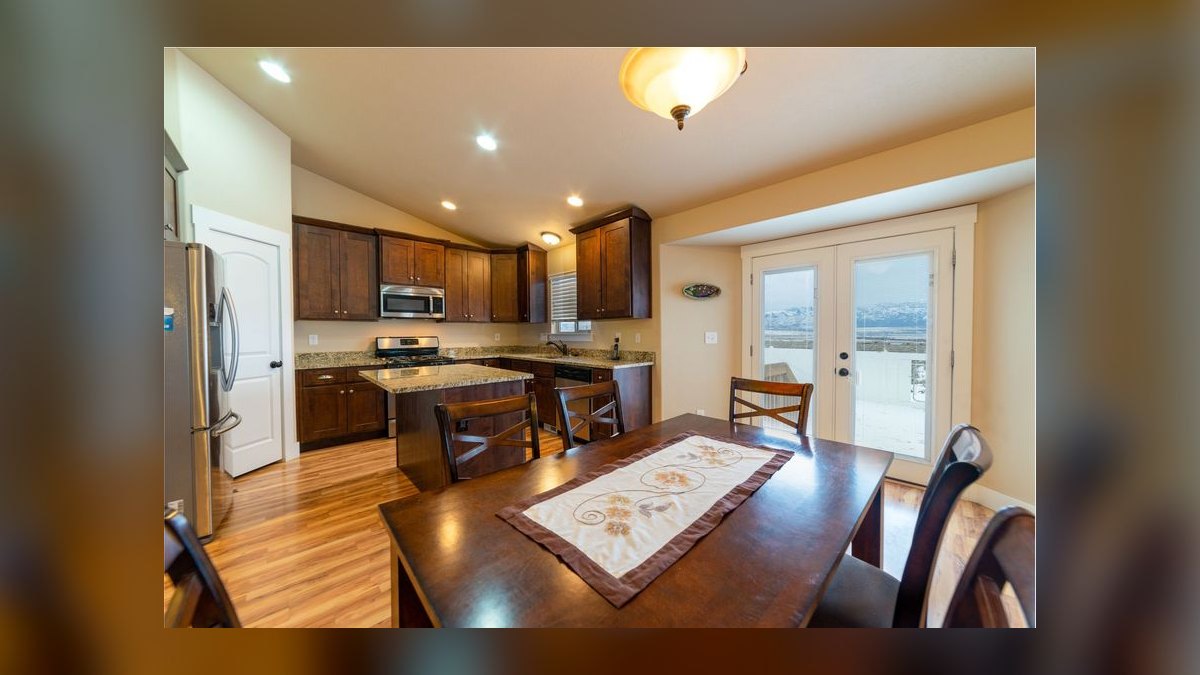
As-is with rent concession. The forgotten third path. You take the space in its current condition, do minimal or no work, and trade the buildout money for free rent or a reduced rate. For a business that can operate in a previously-built suite — a tenant moving into space vacated by a similar user — this is frequently the cheapest total-occupancy outcome available. It never appears in the landlord's opening proposal because it produces no depreciable capital improvement and no reason to push term length.
The economics diverge in ways that matter more than the headline number. Under turnkey, the landlord is amortizing capital into rent, so a $60/SF buildout on a seven-year deal at an implied 8-10% return adds roughly $10-12/SF/year to your rent — you will pay somewhere around $70-85/SF in total rent dollars for that $60/SF of work. Under a cash allowance, the same amortization is happening; it is just buried in the rent number you negotiated rather than shown as a separate line. The difference is not that one is free. The difference is who controls scope, who captures savings, and who eats overruns.
There is a second, quieter difference: quality of finish versus your actual use. A landlord building to a building standard produces a space that is generic on purpose — it re-leases easily. That is exactly what the landlord wants and often not what you want. If your business depends on the space doing something specific — a demo lab, a commercial kitchen, a clean room, a recording booth, sound isolation for a call floor, a data closet with real cooling — a building-standard turnkey will fight you the entire way, and every deviation becomes a change order priced without competition.

Adjacent scenario worth naming: renewals. On a renewal, the landlord's leverage collapses because there is no downtime risk for them and no moving cost for you. Renewal TI packages are frequently 40-60% of what a new tenant would get, but the negotiation is easier and the "as-is plus refresh allowance" structure — new paint, new carpet, minor reconfiguration, $10-20/SF — is often the correct answer rather than either full option.
How to decide without guessing
The decision is not philosophical. It comes down to four variables, and you can score them in an afternoon.
Variable one: do you have a competent construction owner's rep? Not "do you have an office manager who is organized." Self-performing a commercial buildout means reading a set of drawings, running a bid leveling sheet across three GCs, catching that Bidder B excluded fire alarm and Bidder C included it, managing an RFI log, approving submittals, walking a punch list, and pushing back on a change order that claims your electrical scope grew when it did not. If nobody on your team does this, you hire a project manager or owner's rep — typically 3-5% of hard costs, or roughly $5,000-15,000/month on a mid-size job — and that cost has to go into the comparison.

Variable two: how custom is the space? Building-standard office with a few offices and an open floor is a commodity. A landlord's spec suite for 3,000 SF is genuinely cheap for them to produce because it is repeatable. The more your program deviates — supplemental HVAC, floor drains, grease interceptor, three-phase power, structural reinforcement, acoustic separation — the more turnkey pricing inflates, because custom work priced without competition is where markup hides.
Variable three: how hard is your date? A retail tenant with a lease that requires opening before the holiday quarter, or a medical practice with a licensure inspection scheduled, is buying certainty, not square footage. A landlord's construction team knows the building, knows the inspector, and knows which permit desk to call. That is worth real money. A back-office tenant with a flexible move-out on their current lease is buying dollars, not certainty.
Variable four: what is the market doing? In a soft market with high vacancy, allowances climb and landlords concede control easily. In a tight submarket, landlords hold buildout in-house because they want the improvements to be generic and re-leasable. Your leverage on this specific point tracks vacancy in your submarket, not the national number.

One structure deserves more attention than it gets: the hybrid. The landlord turnkeys the shell and core work — rooftop unit replacement, main electrical service, sprinkler main modification, ADA restroom compliance, structural anything — because that work touches base building systems they will own long after you leave, and their contractor already knows the building's quirks. You take an allowance for interior finishes, millwork, flooring, specialty equipment, and low-voltage. Risk lands where competence lives. The lease exhibit has to draw that line explicitly, division by division, or you will spend month three arguing about who owns the ductwork drop from the existing trunk.
The hybrid also solves a problem nobody warns you about: base building deficiencies discovered mid-construction. Open a ceiling in a 1980s building and you may find undersized returns, abandoned conduit, or a fire damper that was never installed. If you self-perform everything, that discovery becomes your fight and possibly your bill. If the landlord owns base building scope, it is contractually theirs. Put a "landlord shall deliver the premises with base building systems in good working order and in compliance with applicable code" clause in the lease regardless of which path you choose. It is the single highest-value sentence in most tenant leases and it costs nothing to ask for.
The numbers that actually move
Ranges vary enormously by market, building class, and year, so treat these as structure rather than as quotes. Get real local pricing before you commit to anything.

Allowance magnitude. For general office in a decent building on a five-to-seven-year term, TI allowances commonly land somewhere in the $30-80/SF range, with higher figures in strong markets, longer terms, and full-floor deals. Medical, lab, restaurant, and other specialized uses run far higher — a restaurant buildout can exceed $200-400/SF all-in, and landlords almost never fund the whole thing. Retail shell-to-open frequently runs $100-200/SF depending on how much the landlord delivers.
What the allowance actually covers. Read this definition carefully in the work letter. A "tenant improvement allowance" is often restricted to hard construction costs only, excluding architecture, engineering, permits, cabling, furniture, signage, and moving. If the definition excludes soft costs, a $60/SF allowance is really about $48-52/SF of buildable value, because A&E runs roughly 6-10% of hard costs and permits, expediting, and low-voltage consume more. Negotiate the definition to include soft costs and to permit any unused balance to be applied against rent. That single change is worth more than several dollars of headline allowance.
Where turnkey premium hides. Landlord construction management fees typically run 3-5% of hard costs and sometimes higher; a GC's overhead and profit runs 8-15% depending on job size and market; general conditions on a mid-size interior job commonly run 8-12%. Stack a landlord CM fee on top of a GC fee on top of general conditions and you can carry 20-30% of the job in overhead before a single stud is set. That is not necessarily fraud — coordination has real cost — but it is the number to interrogate. Ask for the budget broken out by division, with fees shown as separate line items rather than distributed into trade costs.
Time. Realistic durations for a straightforward office interior: two to six weeks for programming and design, four to twelve weeks for permitting depending on jurisdiction (some cities are far worse), eight to sixteen weeks for construction on a mid-size suite, plus two to four weeks for furniture, cabling, and inspections before you can occupy. Total: roughly four to eight months from lease signature to move-in. A landlord's turnkey on a spec suite can compress that dramatically — sometimes to six to ten weeks — because the design already exists and the permit may already be pulled. That compression is the strongest single argument for turnkey and the one worth paying for when your date is real.
Overrun exposure. Carry a contingency of 10-15% of hard costs on a standard buildout and 15-20% on an older building or a complex use. Nothing about self-performing eliminates surprises; it just means you own them. Long-lead equipment is the recurring schedule killer — switchgear, rooftop units, custom glass, and certain specialty equipment can carry lead times measured in months. Order those the week permits are filed, not when the GC gets to that line in the schedule.
The cost of being dark. Compute this before you optimize anything else. If your business does $80,000/month in a location and you go dark for an extra six weeks to save $40,000 on buildout, you did not save money. Retail and restaurant tenants routinely make this mistake. Office tenants have the inverse problem: they extend their old lease month-to-month at a punitive holdover rate — often 150-200% of prior rent — because the new space slipped. Model both.

Amortized TI as a financing product. If your allowance is short and you want more, the landlord will often fund additional dollars amortized into rent at an implied rate. That rate is commonly 8-12% and it is, functionally, an unsecured loan. Compare it honestly against equipment financing, an SBA 504 for a purchase scenario, or a line of credit. Sometimes it is the cheapest money available to a young business with no collateral. Sometimes it is the most expensive and you take it anyway because you have no alternative — just know which one you are doing.
The contract language and the handoff
The decision matters less than the documentation. A well-written work letter attached to a mediocre deal beats a great deal with a vague one.
The work letter is the real document. It should specify: base building condition at delivery, who prepares drawings and who approves them, the approval turnaround clock in business days for each party, allowance amount and exactly what it covers, the draw process, change order authority thresholds, substantial completion definition, and what happens on delay.

Delay attribution decides who pays rent during overruns. Distinguish tenant delay, landlord delay, and force majeure explicitly. Tenant delay is usually defined as your failure to approve drawings within the stated window or a change you request after a defined freeze. Landlord delay is theirs. Force majeure is nobody's. Then tie rent commencement to substantial completion — not to a calendar date — with rent abating day-for-day for landlord delay. In a turnkey deal, an outside date with a real remedy (free rent, then a termination right) is the only thing that makes the landlord's schedule promise meaningful.
Define substantial completion. The workable version: the work is complete per approved drawings except for minor punch items that do not materially interfere with your use, and a certificate of occupancy or its local equivalent has been issued. Without the CO clause, a landlord can declare completion on a space you legally cannot occupy.
Draw mechanics on a cash allowance. Progress payments beat reimbursement-at-the-end for anyone without deep cash reserves. A workable structure is monthly draws against a schedule of values, with the landlord funding within a stated number of days (fifteen to thirty) of receiving a complete package: contractor application for payment, conditional lien waivers for the current period, unconditional waivers for the prior period, and a certification from your architect. Retainage of 5-10% held until punch list completion is normal and appropriate. Get the funding deadline stated as a hard obligation with interest for late payment; otherwise a slow landlord accounting department becomes your cash flow problem.

Change order discipline. Set a written approval threshold — many tenants use $2,500-5,000 — and require pricing before work proceeds, not after. In a turnkey, insist that changes are priced from an agreed unit-cost schedule or with subcontractor backup attached, otherwise every change is priced without competition. Keep a running log with a date, description, cost, and schedule impact for each item. The schedule impact column is the one people forget and the one that generates disputes.
Closeout is where tenants lose money quietly. Before you release final payment, collect: as-built drawings, operations and maintenance manuals for every installed system, equipment warranties in your name where possible, air balance report, final unconditional lien waivers from the GC and every sub and material supplier, and the certificate of occupancy. Missing lien waivers are the classic disaster — a sub who was never paid by your GC can file a mechanic's lien against the property, and the lease almost certainly makes that your obligation to clear, including the landlord's legal fees.
Warranty. One year on labor and installation from substantial completion is standard, with manufacturer warranties passing through on equipment. Put a calendar reminder at month eleven and walk the space looking for problems. HVAC balance issues, door hardware, sealant failures, and flooring seams all surface within the first year and all are free to fix inside the warranty window.

Restoration at the end. Buried in most leases: an obligation to remove your improvements and restore the premises at expiration. Negotiate this at signing, when you have leverage. The clean version is that the landlord identifies at approval time which specific improvements must be removed, and everything else stays. Without that, a landlord can demand removal of an entire buildout years later — a bill that can reach tens of thousands of dollars for a tenant who is already leaving.
Insurance and lien protection during construction. Confirm builder's risk coverage is in place and know whose policy it is. Your GC should carry general liability at limits the lease specifies, with the landlord and its lender named as additional insureds, and you should hold certificates before anyone starts work. In a turnkey, verify the landlord's contractor carries the same — you are still the party occupying a space built by someone whose insurance you never checked.
Sales tax and depreciation. Leasehold improvements you pay for are generally depreciable by you; improvements the landlord funds and owns are generally theirs. This changes the after-tax comparison between turnkey and allowance materially, and the rules shift with tax legislation. Route the final numbers past your CPA before signing. It is a short conversation that occasionally reverses the decision entirely.
Related questions
Does taking a bigger allowance always raise my rent?
Generally yes, in some form. Landlords price deals on net effective rent, so a larger allowance is recovered through higher base rent, a longer term, or smaller free-rent concessions. Compare deals on total occupancy cost across the full term, not on face rate.
What if the landlord's contractor is genuinely the cheapest bid?
Then use them — but under your contract, at market rates, without the landlord's construction management fee layered on top. Their building familiarity is real value. You just should not pay a coordination premium for a relationship you can hire directly.
Can I use unused allowance for furniture and cabling?
Only if the work letter says so. Default language restricts the allowance to hard construction costs. Negotiate explicit permission to apply a defined portion — often 10-20% — toward soft costs, cabling, furniture, signage, or moving, or to credit any balance against rent.
How does this change for a renewal instead of a new lease?
Substantially. On renewal the landlord faces no downtime and you face no moving cost, so allowances shrink. A modest refresh allowance for paint, carpet, and minor reconfiguration is often the realistic ask, and the negotiation resolves faster than a new-lease work letter.
What happens if construction is not finished by the outside date?
Whatever your lease says — which is why the outside date needs a remedy. The standard ladder is day-for-day rent abatement after the target date, escalating abatement after a further delay, and a termination right with deposit return if delivery slips past a hard backstop.
FAQ
Is a turnkey package ever cheaper than a cash allowance?
Yes, in specific cases. A pre-designed spec suite in a multi-tenant building is genuinely cheap for a landlord to reproduce because the drawings, permits, and subcontractor pricing already exist. For a small tenant taking a standard office layout, the landlord's turnkey can beat what you would pay bidding the same scope cold. The savings evaporate as soon as the scope becomes custom.
Who owns the improvements when the lease ends?
Almost always the landlord, regardless of who paid. Improvements become part of the real property. What varies is whether you must remove them — that obligation is negotiable at signing and expensive later. Trade fixtures and equipment you install typically remain yours if the lease says so explicitly and they can be removed without material damage.
How many general contractor bids should I collect?
Three is the working standard, bid from the same complete drawing set, with a leveling sheet comparing scope inclusions and exclusions side by side. Fewer than three gives you no market read; more than four wastes bidders' time and can make good contractors decline to bid. Include at least one who has worked in that building before.
What is the single most important clause in the work letter?
Base building delivery condition — a clear statement of what the landlord is responsible for delivering and warranting: roof, structure, HVAC in working order, electrical service capacity, code compliance in common areas. Almost every mid-construction dispute traces back to an ambiguity about whether a discovered deficiency is base building or tenant work.
Can I negotiate for both turnkey and an allowance?
That is the hybrid structure and it is common in commercial deals. The landlord turnkeys base building and shell scope; you take an allowance for interiors. The lease exhibit must split the scope division by division and state that any savings on the landlord's portion flow to your allowance rather than back to the landlord.
Should I hire an owner's representative if I self-perform?
If nobody internally has run a commercial buildout before, yes. At roughly 3-5% of hard costs, an owner's rep typically returns more than they cost through better bid leveling, change order pushback, and schedule management. On a small, simple suite with an experienced tenant, the fee may not be justified — but that is a judgment about your own capability, not about the size of the job.
Sources
- https://www.boma.org/ — Building Owners and Managers Association International, commercial building operations and leasing standards
- https://www.aia.org/contract-documents — American Institute of Architects standard contract documents for owner-contractor agreements
- https://www.agc.org/ — Associated General Contractors of America, construction industry standards and practices
- https://www.irs.gov/publications/p946 — IRS Publication 946, How to Depreciate Property
- https://www.sba.gov/funding-programs/loans — U.S. Small Business Administration loan programs
- https://www.ccim.com/ — CCIM Institute, commercial real estate investment and analysis education
- https://www.naiop.org/ — NAIOP, Commercial Real Estate Development Association research and resources
- https://www.ada.gov/law-and-regs/design-standards/ — ADA Standards for Accessible Design
- https://www.iccsafe.org/ — International Code Council, model building codes
Related on PULSE
- [Should I take my TI allowance as cash or let the landlord amortize it into rent?](/knowledge/bo0026)
- [How do I structure a lease so I can take the TI allowance as cash and handle construction myself?](/knowledge/bo0258)
- [Should I take a smaller allowance and lower rent, or max allowance with higher base rent?](/knowledge/bo0318)
- [Should I accept an allowance that depreciates over lease years or get it all upfront?](/knowledge/bo0300)
- [How do I finance a buildout if the landlord offers zero TI allowance?](/knowledge/bo0336)
- [Can I require the landlord to escrow my TI allowance before construction begins?](/knowledge/bo0307)
@Kory-White- · if Venmo asks, the last 4 of my number are 2012
 editorialMy Thoughts: How Do I Save on Buildout by Taking a Second-Generation Restaurant Space
 boWhat are the hidden costs of a warm shell delivery that landlords don’t disclose?
 boHow do I force the landlord to pay for an independent cost estimator?
 boShould I hire a tenant rep broker to oversee my buildout or manage it myself?
 boHow do I negotiate a cap on my out-of-pocket costs for the buildout?
 boHow do I terminate a lease early if the landlord fails to deliver the buildout as promised?
 boHow do I negotiate a hard cap on my shared plaza maintenance costs after the buildout?
 boWhat Are the Good and Bad Clauses in a Commercial Lease?
 boShould I demand the landlord provide a third-party cost breakdown for every line item in their GC bid
 boHow do I calculate the true cost of using the landlord’s preferred GC versus my own