
What’s the going rate for buildout hard cost carry during construction in 2027
 Curated byKory White · Fractional CRO · Maryland
 PULSEKNOWLEDGE LIBRARY
There's no single published rate — buildout hard cost carry prices off the funder's cost of capital. Landlords typically amortize TI dollars into rent at their blended borrowing rate plus a small margin; tenant-funded construction loans price at a benchmark like SOFR or prime plus a credit spread. Your actual carry equals average outstanding balance × rate × construction months ÷ 12.
The commercial deal in plain terms
Strip away the jargon and "hard cost carry" describes something simple: somebody fronts the money to build your space, and that money isn't free while the space sits half-finished producing nothing. Hard costs are the physical build — demo, framing, drywall, MEP rough-in, ceilings, flooring, millwork, fixtures, the general contractor's fee and general conditions. Carry is the interest accruing on those dollars from the day the first draw funds until the day the meter stops, which is usually substantial completion or certificate of occupancy, whichever the lease names first.
The confusion around "going rate" comes from the fact that two completely different pricing mechanisms wear the same name. In a landlord-funded deal, carry is not a loan you shop for — it's an internal amortization assumption the landlord bakes into your rent. They advance the TI allowance, then recover it over the lease term at an assumed rate that reflects their own cost of capital plus an administrative bump. Ask a landlord for their carry rate and you'll get a number tied to their construction facility or their portfolio-level debt, not to any public index you can look up. In a tenant-funded deal, carry is real cash leaving your bank account monthly, priced by a lender who underwrites *you* — your credit, your liquidity, your loan-to-cost ratio, and how speculative the project looks on their risk grid.

That distinction drives every downstream negotiation. If the landlord carries, your job is to police the *amortization mechanics*: simple interest versus compounding, the start date of the accrual clock, and whether the rate is disclosed at all. Many leases simply state that unamortized TI is repaid "with interest at X%" and the tenant never asks how X was derived. If you carry, your job is to police the *balance*, because the rate is largely out of your hands once the loan closes — you can't renegotiate SOFR, but you absolutely can control how many dollars sit outstanding for how many months.
A third structure sits between the two: the turnkey buildout. Here the landlord delivers a finished space at an agreed specification and absorbs all hard costs and all carry, recovering the entire package through a higher base rent. The tenant sees no draw schedule, no lender, no interest line. The trade is control — you're accepting the landlord's building standard, their contractor, and their schedule. For a straightforward office fit-out with commodity finishes, turnkey is often the cheapest total-cost path once you price the tenant's own carry and construction management time. For a restaurant, a lab, or anything with heavy process equipment, turnkey rarely works because the landlord can't price the risk on specialized work.
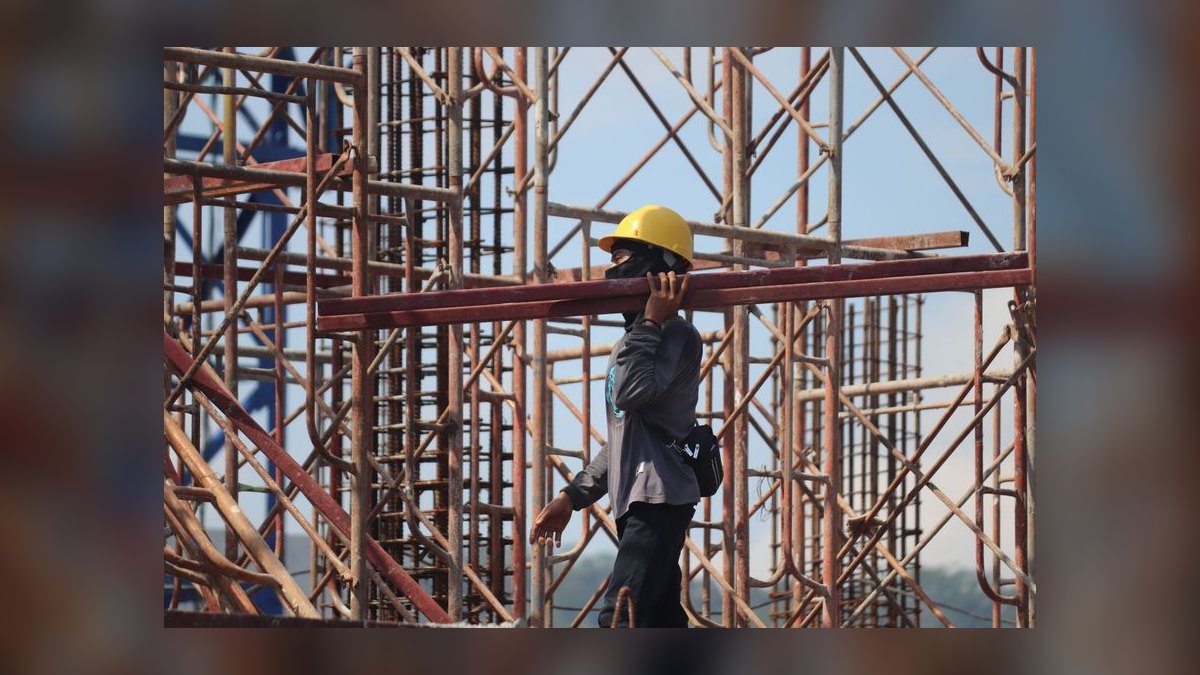
How the buildout process flows
The sequence matters because carry accrues along it. A commercial buildout moves through recognizable stages, and each stage triggers a funding event that adds to the outstanding balance. Understanding the flow lets you see exactly where money starts working against you and where you can insert delay-free savings.
It starts pre-lease, with test fits and a rough order-of-magnitude budget from a contractor. Those early dollars — architect retainer, MEP engineer, sometimes a zoning attorney — are soft costs, and they're often paid before the construction loan even closes, meaning they carry for the entire project duration. Then comes lease execution, permit set drawings, plan review with the local building department, permit issuance, and only then mobilization. Plan review is the single most underestimated stage; jurisdictions vary from a couple of weeks to several months, and expedited review is worth paying for when your carry clock has already started.

Once construction begins, the general contractor bills monthly against a schedule of values. Each billing triggers a draw request, which the lender or landlord inspects — often with a third-party fund control or construction consultant — before funding. Retainage of typically five to ten percent is withheld from each draw until final completion, which has the pleasant side effect of keeping your average balance lower. Punch list, final inspections, and CO close the loop. Rent commencement, in most negotiated leases, keys off substantial completion or a fixed outside date, whichever comes first.
The upstream effect people miss: decisions made in the drawings stage set the carry you'll pay eight months later. A design that specifies long-lead equipment — custom air handlers, specialty electrical gear, imported stone — extends the schedule regardless of how efficiently the field crew works. Value engineering to substitute available materials for long-lead ones frequently saves more in carry and rent-delay than it costs in specification downgrade. Ask your contractor for a lead-time report at the fifty-percent drawing stage, not at buyout, when it's too late to substitute without a redesign.

Costs per square foot, timelines, and ranges
Carry only means something relative to the hard cost base it's charged on, so start there. Buildout costs vary enormously by use type and market, and any number quoted without those qualifiers is noise. Straightforward office fit-out in existing second-generation space with usable MEP infrastructure sits at the low end. Full-gut office, medical, dental, veterinary, lab, and restaurant work climb sharply because of MEP density — a restaurant kitchen's hood, make-up air, grease interceptor, and gas service can consume a large fraction of the entire budget before a single finish is selected. Industrial and warehouse fit-outs are usually cheapest per square foot but largest in absolute area, so the total dollar exposure can still be substantial.
Timelines follow the same logic. Cosmetic refresh of second-generation office might run six to ten weeks from permit. A full-floor office buildout commonly runs three to five months of construction plus one to three months of design and permitting ahead of it. Restaurants and medical suites regularly run six to nine months end to end, with health department and specialty inspections adding review cycles nobody put in the original schedule. Every one of those extra months is a month of carry on whatever balance is outstanding at the time.

Now the arithmetic. The working formula is average outstanding balance × annual rate × (months ÷ 12). For a phased draw where spending is roughly linear across the construction period, average balance approximates half of total hard costs — that's the origin of the common shorthand (Total Hard Costs ÷ 2) × Rate × (Months ÷ 12). Run it on a hypothetical: $1,000,000 in hard costs, drawn evenly over eight months, at an eight percent annual rate. Average balance is roughly $500,000. Carry is $500,000 × 0.08 × (8/12) ≈ $26,667 — call it 2.7 percent of hard costs. Draw the full million on day one instead and the same eight months at the same rate costs about $53,333, double, for no benefit whatsoever except contractor convenience.
That doubling is the most actionable fact on this page. The rate is a market input you mostly can't move; the *shape of the balance curve* is entirely a negotiated term. Push the draw schedule toward just-in-time funding tied to actual subcontractor billing rather than milestone lump sums, and you cut carry by a meaningful fraction without touching a single line of the loan agreement.
Layer soft cost carry on top separately. Architecture, engineering, permit fees, expediting, legal, construction management, insurance, and the lender's own origination fee commonly total a double-digit percentage of hard costs, and because much of it is paid before mobilization, it carries for the *full* duration rather than the half-duration average that hard costs enjoy. Using the same example, $150,000 in soft costs paid entirely upfront at eight percent over eight months is $150,000 × 0.08 × (8/12) = $8,000. Ignore it and your carry estimate is understated by roughly thirty percent.

Where budgets and schedules slip
Change orders are the headline offender, and they come from three predictable places: incomplete drawings issued to bid, unforeseen conditions behind existing walls, and owner-initiated scope additions mid-build. The first is preventable by refusing to bid an eighty-percent drawing set. The second is partially preventable through pre-lease due diligence — get a mechanical engineer into the ceiling before you sign, not after. The third is discipline. Each change order carries a schedule impact that the contractor may or may not quantify honestly, and each week of extension adds carry on the full outstanding balance at exactly the moment your balance is highest.
Permitting is the second offender and the one most often missing from the pro forma entirely. A plan review comment cycle can add weeks; a change of occupancy classification, an accessibility upgrade triggered by valuation thresholds, or a fire marshal requirement for additional sprinkler coverage can add months. In jurisdictions with heavy backlogs, third-party plan review or an expediter is not an extravagance — it's a direct carry-reduction purchase. Compare the expediter's fee against your monthly carry burn and the decision usually makes itself.

Landlord-caused delay is the third, and it's the one with a contractual remedy available. If the landlord is delivering a "vanilla box" or "warm shell" — demised walls, sealed floor, base building HVAC distribution, electrical panel, sprinkler main, ADA-compliant restrooms — and delivers late or incomplete, your contractor sits idle while your loan accrues. Negotiate an explicit delivery condition definition, a delivery date, and a remedy: carry abatement, rent abatement at a stated daily rate, or an outside date after which the tenant may terminate. Without a written condition standard, "vanilla box" means whatever the landlord says it means on delivery day.
Long-lead procurement deserves its own line in the risk register. Switchgear, rooftop units, custom glass, and specialty kitchen equipment have run on extended lead times across recent years, and a single missing component can idle a finished-except-for-one-thing space. The mitigation is early release: buy out and deposit on long-lead items ahead of the general construction contract. That does increase your early outstanding balance and therefore some carry, but the trade against months of schedule slip is almost always favorable. Model both scenarios rather than assuming the lower early balance wins.
Finally, watch the rent commencement trigger. A lease that starts rent at "substantial completion" and a construction schedule that slips means you're paying carry with no revenue from the space — but at least no rent. A lease with a fixed rent commencement date and a slipped schedule means paying carry *and* rent on a space you cannot occupy. That's the double hit. Fixed-date commencement is acceptable only with a tenant-delay carve-out that pushes the date day-for-day for landlord or force-majeure delay.
Decision framework
The right structure depends on three variables: who has the cheaper capital, how specialized the work is, and how long you plan to occupy the space. Work through them in order rather than defaulting to whatever the broker proposes first.

If the landlord is an institutional owner with portfolio-level debt and you're a small business borrowing on a line of credit, the landlord's capital is almost certainly cheaper — push everything into the TI allowance and accept the amortization into rent. If you're a well-capitalized company with cash on the balance sheet and the landlord is a small private owner financing on a bank construction loan, you may be the cheaper source, and a lower TI allowance traded for lower base rent is the better deal. Run both as a net effective rent calculation over the full term, discounted, rather than comparing headline numbers.
On specialization: the more your buildout diverges from generic, the more the landlord will price risk into the carry and the allowance — because in a default, specialized improvements have little re-letting value. Restaurant, lab, and clean-room work reliably sees less generous allowances and stiffer terms. On term length: carry amortized into rent over a ten-year lease is far less painful per month than the same dollars over a five-year term, which is why landlords trade allowance dollars for lease years.

Whichever branch you land on, five negotiated terms move the number more than the rate ever will. First, a carry-free period covering mobilization and early work, so the clock starts at meaningful progress rather than at loan close. Second, carry calculated on the *outstanding drawn balance*, not the full allowance — a distinction that quietly doubles the charge when it goes the landlord's way. Third, simple monthly interest rather than daily compounding. Fourth, an explicit pause on the carry clock for landlord-caused or permitting delay outside tenant control. Fifth, a stated cap on total carry so an open-ended schedule can't become an open-ended charge.
Adjacent structures worth pricing before you commit: a sale-leaseback if you own the building and need the buildout capital; equipment financing for the FF&E portion, which often prices better than construction debt and keeps that balance off the construction loan; and SBA 504 or 7(a) financing for owner-occupied space, which carries longer amortization and different rate mechanics than a conventional construction facility. Each moves a slice of the balance onto cheaper or longer money, and the carry math improves accordingly.
Related questions
Does the carry clock stop at substantial completion or at CO?
It depends entirely on the lease or loan language. Substantial completion is earlier and better for the tenant; certificate of occupancy can trail it by weeks over punch-list and inspection items. Name the trigger explicitly and define who certifies it.
Can I capitalize carry into the TI allowance?
Often yes. Ask the landlord to gross up the allowance by the estimated interest cost so the carry is funded rather than paid out of pocket. It raises the amortized amount in rent but preserves working capital during construction.
Is construction interest tax deductible?
Interest during construction generally must be capitalized into the asset's basis rather than deducted currently, then recovered through depreciation. Rules differ by entity, ownership, and improvement classification — confirm treatment with your CPA before modeling the after-tax number.
How much retainage should I expect withheld?
Five to ten percent of each draw is the common range, released at final completion after punch list and lien waivers. Retainage lowers your carry slightly by keeping the balance down, but it also means the contractor is financing a slice of the job.
Does a pre-leased project get better carry terms than a spec build?
Yes, consistently. Lenders price speculative construction with wider spreads and lower loan-to-cost ratios because there's no contracted income to underwrite. A signed lease with a creditworthy tenant materially improves both the rate and the advance rate.
FAQ
What exactly is hard cost carry in a buildout? It's the interest accruing on money borrowed to fund the physical construction — materials, labor, equipment, contractor fee — from the first draw until the space is complete. It's the cost of holding that debt during a period when the space produces no revenue.
Is there a published "going rate" I can look up for 2027? No. Carry isn't quoted as an index. Tenant-side construction debt prices off a benchmark such as SOFR or prime plus a credit spread; landlord-side carry reflects the owner's blended cost of capital plus an administrative margin. Both are deal-specific and change with the rate environment, so get current quotes rather than relying on any number in an article.
Does the landlord always absorb the carry? Only when the landlord funds the entire buildout through the TI allowance or delivers turnkey. If you top up the allowance or pay for anything above the base specification, the carry on your portion is yours. Read the lease for whether the allowance is stated inclusive or exclusive of financing cost.
How do I estimate carry before I sign anything? Multiply average outstanding balance by the annual rate by construction months divided by twelve. For a linear draw, average balance is roughly half of total hard costs. Then add soft cost carry separately at the full duration, since soft costs are usually paid upfront. Ask the lender for a written carry estimate against your actual draw schedule.
What single change reduces carry the most? Restructuring the draw schedule. Moving from a lump-sum or front-loaded draw to just-in-time funding tied to actual subcontractor billing roughly halves the average outstanding balance, and carry scales directly with that balance. It costs nothing but negotiation.
How does hard cost carry differ from soft cost carry? Hard cost carry accrues on physical construction spending, which ramps up gradually and averages about half the total across the project. Soft cost carry accrues on design, permitting, legal, and insurance spending, most of which is paid before mobilization and therefore carries for the entire duration — a smaller base but a longer clock.
Sources
- https://www.federalreserve.gov/releases/h15/ — Federal Reserve selected interest rates, including prime
- https://www.newyorkfed.org/markets/reference-rates/sofr — SOFR reference rate, Federal Reserve Bank of New York
- https://www.sba.gov/funding-programs/loans — SBA loan programs including 504 and 7(a)
- https://www.irs.gov/publications/p535 — IRS guidance on business interest and capitalization
- https://www.aia.org/resources/6076-contract-documents — AIA standard construction contract documents
- https://www.boma.org/ — Building Owners and Managers Association, standards and measurement
- https://www.cfma.org/ — Construction Financial Management Association
- https://www.iccsafe.org/ — International Code Council, building code and permitting
- https://www.nar.realtor/commercial — National Association of Realtors commercial real estate research
Related on PULSE
- [How much does a 10,000 sq ft cold storage warehouse buildout cost in 2027?](/knowledge/bo348)
- [Can I get the landlord to reimburse my moving and storage costs during the buildout](/knowledge/bo0332)
- [What's the average per-square-foot cost for a restaurant buildout with full kitchen in 2027?](/knowledge/bo0322)
- [What's the average cost to run new electrical for a private server room buildout in 2027?](/knowledge/bo0308)
- [How do I get the landlord to pay for temporary HVAC during an off-hours buildout?](/knowledge/bo0304)
- [What's the average buildout cost for a coffee shop with drive-through in 2027](/knowledge/bo0293)
@Kory-White- · if Venmo asks, the last 4 of my number are 2012
 editorialMy Thoughts: How Do I Save on Buildout by Taking a Second-Generation Restaurant Space
 boWhat are the hidden costs of a warm shell delivery that landlords don’t disclose?
 boHow do I force the landlord to pay for an independent cost estimator?
 boShould I hire a tenant rep broker to oversee my buildout or manage it myself?
 boHow do I negotiate a cap on my out-of-pocket costs for the buildout?
 boHow do I terminate a lease early if the landlord fails to deliver the buildout as promised?
 boHow do I negotiate a hard cap on my shared plaza maintenance costs after the buildout?
 boWhat Are the Good and Bad Clauses in a Commercial Lease?
 boShould I demand the landlord provide a third-party cost breakdown for every line item in their GC bid
 boHow do I calculate the true cost of using the landlord’s preferred GC versus my own