
What’s the average buildout cost for a coffee shop with drive-through in 2027
 Curated byKory White · Fractional CRO · Maryland
 PULSEKNOWLEDGE LIBRARY
Expect roughly $450,000 to $1.2 million all-in for a drive-through coffee shop in 2027. A soft conversion of an existing drive-through QSR shell lands near the bottom; a ground-up build on a raw pad site with site work, utilities, and impact fees pushes past $1 million. Equipment, lane infrastructure, and MEP dominate.
The numbers you should expect
The honest answer to "what does it cost" is that there are three distinct buildings hiding inside that one question, and they price completely differently. Break the range apart before you take any number seriously.
Soft conversion of an existing drive-through QSR: roughly $250,000 to $450,000. You inherit the lane, the canopy footings, the grease interceptor, the hood shaft, the three-phase service, and the stacking geometry that already cleared planning once. Your spend is finishes, millwork, branding, equipment, and whatever the health department makes you touch. On a 1,200–1,800 sq ft box that pencils out to roughly $150–$300 per square foot of interior work, plus equipment on top. The catch: these shells are the most competitive real estate in the sector. Dutch Bros, Scooter's, 7 Brew, and every regional chaser are hunting the same former Taco Bell and Hardee's pads, so you rarely win one on price.
Conversion of a non-drive-through building — retail end-cap, old bank, freestanding hair salon: roughly $500,000 to $850,000. Now you're adding the lane from scratch. Demolishing parking, re-grading for drainage, running conduit and data to a new order point, pouring a canopy foundation, and — the part that kills schedules — going back through planning for a conditional use permit you don't currently have. Banks are the exception worth hunting: a former branch often already has a teller lane, a canopy, and a drive aisle that a civil engineer can re-stripe into a coffee lane for a fraction of new construction.

Ground-up on a pad site: roughly $700,000 to $1.4 million, and $1M+ is the realistic center of mass in 2027. You're buying site work, utility laterals, stormwater detention, foundation, shell, roof, and full MEP with nothing inherited. Shell construction alone commonly runs $250–$400 per square foot in 2027 dollars before a single piece of equipment lands, and that's before the pad itself — land or ground lease is a separate conversation entirely.
Layer in the modular category, because it changed the math. The 500–800 sq ft double-lane kiosk model — the format Dutch Bros and 7 Brew scaled on — arrives as a factory-built or panelized structure and lands in the $400,000 to $750,000 range including site work. You trade dining room revenue and third-place brand equity for speed, a smaller footprint, and a buildout you can complete in a fraction of the time. For a pure throughput play in a suburban market, that trade is usually correct.
Two numbers to internalize. First, equipment is $85,000 to $200,000 and sits on top of every construction figure above; a two-group La Marzocco or Nuova Simonelli, two or three grinders, a batch brewer, an undercounter and a walk-in, a cube ice machine, and a proper water filtration system get you there quickly. Second, soft costs run 12–20% of hard costs — architecture, MEP and civil engineering, permits, impact fees, legal, builder's risk, and construction-period interest. Operators who quote themselves a "buildout number" that excludes soft costs are typically 15% light before the first bid comes back.
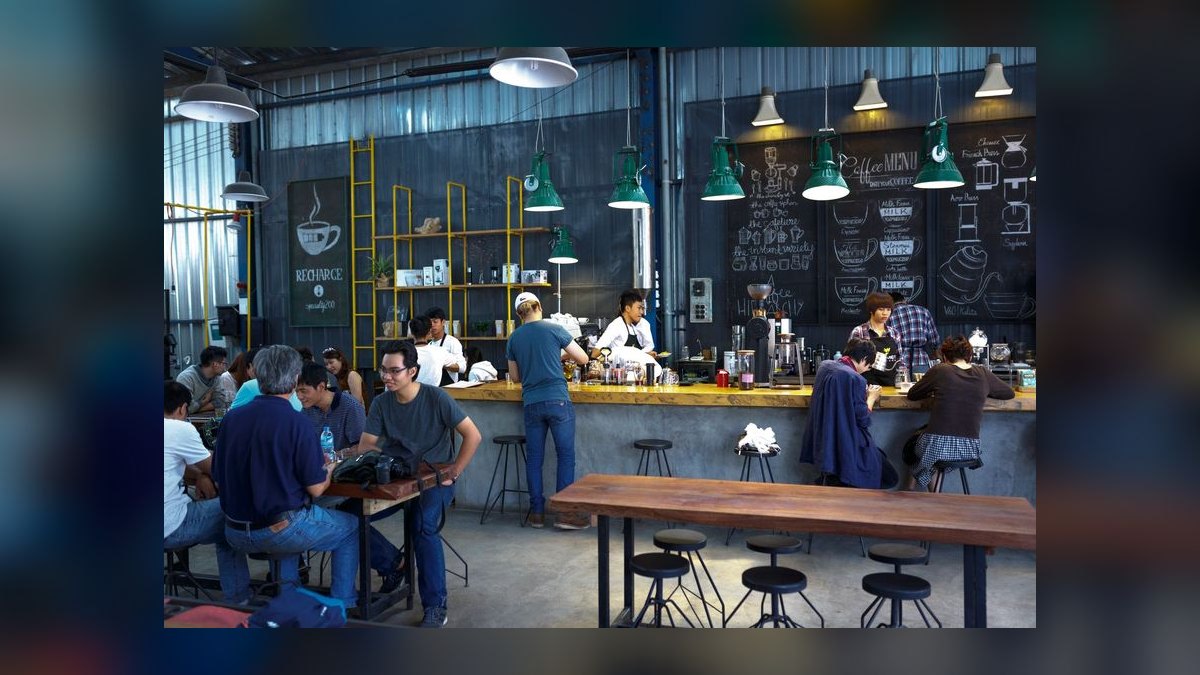
The commercial reality behind the average: a national chain building 40 units a year negotiates prototype pricing, buys equipment on a master agreement, and lands well under what a first-time independent pays for the identical box. If you're a single-unit operator, price yourself at the upper third of every range here and be pleasantly surprised rather than the reverse.
What drives those numbers
Five variables explain most of the variance between a $400K project and a $1.1M one. Understand which ones you control and which the site hands you.
Lane infrastructure is the line item everyone underestimates. A drive-through is a system, not a strip of asphalt. You're paying for trenching for power and data to the order point, subgrade prep and paving for the lane and the stacking area, drainage and possibly a new inlet, a canopy engineered for local wind and snow loads, a digital menu board and confirmation screen, a two-way intercom, a headset system, a payment terminal at the order point and often a second at the window, and a drive-through timer that feeds your POS. Budget $75,000 to $200,000 for the whole assembly on a new lane, and closer to $25,000–$50,000 if you're refreshing the tech on an inherited one. Double-lane configurations — two order points converging to one or two windows — add 30–50% to the paving and equipment side but are the reason the fast-growing brands hit sub-four-minute service times.
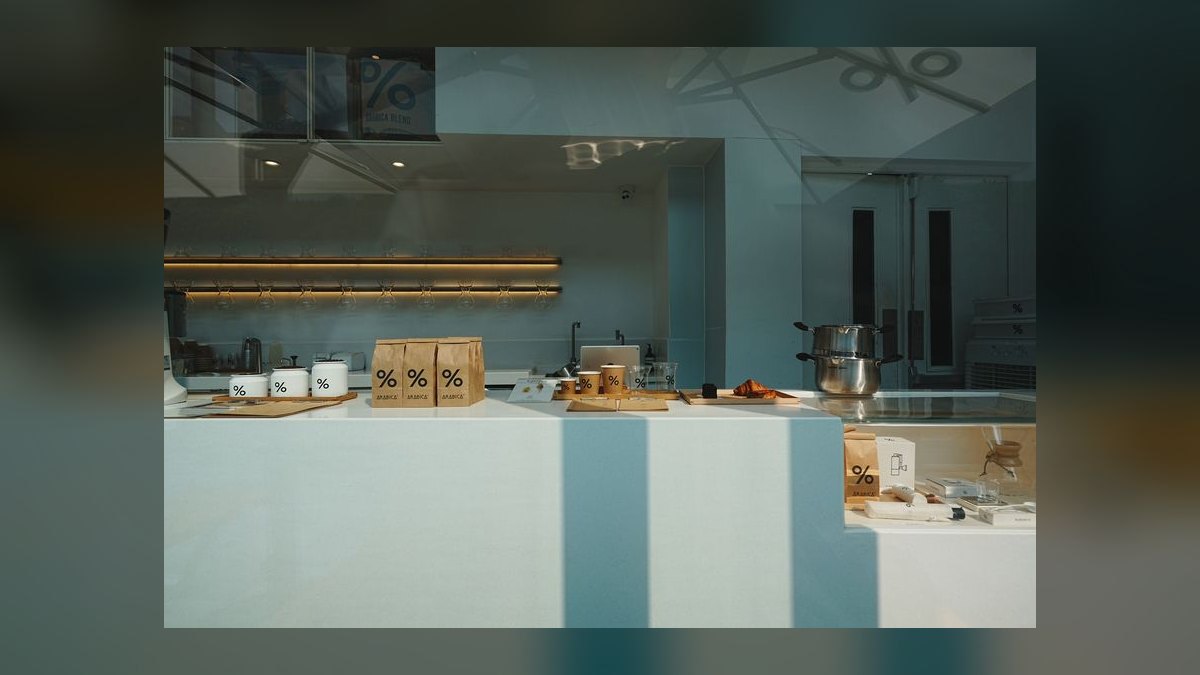
Stacking requirements are a zoning constraint that becomes a construction cost. Most municipalities require somewhere between 6 and 12 vehicle stacking spaces measured back from the order point, at roughly 20 feet per car. Do the arithmetic before you sign: 10 spaces is 200 linear feet of lane you must fit on the parcel without spilling into the public right-of-way. Sites that fail this test either get redesigned into a wrapping lane — more paving, more retaining, more drainage — or die. This is the single most common reason a great-looking corner lot doesn't work.
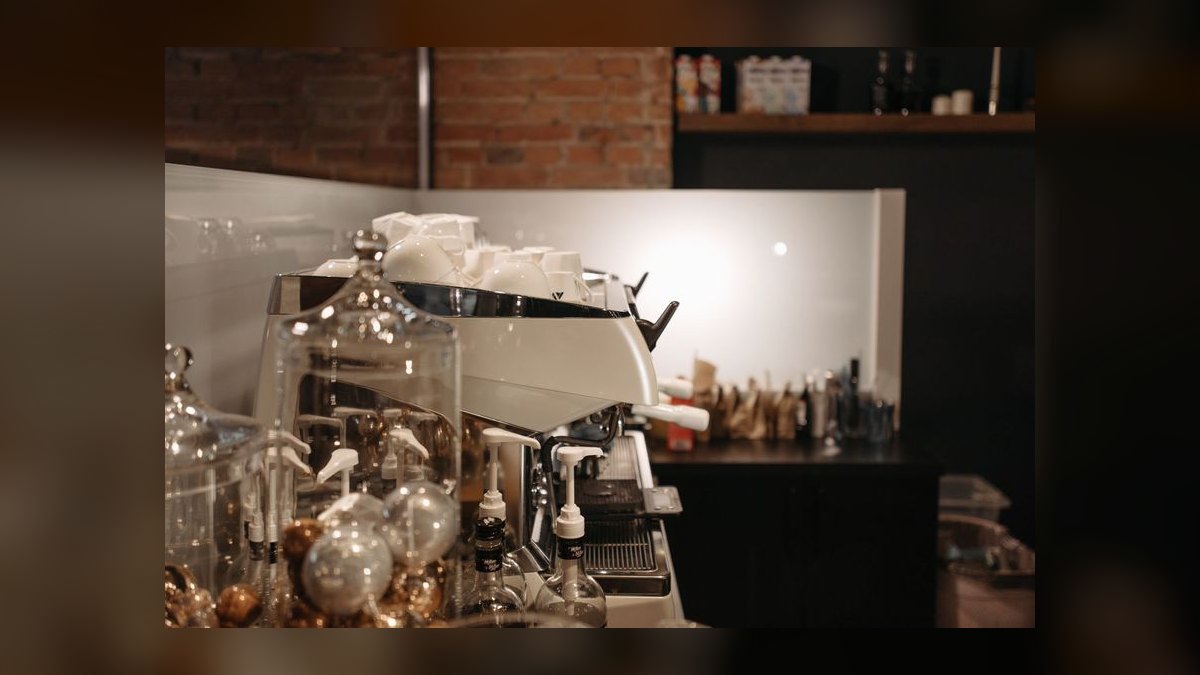
MEP scales with the coffee, not the square footage. A three-group espresso machine wants a dedicated 30–50 amp circuit. Add refrigeration, the ice machine, the batch brewers, the POS and drive-through tech, and a makeup air unit and you're routinely at a 400-amp service on a footprint that a retail tenant would run on 200. If the existing panel can't carry it, a service upgrade with a new transformer coordinated through the utility is $30,000–$100,000 and — worse than the money — a lead time you cannot compress. On the plumbing side, coffee is brutal on water: a proper multi-stage filtration and softening system is $3,000–$10,000 installed and pays for itself in equipment life and shot consistency.
Whether you serve food changes the building. Espresso alone needs modest ventilation. Add a panini press or a conveyor oven and you're into Type I hood territory with fire suppression, a makeup air unit, a grease interceptor sized by the health department, and a roof penetration — call it $40,000 to $90,000 of scope that doesn't exist on a beverage-only concept. Many drive-through operators deliberately stay beverage-and-prepackaged-pastry precisely to avoid this fork, and it's one of the cleanest cost decisions available.
Site conditions are the wildcard that ruins budgets. Contaminated soil on a former gas station or dry cleaner, an undersized stormwater system that triggers a detention vault, a utility lateral 300 feet away, unsuitable subgrade requiring undercut and import — none of these show up in a broker's flyer, and any one can add six figures.
Lease, TI allowance, and negotiation levers
The buildout number you actually pay is a negotiated figure, not a construction estimate. Most first-time operators treat the lease and the construction budget as separate workstreams, which is exactly backwards — the lease is where a third of your buildout cost gets decided.
Tenant improvement allowances for coffee in 2027 typically run $30 to $80 per square foot, with drive-through pads at the upper end because the landlord knows a coffee tenant generates traffic that lifts the rest of the center. On a 1,500 sq ft box that's $45,000 to $120,000 — real money, but rarely more than a quarter of your spend, so don't build a pro forma that assumes TI covers the project. Landlords underwrite TI against your credit and your lease term. A ten-year term with two five-year options and a personal guarantee pulls a materially better allowance than a five-year deal from a single-unit LLC with no operating history.
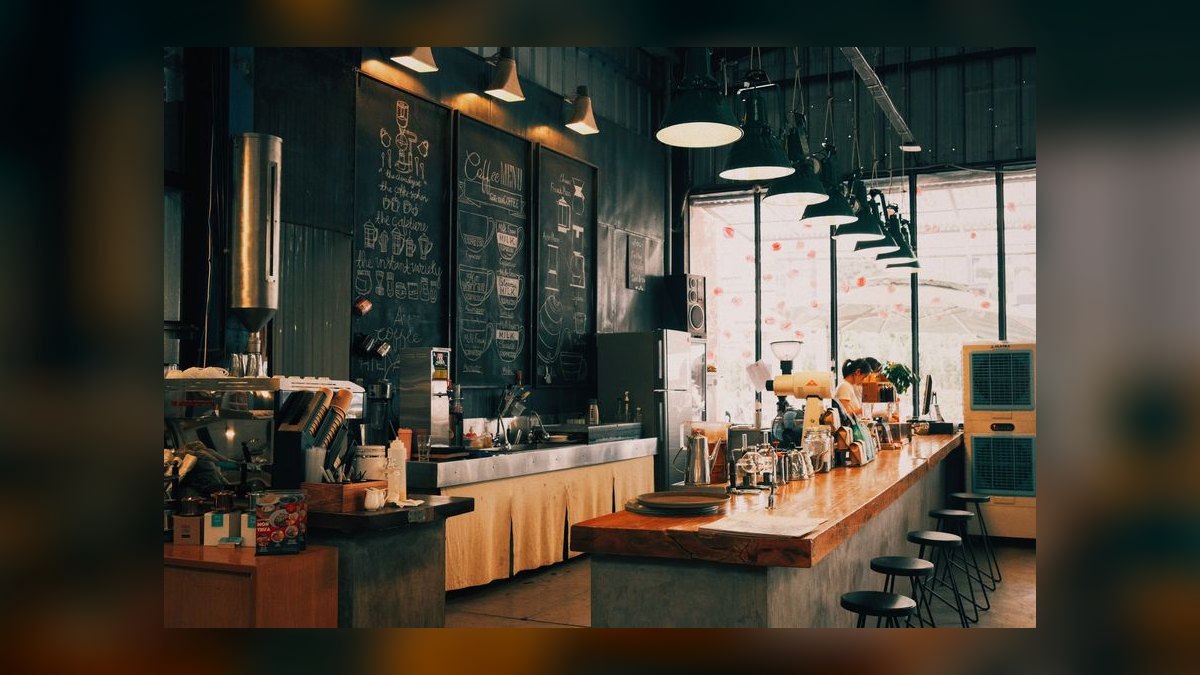
Understand that TI is financed, not gifted. A landlord contributing $75,000 is amortizing it into your base rent at their cost of capital, typically 8–10%. Over a ten-year term that's roughly $900–$1,000 a month embedded in rent. Sometimes that's the right trade — capital preservation matters more than total cost when you're opening your first unit. Sometimes it isn't, and you're better off funding the buildout with an SBA 504 or 7(a) loan at a lower rate and negotiating rent down instead. Run both models before you decide; the delta over a ten-year term is frequently $40,000 or more.
The levers that actually move, ranked by how often they work:
*Free rent during construction and ramp.* Easier for a landlord to grant than cash, because it costs them nothing out of pocket today. Ask for the entire construction period plus 60–90 days post-opening. On $8,000 a month that's $80,000+ of working capital — often worth more to a first-time operator than an equivalent TI bump, because it lands exactly when the business is cash-negative.
*Landlord-delivered site work.* Push paving, the drive lane subgrade, striping, lighting, and landscaping onto the landlord as a capital improvement to their asset rather than your tenant improvement. It genuinely is their asset — the lane outlives your lease — and this argument lands more often than people expect.
*A TI overage or savings clause.* If you come in under the allowance, you keep the difference or apply it against rent. Without this clause, unspent allowance simply evaporates, which quietly incentivizes your GC to spend all of it.
*Co-tenancy and exclusivity.* In a strip center, an exclusive on coffee and espresso beverages is worth more than a few dollars of TI. So is a co-tenancy clause that reduces rent if the anchor goes dark.
*Kickout rights.* A sales threshold at month 36 that lets you exit with a defined termination fee. Landlords resist, but on a marginal site it converts a catastrophic outcome into a survivable one.
On turnkey deals: some landlords will build the shell and the lane to your spec and charge higher rent. Almost always more expensive over the term, almost always the right call if capital is your binding constraint and this is unit one. Get the specification in exhibit-level detail — "turnkey" without a finish schedule and equipment list is a lawsuit waiting for a reason.
Two procedural points. First, get a zoning letter of determination in writing from the planning department before your lease goes hard, and make lease execution contingent on drive-through approval, permits, and a satisfactory Phase I environmental. Never go non-refundable on a site whose entitlement you don't hold. Second, hire a broker who represents tenants exclusively and does restaurant deals. Their commission is paid by the landlord, and a good one routinely finds more value in lease terms than they cost.
Sequencing the buildout
Cost and schedule are the same problem viewed from two angles. Every week of delay is a week of rent, interest, and pre-opening payroll with no revenue behind it, so the sequence matters as much as the budget.
Weeks 1–6: entitlement and due diligence. Zoning letter, traffic study if the jurisdiction demands one, Phase I environmental, ALTA survey, and a preliminary civil review of stacking and drainage. Spend $10,000–$25,000 here. It is the cheapest money in the entire project because it's the only phase where "walk away" is still free.

Weeks 4–14: design and permitting, running parallel. Architect, MEP engineer, and civil engineer working simultaneously, with the equipment schedule locked early because it drives the electrical and plumbing rough-in. Budget 6–10% of hard costs for the full design set. Permitting is the wildcard: a straightforward conversion in a business-friendly jurisdiction clears in four to six weeks, while a conditional use permit requiring a public hearing can take four to six months. Ask the planning counter directly how many hearings a drive-through CUP requires — the answer reshapes your entire schedule.
Week 8 onward: order long-lead items. This is where operators lose the most time. Electrical switchgear and transformers have run 20–40 weeks in recent years, rooftop HVAC units 12–20, walk-in coolers 8–16, and custom canopies and menu board packages 10–16. Every one of those needs to be ordered while you're still in permitting, not after. Release deposits on long-lead equipment before the permit lands and accept the risk — the alternative is a finished building waiting eight weeks for a switchboard.
Weeks 14–30: construction. Site work and utilities, then foundation and shell on a ground-up, then MEP rough-in, inspections, finishes, equipment set, and final inspections. A conversion compresses this to 10–16 weeks. Ground-up runs 20–32. Build float in — inspection scheduling alone can eat two weeks nobody planned for.
Final 3 weeks: pre-opening. Staff hiring and training, equipment calibration and dial-in, a health department pre-opening inspection, initial inventory, POS and drive-through timer configuration, and at least two full soft-opening days at real volume. Pre-opening costs $25,000 to $60,000 and gets left out of budgets constantly.
Then the part almost nobody funds: working capital. Hold 90 to 120 days of operating expenses beyond the buildout. Rent, payroll, insurance, and product before the unit reaches break-even is typically $60,000 to $150,000. A shop that opens fully built and undercapitalized fails for reasons that have nothing to do with the coffee.
A phased strategy worth considering. Open with the lane, the core equipment, and a minimal interior. Defer the patio, the walk-up window, the second espresso machine, and the premium millwork to month twelve, funded from cash flow once you know your actual daypart mix. The upstream effect is smaller debt service during the fragile first year. The downside is a second round of contractor mobilization and possibly a second permit — so phase the things that are genuinely additive, never the things buried behind a wall.
Related questions
Is a modular drive-through kiosk actually cheaper than a conventional build?
Usually yes on total cost and dramatically so on schedule — $400,000 to $750,000 including site work, with the structure delivered in weeks rather than built in months. You still pay full price for site work, utilities, and entitlement. You give up dining room revenue and a brand experience some markets expect.
How much does adding a second drive-through lane cost?
Typically $60,000 to $150,000 more than a single lane: additional paving and drainage, a second order point with menu board and payment terminal, and often a wider curb cut. It pays back through throughput — dual lanes are how the fastest brands push past 200 cars in a peak hour.
Can I get an SBA loan to cover a coffee shop buildout?
Yes. SBA 7(a) commonly funds leasehold improvements, equipment, and working capital up to $5 million, while 504 loans suit owned real estate and long-life equipment. Expect a 10–20% equity injection, a personal guarantee, and a 60–90 day underwriting timeline you should start early.
What ongoing costs does a drive-through add after opening?
Lane maintenance and repaving, menu board and intercom service contracts, higher utility draw from exterior signage and the canopy, periodic seal-coating and restriping, and in some jurisdictions an annual drive-through use permit renewal. Budget a few thousand dollars a year, more once the pavement passes year seven.
Does the same math apply to other drive-through concepts?
Broadly yes. Quick-serve chicken, smoothies, and pharmacy pickup share the lane infrastructure, stacking, and entitlement costs almost line for line. Where they diverge is the kitchen: a fryer-based concept carries far heavier hood, grease, and gas scope than a beverage shop, often adding $100,000 or more.
FAQ
What's the single biggest cost surprise in a drive-through coffee buildout? The electrical service upgrade. Operators budget the espresso machine but not the 400-amp service it implies, and when the existing panel can't carry the load, a utility-coordinated upgrade with a new transformer runs $30,000 to $100,000 and can add months to the schedule. Have an electrician load-calculate the equipment list before your lease goes hard.
How much contingency should I actually carry? Fifteen percent minimum on a conversion, twenty on a ground-up. Conversions hide surprises behind walls — undersized panels, failed plumbing, undocumented structural work — and ground-up projects carry site and weather risk. A contingency you don't spend becomes working capital, which you will use regardless.
Is it cheaper to buy the pad or ground-lease it? Ground-leasing preserves capital and keeps the buildout your only capital outlay, which matters most for a first unit. Buying builds equity and gives you an exit asset independent of the operating business. Multi-unit operators frequently lease early units and buy later ones once cash flow supports the down payment.
Do I need a civil engineer if I'm converting an existing drive-through? Almost always, even when the lane already exists. Any change to the lane geometry, the order point location, or the impervious surface area typically triggers a civil review of drainage and stacking. Budget $5,000 to $20,000. It's cheap insurance against a permit rejection that stalls the whole project.
How does a franchise buildout compare to an independent one? Franchise prototypes cost more up front — mandated finishes, specified equipment, and required signage packages leave little room to value-engineer — but they come with vetted drawings, negotiated vendor pricing, and a site-selection model that reduces the odds of a bad location. Add the franchise fee and ongoing royalties to any comparison.
What's the realistic timeline from signed lease to first customer? Four to six months for a soft conversion of an existing drive-through, six to nine for a conversion that adds a lane, and nine to fifteen for ground-up including entitlement. Permitting variance between jurisdictions is the largest single driver, and long-lead equipment is the second.
Sources
- https://www.sba.gov/funding-programs/loans/7a-loans
- https://www.ncausa.org/
- https://restaurant.org/
- https://www.icsc.com/
- https://www.ashrae.org/
- https://www.epa.gov/npdes/stormwater-discharges-construction-activities
- https://www.usgbc.org/leed
- https://www.bls.gov/ppi/
- https://www.boma.org/
- https://www.scra.org/
Related on PULSE
- [What's the average per-square-foot cost for a restaurant buildout with full kitchen in 2027?](/knowledge/bo0322)
- [How Do I Budget a Coffee Shop or Cafe Buildout?](/knowledge/bo0109)
- [How Do I Structure a Buildout So I'm Not Stuck With the Cost If the Deal Falls Through?](/knowledge/bo0024)
- [What is the average cost per square foot for a cold storage buildout with blast freezer in 2027?](/knowledge/bo0337)
- [What's the average cost to run new electrical for a private server room buildout in 2027?](/knowledge/bo0308)
- [What's the average cost per square foot for a warehouse mezzanine buildout in 2027?](/knowledge/bo0287)
@Kory-White- · if Venmo asks, the last 4 of my number are 2012
 editorialMy Thoughts: How Do I Save on Buildout by Taking a Second-Generation Restaurant Space
 boWhat are the hidden costs of a warm shell delivery that landlords don’t disclose?
 boHow do I force the landlord to pay for an independent cost estimator?
 boShould I hire a tenant rep broker to oversee my buildout or manage it myself?
 boHow do I negotiate a cap on my out-of-pocket costs for the buildout?
 boHow do I terminate a lease early if the landlord fails to deliver the buildout as promised?
 boHow do I negotiate a hard cap on my shared plaza maintenance costs after the buildout?
 boWhat Are the Good and Bad Clauses in a Commercial Lease?
 boShould I demand the landlord provide a third-party cost breakdown for every line item in their GC bid
 boHow do I calculate the true cost of using the landlord’s preferred GC versus my own