
Should I negotiate a separate maintenance cap for specialty buildout features like a kitchen?
 Curated byKory White · Fractional CRO · Maryland
 PULSEKNOWLEDGE LIBRARY
Yes. Negotiate a separate maintenance cap for specialty buildout features like a commercial kitchen. Standard lease caps are sized for drywall and carpet, not grease traps, hoods, and refrigeration. Name each system, cap your annual exposure in fixed dollars, exclude capital replacements, and reset the cap every lease year.
The end-to-end buildout process and where the maintenance cap gets decided
Most tenants discover the maintenance problem eighteen months after they sign, when the hood motor seizes on a Friday night. By then the leverage is gone. The cap has to be negotiated at a specific point in the buildout sequence, and understanding that sequence is what lets you time the ask.
The sequence runs roughly like this. You tour space and issue a letter of intent (LOI). The LOI covers rent, term, tenant improvement (TI) allowance, free rent, and options — and this is the first and best place to plant the specialty maintenance cap as a bullet point. It costs you nothing to include it in the LOI, and once it's in the non-binding term sheet, removing it later requires the landlord to affirmatively take something back, which is psychologically harder than never granting it. Tenants who skip this step and try to raise the cap during lease redlines are negotiating uphill against a landlord who has already priced the deal.
After LOI, the architect produces a test fit, then construction documents. This is where the specialty scope becomes concrete: the kitchen equipment schedule, the mechanical drawings showing makeup air and exhaust, the plumbing riser with the grease interceptor. Those drawings are your definition list. Do not write "kitchen equipment" into the lease when you have a stamped equipment schedule that itemizes every unit with a model number. Attach the schedule as a lease exhibit and define Specialty Features by reference to it.
Next comes permitting and the general contractor (GC) bid. Health department and fire marshal review will force revisions — a grease interceptor sized larger than the architect drew, a Type I hood where the plans showed Type II, a fire suppression system with more nozzles than budgeted. These changes matter to your cap because they change what you'll be maintaining. If the fire marshal upsizes your suppression system mid-permit, the annual inspection and recharge cost goes up, and your cap should be drafted to reference the as-built condition, not the design-phase drawing.
Then construction, punch list, certificate of occupancy, and rent commencement. Somewhere in there the landlord's construction manager signs off on the work and the improvements legally become part of the building. That legal moment — the point at which affixed improvements become the landlord's real property — is the crux of your entire argument for a separate cap, and it happens whether or not anyone writes it down.
The practical takeaway: the cap is a lease-negotiation artifact, but its content is a construction-document artifact. Negotiate the principle early, populate the specifics from the drawings, and true it up before you sign the final lease amendment at rent commencement.
Roles: who actually controls the maintenance outcome
Four parties shape whether you end up with a workable cap, and they have genuinely different incentives. Reading those incentives correctly is more useful than any piece of model language.
The landlord wants predictable net income and no capital calls. Institutional landlords — REITs, pension-fund advisors, large private equity owners — care about the asset's exit value and are usually *more* willing to grant a specialty cap than a mom-and-pop owner, because they have reserve budgets, they underwrite capital expenditure, and they understand that a failed restaurant tenant costs them far more than a compressor. A single-asset owner with a personal guarantee on the mortgage often cannot absorb a five-figure surprise, so they fight harder. Adjust your ask accordingly: with institutional ownership, push for a clean cap with landlord responsibility above it; with a small owner, a cost-sharing split or a rent credit may be the only realistic path.
The landlord's property manager is the person who will actually receive your repair calls, and they are usually measured on operating-expense variance. A property manager who gets a surprise invoice they didn't budget for will fight it regardless of what the lease says. This argues for building an operational process into your cap language: a written notice procedure, an agreed vendor list, and a threshold above which you and the landlord jointly approve the scope. Caps that work in practice are caps the property manager can administer without escalating.
Your broker is compensated on lease value and has a structural bias toward getting the deal signed. That is not a reason to distrust them — good tenant-rep brokers earn their fee — but it does mean you should raise the specialty maintenance cap yourself, early, and treat it as a deal point you personally own. Brokers will happily trade it away for another dollar of TI allowance if you don't tell them it matters. Tell them, in writing, before the LOI goes out.
Your architect and GC are your best source of maintenance-cost truth, and nobody uses them for this. The mechanical engineer who sized your makeup air unit knows its service interval. The GC knows which local hood-cleaning outfits are honest and roughly what they charge. Ask the GC for the maintenance requirements of every piece of specialty equipment in the schedule before you finalize the cap number. A thirty-minute conversation with your mechanical subcontractor will give you a better cap figure than any generic benchmark.
A commercial real estate attorney — specifically one who has done restaurant or specialty-retail leases, not a generalist — is the last piece. The specific value they add is knowing which of your state's landlord-tenant defaults apply when the lease is silent, because a cap that is ambiguous will be interpreted against you if you drafted it. Budget for a few hours of review. This is the cheapest risk transfer in the entire project.

Real cost ranges, contingencies, and how to size the number
The single biggest reason tenants fail to negotiate a good cap is that they have no defensible number to propose. "I want a cap" invites a haggle. "I want a cap of $X, and here are the three vendor quotes it's built from" invites agreement.
Build the number bottom-up. Get written annual service-contract quotes from three local vendors for each system: hood and exhaust cleaning, fire suppression inspection and recharge, grease interceptor pumping, refrigeration preventive maintenance, dishwasher service, and HVAC service for the kitchen zone. Local labor rates vary enormously — a hood cleaning in a dense coastal market and the same job in a secondary Midwest market are not comparable — so use your market, not a national average. Sum the routine contracts, then add a contingency for unscheduled repairs.
The service intervals themselves are code-driven, not discretionary, and that's useful in negotiation because it makes the cost non-negotiable rather than a lifestyle choice on your part. NFPA 96 sets inspection frequency for commercial cooking exhaust based on cooking volume and fuel type — solid fuel operations are inspected monthly, high-volume operations quarterly, moderate-volume semiannually, and low-volume annually. Your fire suppression system requires semiannual service under NFPA 17A. Grease interceptor pumping frequency is set by your local sewer authority's pretreatment ordinance, commonly quarterly, sometimes monthly for high-volume operations. Print the code sections and the local ordinance and hand them across the table. You are not asking for a favor; you are documenting a legally mandated cost stream.
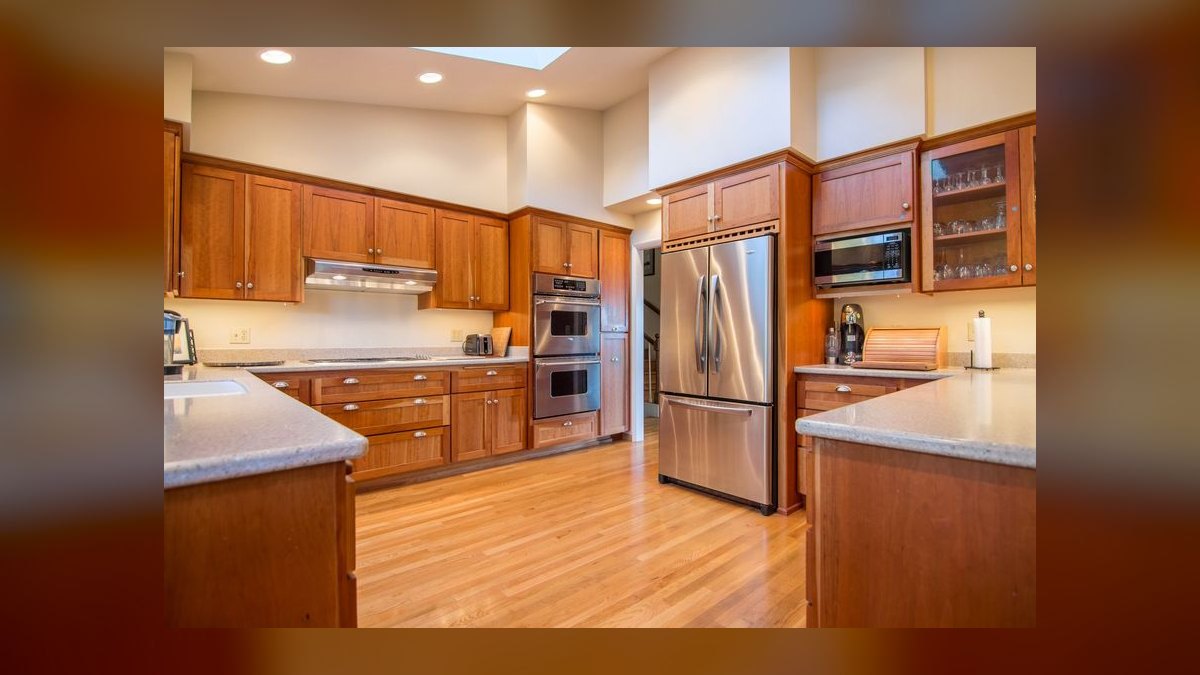
On contingency: refrigeration is where the surprises live. Walk-in compressors, condensing units, and evaporator coils fail on their own schedule, and a failure is both expensive and existential — you lose inventory as well as paying for the repair. Size your contingency around one significant refrigeration event per lease term, not per year. The same logic applies to the makeup air unit, which in a kitchen runs harder and dirtier than any rooftop unit serving an office suite and has a correspondingly shorter service life.
A few structural points on sizing:
- Fixed dollars, not a percentage of rent. Rent escalates on a schedule negotiated for market reasons. Equipment wear does not track rent. A percentage cap silently increases your exposure every year for no reason connected to the equipment.
- CPI adjustment, with a collar. Adjusting the cap annually by CPI is fair to both sides, but negotiate a cap on the adjustment — commonly a ceiling of 3% or 4% per year — so an inflation spike doesn't gut the protection you bought.
- Per-system sub-caps, not one blended pool. If you cap all specialty features at a single aggregate number, a bad refrigeration year consumes the budget that was supposed to cover hood cleaning, and you end up paying out of pocket for a code-mandated service. Sub-caps prevent cross-subsidization.
- Annual reset with no carryforward either direction. Unused cap does not roll to the landlord as a credit; overage does not roll forward against next year's cap. Clean reset each lease year.
- Exclude routine cleaning explicitly. Filter changes, wiping down hood surfaces, daily drain maintenance — these are yours, outside the cap, and saying so removes the landlord's best argument that you'll neglect the equipment to burn through the cap faster.
One more sizing input people miss: your insurance. A commercial kitchen policy typically includes equipment breakdown coverage, and spoilage coverage for refrigeration. Read your policy before you set the cap, because coverage you already carry reduces the exposure the cap needs to absorb, and a landlord who sees that you've done that homework treats your number as credible.
Where these negotiations actually go wrong
The failure modes are consistent enough to list, and most of them are drafting problems rather than negotiation problems.
Vague definitions. "Kitchen equipment" is not a definition. Does it include the makeup air unit on the roof that exists solely to serve your hood? The grease interceptor buried in the parking lot? The dedicated gas line and its regulator? The floor sinks and the trench drain? Each of those is a real dispute waiting to happen. Define Specialty Features by reference to the stamped equipment schedule and the mechanical and plumbing drawings, and add a catch-all for any system installed as part of the tenant improvements that serves the premises exclusively.
The common-area maintenance (CAM) end run. You negotiate a beautiful specialty cap, and then the landlord classifies your rooftop makeup air unit's service as a building systems expense and passes it through as CAM. Your cap is intact and you paid anyway. The fix is a cross-reference: the cap language must state that costs for Specialty Features are excluded from operating expenses and CAM pass-throughs, and that the landlord cannot recover through one mechanism what the cap limits in another.
Repair-versus-replace ambiguity. Everyone agrees capital replacements sit with the landlord. Nobody agrees what a capital replacement is. Use two independent tests joined by "or": any item with a useful life exceeding one year under generally accepted accounting principles, *or* any single repair exceeding a stated dollar threshold. Two tests catch cases one test misses — a cheap part that extends useful life, and an expensive repair that technically doesn't.

"Reasonable wear and tear" carve-outs. A landlord-favorable exception for anything beyond reasonable wear and tear can swallow the cap whole, because heavy commercial cooking is by definition hard use. If the landlord insists on a misuse exception, narrow it to gross negligence or willful misconduct, with the landlord bearing the burden of proof.
No vendor control. If the landlord performs the work and bills you, they have no incentive to shop the price, and the cap gets consumed at retail rates. Negotiate either the right to select vendors from a mutually approved list, or a competitive-bid requirement above a threshold, plus a right to receive copies of invoices.
Ignoring the end of the term. Surrender and restoration obligations interact with your cap. If the lease requires you to remove specialty improvements at expiration, you're paying twice — once to maintain, once to demolish. Negotiate the removal obligation at the same time as the cap; often the landlord will waive removal for equipment they want to re-lease, and that waiver is worth real money.

Sublease and assignment blind spots. If you sublease to another operator, does your cap travel with the sublease? Does your successor inherit it? Make the cap expressly binding on successors and assigns, or you've built protection that evaporates the moment you try to exit.
The same logic extends well past restaurants. A dental or veterinary practice negotiating a buildout has vacuum pumps, compressors, and specialized plumbing. A coffee roaster has an afterburner and a dedicated exhaust path. A laboratory has fume hoods and DI water systems. A cannabis operator has heavy electrical and dedicated dehumidification. Anyone whose buildout puts equipment on the roof, under the slab, or on a code-mandated inspection schedule has the same negotiation available to them, and the same drafting traps waiting.
The negotiation checklist, step by step
Run this in order. Each step feeds the next, and skipping ahead is how tenants end up with a cap that reads well and protects nothing.

Start by inventorying the specialty scope from the equipment schedule and mechanical drawings, then get three local vendor quotes per system and build the annual number bottom-up. Draft the definition by reference to the drawings. Propose the cap in the LOI, before rent and TI are settled — it reads as a technical term rather than a concession at that stage. When redlines come back, check the three cross-references that determine whether the cap actually works: the operating-expense exclusion, the capital-replacement carve-out, and the successors-and-assigns clause. If the landlord refuses outright, fall back in order — cost-sharing split, then rent credit, then a landlord-funded reserve account, then walk.
A note on the fallbacks, because they're where most deals actually land. The cost-sharing split is the most commonly accepted: you bear the first fixed dollar amount per lease year, the landlord bears everything above it, often with a further ceiling on the landlord's annual exposure. Landlords like it because it caps their downside too. The rent credit works when the landlord's objection is precedent rather than economics — they don't want a maintenance cap in any lease in the building, but they'll quietly reduce your rent by an amount that funds a maintenance reserve you control. The landlord-funded reserve is a deposit into a segregated account drawn on for specialty repairs, unused balance returned or applied at expiration; it's more administration but it's clean and auditable.
Two tactical points. First, keep the cap out of a floating addendum if you can — get it into the maintenance or operating-expense article of the lease body, because addenda get lost in assignments, refinancings, and property sales, and a new owner's asset manager reads the lease, not the file. Second, if you are already in a lease without a cap, you are not out of options: renewal is a negotiation, and so is any landlord request — an estoppel certificate, a subordination agreement, consent to an assignment. Those moments are when a landlord needs something from you, and they are the cheapest time to buy the protection you should have gotten at signing.
Related questions
Does this apply to a gross lease, or only triple-net?
Both. In a triple-net lease you pay maintenance directly, so the cap limits your out-of-pocket. In a gross or modified-gross lease the risk arrives as operating-expense pass-throughs and as a specialty-systems carve-out from the landlord's obligations. The mechanism differs; the exposure is the same.
What if my specialty equipment is leased rather than owned?
Equipment financed or leased separately often carries its own service agreement, which reduces what your lease cap needs to cover. Make sure the lease definition distinguishes financed equipment from affixed improvements, and confirm the landlord's lien waiver so the equipment lessor can recover its collateral.
Can I get a cap on a second-generation restaurant space?
Yes, and arguably it matters more. Inheriting an existing kitchen means inheriting equipment of unknown age and service history. Ask for maintenance records, get an independent condition assessment before signing, and negotiate landlord responsibility for anything already at or past its expected service life.
Should the cap cover the rooftop HVAC serving the kitchen?
If the unit serves your premises exclusively — a dedicated makeup air unit or a kitchen-zone condensing unit — yes, include it. Kitchen HVAC runs longer, hotter, and dirtier than office equipment and fails sooner. Shared building systems should stay a landlord obligation entirely.
How does a percentage rent clause change the analysis?
If you pay percentage rent, the landlord shares your upside, which strengthens the argument they should share operating risk. Raise it directly: they participate in sales, so they should participate in the cost of the equipment that generates those sales.
FAQ
What counts as a specialty buildout feature?
Anything installed for your operation that carries an above-normal maintenance burden or a code-mandated service schedule: commercial cooking hoods and exhaust, fire suppression, grease interceptors, walk-in refrigeration, dedicated makeup air and kitchen HVAC, heavy electrical service, specialized plumbing and floor drains, and equivalents in dental, veterinary, laboratory, or light-industrial spaces. Standard office finishes — carpet, drywall, ceiling grid, ordinary lighting — do not qualify and belong under the general cap.
Isn't the kitchen my equipment, since I paid for it?
That argument cuts your way, not the landlord's. Improvements funded through a tenant improvement allowance and permanently affixed to the building generally become the landlord's real property, and they stay after you leave. If the landlord insists the equipment is yours, ask for an express right to remove it at expiration. Most landlords decline, because they want a re-leasable restaurant space — and that refusal concedes your point.
How many years of lease term justify the effort?
Any term long enough for equipment to fail, which in practice means anything beyond about three years. On a short term the cap matters less because the odds of a major failure are lower, though refrigeration can fail in year one. On a ten-year term with options, an uncapped specialty maintenance obligation is one of the largest unpriced liabilities in the whole deal.
Will asking for this kill the deal?
Rarely. It is a standard ask in restaurant and specialty-retail leasing, and a landlord who has leased to food service before has seen it. What creates friction is asking late, asking vaguely, or asking without a number. Raise it in the LOI with a documented figure and it reads as competence, not as a demand.
What if the landlord agrees but the lease language is loose?
Loose language is worse than no language, because it creates a false sense of protection and an expensive dispute later. Confirm four things before signing: the definition points to the stamped equipment schedule, the cap is stated in fixed dollars with a stated adjustment method, capital replacements are excluded by two independent tests, and specialty costs are expressly excluded from operating expenses and CAM.
Does the cap survive a sale of the building?
Only if you draft for it. Make the provision binding on successors and assigns, get it into the lease body rather than a side letter, and when the building sells, request an estoppel certificate that recites the cap by section number. That estoppel becomes your evidence when a new asset manager reads the file differently than the seller did.
Sources
- https://www.nfpa.org/codes-and-standards/nfpa-96-standard-development/96 — NFPA 96, Standard for Ventilation Control and Fire Protection of Commercial Cooking Operations
- https://www.nfpa.org/codes-and-standards/nfpa-17a-standard-development/17a — NFPA 17A, Standard for Wet Chemical Extinguishing Systems
- https://www.epa.gov/npdes/national-pretreatment-program — U.S. EPA National Pretreatment Program (grease interceptor and FOG discharge requirements)
- https://www.boma.org/ — Building Owners and Managers Association, operating expense and lease administration standards
- https://www.naiop.org/ — NAIOP, Commercial Real Estate Development Association
- https://www.icsc.com/ — ICSC, retail leasing and tenant buildout resources
- https://www.restaurant.org/ — National Restaurant Association, operations and facilities guidance
- https://www.sba.gov/business-guide/manage-your-business/buy-assets-equipment — U.S. Small Business Administration, guidance on leasing versus buying equipment
- https://www.americanbar.org/groups/real_property_trust_estate/ — American Bar Association, Section of Real Property, Trust and Estate Law
Related on PULSE
- [How do I negotiate a hard cap on my shared plaza maintenance costs after the buildout?](/knowledge/bo0297)
- [How do I negotiate a cap on my out-of-pocket costs for the buildout?](/knowledge/bo0253)
- [What's the average per-square-foot cost for a restaurant buildout with full kitchen?](/knowledge/bo0322)
- [How do I negotiate a co-tenancy clause that triggers reduced rent if my buildout is delayed?](/knowledge/bo0320)
- [Can I negotiate a lease that converts my buildout allowance into equity in the building?](/knowledge/bo0315)
- [How do I negotiate a lease that allows me to recoup buildout value upon sublease?](/knowledge/bo0288)
@Kory-White- · if Venmo asks, the last 4 of my number are 2012
 editorialMy Thoughts: How Do I Save on Buildout by Taking a Second-Generation Restaurant Space
 boWhat are the hidden costs of a warm shell delivery that landlords don’t disclose?
 boHow do I force the landlord to pay for an independent cost estimator?
 boShould I hire a tenant rep broker to oversee my buildout or manage it myself?
 boHow do I negotiate a cap on my out-of-pocket costs for the buildout?
 boHow do I terminate a lease early if the landlord fails to deliver the buildout as promised?
 boHow do I negotiate a hard cap on my shared plaza maintenance costs after the buildout?
 boWhat Are the Good and Bad Clauses in a Commercial Lease?
 boShould I demand the landlord provide a third-party cost breakdown for every line item in their GC bid
 boHow do I calculate the true cost of using the landlord’s preferred GC versus my own