
Can I negotiate a lease that converts my buildout allowance into equity in the building?
 Curated byKory White · Fractional CRO · Maryland
 PULSEKNOWLEDGE LIBRARY
Yes, but rarely. Converting a buildout allowance into equity means you fund tenant improvements yourself and take a membership interest in the entity that owns the building instead of landlord cash. It requires anchor-tenant leverage, a capital-constrained landlord, a 10-plus-year commercial lease, and a separate operating agreement — never a lease clause alone.
Options compared: turnkey, allowance, as-is, and the equity variant
Before you chase ownership, understand the four buildout structures you are actually choosing between, because the equity conversion is a mutation of the third one, not a separate species.
Turnkey buildout. The landlord designs, permits, builds, and delivers the space finished to an agreed plan and specification. You sign off on drawings; the landlord carries the construction risk, the cost overruns, the contractor disputes, and the schedule. The economics are buried in rent — the landlord amortizes the cost across the term at an implied interest rate, typically well above their borrowing cost. Turnkey is the right call for first-time tenants, small footprints, and anyone whose business does not include managing a general contractor. It is also the structure with the least equity potential: you never touch the capital, so you have no contribution to convert. The landlord owns the improvements from day one and always did.
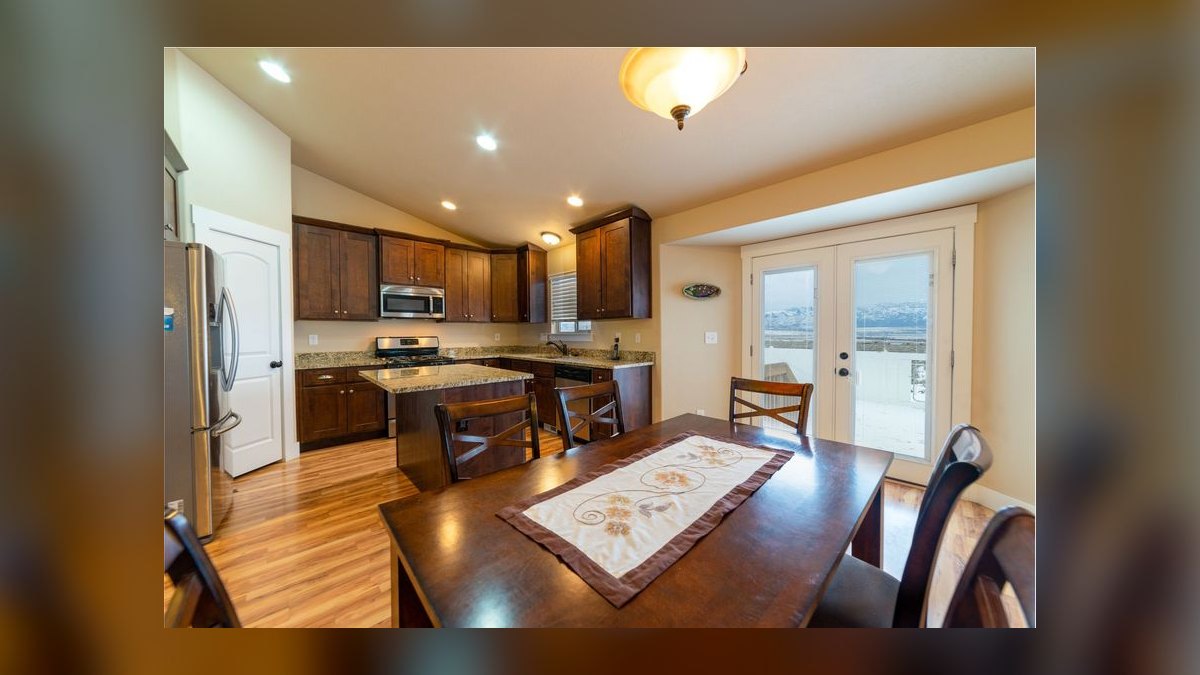
Tenant improvement allowance. The landlord commits a dollar figure per rentable square foot, disbursed against invoices, lien waivers, and inspections as the work progresses. You control the design and the contractor; you own the schedule risk and every dollar of overage. This is the dominant structure in office, medical office, and larger retail. It is also the only structure where the equity conversation is even coherent, because there is a defined pot of landlord capital that both parties agree is owed to the project. The equity conversion says: *don't give me that pot, give me a piece of the entity instead.*
As-is / shell delivery. You take the space in whatever condition it sits — cold dark shell, second-generation restaurant, warehouse with a bathroom — and you fund one hundred percent of the work. Rent is lower, often materially, and free-rent periods stretch longer to compensate. As-is deals produce the strongest equity argument in one specific case: when the landlord has no capital at all and the building will not lease without your money. You are functionally acting as the project's equity sponsor while calling yourself a tenant.

The equity variant. You waive the allowance (or accept a reduced one), fund the improvements from your own balance sheet, and receive a membership interest — usually preferred equity or a profits interest — in the single-purpose entity that holds title. The lease still exists and you still pay rent, generally at or near market, because the equity is your return on invested capital, not a rent discount. Two documents, two economies, one relationship.
The comparison that matters is not "which is cheapest" but "where does the risk sit and who captures the residual value." Turnkey pushes all construction risk to the landlord and all upside too. Allowance splits construction risk and keeps all upside with the landlord. As-is loads you with risk and gives you nothing but cheaper rent. Only the equity variant pays you for the risk you are already carrying. That is the entire argument, and it is a good one — which is why the objection you will hear is never "that's unfair," it is "that's complicated."

How to choose the structure that fits your leverage
Choosing is a leverage assessment before it is a legal one. Run the honest version of these questions before you spend a dollar on counsel.
How much of the building are you taking? Anchor status is the single strongest lever. If you occupy a large share of the rentable area, you are the reason the building gets financed, appraised, and refinanced. Lenders underwrite to your credit. A landlord will trade equity to lock that in. If you are taking a modest suite among dozens, you have rent-negotiation leverage and nothing more — the structuring cost alone will exceed any benefit.

How creditworthy are you? An investment-grade covenant or a genuinely strong balance sheet is a financing instrument. A landlord can borrow against your lease. If your credit is thin and your guarantee is personal, you are the one who needs the landlord, not the reverse.
Is the landlord capital-constrained? This is the condition people skip. Equity gets traded when the owner cannot fund the work — high vacancy blocking a construction draw, a maturing loan, a repositioning from office to medical or industrial that lenders will not underwrite on speculation. A well-capitalized institutional owner with a stabilized asset will simply say no, politely, forever.

How long is your term and how sticky is your use? Equity conversions live in 10-, 15-, and 20-year deals. Specialized uses — imaging suites, commercial kitchens, clean rooms, veterinary surgical space — build the argument for you, because the improvements are worth far more to the building with you in it than without you.
Can you tolerate partnership mechanics? Owning a piece of an LLC means K-1s, capital accounts, capital calls, consent rights you may or may not have, and an exit you must negotiate now for an event a decade out. If your finance function is one bookkeeper, the honest answer may be no.

mermaid flowchart TD A[LOI with equity conversion term sheet] --> B[Lender consent review on transfer restrictions] B --> C[Tax counsel structures interest type] C --> D{Profits interest or capital interest} D -- Profits --> E[Draft operating agreement] D -- Capital --> F[Model immediate tax event] --> E E --> G[Securities exemption filing] A --> H[Lease drafted in parallel] H --> I[Define improvement ownership and restoration] I --> J[Sign lease and operating agreement together] G --> J J --> K[Design and permitting] K --> L[Construction with tenant as funder] L --> M[Capital contribution certified to capital account] M --> N[Certificate of occupancy and rent commencement] N --> O[Annual K-1 and distribution waterfall] O --> P[Exit via buy-sell, sale kicker, or purchase option] </parameter> </invoke>
The handoff detail practitioners forget: certify the actual contributed amount. Your capital account should reflect audited construction costs — invoices, lien waivers, change orders — not the budget. Budgets drift; capital accounts should not.

Adjacent scenarios where the same logic applies
The equity conversion is one instance of a broader pattern: a tenant supplying capital the owner cannot, and asking to be compensated as capital rather than as an occupant. Recognizing the pattern tells you where else to push.
Ground leases. A tenant who builds an entire structure on leased land owns the improvements outright for the term and hands them over at expiration. That reversion is the landlord's return. Participation kickers and purchase options are conventional here, and the negotiating vocabulary transfers directly to a buildout conversion.

Sale-leasebacks in reverse. An operator who sells their building and leases it back converts real estate equity into operating capital. The buildout conversion runs the opposite direction — operating capital into real estate equity. If your business is capital-rich and space-constrained, the reverse trade may serve you better than either.
Franchise and multi-unit rollouts. Operators opening many locations sometimes form a real estate affiliate that co-invests alongside landlords across a portfolio. One structuring exercise amortized across many sites finally makes the legal cost rational — the same math that disqualifies a single small tenant.

Anchor-driven retail. Shopping-center leases have long included co-tenancy clauses, percentage rent, and recapture rights, all acknowledging that an anchor creates value beyond its own rent. An equity ask is the honest extension of that logic.
Medical and dental. Practice groups routinely form a separate entity to own the building they occupy. When outright ownership is not available, an equity slice in the landlord's entity is the intermediate step — and specialized clinical improvements are precisely the kind that lenders will not finance on speculation, which is where your leverage comes from.

Industrial and cold storage. Racking, refrigeration, power upgrades, and dock modifications are enormous capital items with long useful lives. Tenants funding those are effectively co-developing the asset, and the strongest ones negotiate exactly that way.
Related questions
What if the landlord offers a bigger allowance instead of equity?
Run the amortization. A larger allowance repaid through rent at an above-market implied rate may cost more over a 15-year term than self-funding. Compare total occupancy cost, not headline concession size, and treat the implied rate as the negotiable term it actually is.
Does the lender have to approve an equity conversion?
Almost certainly. Mortgages restrict transfers of ownership interests in the borrowing entity. Get lender consent addressed in the letter of intent, not after documents are drafted, or you will spend months on an agreement the loan forbids.
Can I get equity in a multi-tenant building I only partly occupy?
Possible but harder. Your contribution is a smaller share of total capitalization, so the stake is thin while structuring cost stays fixed. Rent participation or a sale-proceeds kicker usually delivers better economics per dollar of legal spend.
What happens to my equity if I outgrow the space?
Negotiate that now. Define whether the interest survives assignment, sublease, or relocation within the portfolio, and fix a buyout formula. Silence defaults to the landlord's forfeiture language, which is written to extinguish your stake on exit.
FAQ
Is an equity conversion realistic for a small tenant?
Generally no. The fixed cost of entity structuring, tax opinions, securities compliance, and operating-agreement negotiation does not scale down. A small tenant captures far more value from free rent, a larger allowance, a purchase option, or a right of first refusal — all of which sit inside the lease and cost a fraction to document.
Do I still pay rent if I own part of the building?
Yes, at or near market. The equity is your return on invested capital; rent is payment for occupancy. Blending them creates tax ambiguity and invites the landlord to double-count. Keep the two economies separate in the documents and benchmark rent against as-is comparables in the submarket.
Why would a landlord ever agree to this?
Because they need the money and the covenant more than they need the percentage. A capital-constrained owner facing vacancy, a maturing loan, or a repositioning no lender will fund gets a stabilized asset and a creditworthy tenant without writing a check. That trade is rational for them, which is why the pitch leads with their problem.
Is a profits interest better than a capital interest?
Often, yes, on timing. A profits interest participates only in value created after issuance, which can avoid an immediate taxable event that a capital interest may trigger. The trade-off is that you get nothing if the property never clears the threshold. Structure choice is a tax-counsel decision, not a preference.
What is the single most common drafting mistake?
Putting the equity in the lease instead of a separate operating agreement. A lease clause naming a percentage without identifying the entity, the interest class, the valuation method, or the exit is unenforceable in substance. Two documents, cross-referenced, executed together.
Should I use rent participation instead?
For most tenants, yes. It captures a real share of upside, avoids securities and partnership complexity, preserves landlord control, and documents in the lease. Reserve the full equity structure for large, long, anchor-scale commercial deals where the contribution is big enough to justify the overhead.
Sources
- https://www.irs.gov/businesses/partnerships
- https://www.sec.gov/education/smallbusiness/exemptofferings/rule506b
- https://www.irs.gov/charities-non-profits/unrelated-business-income-tax
- https://www.nar.realtor/commercial
- https://www.uli.org/
- https://www.icsc.com/
- https://www.sba.gov/business-guide/manage-your-business/buy-assets-equipment
- https://www.americanbar.org/groups/real_property_trust_estate/
- https://www.naiop.org/
- https://www.sec.gov/education/smallbusiness/exemptofferings/rule506c
Related on PULSE
- [How do I negotiate a lease that allows me to recoup buildout value upon sublease?](/knowledge/bo0288)
- [How Do I Negotiate a Lease and Buildout for a Daycare?](/knowledge/bo0115)
- [How Do I Negotiate a Lease and Buildout for a Tattoo Studio?](/knowledge/bo0139)
- [How Do I Negotiate a Lease and Buildout for a Vape or Smoke Shop?](/knowledge/bo0211)
- [How Do I Negotiate a Lease and Buildout for a Private or Charter School?](/knowledge/bo0190)
- [How Do I Negotiate a Food Hall Stall Lease and Buildout?](/knowledge/bo0166)
@Kory-White- · if Venmo asks, the last 4 of my number are 2012
 editorialMy Thoughts: How Do I Save on Buildout by Taking a Second-Generation Restaurant Space
 boWhat are the hidden costs of a warm shell delivery that landlords don’t disclose?
 boHow do I force the landlord to pay for an independent cost estimator?
 boShould I hire a tenant rep broker to oversee my buildout or manage it myself?
 boHow do I negotiate a cap on my out-of-pocket costs for the buildout?
 boHow do I terminate a lease early if the landlord fails to deliver the buildout as promised?
 boHow do I negotiate a hard cap on my shared plaza maintenance costs after the buildout?
 boWhat Are the Good and Bad Clauses in a Commercial Lease?
 boShould I demand the landlord provide a third-party cost breakdown for every line item in their GC bid
 boHow do I calculate the true cost of using the landlord’s preferred GC versus my own