


How do I finance a buildout if the landlord offers zero TI allowance in 2027?
Quality
Certified

Zero TI allowance isn't a dead end — it's a different deal structure. Substitute the landlord's check with free-rent abatement, a lower base rent, or an amortized TI credit, then fund the fit-out through an SBA 504 loan, a bank construction loan, equipment leasing, or C-PACE. Trade a longer term for concessions.
Why landlords stopped writing TI checks in 2027
A zero-allowance offer usually reflects the landlord's own capital math, not your creditworthiness. Since 2022, construction materials and skilled labor have climbed sharply, so a full turnkey buildout now costs a landlord far more per square foot than it did when the current rent roll was underwritten. Layer on elevated interest rates — the landlord finances that improvement work too, and higher debt service makes every dollar of TI more expensive to carry. The result is a defensive posture: "We'll deliver the space as-is; you build it out."
This is most common in Class B and C office towers with high vacancy and thin owner liquidity, and it's effectively standard in industrial and flex space, where tenants are expected to bring their own racking, mezzanines, and demountable partitions anyway. Read the offer as a signal. A landlord who can't fund improvements is often a landlord who badly needs to fill space, and that need is your leverage. Instead of accepting the headline, reframe the ask: "If you can't give me TI cash, what *can* you give me that lowers my all-in cost?" The honest answer is usually free rent, a reduced base rate, a longer runway of fixed rent, or a willingness to amortize your buildout into the lease. None of those require the landlord to touch their construction budget, which is exactly why they say yes to them after saying no to TI.

SBA loans when you occupy the space
If you're an owner-user — you or your operating company will physically occupy at least 51% of the space — the SBA 504 loan is often the strongest tool for financing a buildout without landlord help. The 504 program is built for purchasing or improving commercial real estate and typically pairs a conventional first-mortgage bank loan with a subordinate SBA-backed debenture, leaving the borrower a relatively modest down payment. Hard improvements — demising walls, flooring, HVAC distribution, electrical upgrades, plumbing — generally qualify as eligible project costs, so the buildout rides inside the same long-term, fixed-rate structure as the real estate.
For smaller or tenant-improvement-only scopes where you don't own the building, the SBA 7(a) loan is the more flexible cousin. It can fund working capital, construction labor, furniture, and equipment, and it's commonly used by leasehold tenants who need to finish a space they don't own. Both programs come with real underwriting: expect the lender to want strong personal credit (frequently 680 or higher), two years of business tax returns, and a coherent business plan showing you can service the debt.
The strategic advantage over begging for TI is ownership and tax treatment. When you finance the improvements yourself, you control the scope and the contractor, and you can generally depreciate qualifying leasehold improvements over time — turning buildout spend into a recoverable expense rather than a sunk concession baked into someone else's rent. For a tenant planning to stay put for the long haul, that math frequently beats a landlord check that arrives with a higher base rent attached.
Free rent and abatement as a cash substitute

The moment a landlord says "zero TI," pivot to rent abatement — a stretch where you pay no rent, or reduced rent, while you build. In practice a standard fit-out negotiation might land three to six months of free rent, and a raw shell requiring heavy work can justify pushing toward eight to twelve months. The logic is simple: if several months of abated rent roughly equals your buildout budget, the landlord has effectively "paid" for your improvements without cutting a check or touching a construction loan. Landlords often prefer this because it preserves their upfront cash and defers the cost across the term.
You can shape abatement in more than one way. A graduated structure — three months fully free, then three months at half rent, then full rent — smooths your ramp while you're still finishing the space and not yet generating full revenue there. Alternatively, negotiate a TI credit against future rent: the landlord agrees to knock a fixed dollar amount off each month's rent for a defined number of months, which finances the buildout over the lease rather than at signing. Whatever the shape, get it in writing inside the lease with explicit start and end dates, and confirm it doesn't quietly trigger or accelerate a base-rent escalation later. The concession only works if the savings you bank up front aren't clawed back through a higher rent step in year two or three.
C-PACE for the energy-efficient portion

C-PACE — Commercial Property Assessed Clean Energy — is a financing mechanism specifically for energy and resilience improvements, and it can work even when the landlord contributes nothing. Eligible measures typically include high-efficiency HVAC, LED lighting, building insulation, solar, and energy-management controls. Instead of a conventional loan, C-PACE funds the work through a voluntary assessment recorded against the property and repaid over a long term through the property tax bill. Because the obligation attaches to the building rather than to you personally, it can generally be transferred if ownership or occupancy changes, subject to the parties' consent.
The appeal is the cash profile: little or no money down, fixed rates, and long amortizations that can stretch repayment well beyond a typical bank term. Many state programs have broadened eligible scopes over time to include measures like seismic and water-conservation work, widening what a buildout can capture. The practical catch is that C-PACE requires the property owner's cooperation, because the assessment sits on their property as a priority lien — and some lenders holding the existing mortgage must consent. Landlords sometimes resist for exactly that reason. The counter-argument is value: efficient mechanical and lighting systems lower operating costs and can improve the building's marketability, so framing C-PACE as an upgrade to *their* asset — not just yours — is often what gets the signature. Used well, it can fund the energy slice of a buildout with essentially no out-of-pocket outlay.
Bank term loans and equipment leasing
If SBA financing isn't a fit and the landlord won't cooperate on C-PACE, a straightforward commercial term loan from a local bank or credit union is the workhorse option. These are commonly structured over five- to ten-year amortizations at fixed or variable rates, secured by the improvements themselves plus your business assets and, almost always, a personal guarantee. Community banks and credit unions tend to be more flexible than large national lenders on owner-operator deals, and they value a borrower with steady cash flow and a lease term that comfortably exceeds the loan term.
Equipment leasing is the complement that keeps precious cash intact. Rather than buying workstations, cubicles, conference furniture, signage, kitchen appliances, or specialized machinery outright, lease them over a defined term and preserve capital for the hard construction that can't be financed as easily. Leasing converts a lump-sum capital expense into a predictable monthly operating cost, and many leases offer an end-of-term buyout — often a nominal or fair-market figure — so you eventually own the assets. Because the equipment itself is the collateral, these deals are frequently easier to approve than a general construction loan, and lenders may offer little- or no-money-down structures to established businesses with reasonable credit and a couple of years of operating history. The tactical move is to split your project into two buckets — "hard construction" that's bolted to the building and "equipment" that can be unbolted and moved — then match each bucket to the cheapest capital that will fund it.
Negotiating a TI credit even after they say no
Treat "zero TI" as an opening position, not a verdict. A landlord who won't write a check may still credit you per square foot in reduced rent over the term — a TI credit that spreads the concession across your monthly payments instead of paying it all at signing. The pitch is direct: "You don't have to fund my improvements today; reduce my rent by a fixed amount for the first years and let me finance the rest." That reframes the same economic favor in a form the landlord's cash flow can absorb.
Term length is your other bargaining chip. A short lease with no TI can often be reshaped into a longer lease with a real allowance, because a longer commitment reduces the landlord's single largest fear — re-leasing vacancy. Offer stability and ask for value in return. You can also request that the landlord amortize your self-funded buildout into the rent at a stated interest rate over the term, which converts a "no TI" deal into a financed buildout with predictable monthly payments and no separate bank relationship. And don't stop at money: free rent, lower base rent, longer term, renewal and expansion options, parking, and signage rights are all live even when a TI check is off the table. The landlord isn't refusing to help — they're refusing to spend construction capital. Give them a structure that avoids that, and most will move.
The shell lease strategy

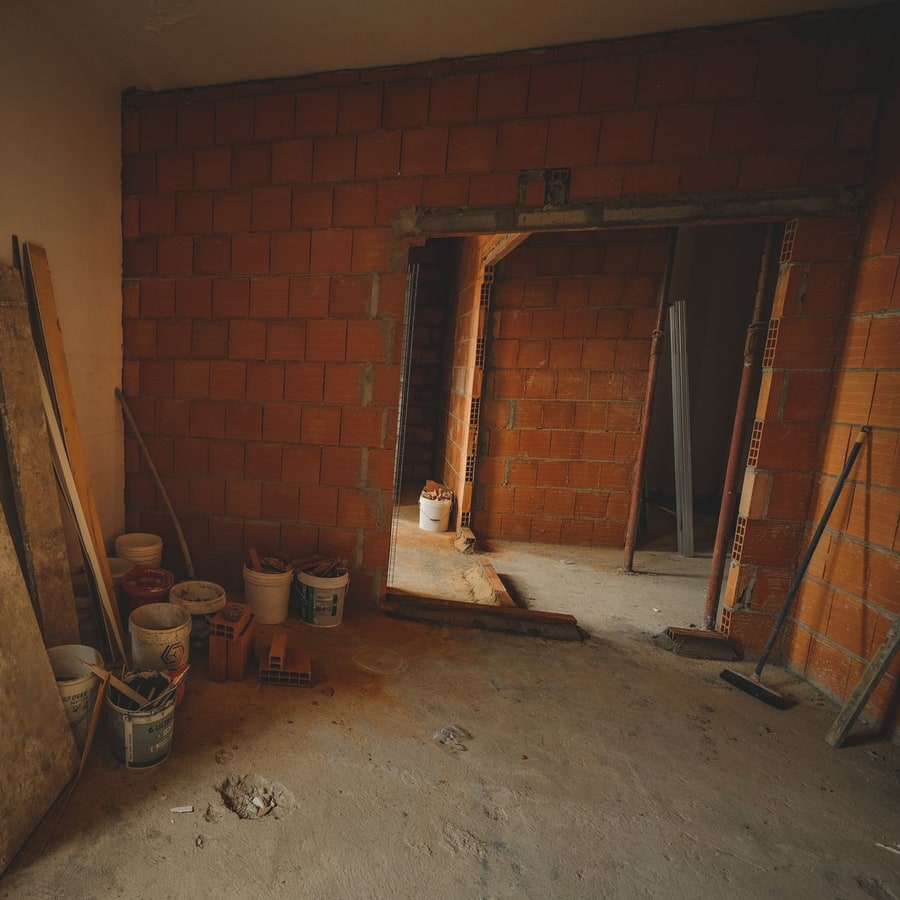
A shell lease — where the landlord delivers only the structural envelope (slab, roof, exterior walls, and core utilities) and you finish everything inside — is the most common home for zero-TI deals. It's more work, but it hands you total control over layout, materials, and schedule. Finance it as a capital project distinct from the lease itself: solicit three general-contractor bids to establish a defensible number, then bring a construction loan application to a community bank or credit union. Many lenders offer construction-to-permanent loans that fund the build in draws and then convert to a term loan once the space is complete, secured by the leasehold improvements and a personal guarantee.
Two levers make shell economics work in your favor. First, shell space usually carries a lower base rent than finished space, which frees up cash flow to service the buildout loan. Second, if the footprint is larger than you need on day one, subleasing a portion — with the landlord's consent — can offset a meaningful share of the annual carrying cost. Protect yourself on the delivery condition: insist on a written shell checklist spelling out exactly what the landlord provides, such as HVAC stub-ups, electrical panel capacity, and bathroom rough-ins, so you don't quietly inherit costs that should have been base-building. The clearer that boundary, the more accurately your contractors can bid and the less likely a surprise change order blows up your loan budget mid-project.
Third-party TI loans and splitting the scope
When the landlord won't contribute and you're not an owner-user, specialized lenders offer tenant-improvement loans structured specifically around your lease and the value the buildout adds. Unlike a generic business loan, these are sized against the improvement scope and usually require a lease term at least as long as the loan — commonly five to ten years — with the leasehold improvements pledged as collateral. Qualifying takes a solid credit profile and a workable business plan, but the payoff is that you preserve working capital and repay the space over the same horizon you'll benefit from it.
Splitting the scope makes every one of these tools cheaper to deploy. A large share of any buildout is tangible, movable equipment — HVAC units, kitchen and bath fixtures, shelving, signage, and specialized machinery — that finances more easily than fixed construction because the asset itself secures the deal. Equipment loans and leases in this environment commonly run three to seven years with minimal money down. By carving the project into "hard construction" (framing, flooring, in-wall electrical) funded by a term or construction loan, and "equipment" funded by leases, you shrink the upfront cash the whole project demands and match each piece of debt to the useful life of what it's paying for. That discipline — right capital for the right cost — is what turns a discouraging "no TI" into a fundable, cash-flow-friendly deal.
Related questions
Is free rent or a TI check the better deal?
It depends on cash flow. Free rent preserves working capital and avoids debt, while a TI check delivers immediate funds but often comes with higher base rent over the term. Run the net present value of both structures before deciding.
Can I use retirement funds to finance a buildout?
Yes, through a ROBS (Rollover for Business Startups) arrangement, but it's risky — you're putting retirement savings at stake, and penalties apply if it's structured incorrectly. Consult a qualified financial advisor and tax professional before attempting it.
What happens to my improvements if I leave early?
Leasehold improvements typically become the landlord's property at lease end. You can try to negotiate a buyout clause compensating you for unamortized improvements on early exit, but that's uncommon in zero-TI deals where the landlord already contributed nothing.
Does zero TI mean no concessions at all?
No. A refused TI check is just one line item. You can still negotiate free rent, lower base rent, a longer or shorter term trade, renewal and expansion options, parking, and signage rights. The landlord may simply want to avoid spending construction capital.
Are there grants for buildouts?
Sometimes, especially for energy-efficiency upgrades through federal or state energy programs and for small-business development via local economic-development agencies. Check Grants.gov and your local SBA district office for current opportunities, and confirm eligibility before you count on the money.
FAQ
What if my credit score is below 650 — can I still get a buildout loan? Often yes, but on tougher terms. You may need a co-signer or an additional personal guarantee from a partner, or you'll pay higher rates through alternative or asset-based lenders. Equipment leasing, where the asset secures the deal, is frequently the most accessible option for weaker credit.
How much free rent should I ask for in place of TI?

For a standard fit-out, three to six months is a common range; a raw shell requiring extensive work can support pushing toward eight to twelve. Anchor the ask to your actual buildout budget divided by monthly rent, so the abatement genuinely offsets the cost you're absorbing.
Can C-PACE really cover an entire project? C-PACE funds energy, efficiency, and resilience measures — HVAC, lighting, insulation, solar, and similar — not your whole buildout. It can finance a large share of that eligible slice with little upfront cash, but you'll still fund non-energy construction through other tools, and you need the property owner's cooperation.
Is an SBA 504 or 7(a) loan better for a fit-out? The 504 suits owner-users financing real estate plus major improvements over a long, fixed-rate term. The 7(a) is more flexible for smaller scopes, working capital, furniture, and equipment, including tenants who don't own the building. Match the program to whether you own the property and the size of the scope.
Should I trade a longer lease term for concessions? Frequently, yes. Term length is a landlord's strongest motivator because it reduces vacancy risk. Offering additional years can unlock free rent, a lower base rate, or an amortized TI credit. Just make sure the added commitment fits your own business plan and you've secured renewal flexibility.
Can I get the landlord to amortize my buildout into the rent? Often. Ask the landlord to fold your self-funded buildout into the rent at a stated interest rate over the term. It converts a "no TI" deal into a financed one with predictable monthly payments and no separate bank relationship, while keeping the landlord out of any upfront construction spend.
Sources
- https://www.sba.gov/funding-programs/loans/504-loans
- https://www.sba.gov/funding-programs/loans/7a-loans
- https://www.energy.gov/scep/slsc/commercial-property-assessed-clean-energy-c-pace
- https://www.irs.gov/publications/p946
- https://www.nar.realtor/commercial
- https://www.boma.org/
- https://www.elfaonline.org/
- https://www.grants.gov/
Related on PULSE
- How Do I Finance a Buildout: TI Loan vs Landlord vs Cash?
- How Do I Compare Two Lease Offers on a True All-In Basis?
- What happens to unused TI allowance if I spend less than the landlord agreed to?
- How do I negotiate a clause that credits my TI allowance against future rent if I underspend?
- Should I negotiate for the landlord to carry my TI allowance as a non-interest-bearing loan?
- Can I require the landlord to escrow my TI allowance before construction begins?
This page will be disappearing soon. Save it to your device for $1 — or read it free while it is here.
@Kory-White- · if Venmo asks, the last 4 of my number are 2012
This page is gone.
This one is off the shelf now. $1 keeps it on your phone for good — the whole page, pictures and diagrams included.
 boHow should I structure a lease to reclaim buildout value if I'm evicted for redevelopment in 2027?
 boHow do I force the landlord to pay for an independent cost estimator in 2027?
 boHow do I negotiate a hard cap on my shared plaza maintenance costs after the buildout in 2027?
 boHow do I structure a lease to allow me to sell my buildout improvements to the next tenant in 2027?
 boHow do I negotiate a cap on my out-of-pocket costs for the buildout in 2027?
 boWhat happens to my buildout schedule if the landlord's lender withholds approval in 2027?
 pulse-buildoutsHow much does Buildouts cost in 2027?
 boShould I demand the landlord provide a third-party cost breakdown for every line item in their GC bid in 2027
 boWhat’s the cheapest way to finish a raw shell space for a small retail store in 2027?
 boCan I get a landlord contribution for my furniture, fixtures, and equipment in 2027?