


What interest rate do landlords typically charge when they amortize a TI allowance into rent instead of paying it as cash in 2027?
Quality
Certified
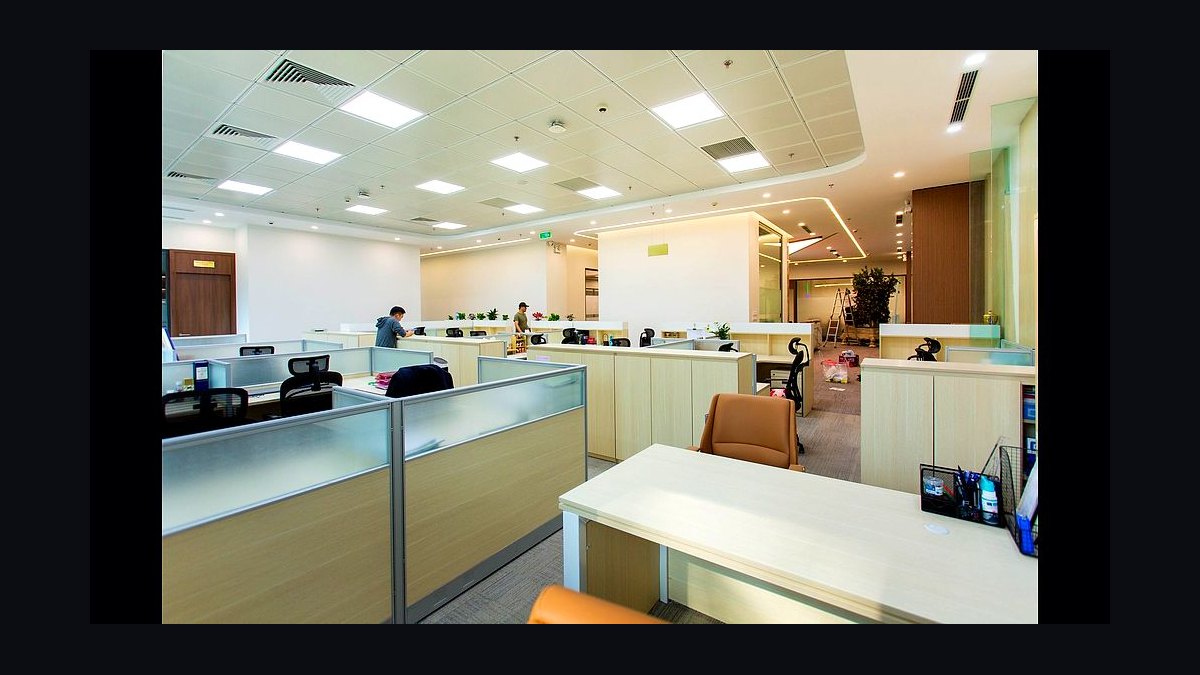
When landlords amortize a tenant improvement allowance into rent rather than paying it as cash, they typically charge an interest rate in the range of 7% to 10% annually in 2027, with 8% being the most common midpoint. That rate approximates the landlord's cost of capital plus a modest spread, and it is applied to the unamortized allowance balance over the remaining lease term.
The end-to-end buildout process and where amortization enters
The amortization interest rate does not get negotiated in a vacuum. It sits at the tail end of a sequence that starts with space selection and ends with rent commencement, and understanding that sequence explains why landlords anchor where they do.
The process begins when a tenant signs a letter of intent for commercial space. At that stage the tenant and landlord agree on a rough allowance figure — often expressed as dollars per rentable square foot — and the tenant begins design work. The architect produces a test fit, then construction documents. The general contractor prices the scope. If the priced scope exceeds the negotiated allowance, the tenant faces a funding gap, and the landlord faces a choice: write a check for the overage, or fold it into the deal as additional landlord-funded allowance recovered through rent.
That choice is where amortization appears. If the landlord funds the gap, the incremental dollars get added to the allowance balance and amortized. The same mechanism applies when a landlord offers above-market allowance to win a competitive tenant, or when a tenant asks to convert free rent into upfront capital.
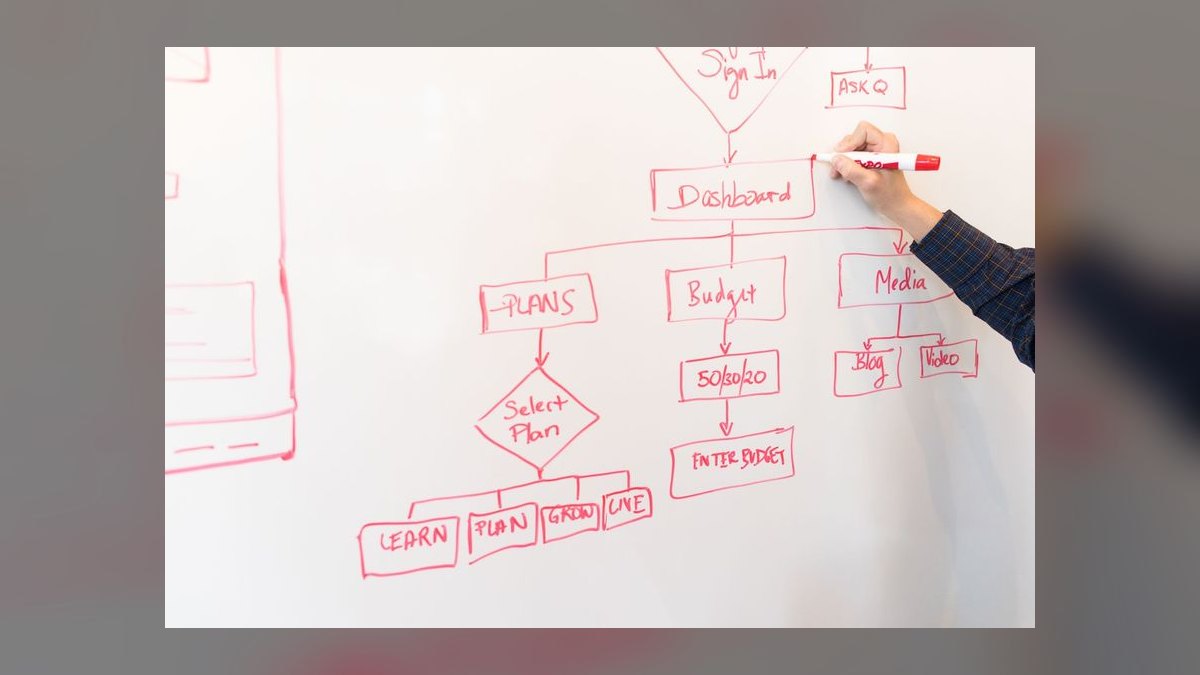
Here is the practical sequence as it actually runs in a 2027 deal:
- LOI stage. Allowance stated as a per-square-foot number, with a cap and a definition of what qualifies as a hard cost versus soft cost.
- Design and pricing. Architect and GC produce a scope. Tenant discovers whether the allowance covers it.
- Gap identification. Tenant and landlord agree on the shortfall. This is the amortization candidate.
- Funding election. Landlord either pays cash, amortizes into rent, or splits the difference.
- Rate setting. If amortizing, the parties agree on an interest rate, an amortization period, and whether it runs concurrent with the lease term or a shorter schedule.
- Documentation. The rate, balance, and payment mechanics go into the lease or a work letter amendment.
- Rent commencement. The amortized amount appears as additional base rent, often on a separate line so it is auditable.

The critical insight is that the interest rate is a financing term, not a construction term. It reflects the landlord's cost of money, the credit risk of the tenant, and the remaining lease term — not the cost of drywall or HVAC.
A few structural details matter enormously at step five. The amortization period is usually the remaining lease term, but landlords sometimes insist on a shorter schedule — say, amortizing over seven years inside a ten-year lease — so the balance is fully recovered before the tenant's renewal option kicks in. That shortening raises the monthly payment but reduces the landlord's exposure if the tenant vacates at renewal. Tenants generally prefer a longer amortization because it lowers the monthly burden, and they will often trade a slightly higher interest rate for a longer schedule.
There is also the question of whether the amortized amount is treated as base rent or as additional rent. The distinction matters for operating expense pass-throughs, percentage rent breakpoints, and renewal rent calculations. Many commercial leases define the amortized allowance recovery as additional rent precisely so it does not inflate the base rent on which renewal options and percentage rent are calculated. That is a tenant-favorable structure, and it is worth asking for explicitly.
Finally, the rate itself is sometimes expressed as a fixed number and sometimes as an index-plus-spread. In a stable rate environment, a fixed number is cleaner. In a volatile one, landlords may push for something tied to their actual borrowing cost, with a floor. Most tenants resist index-linked allowance amortization because it makes budgeting impossible, and most landlords will concede a fixed rate in exchange for a shorter amortization period or a higher rate.
Roles: landlord, tenant, GC, architect, and who actually controls the rate

Each party in a commercial buildout has a different relationship to the amortization interest rate, and knowing who cares about what shortens the negotiation considerably.
The landlord is the party setting the rate. The landlord's internal logic is straightforward: the allowance dollars are capital deployed into an asset, and that capital has an opportunity cost. If the landlord can earn a certain return elsewhere, or if it is borrowing at a certain rate to fund the improvement, the amortization rate should at minimum cover that. Most institutional landlords use a hurdle rate derived from their weighted average cost of capital plus a spread for tenant credit risk. That is why the typical range clusters in the high single digits rather than tracking a risk-free rate. A landlord with a strong balance sheet and low borrowing costs might accept 6.5% to 7.5%. A landlord using mezzanine or higher-cost capital might insist on 10% to 12%. The spread over the landlord's own cost of funds is usually 150 to 350 basis points.
The tenant is the party paying the rate, and the tenant's core question is whether amortization is cheaper than the alternatives. Those alternatives are: paying the overage from its own cash, borrowing from a bank, or reducing scope. A tenant with a low-cost line of credit may find that borrowing at prime or SOFR-plus is cheaper than accepting an 8% to 9% amortization rate. A tenant with no available credit will almost always accept the landlord's rate because the alternative is not building the space. Tenants should also check whether the amortized amount is prepayable — some landlords allow the tenant to buy out the remaining balance at a discount, which effectively converts the amortization into a loan the tenant can refinance.

The general contractor does not negotiate the rate but heavily influences whether amortization is needed at all. A GC who prices early and accurately, and who identifies long-lead items and scope creep before documents are final, can keep the project inside the allowance. A GC who prices late, or who prices from incomplete drawings, produces the surprise overage that triggers the amortization conversation. Tenants should insist on a GC who will do a constructability review before the allowance is finalized, not after. Value engineering — substituting materials, simplifying mechanical layouts, phasing the build — can eliminate a gap entirely, which is always better than financing it.
The architect shapes the size of the gap through design decisions made long before pricing. A design that specifies custom millwork, unusual ceiling heights, or extensive structural modification will blow through a standard allowance. An architect briefed on the allowance number from day one can design to budget. This sounds obvious, but it is frequently skipped: tenants often let the architect design freely and only discover the cost problem at pricing. By then, redesign costs money and time, and the tenant is more likely to accept the landlord's amortization terms because the schedule is already tight.
There is also a fifth party worth naming: the tenant's broker or lease advisor. A good broker knows the market allowance for the submarket and property class, knows what rate comparable landlords are accepting, and can benchmark the proposed rate against recent deals. A broker who does not push back on an above-market amortization rate is leaving money on the table.
The practical takeaway is that the rate is negotiated between landlord and tenant, but the *need* for amortization is a function of design, pricing, and schedule discipline exercised by the architect and GC. Control the gap, and the rate matters less.
Real cost ranges and contingencies
Concrete numbers make this negotiable. The following ranges reflect typical commercial office, retail, and light industrial deals, and they should be treated as benchmarks rather than quotes.

Allowance levels. Standard tenant improvement allowances vary widely by property class and market. For Class A office space, allowances commonly run $40 to $90 per rentable square foot, with gateway markets at the high end and secondary markets lower. Class B office often runs $20 to $50 per square foot. Retail allowances vary enormously with the concept — a vanilla shell restaurant buildout might carry $30 to $60 per square foot, while an inline retail space might see $15 to $40. Light industrial and warehouse allowances are typically the lowest, often $5 to $25 per square foot, because the base building is already functional and tenants do less finish work.
Typical overages. When a project exceeds the allowance, the overage is frequently 10% to 30% of the allowance amount. On a 10,000-square-foot office deal with a $60 per square foot allowance, that is $600,000 in allowance and a $60,000 to $180,000 gap. That gap is the amortization candidate.
Interest rate ranges. As noted, 7% to 10% annually is the typical band, with 8% as a common midpoint. Within that band, the rate moves with tenant credit quality, remaining lease term, and the landlord's cost of capital. A national credit tenant signing a fifteen-year lease might see 6.5% to 7.5%. A startup with two years of operating history signing a five-year lease might see 10% to 12%, or the landlord may refuse amortization entirely and demand cash or a personal guarantee.
Amortization math. The mechanics are simple mortgage-style amortization. Take the amortized balance, apply the annual rate, and divide over the amortization period in months. For example, a $150,000 amortized allowance at 8% over ten years produces a monthly payment of roughly $1,820. Over 120 months that is about $218,400 in total payments — meaning roughly $68,400 of interest on a $150,000 advance. That total-interest figure is the number tenants should focus on, because it is the true cost of not paying cash.
The formula for the monthly payment is:
Monthly payment = P × [r(1+r)^n] / [(1+r)^n − 1]
where P is the principal balance, r is the monthly interest rate (annual rate divided by 12), and n is the number of months. A tenant can run this in a spreadsheet in thirty seconds, and doing so before the negotiation is the single highest-leverage preparation step available.

Contingencies. Landlords typically hold back 10% of the allowance until the work is complete, lien waivers are delivered, and the tenant has accepted the space. That holdback is not part of the amortization calculation — it is released, not financed. Tenants should also budget a construction contingency of 5% to 10% of project cost for unforeseen conditions, and should clarify in the lease whether contingency draws count against the allowance or come out of the tenant's pocket. Ambiguity here is a common source of post-signing disputes.
Soft costs. Allowances are frequently restricted to hard construction costs. Soft costs — architectural fees, engineering, permitting, project management, moving, and sometimes furniture — may or may not be covered. If the allowance is hard-cost-only and the tenant needs $80,000 of soft costs, that is another funding gap, and it may or may not be amortizable. Clarify this in the work letter.
Timing. Amortized allowance recovery usually begins at rent commencement, but if the landlord funds draws during construction, interest may accrue from the date of each draw. Some landlords waive interest during the construction period as a concession; others do not. Over a nine-month buildout, construction-period interest on a $150,000 balance at 8% is roughly $9,000 — worth negotiating.
Trade-offs. The core trade-off is cash today versus rent tomorrow. Paying cash preserves negotiating leverage and avoids interest entirely, but consumes working capital. Amortizing preserves cash for operations and equipment, but adds a fixed monthly obligation that survives even if the space underperforms. A middle path — amortizing part of the gap and paying part in cash — is common and often optimal, because it reduces both the interest drag and the upfront cash hit.
Common commercial pitfalls
The pitfalls in allowance amortization are mostly documentation and incentive problems, not arithmetic problems. The arithmetic is straightforward; the trouble comes from ambiguity.

Pitfall one: the rate is never actually written down. Deals frequently close with the allowance amount specified but the amortization rate left to "market" or omitted entirely. When the first rent invoice arrives with an amortization line, the tenant has no contractual basis to dispute the number. Every amortization term — rate, balance, period, start date, and whether it is base or additional rent — must be in the lease or work letter.
Pitfall two: compounding on undrawn amounts. Some landlords accrue interest on the full committed allowance from the date of lease signing, even though the tenant has not drawn the money. That is a meaningful cost on a project with a long design phase. Interest should accrue only on funds actually disbursed.
Pitfall three: the amortization outlives the lease. If the amortization period is longer than the lease term, the tenant is either obligated to pay the remaining balance at expiration or the landlord has underpriced the risk. Tenants should insist that amortization not extend beyond the initial term unless there is a renewal they control.
Pitfall four: renewal rent double-counts the amortization. If the amortized amount is baked into base rent, and renewal rent is calculated as a percentage of the then-current base rent, the tenant pays for the allowance twice — once through amortization and again through the inflated renewal base. Defining the amortized recovery as separate additional rent avoids this.
Pitfall five: the allowance definition excludes what the tenant actually needs. A hard-cost-only allowance that excludes permitting, design, and project management can leave a tenant with a large uncovered soft-cost bill and no amortization mechanism to finance it. Negotiate soft-cost coverage explicitly.
Pitfall six: no prepayment right. If the tenant's business outperforms and it wants to retire the amortized balance early, a lease with no prepayment provision forces it to keep paying interest. Ask for a prepayment right at par or at a modest premium.

Pitfall seven: the landlord's rate is treated as non-negotiable. It almost never is. Landlords will frequently move 50 to 150 basis points in exchange for a longer lease term, a stronger guarantee, or a shorter amortization schedule. Tenants who accept the first number leave real money on the table.
Pitfall eight: ignoring the opportunity cost comparison. A tenant should always compare the landlord's amortization rate against its own cost of capital. If the tenant can borrow at 6% and the landlord wants 9%, paying cash with borrowed funds is cheaper — assuming the tenant has the credit and the appetite for the debt.
Pitfall nine: failing to model the total interest. Tenants focus on the monthly payment and miss the cumulative interest. On a $200,000 balance at 9% over ten years, total interest exceeds $100,000. That number belongs in the comparison.
Pitfall ten: letting the schedule force the decision. When the buildout is behind schedule, tenants accept whatever amortization terms are on the table because they need to open. The time to negotiate the amortization terms is at the letter of intent, not at the work letter, and certainly not after drawings are complete.
Negotiation checklist
A disciplined negotiation sequence produces better terms than an ad hoc one. The following flow reflects how experienced commercial tenants approach the amortization conversation, and it is worth running in order.
Working through the checklist in practice:
Step one: confirm the allowance. Get the number in dollars per rentable square foot and in total dollars. Confirm the measurement standard used to calculate rentable area, because a 5% measurement difference on a 20,000-square-foot space is 1,000 square feet of allowance.
Step two: clarify coverage. Ask directly whether the allowance covers architectural fees, engineering, permitting, project management, and any landlord-specified vendors. Get the answer in writing.

Step three: price early. Have the GC produce a preliminary budget from the architect's drawings before the allowance is finalized. This is the single best way to avoid a gap.
Step four: quantify the gap. If there is a shortfall, get a line-item breakdown. Do not accept a lump-sum gap figure.
Step five: request the rate. Ask the landlord to state the amortization rate, the amortization period, the accrual start date, and whether the recovery is base or additional rent. Landlords who have a standard answer will give it quickly; landlords who have not thought about it will reveal flexibility.
Step six: benchmark. Compare the quoted rate against the typical 7% to 10% band, against comparable deals your broker knows about, and against your own borrowing cost. Come to the table with a number.
Step seven: counter on multiple dimensions. Rate, amortization period, accrual start, and prepayment are all negotiable. Trading a slightly longer lease term for a lower rate is often the cleanest exchange.
Step eight: lock the treatment. Confirm whether the amortized amount is base rent or additional rent, and confirm how it interacts with operating expense pass-throughs and renewal calculations.
Step nine: secure prepayment. Ask for the right to retire the balance at any time without penalty, or with a defined prepayment premium.
Step ten: model the total. Before signing, calculate total payments and total interest. Compare against the cash alternative. Make the decision on the full number, not the monthly line.
Step eleven: document. Every term goes in the lease or a signed work letter amendment. Verbal understandings about rates do not survive a change in property management.
Step twelve: calendar the review. If the deal includes an option to prepay or refinance, put a reminder on the calendar before the deadline.
Related questions
Do landlords charge interest on TI allowances that are paid as cash upfront?
No. When the allowance is funded as cash, there is no balance to amortize and therefore no interest. Interest only arises when the landlord advances dollars that the tenant repays over time through rent. A cash allowance is a concession; an amortized allowance is a financing arrangement.
Is the amortization rate negotiable in 2027?
Yes, and it is more negotiable than most tenants assume. Landlords will commonly move 50 to 150 basis points in exchange for longer lease term, stronger credit support, a shorter amortization schedule, or a larger security deposit. The quoted rate is an opening position, not a fixed price.
How does tenant credit quality affect the rate?
Materially. A national credit tenant with a long lease may see 6.5% to 7.5%, while a young company with limited operating history may see 10% to 12% or be asked to provide a personal guarantee. The rate is compensation for the risk that the tenant defaults before the balance is recovered.
Can the amortized amount be prepaid?
Sometimes. Many leases are silent on prepayment, which effectively means no. Tenants should negotiate an explicit prepayment right, ideally at par with no premium, so the balance can be retired if the business generates excess cash or refinances at a lower rate.
Does amortized allowance recovery count as base rent?
It depends on the lease language, and the distinction matters. If it is base rent, it inflates renewal rent calculations and percentage rent breakpoints. If it is additional rent, it is typically excluded from those calculations. Tenants should push for additional rent treatment.
FAQ
What interest rate do landlords typically charge when amortizing a TI allowance in 2027?
Most commercial landlords charge between 7% and 10% annually, with 8% as the most common midpoint. The rate reflects the landlord's cost of capital plus a spread for tenant credit risk. Strong-credit tenants on long leases land at the low end; weaker credits on short leases land at the high end or are declined entirely.

How is the monthly amortized payment calculated?
It uses standard mortgage-style amortization. Take the amortized balance, apply the monthly interest rate, and solve for the level payment over the amortization period in months. A $150,000 balance at 8% over ten years produces roughly $1,820 per month and about $68,400 of total interest.
Should a tenant pay cash or accept amortization?
Compare the landlord's rate against the tenant's own cost of capital and against the value of preserving cash. If the tenant can borrow below the landlord's rate and has the credit capacity, paying cash is usually cheaper. If cash is tight or the rate is competitive, amortization preserves working capital for operations.
Can the amortization period be shorter than the lease term?
Yes, and landlords often prefer it. Amortizing over seven years inside a ten-year lease fully recovers the balance before a renewal option, reducing landlord exposure. The trade-off is a higher monthly payment, which is why tenants generally prefer a longer schedule.
What happens if the tenant defaults mid-amortization?
The remaining balance typically becomes immediately due, or the landlord treats it as damages under the lease. This is one reason landlords care about tenant credit and why the amortized amount is often secured by a letter of credit or security deposit covering several months of the amortized payment.
Does the amortization rate include a broker commission or fees?
Usually not directly, but the landlord's overall economics include leasing commissions, and those costs influence how aggressively the landlord prices the allowance. Some landlords will fold commissions and legal fees into the amortized pool; others keep them separate. Ask which costs are being amortized.
Sources
- https://www.investopedia.com/terms/a/amortization.asp
- https://www.investopedia.com/terms/t/tenant-improvement-allowance.asp
- https://www.nolo.com/legal-encyclopedia/commercial-leases-tenant-improvements.html
- https://www.law.cornell.edu/wex/lease
- https://www.federalreserve.gov/data/interest-rates.htm
- https://www.sec.gov/edgar/searchedgar/companysearch
- https://www.bls.gov/ppi/
- https://www.irs.gov/publications/p946
Related on PULSE
- How TI allowances are structured in commercial leases
- Negotiating work letters and construction exhibits
- Free rent versus upfront capital: comparing landlord concessions
- Calculating effective rent in office and retail deals
- Tenant credit, security deposits, and letters of credit
- Buildout cost benchmarking by property class
This page will be disappearing soon. Save it to your device for $1 — or read it free while it is here.
@Kory-White- · if Venmo asks, the last 4 of my number are 2012
This page is gone.
This one is off the shelf now. $1 keeps it on your phone for good — the whole page, pictures and diagrams included.
 buildoutsHow Do I Negotiate a Build-to-Suit Lease Rate (Cost x Cap) in 2027?
 buildoutsHow Do I Get a Commercial Lease With Bad or Thin Credit in 2027?
 pulse-recentHow do I budget a landlord-funded buildout when the TI allowance only covers half the cost in 2027?
 pulse-recentHow much does a 10,000 sq ft cold storage warehouse buildout cost in 2027?
 buildoutsHow Do I Protect Myself If My Landlord Goes Bankrupt in 2027?
 pulse-recentHow do I budget for the landlord's construction management fees in a buildout in 2027?
 buildoutsHow Do I Terminate a Lease After a Fire or Casualty in 2027?
 buildoutsHow Do I Budget a Salon or Spa Buildout in 2027?
 buildoutsHow Do I Cap My Pro-Rata Share Increases in 2027?
 buildoutsWhat Is the Complete Commercial Lease Negotiation Checklist?