


What's the typical resale value gap between a manual and automatic gearbox on a used grand tourer in 2027?
Quality
Certified

On a used grand tourer in 2027, a manual gearbox typically commands a resale premium of roughly 10% to 25% over an equivalent automatic, with the widest gaps on low-volume enthusiast models and the narrowest on high-production cars. Rare colour-and-option combinations can push the spread past 30%, while high-mileage examples often compress it to single digits.
The outcome you should expect
The headline number most buyers and sellers will encounter in 2027 is a manual premium somewhere between 10% and 25% of the automatic's market value. That is not a single fixed figure — it is a band, and where a specific car lands inside that band depends on a short list of variables that a practitioner can actually measure. The most useful way to think about it is as a spread that widens as supply of manuals shrinks and narrows as the car becomes more of a commodity.
Consider a concrete illustration. Take a 2019–2021 front-engined grand tourer that originally sold with a choice of a six-speed manual or a seven- or eight-speed automatic. In 2027 those cars are roughly six to eight years old. If the automatic version with 30,000 miles books at $95,000, the manual version of the same car, same mileage, same condition, will typically transact somewhere between $105,000 and $119,000 — a gap of $10,000 to $24,000. On a cheaper grand tourer whose automatic books at $45,000, the same percentage band produces a gap of roughly $4,500 to $11,000. The percentage holds better than the dollar figure, which is why percentage is the right unit for planning.
The gap is not symmetric in time. It tends to be narrowest in the first three years of a car's life, when both transmissions are still "current" and the automatic's convenience and warranty coverage dominate buyer thinking. It widens through years four to ten as the manual becomes scarce, as the enthusiast buyer base concentrates, and as the automatic's mechatronic and valve-body service costs become a known future expense. After roughly year twelve the pattern can invert for specific models: if the automatic has a reputation for expensive failure and the manual is durable, the manual premium can exceed 30%; if the manual is the one with a weak synchro or a fragile clutch, the premium collapses and can even reverse.
There is also a liquidity dimension that pure price comparison misses. Manual grand tourers typically take longer to sell — often 60 to 120 days versus 30 to 60 for an automatic — but they sell to a more determined buyer who is less likely to haggle hard on price. The automatic sells faster and to a broader pool, including daily drivers and buyers who cannot or will not operate a clutch. So the manual's premium is partly a patience premium: the seller is being paid for waiting.
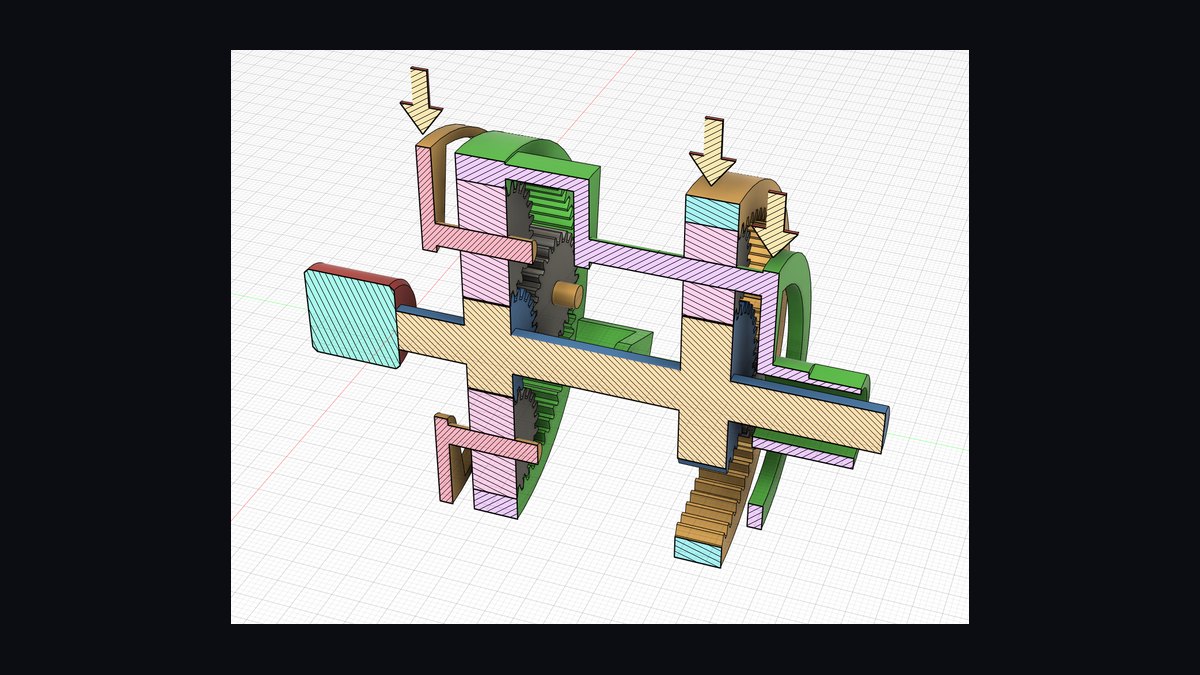
For anyone valuing a car in 2027, the practical takeaway is to price the automatic first, because the automatic is the reference market with far more comparable sales, then apply a manual adjustment drawn from the 10–25% band, then adjust within that band using the specific factors below. Pricing the manual first and discounting to reach the automatic is the more common mistake and it usually produces a number that is too high, because manual comparables are thin and skewed toward optimistic asking prices rather than closed transactions.
What drives that outcome
The size of the gap is not arbitrary. It is the output of a small set of supply and demand forces that can each be assessed independently.
Supply scarcity. The dominant driver. By 2027 the manual take rate on new grand tourers has fallen to low single digits for most nameplates, and several major manufacturers have stopped offering a manual entirely. That means the pool of manual cars in the used market is not being replenished. A car built in a year when 8% of buyers chose the manual has a permanent 8%-of-production ceiling on its manual population, and attrition only reduces it. Scarcity of a desirable configuration is the single most reliable source of a resale premium.
Buyer-base concentration. Manual buyers are a narrower, more motivated group. They are frequently repeat buyers, often already own or have owned the model, and are shopping for a specific configuration rather than a general "nice car." Concentrated demand against fixed supply is what turns a modest preference into a double-digit price gap.

Automatic desirability in the broader market. The automatic is not a penalty box. Modern dual-clutch and torque-converter automatics are faster, more efficient, and easier in traffic. For the majority of used grand tourer buyers — who use the car as a comfortable long-distance machine rather than a weekend toy — the automatic is the better product. That keeps automatic demand high and automatic prices firm, which paradoxically limits how large the manual premium can grow. The gap is a premium, not a discount: the automatic is the healthy baseline.
Model-specific reputation. If a particular automatic has a well-documented failure mode — a mechatronic unit that fails, a valve body that clogs, a fluid service that is expensive and often skipped — the manual premium on that model widens well beyond the general band. Conversely, if the manual has a known weakness, the premium shrinks. Reputation, not specification, sets the tail of the distribution.
Condition and originality. A manual car that has been modified — short shifter, aftermarket clutch, swapped pedals — loses much of its premium because it no longer appeals to the originality-focused collector. A bone-stock manual with full service history captures the maximum. This is why two manual cars of the same year and mileage can differ by 15 percentage points.
Colour, options, and mileage. These act as multipliers on top of the transmission effect. A manual in a desirable colour with the desirable options and below-average mileage can sit at the top of the band or above it. A manual in an unpopular colour with high mileage can sit at the bottom, sometimes barely above the automatic.
The diagram above is the valuation sequence a practitioner should follow. Note that it starts from the automatic and adjusts upward, never the reverse. Note also that the two modifier stages — scarcity and automatic reputation — are the ones that move a car out of the default band, and both are assessable from public information: production data and take rates on one side, owner forums and service bulletins on the other.

A second force worth naming explicitly is the "last of the manuals" effect. When a manufacturer announces that a given generation will be the final one offered with a manual, the manual versions of that generation tend to appreciate relative to their automatics almost immediately, and the effect compounds as the cars age. This is not speculation about future value; it is an observable pattern in how enthusiast markets price the end of an era. In 2027, several grand tourer generations are far enough past their manual sunset for this effect to be fully priced in, which is part of why the band sits where it does rather than higher.
Finally, geography matters more than most guides admit. In markets where manual licences are common and fuel is expensive, the manual premium is smaller because the manual is not a novelty. In markets where the manual is genuinely rare and the car is a leisure purchase, the premium is larger. A single global percentage is a fiction; the 10–25% band is a reasonable global centre, but a local valuation should always be checked against local closed sales.
Benchmarks and realistic ranges
The following ranges are the practical working numbers for 2027. They are expressed as the manual's premium over an equivalent automatic, holding model, year, mileage, and condition constant. Treat them as planning benchmarks, not as quotes.
By production volume. For a high-volume grand tourer — one built in five-figure annual numbers with a manual take rate above 20% — expect a premium of 8% to 14%. For a mid-volume car with a take rate between 8% and 20%, expect 14% to 22%. For a low-volume or limited-run car with a take rate under 8%, expect 22% to 35%, and occasionally more for the right specification.
By mileage band. Under 15,000 miles, the premium is at its widest, typically 20% to 30%, because low-mileage manual cars are the collector target. Between 15,000 and 45,000 miles, the band is the standard 12% to 22%. Between 45,000 and 80,000 miles, the premium compresses to 8% to 15% as the car becomes a used car rather than a collectible. Above 80,000 miles, expect 4% to 10%, and be prepared for no premium at all if the manual needs a clutch or synchro work.
By age. Cars three to five years old in 2027 show the tightest spreads, often 8% to 13%, because both transmissions are still modern and the automatic's convenience wins with mainstream buyers. Cars six to ten years old show the classic 12% to 22%. Cars eleven to eighteen years old show 15% to 30%, widening as the manual population thins and the automatic's maintenance costs become visible. Beyond eighteen years, the spread is entirely model-specific and the general band stops being useful.
By price tier. On a grand tourer whose automatic books under $50,000, a 15% premium is $7,500 — meaningful but not decisive for most buyers. On a car whose automatic books at $120,000, the same 15% is $18,000, which is large enough to change which car a buyer chooses. This is why the percentage matters more than the dollar amount when comparing across tiers, and why sellers of expensive manual cars should expect the transmission to be a headline feature in the listing rather than a footnote.
Time-to-sale benchmarks. A well-priced automatic grand tourer in good condition typically finds a buyer in 30 to 60 days. The equivalent manual typically takes 60 to 120 days, and a manual in an unpopular colour or with modifications can sit for six months. A seller who needs liquidity should price the manual at the bottom of the band; a seller who can wait should price at the middle and hold. The premium is real but it is paid in time as well as money.
Auction versus private sale. Manual cars tend to outperform at enthusiast auctions, where the buyer pool is self-selected for exactly this preference, and to underperform in generic classified listings, where the manual narrows the audience without attracting a specialist. If you are selling a manual grand tourer, the venue is worth as much as the price. If you are buying, the reverse is true: the best manual deals are found where the seller has not realised the manual is the desirable configuration, which in practice means generic listings rather than specialist venues.

Condition adjustments on top of the transmission effect. A full service history is worth roughly 3% to 6% on either transmission but tends to matter more on the manual, because manual buyers are more likely to be inspecting for clutch and synchro wear and to value evidence of care. Original paint and unmodified mechanicals are worth more on the manual than the automatic for the same reason. A recent clutch replacement is a positive on a high-mileage manual, not a negative, provided it was done with quality parts — it removes a known future expense.
What the benchmarks do not cover. They do not cover cars where the automatic is the rare configuration. A handful of grand tourers were built predominantly with manuals, and in those cases the automatic can carry its own premium. They also do not cover cars where the manual was never offered in a given market, where the transmission comparison is meaningless. Always confirm that both transmissions were actually available in the model year and market you are valuing before applying any of these numbers.
Risks, edge cases, and failure modes
The most common failure mode is applying the general band to a car where it does not apply. The band assumes both transmissions were offered in meaningful numbers in the same model year and market. If the manual was a special edition, or the automatic was introduced mid-cycle, the comparison is not like-for-like and the percentage will mislead. The fix is simple: confirm availability first, then look for at least three closed sales on each side before trusting any spread.
A second failure mode is using asking prices instead of sold prices. Manual grand tourers are disproportionately listed by optimistic private sellers, and those listings sit for months without transacting. If you build a comparable set from active listings, you will systematically overstate the manual premium — sometimes by 10 percentage points or more. Closed auction results and confirmed private sales are the only reliable inputs. Where closed data is thin, discount asking prices on manuals more aggressively than you would on automatics.

A third risk is the maintenance-cost trap on the automatic. Buyers in 2027 are increasingly aware that some dual-clutch units require expensive fluid services and can suffer mechatronic failures out of warranty. This awareness widens the manual premium on affected models — but it also means the automatic's price can fall faster than expected, which makes the manual's premium look larger in percentage terms even if the manual's absolute price has not moved. If you are tracking the gap over time, track both absolute prices, not just the ratio.
Edge cases deserve explicit treatment. Swapped cars. A car converted from automatic to manual, or vice versa, is not a factory manual and should not be priced as one; conversions typically trade at or below the automatic value regardless of which direction they went, because the originality premium is gone and the buyer pool distrusts the workmanship. Non-original transmission. A replacement gearbox of the correct type is usually acceptable if documented, but a replacement of the wrong type is a value destroyer. Clutch and synchro wear. A high-mileage manual with a worn clutch is not a bargain at automatic-plus-10%; the imminent $3,000 to $8,000 repair should be deducted from the premium, and on a cheap car it can eliminate the premium entirely.
Regulatory and usage risk. In some jurisdictions, manual cars face no additional burden; in others, resale is affected by emissions-zone rules that treat older cars uniformly regardless of transmission, which compresses the spread. If you are valuing a car that will be used in a low-emission zone, check whether the transmission changes anything about compliance — usually it does not, but the assumption should be verified rather than assumed.

The "enthusiast bubble" risk. Manual premiums are sentiment-driven at the margin. If the broader collector market cools, the manual premium compresses first, because it is the part of the price that is not explained by the car's basic utility. A seller who has priced at the top of the band in a hot market can find the premium gone within a single season. The prudent approach is to treat anything above 20% as sentiment and to be prepared for it to evaporate.
Liquidity risk. The manual's longer time-to-sale is a real cost. Carrying costs, insurance, storage, and the risk of a market shift during the sale period all eat into the premium. A 15% premium that takes four months to realise is worth less than a 10% premium realised in six weeks once carrying costs are counted. Sellers should compute the premium net of holding cost before deciding to hold out.
Financing and insurance edge cases. Some lenders value manuals conservatively because their valuation guides lag the enthusiast market, which can make it harder for a buyer to finance the full manual premium. Some insurers treat modified or unusual configurations differently. Neither changes the market price, but both affect how easily a transaction completes, and a seller should expect the manual buyer to be more likely to pay cash or arrange specialist financing.
A practical rollout plan
If you are valuing, buying, or selling a manual grand tourer in 2027, the following sequence produces a defensible number in a few hours of work.
Step one: establish the automatic baseline. Pull closed sales for the automatic version of the exact model, year, and approximate mileage. Aim for at least five transactions within the last six months, adjusted for condition and options. This is your reference price. Do not start from the manual.
Step two: confirm the manual was actually offered. Check the model year and market. Note the approximate take rate if it is publicly documented, or estimate it from the ratio of manual to automatic cars currently listed for sale. A take rate under 10% signals the upper half of the band; over 20% signals the lower half.

Step three: apply the base band. Multiply the automatic baseline by 1.10 to 1.25 to establish the initial manual range. This is your starting bracket, not your answer.
Step four: adjust for scarcity. If the manual take rate was under 10%, move toward the top of the bracket or slightly above. If it was over 20%, move toward the bottom.
Step five: adjust for automatic reputation. Research the specific automatic unit's known failure modes and service costs. If it has a documented expensive failure, widen the premium by 3 to 8 percentage points. If it is regarded as robust, hold or narrow slightly.
Step six: adjust for condition and specification. Add for full service history, originality, desirable colour, and desirable options. Subtract for modifications, accident history, worn clutch, or unpopular specification. These adjustments are typically worth 3 to 10 percentage points in total.
Step seven: sanity-check against manual comparables. Now — and only now — look at manual listings and closed sales. If your number is far from the manual market, find out why. Usually the answer is condition, mileage, or specification, but occasionally it is a genuinely thin market and you should widen your uncertainty rather than pick a point estimate.
Step eight: price for your objective. Selling quickly: bottom of the band. Selling for maximum: middle of the band with patience. Buying: target cars priced at the bottom of the band and be prepared to walk from anything priced above the top without exceptional justification.
Two practical notes on executing this plan. First, keep a written record of each adjustment and its source, because when you are negotiating you will be asked to justify the premium and "the internet says 20%" is not persuasive. Second, revisit the valuation if the car sits unsold for more than 90 days — in a thin market, time on market is itself evidence that the price is above the clearing level, and the correct response is to reduce toward the automatic baseline rather than to hold and hope.

For buyers, the plan inverts usefully. The best manual purchases happen when a seller has priced the car using automatic comparables and has not recognised the manual premium. Those cars are found in generic listings, at non-specialist dealers, and in estate sales, not at enthusiast auctions. The work of the plan is therefore as much about finding mispriced cars as it is about computing a number.
Related questions
Does the manual premium apply to all grand tourers?
No. It applies where the manual was a genuine factory option and is now scarce. Cars built predominantly as manuals, or where the manual was never offered in your market, do not follow the pattern. Confirm availability before applying any percentage.
Is the premium larger on cheaper or more expensive grand tourers?
In percentage terms it is fairly stable, but in dollar terms it scales with price. A 15% premium on a $120,000 automatic is $18,000; on a $45,000 automatic it is $6,750. Percentage is the better planning unit.
How long does a manual take to sell compared with an automatic?
Typically 60 to 120 days versus 30 to 60 for the automatic, and longer for unpopular colours or modified cars. The premium is partly compensation for that wait, so net it against carrying costs before holding out for top price.
Can a manual ever be worth less than the automatic?
Yes. If the manual has a known weakness, if it has been modified or converted, if the clutch or synchros are worn, or if the automatic is the rarer configuration, the manual can trade at or below the automatic. The premium is a tendency, not a rule.
FAQ

What is the typical resale value gap between a manual and automatic gearbox on a used grand tourer in 2027? Typically 10% to 25% in favour of the manual, holding model, year, mileage, and condition constant. Low-volume cars with manual take rates under 10% can reach 30% or more; high-volume cars with take rates above 20% often sit at 8% to 14%.
Why does the manual carry a premium at all if the automatic is faster? Because the manual is scarce and its buyers are concentrated and motivated. Speed is not the only thing buyers value; engagement, rarity, and the knowledge that the configuration will not be built again all command a price. The automatic remains the better car for most uses, which is why it is the firm baseline rather than a discounted option.
Does mileage change the size of the gap? Yes, substantially. Under 15,000 miles the premium can reach 20% to 30%; between 45,000 and 80,000 miles it compresses to 8% to 15%; above 80,000 miles it can fall to single digits or vanish if the clutch or synchros need work.
How should I value a manual if there are almost no manual comparables? Start from the automatic baseline, apply the 10–25% band, adjust for scarcity and automatic reputation, then widen your uncertainty rather than pretending to a point estimate. Thin markets produce wide ranges, and a range is the honest answer.
Does a modified manual lose its premium? Usually yes. Modifications such as short shifters, aftermarket clutches, and pedal swaps narrow the buyer pool to those who want that specific setup and alienate originality-focused buyers. A stock manual with full history captures the maximum premium.
Is the premium stable over time? No. It is narrowest in a car's first three years, widens through years four to ten, and becomes model-specific after roughly eighteen years. It also compresses first if the broader collector market cools, because the premium is the sentiment-driven portion of the price.
Sources
- Hagerty — https://www.hagerty.com
- Bring a Trailer — https://bringatrailer.com
- Classic.com — https://www.classic.com
- RM Sotheby's — https://rmsothebys.com
- J.D. Power — https://www.jdpower.com
- Kelley Blue Book — https://www.kbb.com
- National Automobile Dealers Association — https://www.nada.org
- SAE International — https://www.sae.org
Related on PULSE
- How automatic transmission service costs affect used grand tourer values
- Reading closed auction data versus asking prices in enthusiast car valuation
- Manual take rates by model year and what they mean for future scarcity
- Condition and originality adjustments in collectible car pricing
- Liquidity and time-to-sale benchmarks for niche used cars
- When the automatic is the rare configuration: inverted transmission premiums
This page will be disappearing soon. Save it to your device for $1 — or read it free while it is here.
@Kory-White- · if Venmo asks, the last 4 of my number are 2012
This page is gone.
This one is off the shelf now. $1 keeps it on your phone for good — the whole page, pictures and diagrams included.
 pulse-carsWhat are the most reliable used hybrid SUVs under $10,000 in 2027 that have low maintenance costs and high fuel efficiency for daily commuters in urban areas?
 pulse-carsBest Used Off-Road SUVs Under $15,000 in 2027 (Ranked)
 pulse-carsBest Used Hybrid Cars Under $10,000 in 2027 (Ranked)
 pulse-recentWhat's the average interest rate on a new car loan for a Volkswagen Golf R in 2027?
 pulse-recentTop 10 Muscle Cars 1986 — Best Overall + Best Value
 pulse-carsBest Used Off-Road SUVs Under $20,000 in 2027 (Ranked)
 pulse-recentTop 10 Most Affordable Used Sedans Under $10,000 in 2019 (Ranked)
 pulse-recentTop 10 Muscle Cars 1975 — Best Overall + Best Value
 pulse-carsBest Cars for Dog Owners in 2027
 pulse-carsTop 10 Mid-Size SUVs 2024 — Best Overall + Best Value