
How do you coach reps to build a mutual action plan with buyers?
 Curated byKory White · Fractional CRO · Maryland
 PULSEKNOWLEDGE LIBRARY
Coach reps to treat a mutual action plan as a buyer-co-authored timeline built backwards from the buyer's go-live date, not a seller's checklist. Teach them to introduce it as risk-reduction, co-build it live with the economic buyer, and assign owners and dates on both sides.
What a mutual action plan is, and why coaching it changes deals
A mutual action plan (MAP) is a written, co-authored schedule of every step required to move from "we're interested" to "we're live," with owners and dates on both the seller's side and the buyer's side, anchored to the date the buyer actually needs the outcome. The distinction that most reps miss — and the first thing you have to coach — is that a MAP is not a close plan. A close plan is a seller's private list of internal steps to reach signature: send order form, get legal to redline, book the QBR. A mutual action plan includes the buyer's own internal machinery — security review, legal redlines, procurement approval, vendor onboarding, board or budget sign-off — and the buyer has edited it. If the buyer never touched the document, it is not mutual, and coaching stops there until it is.
Why does this matter enough to build a coaching program around it? Because the shape of B2B buying has changed. Buying committees have grown — Gartner's research puts the typical enterprise buying group at six to ten stakeholders — and cycle times have stretched, which means the single largest source of forecast error is no longer "will they pick us" but "will their internal process finish on time." A real MAP surfaces that process early, converts vague optimism into dated commitments, and gives both sides a shared artifact to inspect. In a modern RevOps motion, a co-built MAP is the most reliable leading signal that a deal is genuinely committable rather than happy-ears wishful thinking.
For managers, the critical reframe is that MAP-building is a teachable behavior, not a personality trait. Reps who avoid it are not "not consultative enough." They are missing one of four specific things — the skill to introduce and co-build one, the belief that it helps the buyer, the discovery knowledge to map the buyer's real steps, or a system that makes it inspectable — and each of those has a different coaching move. That is what makes this coachable: you diagnose which of the four is missing, then run a targeted intervention instead of a generic pep talk about "adding value."
The step-by-step coaching process
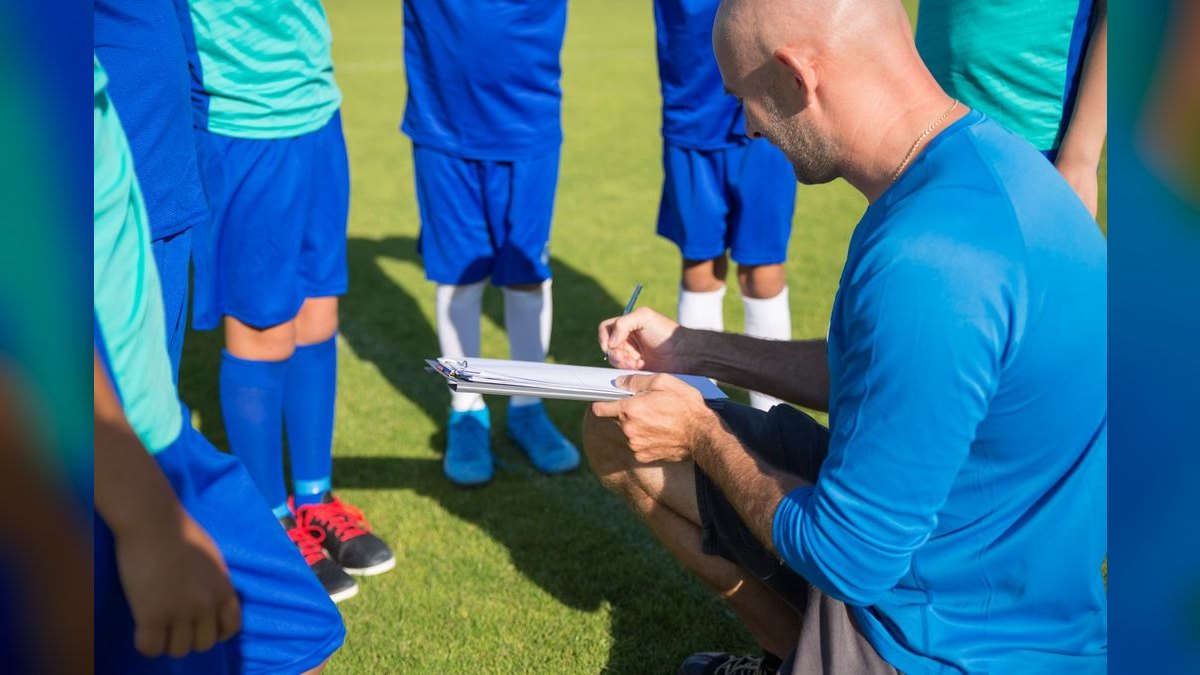
Run the coaching conversation as a structured 1:1 using the GROW model — Goal, Reality, Options, Will — and keep the rep doing most of the talking. Your job is to draw the plan out of them, not hand them a template. A manager who dictates the MAP has taught the rep to wait for the next dictation.
Goal. Anchor on the deal outcome, not the document. Ask: "What date does the buyer actually need to be live, and what breaks for them if they miss it?" If the rep cannot answer, you have found a discovery gap, and the MAP would have been fiction anyway.
Reality. Expose whether a real MAP exists. Ask the rep to show you, in writing, the steps they and their champion have agreed to — including the buyer's legal, security, and procurement steps, with owners and dates. If the rep produces only their own implementation steps, that is a definition gap: they have confused a close plan with a mutual action plan.

Options. Teach the exact language to propose a MAP to buyers, and have the rep rehearse it out loud before they ever say it to a customer. The intro should position the plan as a service: "To make sure your March 1 go-live actually happens, let's build a simple plan we both own — your steps and mine, with dates — so neither of us is surprised by something like a late security review. Can we take ten minutes to sketch it backwards from March 1?" Then coach the co-build motion: share a screen, work backwards from go-live out loud, and ask the buyer to fill in the durations of their own procurement and legal steps.
Will. Close with a specific commitment and a deadline: "By when will you have a co-built MAP, confirmed by the champion in writing — and which single step are you least sure about?" You want the riskiest step named and on the plan, not hidden.
The diagnostic order matters. Do not mandate a template before you know which cause you are treating. A rep whose champion "doesn't want a formal plan" almost always has a discovery gap — they don't know the buyer's procurement, security, and legal steps, so any plan they propose feels invented and pushy. Fix the discovery, and the resistance usually evaporates, because a shared checklist tied to the buyer's own deadline is rarely refused; only a vendor's "process" is.
Timelines, cadence, and the ranges to expect
Build the skill over a 30/60/90 arc, then sustain it with a weekly loop. These are ranges to plan against, not guarantees — a tenured team moves faster than a green one.

Days 1–30 — Define and demonstrate. Get the whole team aligned on what a real MAP is versus a close plan. Show two or three of your own deals, or a recorded call — a Gong or Chorus clip — where a top rep co-built a plan live. Stand up the infrastructure: add a MAP field and stage-exit criteria in your CRM (Salesforce, HubSpot, or whatever your RevOps team runs) so the behavior becomes inspectable rather than anecdotal. Expect roughly one to two weeks of definitional friction as reps argue that their existing close plans "already count."
Days 31–60 — Practice and apply. Role-play the intro and the co-build motion in every 1:1. Require a draft MAP on every deal above your MAP threshold before it can advance to the negotiation or proposal stage. This is where behavior change actually lands; plan for four to six weeks before it feels natural rather than forced.
Days 61–90 — Inspect and refine. Shift the question from "is there a MAP?" to "is the MAP *real*?" — co-built, dated, owners on both sides, and anchored to the economic buyer's outcome date. Coach the gaps, not the mere existence.
On per-deal effort: a first co-build call typically costs ten to twenty minutes of live screen-share time, plus a few minutes of the rep's prep to draft the seller-side steps beforehand. That is the whole "cost" of a MAP — there is no software you must buy, though call-recording and a CRM field make inspection scale. The trade-off is real but small: on a large, committee-driven deal that ten minutes de-risks a six-figure forecast; on a small transactional deal it is pure friction, which is why the threshold matters.

For the weekly sustaining loop, budget one behavior per rep per week. You observe a live call or deal review, diagnose the single biggest MAP gap, coach one specific behavior, have the rep practice it in role-play, watch them apply it on a live deal, and measure the change. Coaching one behavior at a time beats a five-point fix every time — a rep handed five corrections applies none of them.
Track leading indicators, not just closed-won. MAP coverage (the share of open pipeline above threshold with a co-built, dated plan attached) should climb week over week. MAP quality score — your scorecard average — matters far more than mere existence. Stage-slip rate should fall as steps get surfaced early. Economic-buyer engagement (has the EB actually seen and agreed to the plan?) is a strong win-rate correlate in committee deals. And forecast accuracy on MAP-backed deals should visibly separate from non-MAP deals as the skill lands.
Where teams get it wrong
The most common failure is mandating a template instead of coaching the motion. A rep who emails a polished PDF satisfies the checkbox and learns nothing, because the skill is the co-build — the live, two-sided authoring — not the file. When you inspect and find a beautiful one-sided document, that is not success; it is a close plan wearing a MAP costume.
The second failure is coaching the deal instead of the skill. If you solve the Acme MAP yourself this week, you guarantee you will solve the next one too. Your job is to teach the rep to build *any* mutual action plan with buyers, not to rescue this specific one. It feels efficient to just fix it; it is the opposite.

Third, no follow-through. You assign a MAP in the 1:1 and never ask to see it. If you do not inspect it next week, you have taught the rep it does not matter — and reps optimize precisely for what you inspect, not what you say.
Fourth, coaching everyone the same way. A brand-new AE needs the intro script drilled until it sounds like a service rather than a demand. A tenured AE already has the script but needs to deepen the buyer's paper process and pull the economic buyer onto the plan. Running the same drill for both wastes both.
Fifth, confusing a close plan with a mutual action plan — the definitional error that undermines everything downstream. If the buyer did not co-author it, it does not count, full stop. And sixth, forcing a MAP onto a transactional deal. On a small, fast deal a heavy plan is friction that teaches reps to treat MAPs as bureaucracy. Coach judgment about *when* a MAP earns its weight, not blind universal application.

One more trap belongs to RevOps and enablement rather than the front-line manager: a MAP field that lives in the CRM but has no stage-exit rule attached. If a deal can advance to negotiation with the field blank, the field is decoration. Wire the MAP into stage-exit criteria so the system enforces what the coaching teaches.
Decision framework: when to require, when to skip
Not every deal deserves a MAP, and coaching judgment about *when* is as important as coaching the motion itself. Use deal size, committee complexity, and cycle length as your gates. Above a size threshold you set — many teams draw it where a deal touches procurement or legal at all — a co-built MAP is mandatory before the deal advances. Below it, a lightweight confirmed next-step is enough, and forcing a full MAP just adds drag.
The framework doubles as a discovery audit. A credible MAP is built directly on the MEDDPICC elements a rep should already own — the Metrics, the Economic Buyer, the Decision Process, and especially the Paper Process. You literally cannot map a buyer's internal steps without knowing their decision and paper process, so a blank MAP is a symptom of blank qualification. When you sit with a rep who cannot fill in the buyer-side steps, you have not found a MAP problem; you have found a discovery problem, and that is where the coaching goes first.
Finally, layer AI into inspection without outsourcing the coaching. Modern call-coaching tools can flag automatically whether a rep confirmed the go-live date and surfaced the buyer's steps, letting you scale inspection across an entire team instead of spot-checking a handful of calls. But the intro and the co-build are human behaviors you still build through role-play. Use AI to find the gaps; coach the skill yourself.
Related questions
Isn't a MAP just a fancy close plan?
No. A close plan is the seller's private list of steps to signature. A mutual action plan is co-authored with the buyer, includes the buyer's own legal, security, and procurement steps, assigns owners and dates on both sides, and is anchored to the buyer's outcome date. If the buyer never edited it, it is a close plan.
How do I get the economic buyer onto the plan?
Anchor the MAP to the outcome the economic buyer cares about — their go-live date and the cost of missing it — then coach the rep to route the plan for the EB's explicit agreement. A MAP the EB has never seen is unverified; treat EB sign-off as a required field, not a nice-to-have.
What if the rep says the buyer refuses a formal plan?
Diagnose before you believe it. Refusal usually signals a discovery gap: the rep doesn't know the buyer's process, so the plan feels invented. Coach the reframe to a lightweight shared checklist tied to the buyer's own deadline. Resistance to that is rare; resistance to a vendor's "process" is common.
How often should I inspect a MAP once it exists?
Weekly, at the deal-review cadence. Shift the question from "does a MAP exist?" to "is it still real?" — dates current, owners accountable, riskiest step visible. A MAP that isn't inspected is one the rep learns to ignore.
FAQ
What is the difference between a mutual action plan and a close plan? A close plan is the seller's internal list of steps to reach signature. A mutual action plan is co-authored with buyers, includes their own internal steps — legal, security, procurement, board approval — assigns owners and dates on both sides, and is anchored to the buyer's desired outcome date. Coach reps that if the buyer didn't edit it, it isn't mutual.
How do I coach a rep whose buyer "doesn't want a formal plan"? Diagnose first — it's usually a discovery gap, not real resistance. The rep doesn't know the buyer's internal process, so any plan feels invented. Coach the reframe: position the mutual action plan as risk reduction for the buyer's own deadline, and keep it lightweight. Resistance to a shared checklist tied to their date is rare.
When should a rep skip the MAP entirely? On small, fast, transactional deals where the overhead exceeds the value, a lightweight confirmed next-step is enough. Set a deal-size or complexity threshold above which a MAP is required and below which it's optional. Forcing MAPs everywhere teaches reps to treat them as bureaucracy rather than a tool.
How does a MAP connect to MEDDPICC? A credible MAP is built on the MEDDPICC Decision Process and Paper Process — you cannot map the buyer's steps without them. Use the MAP exercise as a discovery audit: blank steps reveal blank qualification. The plan also forces the Economic Buyer into view, since it must anchor to their outcome and carry their sign-off.
How do I tell if a MAP is real versus theater? Inspect four things: the buyer co-built and edited it, it's anchored to the buyer's go-live date and works backwards, it has owners and dates on both sides, and the economic buyer has seen and agreed to it. If any of those is missing, you have a document, not a mutual action plan — and that's your coaching target.
Does AI change how I coach this in 2027? Yes and no. AI call-coaching tools surface automatically whether reps confirmed the go-live date and the buyer's steps, so you can scale inspection across the whole team instead of spot-checking. But the intro and co-build motion is still a human behavior you build through role-play. Use AI to find the gaps; coach the skill yourself.
Sources
- RAIN Group — Sales Negotiation and Closing Research
- Gong Labs — What the Data Says About Winning Deals
- Harvard Business Review — The New Sales Imperative
- Winning by Design — The SaaS Sales Method
- MEDDIC Academy — The Paper Process and Decision Process
- Gartner — Sales and the B2B Buying Journey
- Richardson Sales Performance — Sales Coaching Resources
Related on PULSE
- [How do you certify sales skills before reps face real buyers?](/knowledge/cg0179)
- [How do you build a 30/60/90 day coaching plan for a new rep?](/knowledge/cg0013)
- [How do you coach a rep through a performance improvement plan?](/knowledge/cg0134)
- [Which part of your current pipeline has the highest risk of stalling, and what is your plan to move it forward?](/knowledge/cg0936)
- [How do you coach reps to build a multichannel outreach sequence?](/knowledge/cg0048)
This page will be disappearing soon. Save it to your device for $1 — or read it free while it is here.
@Kory-White- · if Venmo asks, the last 4 of my number are 2012
 sales-coachingHow do you keep remote reps accountable without micromanaging?
 sales-coachingHow do you coach a rep whose attitude is hurting the team?
 sales-coachingHow do you coach reps to ask better questions using call data?
 sales-coachingHow do you coach a renewals rep to protect revenue without discounting?
 sales-coachingHow do you re-motivate a rep who's checked out?
 sales-coachingHow do you coach reps to set their own development goals?
 sales-coachingHow do you coach reps to use stage exit criteria correctly?
 sales-coachingHow do you coach an SDR who books meetings that never show up?
 sales-coachingHow do you coach a rep who's overly focused on commission?
 sales-coachingHow do you coach reps to remove dead deals from the pipeline?