
How do you coach an AE who inherited a messy pipeline?
 Curated byKory White · Fractional CRO · Maryland
 PULSEKNOWLEDGE LIBRARY
Coach an AE who inherited a messy pipeline by running a structured re-qualification scrub against a single three-question bar—named buyer, confirmed pain, calendared next step—then installing a weekly hygiene cadence so the mess never returns, shifting the goal from saving every deal to finding the five real ones worth pursuing.
The outcome you should expect
After a proper pipeline scrub and re-qualification coaching cycle, the AE should emerge with a pipeline that is 40-60% smaller in total value but dramatically more predictable. The real-deal count—deals that pass the buyer/pain/next-step bar—should settle at roughly 3x the quarterly quota target, not the 5x or 6x that the inherited mess showed. Forecast accuracy should improve from sub-50% (typical of inherited optimism) to 70-80% within two quarters as the rep internalizes qualification discipline. The AE should also demonstrate a measurable shift in behavior: they no longer defend every deal equally, they kill zombies without prompting, and they can articulate why each open opp belongs in its current stage. The emotional outcome matters too—the rep moves from defensive anxiety about their pipeline number to confident ownership of a clean, workable set of opportunities. By week four, the AE should be running their own weekly hygiene review without needing the manager to initiate it. If the pipeline re-clogs within 90 days, the coaching didn't stick—the habit of weekly re-qualification against the same three-question bar must become automatic. The manager should observe the AE independently flagging deals that have gone stale for 14 days without activity, proactively scheduling re-qualification sessions before the weekly 1:1, and pushing back on optimistic close dates with evidence from buyer conversations. This behavioral shift is the true leading indicator that the coaching has taken hold, not just the pipeline metrics themselves. When the AE starts saying "this deal doesn't pass the bar" without being prompted, the framework has been internalized. The manager should also expect the AE to become more selective about which new opportunities they add to the pipeline—they should begin rejecting deals that don't meet the same three-question bar at the point of creation, preventing future messes before they start. By the end of the second quarter, the AE should be able to run a full pipeline inspection independently, present a clean forecast to leadership with confidence, and demonstrate that the inherited mess has been fully replaced with their own rigorous pipeline discipline.

What drives that outcome
The core mechanism driving a clean inherited pipeline is a repeatable re-qualification framework applied consistently over time. The AE must learn to distinguish between a real opportunity and a stale contact record—and that distinction comes from forcing every deal through the same three gates: named buyer (not just a company), confirmed pain (in the buyer's words, not the rep's assumption), and a next step on a calendar (not "I'll call them next week"). The second driver is psychological safety: the AE needs explicit permission from their manager to kill dead deals without penalty, because the inherited pipeline's inflated number creates a fear of shrinkage that overrides rational qualification. The third driver is cadence—a single scrub is insufficient; the rep must re-run the same three questions weekly for at least 90 days until the discipline becomes muscle memory. RevOps plays a supporting role here by providing clean CRM data, automated stale-deal alerts, and stage-integrity reports that surface problems before the rep's next 1:1. Without RevOps tooling—even basic pipeline reports in Salesforce or HubSpot—the AE is flying blind on which deals are actually aging. The fourth driver is the manager's willingness to deliver political cover upward: if leadership still expects the original forecast, the AE will revert to zombie-hoarding within two weeks. The manager must reset leadership expectations with a clear, data-backed reframe of the real pipeline value. The fifth driver is the AE's own willingness to confront the emotional discomfort of the scrub—the first week is the hardest because the rep must face how many deals are actually dead, which feels like failure even when it's the right thing to do. The manager must normalize this discomfort by celebrating the kills as wins: "You just saved yourself three months of wasted effort on a deal that was never going to close." The sixth driver is the CRM infrastructure itself—if the CRM lacks fields for next-step date, buyer name, or pain statement, the AE cannot operationalize the three-question bar without manual work. RevOps must ensure the CRM has these fields, ideally with validation rules that prevent deals from advancing without them. The seventh driver is the manager's own discipline in running the weekly hygiene review—if the manager cancels the Thursday pipeline review even once, the AE learns that the cadence is optional, and the pipeline re-clogs within two weeks. The manager must treat the weekly hygiene review as non-negotiable, rescheduling it only in emergencies and never skipping it entirely. The eighth driver is the AE's ability to multi-thread on inherited deals—many inherited opportunities have only one contact, and that contact may have left the company or gone cold. The AE must be coached to identify the buying committee and add at least two additional contacts per deal during the re-engagement phase. Without multi-threading, the AE is one person's departure away from losing the entire deal, and the inherited pipeline's fragility becomes the AE's own problem.

Benchmarks and realistic ranges
When coaching an AE through an inherited pipeline cleanup, use these benchmarks to gauge progress and set realistic expectations. The initial scrub typically removes 30-50% of the pipeline value—this is normal and should be celebrated, not penalized. A healthy pipeline after cleanup should show a real-deal count of 2.5x to 3.5x the quarterly quota target; anything above 4x usually indicates the rep is still keeping zombies alive. Stage integrity—the percentage of deals with a correct stage and a dated next step—should reach 90% within two weeks and 95%+ within four weeks. The stale-deal rate (deals with no activity in 21+ days) should drop from a typical inherited baseline of 40-60% to under 10% by week four. Forecast accuracy for the cleaned pipeline should improve from sub-50% to 65-75% within one quarter, and to 75-85% within two quarters as the rep's qualification muscle strengthens. The time to complete the initial scrub is typically 2-4 weeks, with the first week being the hardest—the AE confronts how many deals are actually dead, which is emotionally draining. The re-engagement rate on nurture deals (breakup emails, multi-threads) averages 10-20%—meaning most of the "maybe" deals will stay dead, and that's fine. The AE should expect to build 40-60% of their pipeline from scratch during the first quarter after cleanup, because the inherited mess was never going to close. RevOps should monitor these metrics weekly and flag any deal that fails the three-question bar for two consecutive weeks—that deal must move to nurture or kill with no exceptions. The AE should also track their own time-to-kill metric: the average number of days between identifying a deal as zombie and actually removing it from the pipeline. In the first week, this number might be 14 days because the AE hesitates; by week four, it should drop to under 3 days. The manager should also track the AE's re-engagement email open rate on nurture deals—a 40%+ open rate suggests the deal may still be alive; a 20% or lower open rate confirms the deal is dead. The AE should also measure their multi-threading ratio: the number of contacts per deal should increase from the inherited average of 1.2 contacts to 3+ contacts per deal within 60 days. If the multi-threading ratio doesn't improve, the AE is still relying on single-threaded relationships that will break when the contact leaves. The manager should also track the AE's pipeline coverage ratio on a weekly basis—if it drops below 2.5x, the AE needs to accelerate new pipeline generation, not just clean the inherited mess. The AE should also track their own qualification confidence score: after each re-qualification session, they rate each deal on a 1-10 scale for how confident they are it will close. If the average confidence score is below 6, the pipeline still has too much uncertainty. By week eight, the average confidence score should be 7.5 or higher for deals in the advance bucket. These benchmarks are not arbitrary—they come from observed patterns across hundreds of pipeline cleanups in B2B sales organizations. The manager should print these benchmarks and review them with the AE during the weekly hygiene session, so the AE has a clear target for what "clean" looks like. Without these benchmarks, the AE may think a pipeline that's 60% stale is normal, because that's what they inherited.

Risks, edge cases, and failure modes
Several failure modes can derail the coaching process, and the manager must anticipate them. The most common risk is the manager penalizing the pipeline shrink—if the AE's pipeline drops 40% after a real scrub and leadership reacts with alarm, the rep learns to keep zombies alive forever. The fix is for the manager to reset the baseline with leadership before the scrub begins. A second risk is the AE who lacks the qualification skill entirely—they can't tell a real deal from a stalled one because they never learned MEDDICC or any other framework. In this case, coaching the scrub is futile without first teaching the framework; schedule a separate 90-minute training session on qualification before attempting the scrub. A third risk is the CRM itself being the root cause—duplicate opps, wrong stages, close dates in the past, and no next-step fields. If the data is garbage, no amount of rep discipline fixes it; RevOps must clean the CRM first, then coach the rep on data entry standards. A fourth edge case is the AE who inherited a pipeline from a top performer who left—the deals may actually be real, but the new rep lacks the relationship context to advance them. In this case, the manager should facilitate a handoff call or written deal history from the departing rep, then coach the new rep on multi-threading to rebuild relationships. A fifth failure mode is the AE who is emotionally attached to the inherited pipeline because they want to prove themselves—they resist killing deals because they see it as admitting failure. The manager must reframe killing as a win: "Finding a dead deal early is cheaper than spending three months chasing it." A sixth failure mode is the AE who has been burned by a previous manager who penalized pipeline shrinkage—they have learned to hoard zombies as a survival mechanism. This requires rebuilding trust over multiple cycles, not just one conversation. The manager must demonstrate consistency: if the AE kills a deal and the manager doesn't penalize them, the trust builds. If the manager penalizes them even once, the trust is broken for the entire quarter. A seventh risk is the AE who is overwhelmed by the sheer volume of the inherited mess—200 deals in the pipeline, most of them stale, and the AE doesn't know where to start. The fix is to break the scrub into manageable chunks: 20 deals per day for 10 days, not 200 deals in one sitting. The manager should sit with the AE during the first scrub session to model the behavior and show them how to bucket deals quickly. An eighth risk is the AE who has a personality style that avoids conflict—they don't want to send breakup emails or tell a prospect the deal is dead because they fear burning bridges. The manager must provide email templates and role-play the conversation, then review the AE's first five breakup emails before they send them. A ninth risk is the AE who has been in the role for less than 90 days and doesn't yet have the credibility to re-qualify deals that were created by a more senior rep. In this case, the manager should co-own the scrub, taking the lead on the most politically sensitive deals. A tenth risk is the AE who is also responsible for generating their own pipeline—if they spend all their time cleaning the inherited mess, they have no time to build new pipeline. The manager must protect the AE's time by limiting the scrub to two weeks maximum, then shifting focus to new pipeline generation. The AE should not spend more than 20% of their working hours on the scrub after the first two weeks. If the scrub takes longer than four weeks, the AE is either overthinking each deal or the manager hasn't provided enough structure. The manager should also watch for the AE who becomes overly aggressive in killing deals—they start killing deals that are actually alive because they've internalized the "kill everything" message too strongly. The three-question bar prevents this: if a deal has a named buyer, confirmed pain, and a calendared next step, it stays in the pipeline. The bar is the guardrail against both zombie-hoarding and premature killing.
A practical rollout plan
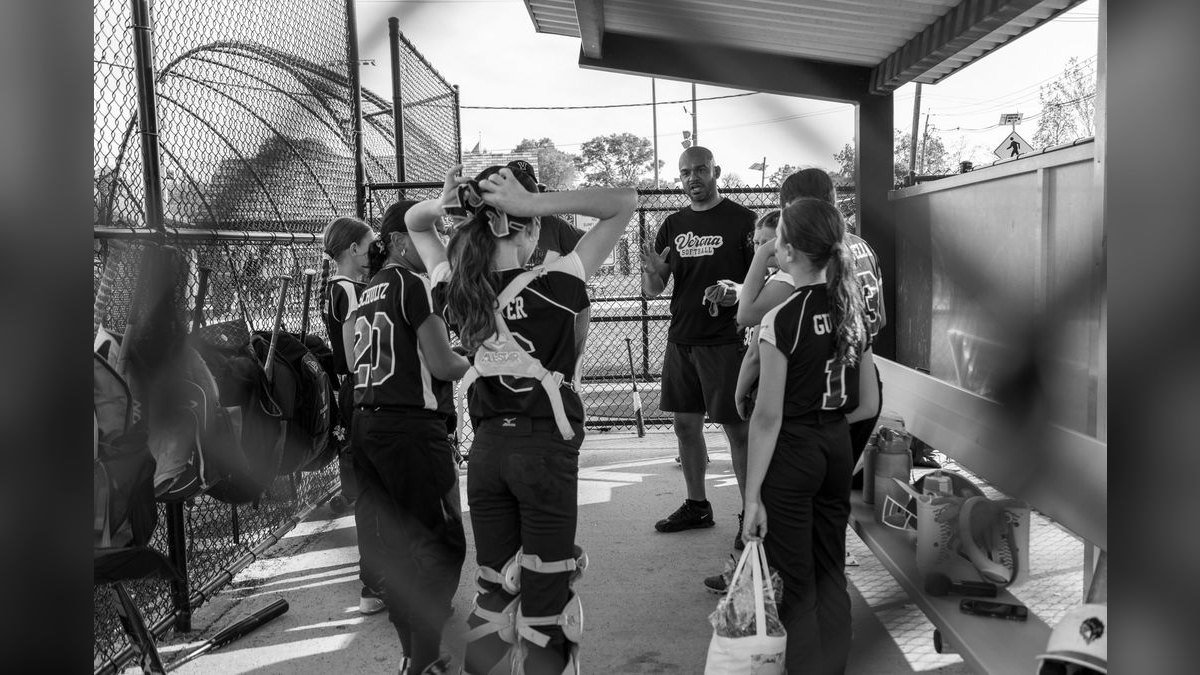
Implement this coaching plan over a structured 30-day period, broken into weekly phases. Week 1 is the scrub: schedule two 60-minute working sessions with the AE, pipeline export open. In session one, explain the three-question bar (named buyer, confirmed pain, next step on calendar) and bucket every inherited deal into advance, nurture, or kill. In session two, execute the kills—remove dead deals from the pipeline and reset the forecast to only include advance and nurture opps. The manager must explicitly say: "Killing a dead deal is a win. Zero penalty." During the scrub session, the manager should model the decision-making process out loud: "This deal has a company name but no named buyer—that's a kill. This deal has a named buyer but no confirmed pain—that's a nurture until we can get the pain confirmed. This deal has a named buyer, confirmed pain, and a next step on Friday—that's an advance." The AE should be encouraged to ask questions and push back on the manager's decisions, because the goal is for the AE to internalize the framework, not just follow orders. By the end of session two, the AE should have a clean pipeline with only advance and nurture deals remaining. Week 2 is re-engagement: the AE runs breakup emails and multi-threads on the nurture bucket. The manager reviews the email copy and the multi-threading strategy, not just the outcomes. The breakup email should follow a specific template: "I noticed we haven't connected in a while—is this still a priority for you? If not, I'll close this out on my end so we can both focus on what matters." The manager should review the first five breakup emails to ensure they are professional, not passive-aggressive, and include a clear call to action. The multi-threading strategy should identify at least two additional contacts per nurture deal—the AE should use LinkedIn to find the economic buyer, the technical buyer, and the champion. Week 3 is new pipeline building: now that the data is clean, coach actual selling skills—discovery quality, next-step discipline, qualification depth. The AE should aim to add 2-3 new qualified opps per week on top of the cleaned base. The manager should review the AE's discovery call recordings from the new pipeline generation efforts, focusing on whether the AE is asking about the three-question bar during the first call. If the AE is not asking "Who else needs to be involved?" or "What's the timeline for making a decision?" during discovery, they will create a new messy pipeline within 60 days. Week 4 is habit installation: implement the weekly hygiene cadence—every Thursday, 30 minutes, the AE re-runs the three-question bar on every open deal. Any deal that fails two consecutive checks moves to nurture or kill. RevOps sets up automated alerts for deals with no activity in 21+ days, and the manager reviews stage integrity reports weekly. The Thursday hygiene session should be a standing meeting on both the manager's and the AE's calendars, and it should never be canceled. During the session, the AE walks through each deal in the advance bucket and states the buyer, pain, and next step out loud. If the AE cannot state any of the three, the deal moves to nurture until they can. After 90 days, the pipeline is no longer inherited—it's the rep's own, built on their own rigor. The manager should also deliver the political cover script to leadership at the end of week 1: "We've re-qualified the inherited pipeline and found that X% of deals lack a confirmed buyer or next step. We're resetting the forecast to only include deals that pass our bar. Expect a lower short-term number, but higher predictability by next quarter." The manager should also schedule a 30-day follow-up review with leadership to show the improvement in forecast accuracy and stale-deal rate, proving that the scrub was the right decision. The AE should be present for this review so they can hear leadership acknowledge the value of the cleanup—this reinforces the psychological safety that was established in week one. The manager should also create a simple one-page dashboard that tracks the four key metrics: pipeline value trend, real-deal count, stale-deal rate, and forecast accuracy. This dashboard should be reviewed weekly during the hygiene session and monthly with leadership. The AE should own the dashboard update as part of their weekly routine, not the manager—this gives the AE ownership of the pipeline health. If the AE starts updating the dashboard proactively without being reminded, the habit has been installed. If the manager has to chase the AE for the dashboard update, the habit is not yet automatic.

Related questions
What is the first thing a manager should do when an AE inherits a messy pipeline?
Run a pipeline scrub before any coaching. Export every deal and re-qualify each against a single bar: named buyer, confirmed pain, and a next step on a calendar. Bucket into advance, nurture, or kill.
How do you give an AE permission to delete dead deals without penalty?
Explicitly say: "Killing a dead deal is a win, not a strike against you. Your pipeline target is based on what you find after the scrub, not what was handed to you." Then reset the forecast to the cleaned number.
What metrics should you measure after cleaning an inherited pipeline?
Measure real-deal count (deals passing the three-question bar), stage integrity (95%+ target), stale-deal rate (under 10%), next-step discipline (every call ends with a calendared step), and forecast accuracy (70-80% target).
How long does it take for an AE to fully own their inherited pipeline?
About 90 days of weekly re-qualification cadence. After 90 days, the pipeline is no longer "inherited"—it's the rep's own, built on their own qualification rigor and next-step discipline.
What role does RevOps play in coaching an AE with a messy pipeline?
RevOps provides clean CRM data, automated stale-deal alerts, stage-integrity reports, and deal-scoring tools (Clari, Gong) that surface zombies. Without RevOps tooling, the AE flies blind on which deals are actually aging.
FAQ
How do I know if the inherited pipeline mess is a skill problem or a system problem? Run a quick diagnostic: if the AE can't re-qualify a deal after coaching, it's a skill gap. If they can but the CRM is full of stale data and no next steps, it's a system problem. Most inherited pipelines are a mix of both, plus some "will" issues from the prior rep's optimism.
What if the AE is afraid to delete deals because it hurts their numbers? That's a common fear, and it's why the manager must give explicit permission and political cover to remove dead opps without penalty. The goal isn't to save every deal, but to find the five real ones worth pursuing. Without that safety net, the rep will cling to fiction.
Should I use AI tools to help flag zombie deals in the inherited pipeline? Yes, tools like Clari or Gong can surface deals with no recent activity or unrealistic close dates, which saves time. But the human still has to make the final kill call—AI can't judge a buyer's real intent or the rep's relationship. Use it as a filter, not a decision-maker.
How do I keep the pipeline clean after the initial scrub? Install a weekly hygiene cadence: a 30-minute meeting where the rep reviews every open deal for a named buyer, confirmed pain, and a next step within 7 days. Anything that doesn't meet that bar gets moved to nurture or killed. No exceptions. This prevents the mess from returning within a quarter.
What's the biggest mistake managers make when coaching an AE with an inherited messy pipeline? Trying to coach selling skills before the pipeline is clean. If you coach discovery or closing on a deal that's already dead, you're wasting time. The first move is always a scrub: re-qualify every opp against a single bar, then bucket them into advance, nurture, or kill.
How do I deliver the bad news to leadership about the pipeline shrink? Use this script: "We've re-qualified the inherited pipeline and found that X% of deals lack a confirmed buyer or next step. We're resetting the forecast to only include deals that pass our qualification bar. Expect a lower short-term number, but higher predictability by next quarter."
Sources
- MEDDIC Academy: Re-qualifying Inherited Deals
- Clari: Pipeline Inspection and Hygiene Best Practices
- Gong Labs: Deal Warning Signs and Pipeline Risk
- HBR: Stop Losing Deals You Should Win
- Sales Hacker: How to Clean Up Your Sales Pipeline
- Winning by Design: Pipeline Math and Deal Stages
- Salesforce Blog: Pipeline Management Fundamentals
- HubSpot: Sales Pipeline Management Guide
- Forrester: The Value of Pipeline Hygiene in B2B Sales
Related on PULSE
- [How do you coach an enterprise AE to navigate a buying committee?](/knowledge/cg0210)
- [How do you coach a partner manager to drive sourced pipeline?](/knowledge/cg0219)
- [How do you coach reps to remove dead deals from the pipeline?](/knowledge/cg0106)
- [How do you coach a rep to inspect their own pipeline?](/knowledge/cg0105)
- [How do you coach reps to keep their pipeline 3x covered?](/knowledge/cg0023)
- [How do you coach a rep whose pipeline keeps drying up?](/knowledge/cg0024)
This page will be disappearing soon. Save it to your device for $1 — or read it free while it is here.
@Kory-White- · if Venmo asks, the last 4 of my number are 2012
 sales-coachingHow do you coach a rep to improve forecast accuracy?
 sales-coachingHow do you coach a rep who thinks their quota is unfair?
 sales-coachingHow do you build a self-coaching habit in your sales reps?
 sales-coachingHow do you coach reps to get past gatekeepers?
 sales-coachingHow do you coach a top performer so they don't leave?
 sales-coachingHow do you tell if a rep needs coaching or a PIP?
 sales-coachingHow do you follow up on coaching so it actually changes behavior?
 sales-coachingHow do you coach reps to stop doing feature-dump demos?
 sales-coachingHow do you coach reps to set their own development goals?
 sales-coachingHow do you coach reps to handle end-of-quarter procurement pressure?