


How do you coach a rep to overcome imposter syndrome in competitive sales environments in 2027
Quality
Certified

To coach a rep through imposter syndrome in 2027's hyper-competitive sales market, you must first separate the emotional experience from the performance reality — the feeling of fraudulence rarely correlates with actual competence. The most effective approach is a structured three-phase process: normalize the feeling through shared vulnerability, reframe failure as data using a "learning log" that tracks specific wins and losses, and install behavioral anchors like pre-call affirmations and post-call debriefs that build evidence of capability over time. By 2027, with AI-driven call analysis providing objective performance metrics, you can directly counter a rep's internal narrative with hard data on their actual impact — turning "I'm a fraud" into "I see the data says I'm effective, so let's trust the numbers." The key is consistency: imposter syndrome doesn't disappear overnight, but a daily coaching ritual that reinforces self-efficacy gradually erodes the doubt.
Why Imposter Syndrome Fester in 2027 Sales
The 2027 sales environment is uniquely fertile ground for imposter syndrome because of three converging forces. First, AI transparency tools now record and analyze every call, giving reps a constant, unfiltered view of their own stumbles — a raw feed that amplifies self-doubt. Second, the remote and hybrid work model means reps lack the casual "you're doing fine" signals from peers in an office; they're isolated with their inner critic. Third, hyper-competitive markets with shrinking deal cycles and rising quotas mean every loss feels existential, not instructional. A rep might close many deals but obsess over the one they lost, internalizing it as proof of inadequacy. The coach's job is to interrupt this narrative early — before the doubt calcifies into a performance spiral. Recognize that imposter syndrome often masquerades as perfectionism or over-preparation (the rep who spends hours on a single email), and address the root, not the symptom.
The Diagnosis: Is It Imposter Syndrome or a Skill Gap?
Before you coach, you must distinguish imposter syndrome from a genuine skill deficiency — treating the wrong problem wastes time and erodes trust. Use this diagnostic framework: if the rep's objective performance data (close rate, pipeline velocity, customer feedback scores) is solid but they still feel fraudulent, it's imposter syndrome. If the data shows clear gaps (low conversion, poor discovery scores), you need skill-building first — the confidence will follow competence. A simple question reveals the difference: *"If you had the exact same skills but believed you belonged, how would your results change?"* A rep with imposter syndrome will say "I'd close more" without knowing how; a rep with a skill gap will say "I need to learn X." Use AI call scoring tools (common in 2027) to generate an objective report of their strengths and weaknesses — then show them the evidence. When the data says "you're good at objection handling," but the rep says "I'm terrible," you have a clear coaching entry point.
Phase 1: Normalize and Reframe the Feeling

The first step is normalization — the rep needs to hear that imposter syndrome is not a defect but a common experience, especially among high performers. Share your own story: a time you felt like a fraud, a deal you lost that shook you, or a moment you doubted your promotion. This vulnerability from the coach builds psychological safety and reduces shame. Then reframe the feeling: explain that imposter syndrome often correlates with high standards and self-awareness — traits that drive success, not failure. Use the analogy of a growth mindset: the discomfort of not knowing is the price of learning, not proof of fraudulence. Introduce a simple mantra: *"Feeling like an imposter means I'm stretching, not faking."* In 2027, many organizations use digital wellness tools (like meditation apps or resilience platforms) that offer guided exercises for reframing negative thoughts — recommend one as a daily practice. This phase is not about "fixing" the feeling but about removing its power by naming it and placing it in context.
Phase 2: Build an Evidence Log
Imposter syndrome thrives on selective memory — the brain remembers failures and forgets wins. Counter this with a structured evidence log that the rep maintains daily. This is a simple document (or app) where they record three things after every interaction: one win (a positive outcome, a compliment, a deal step), one learning (something they'll do differently), and one objective data point (a call score, a conversion rate, a customer satisfaction rating). Review this log together weekly. The goal is to build a tangible archive of competence that the rep can reference when doubt strikes. In 2027, many CRM platforms integrate sentiment analysis and call scoring, so you can pull automated summaries that feed directly into this log. For example, if the AI says the rep's objection handling is in the top tier of the team, you highlight that as evidence. Over a sustained period, the log becomes a counter-narrative to the inner critic — the rep can't argue with their own recorded data. This is not about toxic positivity; it's about accurate self-assessment that includes both strengths and areas for growth.
Phase 3: Install Behavioral Anchors

The final phase is behavioral anchoring — replacing the feeling of fraud with a repeatable action that signals competence. Teach the rep a pre-call ritual: before every important conversation, they take a brief moment to review several pieces of evidence from their log (e.g., "I handled a tough objection last week," "My discovery score is strong," "A client thanked me for my insight"). This primes the brain with proof of capability. Then install a post-call debrief that focuses on what went well, not just what went wrong. Use a simple template: *"What did I do well? What did I learn? What will I do next time?"* This shifts the rep's focus from self-judgment to continuous improvement. Additionally, in 2027, many sales teams use AI coaching assistants that provide real-time nudges during calls — for example, a subtle vibration on the rep's watch if they start using self-deprecating language (like "I'm sorry" or "I'm not sure"). These behavioral anchors turn the abstract feeling of imposter syndrome into a concrete, manageable practice. Over time, the ritual becomes automatic, and the doubt fades because the rep has internalized evidence of their own competence.
The Role of the Coach: Accountability Without Judgment
Your role as a coach is to provide accountability without judgment — you hold the rep to their evidence log and rituals, but you never shame them for the feeling itself. Set a weekly check-in dedicated solely to confidence building, not pipeline review. Ask: *"What evidence did you collect this week? What did you learn? Where did the doubt show up, and how did you respond?"* If the rep skips their log, don't punish — instead, ask *"What got in the way, and how can we make it easier?"* In 2027, many coaches use gamification in CRM systems — awarding badges for completing evidence logs or pre-call rituals — to make the process engaging. But the core is consistency: the rep needs to see that you are invested in their growth, not just their quota. When they have a bad week, resist the urge to "fix" it; instead, sit with them in the discomfort and say, *"This is part of the process. Let's look at the data together."* Over time, your steady presence becomes an external anchor that the rep internalizes — they start hearing your voice in their head saying, *"You've got the evidence. Trust it."*
The Role of AI Coaching Dashboards in Building Objective Self-Confidence
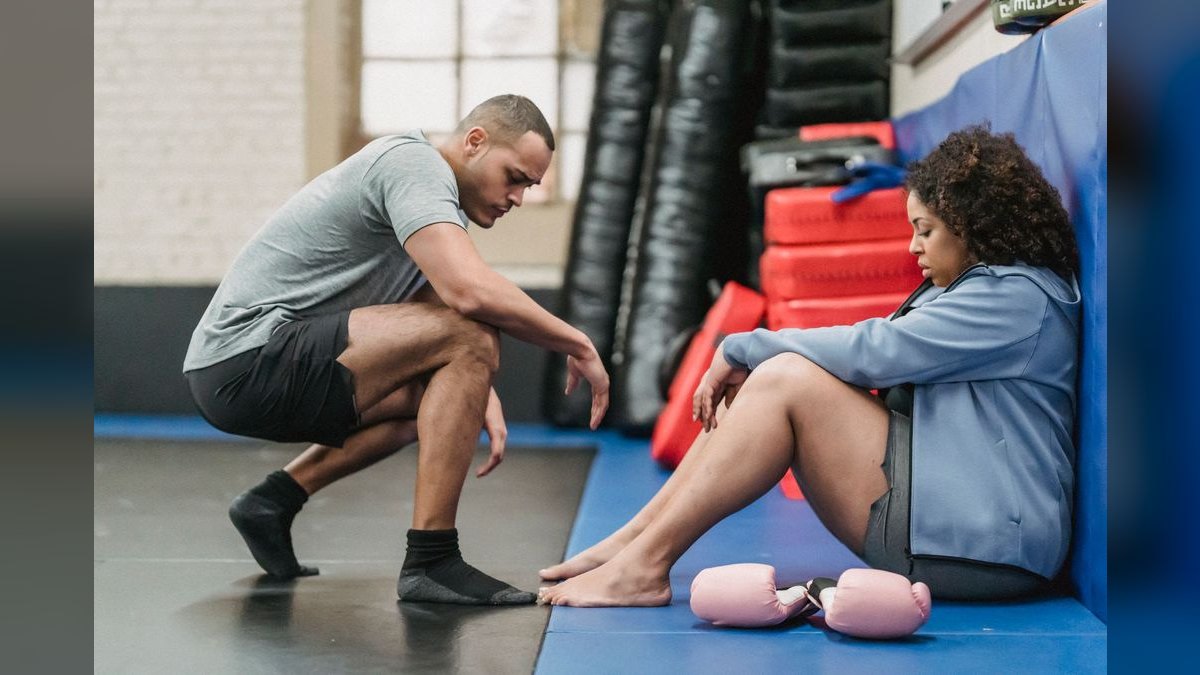
By 2027, most sales organizations use AI-powered conversation intelligence platforms that analyze every call for key behaviors—talk-to-listen ratio, objection handling, value proposition delivery, and next-step commitment rates. A rep suffering from imposter syndrome often believes they are performing poorly, yet the dashboard may show they are in a top tier for closing rate or customer satisfaction. Your coaching job is to make this data visible and personal. Schedule a weekly "data mirror" session where you and the rep review their own metrics side-by-side with team averages. Instead of saying "you're doing great," you point to the screen and say, "Your objection recovery rate is above the median—that's not luck, that's skill." The objective evidence from the AI dashboard becomes an irrefutable counterweight to the subjective feeling of fraudulence. Over time, the rep learns to trust the numbers more than the internal critic. This also helps them identify specific, narrow areas for genuine improvement (e.g., "I see your discovery questions are strong, but your closing language could be more direct—let's practice that"), which turns vague anxiety into a concrete, manageable growth plan.
Peer-Based Coaching Circles: Normalizing the Struggle
Imposter syndrome thrives in isolation—the rep believes they are the only one who feels this way. A powerful coaching intervention in 2027 is to create small, cross-functional peer coaching circles (a few reps from different teams or territories) that meet regularly. The structure is simple: each member shares one recent moment when they felt like a fraud, and the group responds with their own similar experiences. The goal is not to solve the problem but to normalize it. As a coach, you facilitate the first few sessions by modeling vulnerability—share a story from your own early sales career when you felt out of your depth. Once the group establishes psychological safety, the magic happens naturally: reps start to see that their high-performing peers also question themselves, and that the feeling is a universal feature of ambitious professionals, not a personal defect. Over several months, the circle can evolve into a "strength-spotting" practice where members actively call out each other's genuine wins and talents. This external validation from trusted peers is often more credible to the rep than praise from a manager, because it comes from someone who "does the same job and still feels the same way."

Redefining "Competitive" as "Collaborative Learning"
A hidden driver of imposter syndrome in competitive sales environments is the rep's internal definition of "competition." Many reps unconsciously frame every interaction as a win-lose battle against other reps, which amplifies the fear of being "found out" as less capable. In 2027, you can coach a reframe: shift the competitive focus from "beating others" to "mastering the craft." Introduce a weekly practice called "competitive deconstruction" where the rep picks one top-performing colleague (not a rival) and asks them for a brief debrief on how they handled a specific deal or objection. The rep's job is to extract one actionable technique they can try next week. This turns a potential threat into a learning resource. Over time, the rep builds a personal "playbook" of borrowed and adapted tactics, which directly counters the imposter narrative of "I don't know what I'm doing" with the reality of "I'm systematically collecting proven methods from the best." You reinforce this by celebrating the act of learning itself—praise the rep for asking a good question of a peer, not just for closing a deal. This cultural shift from competition-as-threat to competition-as-curiosity reduces the emotional stakes of every sales interaction and makes the rep's growth visible and self-directed.
FAQ
What if the rep refuses to believe the data?

Then you have a trust issue — the rep may not believe the metrics are accurate or fear they're being manipulated. Address this by showing them how the data is collected (e.g., AI call scoring methodology) and ask them to audit a few of their own calls to see if the scores match their perception.
Can imposter syndrome ever be completely eliminated? No, and that's not the goal. The goal is to manage it — to reduce its intensity and duration so it doesn't interfere with performance. Many high performers experience it throughout their careers; the difference is they have tools to handle it.
How long does this coaching process typically take? Most reps show meaningful improvement after a period of consistent practice. The evidence log starts building momentum after a couple of weeks, and behavioral anchors become automatic after about a month. But imposter syndrome can recur during major transitions (new role, new product, new team).
What if the rep is also dealing with burnout or anxiety? Imposter syndrome often co-occurs with mental health challenges like anxiety or depression. In that case, coaching alone is insufficient — refer the rep to an Employee Assistance Program (EAP) or a licensed therapist. Your role is to support, not diagnose.
Should I share my own imposter syndrome stories? Yes, but strategically. Share stories that show resilience and growth, not just struggle. For example, "I remember feeling like a fraud when I was promoted, but I kept a log of wins and it helped." Avoid oversharing that might make the rep feel they need to manage your emotions.
How do I measure progress with imposter syndrome? Track qualitative indicators: the rep's self-reported confidence level (use a simple scale weekly), their willingness to take risks (like asking for referrals), and their call behavior (fewer apologetic phrases, more assertive language). Also monitor objective metrics like close rate and pipeline velocity — if those improve, the coaching is working.
Sources
- American Psychological Association (APA) — resources on imposter syndrome and workplace mental health
- Harvard Business Review — articles on coaching high performers and psychological safety
- The Sales Management Association — best practices for sales coaching and performance management
- Mind Tools — frameworks for GROW model and behavioral coaching
- Salesforce Blog — insights on AI-driven sales coaching tools in 2027
- Indeed Career Guide — practical advice on overcoming imposter syndrome in sales
- SHRM (Society for Human Resource Management) — workplace wellness and EAP resources
Related on PULSE
- What specific proof point or case study do you use to overcome the price objection?
- Top 10 questions to understand a rep's competitive positioning approach
- How do you coach reps to compete in a competitive deal?
- How do you coach a rep to use social proof and case studies earlier in the sales cycle
- How do you coach a rep who is struggling to adapt to a new sales methodology in 2027
- How do you coach a rep to improve their time management during peak sales season in 2027
This page will be disappearing soon. Save it to your device for $1 — or read it free while it is here.
@Kory-White- · if Venmo asks, the last 4 of my number are 2012
This page is gone.
This one is off the shelf now. $1 keeps it on your phone for good — the whole page, pictures and diagrams included.
 cgHow do you coach a rep who is overly reliant on email and avoids phone calls in 2027
 cgHow do you coach a team through a territory reassignment in 2027?
 cgHow do you coach a sales rep who consistently misses their quota in 2027?
 cgHow do you coach a rep who struggles to articulate your product's unique value in 2027
 cgHow do you coach a rep who always defaults to a feature dump instead of benefits in 2027
 cgHow do you coach a rep to improve their demo skills quickly in 2027?
 cgHow do you coach a rep who freezes up on executive-level calls in 2027
 cgHow do you coach a rep to navigate multi-stakeholder buying groups in 2027
 cgHow do you coach a rep to build stronger internal champions in 2027?
 cgHow do you coach a rep who is overly aggressive on cold calls in 2027