
The 10 Best Watches from the 1960s in 2027
 Curated byKory White · Fractional CRO · Maryland
 PULSEKNOWLEDGE LIBRARY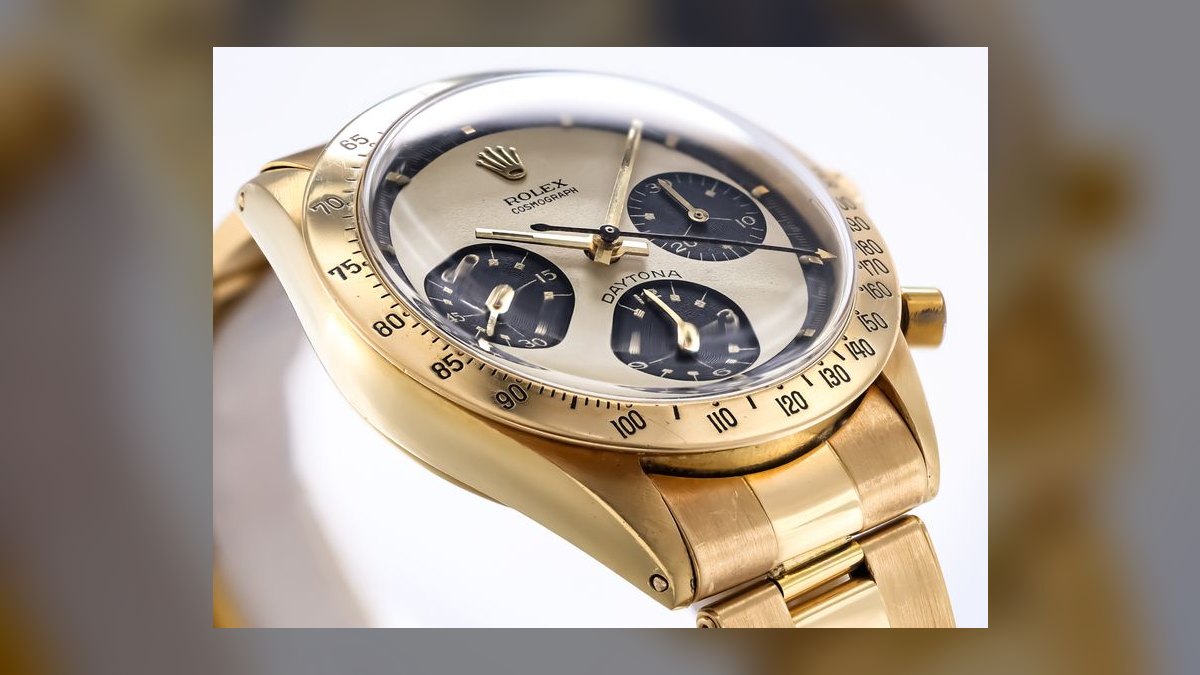
The best 1960s watch to own in 2027 is the Rolex Cosmograph Daytona reference 6239 "Paul Newman" — the most coveted vintage chronograph in the world, with collector-grade examples running from roughly $200,000 to over $1 million depending on dial, metal, and provenance.
The best value pick is the Zenith El Primero A386 (1969), the watch that helped introduce the first automatic chronograph movement, available in original form for roughly $14,000–$19,000 — a fraction of the Rolex prices for a genuine horological milestone. This list is for serious vintage collectors who want real 1960s references with documented auction and marketplace results, not modern reissues.
Every watch below was produced in the 1960s (the A386 launched in 1969), and the prices reflect early-to-mid 2027 conditions, which swing hard on originality, dial type, and box-and-papers.
Vintage watch values in the 1960s tier are driven by reference, dial variant, and originality more than brand alone. A service-replaced dial or a polished case can cut value by half. Below are the ten references that define the decade, with the specifics that separate a great example from a compromised one.
How We Ranked the Top 10
We scored each watch across six weighted criteria, drawing on auction results from Phillips, Sotheby's, Christie's, and Bonhams; Chrono24 and WatchCharts marketplace data; and reference-specific guides from established vintage dealers:
- Realized auction & market comps (30%) — documented hammer prices and current Chrono24 medians.
- Reference significance (20%) — historical importance and the model's place in the decade.
- Originality sensitivity (20%) — how much dial, hands, bezel, and case originality swing value.
- Collector demand (15%) — depth and durability of the buyer pool in 2026–2027.
- Condition & provenance upside (10%) — premiums for box, papers, and notable history.
- Counterfeit/franken risk (5%) — exposure to redials, swapped parts, and married watches.
Every entry has verifiable sales. None made the list without documented results.
1. Rolex Cosmograph Daytona 6239 "Paul Newman" 🏆 BEST OVERALL

Era/Set: 1963–1969, Rolex | Typical price: ~$200,000–$1,000,000+ (condition/dial/metal) | Best for: the serious collector chasing the most iconic vintage chronograph made.
The 6239 with the exotic "Paul Newman" dial is the vintage grail. Newman's own example sold for $17.8 million including premium in 2017, still the most expensive Rolex ever auctioned. The reference remains active at the top of the market: a yellow-gold 6239 Paul Newman that sat in a drawer for 45 years sold at Sotheby's Geneva in May 2026 for roughly $1.3 million, nearly double its high estimate.
Steel examples typically start around $200,000, while gold references are projected at $380,000–$760,000. Value hinges entirely on dial originality, pushers, and metal — this is a reference where authentication is everything.
Pros:
- Most coveted vintage chronograph, with the deepest blue-chip demand
- Record-setting auction pedigree anchored by Newman's own $17.8M watch
- Multiple metals and dial variants create tiers from $200K into the millions
- Permanent top-of-market status that has held through every cycle
Cons:
- Six-figure-plus entry puts it out of reach for most collectors
- Exotic-dial fakes and married examples make authentication critical
Verdict: The undisputed grail of 1960s watches — buy only with ironclad dial and provenance verification.
2. Rolex Submariner 5512 / 5513

Era/Set: early 1960s onward, Rolex | Typical price: ~$15,000–$40,000+ (gilt dial) | Best for: the collector who wants the definitive vintage dive watch.
The 5512 (chronometer-certified, four lines of dial text) and 5513 (non-chronometer) are the vintage Submariner cornerstones. 1960s gilt-dial examples command $25,000–$40,000 or higher, while a typical 5513 sells around $15,200 and a 5512 well over $30,000. Rolex made just 17,338 of the 5512 versus 151,449 of the 5513 — roughly one to ten — which is why the chronometer-rated 5512 averages about $6,000 more than a comparable 5513.
Gilt dials, original bezels, and unpolished cases drive the premium.
Pros:
- Definitive vintage dive watch, with broad and durable demand
- Two references give buyers an entry point at multiple budgets
- Gilt-dial 1960s examples carry strong, documented premiums
- 5512 scarcity (17,338 made) supports its value over the 5513
Cons:
- Redials and service dials are common and hard for novices to spot
- Polished cases and replaced bezels sharply reduce collector value
Verdict: The cornerstone vintage diver — chase a gilt-dial 5512 with an unpolished case for the best hold.
3. Rolex GMT-Master 1675

Era/Set: 1959–1980, Rolex | Typical price: ~$11,000–$80,000 (gilt vs. matte) | Best for: the collector who wants the iconic "Pepsi" travel watch in vintage form.
The 1675 is the most coveted vintage Pepsi GMT, in the catalog for over 20 years. Good used examples run from about $10,963 to $80,780, with the majority around $23,080 and a typical figure near $17,500. Gilt-dial 1960s examples sit at the higher end, while matte-dial 1970s versions are more affordable. A tropical-gilt 1964 example has been listed as high as $95,000.
Bezel condition (faded "ghost" inserts command premiums), dial type, and originality drive the wide spread.
Pros:
- Most coveted vintage Pepsi GMT, with strong worldwide demand
- Wide price range lets buyers enter at $11K or chase $80K+ gilt dials
- Faded bezel inserts add desirable, well-documented premiums
- Long production means a deep supply for finding the right example
Cons:
- Gilt vs. matte and bezel condition make pricing complex
- Service dials and reluminated examples require careful checking
Verdict: The vintage travel icon — gilt dials and faded bezels command the money, so verify both.
4. Omega Speedmaster Pre-Moon 105.012 / 145.012

Era/Set: mid-to-late 1960s, Omega | Typical price: ~$9,000–$40,000+ (condition/provenance) | Best for: the collector who wants real space-flight history on the wrist.
The 105.012 and its near-identical successor 145.012 are the "pre-moon" Speedmasters tied directly to Apollo. Buzz Aldrin wore a 105.012 on the lunar surface on July 20, 1969, while Michael Collins wore a 145.012. A 145.012 trades around $9,670 on Chrono24, and a 105.012-66 around $17,199. Documented examples have hit $40,000+ at auction with provenance, while undocumented or service-crown examples still bring $22,000–$27,000.
Mid-1960s 105.012s are genuinely scarce, and box-and-papers heavily affect value.
Pros:
- Direct Apollo lineage, including Aldrin's lunar-surface reference
- Two close references offer a range of entry prices
- Provenance examples reach $40K+, with strong upside on documentation
- Scarce mid-60s 105.012 supports value at the top of the range
Cons:
- Service crowns, hands, and bezels are common and cut value
- Pre-moon vs. transitional details confuse less-experienced buyers
Verdict: The wearable piece of space history — originality and documentation drive the price, so vet both.
5. Rolex Explorer 1016 (Gilt Dial)

Era/Set: early 1960s onward, Rolex | Typical price: ~$22,000–$25,000+ (gilt dial) | Best for: the collector who prizes the purist three-six-nine sports Rolex.
The 1016 is one of Rolex's most purist sports watches, introduced in the early 1960s and made until around 1989. Gilt-dial examples — the early glossy dials with gold-relief printing, replaced by matte dials in the late 1960s — bring roughly $22,000–$25,000 and sometimes more. A 1016 that traded around $7,000 in 2013 now sits near $22,000, a clear appreciation track.
The clean 3-6-9 Explorer dial, original handset, and an unpolished case are what separate a strong gilt example from an ordinary one.
Pros:
- Purist Rolex sports design with enduring, understated appeal
- Gilt-dial 1960s examples command a clear premium over matte
- Strong appreciation track from ~$7K (2013) to ~$22K today
- Long production provides a healthy supply of honest examples
Cons:
- Gilt dials are frequently faked or service-replaced
- Matte-dial later examples are far more common and worth less
Verdict: The understated sports-Rolex favorite — buy a gilt dial with an unpolished case for real upside.
6. Heuer Autavia 2446

Era/Set: 1962 onward, Heuer | Typical price: ~$10,000–$30,000+ (generation/dial) | Best for: the chronograph collector who wants a rising, screw-back motorsport icon.
The Autavia 2446 launched Heuer's motorsport chronograph line in 1962, using the screw-back case with the Valjoux 72/92 through most of the decade. Early manual-winding screw-back Autavias are on a clear upward trend, and clean first-generation examples are getting hard to find. Values for strong examples run from roughly $10,000 into the $30,000+ range depending on generation, dial (Mark 1, 2, 3), and originality.
Heuer's lower vintage production versus Rolex makes honest examples genuinely scarce, and collector interest has grown steadily.
Pros:
- Founding Heuer motorsport chronograph, with strong collector momentum
- Screw-back Valjoux 72 examples are scarce and appreciating
- Multiple dial generations to specialize in across budgets
- Lower vintage production than Rolex keeps clean examples rare
Cons:
- Frankens and swapped dials/bezels are a real risk in this market
- Wide generation/dial variation makes accurate pricing difficult
Verdict: A rising motorsport icon — first-generation screw-back examples reward patient, careful buyers.
7. Heuer Carrera 2447
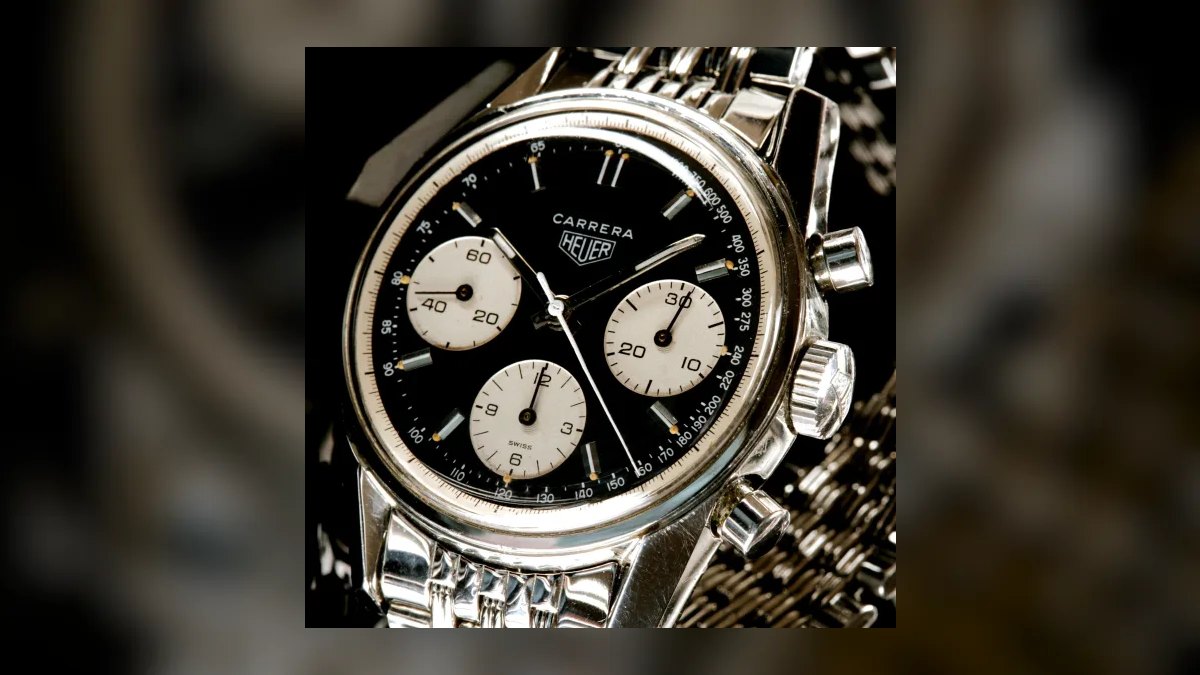
Era/Set: 1963 onward, Heuer | Typical price: ~£10,000–£25,000+ ($13,000–$32,000) | Best for: the collector who wants the cleanest vintage racing chronograph design.
The Carrera 2447, introduced in 1963, is the design benchmark for the vintage racing chronograph — a simple, elegant screw-back case. Values run from under £10,000 for a weaker example to £25,000+ for the very best, with the scarce 2447SN "Panda" (fewer than 400 produced) at the top. The Carrera's restrained dial and motorsport heritage make it one of the most copied designs in modern watchmaking, which only sharpens demand for honest 1960s originals.
Dial variant and case condition drive the spread.
Pros:
- Benchmark vintage racing-chronograph design, endlessly influential
- 2447SN Panda is genuinely scarce (under 400 made) and prized
- Clean screw-back case is highly sought when unpolished
- Strong design pedigree keeps demand durable across cycles
Cons:
- Redials and reprinted dials are common and reduce value sharply
- Panda and rarer variants attract convincing fakes
Verdict: The cleanest vintage racing chronograph — the 2447SN Panda is the standout if you can find one.
8. Patek Philippe 2526 (First Automatic)
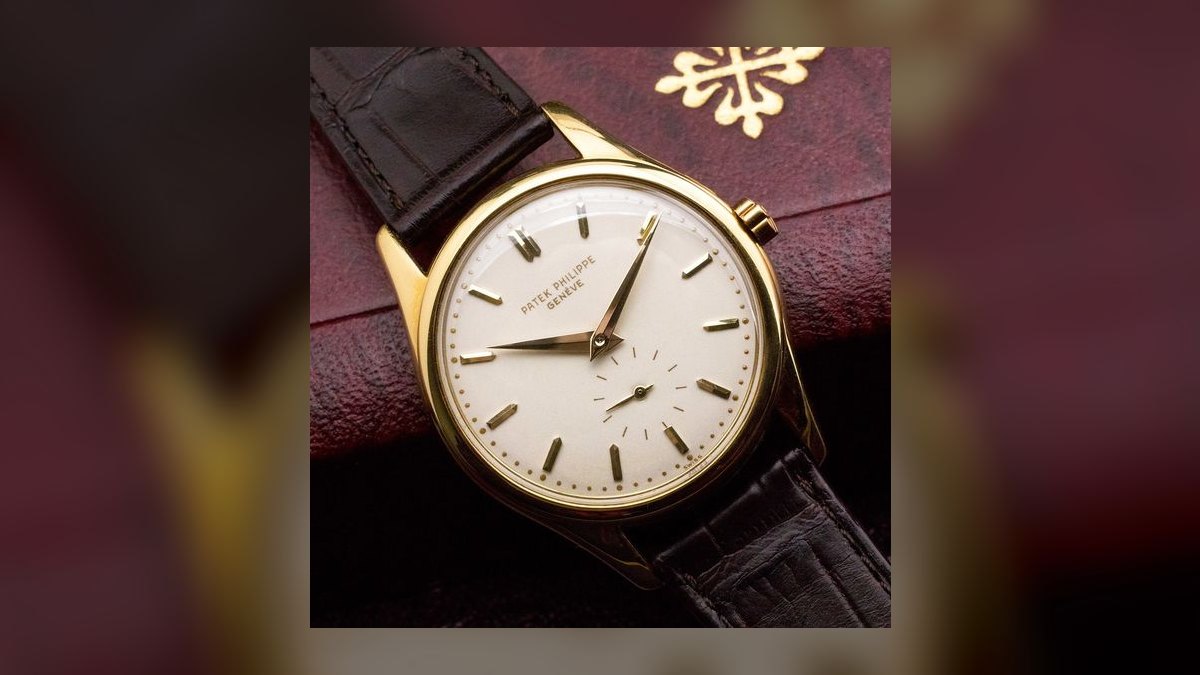
Era/Set: 1953–early 1960s, Patek Philippe | Typical price: ~$60,000–$730,000+ (dial/metal) | Best for: the haute-horology collector who wants Patek's landmark first automatic.
The 2526 was Patek's first automatic wristwatch, launched with the celebrated caliber 12-600 AT, regarded by many as the most beautiful self-winding movement ever made; production ran into the early 1960s. The first example ever made (movement number 760000) sold for roughly $732,690 at Sotheby's Hong Kong in 2024, a reference record.
Standard white-enamel-dial examples in gold trade from the mid-five figures, while platinum cases, black enamel dials, and retailer signatures push prices far higher. The fragile enamel dial is the single biggest value factor — cracks or restoration cut it sharply.
Pros:
- Patek's first automatic, with the legendary caliber 12-600 AT
- Enamel-dial examples are prized for beauty and scarcity
- Record auction pedigree anchored by the $732K first example
- Platinum and black-dial variants offer genuine top-tier upside
Cons:
- Enamel-dial cracks and restoration severely reduce value
- High entry price and authentication complexity deter casual buyers
Verdict: The haute-horology pick of the decade — an intact original enamel dial is everything.
9. Zenith El Primero A386 (1969) 💎 BEST VALUE
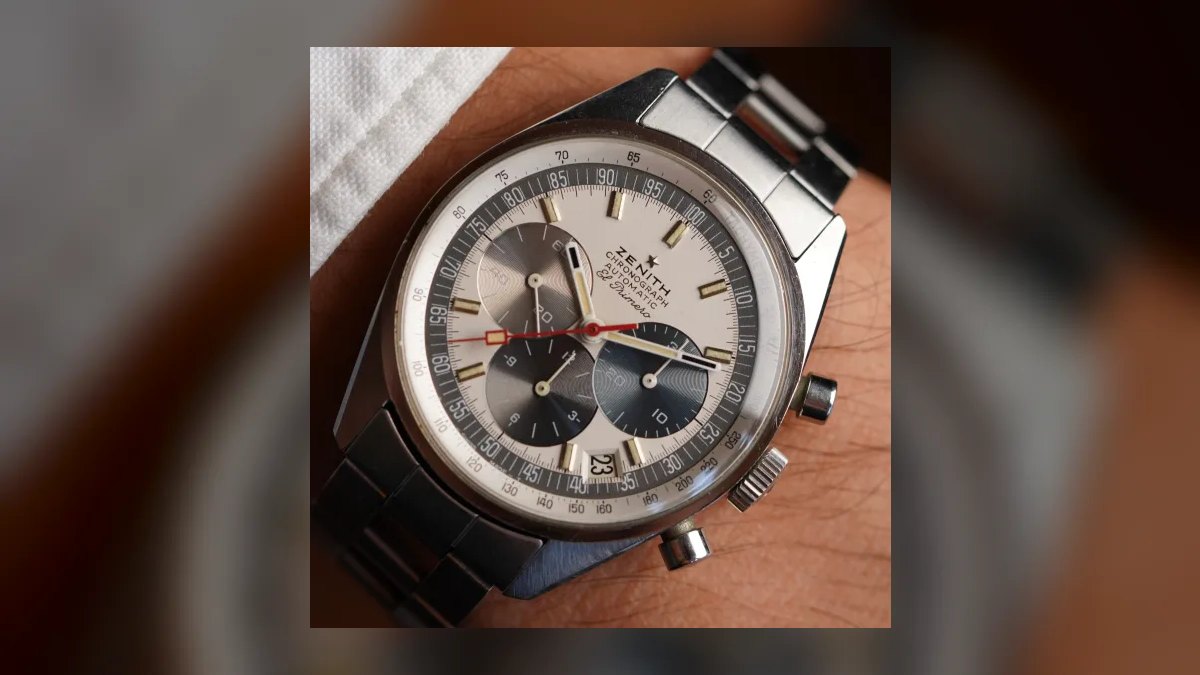
Era/Set: 1969, Zenith | Typical price: ~$14,000–$19,000 (original) | Best for: the value-focused collector who wants a true horological milestone for the least money.
The A386 introduced the El Primero, among the first automatic chronograph movements and still the highest-beat at 36,000 vph. Genuine 1969 examples trade roughly $14,000–$19,000, with full-set box-and-papers examples around $27,075. That makes it the standout value here: a documented industry first-of-its-kind, with its tri-color "overlapping registers" dial, for a fraction of the Rolex and Patek prices.
Mark 1 details and original dials matter, but even strong examples stay within reach of a serious collector — the rare case where milestone history is genuinely affordable.
Pros:
- One of the first automatic chronographs, a true horological milestone
- Most affordable milestone here, at $14K–$19K for an original
- Iconic tri-color dial with the highest-beat El Primero caliber
- Full-set examples (~$27K) offer documented, collectible upside
Cons:
- Service dials and refinished cases appear on the market
- Mark-1 vs. later details require study to price correctly
Verdict: The runaway value play — a genuine horological first for a fraction of the marquee references.
10. Rolex Sea-Dweller 1665 "Single Red" (1967)
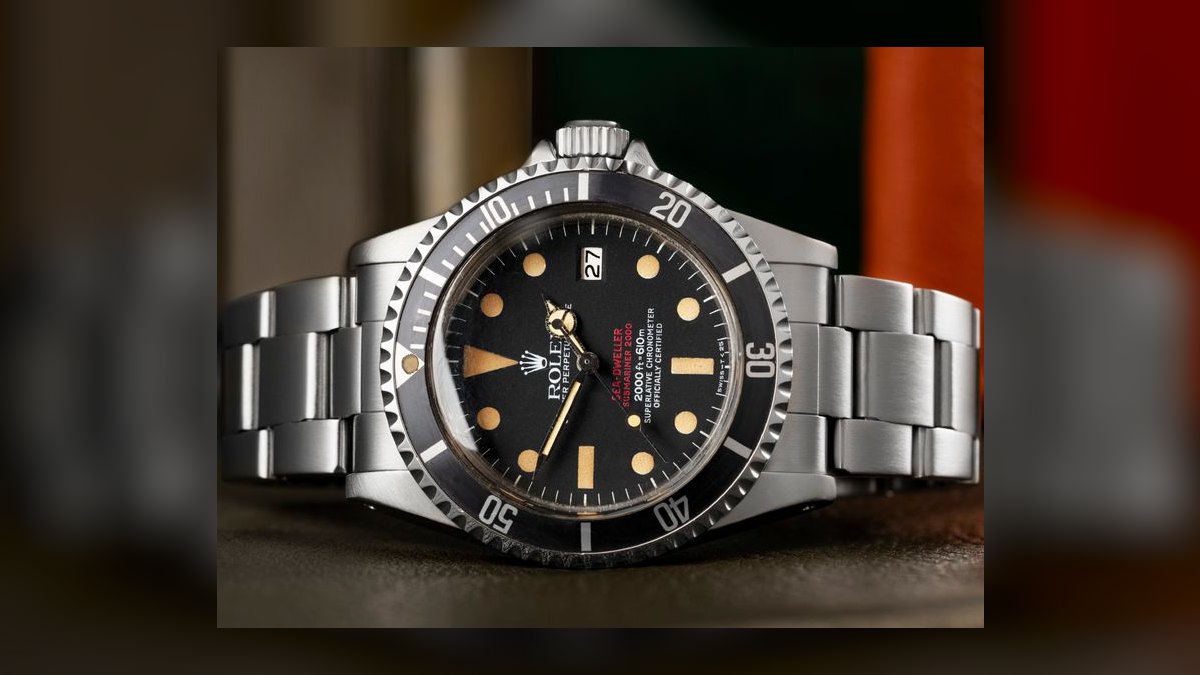
Era/Set: 1967, Rolex | Typical price: ~$300,000–$500,000 (single red) | Best for: the advanced collector chasing an early, ultra-rare dive prototype.
The 1665 Sea-Dweller's earliest variant carries a single red "Sea-Dweller" line of dial text, predating the better-known "Double Red" production examples. The 1967 single red is exceptionally rare — an early prototype-era configuration — with an estimated value of $300,000–$500,000, far above the more common Double Red versions. It's a connoisseur's reference where the exact dial text, gas-escape-valve details, and provenance define the price.
This is deep-end vintage collecting, not an entry point, but it represents the scarcest desirable diver of the decade.
Pros:
- Ultra-rare early variant with the prized single-red dial text
- Connoisseur-level desirability among advanced Rolex collectors
- Prototype-era significance in the Sea-Dweller's development
- Scarcity keeps it well above the more common Double Red
Cons:
- Six-figure entry and extreme rarity make sourcing very hard
- Single-red dials are heavily faked, demanding expert authentication
Verdict: The scarcest desirable 1960s diver — strictly for advanced collectors with expert authentication.
Which One Is Right for You?
What to Look For
- Dial originality is the whole ballgame. A redial or service dial can cut a vintage watch's value by half or more; on gilt-dial Rolex and enamel-dial Patek references it is the single biggest factor.
- Insist on an unpolished case. Sharp lugs and crisp chamfers signal an honest example; over-polished cases lose the factory geometry and the premium that comes with it.
- Match the movement and parts to the reference. Verify the caliber, hands, bezel, and crown are correct and period-appropriate to avoid a "married" or franken watch.
- Box, papers, and provenance pay. Original documentation and notable history can add tens of thousands, especially on the Speedmaster, Daytona, and Patek.
- Buy from specialists who guarantee authenticity. Vintage watches carry real fake-and-franken risk; a reputable dealer or major auction house with a return policy is worth the premium.
What matters less than the hype: chasing the absolute lowest serial or the flashiest box set. A correct, unpolished example with an original dial will outperform a documented-but-restored watch every time.
FAQ
Are 1960s watches a good investment in 2027? The best references are. Blue-chip vintage like the Daytona Paul Newman, gilt Submariner, and Patek 2526 have decades of appreciation and deep demand. Lesser references and restored examples are far riskier — treat watches as collectibles with selective upside.
Why does the same reference range from $15K to $100K+? Because dial variant, originality, and condition dominate. A gilt dial versus matte, an unpolished case versus a refinished one, and box-and-papers can multiply the price of an otherwise identical reference.
What's the best entry point into 1960s collecting? The Zenith El Primero A386 at $14,000–$19,000 is the standout value — a genuine horological milestone for a fraction of the Rolex and Patek figures. A clean 5513 Submariner around $15,200 is another solid first step.
How do I avoid buying a franken watch? Verify that the movement, dial, hands, bezel, and crown are all correct and period-appropriate for the reference, and buy from a specialist or auction house that guarantees authenticity with a return policy.
Why is the single-red Sea-Dweller worth so much more than the double red? The 1967 single red is an early prototype-era variant produced in tiny numbers, estimated at $300,000–$500,000, while Double Red production examples are more common and sell for substantially less.
Does box and papers really matter for vintage? Yes — on top references it can add tens of thousands. A documented, full-set Speedmaster or Daytona commands a clear premium over an otherwise identical watch with no provenance.
Bottom Line
The decade's best watch is the Rolex Daytona 6239 "Paul Newman" — the most coveted vintage chronograph, from roughly $200,000 into the millions depending on dial and metal. For value, the Zenith El Primero A386 (1969) delivers a true horological first for $14,000–$19,000, the best dollar-for-history pick on this list. Between them sit the vintage Rolex sports cornerstones (Submariner, GMT, Explorer), the space-flown Speedmaster, the influential Heuer chronographs, and Patek's landmark first automatic.
Buy unpolished, verify the dial, and favor original parts over restored beauty every time.
Related on PULSE
- [The 10 Best Baseball Cards from the 1960s](/knowledge/co0065)
- [The 10 Best Vinyl Records from the 1960s](/knowledge/co0064)
- [The 10 Best Comic Books from the 1960s](/knowledge/co0027)
- [The 10 Best Watches from the 2000s to Collect in 2027](/knowledge/co0069)
- [The 10 Best Watches from the 1990s](/knowledge/co0060)
- [The 10 Best Watches from the 1980s](/knowledge/co0049)
Sources
- Bob's Watches — Rolex Daytona Paul Newman prices and history
- Watch My Diamonds — Rolex 5512 vs 5513 vintage Submariner (2026)
- WatchCharts — Rolex GMT-Master 1675 price data (May 2026)
- Chrono24 — Omega Speedmaster Ref. 105.012 listings
- Heuer Price Guide — Carrera 1960s reference guide
- Robb Report — Patek Philippe's first automatic 2526 at auction
- Chrono24 — Zenith El Primero Original 1969 (A386)
- Bob's Watches — Rolex Sea-Dweller 1665 reference guide
*1960s watches review — 1960s watches reviews, ratings, best vintage 1960s watches 2027, and a review of the top 1960s watches for collectors.*
People also search for: best watches from the 1960s · top watches from the 1960s · top rated watches from the 1960s · top ranked watches from the 1960s · highest rated watches from the 1960s · watches from the 1960s reviews
This page will be disappearing soon. Save it to your device for $1 — or read it free while it is here.
@Kory-White- · if Venmo asks, the last 4 of my number are 2012
 pulse-recentTop 10 Comic Books 1976
 collectible-reviewThe 10 Best Football Cards from the 1990s in 2027
 pulse-recentTop 10 Comic Books 1957
 pulse-recentTop 10 Comic Books 1984
 pulse-recentTop 10 Comic Books 1967
 collectible-reviewThe 10 Best Comic Books from the 2000s in 2027
 pulse-recentTop 10 Comic Books 1955
 pulse-recentTop 10 Comic Books 1965
 pulse-recentThe 10 Best Vintage Fishing Lures to Collect in 2027
 pulse-recentTop 10 Comic Books 2024