
The 10 Best Pokemon Cards from the 1990s in 2027
 Curated byKory White · Fractional CRO · Maryland
 PULSEKNOWLEDGE LIBRARY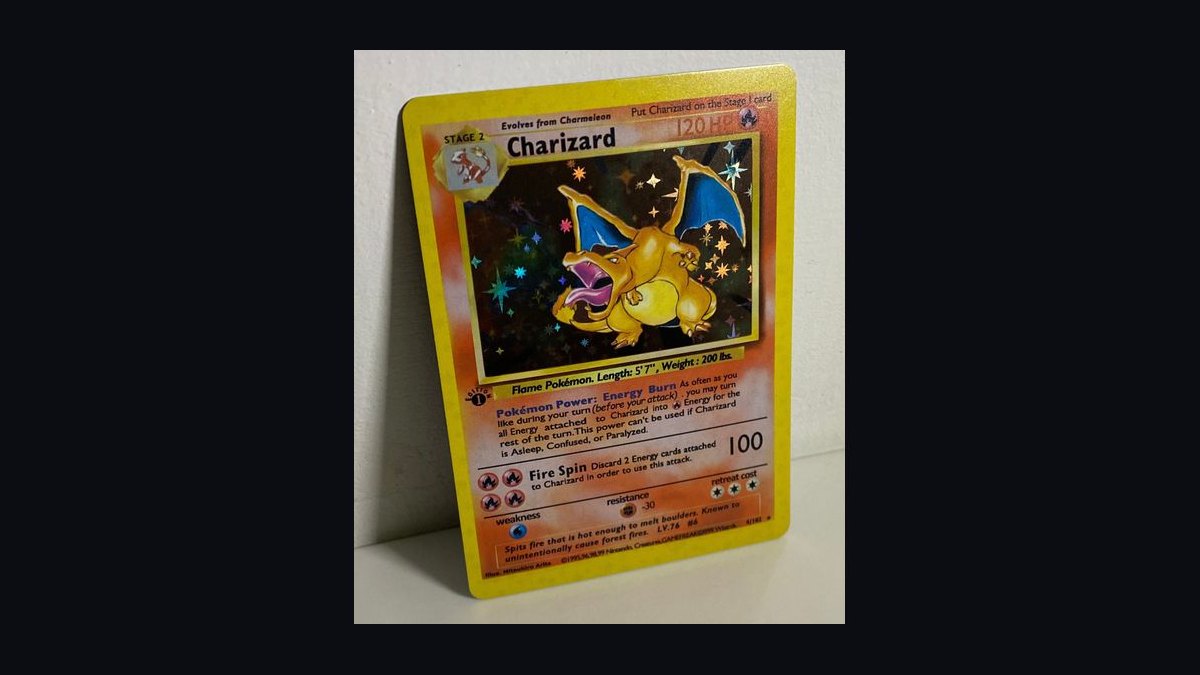
The best 1990s Pokémon card to own in 2027 is the 1999 1st Edition Base Set Charizard #4 — the most famous trading card of the era. A PSA 10 reached a record $954,800 in February 2026, while clean PSA 9 copies still trade in the $30,000–$60,000 range.
The best value pick is the 1999 Shadowless Base Set Charizard #4, the same legendary artwork from an early unlimited print run, where a PSA 10 trades around $15,000+ — a fraction of the 1st Edition price for a nearly identical card.
This list is for collectors who want real 1990s Pokémon cardboard with documented sales, from the iconic Base Set holos to the ultra-rare Japanese trophy and contest promos. Every card below was printed in the 1990s (the Pikachu Illustrator was awarded via a 1997–98 illustration contest), and prices reflect early-to-mid 2027 conditions, which swing dramatically by grade.
The same character can be worth $50 or $500,000 depending on the set, the rarity symbol, and the grade — so below are the ten cards that anchor the hobby, with the details that separate a reprint from a six-figure original.
How We Ranked the Top 10
We scored each card across six weighted criteria, drawing on PSA Auction Prices Realized, Card Ladder sales history, Heritage Auctions and Goldin results, PriceCharting marketplace data, and PSA population reports:
- Recorded sale comps & demand (30%) — documented auction and marketplace prices in 2026–2027.
- Rarity & population (20%) — PSA 10 survival counts and total print scarcity.
- Iconic status (20%) — the card's place in Pokémon and hobby history.
- First-edition / variant significance (15%) — 1st Edition vs. Shadowless vs. unlimited, and Japanese exclusives.
- Condition sensitivity & upside (10%) — grade premiums and appreciation track record.
- Counterfeit/altered risk (5%) — exposure to fakes, trimming, and reprints.
Every card here has verifiable sales. None made the list on hype alone.
1. 1999 1st Edition Base Set Charizard #4 🏆 BEST OVERALL

Era/Set: 1999, Base Set (1st Edition) | Typical price: ~$30,000–$60,000 (PSA 9), $420,000–$955,000 (PSA 10) | Best for: the collector who wants the single most iconic Pokémon card ever made.
This is the holy grail of the hobby. A PSA 10 sold for a record $954,800 in February 2026, after a $550,000 Heritage result in December 2025 set the prior public auction record. Of 5,325 copies PSA has graded, only 124 reached Gem Mint 10 — a 2.3% survival rate that explains the gulf between grades. PSA 9 copies trade roughly $30,000–$60,000, and even mid-grades hold strong value.
The 1st Edition stamp and the absence of a drop shadow make this the most desirable version of the most desirable card.
Pros:
- Most iconic trading card of the era, with the deepest buyer pool in the hobby
- Record-setting comps including a $954,800 PSA 10 in February 2026
- Brutal gem scarcity — only 124 PSA 10s of 5,325 graded
- 1st Edition stamp makes it the definitive version of Charizard
Cons:
- Six-figure-plus gem price puts the top grade out of most budgets
- Heavily counterfeited and frequently trimmed, demanding expert authentication
Verdict: The undisputed grail of 1990s Pokémon — buy graded, and verify the 1st Edition stamp.
2. Pikachu Illustrator (1997–98 Contest Promo)

Era/Set: 1997–98, CoroCoro illustration-contest promo | Typical price: ~$1M+ (any grade), $16.49M (sole PSA 10) | Best for: the ultra-high-end collector chasing the most valuable card on earth.
The most valuable Pokémon card in existence. Awarded to winners of a 1998 Japanese illustration contest, only 39 copies were ever made and roughly 24 are known to survive. The sole PSA Gem Mint 10 — Logan Paul's — sold for a record $16.49 million in February 2026, more than tripling the $5.2 million he paid in 2021. Lower-grade examples still command seven figures.
This is less a collectible than a trophy asset, but it sits at the absolute apex of 1990s Pokémon and defines the ceiling of the entire hobby.
Pros:
- Most valuable Pokémon card ever, with a $16.49M record sale
- Extreme scarcity — 39 made, about 24 surviving
- Contest-promo provenance that no other card can replicate
- Apex status that anchors the top of the entire market
Cons:
- Effectively unattainable for all but a handful of buyers worldwide
- Authentication and insurance complexity match the eight-figure price
Verdict: The apex trophy of the hobby — a museum-tier asset rather than a collectible to chase.
3. 1995 Topsun Charizard (Blue Back, No Number)

Era/Set: 1995, Topsun (pre-TCG) | Typical price: ~$20,000+ (high grade) | Best for: the historian who wants the first-ever Charizard card.
Before the TCG existed, Topsun printed the first Charizard card in 1995. The Blue Back, no-number holo is the prized variant: the sole PSA 10 famously sold for $493,230 in January 2021, a then-record. High-grade examples list around $20,000 and up, with the card's pre-TCG status making it a cornerstone for serious Charizard collectors.
Only one copy has reached PSA 10, versus 122 for the 1st Edition holo — a scarcity that keeps top-grade examples in a class of their own.
Pros:
- First-ever Charizard card, a genuine historical landmark
- Blue Back no-number variant is the most prized configuration
- Extreme high-grade scarcity — a single PSA 10 in existence
- Pre-TCG status makes it essential for Charizard completists
Cons:
- Print and centering issues make high grades exceptionally hard
- Multiple back/number variants confuse buyers and complicate pricing
Verdict: The original Charizard — a pre-TCG landmark where high grade is genuinely rare.
4. 1996 Japanese Base Set "No Rarity" Charizard #6
Era/Set: 1996, Japanese Base Set (No Rarity Symbol) | Typical price: ~$27,000–$640,000 (by grade) | Best for: the collector who wants the earliest TCG Charizard in its rarest variant.
The 1996 Japanese Base Set launched the TCG, and the earliest print lacked a rarity symbol in the corner. The "No Rarity" Charizard is exceptionally scarce: PSA has graded just eight PSA 10s and 43 PSA 9s. Recent values run $641,721 for a PSA 10, $38,400 for a PSA 9, and $27,500 for a PSA 8. The No Rarity version is roughly 63 times rarer than the standard Japanese Base Set Charizard in the same grade.
It's the connoisseur's Japanese Charizard and a centerpiece for advanced collectors.
Pros:
- Earliest TCG Charizard from the 1996 Japanese Base Set
- No Rarity variant is ~63x rarer than the standard version
- Tiny gem population — only eight PSA 10s graded
- Strong cross-grade comps anchor value from PSA 8 up
Cons:
- Identifying the No Rarity variant requires careful corner inspection
- Six-figure gem price and scarcity make sourcing difficult
Verdict: The connoisseur's Japanese Charizard — confirm the missing rarity symbol before paying up.
5. 1997 No. 1 Trainer Trophy Pikachu (Gold)
Era/Set: 1997, 1st Tournament trophy promo | Typical price: ~$80,000 (PSA 7) up to $3M (PSA 9) | Best for: the elite collector chasing tournament-history rarity.
Awarded at the first-ever Pokémon TCG tournament at Makuhari Messe in Chiba, Japan, in 1997, the No. 1 Trainer Trophy Pikachu is among the rarest competition cards. A PSA 9 example sold for $3 million, while a Near Mint PSA 7 traded around $80,000 in earlier sales. Gold, Silver, and Bronze tiers exist for the No. 1, No. 2, and No. 3 finishers.
Its tournament provenance and tiny print make it a true trophy card — the kind that headlines major auctions and rarely surfaces.
Pros:
- First-tournament provenance, the rarest tier of competition cards
- Multi-million-dollar comps for high-grade examples
- Gold/Silver/Bronze tiers create a chase within the trophy class
- Historic significance as a relic of the TCG's competitive origins
Cons:
- Extreme rarity makes any example exceptionally hard to source
- Seven-figure prices restrict the card to elite buyers
Verdict: A true trophy card — tournament history at the very top of the 1990s market.
6. 1999 Tropical Mega Battle "Tropical Wind"

Era/Set: 1999, Tropical Mega Battle promo | Typical price: ~$47,000–$65,000 (high grade) | Best for: the collector who wants a rare, more achievable trophy-tier promo.
Handed out at the inaugural Tropical Mega Battle in Honolulu, Hawaii, in 1999, the Tropical Wind is one of the scarcest promos that still trades with regularity. Across 12 documented auction sales totaling $192,476, a PSA 10 reached $65,100 in 2020 and a PSA 9 hit $47,100 in 2021. Far rarer than Base Set holos but more attainable than the trophy Pikachus, it's the sweet spot for collectors who want genuine tournament rarity without seven-figure prices.
Pros:
- Tournament-promo provenance from the 1999 Hawaii event
- More attainable than the trophy Pikachus while still very rare
- Documented comps into the $47K–$65K range for high grades
- Distinctive artwork prized by promo and trophy collectors
Cons:
- Still a five-figure card, out of reach for casual collectors
- Thin sales history makes precise valuation harder
Verdict: The achievable trophy promo — genuine 1999 tournament rarity below seven figures.
7. 1999 1st Edition Base Set Blastoise #2
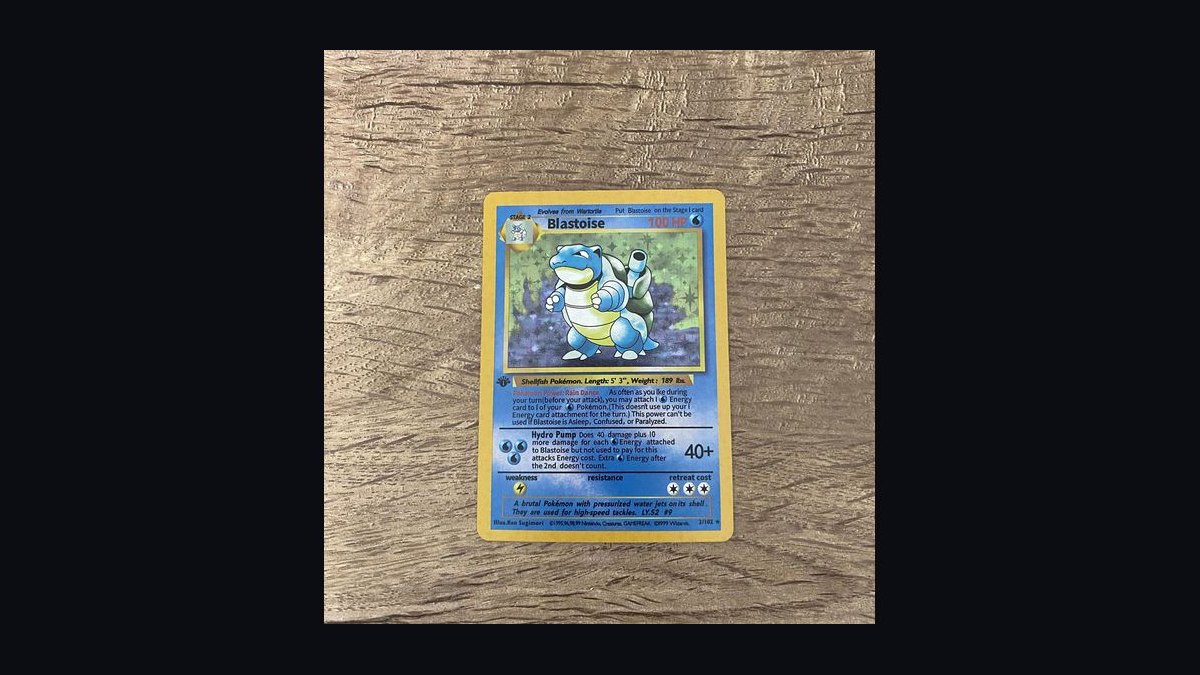
Era/Set: 1999, Base Set (1st Edition) | Typical price: ~$55,000 (PSA 10) | Best for: the collector building the iconic Base Set holo trio.
Blastoise is one-third of the famous 1st Edition Base Set starter trio. PSA 10 copies sold around the $55,000 mark twice in February 2026 and once in October 2025. As the water-type counterpart to Charizard, it carries strong demand from collectors completing the trio and from those who simply prefer the design. It trades well below Charizard but holds firm value, making it a core blue-chip holo of the set.
Pros:
- Core member of the 1st Edition starter trio, with steady demand
- Documented ~$55,000 PSA 10 comps in 2025–2026
- Trio-completion appeal sustains a deep buyer pool
- 1st Edition stamp keeps it firmly in blue-chip territory
Cons:
- Lives in Charizard's shadow, capping its ceiling
- Holo print lines and edge wear make gem copies condition-sensitive
Verdict: A blue-chip 1st Edition holo and an essential piece of the Base Set trio.
8. 1999 1st Edition Base Set Venusaur #15
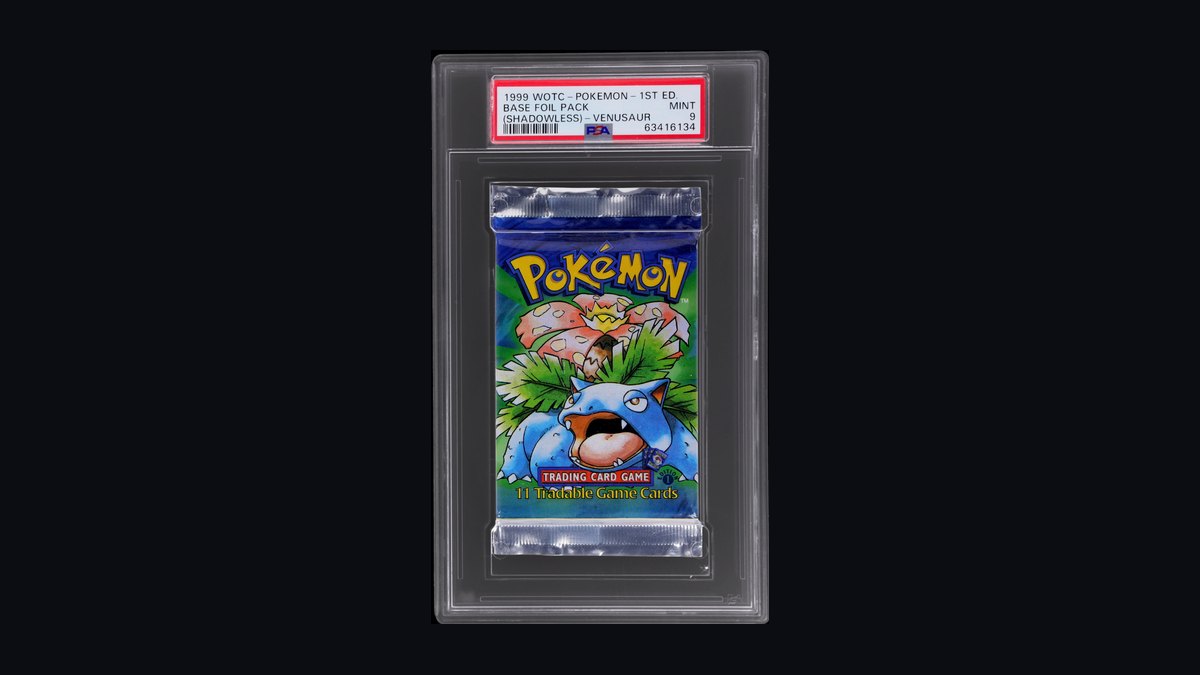
Era/Set: 1999, Base Set (1st Edition) | Typical price: ~$55,000 (PSA 10) | Best for: the collector finishing the starter trio with the grass-type holo.
Venusaur completes the 1st Edition starter trio alongside Charizard and Blastoise. PSA 10 examples have sold near $55,000, matching Blastoise. As the grass-type anchor, it's the least flashy of the three but no less essential for set builders, and its value tracks closely with Blastoise. Owning all three 1st Edition holos is a milestone for serious Base Set collectors, and Venusaur is the piece that closes the trio.
Pros:
- Completes the famous 1st Edition starter trio of Base Set holos
- ~$55,000 PSA 10 comps in line with Blastoise
- Set-completion demand keeps the market deep and steady
- 1st Edition stamp preserves its blue-chip status
Cons:
- Least iconic of the three starters, limiting standalone demand
- Holo scratching and centering make high grades elusive
Verdict: The grass-type anchor of the trio — a must-have for any serious Base Set build.
9. 1999 Shadowless Base Set Charizard #4 💎 BEST VALUE
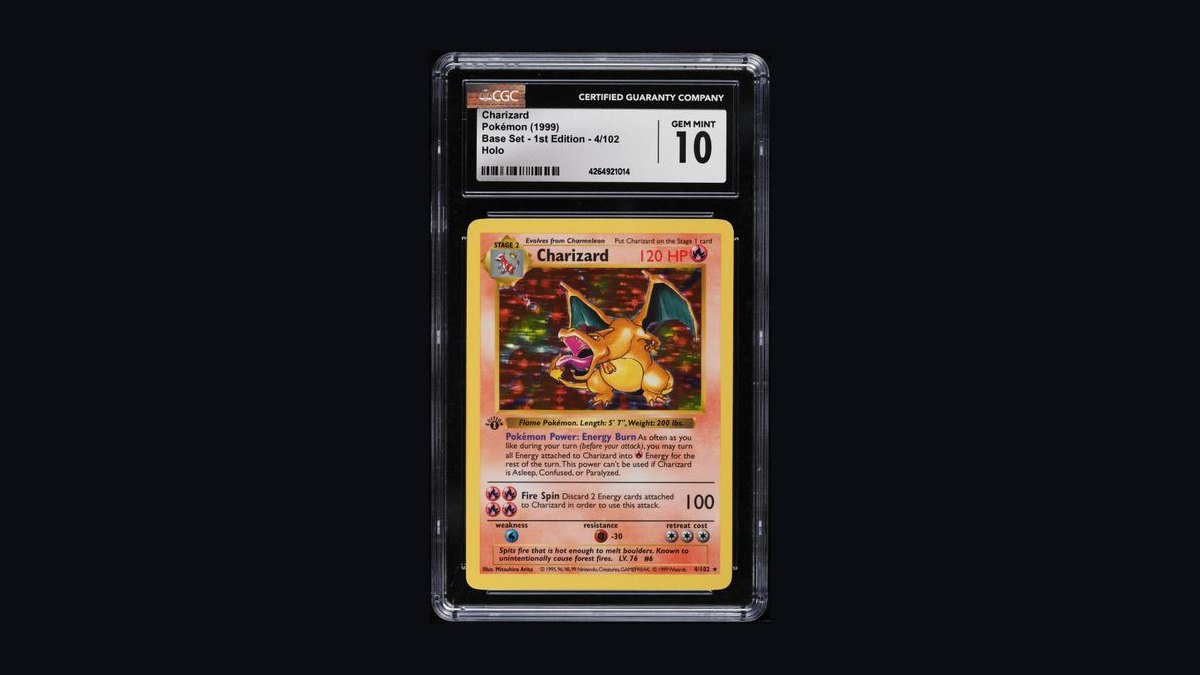
Era/Set: 1999, Base Set (Shadowless, unlimited) | Typical price: ~$15,000+ (PSA 10), $3,000–$6,000 (raw/lower grade) | Best for: the value collector who wants the legendary Charizard art without the 1st Edition price.
The Shadowless Charizard is the early-print version that lacks the 1st Edition stamp but still predates the standard unlimited run, identifiable by the missing drop shadow on the artwork frame. A PSA 10 trades around $15,000+ — a fraction of the $420,000–$955,000 for the 1st Edition — while raw and lower-grade copies sit in the $3,000–$6,000 band. You get the exact same iconic Charizard artwork and an early-print pedigree at a tiny fraction of the marquee price.
It's the clear value entry into owning a genuine vintage Charizard.
Pros:
- Same iconic Charizard art as the 1st Edition at a fraction of the cost
- Early-print Shadowless pedigree, above the standard unlimited run
- PSA 10 around $15,000+, attainable versus six-figure 1st Editions
- Strong liquidity with a deep, active market across grades
Cons:
- Far more common than 1st Edition, capping appreciation
- Shadowless vs. unlimited is easy to misidentify for newcomers
Verdict: The runaway value play — the legendary Charizard art and early-print status for a fraction of 1st Edition money.
10. 1999 1st Edition Base Set Mewtwo #10
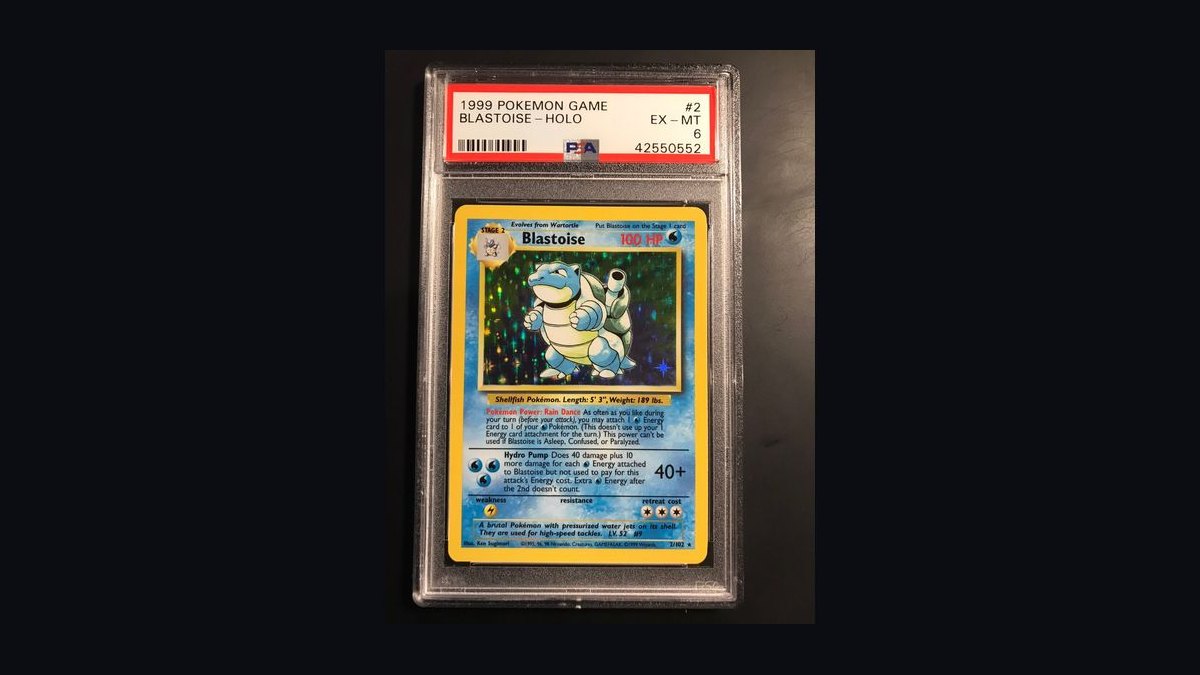
Era/Set: 1999, Base Set (1st Edition) | Typical price: ~$2,000–$14,250 (PSA 8 to PSA 10) | Best for: the collector who wants a marquee 1st Edition holo below the starter-trio prices.
Mewtwo is one of the most popular characters in the franchise, and its 1st Edition Base Set holo is a sought-after card that's far more attainable than Charizard or the starter trio. The highest recorded PSA 10 sale is $14,250, with PSA 8 copies around $2,160 in February 2026 and CGC 10 examples listed near $9,000.
As a fan-favorite psychic legendary with the 1st Edition stamp, it offers genuine Base Set pedigree and character appeal at a mid-tier price, making it a smart step up from the value pick.
Pros:
- Fan-favorite legendary with broad character appeal
- Attainable 1st Edition holo, well below the starter trio
- Clear cross-grade comps from ~$2,000 to ~$14,250
- 1st Edition stamp delivers real Base Set pedigree
Cons:
- Higher population than the starters limits scarcity-driven upside
- Holo scratching commonly knocks copies down to PSA 8/9
Verdict: A marquee 1st Edition holo for a mid-tier budget — character appeal with genuine pedigree.
Which One Is Right for You?
What to Look For
- Confirm the print variant first. 1st Edition (stamp + no drop shadow), Shadowless (no stamp, no drop shadow), and Unlimited (drop shadow) look similar but differ in value by orders of magnitude — check the stamp and the artwork frame.
- Buy graded for anything five-figure. PSA, CGC, and BGS slabs protect against trimming and reprints; verify the cert number on the grader's site before paying.
- Watch for trimmed and recolored cards. High-value holos attract alterers; a fresh re-holder or unnaturally sharp edges on a 1990s card deserve scrutiny.
- Inspect the holo and centering. Holofoil scratching and off-center cuts are the main reasons Base Set cards miss PSA 10; even small flaws drop a card multiple grades.
- Verify Japanese variants carefully. The 1996 No Rarity Charizard and Topsun Blue Back hinge on tiny details (corner symbols, back color, numbering) that determine whether you're holding a $500 or $500,000 card.
What matters less than the hype: chasing the flashiest slab label or the lowest cert number. A correctly identified, well-centered card in an honest grade will hold value far better than a gimmick.
FAQ
Are 1990s Pokémon cards a good investment in 2027? Selectively. Base Set holos and rare Japanese promos have proven, deep demand, but most 1990s commons are worth little. The 1st Edition and Shadowless holos and the trophy promos here have documented liquidity — treat them as collectibles with selective upside, not guaranteed returns.
What's the difference between 1st Edition, Shadowless, and Unlimited? 1st Edition has the stamp and no drop shadow behind the art; Shadowless has no stamp and no drop shadow; Unlimited has the drop shadow. Value drops steeply from 1st Edition to Shadowless to Unlimited even for the same card.
Why is the Pikachu Illustrator worth $16 million? It's the rarest card in the hobby — only 39 were made via a 1997–98 illustration contest and about 24 survive. The sole PSA 10 sold for a record $16.49 million in 2026, making it the apex trophy of the entire market.
Which 1990s Pokémon card is the best value? The 1999 Shadowless Base Set Charizard at roughly $15,000+ in PSA 10, or $3,000–$6,000 in lower grades. It offers the same iconic Charizard art and early-print pedigree at a fraction of the 1st Edition price.
How do I avoid buying a fake Charizard? Buy graded copies and verify the cert online. For raw cards, check the print variant, look for trimming or recoloring, and inspect the holo pattern. The marquee cards are heavily counterfeited, so authentication is essential.
Is the 1995 Topsun really the first Charizard? Yes — Topsun printed Charizard in 1995, before the TCG launched in 1996. The Blue Back, no-number holo is the prized variant, with only one copy ever reaching PSA 10.
Bottom Line
The decade's best Pokémon card is the 1999 1st Edition Base Set Charizard #4 — the most iconic card in the hobby, with a PSA 10 reaching $954,800 in 2026 and PSA 9 copies in the $30,000–$60,000 range. For value, the 1999 Shadowless Charizard delivers the same legendary art and early-print pedigree at roughly $15,000+ in PSA 10, the best dollar-for-icon pick here.
Between them sit the apex Pikachu Illustrator, the rarest Japanese variants (Topsun, No Rarity), the tournament trophies, and the blue-chip 1st Edition trio. Confirm the print variant, buy graded, and favor honest centering over flashy labels.
Related on PULSE
- [The 10 Best Football Cards from the 1990s](/knowledge/co0037)
- [The 10 Best Basketball Cards from the 1990s](/knowledge/co0034)
- [The 10 Best Watches from the 1990s](/knowledge/co0060)
- [The 10 Best Vinyl Records from the 1990s](/knowledge/co0059)
- [The 10 Best Toys from the 1990s](/knowledge/co0056)
- [The 10 Best Video Games from the 1990s](/knowledge/co0052)
Sources
- Card Ladder — Pokémon card sales history and population data
- PriceCharting — Pikachu Illustrator Japanese promo prices
- PriceCharting — 1995 Topsun Charizard No Number
- PSA Auction Prices Realized — 1999 Pokémon Game (Base Set)
- PSA Population Report — Pokémon
- Heritage Auctions — Pokémon TCG auction results
- Goldin — Pokémon card auction results
Read it free — or make it yours for $1.
@Kory-White- · if Venmo asks, the last 4 of my number are 2012
 pulse-recentTop 10 Comic Books 2023
 pulse-recentTop 10 Comic Books 2009
 pulse-recentThe 10 Best Steps for Appraising a Comic Book Collection in 2027
 pulse-recentTop 10 Comic Books 1962
 pulse-recentTop 10 Comic Books 1992
 collectible-reviewThe 10 Best Basketball Cards from the 1980s in 2027
 pulse-recentTop 10 Comic Books 1980
 pulse-recentTop 10 Comic Books 1987
 pulse-recentTop 10 Comic Books 2020
 collectible-reviewThe 10 Best Investment-Grade Wines to Collect in 2027