


Should I open or buy a Chick-fil-A franchise in 2027?
Quality
Certified
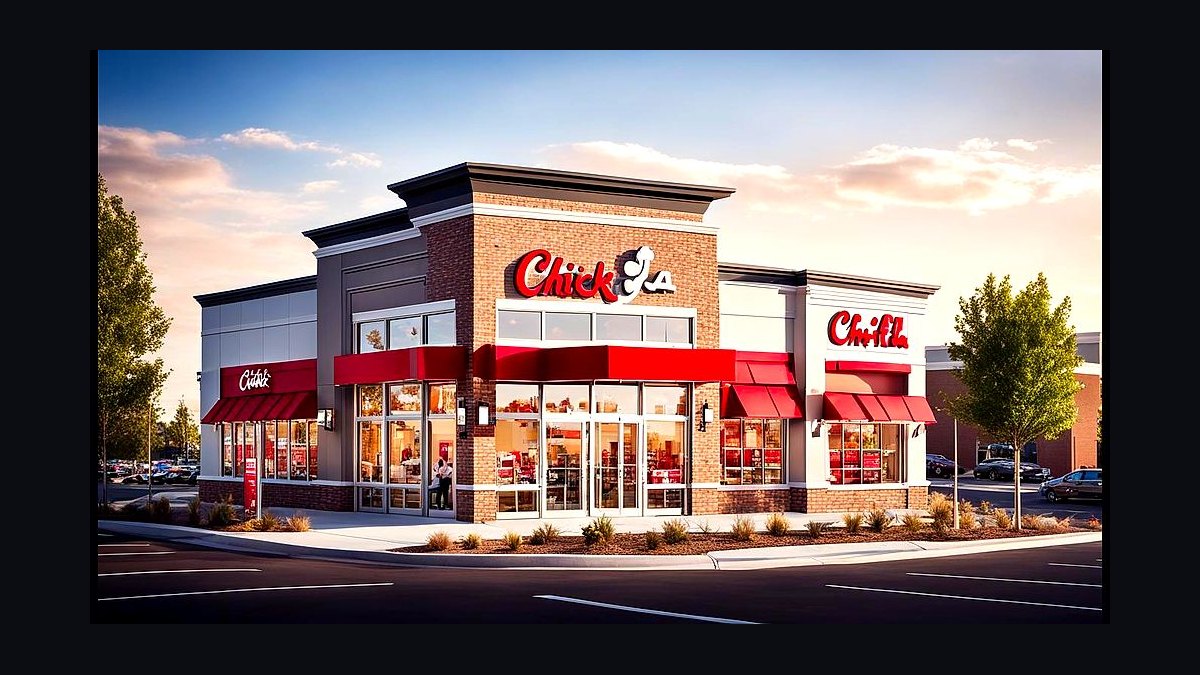
Only if you want a job, not an asset. Chick-fil-A operators pay roughly $10,000, never own the land, building, equipment, or franchise rights, cannot sell or transfer the unit, must work on-site 60-70 hours weekly, and face a selection rate near 0.15%. High income, zero terminal value.
What the Chick-fil-A operator agreement actually is
The single most expensive misunderstanding in franchise research is treating Chick-fil-A as a franchise in the same sense that Wingstop, Subway, or Popeyes are franchises. Legally it is a franchise — Chick-fil-A files a Franchise Disclosure Document, the FTC Franchise Rule applies, and the relationship is governed by a franchise agreement. Economically it functions closer to a profit-sharing management contract with an unusually long tenure and an unusually high ceiling on earnings.
In a conventional quick-service franchise, the franchisee is buying three things: the right to use the brand, a business entity they control, and an asset they can eventually sell. They typically own or hold a long-term lease on the real estate, they own the kitchen equipment outright or finance it, and when they retire they market the unit to another operator and capture a multiple of store-level cash flow. That resale value is often the largest single component of lifetime return in franchising. Someone who runs a unit for fifteen years and nets a moderate annual income can still walk away with a seven-figure liquidity event if the resale market is healthy.
Chick-fil-A removes all three of those from the equation and replaces them with something different. In the most common arrangement, the corporation selects the trade area, buys or leases the land, designs and constructs the building, owns the kitchen equipment and the point-of-sale system, and then places a single operator inside that package. The operator does not carry a construction loan, does not sign a twenty-year ground lease, and does not fund the equipment. That is a genuine and substantial transfer of risk away from the individual. In exchange, the operator holds no ownership interest in anything they build up over their tenure.
The consequences run deeper than the resale question. Because the operator has no equity, there is nothing to pledge as collateral, nothing to place in a trust, nothing to pass to children, and no capital gains treatment on exit. Everything the operator earns arrives as ordinary income taxed at ordinary rates in the year it is earned. A conventional franchisee earning less annually but building a salable asset may accumulate more after-tax wealth over the same period, because a meaningful share of their return arrives as a capital gain at the end rather than as ordinary income throughout.
There is also a day-to-day structural difference that reshapes the operator's life. A traditional multi-unit franchisee can hire a general manager, install a district manager over several stores, and step back into an ownership role — reviewing financials, negotiating leases, scouting new sites. Chick-fil-A's agreement requires the operator to be personally, physically, and continuously engaged in the single restaurant they are assigned. The operator is the general manager. They interview the crew, run shifts, handle escalated guest complaints, and represent the store in the community. The agreement also restricts outside business interests of any consequence, which means the operator cannot run this alongside a real estate portfolio, a consulting practice, or a second franchise brand. It is a single-threaded commitment.
Understanding this before you apply matters because the selection committee is explicitly screening for people who understand it. Applicants who arrive describing a five-year plan to build a portfolio of units, or asking about semi-absentee structures, or probing how quickly they can promote a general manager and step back, are filtered out early — not because those are bad instincts in franchising generally, but because they are incompatible with this specific agreement.
How the selection and opening process actually runs
The path from initial interest to opening day is long, and the shape of it is unlike almost any other franchise process. Most franchisors qualify candidates primarily on financial capacity: net worth, liquidity, credit, and prior business experience. Chick-fil-A screens primarily on character, leadership history, community involvement, and cultural alignment, with financial capacity as a secondary and comparatively modest hurdle.
The application volume is the reason the process is structured the way it is. The company receives tens of thousands of applications annually against a new-operator cohort in the range of eighty to just over a hundred. That produces a selection rate meaningfully below the admit rate of highly selective universities. A process that severe cannot be run on paper credentials, so it is run on depth: repeated interviews, in-person visits, personality and values assessments, extended reference checks that reach back years, and a partner or spouse conversation.
That last element surprises people, and it should not. The company has learned across decades that the leading cause of operator burnout and early exit is not restaurant economics — it is household strain. A role that consumes sixty to seventy hours a week, requires relocation to a market the operator did not choose, closes every Sunday, and offers no exit event is a family decision. If the operator's partner has an immovable career, or is unwilling to relocate, or is quietly opposed to the hours, the arrangement tends to fail two or three years in. The interview surfaces that before either side commits.
Here is the sequence a serious candidate should expect and plan around.
A few notes on the steps that candidates handle badly.
Reading the FDD is non-negotiable and most people skip it in favor of blog summaries. The items that matter most are the initial fees, the ongoing fees, the estimated initial investment table, the financial performance representations, the outlet and operator turnover tables, and the renewal, termination, and transfer provisions. The two different cost structures — the low-commitment path where the corporation funds construction and the operator-funded path — are distinguished in the agreement exhibits rather than in the marketing material, and confusing them produces wildly wrong financial models.
Calling current operators is the highest-return hour you will spend and almost nobody does it. The FDD includes a list of current and former operators with contact information. Call at least ten, deliberately spread across low, middle, and high volume units, and across different states. Ask the same four questions each time: what did you take home in year one, in year three, and now; what surprised you that you wish you had known; what does a normal week actually look like; and knowing what you know now, would you do it again. Former operators on the list are especially valuable, because they will tell you why they left.
The location offer is the step candidates are least prepared for. You do not choose your market. You are offered a restaurant, in a place the company's site selection process has identified, and you accept or decline. Declining is permitted but is not free — it signals limited flexibility and can slow or end your candidacy. Before you reach this stage, you should already know which regions you would genuinely move to, and you should have discussed it with your household in specific terms, not abstract ones.
Costs, fee structure, and the earnings math
The headline number is real but incomplete. The low-commitment path carries an initial financial commitment in the low five figures — an order of magnitude below what a comparable-volume franchise costs to enter — and the corporation funds the site, the building, and the equipment. That is the lowest capital-at-risk entry point of any major restaurant brand operating at this unit volume. There is no ground lease to guarantee, no construction loan to service, no equipment note.
The operator-funded path is a different animal. Where the operator funds construction, leasehold improvements, equipment, signage, opening inventory, working capital, training and travel, insurance, and permits, the estimated initial investment stretches from roughly the high five hundred thousands at the low end into the low seven figures and beyond at the high end, depending on whether it is a conversion, an inline space, or a free-standing unit with a dual drive-thru. This path is less common and typically appears where the company does not want to hold the real estate. Critically, funding the build does not buy transferability — the restrictions on sale and transfer still apply.
The ongoing fee structure is where the model diverges most sharply from the rest of the industry. Three separate charges stack:
A royalty on gross sales that is far above the industry norm. Most quick-service brands charge somewhere in the four-to-six percent range; this one is in the mid-teens.
A marketing contribution on gross sales, in the low single digits, covering national and local advertising.
A split of pre-tax profit with the franchisor after the operator's store-level costs. This is the component that has no analogue at most brands, and it is the one people forget to model. It means the franchisor's take scales with the operator's efficiency, not just with sales volume.
Layer those together and the effective share of revenue flowing to the franchisor is roughly double what a conventional franchisee pays. That is the trade for a corporate-funded building, a brand with the highest per-unit sales in the segment, and near-zero capital at risk.
Now the part that has to be modeled carefully. Free-standing units in this system generate average unit volumes in the range of nine million dollars, with mall and non-traditional locations running roughly half that. The distribution is wide — the weakest free-standing units sit under two million while the strongest exceed twenty million. After food, labor, occupancy-related charges, the royalty, the marketing contribution, and the profit split, operator take-home typically lands in the mid-single-digit percentage of gross sales. At an average free-standing volume that produces roughly four to six hundred thousand dollars of pre-tax personal income. Operators at lower-volume units, or in high-labor-cost states, commonly land closer to a hundred fifty to two hundred thousand.
Run that against the alternative honestly. A conventional franchisee at a two-million-dollar unit paying a six percent royalty and a five percent marketing fee sends roughly two hundred twenty thousand dollars a year to the franchisor and keeps store-level profit in the fifteen-to-twenty percent range, or roughly three to four hundred thousand dollars across two units. That is less annual income than a strong Chick-fil-A unit produces. But at the end of ten or fifteen years, that operator sells two units at a multiple of cash flow and books a capital gain. The Chick-fil-A operator ends the same period with nothing beyond what they saved out of income along the way.
The correct comparison is therefore not annual income against annual income. It is cumulative after-tax wealth over a full career, including the exit. Build both models across a fifteen-year horizon, tax the Chick-fil-A income at ordinary rates, tax the conventional operator's exit at capital gains rates, assume a realistic savings rate on both, and see which one wins for your situation. For an operator who reliably saves a large fraction of a six-hundred-thousand-dollar income, the model holds up well. For an operator who spends to their income, it does not.
Where prospective operators get it wrong
The failure modes are consistent and mostly avoidable.
Assuming income equals wealth. Because there is no exit event, the operator's entire lifetime return is whatever they save and invest out of annual earnings. This makes personal savings discipline a structural requirement of the model, not a personal virtue. An operator earning six hundred thousand and saving eighty thousand a year ends a fifteen-year tenure in a materially worse position than a conventional franchisee earning half as much who sells the business. Model the savings rate explicitly before you commit.
Underweighting the labor market you are assigned to. Labor is the largest controllable line, and it is not uniformly controllable across geographies. States with elevated fast-food minimum wages push labor several points higher as a share of sales than the national norm. At nine-million-dollar volume, every point of labor cost is ninety thousand dollars of profit — and because the profit split takes a share of what remains, the operator absorbs only part of the swing but still feels it heavily. An operator assigned to a high-wage market should assume take-home lands toward the bottom of the range, not the middle, and should ask the company directly whether any structural relief exists before accepting.
Ignoring the Sunday closure in the wrong location type. The closure is a fixed brand commitment and is not negotiable. In most trade areas the brand's weekday and Saturday volume more than compensates. In locations where Sunday is a peak day — near stadiums, hospitals, airports, or heavy weekend retail — the operator forfeits a meaningful share of achievable weekly revenue while competitors capture it. This is a location-specific risk, not a brand-wide one, and it should be evaluated against the specific site being offered.
Over-leveraging on the operator-funded path. Anyone borrowing the full construction cost is taking on real estate risk without receiving real estate ownership, and is doing so in a commercial lending environment where restaurant construction paper is expensive and refinancing is not guaranteed. If you fund the build, model debt service against the low end of the volume range, not the average, and confirm you can cover it if the unit opens below expectation.
Skipping the turnover data. The outlet and operator tables in the FDD show that operator transitions — resignations, non-renewals, terminations — happen every year in non-trivial numbers. The system is not a place where every operator stays for life. Read those tables and, ideally, reach a former operator from the contact list.

Treating the values alignment as a formality. The Sunday closure, the service culture, and the explicitly faith-influenced leadership curriculum are real features of the working environment, not marketing. An operator who privately resents them will be visible to their crew within a year. If those elements do not fit you, that is a legitimate reason to pursue a different brand, and it is far cheaper to discover before applying than after opening.
Not funding a real alternative. With a selection rate near two in a thousand, the base-rate outcome is rejection. Every serious candidate should have a fully researched, financeable alternative ready to execute the day a rejection arrives, rather than reapplying indefinitely.
Choosing between this and an ownership-model franchise
The decision reduces to a small number of questions, and they are best answered in order, because an early no ends the analysis.
If the first answer is that you want an asset, stop and look at ownership-model brands. The comparison set for someone drawn to high-volume chicken concepts includes brands with royalty structures in the five-to-six percent range, marketing fees in the same neighborhood, no profit split, unit volumes in the one-to-two-million range, explicit multi-unit development rights, and an active resale market. Adjacent categories worth modeling include drive-thru coffee, fast-casual concepts with strong lunch dayparts, and regional independents where you build the brand yourself and capture the full multiple at exit.
Run each candidate through the same four-line comparison: total investment range, total ongoing fee load as a percentage of sales, realistic unit volume, and whether the units are transferable. That single table resolves most of the confusion in franchise research, because it exposes that headline unit volume and operator return are only loosely correlated once the fee structure is applied.

If you clear every question and decide to proceed, sequence the work over roughly ninety days. Spend the first two weeks on the FDD itself. Spend the next two weeks on operator calls. Spend the following two weeks doing a genuine self-audit with your household on hours, relocation, and the absence of an exit. Spend a week with a franchise-specialist attorney reviewing the transfer restrictions, the profit-split mechanics, the termination provisions, and any personal guarantee language — budget several thousand dollars and consider it cheap. Use the remaining time to document your leadership and community history in specific, verifiable terms, and to line up the alternative you will pursue if the answer is no. Then apply, and plan on six to twelve months before you have a decision.
One last framing that helps people decide. Ask yourself what you want to be true in year sixteen. If the answer is "I want to have built something I can hand to someone," this is the wrong model regardless of the income. If the answer is "I want to have led a large team well, served a community for a long time, earned a strong income, and invested it carefully," this model does that as well as anything in the restaurant industry — and it does it without asking you to put a million dollars of your own capital at risk to find out.
Related questions
Can a Chick-fil-A operator own more than one restaurant?
Multi-unit operation is rare and not the standard path. The agreement centers on a single operator personally running a single restaurant full-time, and outside business interests of consequence are restricted. Applicants planning a portfolio should look at brands with formal development agreements instead.
What happens to a Chick-fil-A restaurant when the operator retires?
The restaurant returns to the company, which places a new operator. The departing operator receives no sale proceeds, no franchise-rights transfer, and no equity distribution. Their entire return is whatever they earned and saved during their tenure, plus any contractual end-of-tenure arrangements in the agreement.
Is the operator-funded path better than the low-commitment path?

Rarely, for the operator. Funding the build adds substantial capital risk and debt service without granting transferability or resale rights. It exists mainly where the company prefers not to hold the real estate. Read the specific agreement type carefully before assuming ownership follows the investment.
How long does the Chick-fil-A selection process take?
Plan on six to twelve months from application to decision, spanning multiple interview rounds, in-person visits, assessments, deep reference checks, and a partner conversation. Training adds several more weeks, and site readiness can add months after that before you open the doors.
Which franchise is the closest ownership-model alternative?
Brands in the same chicken-focused, high-throughput category with single-digit royalties, no profit split, multi-unit development rights, and an active resale market are the nearest comparison. Lower unit volumes, but the operator keeps a larger share and builds transferable equity.
FAQ
How much does it really cost to become a Chick-fil-A operator?
The commonly cited figure is a low five-figure financial commitment, which is accurate for the path where the corporation funds the site, building, and equipment. The alternative operator-funded path runs from roughly the high five hundred thousands into the low seven figures depending on the build type. Neither path conveys ownership of the property, the equipment, or transferable franchise rights, so the investment question and the ownership question are entirely separate here.
What does an operator actually take home each year?

Take-home typically lands in the mid-single-digit percentage of gross sales after food, labor, the royalty, the marketing contribution, and the profit split. At average free-standing volume that is roughly four to six hundred thousand dollars pre-tax. Lower-volume units and high-labor-cost markets commonly produce closer to a hundred fifty to two hundred thousand. Model the specific location offered, not the system average.
What are my odds of being selected?
Tens of thousands of applications each year against a cohort of roughly eighty to a hundred new operators puts the rate near two in a thousand. Most rejections happen because the applicant wants something the model does not offer — multiple units, absentee management, or an eventual sale. Fund and research an alternative before you apply, because rejection is the base-rate outcome.
Do I have to work in the restaurant myself?
Yes. This is a full-time, on-site, owner-operator role, not a passive investment. Expect sixty to seventy hours a week, particularly through the first eighteen months, and expect the agreement to restrict outside business interests. You cannot hire a general manager and step back into an ownership role the way you can at most franchise brands.
Can I ever sell the restaurant or leave it to my children?
No. The agreement prohibits sale and transfer, and there is no equity, no franchise right, and no property interest to convey. When you leave, the restaurant returns to the company. This is the single most important economic fact in the model and the one prospective operators most frequently fail to internalize until they are years in.
Does the Sunday closure hurt the business?
In most trade areas, no — weekday and Saturday volume more than covers it, and the brand still leads the segment in per-unit sales. In locations where Sunday is the peak day, such as stadium, hospital, or heavy weekend retail sites, the closure represents real forfeited revenue while seven-day competitors capture it. Evaluate it against the specific site you are offered.
Sources
- U.S. Federal Trade Commission — Franchise Rule and buyer guidance: https://www.ftc.gov/business-guidance/industry/franchises
- U.S. Small Business Administration — franchise financing and eligibility: https://www.sba.gov/
- Chick-fil-A — official franchising and operator information: https://www.chick-fil-a.com/franchise
- QSR Magazine — quick-service industry reporting: https://www.qsrmagazine.com/
- Nation's Restaurant News — restaurant industry coverage: https://www.nrn.com/
- Restaurant Business Online — operations and unit economics reporting: https://www.restaurantbusinessonline.com/
- Franchise Times — franchise transactions and industry analysis: https://www.franchisetimes.com/
- International Franchise Association — franchising research and standards: https://www.franchise.org/
- U.S. Bureau of Labor Statistics — food service wage and employment data: https://www.bls.gov/oes/current/oes_nat.htm
Related on PULSE
- Should I open or buy a Chicken Salad Chick franchise in 2027?
- Should I open or buy a Golden Chick franchise in 2027?
- Should I open or buy a White Spot franchise in 2027?
- Should I open or buy a Five Guys franchise in 2027?
- Should I open or buy a Mrs. Fields Cookies franchise in 2027?
- Should I open or buy a Mosquito Authority franchise in 2027?
This page will be disappearing soon. Save it to your device for $1 — or read it free while it is here.
@Kory-White- · if Venmo asks, the last 4 of my number are 2012
This page is gone.
This one is off the shelf now. $1 keeps it on your phone for good — the whole page, pictures and diagrams included.
 franchiseShould I open or buy a Merry Maids franchise in 2027?
 franchiseShould I open or buy a Great Clips franchise in 2027?
 franchiseShould I open or buy a Sonic Drive-In franchise in 2027?
 franchiseShould I open or buy a Subway franchise in 2027?
 franchiseShould I open or buy a Mac Tools franchise in 2027?
 franchiseShould I open or buy an Orangetheory Fitness franchise in 2027?
 franchiseShould I open or buy a Panera Bread franchise in 2027?
 franchiseShould I open or buy a Stanley Steemer franchise in 2027?
 franchiseShould I open or buy a Take 5 Oil Change franchise in 2027?
 franchiseShould I open or buy a Cinnabon franchise in 2027?