


Should I open or buy a Crumbl Cookies franchise in 2027?
Quality
Certified
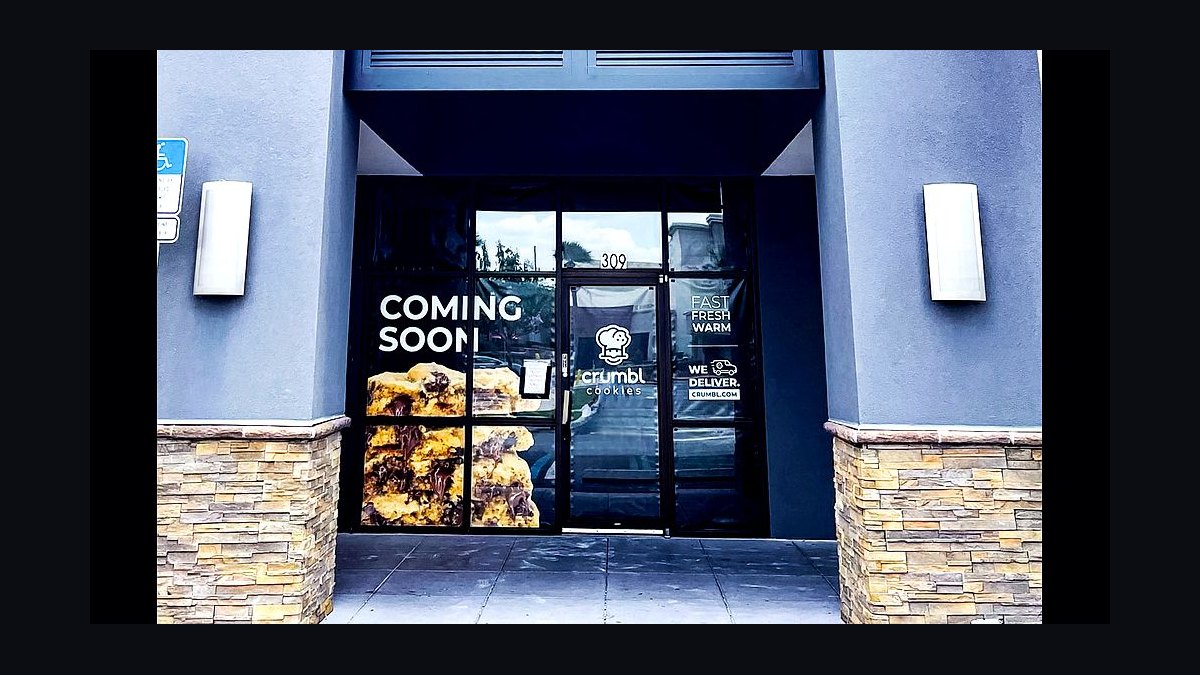
Opening or buying a Crumbl Cookies franchise in 2027 only makes sense if you can fund roughly $816,000 to $1.44 million in startup capital, accept a system average unit volume that has fallen from $1.83M (2022) to about $1.30M, and secure a trade area more than eight miles from any existing Crumbl. On those numbers, realistic Year-1 cash flow runs $150,000-$220,000 with a 5-7 year payback — workable for a well-capitalized, hands-on operator, risky for anyone under-capitalized or planning to stay absentee.
What it is and why it matters
A Crumbl Cookies franchise is a single-brand bakery license built around one gimmick that actually works as a business model: a rotating weekly menu of four to six specialty cookie flavors, announced every Sunday night and baked fresh daily in a 1,200-1,600 sq ft retail box. The franchisor controls the recipe calendar, the approved-vendor ingredient list, and the brand's national marketing cadence, while the franchisee owns the real estate commitment, the labor, and the day-to-day execution. That division of labor is exactly why the decision to open one in 2027 is no longer the slam-dunk it was during the 2021-2022 viral boom.
It matters now for three reasons that did not exist three years ago. First, the system has crossed roughly 1,000 units against a domestic addressable market that franchise analysts increasingly estimate at only 1,150-1,300 viable trade areas — meaning most of the easy, under-served locations are already taken, and Crumbl itself has begun routing growth capital into the UK, Australia, and Mexico instead of the U.S. Second, average unit volume has compressed 37% off its 2022 peak, from $1.83M down to roughly $1.30M, which drags every downstream margin calculation with it. Third, the capital stack to open has grown even as the revenue has shrunk: build-out costs are up $40,000-$80,000 versus the 2022 cohort because landlords are absorbing less of the tenant-improvement package, and SBA 7(a) debt now prices around 11.0-11.5% versus roughly 6.5% in 2021. A buyer evaluating this franchise in 2027 is underwriting a maturing, saturating system — not a growth story — and the entire analysis has to be built on that premise or the pro forma will be wrong from line one.
The upside case still exists. Crumbl's brand recognition, built-in weekly content hook (the Sunday menu drop), and centralized recipe R&D genuinely lower the operating burden compared to an independent bakery trying to build a following from zero. A buyer who treats this as a real operating business — not a social-media lottery ticket — and who can clear the capital bar can still land a 15-18% EBITDA margin. The business case has simply shifted from "ride the wave" to "run a disciplined QSR-style operation in a maturing category," and the franchise only rewards operators built for the second version.
The step-by-step process
Opening a Crumbl franchise in 2027 follows a fairly rigid sequence because the franchisor controls site approval, training, and build-out specs tightly. The realistic timeline from first FDD read to grand opening runs four to seven months, assuming financing is pre-qualified and a trade area is already identified.
The process starts with pulling and reading the current Franchise Disclosure Document — all 23 items, with Item 7 (initial investment), Item 19 (financial performance representations), and Item 20 (outlet and franchisee turnover data) as the three that actually decide whether to proceed. From there, a serious buyer calls a representative sample of current franchisees listed in Item 20 — split across top-quartile, median, and bottom-quartile performers if the list allows it — and asks pointed questions about actual AUV, true cost to open versus what the FDD estimated, and current labor percentage. Only after that validation does site selection start: trade-area analysis using tools like Esri Tapestry or Placer.ai to confirm population density, household income, traffic counts, and distance from any existing Crumbl location, since the brand enforces a non-cannibalization radius around existing units.
Financing runs in parallel with site selection — SBA 7(a) pre-qualification from a Preferred Lender Program bank, since most single-unit buyers are debt-financing 60-75% of the total build. Once a site is under a signed letter of intent and financing is committed, the franchisor schedules mandatory training in Lindon, Utah, covering operations, the weekly menu rollout process, equipment, and the brand's labor scheduling model. Build-out then proceeds against Crumbl's approved vendor and design specifications — equipment, signage, POS, and security systems are not optional substitutions, which is a meaningful constraint compared to an independent bakery where every line item is negotiable. The sequence closes with opening inventory, a mandatory minimum grand-opening marketing spend, and a soft-open period before the unit appears on the official locator and starts getting measured against system AUV benchmarks.

Each gate in this chain is a legitimate point to walk away. A buyer who skips the Item 20 phone calls, or who signs a lease before financing is actually committed (not just pre-qualified), is the profile most likely to show up in next year's closure data.
Costs, timelines, and typical ranges
The published cost structure for a standard Crumbl unit opening in fiscal 2027, per FDD Item 7, totals $816,066 to $1,442,533 including the $50,000 initial franchise fee. That range breaks down roughly as: leasehold improvements and build-out at $250,000-$525,000 (the single biggest swing line, driven almost entirely by the landlord's tenant-improvement contribution); the Crumbl-approved equipment package (ovens, mixers, refrigeration) at $185,000-$260,000; signage, decor, POS, and security at $45,000-$95,000; opening inventory and smallwares around $25,000-$42,000; mandatory training travel and lodging at $8,000-$24,000; three months of working capital at $90,000-$185,000; real estate deposits and rent reserves at $35,000-$95,000; and required grand-opening marketing of $35,000-$50,000. A realistic liquidity bar for a buyer, accounting for contingency, sits closer to $1.0 million in accessible capital even at the low end of the published range.

Ongoing costs are where many first-time buyers underestimate the true take. Royalty runs 8% of gross sales — meaningfully above the 5-6% that is typical across the broader QSR category — plus a 2% brand fund contribution, a local advertising co-op of 0.5-1.5%, and technology/POS fees of roughly $500-800 per month. All-in, that's about 10.5-11% off the top of revenue before a single dollar of rent, labor, or cost of goods sold is paid. Against a 2024-cohort system AUV of roughly $1.30M, that works out to something in the neighborhood of $136,500-$143,000 a year flowing straight to the franchisor and ad fund, independent of whether the location is profitable.
On profitability, the 2024 FDD Item 19 cohort (858 qualifying stores) shows a median net profit around $223,000, implying a roughly 17% net margin — down from an estimated 21% at the 2022 peak. Translating that into owner earnings, operators are realistically looking at $140,000-$210,000 a year depending on location quartile. At a midpoint total investment of $1.10M and $180,000 in annual cash flow, full payback lands around 6.1 years; breakeven on the operating P&L (a different, earlier milestone than full capital payback) typically arrives in month 14 to 22. Top-quartile locations can clear $1.8M+ in AUV and push owner earnings well past $200,000; bottom-quartile locations, often in markets that are already near saturation, can land at $700,000-$850,000 AUV with correspondingly thin or negative owner take-home in year one.
Labor cost is the single biggest variable inside that margin. Crumbl's model assumes roughly 24% labor as a percentage of sales. In high-minimum-wage markets — California at $20/hour for fast food, Seattle at $20.76, New York City at $16.50 — that percentage realistically runs 32-35%, which alone can erase most of the difference between a median and a bottom-quartile unit. Food cost tells a similar story: the brand targets 24% but the mandated approved-vendor program (operators can't substitute suppliers to chase better pricing) combined with 2026 input inflation — butter up roughly 18% year over year, specialty chocolate up 12-22% — has pushed actual food cost to 27-29% at many units.
Where teams get it wrong

The clearest signal of what goes wrong comes from the closure data itself: Crumbl recorded 7 permanent closures in 2023 — the first in company history — and 12+ more in 2024. Those failures cluster around a small number of repeatable mistakes rather than bad luck.
The most common failure mode is absentee ownership. Crumbl's day-to-day operation depends on constant judgment calls around cookie waste, scheduling, and the weekly recipe changeover — a general manager hired at $75,000 a year and left largely unsupervised is a frequent precursor to a unit losing its lease within 18 months. Every week running at 15% ingredient waste instead of a controlled 8-11% costs roughly 2.5 points of margin, and that erosion compounds quickly when there's no owner on-site catching it.
The second failure pattern is under-capitalization paired with saturated-market siting. Buyers who take on $800,000+ in SBA debt with only $90,000 in working capital have almost no runway if the first two or three quarters underperform pro forma — and several 2024-cohort units that opened in already-dense metro trade areas ran out of cash by month nine. Related to this: once a second Crumbl opens within roughly eight miles of an existing one, cohort analysis from 2023-2024 shows AUV cannibalization of 18-32% at the existing location. Buyers who don't do independent trade-area verification — rather than trusting the franchisor's site approval alone — are the ones most likely to discover a competing unit is already planned nearby.

A third pattern is skipping franchisee due diligence entirely. The FDD's Item 20 list exists specifically so prospective buyers can call existing operators before signing, and the 2024 data point worth taking seriously is that franchisee turnover in saturated states ran above 30% — a number that should show up in those phone calls well before it shows up in a buyer's own P&L. Finally, high-labor-cost geography is a mistake that's baked in at the lease-signing stage: choosing a California, Washington, or New York City location without re-underwriting labor at 32%+ instead of the brand's assumed 24% means the pro forma was wrong before the doors opened, not because of poor operations but because of a bad market selection.
Decision framework: when to choose what
The honest framework for 2027 splits buyers into three groups, and the right answer genuinely differs by group rather than defaulting to a single "yes" or "no."

A buyer with $500,000+ net worth, $200,000+ in liquid capital, and the willingness to personally guarantee $650,000-$900,000 in SBA debt, who can commit to 50-60 hours a week on-site for the first 18 months, and who has a confirmed trade area outside the 8-mile radius of any existing Crumbl, fits the profile where this franchise still works. Sunbelt expansion markets — the Carolinas, Texas, Arizona, inland Florida — still show real whitespace; Utah, coastal California, New Jersey, and Massachusetts are effectively saturated and trending down on AUV, and should be avoided regardless of how attractive a specific piece of real estate looks.
A buyer who needs under $400,000 in total capital, or who wants a genuinely absentee ownership structure, should not open a Crumbl in 2027 — the capital bar and the active-management requirement both rule it out. For that buyer, a Great American Cookies resale ($277,000-$403,000 total investment, 6% royalty, lower but more forgiving AUV of $550,000-$750,000) or an independent specialty bakery (no royalty, full pricing freedom, but a 24-36 month runway to build brand recognition from zero) are the more realistic adjacent plays. A buyer somewhere in between — adequate capital but uncertain about the time commitment — should run the numbers at a downside AUV scenario of $1.10M before signing anything: if modeled EBITDA at that downside case falls below 12%, that is the signal to walk rather than sign the FDD acknowledgment and wire the $50,000 fee.
Related questions
How does Crumbl's 8% royalty compare to other cookie franchises?
It's notably higher than most peers — Great American Cookies runs 6%, Nestle Toll House Café 5%, and Krispy Kreme/Insomnia roughly 4.5% — making Crumbl's all-in ~10.5-11% off-the-top take the heaviest in the category.
What's driving Crumbl's AUV decline since 2022?
System saturation (nearly 1,000 U.S. units), fading novelty from the 2021-2022 TikTok viral peak, and roughly 8-12% softer discretionary spend on treat categories since that peak.
Is a multi-unit Crumbl operator better positioned than a single-unit buyer?
Generally yes — multi-unit operators in one market can amortize a GM-level operations lead and commissary-style ingredient ordering across several units, which single-unit owners can't replicate.
Should I wait past 2027 for better unit economics?
Not obviously — whitespace is shrinking as the system approaches its estimated 1,150-1,300 viable U.S. trade area ceiling, so waiting likely means fewer available non-cannibalized sites, not better terms.
FAQ
What is the total initial investment to open a Crumbl Cookies franchise in 2027? The initial investment ranges from roughly $816,000 to $1.44 million, plus a $50,000 franchise fee. This includes build-out, equipment, inventory, and working capital. Plan on having at least $1.0 million in accessible capital.
How much money can a Crumbl franchise owner realistically expect to make in the first year?
Realistic first-year cash flow after royalties and expenses is typically $150,000 to $220,000, based on 15-18% EBITDA margins against a system average unit volume of around $1.30 million — down from a 2022 peak of $1.83 million.
How long does it take to break even and recover the initial investment? Breakeven on the operating P&L usually occurs between month 14 and month 22. Full payback of the initial capital investment typically takes 5 to 7 years depending on location, sales performance, and labor cost control.
Are there restrictions on where I can open a Crumbl Cookies franchise? Yes — the trade area must be more than eight miles from any existing Crumbl location to avoid franchisor-recognized cannibalization, which is increasingly difficult to satisfy in already-dense metro markets.
What ongoing fees does a Crumbl franchise pay? An 8% royalty on gross sales, a 2% brand fund contribution, a local co-op ad fee of 0.5-1.5%, plus roughly $500-800 a month in technology and POS fees — combining to about 10.5-11% of top-line revenue.
Is Crumbl a good option for someone with limited capital or who wants to be an absentee owner? No. Buyers with under $400,000 in capital or who want absentee ownership are poorly matched to this franchise's capital requirements and active-management demands; a Great American Cookies resale or an independent bakery concept is typically a better fit.
Sources
- https://www.franchisetimes.com
- https://www.restaurantbusinessonline.com
- https://www.ibisworld.com
- https://www.statista.com
- https://www.bls.gov
- https://www.sba.gov
- https://www.vettedbiz.com
- https://www.placer.ai
- https://www.esri.com
- https://www.franchise.org
Related on PULSE
This page will be disappearing soon. Save it to your device for $1 — or read it free while it is here.
@Kory-White- · if Venmo asks, the last 4 of my number are 2012
This page is gone.
This one is off the shelf now. $1 keeps it on your phone for good — the whole page, pictures and diagrams included.
 franchiseShould I open or buy a Planet Fitness franchise in 2027?
 franchiseShould I open or buy a Mac Tools franchise in 2027?
 franchiseShould I open or buy a KinderCare franchise in 2027?
 frShould I open or buy a McDonald's franchise in 2027?
 franchiseShould I open or buy a Whataburger franchise in 2027?
 franchiseShould I open or buy a Little Caesars franchise in 2027?
 franchiseShould I open or buy a Sonic Drive-In franchise in 2027?
 franchiseShould I open or buy a Wingstop franchise in 2027?
 franchiseShould I open or buy a Cinnabon franchise in 2027?
 franchiseShould I open or buy a Mathnasium franchise in 2027?