


Should I open or buy a Jimmy John's franchise in 2027?
Quality
Certified
Opening a Jimmy John's franchise in 2027 makes sense only if you can put down $400,000-$600,000 in liquid capital, plan to personally operate the store for at least 24 months, and lock a dense lunch-traffic site near 1,500 or more daytime workers. The 2025 FDD shows a $366,200-$728,200 total investment against a $935,022 median AUV — a workable but slow 5-7 year payback, not a passive-income play.
A Corner Table Two Miles Apart
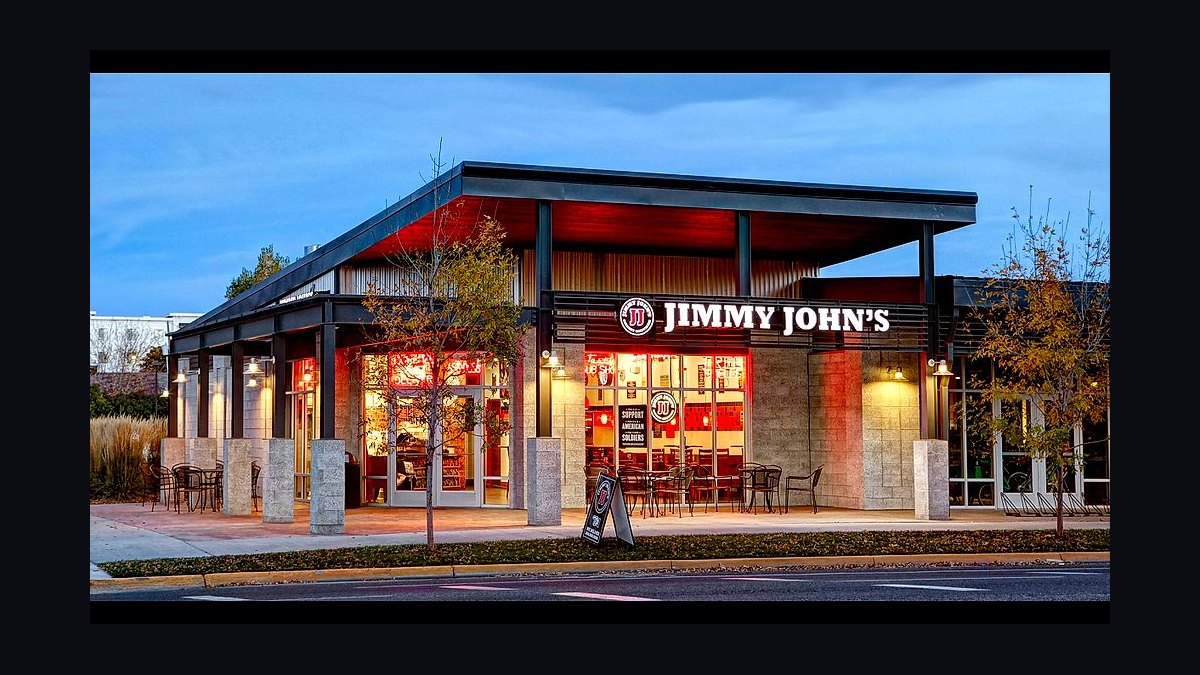
Picture two prospective franchisees who both sign a letter of intent with Jimmy John's the same week in early 2027. Operator A takes a 1,400-square-foot endcap 400 feet from a 2,200-employee insurance-company campus, with a hospital's outpatient wing two blocks over. Operator B, working with a smaller budget and a landlord eager to close, signs a strip-center unit two miles away in a residential pocket with decent car counts but no meaningful daytime office population. Both open on the same day, both run the identical build-out spec, both hire from the same labor pool, both pay the same 6% royalty.
Eighteen months later, Operator A is running close to $1.05 million in annualized volume, built mostly on an 11 a.m.-2 p.m. lunch rush that fills every register and a catering book that now covers three law firms and a hospital scheduling department. Operator B is stuck around $650,000, unable to escape the fact that a sandwich shop's fixed lease and labor costs do not care whether the dining room is full or empty — they run the same either way. This is not a hypothetical; it is the modal outcome distribution inside the Jimmy John's system, and it is the single most important variable a buyer controls before signing anything. The franchise fee, the build-out spec, and the royalty rate are fixed. The site is not, and the site is what separates a $135,000-EBITDA store from a $40,000-EBITDA store running the identical menu under the identical brand.
The scenario also exposes a decision most first-time buyers skip: whether to build a new unit from the ground up or buy an existing, already-ramped location from a departing franchisee. A resale near the top of its trade area sidesteps the 12-18 month ramp entirely — you inherit Operator A's volume, not Operator B's uncertainty — but resale pricing usually capitalizes three to four times trailing EBITDA on top of the transferred lease, so the entry cost converges with a new build even though the risk profile is completely different. Anyone comparing "open new" against "buy existing" inside the same system should run both paths against the same trade-area test before deciding, because the underlying mechanism that decides success is identical either way: how many lunch-hour eyeballs sit within walking distance of the front door.
How the Trade-Area Mechanism Actually Works
Jimmy John's earns roughly 70% of its sales in a five-hour weekday window concentrated tightly around lunch. That single fact drives almost everything else about how the unit economics behave, and it is worth walking through mechanically rather than treating it as a marketing slogan about "Freaky Fast" delivery.
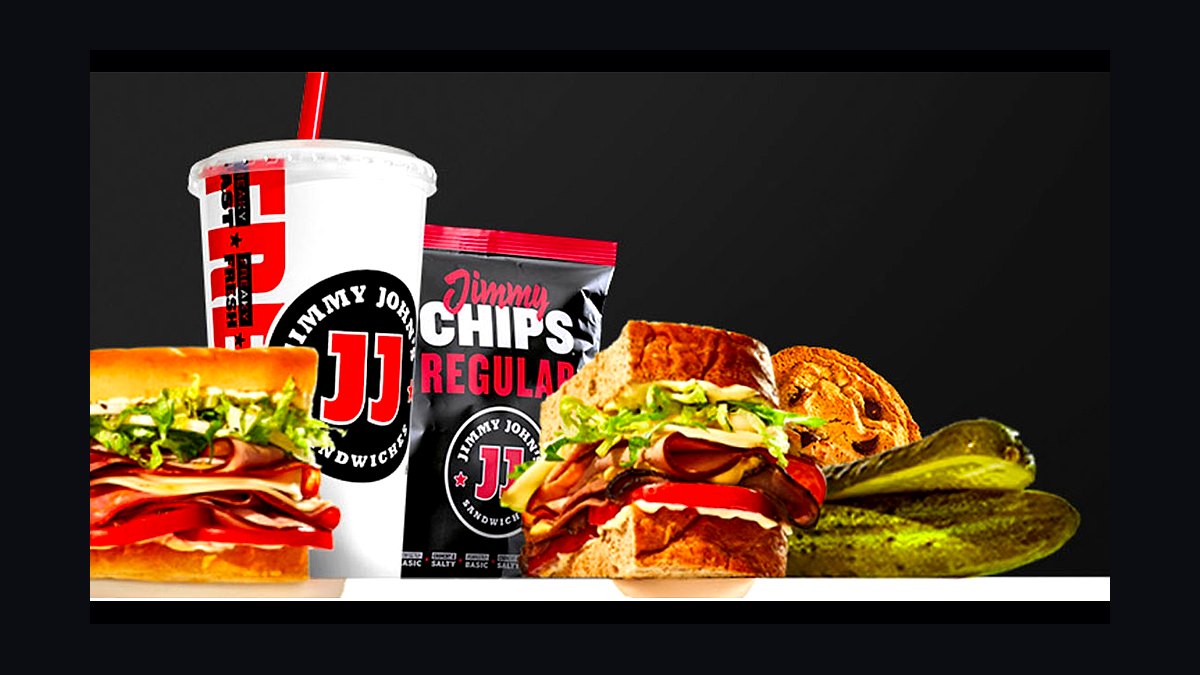
A sandwich shop carries largely fixed costs: rent, base staffing, insurance, equipment financing. Its revenue, by contrast, is compressed into a narrow daily window because the format has no strong dinner, breakfast, or weekend occasion — no espresso program, no all-day menu extensions, historically no breakfast daypart. That means the store's entire annual P&L outcome is determined by how much volume gets crammed into roughly 15 hours a week of true peak demand (weekday lunch) plus whatever catering an owner personally books to fill the gaps. A site with heavy daytime office density runs near capacity during that window every single day. A site without it runs at a fraction of capacity during the only hours the format actually sells, and the fixed costs do not shrink to match.
This is why the franchisor's own site-selection criteria — daytime population, competitor density, parking turnover, drive-thru viability where available — function less like a marketing checklist and more like the actual profit-and-loss engine of the business. An owner who treats site selection as "find an available space with acceptable rent" instead of "find where 1,500-plus people already eat lunch within walking distance" is not making a marginal mistake; they are choosing which of two very different businesses they are about to run. The same mechanism explains why delivery radius matters almost as much as walk-in traffic: a store inside a tight 1.5-mile delivery zone with dense office parks converts third-party and in-house delivery orders into incremental lunch volume without adding dining-room seats, while a store in a sprawling suburban zone burns driver time and fuel reaching customers who could have been captured by a tighter, denser site instead.
Real Numbers, Ranges, and Benchmarks
The 2025 FDD, issued March 27, 2025 and amended July 18, 2025, is the anchor document, and its Item 7 and Item 19 disclosures give a buyer a real financial model rather than a marketing estimate.
Initial investment (Item 7):
| Line Item | Low | High |
|---|---|---|
| Franchise fee | $35,000 | $35,000 |
| Real estate / lease deposits | $4,500 | $30,000 |
| Build-out & leasehold improvements | $145,000 | $325,000 |
| Equipment, signage, POS | $90,000 | $155,000 |
| Opening inventory | $7,500 | $13,000 |
| Insurance & permits | $3,500 | $12,500 |
| Training & travel | $4,500 | $11,000 |
| Grand opening marketing | $10,000 | $15,000 |
| Working capital (3 months) | $66,200 | $131,700 |
| Total | $366,200 | $728,200 |
Ongoing economics on a median unit (Item 19): median AUV is $935,022, with an average of $986,095 across franchised units in the 2024 reporting period. A 6% royalty and a 2% brand fund contribution come off the top before any operating costs, leaving roughly $56,100 and $18,700 respectively deducted from a median-volume store. Food cost runs 28-31% under the Inspire Brands supply chain, labor runs 27-30% and is meaningfully tighter in $15-plus minimum-wage states, and occupancy typically lands 8-11% for the corner or endcap retail format the brand favors. Net that out and store-level EBITDA lands in a 15-18% band — roughly $140,000-$168,000 on a median-volume unit — with payback in the 4.8-6.8-year range according to third-party franchise-economics trackers.
Two qualifiers matter more than the headline numbers. First, the $986,095 average is skewed upward by mature, top-quartile urban units; a new 2027 opening in a suburban market typically ramps to $650,000-$800,000 in its first year, not the system average, so underwriting to the median minus roughly 15% is the more conservative and realistic planning assumption. Second, the franchisor's stated minimums — $200,000 liquid, $1,000,000 net worth — are floor requirements, not comfortable operating minimums. Owners who close near the $366,200 low end of Item 7 with only $50,000 of working capital commonly run out of cash in month 7-9, before lunch-rush volume has stabilized enough to carry the business on its own. A useful underwriting habit borrowed from SBA lenders is to model three scenarios — a slow ramp (first-year AUV at 60% of median), a base case (80% of median), and a strong-site case (100%-110% of median) — and confirm the loan and lease still service comfortably under the slow-ramp case, since that is the scenario a first-time franchisee is statistically more likely to hit than the strong-site case.
Trade-offs Against Other Sandwich Concepts
Before signing, it is worth pricing Jimmy John's against the other franchise paths a buyer with $400,000-$600,000 in liquid capital could take, because the decision to open is really a choice between several adjacent options, not a yes/no on one brand.

Jersey Mike's currently posts the strongest same-store sales momentum in the category, roughly +6.4% in 2026, and a materially higher median AUV near $1.3 million, though its Item 7 range runs comparably wide ($237,000-$1.05 million) and territory waitlists are longer. Penn Station East Coast Subs offers a lower royalty (5% versus Jimmy John's 6%) and AUVs in the $850,000-$1.1 million range on a smaller Item 7 ($300,000-$525,000), trading brand recognition for better unit economics, particularly in Midwest college-town markets. Firehouse Subs, under Restaurant Brands International ownership, runs $1.0 million-plus AUVs with strong catering attachment and the same kind of supply-chain leverage Jimmy John's gets from Inspire Brands. Capriotti's is smaller and more regional but posts strong AUV-per-square-foot in markets like Las Vegas and Phoenix on a lower $200,000-$650,000 Item 7. An independent sandwich shop avoids the $35,000 franchise fee and the combined 8% royalty-plus-brand-fund drag entirely, but gives up the supply chain, the national marketing fund, and the proven playbook — and independent restaurants fail at a rate approaching 60% over five years, compared with roughly 20% for top-quartile franchise systems.
The comparison also extends upstream and downstream of the sandwich category itself. Buyers weighing Jimmy John's against a coffee-and-breakfast concept (Dunkin', biscuit chains) are really weighing a single-daypart model against a two-daypart model — breakfast concepts spread fixed costs across a morning rush and a smaller midday tail, which can smooth cash flow but demands earlier staffing and a different labor cost curve. Buyers weighing it against a full-service casual-dining franchise are trading Jimmy John's lower build-out and faster unit economics for a format with dinner and weekend dayparts but roughly double the initial investment and a much longer path to store-level profitability. None of these adjacent categories is strictly better — each trades capital intensity for daypart diversification in a different ratio — but understanding where Jimmy John's sits on that spectrum (low capital, single daypart, fast but shallow payback) clarifies why the trade-area requirement is so unforgiving: a concept with only one profitable window per day has no room to absorb a mediocre site the way a multi-daypart concept can.
Common Pitfalls and How to Avoid Them

The failure pattern across underperforming Jimmy John's units is consistent enough to name specifically, and every one of them is avoidable with the right underwriting discipline before signing.
The most common mistake is hiring a general manager on day one instead of operating the store personally. Without an owner on the line, food cost tends to drift toward 33%, weekend shift coverage becomes unreliable, and catering — which runs 18-24% of sales at top-quartile units versus under 8% at bottom-quartile ones — never gets actively sold, because nobody is cold-calling HR coordinators and hospital schedulers to book it. The fix is straightforward but non-negotiable: plan to work the store yourself for the first 24 months, full stop, before any GM transition.
A second pitfall is choosing a market with the wrong daypart profile. Tourist corridors, beach towns, and dinner-and-entertainment districts do not match Jimmy John's lunch-heavy traffic pattern, and a franchisee who opens there is paying a fixed lease to cover hours the format was never built to fill. Validate the daytime population and competitor density before signing a lease, not after.
A third pitfall is undercapitalization: closing near the $366,200 low end of Item 7 while carrying only minimal working capital leaves no runway for the months it takes lunch volume to ramp, and cash-flow failure in month 7-9 is a documented pattern rather than a rare accident. Budget working capital toward the higher end of the Item 7 range, not the low end. A fourth pitfall is opening in a high-minimum-wage state — California, Washington, parts of New York — without a pricing or staffing plan built around 350-500 basis points of added labor cost; several California operators have closed units rather than continue absorbing that compression. A fifth, subtler pitfall is underestimating how much of the catering upside depends on the owner's own outbound selling rather than the store's foot traffic; catering does not walk in the door on its own, and franchisees who wait for it to materialize passively typically see it stall under 10% of sales indefinitely. Finally, franchisees who expect menu flexibility — limited-time offers, breakfast, an espresso line — outside what Inspire Brands approves tend to damage the relationship with their franchise business consultant and lose access to co-op marketing dollars; going in aligned with the brand's deliberately narrow menu discipline avoids an entirely preventable source of friction.
Related questions
Should I open or buy a Jersey Mike's franchise in 2027? Jersey Mike's carries a higher median AUV (roughly $1.3 million) and stronger recent same-store sales growth than Jimmy John's, but territory waitlists are longer and franchisee selection is tighter, so timeline risk replaces some of the capital risk.

Is a Firehouse Subs franchise a better bet than Jimmy John's? Firehouse posts $1.0 million-plus AUVs and strong catering attachment under RBI ownership, making it a reasonable alternative for buyers prioritizing catering revenue over Jimmy John's lunch-speed positioning.
How much SBA financing do I need for a sandwich franchise in 2027? Most buyers pair $150,000-$300,000 in personal cash with a 70% SBA 7(a) loan at roughly prime-plus-2.5-3.0%, keeping annual debt service in the $50,000-$60,000 range on a typical Jimmy John's-sized build-out.
What daytime population do I need for a lunch-driven QSR franchise? Most fast-casual lunch concepts, Jimmy John's included, want at least 1,500 daytime workers within a half-mile radius before a site is considered viable for full-capacity lunch volume.
Is it better to buy an existing Jimmy John's location or build a new one? An existing, already-ramped store skips the 12-18 month buildup period but usually prices in three to four times trailing EBITDA on top of the lease, so total entry cost often converges with a new build despite the lower risk.
FAQ
Is a Jimmy John's franchise profitable in 2027? Most franchisees see store-level EBITDA margins of 15-18%, which on median revenue of around $935,000 translates to roughly $140,000-$170,000 in operator cash flow before debt payments. Absentee owners typically see meaningfully lower returns than owner-operators.

How much money do I need to open a Jimmy John's? The 2025 FDD shows a total initial investment range of roughly $366,200 to $728,200, including a $35,000 franchise fee. Most qualified buyers bring $400,000-$600,000 in liquid capital and finance the remainder.
How long does it take to recoup my investment? Realistic payback periods run 5-7 years for owner-operators, given the upfront build-out costs relative to typical cash flow — longer than category leaders like Jersey Mike's on comparable capital outlay.
What ongoing fees does a Jimmy John's franchisee pay? A 6% royalty on gross sales plus a 2% brand fund contribution, both deducted from top-line revenue before any operating costs or profit are calculated.
Can I be an absentee owner of a Jimmy John's? The franchisor strongly prefers owner-operators for at least the first 24 months. Absentee ownership after that point is possible but is associated with lower EBITDA and slower payback in practice.
How does Jimmy John's compare financially to other sandwich franchises? Jimmy John's median AUV of roughly $935,000 is solid but its payback timeline is slower than Jersey Mike's, Firehouse Subs, or Penn Station on similar capital, largely because those brands post either higher AUVs or lower royalty rates.
Sources
- Jimmy John's Franchise Disclosure Document (FDD), issued March 27, 2025, amended July 18, 2025 — Items 5, 7, 19, 20
- jimmyjohnsfranchising.com/investment
- 1851franchise.com — Jimmy John's Franchise Costs, Fees & Profit Analysis
- franchisepayback.com/franchise/jimmy-johns
- franchisechatter.com — Jimmy John's Franchise Review
- qsrmagazine.com — Inspire Brands and Jimmy John's global expansion coverage
- franchisetimes.com — How Jimmy John's Evolved in a Crowded Sandwich Category
- ifa.org — International Franchise Association, Franchise Economic Outlook
- sba.gov — SBA 7(a) loan program guidance
Related on PULSE
This page will be disappearing soon. Save it to your device for $1 — or read it free while it is here.
@Kory-White- · if Venmo asks, the last 4 of my number are 2012
This page is gone.
This one is off the shelf now. $1 keeps it on your phone for good — the whole page, pictures and diagrams included.
 franchiseShould I open or buy a Jiffy Lube franchise in 2027?
 franchiseShould I open or buy a Chipotle franchise in 2027?
 franchiseShould I open or buy a Massage Envy franchise in 2027?
 franchiseShould I open or buy a Servpro franchise in 2027?
 franchiseShould I open or buy a Marco's Pizza franchise in 2027?
 franchiseShould I open or buy a Kumon franchise in 2027?
 franchiseShould I open or buy a Bruster's Real Ice Cream franchise in 2027?
 franchiseShould I open or buy an Anytime Fitness franchise in 2027?
 franchiseShould I open or buy a Dunkin' franchise in 2027?
 franchiseShould I open or buy a McAlister's Deli franchise in 2027?