


Should I open or buy a Pizza Hut franchise in 2027?
Quality
Certified
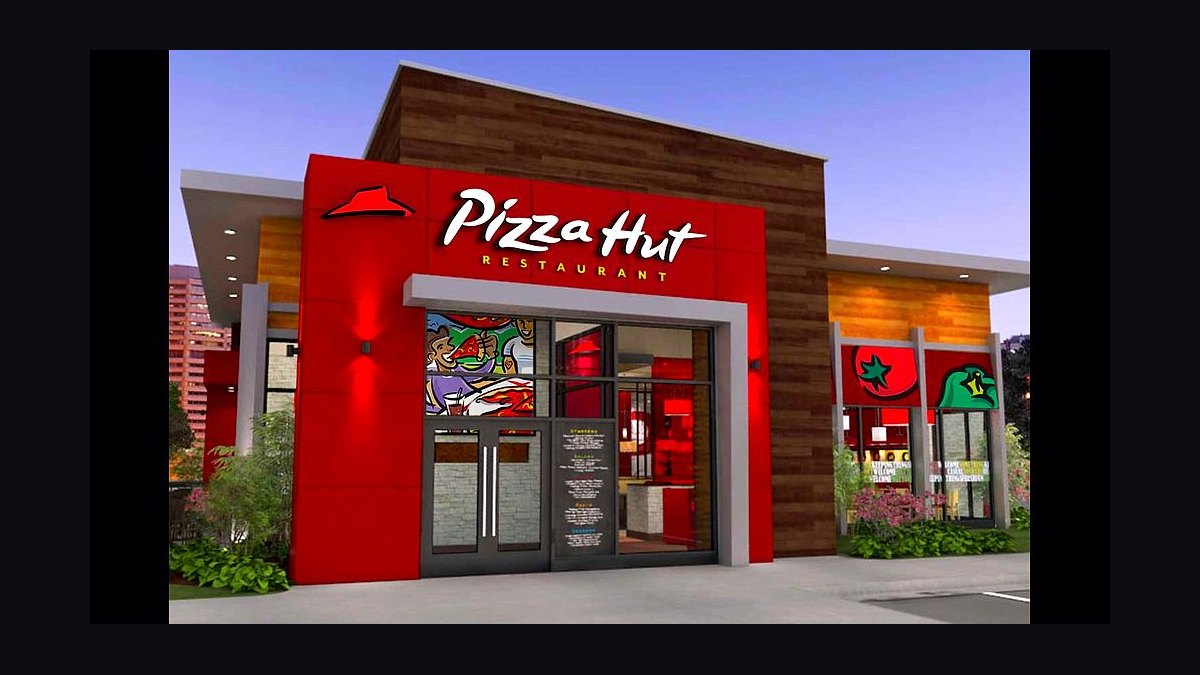
Probably not — unless you can buy 5+ existing Pizza Hut units at a distressed multiple (3.5-4.5x EBITDA) AND you have a turnaround operator's stomach. A new ground-up Pizza Hut Delco or Express runs $782,000 to $2,053,500 all-in (FDD 2025 Item 7), with a $25,000 franchise fee, 6% royalty, and 4.75% national/local marketing fee. Average mature-store AUV sits at $1.07M (FDD 2025 Item 19), down from $1.21M in 2017 — a brand contraction story. Conservative Year-1 cash flow on a single new build is negative $40K to positive $80K. Breakeven on a single new build is 5-8 years; on a distressed acquisition of 10+ units, 3-4 years. With Yum closing 250 units in 2026 and Domino's eating share, only multi-unit consolidators with cheap real estate win here.
The Real Numbers
Pizza Hut's 2025 Franchise Disclosure Document (FDD) — the latest filed with the FTC and state regulators, governing 2026-2027 new openings — paints a brutally honest picture. Item 7 (Estimated Initial Investment) and Item 19 (Financial Performance Representations) are the only two pages that matter for an underwriting decision. Below are the real, line-item 2025 FDD numbers that any 2027 buyer will see in their own franchise package.
| Cost Bucket | Low | High | Notes |
|---|---|---|---|
| Initial Franchise Fee | $25,000 | $25,000 | Per restaurant, non-refundable (FDD Item 5) |
| Real Estate / Lease Deposits | $15,000 | $250,000 | Varies by market; build-to-suit vs. existing |
| Building / Leasehold Improvements | $200,000 | $1,150,000 | Delco (Delivery/Carryout) on low end |
| Equipment, Furniture, Signage | $260,000 | $400,000 | Ovens, makelines, POS, walk-in cooler |
| Opening Inventory | $9,500 | $13,500 | First 30 days of food + paper |
| Training Expenses | $5,000 | $25,000 | Travel + lodging for required Plano, TX training |
| Insurance (3 months) | $4,500 | $15,000 | GL, workers' comp, property |
| Working Capital (3 months) | $40,000 | $150,000 | Payroll, utilities, rent buffer |
| Misc / Permits / Pre-opening | $20,000 | $25,000 | Liquor (where applicable), licenses |
| TOTAL INITIAL INVESTMENT | $782,000 | $2,053,500 | Per FDD 2025 Item 7 |
Ongoing fees ride on top of every dollar sold: 6.0% royalty, 4.75% combined national + local marketing contribution, plus technology fees of roughly $400-700/month for the Pizza Hut POS, online ordering, and loyalty stack.
Revenue reality (Item 19 — 2025 FDD): Median annual gross sales for the 3,961 traditional Pizza Hut U.S. restaurants open the full 2024 fiscal year was $1,067,925. The top quartile cleared $1.45M; the bottom quartile sat at $701,000. EBITDA margins at the store level run 8-12% for well-run multi-unit operators (per Flynn Group and former Muy Pizza Tejas disclosures) and 2-6% for single-unit franchisees absorbing 100% of G&A. Payback period on a $1.4M new build assuming a $1.0M AUV and 8% EBITDA: 17.5 years on EBITDA alone, which is why almost no new ground-up Pizza Huts have opened in the U.S. since 2019. The only economic play is buying existing distressed units at 3.5x-4.5x trailing EBITDA, which is roughly $280K-$400K per unit in today's secondary market (down from 6x-7x pre-COVID).
Who Wins With This Business
Three operator profiles consistently make money on Pizza Hut in 2027, and all three look almost nothing like a first-time franchisee. First, the multi-unit consolidator with cheap labor markets — Flynn Group (acquired 900+ NPC units in 2021 for $816M) wins because they spread regional supervisor, payroll, and insurance G&A across 15-30 stores per district manager, dropping store-level G&A from 6-7% to under 3%. Second, the strip-center landlord-operator — if you already own a 1,800-sf endcap with a 20-year amortized mortgage and a basis under $150/sf, your occupancy cost drops from 8% to 3% of sales, recovering most of the brand's margin loss. Third, the rural-market sole operator in a town under 25,000 population where there's literally no Domino's within 15 miles and Pizza Hut is the default Friday-night order — these units often run $1.3M+ AUV with 14-17% store EBITDA because delivery aggregator commissions are minimal and labor costs $2-3/hour less than urban builds. A common thread: all three operators bought existing units, never built ground-up since 2019, and run lean Delco (delivery/carryout) formats rather than full dine-in.

Who Loses With This Business
The losers are predictable and they lose big. First-time, single-unit, new-build operators signing a 20-year lease in a major metro at $28-$45/sf triple-net are the textbook bankruptcy case — NPC International (1,227 units) filed Chapter 11 in July 2020 with $903M of debt after AUVs slipped from $1.21M to under $1M while occupancy and labor climbed. Operators who borrowed 70%+ of build cost at floating rates north of 8.5% in 2024-2026 are now servicing $90K-$140K/year of debt on a unit clearing $70K-$110K of EBITDA — a negative free cash flow trap. Urban operators competing head-to-head with Domino's lose on delivery times (Pizza Hut's average delivery clocks 34 minutes vs. Domino's 27) and on digital ordering UX (Pizza Hut's app review average sits at 3.6 stars vs. Domino's 4.7). Anyone counting on Yum's national marketing fund to drive traffic — the 4.25% national contribution is being out-spent 2.4-to-1 per unit by Domino's because Domino's has more units paying into a similar percentage. Finally, operators who skipped a unit-economic audit before signing — the 250 closures Yum announced for 2026 are heavily concentrated among units that should never have been allowed to renew.

2027 Market Conditions
The 2027 Pizza Hut opportunity exists only because the brand is in transition. Yum! Brands announced in Q4 2025 that it is reviewing strategic alternatives for Pizza Hut, including a potential divestiture to private equity — Bloomberg and QSR Magazine reporting throughout late 2025 and into 2026 confirm Roark Capital, Sycamore Partners, and a Carlyle-led consortium are in the data room. A sale closing in 2026 or 2027 likely resets the franchise relationship: new ownership typically rebases marketing investment, simplifies the menu, and offers incentive deals to franchisees willing to commit to remodels. The Hut Forward initiative, launched late 2025, is closing 250 underperforming units, refreshing the logo (the red roof is back), and pushing a new dough recipe to all 5,800+ U.S. units by Q3 2027. Pizza category economics are favorable at the macro level — the U.S. pizza market hit $50.7 billion in 2024 (IBISWorld) and grew to $52.8B in 2025, projected at $54.4B in 2027 — but the growth is concentrated at Domino's, regional independents, and the fast-casual segment (MOD, Blaze). Pizza Hut's share of QSR pizza fell from 18% in 2019 to roughly 12.5% in 2025, while Domino's climbed from 19% to 23.3%. Labor cost outlook for 2027 is the single biggest swing variable — federal minimum stayed at $7.25, but 22 states are above $12/hr and California-specific QSR minimum sits at $20/hr, hammering coastal unit economics.
The 90-Day Decision Tree
A disciplined 90-day evaluation kills bad deals before earnest money is at risk.
- Days 1-10: Pull the FDD and underwrite Item 19 honestly. Request the full 2025 Pizza Hut FDD from a franchise broker or directly from Pizza Hut, LLC. Build a P&L using the bottom quartile $701K AUV, not the median. If the deal doesn't work at the 25th percentile, walk away.
- Days 11-25: Validate the specific unit(s). Pull 3 years of trailing P&Ls and Z-tapes from the seller. Verify daypart mix, third-party delivery commission as a % of sales, and the labor schedule for the last 8 weeks. Red flag: any unit where delivery aggregator commissions exceed 9% of total sales or labor exceeds 32%.
- Days 26-40: Site visit the trade area at three dayparts. Friday 6-8 PM, Saturday lunch, Tuesday 7 PM. Count cars in the Domino's parking lot within a 3-mile radius. Pull Placer.ai or SafeGraph foot-traffic data on the unit and its three nearest competitors.
- Days 41-55: Underwrite real estate separately. If buying, get the lease abstract and 5-year occupancy projection. Occupancy over 10% of sales is a dealbreaker unless you're buying the building.
- Days 56-70: Reference-check with 3 current franchisees, ideally ones who exited a unit in the last 18 months. Ask: would you buy this unit at this price today? If 2 of 3 say no, walk.
- Days 71-85: Model debt service at 8.5% with 80% LTV and verify DSCR exceeds 1.35x at the bottom-quartile AUV.
- Days 86-90: Final go/no-go with your CPA and franchise attorney, never the seller's broker. If a clean DSCR isn't there, negotiate the price down or walk.
Alternative Plays

If the Pizza Hut math doesn't pencil, three nearby plays often do. Marco's Pizza has a smaller footprint ($335K-$750K all-in), a 5.5% royalty, and AUVs averaging $908K with higher EBITDA margins (11-14%) because the brand is still in growth mode with stronger digital tools. Donatos (a regional Midwest brand) runs $430K-$680K all-in with rapid expansion in non-traditional venues (airports, college campuses). A non-pizza alternative worth examining is Crumbl Cookies — total investment $329K-$619K, average net sales $1.7M+ (2024 FDD Item 19), but franchise availability is now tightly restricted to existing operators. For investors with $3M+ liquid, buying a 4-6 unit Wingstop package in a secondary market clears 17-22% store EBITDA versus Pizza Hut's 8-12%, with a lower buildout per unit ($410K-$890K). The pure-financial alternative: deploy the same $1.5M into a non-franchise real estate triple-net lease deal with a credit-rated tenant — boring, but a 6.5-7.5% cap rate with no operational risk often beats a single Pizza Hut unit's risk-adjusted return.
FAQ
What is the total investment to open a new Pizza Hut franchise? The all-in cost for a new ground-up Pizza Hut Delco or Express ranges from roughly $782,000 to $2,053,500, per the 2025 FDD Item 7. This includes the $25,000 franchise fee, build-out, equipment, and initial inventory. Actual costs vary significantly by location size and market conditions.
How much can I expect to earn in the first year? Conservative Year-1 cash flow for a single new build is typically between negative $40,000 and positive $80,000. Many new units operate at a loss initially due to ramp-up time and high startup expenses. Profitability usually improves after the first 12–18 months.
How long until I break even on a Pizza Hut franchise?
For a single new build, breakeven generally takes 5 to 8 years. If you acquire 10 or more existing distressed units at a favorable multiple (3.5–4.5x EBITDA), breakeven can shorten to 3–4 years. The timeline heavily depends on location, operational efficiency, and market conditions.
Is Pizza Hut still growing, or is it shrinking? The brand has been contracting in recent years. Average mature-store AUV dropped from about $1.21 million in 2017 to $1.07 million in 2025. Yum Brands closed roughly 250 Pizza Hut units in 2026, and Domino's continues to gain market share. Growth opportunities are limited to select markets.
What are the ongoing fees for a Pizza Hut franchise? You pay a 6% royalty on gross sales and a combined national/local marketing fee of 4.75% of sales. These fees are standard across most Pizza Hut franchise agreements. They apply regardless of whether the store is profitable.
Who is most likely to succeed with a Pizza Hut franchise in 2027? Multi-unit operators with experience turning around distressed assets and access to cheap real estate have the best chance. Single-unit new builds are high-risk with long payback periods. The model works best for consolidators buying 5+ existing units at a discount, not first-time franchisees.
Bottom Line
Pizza Hut in 2027 is not a startup story — it's a turnaround story. The math does not work for a first-time franchisee building a single new unit at $1.5M all-in to chase a $1.0M AUV with 8% store EBITDA and a 6% royalty drag. It does work for experienced multi-unit operators buying 5-15 distressed units at 3.5x-4.5x EBITDA, particularly in rural and tertiary markets where Domino's is weak, occupancy is cheap, and labor costs are 20-30% below coastal metros. The strategic clock is loud: Yum's pending decision on a divestiture, the 250-unit closure plan, and the brand's relaunch will reshape franchisee economics within 18 months. If you are not a turnaround operator with $3M+ liquid, a regional supervisor bench, and a real estate partner ready to negotiate leases — choose a different brand. Marco's, Wingstop, or a private real estate deployment will deliver better risk-adjusted returns than chasing the red roof.
Sources
- Pizza Hut Franchise Review 2025: Costs, Fees, News, Average Revenues and/or Profits — Franchise Chatter
- Pizza Hut Franchise FDD, Profits & Costs (2025) — Sharpsheets
- Pizza Hut Franchise Costs, Fees, and Profit Data for 2026 — 1851 Franchise
- Pizza Hut to close 'underperforming' restaurants — Fox Business
- On Verge of Potential Sale, Pizza Hut Remains a Brand in Transition — QSR Magazine
- Domino's expects Papa Johns, Pizza Hut to close more stores — Restaurant Dive
- 1,200-Unit Pizza Hut Franchisee NPC Declares Bankruptcy — QSR Magazine
- NPC International — Wikipedia
- Domino's grabs the biggest slice of pizza chain market share — Bloomberg Second Measure
- Pizza Hut Sale? Yum! Brands Weighs Divestiture and 250 Store Closures — 1851 Franchise
- IBISWorld — Pizza Restaurants in the US Industry Report
- International Franchise Association (IFA) 2026 Franchising Economic Outlook
Related on PULSE
- Should I open or buy a Cheba Hut franchise in 2027?
- Best pizza franchises to buy in 2027
- Should I open or buy an East of Chicago Pizza franchise in 2027?
- Should I open or buy a Gatti's Pizza franchise in 2027?
- Should I open or buy a Pizza Ranch franchise in 2027?
- Should I open or buy a Snappy Tomato Pizza franchise in 2027?
This page will be disappearing soon. Save it to your device for $1 — or read it free while it is here.
@Kory-White- · if Venmo asks, the last 4 of my number are 2012
This page is gone.
This one is off the shelf now. $1 keeps it on your phone for good — the whole page, pictures and diagrams included.
 franchiseShould I open or buy a Servpro franchise in 2027?
 franchiseShould I open or buy a McAlister's Deli franchise in 2027?
 franchiseShould I open or buy a Papa John's franchise in 2027?
 franchiseShould I open or buy a UPS Store franchise in 2027?
 franchiseShould I open or buy a Wienerschnitzel franchise in 2027?
 franchiseShould I open or buy a Dunkin' franchise in 2027?
 franchiseShould I open or buy a Big O Tires franchise in 2027?
 franchiseShould I open or buy a Dairy Queen franchise in 2027?
 franchiseShould I open or buy an Auntie Anne's franchise in 2027?
 franchiseShould I open or buy a Little Caesars franchise in 2027?