


Should I open or buy a Dairy Queen franchise in 2027?
Quality
Certified
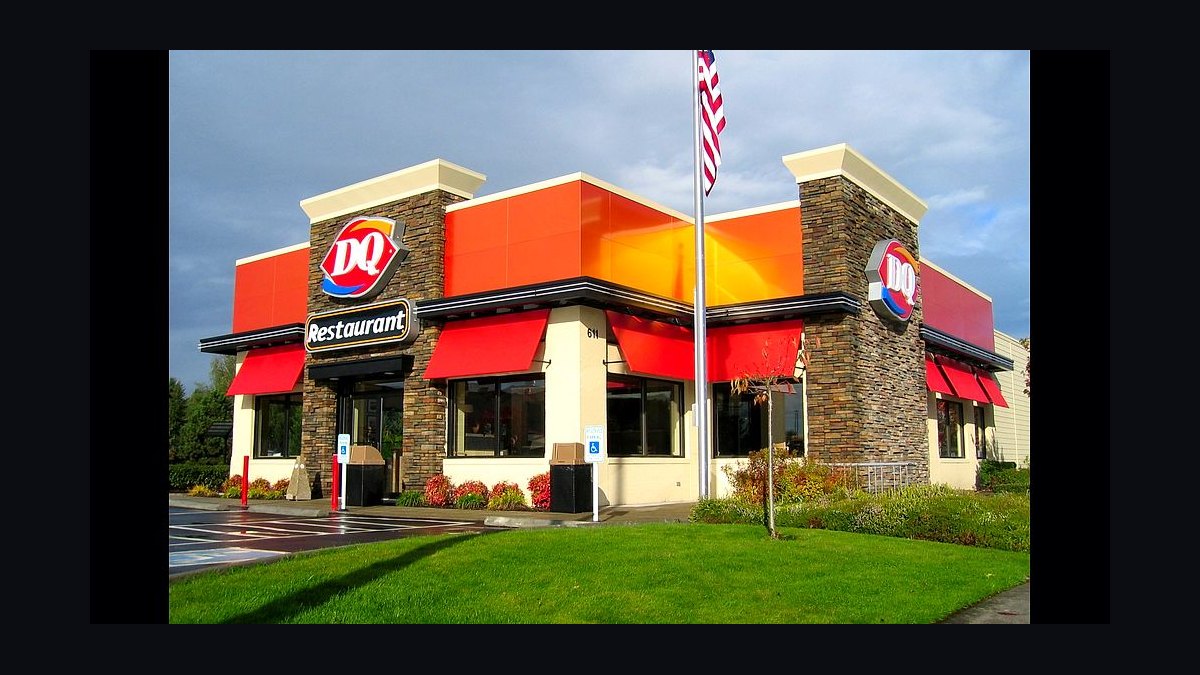
Open or buy a Dairy Queen Grill & Chill in 2027 if you can bring $650,000–$900,000 in liquid capital, a net worth above $1.5 million, and a willingness to commit to multi-unit development in the Midwest, Texas, or Mountain West. The $45,000 franchise fee, 4% royalty, and 5–6% marketing fee sit on top of a $1.52M–$2.54M build, with breakeven typically arriving in year three or four. Single-unit buyers in saturated coastal markets should think twice.
A Concrete Scenario That Frames The Problem
Picture a 42-year-old operator who currently runs two Taco Bell franchises in suburban Ohio, clears roughly $180,000 a year after debt service, and has $2.1 million in net worth with $720,000 sitting liquid after a cash-out refinance on a prior unit. That operator calls Dairy Queen's franchise development line in January 2027 asking the exact question this page answers: should they open or buy a Dairy Queen franchise, and does the brand's current incentive structure make this the right year to do it. The honest answer depends entirely on whether they can replicate what already works for them — multi-unit discipline, an existing general manager bench, and a bank relationship that can move fast on an SBA 7(a) loan — inside a new treat-led category they have never operated in.
This hypothetical operator is the profile Dairy Queen is actually selling to in 2026–2027. The brand's own franchise sales team is explicit that it favors existing multi-unit restaurant operators over first-time buyers, because a first-timer absorbing a $1.5M–$2.5M construction budget, a seasonal demand curve, and a frozen-dessert supply chain all at once is a materially higher default risk than an operator who already knows how to hire a $70,000–$95,000 GM, manage a P&L through a slow fourth quarter, and negotiate a construction contract. The scenario sharpens the real decision: this is not "should I open a restaurant," it is "should I add a Dairy Queen Grill & Chill to a portfolio, or take on my first restaurant ever, in a year when corporate is paying cash to multi-unit developers and only lukewarm attention to single-unit ones."
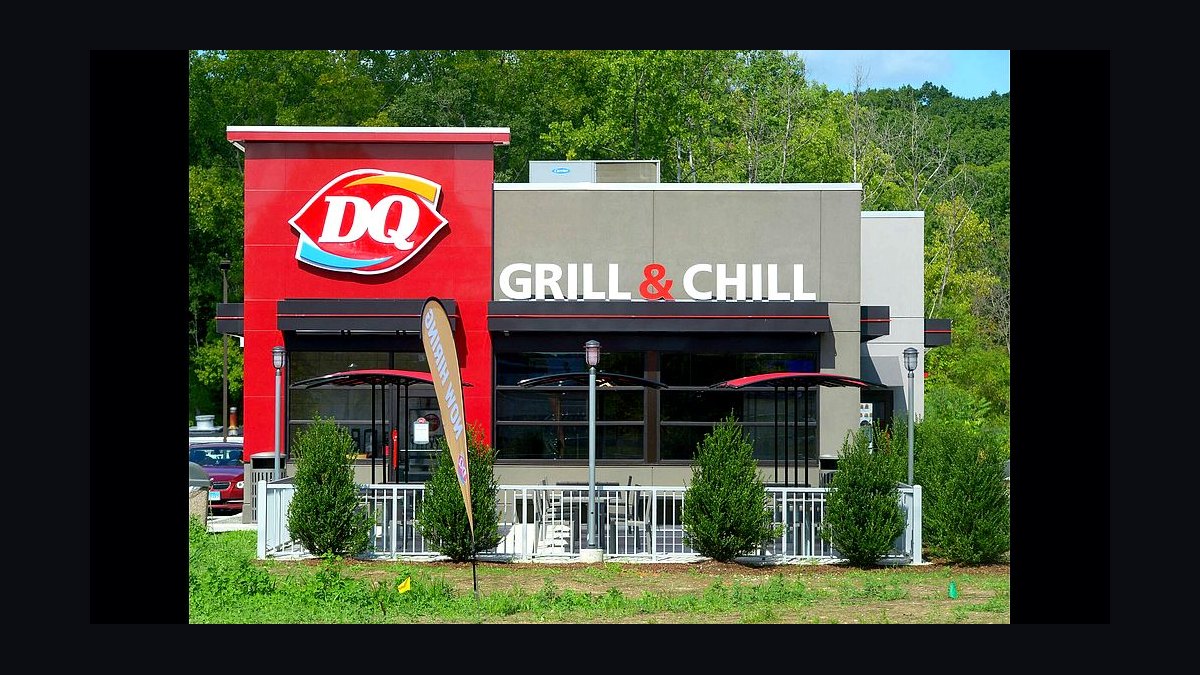
A second version of the same scenario — a first-time buyer, $420,000 liquid, no restaurant experience, eyeing a single infill lot in a coastal metro with no room for a drive-thru — is the profile that most often ends up disappointed three years later. The unit economics of a Grill & Chill lean hard on drive-thru volume and on a franchisee who can personally absorb 40–60 hours a week in year one without burning out before the business stabilizes. Framing the decision around which of these two scenarios actually describes you, rather than around the brand's marketing materials, is the single most useful filter before signing anything.
How The Mechanism Actually Works
The mechanism that actually determines whether opening or buying a Dairy Queen franchise pays off is the relationship between average unit volume and the fixed percentage load taken off the top every single month, regardless of profitability. Once the doors open, Dairy Queen collects 4% of gross sales as royalty and another 5–6% into the marketing fund — a combined 9–10% that comes out before the franchisee pays a single dollar of labor, dairy, or rent. That is a meaningfully higher combined load than McDonald's 4%+4%, which means the entire model only works if the unit's average unit volume clears roughly $1.3 million. Below that line, the same percentage take consumes a disproportionate share of a thinner gross margin, and the franchisee is working for the brand before working for themselves.
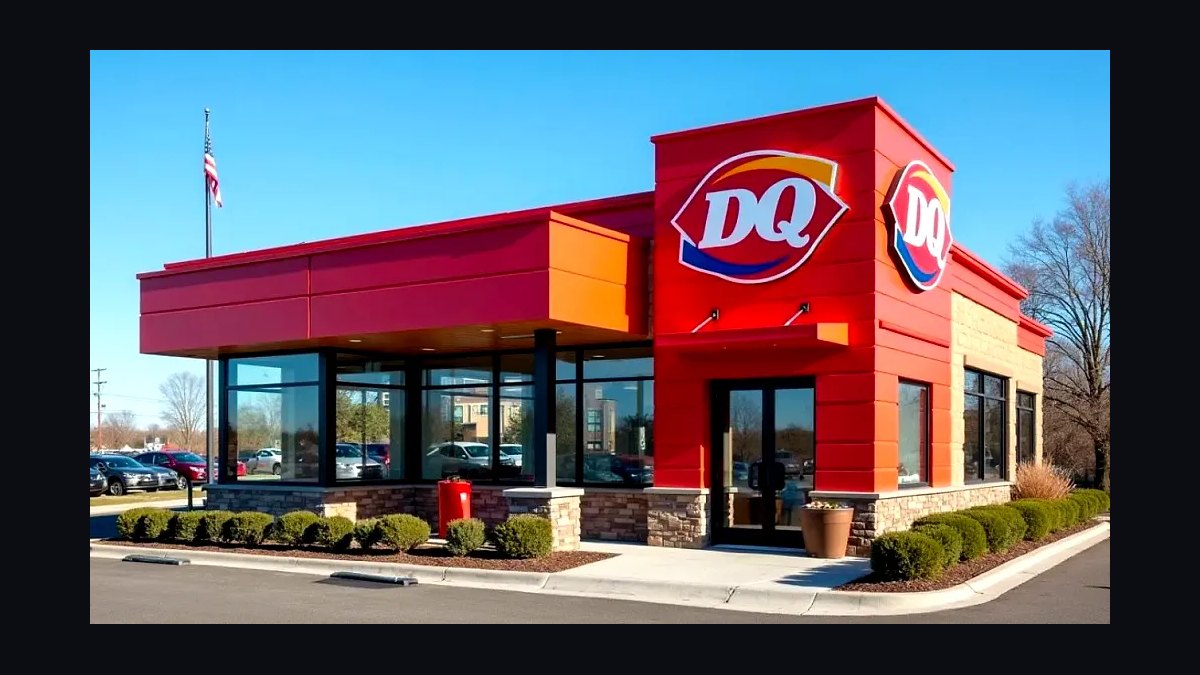
The second half of the mechanism is the construction-to-breakeven pipeline. A franchisee who signs the FDD pays the $35,000–$45,000 franchise fee up front, then moves into an 18-to-24-month site-approval and construction window where $1.52 million to $2.54 million gets deployed before a single sale occurs. During this window, DQ's internal site-approval team has to sign off on the location — a franchisee cannot simply pick an available lot, which is why the 90-day decision process below treats site approval as a gating step rather than a formality. Once open, the business needs roughly three to four years of $1.4M–$1.5M AUV performance at a 9–11% operator EBITDA margin to recover the initial capital outlay, assuming no catastrophic labor or dairy-commodity shock along the way.
The incentive layer corporate added for 2026–2028 changes the shape of this mechanism without changing its underlying math: a $150,000 opening cash incentive and a $200,000 second-store bonus do not raise AUV or lower the royalty, they simply inject cash at specific milestones that shortens the payback window for an operator who commits to multi-unit development. That is why the mechanism rewards multi-unit development so heavily in the current environment — the brand needs net unit growth toward its $10 billion 2030 systemwide sales target, and it is willing to pay cash to franchisees willing to open a second location within an 18-month window to get there.
Real Numbers, Ranges, And Benchmarks
The 2025 Franchise Disclosure Document, which governs most 2026 and 2027 openings until a 2026 FDD registers, gives a reasonably transparent Item 19 picture for the Grill & Chill format specifically — the broader DQ Treat ice-cream-only format runs on a different, lower cost and revenue curve and should not be confused with these figures.
- Franchise fee: $35,000–$45,000, due at signing, non-refundable in nearly all circumstances.
- Total initial investment (Item 7, excluding land): $1,516,200–$2,543,050, covering building and site work ($700,000–$1,300,000), equipment, signage and POS ($360,000–$510,000), opening inventory ($25,000–$40,000), and three months of working capital ($80,000–$150,000).
- Royalty: 4.0% of gross sales, paid monthly for the life of the agreement.
- Marketing fund contribution: 5.0–6.0% of gross sales, covering national and local co-op advertising.
- Reported Item 19 average unit volume: roughly $1.39M–$1.50M across the reporting pool of freestanding new-construction units opened 2015–2024, trending toward the top of that range in the most recent reporting years.
- Net worth requirement: $1.5 million or above.
- Liquid capital requirement: $400,000–$750,000, though the realistic range for a competitive candidate is closer to $650,000–$900,000 once a lender's own comfort margin is factored in.
- Operator EBITDA margin: 8–12%, with 9–11% a reasonable planning assumption for a stabilized unit.
- Year-one owner cash flow: a conservative $90,000–$160,000 at a $1.4M AUV, before debt service on construction financing.
- Payback period: three to five years for a single unit, compressed meaningfully for a franchisee who stacks the opening and second-store incentives.
- Second-generation conversion savings: $300,000–$500,000 off the new-build floor when converting a vacant Hardee's, Wendy's, or Burger King box, which is a large part of why DQ is actively subsidizing conversions in 2026–2027.
Regional benchmarks matter as much as the system-wide average. Texas carries roughly 600 units and real brand density; Minnesota, the brand's home market, carries around 120; Wisconsin, Missouri, and Tennessee round out the strongest Midwest cluster. A single-unit, urban-coastal buyer, by contrast, routinely underperforms the system AUV by 20–30%, which is the single biggest number in this entire analysis — it is the difference between a business that clears $1.4M and one stuck near $1.0M–$1.1M, and no amount of opening incentive fixes a structurally low-volume site.
Trade-Offs And Alternatives
Opening or buying a Dairy Queen is not a decision made in isolation — it should be run side by side against the realistic alternatives at the same capital tier, because the treat-led QSR category has several viable entry points at very different price points and risk profiles. The core trade-off inside the DQ system itself is single-unit versus multi-unit: a single Grill & Chill gets none of the cash-incentive stacking and carries the full 20–30% AUV underperformance risk if the site is anything less than excellent, while a two-or-three-unit commitment unlocks the $150,000 opening incentive plus the $200,000 second-store bonus, which can compress total payback by a year or more if both units perform near system average.
Outside the DQ system, the DQ Treat sub-format itself is worth considering for a lower-capital buyer: a $400,000–$900,000 all-in cost and $550,000–$800,000 AUV fits a strip-center inline space and a $200,000–$400,000 liquid-capital operator, but it forfeits the drive-thru moat that drives 65–75% of Grill & Chill sales in suburban locations. Culver's sits at the opposite end — a $2.6M–$5.6M Item 7 and AUV above $3.5 million produce stronger absolute unit economics, but the $5 million-plus net worth requirement and expected multi-unit commitment put it out of reach for most candidates evaluating DQ in the first place. Cold Stone Creamery ($121,000–$655,000 all-in, roughly $587,000 AUV, 6% royalty) and Baskin-Robbins (around $521,000 AUV, with Dunkin' co-branding available in some markets) sit below DQ on both capital requirement and absolute return, which makes them reasonable fallback options for a buyer who cannot clear the $650,000 liquid threshold. Crumbl, despite a lower $300,000–$600,000 entry cost and historically strong AUV, carries a viral-marketing dependency that has already cooled noticeably through 2026 and should be treated as higher-risk than any of the established treat brands. Sonic Drive-In, also under Inspire Brands, is the closest comparable in seasonality and drive-in mechanics but requires a similar $1.2M–$3.5M investment with a stronger national marketing budget behind it.
The honest trade-off summary: if the goal is wealth-building through a transferable, appreciating asset, DQ Grill & Chill and Culver's are the two real options above $1.5 million net worth, with DQ the more accessible of the two. If the goal is a lower-capital entry into the treat category with acceptable but lower absolute returns, DQ Treat, Cold Stone, or Baskin-Robbins are the honest comparisons — and a buyer should run all three pro formas before signing anything, because the 2027 incentive environment makes DQ temporarily more attractive than its underlying unit economics alone would justify.
Common Pitfalls And How To Avoid Them
The most expensive mistake a new Dairy Queen franchisee makes is site selection without a drive-thru. Drive-thru does 65–75% of sales in a suburban Grill & Chill, and a franchisee who signs for an urban infill lot without one should expect AUV in the $800,000–$1.0 million range while fixed costs — rent, labor, the royalty and marketing load — stay exactly where they would be at $1.4 million in sales. Avoid this by refusing to sign a lease or purchase agreement until DQ's site-approval team has confirmed drive-thru feasibility in writing, and by walking away from any "opportunity" site that requires a variance to add one later.
A second recurring pitfall is underfunding working capital. The FDD's own $80,000 floor is light relative to real-world year-one burn, which more commonly runs $120,000–$200,000 before a new unit stabilizes demand and staffing. Operators who finance to the FDD minimum are frequently forced into a second capital raise mid-year on worse terms than their original construction loan. Avoid this by building a pro forma with $150,000–$200,000 of working capital reserved from day one, not assumed to be available from early cash flow that may not materialize on schedule.
A third pitfall is buying an existing, tired unit without pricing the remodel honestly. A re-image and deferred-maintenance catch-up on an older Grill & Chill commonly runs $300,000–$600,000, and that cost sits entirely with the buyer, not the seller or the franchisor. Avoid this by having an independent contractor walk the property and price a full remodel before closing, not after — a franchise broker's estimate is not a substitute for a contractor's bid.
A fourth pitfall is building a labor budget on outdated wage assumptions. Wisconsin, Minnesota, and Illinois already sit in a $15–18/hour QSR labor market as of 2026–2027, and a pro forma built on $13/hour wages is dead on arrival the moment it meets real hiring conditions. Avoid this by pulling current Bureau of Labor Statistics QCEW data for the specific county before finalizing any labor line, and by stress-testing the pro forma at $18/hour regardless of what the current local rate happens to be.
A fifth and more subtle pitfall is ignoring the ice-cream-cake line of business. Cakes run 12–18% of AUV at top-performing units, and franchisees who treat them as an afterthought rather than actively merchandising them leave a genuinely high-margin revenue stream unclaimed. Avoid this by building cake merchandising into the opening training plan from day one rather than treating it as a year-two optimization. Finally, a sixth pitfall is signing without reading Item 20 closely — it lists every closure and transfer in the system over the last three years, and it is the single best leverage point a prospective buyer has before committing capital; skipping it in favor of Item 19's average-sales figures alone means missing the actual failure rate behind that average.
Related questions
How long does it take to open a Dairy Queen franchise from signing to grand opening?

Site approval, permitting, and construction typically run 18–24 months from signing the FDD to grand opening, longer in markets with slow municipal permitting or supply-chain delays on specialized equipment.
Does Dairy Queen finance any part of the construction cost?
No — Dairy Queen does not provide direct financing. Franchisees typically combine personal capital with an SBA 7(a) loan through a preferred lender, and the brand's incentive cash arrives after milestones, not up front.
Is a Dairy Queen franchise a good fit for a completely first-time business owner?
It is possible but materially riskier — DQ's own franchise sales process favors experienced multi-unit operators, and a first-timer should expect a steeper operational learning curve during the critical first 12 months.
How does seasonality affect cash flow for a new Dairy Queen owner?
Northern-market units see 65–70% of annual sales between April and September, so a new owner needs enough working capital reserved to cover thinner winter months without straining payroll or rent obligations.
What happens if I want to sell my Dairy Queen franchise later?
Transfers are permitted but require franchisor approval, and buyers typically value the unit on a multiple of EBITDA, so the pitfalls above — AUV, working capital discipline, and deferred maintenance — directly determine resale value years later.
FAQ
What is the total initial investment for a Dairy Queen franchise in 2027? The Item 7 range for a new freestanding Grill & Chill is $1.52 million to $2.54 million, excluding land. This covers construction, equipment, signage, and the $45,000 franchise fee, with actual costs varying by region and whether you build new or convert an existing building.
How much liquid capital do I need to qualify? You'll generally need $650,000 to $900,000 in liquid assets and a net worth above $1.5 million to be a competitive single-unit candidate. Multi-unit deals, which the brand currently favors, often require higher thresholds from both the franchisor and the lender.
What are the ongoing royalty and marketing fees? The royalty is 4% of gross sales, and the marketing fund contribution is 5–6%. Combined, that is 9–10% of revenue going to the franchisor before any operating costs are paid, which only works comfortably if your AUV stays near or above the system average.
Can I open a single unit, or is multi-unit development expected? You can open a single unit, but the 2026–2027 incentive structure strongly favors multi-unit commitments. Single-unit buyers in urban or coastal markets often see AUVs 20–30% below system average, while multi-unit operators in the Midwest, Texas, or Mountain West benefit from brand density.
What is a realistic timeline to breakeven? Most new builds reach breakeven in year three or four, assuming a $1.4–$1.5 million AUV and a 9–11% operator EBITDA margin. Year-one cash flow typically runs $90,000–$160,000, so reserves need to cover negative or thin cash flow through the first two years.
Are there current opening incentives worth factoring into the decision? Yes — Dairy Queen is offering a $150,000 opening cash incentive for new Grill & Chill locations plus a $200,000 second-store bonus for franchisees who commit to a second unit within an 18-month window. Both are tied to performance milestones, not guaranteed simply for signing.
Sources
- American Dairy Queen Corporation, 2025 Franchise Disclosure Document — Items 5, 6, 7, 19, and 20, dairyqueenfranchising.com
- Franchise Chatter, "DQ Grill & Chill Franchise Review 2025: Costs, Fees, News, Average Revenues and/or Profits," franchisechatter.com
- Restaurant Dive, "Dairy Queen adds $150K development incentive for food-focused stores," restaurantdive.com
- QSR Magazine, "Dairy Queen Targets $10 Billion by 2030 as Global Growth Continues," qsrmagazine.com
- Nation's Restaurant News, "Dairy Queen is giving cash to franchisees that open new locations," nrn.com
- Sharpsheets, "Dairy Queen Franchise FDD, Profits & Costs," sharpsheets.io
- International Franchise Association, Franchise Economic Outlook, franchise.org
- IBISWorld, US Ice Cream Production Industry Report, ibisworld.com
- Bureau of Labor Statistics, Quarterly Census of Employment and Wages, NAICS 722513, bls.gov
- Restaurant Business Magazine, "QSR Margin Pressure and Labor Inflation," restaurantbusinessonline.com
Related on PULSE
This page will be disappearing soon. Save it to your device for $1 — or read it free while it is here.
@Kory-White- · if Venmo asks, the last 4 of my number are 2012
This page is gone.
This one is off the shelf now. $1 keeps it on your phone for good — the whole page, pictures and diagrams included.
 franchiseShould I open or buy a Bruster's Real Ice Cream franchise in 2027?
 franchiseShould I open or buy a Meineke franchise in 2027?
 franchiseShould I open or buy a Massage Envy franchise in 2027?
 franchiseShould I open or buy a Little Caesars franchise in 2027?
 franchiseShould I open or buy a Take 5 Oil Change franchise in 2027?
 franchiseShould I open or buy a Roto-Rooter franchise in 2027?
 franchiseShould I open or buy a Subway franchise in 2027?
 franchiseShould I open or buy a Mac Tools franchise in 2027?
 franchiseShould I open or buy a Cold Stone Creamery franchise in 2027?
 franchiseShould I open or buy a Papa John's franchise in 2027?