


Should I open or buy a Jeremiah's Italian Ice franchise in 2027?
Quality
Certified
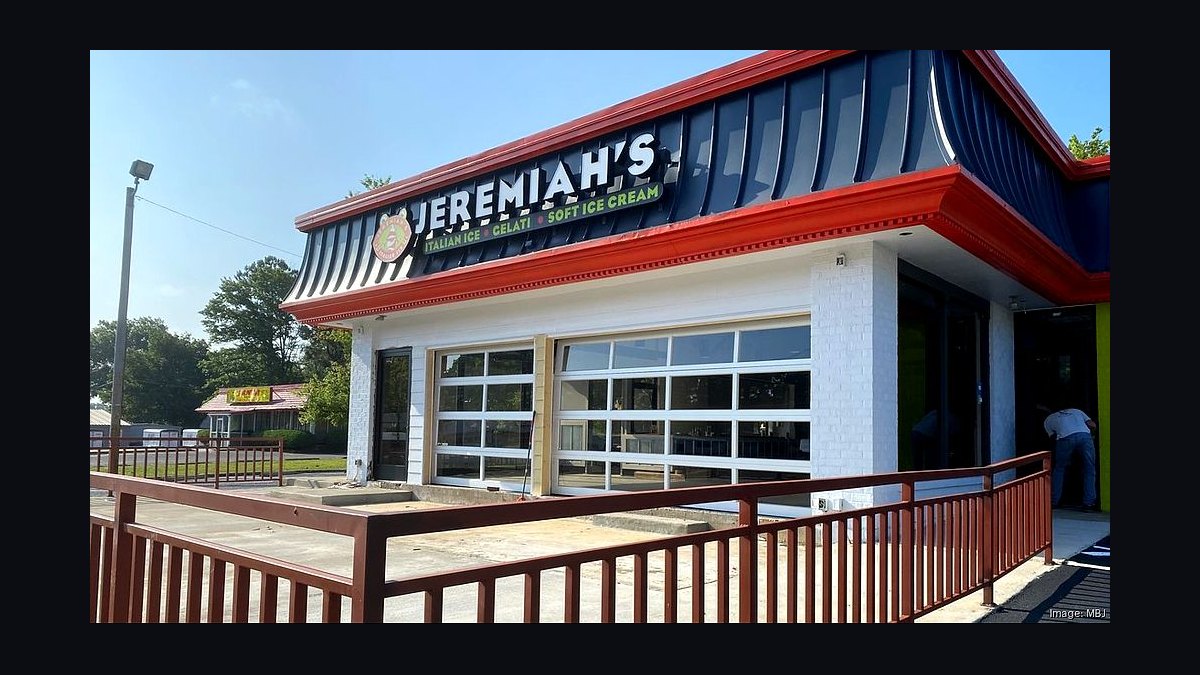
Open a Jeremiah's Italian Ice franchise in 2027 if you have $150,000–$300,000 liquid capital, live in a Sunbelt market with 220+ frozen-treat days, and can personally supervise seasonal hourly labor for two summers. Expect a $295,000–$745,000 total investment, 6% royalty, 1% brand fund, and 2024 median net sales of $436,373. Conservative Year-1 owner-operator cash flow runs $55,000–$90,000.
What a First-Year Owner-Operator Actually Experiences
Imagine you are a 42-year-old former regional manager for a QSR chain living in Charlotte, North Carolina. You have $180,000 in liquid savings, a $700,000 home with equity, and a spouse willing to handle payroll and scheduling. You sign a franchise agreement in January 2027, pay the $30,000 fee, and begin a 90-day construction timeline on a 1,400-square-foot endcap in a grocery-anchored strip center with 24,000 cars per day of drive-by traffic. Your build-out costs land at $380,000 — mid-range on Item 7 — and you finance $400,000 via an SBA 7(a) loan at 11.25% over 10 years.
You open in mid-April, just before the peak season. For the first eight weeks, you work 70-hour weeks: opening the shop at 9:00 AM, managing a crew of six high-school and college students through lunch and dinner rushes, closing at 10:00 PM, then doing prep and cleaning until midnight. Your spouse handles the schedule, orders supplies through Toast POS, and reconciles daily sales. By July, you have trained a shift leader to handle closing shifts three nights per week, dropping your hours to 55. Your July net sales hit $62,000 — the strongest month of the year. By October, as temperatures drop, you reduce hours and lay off two part-time staff. Your first-year net sales land at $412,000 — slightly below the system median because you are a new location building a customer base. After paying the 6% royalty ($24,720), 1% brand fund ($4,120), local marketing ($14,420), rent and CAM ($39,140), hourly labor ($115,360), COGS ($105,060), and all other operating expenses, your pre-debt cash flow is approximately $68,000. Your SBA debt service consumes $66,800 per year. Your true free cash flow is $1,200 — but you did not pay yourself a salary. Your total compensation from working the counter is the $68,000 cash flow plus the avoided manager salary of roughly $45,000, giving you an effective total of $113,000 for the year. By Year 3, with net sales growing to $460,000 and labor efficiency improving, your free cash flow after debt service reaches $28,000, and your effective total compensation hits $135,000.
How the Franchise Revenue Model Actually Works
The Jeremiah's Italian Ice franchise revenue model depends on three interconnected levers: seasonal throughput, labor efficiency, and real estate cost control. The business generates approximately 70% of annual revenue between Memorial Day and Labor Day, with a secondary shoulder season in March–April and September–October. November through February typically deliver 30–40% of peak-month sales, making cash-flow management during winter months the single biggest operational challenge. The mermaid diagram below maps the decision logic a prospective franchisee should run before committing capital.
The revenue engine works as follows: each customer transaction averages $8.50–$9.50 per visit, with gelati (ice cream layered with Italian ice) commanding the highest margin at roughly 72% gross profit versus 65% for standalone Italian ice. The typical high-volume store processes 120–180 transactions per day during peak season, generating $1,020–$1,710 in daily revenue. At 28% labor cost and 25.5% COGS, each dollar of revenue leaves approximately 46.5 cents to cover rent, royalty, marketing, and overhead before owner cash flow. The system median net sales of $436,373 imply roughly 48,500 transactions per year at a $9.00 average ticket — meaning the shop needs to serve an average of 133 customers per day, every day the store is open. During the 210-day peak season (March–October), that daily average must rise to approximately 175 transactions to compensate for the slow winter months when daily counts can drop below 60.
Real Numbers, Ranges, and Benchmarks

The 2025 Franchise Disclosure Document provides the authoritative cost and performance data for any prospective franchisee evaluating a 2027 opening. The table below consolidates Item 7 and Item 19 data into actionable benchmarks.
| Metric | Low Estimate | High Estimate | Source |
|---|---|---|---|
| Total investment (traditional shop) | $294,817 | $743,725 | 2025 FDD Item 7 |
| Total investment (non-traditional kiosk) | $123,150 | $253,783 | 2025 FDD Item 7 |
| Initial franchise fee | $30,000 | $30,000 | 2025 FDD Item 5 |
| Royalty (ongoing) | 6.0% of gross sales | 6.0% of gross sales | 2025 FDD Item 6 |
| Brand development fund | 1.0% of gross sales | 1.0% of gross sales | 2025 FDD Item 6 |
| Local marketing minimum | Up to 3.5% of gross sales | Up to 3.5% of gross sales | 2025 FDD Item 6 |
| Technology fee | $250/month | $250/month | 2025 FDD Item 6 |
| System median net sales (2024) | $436,373 | $436,373 | 2025 FDD Item 19 |
| System average net sales (2024) | ~$487,000 | ~$487,000 | 2025 FDD Item 19 |
| Top-quartile net sales (2024) | $612,000+ | $612,000+ | 2025 FDD Item 19 |
| Median gross profit (after COGS) | $193,619 | $193,619 | 2025 FDD Item 19 |
| Historical median net sales (2021) | $617,268 | $617,268 | 2025 FDD Item 19 |
| Historical median net sales (2019) | $598,960 | $598,960 | 2025 FDD Item 19 |
The 2024 median of $436,373 represents a significant decline from the pandemic-era peak of $617,268 in 2021. This normalization is not necessarily negative — the 2021 figure was inflated by stimulus spending, reduced competition from closed businesses, and pent-up demand for outdoor treats. The 2024 figure is more sustainable and reflects a mature system. However, prospective franchisees should note that the 2024 median is 27% below the 2021 peak, which may indicate market saturation in core Florida markets or increased competition from concepts like Rita's and Kona Ice.

The unit-economics reality check at system median reveals the tight margins. At $436,000 net sales, COGS runs $111,200 (25.5%), hourly labor $122,100 (28.0%), rent and CAM $41,400 (9.5%), royalty $26,160 (6.0%), brand and local marketing $19,620 (4.5%), utilities and tech and insurance $21,800 (5.0%), and repairs and supplies and miscellaneous $17,440 (4.0%). This leaves $76,280 in owner cash flow before debt service — a 17.5% margin. After SBA debt service of approximately $66,800 per year on a $400,000 loan, the true free cash flow is $9,480. The owner-operator who works the counter avoids a $45,000 manager salary, effectively pulling $121,280 in total compensation. The semi-absentee owner who hires a manager sees negative cash flow after debt service — the model simply does not support an absentee structure at median sales.
Trade-Offs and Alternatives
Every franchise decision involves trade-offs between investment level, operational intensity, and market fit. The mermaid below compares Jeremiah's against three adjacent concepts that a prospective franchisee should evaluate in parallel.
Jeremiah's offers the strongest unit economics for owner-operators in warm climates, but the seasonal revenue gap creates a structural disadvantage for single-unit operators without a second income stream. Rita's provides a larger system (600+ units) with better geographic coverage in the Northeast and mid-Atlantic, plus a $35,000 drive-thru build incentive available through May 2027 that can meaningfully improve winter revenue by capturing car traffic. Kona Ice's mobile model eliminates real estate risk entirely — the $149,000–$170,000 all-in investment is roughly half the Jeremiah's low end — but the $250,000 system AUV means lower absolute cash flow and a harder path to building wealth through multiple units. Crumbl Cookies offers dramatically higher AUV at $1.3 million, but the brand has experienced declining same-store sales since 2023, and territory availability in desirable markets is shrinking rapidly.

The independent operator path deserves serious consideration for experienced restaurateurs. A Carpigiani batch freezer costs approximately $48,000 new, a Mr. Freeze or Lukes Italian Ice white-label base costs 30% less than Jeremiah's proprietary mix, and the total build-out for a 1,000-square-foot shop can be completed for $120,000–$180,000. The independent operator keeps 100% of the margin rather than paying 7% in royalty and brand fund fees, but loses the brand pull that drives customer awareness, the operations playbook that reduces training time, and the SBA lender comfort that secures financing at 11.25% rather than 13.5% or higher. For a first-time franchisee without restaurant experience, the brand is worth the fee. For a 20-year QSR veteran, the independent path may yield higher lifetime returns.
Common Pitfalls and How to Avoid Them
The four most common failure modes for Jeremiah's franchisees are predictable and preventable. The first is the absentee investor trap. A franchisee who buys a single shop, hires a $48,000 manager, and visits twice per month will watch gross margins erode through portion creep (employees over-serving gelati by 15–20%), theft (unreported cash sales during busy rushes), and weekend no-shows that force the shop to close early on the highest-revenue days. The solution is simple: the franchisee must work the counter for the first two peak seasons, or partner with a family member who will. The system median cash flow of $76,280 before debt service cannot support a professional manager and still leave a return for the owner.
The second pitfall is the wrong-climate market. A franchisee who opens in Cleveland, Detroit, or Minneapolis will face 160 or fewer days with temperatures above 50 degrees Fahrenheit. At 160 treat days, the shop's potential revenue drops to approximately $260,000–$310,000 based on the relationship between operating days and system median sales. At $260,000 net sales, the cash flow after COGS and labor drops to roughly $121,000, leaving only $15,600 after rent, royalty, and marketing — before debt service. The shop loses money. The solution is to verify that the target market has at least 180 frozen-treat days per year, and ideally 220 or more. The National Oceanic and Atmospheric Administration provides historical climate data by county that can be used to calculate treat days.

The third pitfall is under-capitalization. A franchisee who hits the $294,817 Item 7 low end with zero working-capital reserve is one equipment failure away from bankruptcy. The Carpigiani batch freezer that produces the Italian ice costs $18,000–$25,000 to replace. The HVAC system for a 1,400-square-foot shop costs $8,000–$14,000 to repair. Both failures typically occur in July — the hottest month, when the shop is generating maximum revenue but also maximum stress on equipment. The solution is to maintain a $40,000–$60,000 working-capital reserve beyond the Item 7 investment, funded through personal savings or an SBA loan that includes a working-capital line.
The fourth pitfall is the over-built shop. Franchisees who upgrade to the $700,000 high end of Item 7 with custom tile, premium signage, and a 2,000-square-foot footprint are paying $5,200 per month in rent on a concept that should pay $3,400. The extra $21,600 per year in rent burn equals the entire owner draw at median AUV. The solution is to build to the brand's prototype specifications — 1,200–1,600 square feet, standard finishes, and a lease rate no higher than 9.5% of projected net sales. Any site that requires a rent above $4,000 per month should be rejected unless the franchisee is committed to a multi-unit strategy that spreads the fixed cost across multiple locations.
Related Questions
What credit score do I need for a Jeremiah's Italian Ice SBA loan?
Most SBA lenders require a personal credit score of 680 or higher for franchise loans. Scores below 650 typically require a larger down payment or a co-signer with stronger credit. Jeremiah's is listed on the SBA Franchise Directory, which streamlines approval.
How many Jeremiah's Italian Ice locations exist in 2026?

The system ended 2025 with 171 operating units: 18 corporate-owned, 149 traditional franchise locations, and 4 non-traditional kiosks. The brand was the fastest-growing frozen dessert franchise by net unit count in 2024–2025, according to Entrepreneur's Franchise 500.
Can I open a Jeremiah's Italian Ice franchise part-time?
No. The business requires 70 hours per week of owner or manager presence during the March–October peak season. Part-time operators cannot maintain the labor discipline, inventory control, or quality standards needed to hit system median revenue.
What is the franchise term and renewal fee?
The initial franchise term is 10 years. The renewal fee is $7,500. Franchisees who meet performance standards and complete required training can renew for additional 10-year terms. Transfer fees are $10,000 if you sell the business.
Does Jeremiah's offer financing for the franchise fee?
Jeremiah's does not directly finance the franchise fee. However, the $30,000 fee can be included in an SBA 7(a) loan package. Some franchisees use home equity lines of credit or 401(k) rollovers (via a ROBS transaction) to fund the fee.
FAQ
What is the total investment needed to open a Jeremiah's Italian Ice franchise? The total investment for a traditional shop ranges from roughly $295,000 to $745,000, as outlined in Item 7 of the 2025 FDD. This includes the $30,000 franchise fee, leasehold improvements, equipment, initial inventory, and three months of working capital. Non-traditional kiosk formats run $123,000–$254,000.
How much can I expect to earn in my first year? The 2024 system median net sales were $436,373 per location. A conservative Year-1 cash flow for an owner-operator is $55,000–$90,000 after royalties, rent, and labor. New franchisees typically see lower revenue in the first season as they build brand awareness and repeat customers.
How long does it take to break even? Breakeven typically occurs within 24 to 36 months for traditional inline units in warm-weather markets. This timeline depends on site traffic, local competition, and how effectively you manage seasonal staffing. Multi-unit operators often break even faster due to shared overhead.
What are the ongoing royalty and marketing fees? You pay a 6% royalty on gross sales, a 1% contribution to the national brand development fund, and a local marketing minimum of up to 3.5% of sales. The total ongoing fee burden is 7% to JII corporate plus up to 3.5% in local marketing spend.
Do I need to be personally involved in running the shop? Yes, especially during the first two peak seasons. The business requires hands-on supervision of hourly staff for approximately 70 hours per week from March through October. Semi-absentee owners who hire managers rarely achieve positive cash flow after debt service.
What markets are best for a Jeremiah's Italian Ice franchise? High-traffic Sunbelt locations with at least 180 frozen-treat days per year are ideal. Top markets include Florida, Texas, Georgia, South Carolina, North Carolina, Tennessee, Arizona, and Southern California. Avoid markets with fewer than 160 treat days per year.
Sources
- Jeremiah's Italian Ice 2025 Franchise Disclosure Document, JII Franchise Group, LLC — Items 5, 6, 7, 19, 20, 21
- Entrepreneur Franchise 500, 2026 Edition — Jeremiah's Italian Ice ranked No. 211
- Franchise Chatter FDD Talk: Jeremiah's Italian Ice (2023 and 2024 updates)
- VettedBiz Jeremiah's Italian Ice Franchise Insights, 2026
- Sharpsheets Jeremiah's Italian Ice Franchise FDD, Profits & Costs (2025)
- Franchise Gator Jeremiah's Italian Ice Profile, 2026
- QSR Magazine: "Rita's Surpassed 600 Locations in 2025"
- Food & Beverage Magazine: Rita's 2026 Record Growth, 600th Shop Milestone
- IBISWorld OD4321 Frozen Dessert Manufacturing Report, March 2026
- Datassential 2026 Sweet Treats Keynote
- SBA Franchise Directory, SBA Form 2462
- Restaurant Brokers International 2026 Frozen Dessert Resale Comp Set
Related on PULSE
- Should I open or buy a Repicci’s Italian Ice franchise in 2027?
- Should I open or buy a Rita's Italian Ice franchise in 2027?
- Should I open or buy a Carrabba’s Italian Grill franchise in 2027?
- Best ice cream and frozen dessert franchises to buy in 2027
- Should I open or buy a Sub Zero Nitrogen Ice Cream franchise in 2027?
- Should I open or buy a Hokulia Shave Ice franchise in 2027?
This page will be disappearing soon. Save it to your device for $1 — or read it free while it is here.
@Kory-White- · if Venmo asks, the last 4 of my number are 2012
This page is gone.
This one is off the shelf now. $1 keeps it on your phone for good — the whole page, pictures and diagrams included.
 frShould I open or buy a McDonald's franchise in 2027?
 franchiseShould I open or buy a Cold Stone Creamery franchise in 2027?
 franchiseShould I open or buy a Supercuts franchise in 2027?
 franchiseShould I open or buy a Dairy Queen franchise in 2027?
 franchiseShould I open or buy a Mathnasium franchise in 2027?
 franchiseShould I open or buy a Little Caesars franchise in 2027?
 franchiseShould I open or buy a Cinnabon franchise in 2027?
 franchiseShould I open or buy a Meineke franchise in 2027?
 franchiseShould I open or buy a Wingstop franchise in 2027?
 franchiseShould I open or buy a McAlister's Deli franchise in 2027?