


Should I open or buy a Jamba franchise in 2027?
Quality
Certified
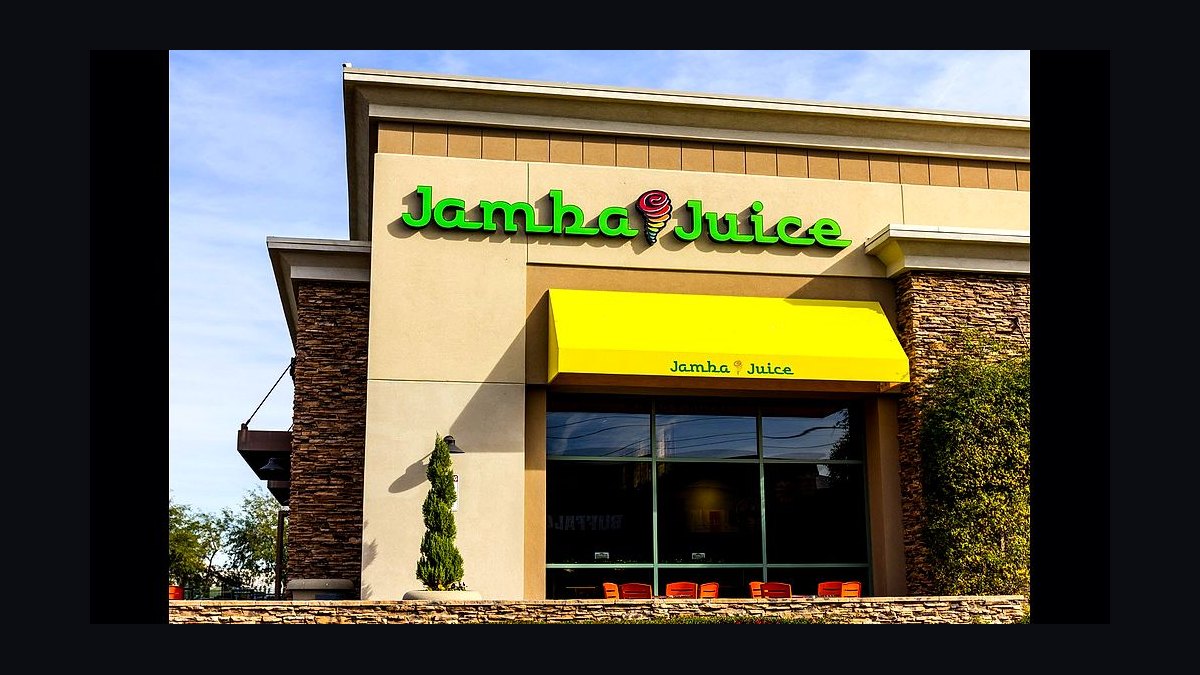
Probably not as a first-time single-unit owner. Jamba's 2024 FDD shows a $243,000–$1,133,000 initial investment, a $35,500 franchise fee, and 6% royalty plus 4% marketing — a 10% off-the-top load against a $719,406 average unit volume. The economics reward existing multi-unit Focus Brands operators, co-brand stackers, and area developers with pre-secured real estate.
Buying an existing unit versus opening a brand-new one
The question "should I open or buy" hides two genuinely different businesses wearing the same logo, and most prospective franchisees never separate them cleanly. Opening a new Jamba means signing a fresh franchise agreement, paying the full $35,500 initial fee, financing a ground-up or inline build somewhere in the $243,000–$1,133,000 Item 7 range, and then living through a ramp period where you are paying full rent, full royalty, and full labor against a sales line that has not yet found its ceiling. Buying an existing unit means acquiring a resale — a store with a known sales history, a trained crew, an established local customer base, and a lease with defined remaining term — and paying a transfer fee to the franchisor instead of the full initial fee, though the purchase price itself typically absorbs whatever goodwill the seller has built.
The new-build case is a bet on real estate and demographic trajectory. You are underwriting a site that has never sold a smoothie, using traffic counts, daypart studies, competitor heatmaps, and the franchisor's site-approval model as proxies for future revenue. The upside is that you get to choose everything: format (traditional inline, drive-thru, Jamba Express, co-brand), footprint, lease terms, opening date, and buildout spec. You also get a fresh full-term franchise agreement rather than the tail end of someone else's, which matters enormously when you go to sell — a buyer paying for a unit with four years left on the agreement is buying an option, not a business. The downside is that every construction and permitting variable is yours. Buildout timelines in most metros have not returned to pre-2020 norms; permitting, utility connections, health department sign-off, and equipment lead times routinely stretch a "90-day build" into six or seven months of paying rent on a dark box.

The resale case is a bet on operational improvement. You are buying a P&L you can actually read, which is worth more than most first-time buyers appreciate. Instead of modeling AUV from a broker's traffic study, you can pull three years of daily sales by daypart, see exactly how the store performs in January versus July, and know whether the 11 AM–3 PM window that drives this brand is actually populated at that address. The risk is adverse selection: healthy, high-volume Jamba units in good markets rarely hit the open resale market, because the operator either keeps them or sells them quietly to another franchisee in the system. What reaches a business broker's listing page skews toward stores with a problem — a lease coming due at a rent the sales cannot support, an owner who burned out, a location whose anchor tenant left, or a unit that never cleared the debt service hurdle. Every resale listing deserves the question "why is this available to me, a stranger, rather than to the operator three exits down the highway?"
There is a third option most people miss: buying a small portfolio rather than a single store. Multi-unit resales appear when an operator retires or exits the brand, and a package of three to six units at once solves the single biggest structural weakness in single-unit franchise ownership, which is that one store cannot support a general manager, a district-level operator, and an owner all taking money out of the same $719,000 revenue line. A portfolio spreads back-office, bookkeeping, marketing, and supervisory overhead across enough revenue to actually pay for it. It also gives you internal promotion paths, which is the only durable answer to QSR labor turnover.
How to decide between opening, buying, and walking away
Run the decision as an elimination sequence rather than a scoring exercise. Most prospective franchisees build a weighted rubric where a strong score in one category compensates for a fatal weakness in another, and that is precisely how undercapitalized operators talk themselves into signing. The correct structure is a series of gates where failing any one gate ends the process, because capital, real estate, and daypart demographics are not substitutes for each other.
Gate one is capital adequacy measured against the bottom-quartile scenario, not the average. If your entire plan collapses when the store does $480,000 instead of $719,000, you do not have a plan, you have a hope. Underwrite to the low case and treat anything above it as upside. Gate two is the operating model: are you going to be in the store, or are you buying yourself a job you intend to delegate on day one? Absentee ownership in a made-to-order beverage concept with fresh produce prep and aggressive ticket-time targets is the single most reliable way to watch four to six points of margin evaporate into labor variance and waste. Gate three is real estate, and it is the gate that determines whether the other two even matter — this brand's revenue is overwhelmingly a function of who walks past the door between late morning and mid-afternoon.
The gate that eliminates the most candidates in practice is the franchisee-call gate, and it is the one people rush. Item 20 of the FDD gives you a contact list of current franchisees and — critically — a list of units that closed, transferred, or terminated in the prior three years. The current operators will give you a filtered picture, because a franchisee with a store on the market has every incentive to talk up the brand. The closed-unit operators have no such incentive and will tell you exactly what went wrong: the lease that reset, the labor line that never came down, the daypart that never materialized, the corporate promise about a remodel subsidy that did not survive the ownership change. Call six of each. If the closed-unit stories all rhyme with your own site's characteristics, you have your answer.

Walking away deserves to be a real branch, not a formality. The opportunity cost of a smoothie franchise is not zero — the same capital deployed into a different QSR category, into a service business with no inventory and no perishables, or into a resale in a category with a longer daypart spread, all compete for the same dollars. Jamba's structural weakness is the dinner daypart, which contributes a small fraction of sales. A concept that sells at breakfast, lunch, and dinner earns three revenue events per day against the same rent. That is not a knock on the brand's product; it is arithmetic about fixed-cost absorption, and it applies equally to any single-daypart concept — bagel shops, frozen yogurt, açaí bowls, juice bars.
What the numbers actually say behind each path
Start with what the franchisor discloses, because it is the only figure in the process that carries legal weight. The 2024 FDD, filed by Jamba Juice Franchisor SPV LLC under the GoTo Foods / Focus Brands umbrella following the February 2024 acquisition, puts the Item 7 initial investment at $243,000 to $1,133,000 for a traditional store. That range is wide for a reason: the low end assumes a small inline space in a second-generation restaurant box with usable infrastructure, minimal working capital, and a landlord contributing tenant improvement allowance. The high end assumes a drive-thru or freestanding format with site work, longer permitting, heavier equipment, and a full three months of working capital reserved. Most single-unit traditional builds land in the middle of that range, and the mid-point is where you should model unless you have a signed LOI on a specific space with a specific TI allowance.
The Item 5 initial franchise fee is $35,500. Ongoing, Item 6 discloses a 6% royalty on gross sales plus a 4% advertising contribution. Ten cents of every dollar that crosses the counter leaves before you have paid for a single strawberry or a single hour of labor. That is not unusual for the category — some competitors run a higher combined load — but it is the number that makes the difference between a $719,000 store and a $480,000 store so consequential. On $719,000, the royalty and marketing load is roughly $72,000. On $480,000 it is roughly $48,000, but your rent, your manager's salary, your insurance, and your loan payment did not shrink by a third. Fixed costs do not scale down with sales; that asymmetry is the entire risk of the business.
Item 19 for FY2023 reports an average unit volume of $719,406 for traditional stores reporting a full period. Read that figure with three caveats. First, it is an average of reporting stores, which excludes non-traditional locations, and averages in any franchise system are pulled upward by a strong top quartile. A meaningful share of units land below the median, and the median is below the mean. Second, it reflects a specific fiscal year's conditions and does not forecast 2027. Third, it says nothing about profit — Item 19 is a revenue disclosure, and any franchisor representation about earnings has to be in Item 19 to be legally usable. If a broker, seller, or development rep gives you a profit number verbally, ask them to point to where it appears in Item 19. If it is not there, it is not a representation you can rely on.
Building the P&L from the AUV: a well-run unit in this category tends to run cost of goods in the high twenties as a percentage of sales, labor near thirty, occupancy around ten depending on how good your lease is, the 10% royalty-and-marketing load, and remaining operating expenses in the high single digits. That leaves store-level EBITDA in the low-to-mid teens as a percentage of sales — call it $86,000 to $108,000 on the disclosed AUV. Store-level EBITDA is not owner take-home. Subtract debt service, subtract any management fee if you are not the manager, subtract capital reserve for the equipment replacement cycle, and subtract the sales tax and franchise tax obligations that show up below the store P&L. On a $600,000 all-in build financed conventionally, unaccelerated payback runs somewhere in the five-to-seven-year band. With SBA 7(a) leverage the cash-on-cash return improves materially because you have less equity at risk, but the debt service turns a bad year into an existential year rather than a disappointing one.
The resale math works differently and is easier to underwrite. Franchise resales in QSR typically transact on a multiple of trailing store-level cash flow, adjusted for remaining lease term, remaining franchise agreement term, required remodel obligations, and equipment condition. The three items that most often blow up a resale after closing are: a remodel requirement triggered by transfer that the seller did not disclose and the franchisor enforces on the new owner; a lease with a rent escalation or an option renewal at market that resets occupancy from a comfortable percentage of sales to an uncomfortable one; and deferred maintenance on blenders, refrigeration, and HVAC that turns into a five-figure capital call in year one. Every resale LOI should be conditioned on the franchisor confirming in writing what remodel and technology obligations transfer with the unit, and on a mechanical inspection of the equipment package.
Cost pressures deserve their own line. Frozen fruit is the input that moves most, and it moves for reasons entirely outside your control — weather in growing regions, currency, export policy, and freight. A three-point swing in COGS on a $719,000 store is roughly $21,500, which is a fifth to a quarter of the entire store-level EBITDA line. Labor is the other volatile input, and it is now policy-driven as much as market-driven. California's AB 1228 fast-food minimum wage, effective April 2024, moved store-level labor materially for operators in that state — the brand's largest — and other states have signaled interest in similar frameworks. If you are underwriting in a state considering sector-specific wage legislation, model the higher wage now, because you will be operating under it for most of the lease term.
Sequencing the diligence, the build, and the first eighteen months
Diligence should run roughly ninety days from first contact to signed LOI, and the order matters because each phase either kills the deal cheaply or de-risks the next phase's spend. Request the FDD first and read Items 5, 6, 7, 19, 20, and 21 in full — Item 21 is the franchisor's audited financial statements, and a franchisor's own balance sheet strength determines whether the support infrastructure you are paying 4% for will still exist in year five. Flag every closure, transfer, and termination in Item 20 and map them geographically; a cluster of closures in markets that resemble yours is the single most predictive datapoint in the entire document.
Then build your own pro forma from scratch. Do not use the franchisor's model, the broker's model, or a template. Build it at the bottom-quartile revenue case with your actual quoted rent, your actual state's wage floor, and your actual debt terms. If it does not clear debt service plus a modest owner salary at the low case, the deal is dead regardless of how good the average looks. This exercise costs nothing and eliminates more bad deals than any other single step.
Real estate diligence should engage a retail broker who has actually placed QSR tenants in your specific market — not a generalist commercial broker. Ask for traffic counts, but weight daytime population and daypart-specific foot traffic higher than raw vehicle counts, because a road with high commuter volume at 8 AM and 6 PM does nothing for a concept that sells between late morning and mid-afternoon. Map every competing smoothie, juice, açaí, and bowl concept within a three-mile radius, and map the co-tenancy: a gym, a university, a hospital campus, or a dense office cluster is worth more to this concept than a grocery anchor.
Financing sequencing trips up more deals than construction does. Get lender pre-approval before you sign a lease, not after, and use a lender with an active QSR franchise lending practice — SBA Preferred Lenders who already have the brand in their portfolio can move on a known credit box instead of underwriting the concept from zero. Understand that SBA 7(a) will almost certainly require a personal guarantee and, if you have equity in a home, a lien against it. That is a real risk transfer from the business to your household, and it should change how conservatively you underwrite.
Once open, the first six months determine the store's permanent cost structure. Labor percentage is set by habits formed in the opening weeks: how the opening shift preps, how the closing shift handles waste, how the schedule flexes against the actual sales curve rather than a template. Fix it early or live with it. Waste in a fresh-produce concept compounds quietly — a store throwing away a modest amount of cut fruit daily is throwing away a meaningful fraction of its annual EBITDA. Ticket time is the third lever, because in a beverage concept a long line at noon does not queue, it leaves and does not come back.

The transition from owner-operated to manager-run is the point where most single-unit franchisees discover whether they built a business or a job. It requires a general manager you trust with the schedule and the inventory order, documented systems that survive that person leaving, and enough margin to pay a real GM wage. A single store at average volume can support this only barely, which is the structural argument for multi-unit ownership: two or three units in a tight geography can support a district-level operator, share a labor pool, cover each other's callouts, and give strong shift leads somewhere to be promoted to.
Adjacent plays worth modeling before you commit
The honest comparison set for this decision is broader than smoothies. Within the category, several competing brands publish their own FDDs with their own Item 7 ranges, royalty structures, and Item 19 disclosures, and you should pull and compare them side by side rather than taking any secondhand summary as fact. The relevant comparisons are: build cost relative to disclosed revenue, combined royalty-plus-marketing load, unit growth trajectory, and the franchisor's real estate pipeline strength. A brand opening units quickly in your region has development momentum and, usually, better site access; a brand with flat or negative net unit growth is either disciplined or struggling, and Item 20's transfer and closure columns tell you which.
Outside the category, the structural comparison worth making is daypart spread against fixed cost. Any concept that sells across breakfast, lunch, and dinner amortizes rent and management salary over more revenue events than a single-daypart concept does. That is why fast-casual formats with a broad menu often show better fixed-cost absorption than beverage-led concepts at similar AUVs, even when the beverage concept has better gross margin per ticket. Conversely, beverage and snack concepts typically carry a smaller footprint, lower buildout cost, simpler equipment packages, and shorter training curves — which means lower capital at risk and faster staff replacement. Neither is universally better; they are different risk shapes, and you should know which one you are buying.
The co-brand angle is genuinely distinctive here and worth naming clearly. Because the brand sits inside a portfolio franchisor alongside other snack and treat concepts, an operator who already runs one of those units can, where the franchisor permits it, add a second brand into an existing footprint. That path changes the math fundamentally: the incremental capital is equipment and buildout for a partial conversion rather than a full new store, the rent is already being paid, and the labor pool is shared. If you are already inside that system and a co-brand slot is available, that is the highest-return version of this decision by a wide margin — and it is the version that most outside candidates cannot access.
The final adjacent play is the independent route. An owner-operated juice and smoothie bar with no franchise fee, no royalty, and no marketing contribution keeps that 10% load entirely. Build costs are typically lower because you are not held to a brand's specification. The trade is real: no brand recognition, no supply chain leverage, no proven operating system, no site-selection support, no national marketing, and no exit multiple — independents sell for materially less than franchised units of comparable cash flow, because a buyer is purchasing a job rather than a system. Independents work in dense, affluent, foot-traffic-heavy neighborhoods where the owner is physically present and personally known. They fail in suburban strip centers where brand recognition is the only thing pulling a stranger through the door.
Related questions
Is it cheaper to buy an existing Jamba than to open a new one?
Usually yes on total capital, because the resale price often lands below the cost to build the same store, and the transfer fee is smaller than the initial franchise fee. But you inherit the remaining lease term, remaining agreement term, and any triggered remodel obligation.
How long does the buildout actually take?
Plan for six to nine months from lease signing to opening in most markets. Permitting, utility work, health department inspection, and equipment lead times routinely add months to a franchisor's stated construction timeline. Budget rent for the dark period.
Can I run a Jamba franchise absentee?
Not well as a single unit. Made-to-order preparation, fresh produce handling, and tight ticket-time targets mean labor and waste variance are managed shift by shift. Absentee single-unit ownership reliably costs several points of store-level margin.
What kills most smoothie franchise units?
Three things in order: rent that is too high a percentage of sales, a location without daytime foot traffic in the late-morning-to-afternoon window, and a labor line that was never brought under control during the opening months.
Should I sign a multi-unit development agreement upfront?
Only if you have already operated in the category. Development agreements carry opening schedules with penalties for missing them. Signing one before you have run a single unit converts a manageable risk into a contractual obligation.
FAQ
What does it cost to open a Jamba franchise?
The 2024 FDD discloses an Item 7 initial investment range of $243,000 to $1,133,000 for a traditional store, plus a $35,500 initial franchise fee under Item 5. The spread reflects format, footprint, second-generation versus raw space, tenant improvement allowance, and how much working capital is reserved. Model the middle of the range until you have a specific site and a specific lease.
What are the ongoing fees?
Item 6 discloses a 6% royalty on gross sales and a 4% advertising fund contribution, so 10% of every dollar of revenue leaves before cost of goods and labor. On the disclosed average unit volume that is roughly $72,000 a year. That load is the reason low-volume units struggle — fixed costs do not shrink when sales do.
How much revenue does an average unit do?
Item 19 in the 2024 FDD reports an average unit volume of $719,406 for traditional stores reporting a full fiscal period. Treat that as an average of reporting stores, not a floor and not a forecast. A significant share of units perform below the median, and Item 19 is a revenue disclosure only — it is not a statement of profit.
Is buying a resale safer than building new?
It is more knowable, which is different from safer. A resale gives you real sales history instead of a traffic study, but healthy units rarely reach the open market. Ask directly why the store is available to an outsider, verify the lease term and any transfer-triggered remodel obligation in writing with the franchisor, and inspect the equipment before you close.
What kind of location does this concept need?
Daytime population in the late-morning-to-mid-afternoon window matters more than raw vehicle counts. Co-tenancy with gyms, universities, hospital campuses, or dense office clusters outperforms grocery-anchored centers. The brand has meaningfully reduced its mall exposure over the past several years, which tells you what the franchisor learned about that format.
Who should actually buy one of these in 2027?
Existing multi-unit operators inside the same portfolio franchisor — especially anyone who can stack the brand as a co-brand into a footprint they already pay rent on — and well-capitalized area developers with pre-secured sites. First-time single-unit buyers should compare the full FDD set across the category before committing, and should underwrite to the bottom quartile.
Sources
- https://www.ftc.gov/business-guidance/resources/franchise-rule-compliance-guide
- https://www.sba.gov/funding-programs/loans/7a-loans
- https://www.franchise.org/
- https://www.ibisworld.com/united-states/market-research-reports/juice-smoothie-bars-industry/
- https://www.qsrmagazine.com/
- https://www.restaurantbusinessonline.com/
- https://www.franchisetimes.com/
- https://www.dir.ca.gov/dlse/Minimum-Wage-Fast-Food-Restaurants.html
- https://www.bls.gov/iag/tgs/iag722.htm
Related on PULSE
This page will be disappearing soon. Save it to your device for $1 — or read it free while it is here.
@Kory-White- · if Venmo asks, the last 4 of my number are 2012
This page is gone.
This one is off the shelf now. $1 keeps it on your phone for good — the whole page, pictures and diagrams included.
 franchiseShould I open or buy a Bruster's Real Ice Cream franchise in 2027?
 franchiseShould I open or buy a Massage Envy franchise in 2027?
 frShould I open or buy a McDonald's franchise in 2027?
 franchiseShould I open or buy a UPS Store franchise in 2027?
 franchiseShould I open or buy an F45 Training franchise in 2027?
 franchiseShould I open or buy a Cook Out franchise in 2027?
 franchiseShould I open or buy a Pizza Hut franchise in 2027?
 franchiseShould I open or buy a KinderCare franchise in 2027?
 franchiseShould I open or buy a Goddard School franchise in 2027?
 franchiseShould I open or buy a Cold Stone Creamery franchise in 2027?