


Should I open or buy a McAlister's Deli franchise in 2027?
Quality
Certified
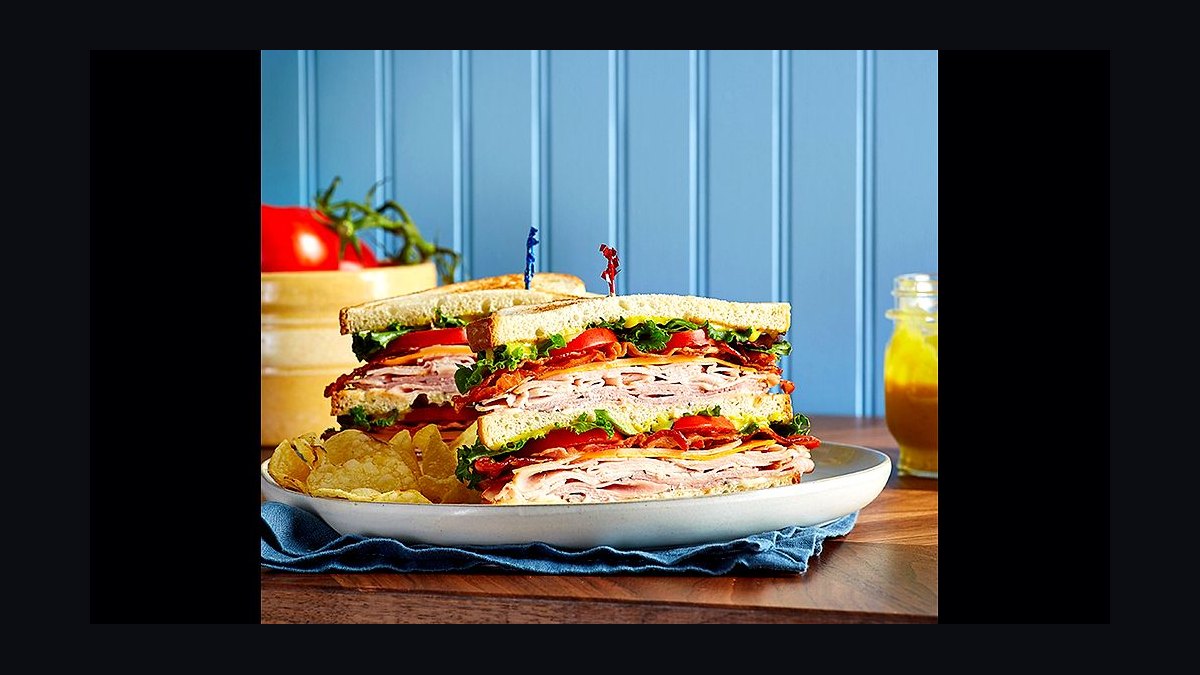
Open a McAlister's Deli franchise in 2027 only if you can fund a $1.25M–$2.45M total investment, already operate three or more restaurant units, and can lock down a suburban pad or drive-thru-capable site in a 30,000+ household trade area averaging $85,000+ income. GoTo Foods now approves almost exclusively experienced multi-unit developers with $750K liquid capital and $1.5M net worth — a first-time single-unit buyer is better served looking at Jersey Mike's or Tropical Smoothie Cafe.
A Concrete Scenario That Frames the Problem
Picture a regional operator who already runs four Jersey Mike's locations across a mid-sized Tennessee metro. They have a bench of three trained general managers, an existing relationship with a preferred-lender-program bank, and roughly $900K sitting in a business line of credit after a cash-out refinance on real estate they already own. They approach GoTo Foods about a McAlister's Deli development deal not because the sandwich category is underserved in the abstract, but because their own trade area has a density-fill gap: a 38,000-household suburb fifteen minutes from their existing stores, no bakery-cafe concept within five miles, and a daytime office population north of 20,000 that currently drives to a competing chain for lunch and catering. This is close to the exact buyer profile the brand is underwriting toward heading into 2027, and it illustrates why the question "should I open a McAlister's Deli" cannot be answered the same way for every reader.
Now contrast that with a first-time buyer: a corporate manager with $400K in savings, no restaurant operating history, and a general desire to "own a franchise" rather than a specific trade-area thesis. Under the brand's current development posture, this candidate's inquiry gets a soft no well before a term sheet is drafted — not because $400K is a small amount of money in absolute terms, but because the $750,000 per-unit liquid-capital floor and the $1,500,000 net-worth floor are gating criteria the brand screens against up front, and because single-unit first-timers without an operating bench show a materially higher failure rate industry-wide in the first 24 months of operation.
The scenario matters because it reframes the entire question. For the multi-unit operator with capital and an operations team already in place, McAlister's $1,792,000 average unit volume and 12–18% restaurant-level EBITDA margin make it a genuinely strong fast-casual sandwich play relative to the category. For the capital-light first-timer, the honest answer is that the door is largely closed in 2027, and trying to force it open — by over-leveraging, skipping a general-manager hire, or underpricing working capital — is how a unit lands in the bottom performance quartile within its first two years. This operator-profile-versus-capital distinction governs nearly every downstream decision covered below: how the approval mechanism actually works, what the real numbers look like, which adjacent concepts deserve a look, and which operational mistakes sink otherwise well-capitalized buyers.
It's also worth sitting with how this compares to a reader evaluating a completely different concept, such as a boutique fitness studio or a home-services franchise. Those categories often have lower entry capital but also lower absolute unit volume and a less standardized real estate footprint — the comparison matters because a candidate deciding "franchise ownership generally" rather than "McAlister's Deli specifically" should weigh category economics, not just brand recognition, before narrowing in.
How the Franchise Decision Actually Works
The path from "interested" to "open" runs through a specific gate sequence, and understanding where candidates actually stall tells you more than the headline investment range does. The first gate is financial pre-qualification against Item 7 of the Franchise Disclosure Document — not the $1.25M–$2.45M total figure itself, but the $750,000 liquid-capital minimum and $1.5M net-worth minimum GoTo Foods screens for before any development conversation starts. Candidates who clear this gate move to the second: operating history. Because the brand's active pipeline is now reported as more than 90% multi-unit developers, a candidate without three or more existing restaurant units generally needs either a signed joint-venture partner who brings that history, or needs to pursue an existing resale unit instead of a new development agreement.
The third gate is territory. GoTo Foods is not opening greenfield states on spec; it is filling density gaps inside markets where the brand already has recognition, supply-chain penetration, and marketing-fund leverage. Concentrating new units inside 30,000–50,000 household trade areas has reportedly cut marketing cost per incremental customer by roughly 18% since 2023, which is why a candidate who shows up with capital and operating history but no specific trade-area thesis typically gets sent back to complete territory homework — often a Placer.ai or Buxton-style site study — before a development agreement is drafted.
The fourth gate is real estate execution: converting an approved territory into an actual signed site, which is where tenant-rep brokers, letters of intent, and drive-thru permitting feasibility become the binding constraint rather than capital. The fifth and final gate is financing close, matching SBA or conventional debt to the equity the candidate already demonstrated in gate one. Every one of these five steps is a place an otherwise-qualified candidate can stall, and in 2026–2027 the most common stall point isn't capital at all — it's gate three, because candidates frequently approach the brand wanting "a McAlister's" in the abstract rather than arriving with a specific lunch-and-catering gap already identified and quantified.
This gate structure is also why timing matters for a 2027 decision specifically. Construction costs embedded in Item 7 have climbed roughly 31% since 2020, interest rates on SBA 7(a) paper remain elevated relative to the pre-2022 era, and labor markets in several target states have tightened wage floors well above where they sat when many existing franchisees signed their original agreements. A candidate modeling 2027 economics off a five-year-old conversation with an existing franchisee is modeling a different business than the one they would actually sign up for.
Real Numbers, Ranges, and Benchmarks
The financial profile of a McAlister's Deli unit in 2027 sits above the fast-casual sandwich median on volume, but it has absorbed meaningful cost inflation on the build side. The initial franchise fee is $35,500 per restaurant, and the total Item 7 investment runs $1,247,725 to $2,442,200, split roughly into $715,000–$1,420,000 of build-out, $285,000–$510,000 of equipment, signage, and point-of-sale, and $165,000–$385,000 of pre-opening costs, training, and working capital. Ongoing fees run 5.0% royalty plus 3.99% national marketing plus a 1.0% local marketing minimum — just under 10% of gross sales off the top before any operating expense is paid.
Against a systemwide Item 19 average unit volume of $1,792,000 (top quartile closer to $2,290,000, bottom quartile around $1,310,000), a representative P&L runs approximately: 30% food cost (~$537,600), 32% labor including management (~$573,440), 9.99% royalty and marketing (~$179,021), 8% occupancy (~$143,360), and 6% other operating costs (~$107,520) — leaving roughly $251,059 in restaurant-level EBITDA, a 14.0% margin. Debt service on a $900K SBA 7(a) loan at roughly 10.5% over 10 years runs about $144K annually, bringing owner cash flow down to an estimated $107K–$320K depending on leverage and whether the owner draws a manager's salary, with blended Year-1 cash flow commonly cited in the $180K–$320K range across the system.
Payback period averages 5–7 years on a leveraged deal at roughly 60% debt / 40% equity — competitive against the broader fast-casual sandwich category, though slower than lower-capital concepts such as Jimmy John's or Firehouse Subs. The agreement term runs 20 years with two 5-year renewal options, meaning a franchisee who signs in 2027 is committing capital and operating attention through at least 2047 on the initial term alone, a horizon that belongs in any discounted-cash-flow analysis, not just the 5–7 year payback headline.

Catering is the single biggest swing variable in this math. Units that build a dedicated catering sales function report catering approaching 22% of total revenue, and that channel is cited as the primary differentiator between bottom-quartile and top-quartile EBITDA performance. A unit that treats catering as an afterthought is effectively surrendering the margin that separates a 12% year from an 18% year — which is also why evaluating any sandwich or bakery-cafe concept purely on walk-in traffic projections, without a catering build-out plan, tends to understate the realistic upside.
Trade-offs and Alternatives
McAlister's is not the only lunch-daypart fast-casual concept competing for development capital in 2027, and the trade-offs against its nearest peers come down to entry cost, royalty structure, and how forgiving the model is for a first-time single-unit buyer. Jersey Mike's Subs sits at a $237K–$1.04M total investment with a 6.5% royalty and roughly $1.1M AUV — a materially lower entry cost, and a brand still willing to work with single-unit buyers, making it the more realistic starting point for someone without an existing multi-unit platform. Jimmy John's runs $359K–$598K with a 6% royalty against a smaller $900K–$1.1M AUV, trading lower margin for a dramatically lower capital bar. Firehouse Subs, backed by Restaurant Brands International, lands in between at $130K–$1.20M with roughly $870K AUV.
Newk's Eatery is the closest direct comparison in format and AUV ($1.10M–$2.15M investment, ~$1.65M AUV) but runs a system roughly a fifth the size of McAlister's, which cuts both ways — less marketing-fund leverage and brand recognition, but potentially more room to claim unsaturated trade areas without competing against an existing McAlister's footprint nearby. Tropical Smoothie Cafe solves a different problem entirely: at $317K–$686K and a smaller box with lower labor needs, it smooths lunch-dependency risk by capturing breakfast and snacking dayparts, which matters for a candidate worried about concentration risk in the 11am–2pm window that drives 55–62% of daily sales at a typical McAlister's.
The resale path deserves separate weight for anyone deciding whether to open new versus buy existing. McAlister's units in healthy markets trade at roughly 3.5–4.5x seller's discretionary earnings, meaning a unit generating $600K–$1.2M in EBITDA sells for approximately $2.5M–$5M total. That is a steep absolute price, but it runs 20–30% cheaper than ground-up development once the typical 18-month ramp-to-stabilization period is priced in, and it eliminates construction-cost-inflation risk entirely — relevant given that Item 7's high end has climbed roughly 31% since 2020. For an operator who already has the capital and the operating bench but is wary of a multi-year build timeline in a tight commercial real estate market, resale is frequently the more conservative route into the brand, even if it looks less exciting than signing a fresh development agreement.
It's also worth widening the lens one step further: an operator evaluating sandwich-and-bakery-cafe concepts should weigh them against adjacent categories entirely, such as fast-casual Mediterranean, poke, or breakfast-forward concepts, several of which have lower average investment and are actively recruiting single-unit buyers in 2027 precisely because McAlister's and similar mature brands have shifted upmarket toward multi-unit developers.
Common Pitfalls and How to Avoid Them
The single most expensive mistake in this category is site selection divorced from drive-thru or dedicated pickup access. Inline strip-mall slots without a drive-thru lane underperform pad sites by an estimated 22–28% in AUV, and the brand has been retrofitting drive-thru into older units since 2023 specifically because the format increasingly separates winners from laggards. A candidate evaluating a lease should treat "no drive-thru feasibility" as close to disqualifying, not a minor trade-off against cheaper rent.
The second pitfall is underpricing labor in high-wage-floor states. In California, New York, Washington, Colorado, and Illinois, $17–$20/hour wage floors push labor cost past 36% of sales, compressing a healthy 14% EBITDA margin into the single digits. A candidate pro-forma-ing a unit in one of these states off the systemwide average AUV and margin is modeling a different business than the one they would actually operate; the underwriting needs a state-specific labor line, not a national blend.
The third pitfall is treating catering as optional rather than as a core revenue channel. Operators who skip a dedicated catering sales function leave an estimated $300K–$450K of annual revenue per unit on the table relative to catering-first operators, and because catering carries better margin than walk-in traffic, that gap disproportionately hits EBITDA rather than just top-line sales.

The fourth and most structural pitfall is attempting this as a single-unit first-timer with no operations bench. General-manager turnover above 40% annually is cited as a leading cause of underperformance system-wide, and a multi-unit operator absorbs a GM departure by shifting a trained manager from another location — a solo first-time owner absorbs it by running the floor personally for months while hiring and retraining, which is exactly the labor-cost and consistency spiral that turns a decent site into a struggling one. Related to this: operators who substitute cheaper point-of-sale or loyalty tools instead of the brand's integrated stack consistently under-index on sales relative to units running the proprietary integration as designed.
Finally, undercapitalizing post-opening working capital is a quiet killer. Units that open with less than $200K in post-opening cash on hand reportedly fail at 3–4x the system average within 24 months, because the ramp period to AUV stabilization reliably takes 12–18 months, and a thin cash cushion forces corner-cutting on staffing, maintenance, or marketing exactly when the new unit needs the opposite. Any candidate building a 2027 opening budget should treat working capital as a hard floor, not a number to trim when construction costs run over.
Related Questions
Should I open or buy a Jersey Mike's Subs franchise instead?
Yes, if you have $300K–$500K liquid and want single-unit-friendly terms. Jersey Mike's $237K–$1.04M total investment and 6.5% royalty make it a more realistic entry point than McAlister's for a first-time franchise buyer in 2027.
Can a single-unit buyer still get a McAlister's Deli franchise in 2027?
Rarely. The pipeline is over 90% multi-unit developers, and the $750K liquid-capital and $1.5M net-worth minimums effectively screen out most solo first-timers from new development agreements.
Is buying an existing McAlister's Deli resale unit better than building new?
Often yes. Resale units trade at 3.5–4.5x SDE, roughly 20–30% cheaper than ground-up development once the 18-month stabilization ramp and 31% build-cost inflation since 2020 are factored in.
How much does catering revenue matter to franchise profitability here?
Significantly. Catering runs near 22% of total revenue in strong units and is the primary gap between bottom-quartile and top-quartile EBITDA, making a dedicated catering plan a profitability requirement rather than an extra.
FAQ
What is the total investment required to open a McAlister's Deli franchise in 2027? The initial investment ranges from roughly $1.25 million to $2.45 million, including a $35,500 franchise fee. This covers build-out, equipment, signage, and working capital, though exact costs vary by site size and lease terms.
How much can I expect to earn in the first year?
Realistic Year-1 operator cash flow typically falls between $180,000 and $320,000, based on a restaurant-level EBITDA margin of 12–18%. Actual profit depends heavily on local sales volume, labor costs, and catering execution.
Does McAlister's require multi-unit ownership to open a franchise? Yes — GoTo Foods now awards franchises almost exclusively to multi-unit developers. Candidates generally need the capacity to open at least three units and a minimum of $750,000 in liquid assets to be considered.
What are the ongoing royalty and marketing fees? You pay a 5% royalty on gross sales plus a 3.99% national marketing fee, with a 1% local marketing minimum layered on top — just under 10% of gross sales funding brand support and advertising.
What location characteristics matter most before I open a unit? Ideal sites are suburban end-cap or pad locations with drive-thru or pickup-lane access, in trade areas with at least 30,000 households and median income of $85,000 or more, supporting the brand's $1.79 million average unit volume.
How long does it take to recoup my investment in a new McAlister's Deli? Payback periods typically run 5 to 7 years on a leveraged deal, assuming consistent catering revenue and controlled labor cost. High-minimum-wage markets or weak drive-thru access can push that timeline out materially.
Sources
- McAlister's Deli Franchise Disclosure Document, Items 5, 6, 7, 17, 19, 20 (filed via GoTo Foods Franchise LLC) — https://www.mcalistersfranchising.com
- Franchise Chatter — "McAlister's Deli Franchise Review: Costs, Fees, News, Average Revenues and/or Profits" — https://www.franchisechatter.com
- QSR Magazine — fast-casual sandwich category coverage — https://www.qsrmagazine.com
- Franchise Times Top 400 ranking — https://www.franchisetimes.com
- International Franchise Association — industry economic reporting — https://www.franchise.org
- Restaurant Business Online — catering and fast-casual same-store-sales reporting — https://www.restaurantbusinessonline.com
- Franchise Direct — McAlister's Deli franchise cost and fee disclosure — https://www.franchisedirect.com
- U.S. Small Business Administration — 7(a) loan program terms — https://www.sba.gov
Related on PULSE
- Should I open or buy a Jason's Deli franchise in 2027?
- How long does it take to open a franchise and break even in 2027?
- Should I open or buy a Jersey Mike's Subs franchise in 2027?
- Should I open or buy a Tropical Smoothie Cafe franchise in 2027?
- Is a resale franchise unit a better buy than new development in 2027?
This page will be disappearing soon. Save it to your device for $1 — or read it free while it is here.
@Kory-White- · if Venmo asks, the last 4 of my number are 2012
This page is gone.
This one is off the shelf now. $1 keeps it on your phone for good — the whole page, pictures and diagrams included.
 franchiseShould I open or buy a Whataburger franchise in 2027?
 franchiseShould I open or buy a Hand and Stone Massage franchise in 2027?
 franchiseShould I open or buy a Valvoline Instant Oil Change franchise in 2027?
 frShould I open or buy a McDonald's franchise in 2027?
 franchiseShould I open or buy a Mathnasium franchise in 2027?
 franchiseShould I open or buy a Matco Tools franchise in 2027?
 franchiseShould I open or buy a Panera Bread franchise in 2027?
 franchiseShould I open or buy a Rita's Italian Ice franchise in 2027?
 franchiseShould I open or buy a Primrose Schools franchise in 2027?
 franchiseShould I open or buy a Crumbl Cookies franchise in 2027?