


Should I open or buy a Great Clips franchise in 2027?
Quality
Certified
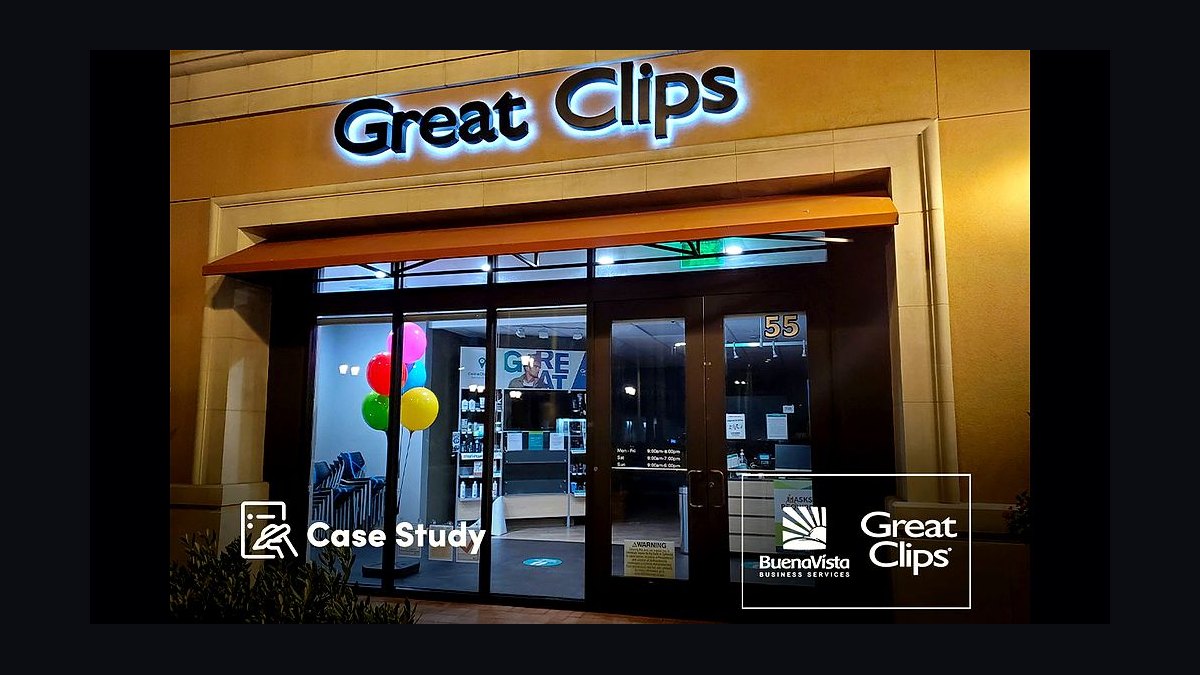
Buy an existing Great Clips franchise if you want cash flow on day one and a proven trade area; open a new salon only if you have capital for three-plus units and 24 months of patience. Single-unit ownership rarely justifies the fee load. Below roughly $400,000 liquid, walk away.
What you are actually choosing between
Most people frame this as "Great Clips: yes or no." That framing is wrong, and it is the reason so many first-time franchise buyers end up disappointed with a business that is, on its own terms, working fine. The real decision has two axes, not one, and they interact.
The first axis is open versus buy. Opening a new salon means signing a franchise agreement, paying the initial franchise fee, finding a site, negotiating a lease, funding the build-out, hiring a full staff from zero, and then waiting somewhere between twelve and thirty months for the location to ramp to a mature customer count. Buying an existing salon — a resale from a retiring or exiting franchisee — means paying a multiple of the salon's current seller's discretionary earnings, inheriting its lease, its stylists, its customer base, and its reputation, good or bad, from the first day you own it.
The second axis is single unit versus multi-unit. This is the axis people ignore, and it is the one that determines whether the economics work at all. Great Clips, like nearly every service franchise built on a percentage-of-gross royalty, has a cost structure that assumes you will spread certain fixed expenses — a manager who covers more than one location, your own time, insurance, accounting, the district-level overhead of running a small business — across multiple revenue streams. A single salon carries the full weight of that overhead against one salon's gross. Three salons in the same metro carry it against three.
Combine the axes and you get four real strategies, not two:

Open a single new salon. The worst risk-adjusted option for a first-time owner. You take on full construction risk, full ramp risk, full hiring risk, and full lease risk, and you do it with no cash flow coming in during the eighteen-to-thirty-month period when all of those risks are live. If the site turns out to be mediocre — wrong side of the road, bad sightline from the parking lot, an anchor tenant that closes — you find out after you have spent the money, not before.
Buy a single existing salon. The most common first move, and defensible if the price is right. You are buying trailing revenue you can verify, a staff roster you can interview, and a lease you can read. Your risk shifts from "will this work" to "did I pay too much and can I keep the stylists." The ceiling is low, but so is the variance.
Buy one, then open two. The strategy that most consistently works for people entering this category from outside the industry. The acquired salon funds your learning curve and produces cash while you develop the operating muscle. Salons two and three get opened by someone who now knows what a good site looks like in their own market, what a good stylist costs, and what the actual weekly rhythm of the business is. This sequencing is the single most underrated move available to a new franchise owner.
Sign an area development agreement and open three-plus. The highest-return path and the one the franchisor most wants to sell you. It also has the highest capital requirement and the least room for error. Do this only if you have run multi-unit operations before — retail, restaurants, fitness, anything with hourly labor and a physical footprint — or if you have hired someone who has.
There is a fifth option worth naming because it keeps getting dismissed too quickly: do neither, and buy an independent salon instead. Independent salons in most markets trade at lower multiples than branded resales, and they carry no royalty and no ad fund. On a pure single-location, cash-on-cash basis, an independent frequently returns more per dollar invested than a franchised unit. What you give up is the brand, the check-in app, the national advertising, the operating playbook, and — critically — the ability to scale to five or ten units without inventing every system yourself. If your honest plan is one location and a comfortable income, the independent deserves a serious look. If your plan is a portfolio, it does not.
How the two paths actually differ in risk

Opening and buying fail in completely different ways, and knowing which failure mode you can tolerate is more useful than any spreadsheet.
New-build failure is front-loaded and site-driven. The overwhelming majority of new-salon underperformance traces back to the trade area, not the operator. A haircut is a low-ticket, high-frequency, convenience-driven purchase. Nobody drives twenty minutes for a value haircut. That means your customer base is essentially everyone within a short drive who passes your center regularly — which makes household density, daily traffic patterns, co-tenancy, and the physical ease of pulling into the parking lot the dominant variables. You can be an excellent operator in a weak trade area and still post mediocre numbers forever. The corollary is brutal: a bad site cannot be fixed by working harder, and you are locked into it by a lease that likely runs a decade with options.
Resale failure is back-loaded and people-driven. When an acquired salon underperforms after closing, the cause is almost always staff attrition. Stylists have relationships with their regulars and with each other, and a change of ownership is the moment those relationships get re-evaluated. If two experienced stylists leave in your first sixty days, you lose their book, your remaining stylists absorb the wait times, walkouts climb, and revenue drops in a way that has nothing to do with your marketing. The seller's trailing numbers were real; they were just attached to people who no longer work there.
This distinction should drive your diligence budget. If you are opening, spend your money and time on trade-area analysis before you sign anything — foot traffic data, household counts within a three-mile ring, drive-time isochrones, competitor mapping, and physical visits at multiple times of day on multiple days of the week. Sit in the parking lot on a Saturday at 11am and count cars. If you are buying, spend your money and time on the staff — meet every stylist before closing if the seller will permit it, understand their tenure, their pay relative to local market, and whether any of them expected to buy the salon themselves. A stylist who thought they were next in line and got passed over is a retention risk you must price in.

There is also a transfer-approval layer unique to buying a franchised unit that does not exist when you buy an independent. The franchisor typically must approve you as a transferee, which means you go through qualification anyway, and there is usually a transfer fee. The remaining term on the existing franchise agreement matters enormously — buying a salon with three years left before a renewal that will require a full remodel is materially different from buying one with eight years of runway. Read the remaining term and the remodel obligation before you agree on price, not after.
One more asymmetry: information quality. When you buy, you get real trailing financials, real customer counts, real labor cost as a percentage of revenue for that specific location. When you open, you get system averages and your own projections. System averages are genuinely useful — they tell you the shape of the business — but they are not a forecast for your specific corner of a specific suburb. Buyers make decisions on evidence; openers make decisions on inference. Price that difference into how much certainty you require before committing.
The numbers that decide it
Everything below is either disclosed in the franchise disclosure document or is a general market convention. The FDD is the only authoritative source for the specific figures, and you must request the current one and read it yourself — the numbers move year to year and the version in force when you sign is the one that governs you.
What the FDD gives you. Item 5 lists the initial franchise fee. Item 6 lists ongoing fees — the royalty and the advertising fund contribution, both calculated on gross sales. Item 7 gives the estimated range of total initial investment for a new salon, which for this category runs from roughly the high six figures at the low end to several hundred thousand at the high end depending on build-out cost, market, and how much working capital they assume. Item 19 is the financial performance representation, where the franchisor discloses average and sometimes median unit volumes across reporting salons, often broken into quartiles. Item 20 lists system size, openings, closures, terminations, and transfers over the prior three years, plus contact information for current and recently departed franchisees. Item 21 has audited financials for the franchisor itself.
How to read Item 19 without fooling yourself. The average is the number the franchisor leads with; the distribution is the number that decides your outcome. Ask two questions of any Item 19 table. First, what fraction of salons are in the reporting set — if a meaningful number are excluded, understand why. Second, what does the bottom quartile look like. Your downside case is not the average minus ten percent; your downside case is the bottom quartile, because somebody is running those salons and they did not plan to be there. Build your model at bottom-quartile volume and see whether you can still service debt. If you cannot, you are not buying a business, you are buying a bet on being above median.
The fee load is the single most important structural fact. A royalty plus a national advertising contribution, both on gross, comes off the top before you pay a single stylist or a single month of rent. Add the local marketing spend that any competent operator does on top of the national fund, and roughly an eighth of every dollar through the register is committed before operations begin. That is not unusual for franchising and it buys real things — brand recognition, the check-in technology, national media, the operating system. But it means your operating margin must be earned out of what is left, and it means a location that grosses below a certain threshold cannot produce meaningful owner earnings no matter how well it is run. Find that break-even gross for your specific rent and labor market and treat it as your minimum acceptable trade area.
Labor is the other half of the P&L. Stylists are licensed professionals in a supply-constrained trade. Cosmetology school enrollment has been under pressure for years and licensing hour requirements in most states remain substantial, which means the pool of newly licensed stylists entering the market each year is limited. In practice this means two things. First, your wage is set by the local market for stylists, not by your budget — if you pay under market, you lose people, and every empty chair is lost revenue you cannot recover. Second, retention is a financial strategy, not an HR nicety. The cost of replacing a stylist includes recruiting time, the ramp period before they are fully productive, and the customers who followed the departing stylist somewhere else.
Wait time is the controllable KPI that moves revenue most. In a walk-in model, a customer who sees a long wait leaves and gets their haircut somewhere else, and you never know it happened. Walkouts are invisible on your P&L — they show up only as revenue you did not earn. This is why staffing to demand curves rather than to a flat schedule matters so much, and why the online check-in system is genuinely valuable rather than a gimmick: it converts a walkout into a customer who shows up at the right time.
Pricing a resale. Small service businesses in this category generally trade on a multiple of seller's discretionary earnings — owner's cash benefit before owner's compensation. The multiple depends on transferability. A salon where the owner works the front desk daily and holds the customer relationships is worth less than one that already runs with a manager, because the second one is what you are actually buying. Underperforming salons trade at low multiples for a reason. If the salon is below system median volume, do not pay a median multiple and tell yourself you will fix it; find out first why it is below median, and separate causes you control (staffing, hours, cleanliness, marketing) from causes you do not (trade area, competition, lease terms, site visibility). Only the first category justifies paying up.
Financing. SBA-guaranteed lending is the standard vehicle for both new builds and acquisitions in franchised businesses, and being on the SBA franchise directory streamlines eligibility review. Expect to put meaningful equity down, personally guarantee the loan, and pledge collateral. Run your model with debt service included — a location that produces acceptable owner earnings unlevered can produce nothing at all after a loan payment, and that is the scenario that ends ownership.
The number that actually matters is combined owner earnings across all units in year four, not first-year revenue at one location. Build the model that way from the start. If three units at conservative volume, market-rate labor, and full debt service do not produce an income you would accept, the plan is wrong and no amount of operational excellence fixes it.
What the surrounding market does to both paths
Zoom out from the single decision and a few structural forces shape whichever path you pick.
Value-tier services hold up in soft consumer environments. Haircuts are close to non-discretionary — people stretch the interval when money is tight, going from five weeks to seven, but they do not stop. What they do is trade down. In a tightening consumer economy, the mid-tier salon loses customers to the value tier and the value tier gains them. That is a structural advantage of being at the low end of the price ladder, and it is the strongest single argument for this category over a premium personal-care concept.
The service is un-automatable and un-shippable. Nobody is delivering a haircut over the internet, and no software substitutes for the transaction. That is a real moat against the kind of disruption that has hollowed out other retail categories. The technology risk in this business is not that software replaces you; it is that software makes your competitors as convenient as you are. Online booking and check-in used to be a differentiator that independents could not match. Increasingly, off-the-shelf tools give a single independent salon a booking experience comparable to a national chain's. That erodes a piece of the franchise value proposition and it is worth being honest about when you weigh the royalty.

Real estate is the quiet variable. Suburban strip retail leases signed years ago are renewing into a different market. If you are buying an existing salon, the remaining lease term and renewal options are as important as the revenue — a great salon with two years left and a landlord who knows you cannot easily move is a weaker asset than the trailing numbers suggest. If you are opening, the lease you negotiate is a ten-plus-year commitment made at the moment you have the least information about the location's actual performance. Negotiate for the things that protect you: co-tenancy provisions, an exclusive-use clause preventing a competing salon in the same center, reasonable assignment rights so you can sell the business later, and a personal guarantee that burns off after a few years of performance.
Density and saturation cut both ways. Mature markets — the brand's home market and the large metros where it has been established longest — often have salon density that leaves little room for a new location without cannibalizing an existing one. That closes the open path and opens the buy path: in a saturated market, the only way in is to acquire. Growth markets with rising household counts and lower existing density are where new-build economics work best, but they are also where you have the least local knowledge if you are moving into them from outside.
Adjacent categories are worth comparing before you commit. Suite- and studio-rental concepts in personal care flip the model entirely — you become a landlord to independent stylists rather than an employer of them, which removes your labor exposure and much of your daily operating burden at the cost of a much larger real estate footprint and more capital up front. Other men's-grooming concepts occupy a similar price band with a narrower customer focus and a higher average ticket. Broader personal-care services carry higher unit volumes with more operational complexity. None of these are strictly better; they trade labor risk for capital risk in different proportions. The right comparison is not "which concept has the best numbers" but "which risk am I actually equipped to manage." If you are good at hiring and retaining hourly staff, an operating model rewards you. If you are not, a rental model may fit better even at lower headline returns.
Sequencing the decision over ninety days

Whichever path you choose, the order of operations matters more than the speed. Here is a sequence that keeps you from spending real money before you have real information.
Weeks one and two — get the document and read it yourself. Request the current FDD from the franchisor. There is a mandatory waiting period between receipt and signing, and you should use all of it. Read Items 5, 6, 7, 19, 20, and 21 personally, then have a franchise attorney read the whole thing. Do not substitute a broker's summary for the document. If you are pursuing a resale, request the FDD anyway — you will still be signing a franchise agreement.
Weeks two and three — check system health in Item 20. Track openings, closures, terminations, non-renewals, and transfers over the disclosed years. Net unit growth is a proxy for whether new units are working. A high transfer count is ambiguous — it could mean a healthy resale market or it could mean people are getting out. Closures and terminations are less ambiguous. Compute these as rates against total system size, not raw counts, and compare across the disclosed years to see the direction.
Weeks three through five — call franchisees, and call the ones who left. Item 20 gives you contact information for current franchisees and for those who departed in the prior year. Call a large sample, not three. Ask the same questions each time so answers are comparable: trailing twelve-month volume, stylist turnover, labor as a percentage of revenue, what they wish they had known, and whether they would buy their next unit from this brand. Then call the departures. Those conversations are the most informative ones available to you and almost nobody makes them.
Weeks five through seven — build the model, then break it. Build a three-unit pro forma with conservative volume, market-rate labor, full fee load, realistic rent, and actual debt service. Then run the downside: bottom-quartile volume, labor costs meaningfully above your base case, and a slower ramp than the franchisor's typical. If year four combined owner earnings in the downside case are unacceptable, stop. This is the gate that saves people.
Weeks six through nine — lock the site or the target list. If opening, evaluate three to five candidate sites on household counts in a three-mile ring, income band, daily traffic, co-tenancy, visibility, and parking access. Visit each at peak and off-peak. If buying, build a target list of salons in your DMA and approach owners directly as well as through brokers — off-market conversations frequently produce better prices than listed deals.
Weeks eight through eleven — arrange financing and hire the manager. Get the loan approved before you are under time pressure. And hire your district-level manager before you sign, not after. This is counterintuitive because it means paying salary before you have revenue, but a semi-absentee model without an experienced operator on the ground is just an absentee model, and absentee ownership of a labor-driven walk-in business does not work. If you cannot find or afford that person, you do not have a three-unit plan — you have a single-unit plan you have not admitted to yet.

Weeks eleven through thirteen — sign the right agreement. If you have committed to multiple units, sign a development agreement rather than a sequence of single-unit agreements. Development agreements lock your territory for a defined build schedule and typically carry fee concessions on later units. The trade-off is a binding development schedule with real consequences for missing it — so only sign a schedule you can actually hit under your downside case, not your base case.
What ownership actually looks like week to week
Prospective buyers consistently misjudge the texture of this business, and the misjudgment goes in both directions.
The work is not about hair. You do not need a cosmetology license to own the business, and the operational skill that matters is scheduling hourly labor against a demand curve. Saturday morning is a different business than Tuesday at two in the afternoon, and staffing both correctly — enough chairs open to absorb the rush without paying people to stand around during the lull — is most of the margin. Operators who came from restaurants recognize this immediately. Operators who came from an office job find it genuinely unfamiliar.
The recurring tasks are recruiting, retention, scheduling, and local marketing. Recruiting never stops; in a supply-constrained trade you are always somewhat short and always talking to candidates. Retention is a pay-and-culture problem you manage continuously, not a thing you fix once. Scheduling is weekly. Local marketing — the spend on top of the national fund — is where you can genuinely differentiate, because it is the one lever the system does not pull for you.
The semi-absentee framing is honest but conditional. It is true that this model is designed to run without the owner on the floor. It is also true that the condition making it work is a capable manager, and a capable manager costs real money and is hard to find. Budget for that person as a line item from day one, not as a reward you grant yourself after the salon succeeds. The owners who treat manager compensation as an expense to minimize are the ones who end up working the front desk on Saturdays for years.
Finally, think about the exit before you enter. You will eventually sell, and what a buyer pays depends on transferability: does the business run without you, is the lease assignable, is there term remaining on the franchise agreement, are the books clean, is staff turnover in a normal range. Every operational choice that makes the business less dependent on you raises the exit multiple. Building for the exit and building for a good week-to-week life turn out to be the same project.
Related questions

Is buying an existing franchise always safer than opening a new one?
No. A resale transfers the seller's problems along with their revenue — a weak trade area, a short lease, or a demoralized staff. It is safer only when diligence confirms the underperformance risk is operational rather than structural, and when the price reflects the actual risk.
Do I need a cosmetology license to own a salon franchise?
Not to own it. Owners hire licensed stylists and, in most states, a licensed manager where required. The relevant skills are labor scheduling, hiring, retention, and local marketing — not cutting hair. Check your state's specific requirements for salon ownership and management before assuming.
How many units do I actually need for the economics to work?
Enough to spread overhead across more than one revenue stream — typically three. The fixed costs of a manager, insurance, accounting, and your own time do not shrink with a single location. Two units is a meaningful improvement over one; three is where multi-unit structure genuinely pays for itself.
What kills salon profitability fastest?
Stylist turnover. Every departure costs recruiting time, a ramp period, and the customers who followed that stylist elsewhere. Empty chairs during peak hours produce walkouts you never see on the P&L. Paying under local market rate to protect margin reliably destroys more revenue than it saves.
Should I consider an independent salon instead?
If your plan is one location and a good income, seriously — independents carry no royalty or ad fund and often trade at lower multiples, which can beat a franchised unit on cash-on-cash return. If your plan is a portfolio of five or ten units, the franchise systems and brand are worth what they cost.
FAQ

How much liquid capital do I realistically need?
Enough to fund the full investment range for your first unit plus meaningful working capital reserve, and enough left over that a slower-than-expected ramp does not force a bad decision. The FDD's stated financial requirements are a floor for qualification, not a recommendation. Operators who scale successfully generally enter with materially more than the stated minimum, because the second and third units are funded partly from capital, not entirely from the first unit's cash flow.
How long until the business pays back my investment?
Plan on multiple years, not months, and plan on the first unit taking longer than later ones because you are learning. Payback depends heavily on trade area quality, how quickly the salon ramps to a mature customer count, your labor cost relative to local market, and your debt structure. Build the model with a conservative ramp and check whether you can tolerate the timeline if it runs a year longer than your base case.
Can I keep my full-time job while owning salons?
Only with a genuinely capable manager and preferably more than one unit to justify that manager's salary. Keeping outside income during the first year or two is actually a good idea — it means you are not drawing against the business during ramp. But treat "semi-absentee" as a description of your hours on the floor, not your engagement. You will still be making hiring, pay, and marketing decisions every week.
What should I ask existing franchisees?
Trailing twelve-month revenue, stylist turnover rate, labor as a percentage of sales, what surprised them most in year one, and whether they would buy another unit from this brand today. Then find the franchisees who left the system — the FDD lists departures — and ask them the same questions. Those conversations are the highest-value diligence available and almost nobody does them.
Is a development agreement better than single-unit agreements?
If you are genuinely committing to multiple units, yes — it protects territory and typically carries fee concessions on later units. But it binds you to a development schedule with consequences for missing it. Sign a schedule you can hit in your downside case, not your base case, because the downside case is where development schedules get missed.
What is the single biggest mistake first-time franchise buyers make?
Planning as a single-unit owner while modeling returns as if the overhead were spread across several. The fee structure and the fixed costs of running any small business assume scale. If you are honestly only ever going to own one location, compare that plan directly against buying a good independent salon at a lower multiple with no royalty — that comparison, done honestly, changes a lot of minds.
Sources
- https://www.ftc.gov/business-guidance/resources/franchise-rule-compliance-guide
- https://www.sba.gov/partners/lenders/7a-loan-program
- https://www.sba.gov/document/support-sba-franchise-directory
- https://www.bls.gov/ooh/personal-care-and-service/barbers-hairstylists-and-cosmetologists.htm
- https://www.census.gov/programs-surveys/susb.html
- https://www.franchise.org/
- https://www.ibisworld.com/united-states/market-research-reports/hair-salons-industry/
- https://franchise.greatclips.com/
- https://www.entrepreneur.com/franchises/franchise500
Related on PULSE
This page will be disappearing soon. Save it to your device for $1 — or read it free while it is here.
@Kory-White- · if Venmo asks, the last 4 of my number are 2012
This page is gone.
This one is off the shelf now. $1 keeps it on your phone for good — the whole page, pictures and diagrams included.
 franchiseShould I open or buy a Planet Fitness franchise in 2027?
 franchiseShould I open or buy a Papa John's franchise in 2027?
 franchiseShould I open or buy a Take 5 Oil Change franchise in 2027?
 franchiseShould I open or buy a Cold Stone Creamery franchise in 2027?
 franchiseShould I open or buy a Servpro franchise in 2027?
 franchiseShould I open or buy a Mac Tools franchise in 2027?
 frShould I open or buy a McDonald's franchise in 2027?
 franchiseShould I open or buy a Sonic Drive-In franchise in 2027?
 franchiseShould I open or buy a Bojangles franchise in 2027?
 franchiseShould I open or buy a Pizza Hut franchise in 2027?