


Should I open or buy an Anytime Fitness franchise in 2027?
Quality
Certified
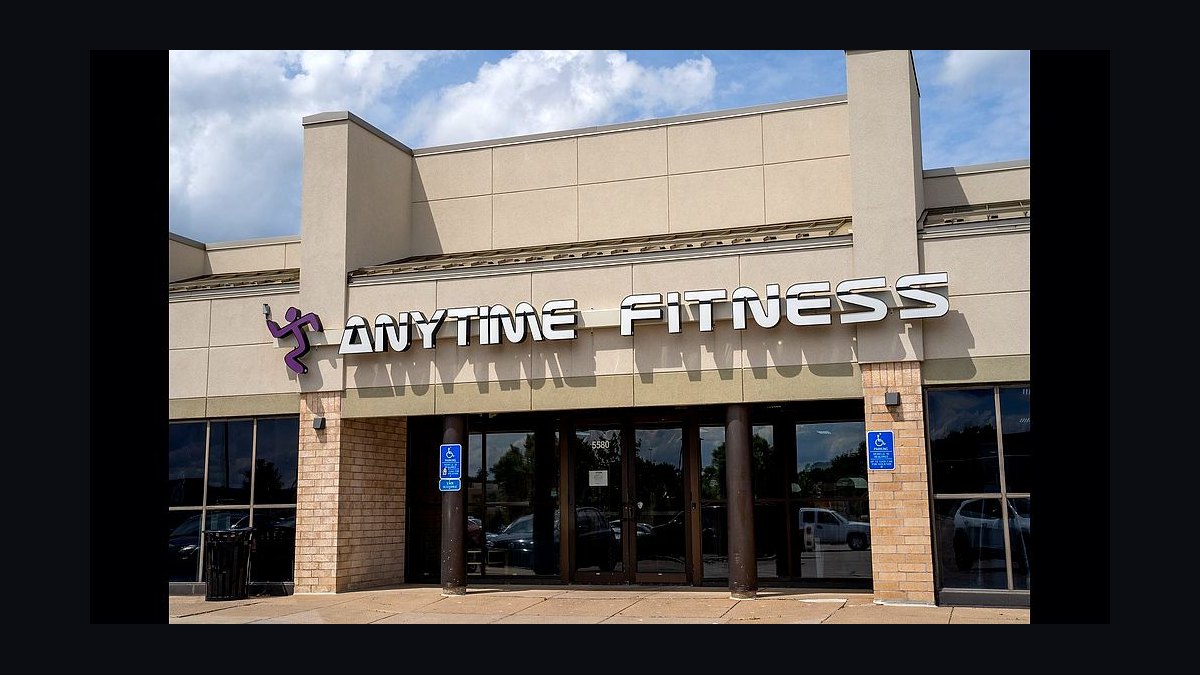
Open an Anytime Fitness franchise in 2027 only if you have $250K+ liquid capital, can secure a Tier-2/Tier-3 suburban site under $22/sqft NNN, and are prepared to work as a hands-on owner-operator for 18-24 months. The 2026 FDD shows a $539K-$905K investment range, a flat $699/month royalty, and median Year-1 owner cash flow of $45K-$75K — solid, but not a quick income replacement.
A Concrete Scenario That Frames The Problem
Picture a 42-year-old regional sales manager in Fort Wayne, Indiana, sitting on $310,000 in liquid savings after a decade of six-figure W-2 income. He's tired of a boss, has no fitness-industry background, and has started circling "franchise opportunities" on a Saturday morning. Anytime Fitness keeps surfacing because the brand feels familiar — he's a member at one. He calls a franchise broker, gets a glossy deck, and the numbers look approachable next to a $2M Marriott hotel franchise or a $4M car wash build. This is exactly the moment where most prospective owners make their first mistake: they evaluate the franchise fee ($42,500) as the "cost of entry" and treat everything else as a rounding error.
In reality, the franchise fee is the smallest line on the FDD. The real decision is about real estate, equipment financing, and — critically — whether this person is willing to spend 50 hours a week for a year and a half calling lapsed members, training front-desk staff, and negotiating with a landlord who wants a personal guarantee stretching past his youngest kid's college graduation. Anytime Fitness is marketed around "24/7 keyless access," which creates a dangerous illusion for first-time franchisees: that the business runs itself because the doors are always open. The access model removes staffing costs: it does not remove the owner's job. Someone who opens a Fort Wayne location, lists it as "passive," and checks in twice a week is the exact profile that shows up in FDD Item 20 closure data within three years. The scenario matters because it reframes the question from "can I afford to open this franchise?" to "am I the kind of operator this specific unit economics model rewards?" Those are different questions, and the 2027 answer depends on getting that distinction right before signing anything.
How The Mechanism Actually Works
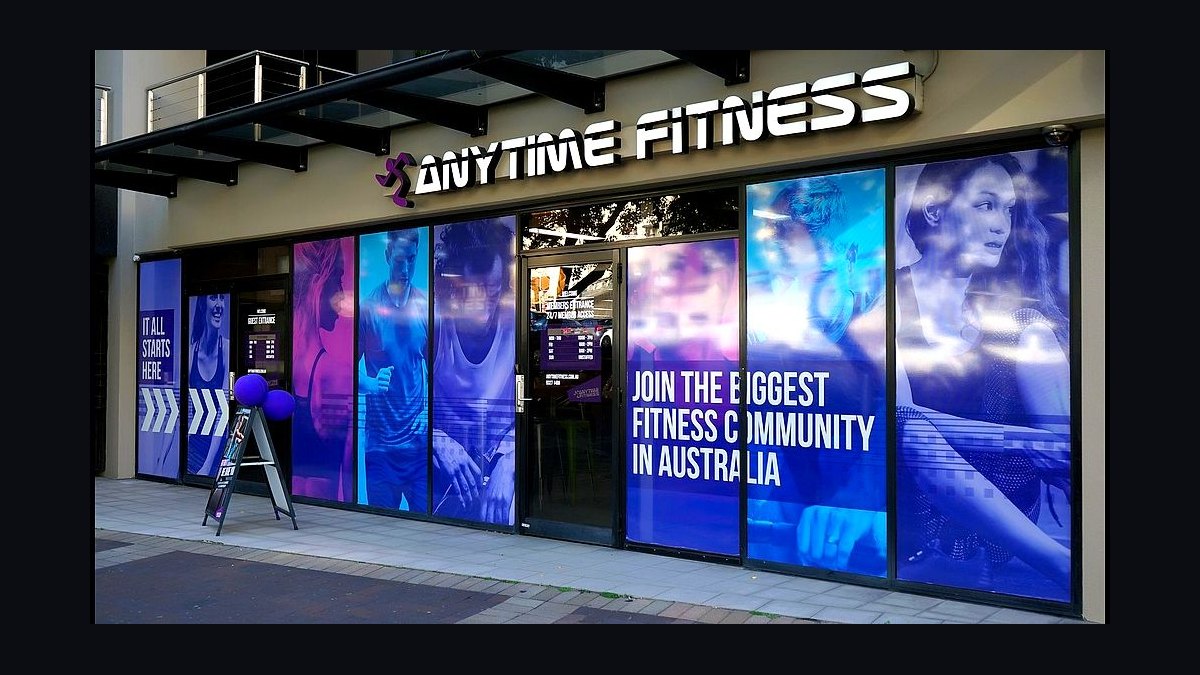
The Anytime Fitness business model runs on a different mechanism than most gym franchises, and understanding that mechanism is the single highest-leverage thing a prospective franchisee can do before writing a check. Most competitors — Crunch Fitness at roughly 7% of revenue, Planet Fitness also around 7% — charge royalties as a percentage of gross sales. Anytime Fitness charges a flat $699/month regardless of whether the club does $250,000 or $700,000 in annual revenue. That single structural choice changes the incentive on both sides. The franchisor has less direct financial upside from helping a struggling club grow (their check doesn't change), which pushes more of the growth burden onto tools like the Coaching Dashboard and member-acquisition training rather than field-rep hand-holding. The franchisee, meanwhile, gets a royalty structure that behaves like a fixed cost: it's a brutal percentage of revenue in month three when membership is thin, and it becomes nearly invisible — 1.2% of revenue — once a club matures toward $700K AUV.
The day-to-day mechanism works like this: a member joins through a 30-day free trial, converts to a monthly membership (often $39-$59/month depending on market), and from that point the location earns recurring revenue with minimal marginal cost per member, since 24/7 keyless access doesn't require staff presence during most open hours. Revenue compounds as the membership base grows past the breakeven line, typically cited around 18 months. The owner's job during the ramp-up phase is almost entirely top-of-funnel: driving trial sign-ups through local marketing, converting trials in-person, and — this is the part absentee owners miss — personally re-engaging members who show signs of lapsing, because churn is the mechanism's biggest threat. Once membership stabilizes in the 1,000-1,400 range for a standard 5,500 sqft box, the owner's role can shift toward oversight, hiring a general manager, and either opening a second unit or extracting cash flow. The flowchart below shows how a single location's revenue mechanism connects members, retention, and royalty structure into the owner's actual take-home.
Real Numbers, Ranges, And Benchmarks

Before opening any Anytime Fitness location in 2027, the numbers from the 2026 FDD need to be internalized line by line, not skimmed as a single "total investment" figure. The total initial investment runs $539,000 to $905,000, with a median build closer to $720,000. Inside that range: the $42,500 franchise fee is fixed and non-negotiable; real estate and build-out for a 4,500-6,000 sqft space runs $208,000-$389,000 depending on the condition of the shell and local construction costs; the required Matrix Fitness equipment package runs $185,000-$245,000; signage and the keyless-access technology stack adds $24,000-$38,000; and three months of working capital — covering payroll, rent, and fees before the club is self-sustaining — runs $46,000-$127,000. That working capital line is the one franchise consultants flag most often as underestimated; a reasonable cushion is an extra $60,000-$90,000 beyond what Item 7 states, because Months 4-9 is where most cash-flow surprises land.
On the revenue side, the 2026 FDD (covering 1,683 reporting U.S. units) shows median gross revenue of $399,000 and a mean of $438,422, with the top quartile — largely Coaching Dashboard adopters — clearing $561,000 or more. Newer units from the 2024 opening cohort run about 22% below mature-unit averages, which matters for anyone opening in 2027 and comparing themselves to five-year-old locations down the street. On a representative $400,000-revenue club, the cost structure breaks down roughly as: rent 18%, payroll 24%, royalty plus brand fund under 4%, equipment lease 8.4%, utilities/insurance/technology 10.5%, and member-management software around 3.5%. That leaves EBITDA near 31.5% before the owner's draw, translating to realistic Year-1 owner cash flow of $45,000-$80,000, scaling toward $130,000-$180,000 by Year 3 as membership matures and fixed costs stay flat. Breakeven typically lands around 18 months, with full payback of the initial investment averaging 28 months — figures that assume disciplined cost control and a location in the $18-22/sqft NNN range rather than a premium urban lease pushing $35-$60/sqft, which can consume 32-40% of revenue instead of the 15-20% target.

Trade-Offs And Alternatives
Every franchise decision is really a trade-off between capital intensity, royalty structure, and how much personal time the model demands — and Anytime Fitness sits in a specific spot on that spectrum that's worth comparing explicitly before committing $700K to one brand. Against Crunch Fitness, which runs $1.4M-$3.1M in total investment with a 7% revenue-based royalty, Anytime Fitness is roughly a quarter of the capital outlay, but Crunch's median AUV of $1.8M dwarfs Anytime's $399K — the trade-off is capital efficiency versus absolute scale. Against Planet Fitness, which requires a 15-unit area development minimum and $1.5M-$5.1M per location, Anytime Fitness is accessible to a single-unit operator in a way Planet Fitness simply isn't anymore in most markets. Against Snap Fitness, a smaller-footprint, lower-cost competitor at $299K-$622K, Anytime Fitness costs more up front but generates a meaningfully higher AUV ($399K median versus $245K), which is the classic "spend more, earn proportionally more" trade-off rather than a straightforward cheaper-is-better comparison.
The alternative that deserves the most serious look for a 2027 buyer who's hesitant about new-build costs is an existing Anytime Fitness resale, typically trading at 3.2-3.8x EBITDA in Tier-3 markets through brokers like Sunbelt Business Brokers, versus an effective 2.8x synthetic multiple on a fresh build once build-out costs are counted. A resale skips the 18-month ramp-to-breakeven entirely — you inherit an existing membership base — but caps upside if the prior owner already captured the easy local market share. Boutique-format alternatives like 9Round Kickboxing ($98K-$201K) or Xponential brands like StretchLab and Club Pilates ($170K-$340K) offer a dramatically lower capital bar, but 9Round's 11% unit-closure rate in 2024-2025 signals real demand softness in the micro-boutique category, and Xponential's 9.5% royalty plus 2% brand fund erodes margin fast once a location scales past $500K in revenue. The diagram below maps where each option sits on capital required versus royalty structure, which is the actual trade-off axis that should drive the decision — not brand recognition alone.
Common Pitfalls And How To Avoid Them
The single most common and most expensive mistake is treating Anytime Fitness as a passive investment because of its 24/7 keyless-access marketing. Absentee owners who don't personally work the first 18-24 months consistently show the worst outcomes in FDD Item 20 closure and transfer data, because member churn — which industry-wide averages around 38% annually — climbs toward 50%+ without someone personally re-engaging lapsing accounts. The fix is straightforward but non-negotiable: budget your own time, not just your capital, and plan to be on-site or directly managing acquisition and retention for the first year and a half minimum.

The second pitfall is site selection driven by availability rather than discipline. Signing a lease above roughly $22/sqft NNN, especially in a dense urban core, breaks the unit economics because rent then consumes 32-40% of revenue instead of the 15-20% target, and no amount of operational excellence fully offsets that structural drag. The fix is to work with a tenant-rep broker, target daily traffic counts above 18,000 vehicles in a suburban corridor, and walk away from any landlord unwilling to negotiate free rent, a tenant-improvement allowance, or a reasonable personal-guarantee term. A third, less obvious pitfall is skipping the Coaching Dashboard rollout to save on the technology fee — FDD data shows adopters averaging $561K AUV against $447K for non-adopters, meaning the "savings" costs far more in lost revenue than the monthly fee itself. A fourth pitfall is financing the required Matrix equipment package through the manufacturer's in-house capital arm at 11-14% APR instead of pursuing an SBA 7(a) loan near Prime+1.5 — the interest-rate spread alone can total tens of thousands of dollars over a loan term. Finally, resist the urge to compete on price against neighboring low-cost gyms; racing membership pricing down to $15/month permanently compresses ARPU and undermines the entire 31.5% EBITDA margin the flat-royalty model depends on. Each of these pitfalls shares the same root cause: treating the franchise agreement as the finish line rather than the starting line of an 18-month operational sprint.
Related questions
How much does it cost to open a Snap Fitness franchise compared to Anytime Fitness?
Snap Fitness runs $299K-$622K versus Anytime's $539K-$905K, with a smaller 3,500 sqft footprint and a 5% revenue-based royalty instead of Anytime's flat fee — but Snap's median AUV of $245K trails Anytime's $399K meaningfully.
What's the difference between opening a new Anytime Fitness and buying a resale?
A resale trades at 3.2-3.8x EBITDA and comes with an existing membership base, skipping the 18-month breakeven ramp, but caps upside if the seller already captured easy local growth; a new build costs more up front but lets you shape the site and market from scratch.
Does Anytime Fitness require prior fitness industry experience to franchise?
No formal requirement exists, but owners with either fitness-industry background or multi-unit retail/QSR ownership experience consistently outperform first-time small-business owners, largely because they already understand P&L discipline and staff management.
How does the flat royalty fee change as a club grows?
At $400K revenue the $699/month royalty is roughly 2.1% of sales; at $700K AUV it drops to about 1.2% — the flat structure rewards growth far more than Crunch's or Planet Fitness's 7% revenue-based royalties, which never shrink as a percentage.
FAQ

Is Anytime Fitness a good franchise to open in 2027 specifically, versus waiting? 2027 favors Tier-3 and exurban counties with 20,000-60,000 population and no existing 24/7 gym within eight miles, since Tier-1 metros are approaching saturation. Waiting risks losing the best remaining territories to competing multi-unit operators already scouting those same corridors.
Can I franchise Anytime Fitness with less than $250,000 in liquid capital? It's difficult. Most SBA 7(a) lenders expect a meaningful owner equity injection against the $539K-$905K total investment, and undercapitalized openings are disproportionately represented in early closures because they can't absorb Months 4-9 cash-flow gaps.
How long does it realistically take before an Anytime Fitness franchise becomes profitable? Breakeven typically arrives around 18 months post-opening, with full investment payback averaging 28 months. Locations that run a disciplined 90-120 day pre-sale campaign before opening tend to hit breakeven meaningfully faster than cold openings with no pre-sold membership base.
What happens if I open an Anytime Fitness franchise but can't work it full-time? Absentee ownership correlates with the weakest outcomes in the system. Member churn climbs without an owner personally handling retention, and revenue often erodes 18-24 months in. If full-time involvement isn't possible, a GM hire from day one — budgeted at $65K-$80K — is close to mandatory, not optional.
Are there new regulations in 2027 that affect opening a gym franchise? Yes — California's AB 2491 (effective January 2027) requires 60-day opt-out notice before auto-renewing monthly memberships, and New York's "Easy Cancel" Act imposes similar notice rules. Operators in those states need billing-flow changes built into pre-opening setup.
Is a multi-unit Anytime Fitness strategy better than opening just one franchise? Multi-unit operators who own 3-5 territories unlock owner-as-investor economics once a regional general manager is in place, but that strategy requires far more capital and management depth upfront than a single-unit, owner-operator open.
Sources
- https://www.ihrsa.org
- https://www.franchisetimes.com
- https://www.franchisedisclosure.com
- https://www.athletechnews.com
- https://www.ibisworld.com
- https://www.statista.com
- https://www.vettedbiz.com
- https://www.1851franchise.com
- https://www.fortunebusinessinsights.com
- https://www.commerce.state.mn.us
Related on PULSE
- Should I open or buy a Workout Anytime franchise in 2027?
- Best fitness and gym franchises to buy in 2027
- Should I open or buy a Fitness 19 franchise in 2027?
- Should I open or buy a Snap Fitness franchise in 2027?
- Should I open or buy an EOS Fitness franchise in 2027?
- Should I open or buy a Crunch Fitness franchise in 2027?
This page will be disappearing soon. Save it to your device for $1 — or read it free while it is here.
@Kory-White- · if Venmo asks, the last 4 of my number are 2012
This page is gone.
This one is off the shelf now. $1 keeps it on your phone for good — the whole page, pictures and diagrams included.
 franchiseShould I open or buy a Bojangles franchise in 2027?
 franchiseShould I open or buy a Jimmy John's franchise in 2027?
 franchiseShould I open or buy a Papa John's franchise in 2027?
 franchiseShould I open or buy a Meineke franchise in 2027?
 franchiseShould I open or buy a Dairy Queen franchise in 2027?
 franchiseShould I open or buy a Jeremiah's Italian Ice franchise in 2027?
 franchiseShould I open or buy a Great Clips franchise in 2027?
 franchiseShould I open or buy a Goddard School franchise in 2027?
 franchiseShould I open or buy a KinderCare franchise in 2027?
 franchiseShould I open or buy a Subway franchise in 2027?