


Should I open or buy an Orangetheory Fitness franchise in 2027?
Quality
Certified
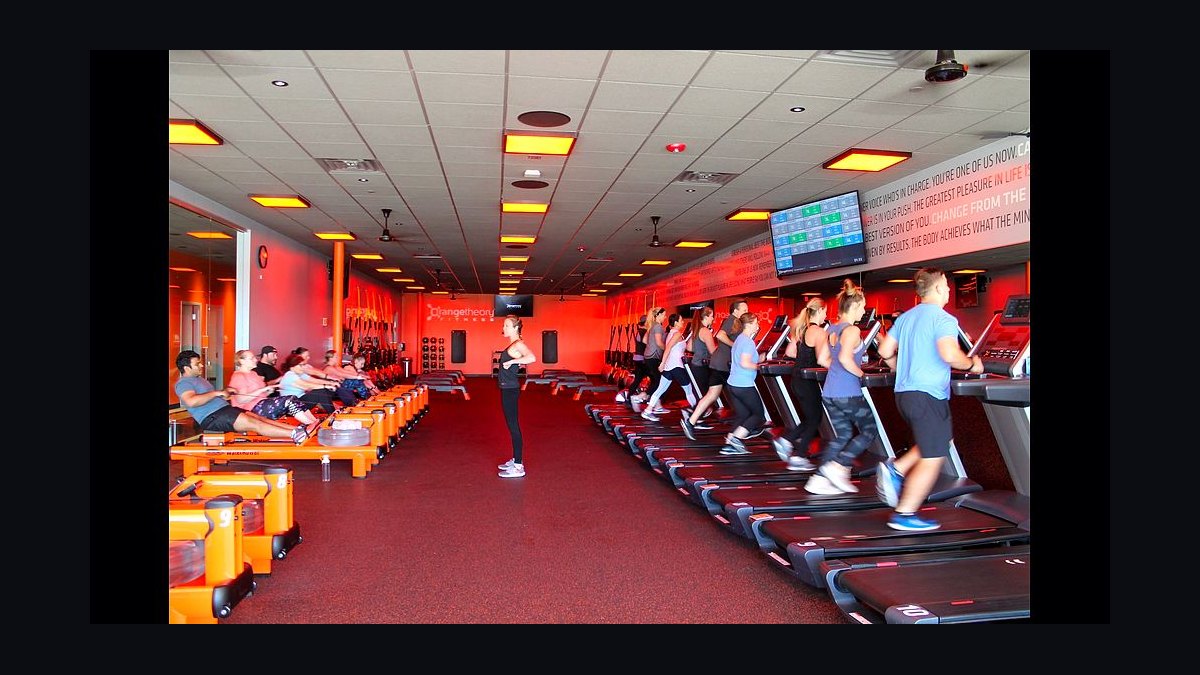
Yes — if you can fund a $1.0M-$1.4M all-in build in a top-quintile demographic, accept 8-12 year payback, and operate hands-on through a maturing boutique-fitness cycle. Orangetheory Fitness in 2027 is a #2-ranked Franchise 500 fitness brand (Entrepreneur, January 2027) with 1,269 U.S. studios, a median AUV of $1.0M, and a 8% royalty + 2-3% marketing fund. Real 2026 FDD Item 7 ranges show $821,622-$1,377,160 total investment with a $59,950 franchise fee. Conservative Year-1 owner cash flow lands at $121K-$145K on a single mature studio; greenfield Year-1 typically runs negative $40K to positive $60K before ramping in Year-2. Breakeven 18-30 months, payback 8-12 years. Resale of a seasoned studio at 1.5-2.5x EBITDA is the smarter 2027 play than greenfield.
The Real Numbers
Orangetheory's 2026 FDD (issued April 2026, in force through April 2027) is the most current disclosure on file with state regulators in California, Illinois, Maryland, Minnesota, New York, Virginia, and Washington. Item 7 ranges and Item 19 financial performance representations both reflect the 1,269 U.S. studios open as of December 31, 2025. The numbers below blend the 2026 FDD with cross-checks from IHRSA's 2027 Global Report, IBISWorld Gym, Health & Fitness Clubs in the US (NAICS 713940, February 2027), and IFA Franchise Business Economic Outlook 2027. Note that Orangetheory does not grant exclusive territory under the current FDD — a material risk that pencils into your valuation discount.
| Line Item | Low | High | Notes (2026 FDD) |
|---|---|---|---|
| Initial Franchise Fee | $59,950 | $59,950 | Single unit; multi-unit deals discount to $42,500/unit |
| Architect & Design Fees | $20,000 | $45,000 | Item 7.2; prototype B studio 2,800-3,400 sq ft |
| Leasehold Improvements & Build-Out | $385,000 | $720,000 | Item 7.3; class B retail, varies by metro |
| Equipment (treadmills, rowers, strength) | $185,000 | $245,000 | Woodway treadmills + Concept2 rowers |
| Technology (POS, OTbeat, heart rate) | $42,000 | $68,000 | OTbeat tile system + Mindbody integration |
| Signage & Branding | $18,000 | $32,000 | Exterior + interior orange standard package |
| Initial Training (8 weeks, FL HQ) | $8,000 | $14,000 | Travel + lodging for owner + 2 coaches |
| Pre-Opening Marketing | $25,000 | $45,000 | Required pre-sale campaign 90 days out |
| Insurance, Permits, Legal | $12,000 | $24,000 | Varies by jurisdiction |
| 6-Month Working Capital | $70,000 | $125,000 | Item 7 floor; most operators run $150K+ |
| TOTAL INITIAL INVESTMENT | $821,622 | $1,377,160 | Item 7 grand total |
| Royalty | 8.0% gross sales | 8.0% gross sales | Item 6 |
| National Marketing Fund | 2.0% gross sales | 3.0% gross sales | Item 6; lifted from 2% to 3% in 2025 |
| Local Marketing Minimum | $2,500/month | $5,000/month | Item 11 |
| AUV (Item 19, all 1,269 U.S. studios) | $807,976 mean | $1.0M median | 2026 FDD Item 19 |
| Top-Quartile AUV | $1.35M | $1.6M | Item 19 cohort analysis |
| Studio-Level EBITDA Margin | 14% | 18% | Mature studio post Year-3 |
| Year-1 Owner Cash Flow (greenfield) | -$40,000 | +$60,000 | Pre-ramp, post-debt service |
| Year-3 Owner Cash Flow (single unit) | $121,000 | $145,000 | Per franchisee earnings disclosure |
| Payback Period | 8 years | 12 years | Industry median |
| Breakeven Operating Months | 18 months | 30 months | From soft open to cash-flow positive |
Independent benchmark cross-check. IBISWorld (NAICS 713940, February 2027) reports sector EBITDA at 11.2%, putting Orangetheory's 14-18% in the top tercile of fitness operators. IHRSA's 2027 report confirms boutique fitness studio revenue grew 4.1% YoY in 2026, recovering from the 2020-2021 dip. BLS Consumer Expenditure Survey (Q4 2026) shows household fitness spending up 6.3% YoY among the $100K+ income cohort — Orangetheory's core. Placer.ai's January 2027 fitness traffic report flagged Orangetheory foot traffic up 7.8% YoY through 2024, sustained through 2026.
Who Wins With This Business
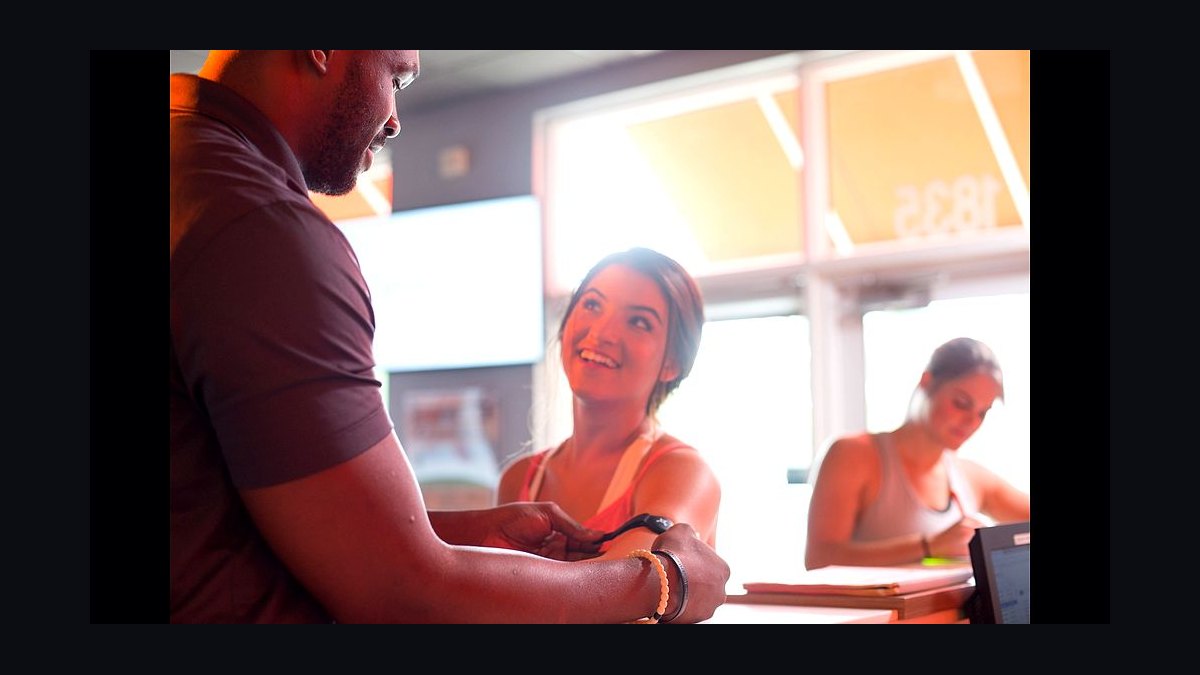
The Orangetheory operator who wins in 2027 is rarely a first-time franchisee with a single greenfield studio. The franchisor's screening process — confirmed by VP of Franchise Development David Hardy in a February 2027 1851 Franchise interview — explicitly favors multi-unit operators or experienced fitness professionals with operational scars. Five winning profiles consistently outperform.
First, multi-unit area developers with 3-10 studios in adjacent suburban trade areas. They share regional managers, group exercise instructor pools, and pre-sale marketing budgets. Per-studio overhead drops $4K-$8K/month in clusters. The top quartile of franchisees (~$1.35M-$1.6M AUV) are almost exclusively multi-unit. Names like Self Esteem Brands franchisees and Ellipse Fitness operators dominate this cohort.
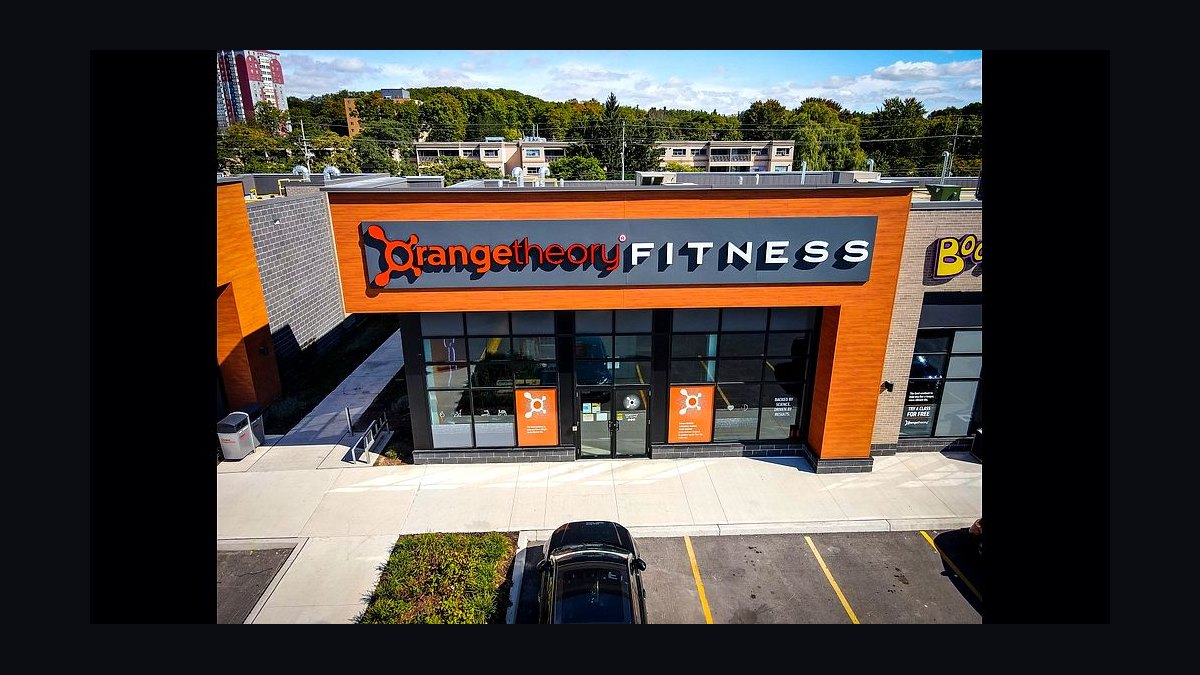
Second, owner-operators in $120K+ median household income trade areas. Orangetheory's $159-$199/month unlimited membership demands disposable income. Westchester County, Marin County, North Dallas, Boston metro west, and Northern Virginia consistently produce $1.2M+ AUVs. Operators who pay up for these sites win the decade.
Third, fitness-professional owners who coach the floor. The brand's OTbeat heart-rate-zone training is coach-led. Owners with NASM/ACE certifications and prior boutique-fitness GM experience drive 75%+ member retention versus the 62% chain average. Coaching skill is the brand's moat.
Fourth, operators with $500K+ liquidity beyond the SBA loan. Greenfield Year-1 burns $80K-$150K before cash-flow positive. Operators who can self-fund the ramp without panic-discounting memberships protect long-run pricing power and avoid the "$99 unlimited" death spiral that has killed several franchisees in saturated markets.
Fifth, resale buyers who acquire mature studios. A $1.0M AUV studio at 16% studio-level EBITDA ($160K) trades at 1.5-2.5x EBITDA ($240K-$400K) plus assumed FF&E. Buyers skip the 18-30 month ramp and start at positive cash flow on Day 1. Orangetheory's official resale portal lists 60-90 studios at any time. This is the highest-IRR play in 2027.
Who Loses With This Business

Solo absentee investors lose first and fastest. Orangetheory is a high-touch, instructor-dependent boutique. An absentee operator with a GM proxy will hemorrhage $15K-$30K/month through coach turnover, member churn, and 2-star Google reviews. The brand's franchisee survey (2026) showed absentee-operated studios run 22% below cluster median AUV.
Operators in saturated suburban rings lose by cannibalization. Orangetheory does not grant exclusive territory in the current FDD. Markets like Plano TX, Scottsdale AZ, Naperville IL, and Walnut Creek CA now have 4-7 studios within a 10-mile radius, splitting the addressable member pool. New entrants in these markets routinely settle at $650K-$780K AUV — below breakeven on a $1.2M build.
Undercapitalized operators lose to the ramp. The Item 7 floor of $821K is misleading. Real all-in for a competitive greenfield studio with 6 months of working capital, full pre-sale marketing spend, and a $40K equipment buffer is $1.1M-$1.5M. SBA 7(a) loans cap at $5M but most lenders require 20-25% equity injection, meaning $220K-$300K cash on the table. Personal liquidity below $300K disqualifies most candidates.

Operators who under-invest in coach development lose retention. Orangetheory's monthly churn target is 4.5%; sloppy coaches push it to 7-9%. At $159 average revenue per member, every 1% of monthly churn costs $8,400/year per 100 members. A 300-member studio with 8% churn versus 4.5% loses $88K/year in cash flow — more than the franchise fee.
Operators ignoring the GLP-1 demographic shift lose membership growth. CDC NHANES 2027 data shows 14.3M U.S. adults on semaglutide or tirzepatide by Q1 2027 — many in Orangetheory's core demographic. GLP-1 users want muscle retention and HIIT, which is Orangetheory's strength, but operators who fail to market explicitly to this segment (offering body-composition scans, RPE-adjusted classes, post-GLP-1 strength programs) cede ground to F45, Barry's, and CrossFit affiliates. The opportunity is real; ignoring it is the loss.
2027 Market Conditions
The 2027 boutique fitness market is in a maturity phase with selective growth, not the explosive expansion of 2015-2019. Four macro forces define the year.
One — GLP-1 demand reshaping fitness. Roughly 14.3 million U.S. adults are on semaglutide or tirzepatide by Q1 2027 per CDC NHANES preliminary 2027 data. GLP-1 users lose weight plus muscle mass, creating massive demand for HIIT and resistance training. Orangetheory's 50% strength + 50% cardio format is uniquely positioned. IHRSA's 2027 report flags GLP-1-aware fitness brands as the fastest-growing segment, projecting 8-12% category growth through 2029. Smart operators are launching "GLP-1 strong" class blocks and partnering with local endocrinologists.

Two — Premium fitness consolidation. Placer.ai's January 2027 fitness chain report showed Life Time, Equinox, Orangetheory, and Barry's as the "flourishing premium tier" while mid-market chains (LA Fitness, 24 Hour Fitness) continue to lose share. Orangetheory's $159-$199/month price point sits squarely in the defended premium zone. Bain & Company's 2026 health-and-wellness report projects boutique fitness CAGR of 6.4% through 2029, driven entirely by the top quartile by income.
Three — Saturation and cannibalization. Orangetheory's 1,269 U.S. studios plus competitors (F45 with 1,500+, CycleBar with 245, Barry's with 80+, Solidcore with 130+) have densified suburban metros. Athletech News (March 2027) flagged 27% of U.S. ZIP codes with $100K+ median HHI now have 3+ boutique fitness studios. New entrants must either find white-space metros (Boise, Charleston, Knoxville, Reno) or acquire existing studios.
Four — Wage and rent pressure. BLS Q1 2027 data shows fitness instructor wages up 4.2% YoY while commercial retail rent is up 3.8%. The combined 8%+ cost inflation on a flat membership base squeezes operators who cannot push price. Orangetheory raised the national marketing fund from 2% to 3% in 2025; further royalty pressure is unlikely until the next FDD cycle but remains a risk.
The 90-Day Decision Tree

- Days 1-15 — Financial gating. Pull a personal financial statement. Confirm net worth above $1.0M and liquid assets above $300K. Get pre-qualified with Live Oak Bank, Huntington National Bank, or ApplePie Capital for SBA 7(a) up to $1.2M. If liquidity is short, stop now and revisit in 12 months.
- Days 16-25 — Brand discovery call. Submit Orangetheory's online franchise inquiry. Get routed to David Hardy's team. Request the 2026 FDD. Read Item 7 (investment), Item 19 (financial performance), Item 20 (franchisee list and closures), and Item 21 (audited financials of the franchisor). Closures matter — count them per metro.
- Days 26-45 — Validation calls. Orangetheory mandates 15-20 franchisee validation calls before approval. Target a mix: multi-unit operators, single-unit operators in Year 1-3, and operators who closed. Ask about AUV ramp curves, coach retention, landlord negotiations, and the 2% to 3% marketing fund lift. Document everything.
- Days 46-60 — Trade area analysis. Hire a Buxton or Tango Analytics demographic study ($4K-$7K). Confirm $120K+ MHI within 3 miles, 2-5 mile radius population over 75,000, and fewer than 2 competing Orangetheory studios within 7 miles. If the trade area fails, pivot to a different metro or pursue resale.
- Days 61-75 — Resale comparison. Pull current Orangetheory resale listings at orangetheory.com/franchising/studio-resale-locations. Compare 3-5 mature studios trading at 1.5-2.5x studio-level EBITDA. If a $1.2M AUV studio is available at $400K plus assumption of $600K SBA debt, the IRR beats greenfield by 200-400 bps.
- Days 76-85 — Discovery Day. Attend Discovery Day in Boca Raton, FL (Orangetheory HQ). Meet founder Ellen Latham, the operations team, and existing franchisees. Tour the corporate flagship studio. This is mutual evaluation — they decide you fit, you decide they fit.
- Days 86-90 — Decision and deposit. Sign the Area Development Agreement (if multi-unit) or single-unit Franchise Agreement. Wire the $59,950 franchise fee (or $42,500 per additional unit). Begin site selection. Plan 9-15 months from contract to soft open.
Alternative Plays
If Orangetheory does not fit your capital, capacity, or trade area, four alternative fitness-franchise plays deserve evaluation in 2027.

First, F45 Training — $320K-$682K total investment, 7% royalty + 2% marketing, $650K-$900K AUV median. Lower capital, higher unit density (1,500+ U.S.), but post-2023 IPO pressure has driven franchisee dissatisfaction. Best for operators who can stomach brand volatility for lower entry cost.
Second, Stretch Lab (Xponential Fitness) — $200K-$430K total investment, 6% royalty + 2% marketing, $550K-$750K AUV. The assisted-stretching category is the fastest-growing fitness vertical (+18% YoY per IHRSA). Smaller footprint (1,200-1,800 sq ft), lighter equipment, GLP-1-aligned.
Third, Club Pilates (Xponential Fitness) — $200K-$510K total investment, 7% royalty + 2% marketing, $650K-$1.0M AUV. #1 Pilates franchise by units (1,000+) and aligned with the 2027 strength-and-mobility consumer trend. Strong female demographic.
Fourth, buy an existing Orangetheory at a discount. As detailed above, mature studios at 1.5-2.5x studio-level EBITDA beat greenfield IRR. Combine with a multi-unit roll-up strategy in adjacent trade areas to capture cluster operating leverage. This is the asymmetric play that most prospective franchisees overlook.
FAQ
What is the total investment needed to open an Orangetheory Fitness in 2027? You’ll need between $821,622 and $1,377,160, according to the 2026 FDD Item 7. That includes a $59,950 franchise fee, build-out, equipment, and pre-opening costs. Most owners budget around $1.0M to $1.4M for a fully operational studio.
How long does it take to break even and see a return? Breakeven typically occurs between 18 and 30 months, with payback on your investment taking 8 to 12 years. Year-1 cash flow for a greenfield studio can range from negative $40K to positive $60K, then ramps up in Year-2.
What are the ongoing royalty and marketing fees? You’ll pay an 8% royalty on gross revenue plus a 2-3% marketing fund contribution. These are standard across the system and fund national advertising and brand support.
Is it better to buy a resale studio or build a new one in 2027? Resale of a seasoned studio at 1.5-2.5x EBITDA is often the smarter play. You avoid the 18-30 month ramp-up and negative first-year cash flow, and you get a proven location with existing members.
What kind of owner cash flow can I expect in the first year?

Conservative Year-1 owner cash flow for a single mature studio is $121K-$145K. But a new greenfield studio may lose $40K or make up to $60K in Year-1, so plan for a lean start.
Is Orangetheory Fitness still a strong franchise brand in 2027? Yes, it’s ranked #2 in Entrepreneur’s Franchise 500 for fitness (January 2027), with 1,269 U.S. studios and a median AUV of $1.0M. The brand is maturing, so hands-on operation and a top-quintile demographic are key to success.
Bottom Line
Orangetheory Fitness in 2027 is a defensible premium-tier boutique fitness franchise with strong Year-3+ economics — but a brutal greenfield ramp and no territory protection. The math works for multi-unit operators, owner-coaches in $120K+ MHI trade areas, and resale buyers acquiring mature studios at 1.5-2.5x EBITDA. It does not work for absentee solo investors, undercapitalized first-timers, or new entrants into saturated suburban rings. Conservative Year-3 cash flow of $121K-$145K on a single mature studio with 8-12 year payback is a real wealth-building outcome — provided you survive the 18-30 month ramp. The smart 2027 move is to acquire an existing studio, cluster a second within 18 months, and ride GLP-1-driven HIIT demand through the decade. Skip greenfield in any metro with three or more existing Orangetheory studios within 10 miles.
Sources
- Orangetheory Fitness 2026 Franchise Disclosure Document (Item 6, Item 7, Item 11, Item 12, Item 19, Item 20, Item 21), April 2026 issue
- Entrepreneur Magazine Franchise 500, January 2027 edition
- IHRSA 2027 Global Report on the Health Club Industry
- IBISWorld Gym, Health & Fitness Clubs in the US (NAICS 713940), February 2027
- IFA Franchise Business Economic Outlook 2027
- Placer.ai Fitness Chain Foot Traffic Report, January 2027
- Athletech News, "Premium Fitness Brands Flourishing," March 2027
- 1851 Franchise interview with David Hardy (VP Franchise Development, Orangetheory Fitness), February 2027
- CDC NHANES preliminary 2027 data on GLP-1 receptor agonist adoption
- BLS Consumer Expenditure Survey, Q4 2026
- Bain & Company Health and Wellness Industry Report 2026
- Orangetheory Fitness Studio Resale Portal (orangetheory.com/en-us/franchising/studio-resale-locations)
Related on PULSE
- Best fitness and gym franchises to buy in 2027
- Should I open or buy a Fitness 19 franchise in 2027?
- Should I open or buy a Snap Fitness franchise in 2027?
- Should I open or buy an EOS Fitness franchise in 2027?
- Should I open or buy a Crunch Fitness franchise in 2027?
- Should I open or buy a Blink Fitness franchise in 2027?
This page will be disappearing soon. Save it to your device for $1 — or read it free while it is here.
@Kory-White- · if Venmo asks, the last 4 of my number are 2012
This page is gone.
This one is off the shelf now. $1 keeps it on your phone for good — the whole page, pictures and diagrams included.
 frShould I open or buy a McDonald's franchise in 2027?
 franchiseShould I open or buy a Whataburger franchise in 2027?
 franchiseShould I open or buy a Little Caesars franchise in 2027?
 franchiseShould I open or buy a Sonic Drive-In franchise in 2027?
 franchiseShould I open or buy a Wingstop franchise in 2027?
 franchiseShould I open or buy a Cinnabon franchise in 2027?
 franchiseShould I open or buy a Mathnasium franchise in 2027?
 franchiseShould I open or buy a Stanley Steemer franchise in 2027?
 franchiseShould I open or buy a Dairy Queen franchise in 2027?
 franchiseShould I open or buy a Hand and Stone Massage franchise in 2027?