


Should I open or buy a Kumon franchise in 2027?
Quality
Certified
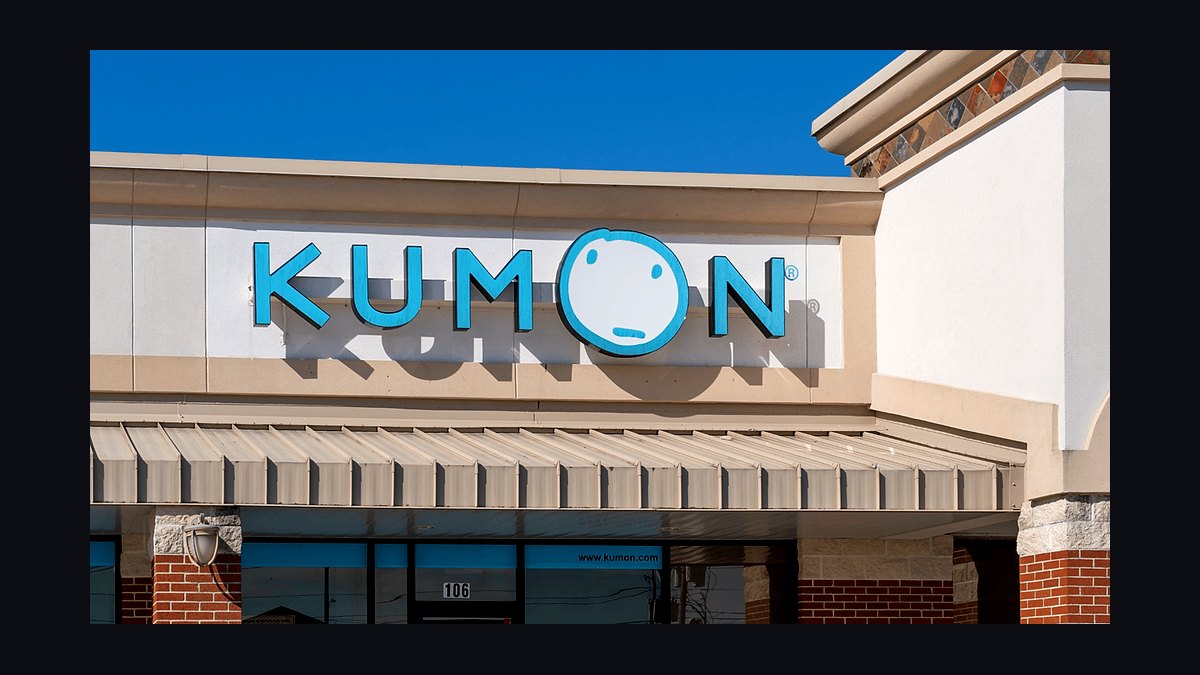
Opening or buying a Kumon franchise in 2027 makes sense only if you can fund $73,000–$165,000 without touching debt service for 24 months, are willing to personally teach sessions twice a week yourself, and can tolerate a 2-to-4-year payback instead of a quick return. Expect negative cash flow of $15,000–$35,000 in year one while you build toward roughly 60 enrolled students.
A Suburban Garage-to-Storefront Scenario
Picture a former public-school math teacher in a growing suburb outside Columbus, Ohio, in early 2027. She has $140,000 in savings, a spouse with a stable second income, and a strong conviction that the local school district's test scores have been sliding since the pandemic. She is not looking for a side hustle — she wants to replace her teaching salary within three years while working fewer, more controllable hours than a classroom demands. This is the exact profile Kumon is built around, and walking through her decision illustrates every variable that actually determines whether opening a Kumon franchise is the right move in 2027.
She starts by touring three vacant retail bays near a shopping plaza anchored by a grocery store, all within 1,400 square feet and all inside a 10-minute drive of her home — a requirement, not a preference, since Kumon expects the franchisee to be present for nearly every session. She pulls enrollment data from the two nearest elementary schools, checks GreatSchools ratings, and maps the two existing Kumon centers and one Mathnasium already operating in the metro area. None sit within four miles of her target site, so she is not cannibalizing an existing franchisee's territory. She models her own household budget assuming zero income from the center for 15 months, which is the real planning horizon rather than the hopeful 6-month ramp many first-time buyers assume.

Her biggest open question isn't the $1,000 franchise fee — it's whether she can actually commit 20-plus hours a week of in-person instruction, Tuesday and Thursday evenings plus Saturday mornings, for years, while also handling grading, parent calls, and local marketing. That tension between "I can afford to open this" and "I can actually run this as my daily life" is the real decision point for 2027 buyers, and it is where most due diligence conversations should start.
How the Flat-Fee Royalty Mechanism Actually Works
Kumon's economics work differently from almost every other franchise category, and understanding the mechanism — not just the headline numbers — is what separates owners who price correctly from owners who get squeezed. Instead of paying a percentage of revenue to the franchisor, Kumon charges a flat royalty of roughly $38 per student per subject per month, regardless of what tuition you charge that student. That design choice has a direct consequence: your royalty burden scales with enrollment, not with price, which means your own pricing decisions determine your margin far more than they would under a percentage-royalty model.

At 100 students each taking two subjects (math and reading, the typical combination), the royalty bill is 100 × 2 × $38, or $7,600 a month, independent of whether you charge $150 or $200 per subject. If you charge low to "compete" on price, you are paying the same royalty on lower revenue, which collapses your margin fast. If you hold Kumon's brand-supported pricing of $160–$210 per subject, the royalty becomes a smaller share of a larger number. This is the single most important mechanical fact a prospective owner must internalize before signing: your profitability is a pricing-discipline problem layered on top of an enrollment-growth problem, not simply a volume problem.
The practical lesson from this diagram: a Kumon owner who discounts tuition to chase enrollment is fighting the royalty structure instead of using it. The owners who do best treat enrollment growth and price-holding as two separate levers that must move together, not substitutes for each other.
Real Numbers, Ranges, and Benchmarks
The Kumon Franchise Disclosure Document is unusually transparent for the category, and the numbers it discloses are worth walking through individually rather than skimming as a single lump sum.

The initial franchise fee is just $1,000 — among the lowest entry fees of any established franchise brand, tutoring or otherwise. That low fee is misleading on its own, though, because the real cost sits in build-out and working capital. Leasehold improvements and furniture for an 800–1,400 square foot retail space typically run $18,000 to $58,000 depending on the condition of the shell and local construction costs. Materials, signage, and classroom technology add another $9,500 to $24,000. Mandatory instructor training, which runs roughly three weeks and includes required travel and lodging, adds $2,200 to $5,800. Insurance, deposits, and local licensing commonly run $3,500 to $8,400. The largest and most-cited line item is working capital: Kumon disclosure data and operator surveys both point to $24,000 to $68,000 needed to cover the first three months of operating losses before enrollment and tuition revenue catch up to expenses. Added together, total Item 7 investment lands between $73,000 and $165,000, with most new centers landing closer to the middle of that range around $110,000–$115,000.
Ongoing costs beyond royalty include a $300-per-month new-center marketing fee (mandatory for the first three years) and a roughly $49-per-month technology fee. Reported median annual revenue across more than 1,600 reporting U.S. centers sits around $173,000, with a wide spread — weaker centers report closer to $95,000 and strong, mature centers exceed $300,000. Reported EBITDA margins for healthy centers run 18% to 38%, with 28%–30% a reasonable planning midpoint. Owner take-home pay varies enormously by maturity: new centers often net $17,000 or less in year one or two, while centers with 200-plus students can produce $90,000 to $140,000 in owner compensation. Payback periods, measured from initial investment to cumulative cash-flow breakeven, typically run 2 to 5.5 years, with 3 years a realistic median expectation rather than an outlier.

Enrollment ramp is the number most first-time buyers get wrong. Rather than the 60 students some assume by month six, a more typical ramp looks like roughly 28 students by month six, 55 by month twelve, and 80 by month eighteen. Planning your personal cash runway around the faster, more optimistic curve is one of the most common and most expensive mistakes a new owner can make, because it leads to under-funding working capital at exactly the moment the center needs it most.
Macro conditions in 2027 are also relevant context, not just center-level economics. The broader U.S. supplemental-education and tutoring market is estimated in the tens of billions of dollars with mid-single-digit annual growth, driven partly by a persistent post-pandemic academic-recovery gap that has kept parent demand for outside academic support elevated well past the initial COVID disruption. At the same time, AI-driven tutoring apps have entered the market at lower price points, which puts some pressure on a brand like Kumon to articulate why in-person, accountability-driven instruction is worth a premium over a $20-a-month app — a case Kumon's retention data has historically supported, since fully unsupervised digital tutoring tends to show much higher drop-off than supervised, in-person models.
Trade-Offs Against Mathnasium, Code Ninjas, and Going Independent

No franchise decision happens in a vacuum, and Kumon is not the only path into the supplemental-education category in 2027. Comparing it honestly against its closest competitors clarifies what you are actually choosing when you choose Kumon specifically.
Mathnasium sits at a similar investment range, roughly $112,000 to $170,000, but runs on a percentage-of-revenue royalty (commonly cited around 9% royalty plus a smaller marketing contribution) rather than Kumon's flat per-subject fee. Mathnasium also permits a more employee-driven staffing model, meaning an owner can be closer to semi-absentee than Kumon allows, and reported median annual revenue tends to run higher. The trade-off is that Mathnasium's percentage royalty grows directly with revenue, so a fast-scaling center pays proportionally more to the franchisor than a Kumon center at the same revenue level would, assuming Kumon pricing is held firm.
Code Ninjas occupies an adjacent but distinct niche — after-school coding instruction rather than core math and reading — with a wider investment range (roughly $162,000 to $501,000) and a lower royalty rate, appealing most to owners targeting tech-employed-parent suburbs rather than the broader demographic Kumon serves. Tutor Doctor offers a lower-cost, home-based alternative with no retail lease requirement, trading a lower ceiling on revenue for meaningfully lower fixed overhead and risk — a reasonable option for someone unwilling to commit to a storefront lease.

The non-franchise alternative worth naming honestly is going independent: licensing a structured curriculum such as Singapore Math or a similar program for a few thousand dollars a year and operating under your own name. This path keeps 100% of revenue and avoids royalty entirely, but sacrifices brand recognition, established local parent trust, proven operating systems, and the franchisor's training — meaning the owner carries the entire marketing and curriculum-development burden alone. For an operator with teaching credibility and an existing local network, this can produce a higher take-home at equivalent enrollment; for someone relying on a recognized name to generate walk-in demand, it is a materially riskier path.
Each path trades some combination of brand support, royalty structure, owner time commitment, and revenue ceiling. Kumon's specific trade is low entry cost and strong brand recognition in exchange for mandatory personal instruction and a royalty that rewards disciplined pricing over aggressive discounting.
Common Pitfalls and How to Avoid Them
The failure patterns among underperforming Kumon franchisees are consistent enough across operator surveys and franchisee forums that they are worth naming individually rather than treating as generic risk.

The most damaging pitfall is treating the franchise as a passive investment. Kumon's agreement requires the franchisee to serve as the lead instructor, personally teaching sessions at least twice weekly. Owners who try to hire a salaried head teacher and manage from a distance routinely run into compliance problems with the franchisor and, more practically, lose the parent-facing relationship that drives referrals and renewals in a trust-based local service business. If you know going in that you want a hands-off investment, Kumon is the wrong franchise regardless of how attractive the unit economics look on paper.
A second common mistake is underestimating the enrollment ramp and under-capitalizing working capital as a result. Owners who plan around a 6-month path to 60 students, rather than the more realistic 12-to-18-month path, frequently run out of cushion right as the center is gaining real traction — the worst possible moment to be cash-constrained, since it forces cuts to the marketing spend that would otherwise accelerate growth.
A third pitfall is choosing a cheap, low-visibility location to save on rent. A $2,400-a-month strip-mall unit tucked behind other storefronts, with no sightline from a school pickup route or a grocery-anchored parking lot, consistently underperforms a pricier, higher-visibility space near a well-rated school or a busy family-oriented retail anchor. Rent that looks expensive on a spreadsheet is often cheap relative to the enrollment it generates.

A fourth pitfall, already covered mechanically above, is discounting tuition to compete on price. Because royalty is flat per subject rather than a percentage of revenue, discounting tuition directly destroys margin without reducing what you owe the franchisor — it is one of the few business decisions where the math is almost entirely one-directional against the owner.
Finally, many new owners skip or underfund local marketing beyond the mandatory $300-a-month brand fee, assuming the Kumon name alone will generate walk-ins. In practice, most successful new centers layer an additional $800 to $1,500 a month into local digital ads, school-sponsorship placements, and community events during the first two to three years, specifically to compress the enrollment ramp described earlier. Treating that spend as optional rather than part of the real Item 7 investment is a common and avoidable planning error.
Related questions
How long does it realistically take to break even on a Kumon franchise?
Most centers reach cumulative breakeven between 24 and 40 months, once enrollment reaches roughly 80–110 total subjects across math and reading combined, assuming working capital was funded to cover the slower realistic ramp rather than an optimistic one.
Is a Kumon franchise a good fit for someone who wants to stay a full-time employee elsewhere?
No. The franchisor requires the owner to personally instruct at least twice weekly, which makes Kumon incompatible with a demanding full-time job elsewhere; a semi-absentee model like Mathnasium fits that situation better.
Should I buy an existing Kumon center instead of opening a new one in 2027?

A resale with 100-plus existing students, typically priced around 2.5 times EBITDA, is generally the lower-risk entry path in 2027 because it skips the slow, cash-negative enrollment ramp that new centers face.
What local market signals suggest a Kumon franchise will perform well?
Median household income above roughly $95,000, school ratings of 8 or higher, high child population density, and no existing Kumon center within about four miles are the strongest predictors of a healthy trade area.
FAQ
What is the total investment needed to open a Kumon franchise in 2027? Total Item 7 investment ranges from roughly $73,000 to $165,000, covering the franchise fee, build-out, materials, training, licensing, and working capital. Plan to have enough cash on hand to cover about 24 months of operations without relying on debt financing.
How long does it take to break even with a Kumon franchise? Breakeven typically occurs between month 14 and month 22, once you reach roughly 80 to 110 active subjects combined across math and reading. Year-one cash flow is usually negative $15,000 to $35,000 while you build from zero toward around 60 students.
Do I have to be the one teaching classes as the owner?

Yes. Kumon requires the franchise owner to serve as the lead instructor, personally teaching sessions at least twice a week. This is a hands-on operating role rather than a passive investment, and owners are generally expected to live within about a 10-minute drive of the center.
What is the realistic income potential for a Kumon franchise owner? Top-performing centers with 200 or more students can generate $90,000 to $140,000 in owner take-home pay. Most centers need two to four years to approach that level, and the early years often bring modest or negative income while enrollment builds.
Can I sell a Kumon franchise for a profit later? A resale market exists, with recent transfer prices commonly ranging from roughly $95,000 to $425,000 depending on enrollment and profitability. Resale value should be treated as a secondary benefit rather than a primary reason to open the franchise, since value depends heavily on how well the center performed while you owned it.
What are the biggest risks of buying a Kumon franchise in 2027? The largest risks are negative first-year cash flow, the mandatory personal-instruction requirement that limits scalability, dependence on a slow and often underestimated enrollment ramp, and the royalty structure's sensitivity to discounted pricing. Treat this as buying a job with long-term upside, not a passive income stream.
Sources
- International Franchise Association — Franchising Economic Outlook — franchise.org
- IBISWorld — Tutoring & Driving Schools industry report — ibisworld.com
- Pew Research Center — Parents and Out-of-School Learning — pewresearch.org
- Transworld Business Advisors — Franchise Resale Market Report — tworld.com
- Franchise Times — Top Franchises, Education Category — franchisetimes.com
- Franchise Business Review — Best Education Franchises — franchisebusinessreview.com
- Kumon North America — corporate franchise information site — kumonfranchise.com
- U.S. Small Business Administration — SBA 7(a) loan program overview — sba.gov
Related on PULSE
This page will be disappearing soon. Save it to your device for $1 — or read it free while it is here.
@Kory-White- · if Venmo asks, the last 4 of my number are 2012
This page is gone.
This one is off the shelf now. $1 keeps it on your phone for good — the whole page, pictures and diagrams included.
 franchiseShould I open or buy a Big O Tires franchise in 2027?
 franchiseShould I open or buy a Mathnasium franchise in 2027?
 franchiseShould I open or buy a Cold Stone Creamery franchise in 2027?
 franchiseShould I open or buy a Panera Bread franchise in 2027?
 franchiseShould I open or buy a Bojangles franchise in 2027?
 franchiseShould I open or buy a Jamba franchise in 2027?
 franchiseShould I open or buy a Roto-Rooter franchise in 2027?
 franchiseShould I open or buy a Dairy Queen franchise in 2027?
 franchiseShould I open or buy a Great Clips franchise in 2027?
 franchiseShould I open or buy a Bruster's Real Ice Cream franchise in 2027?