


Should I open or buy a Code Ninjas franchise in 2027?
Quality
Certified
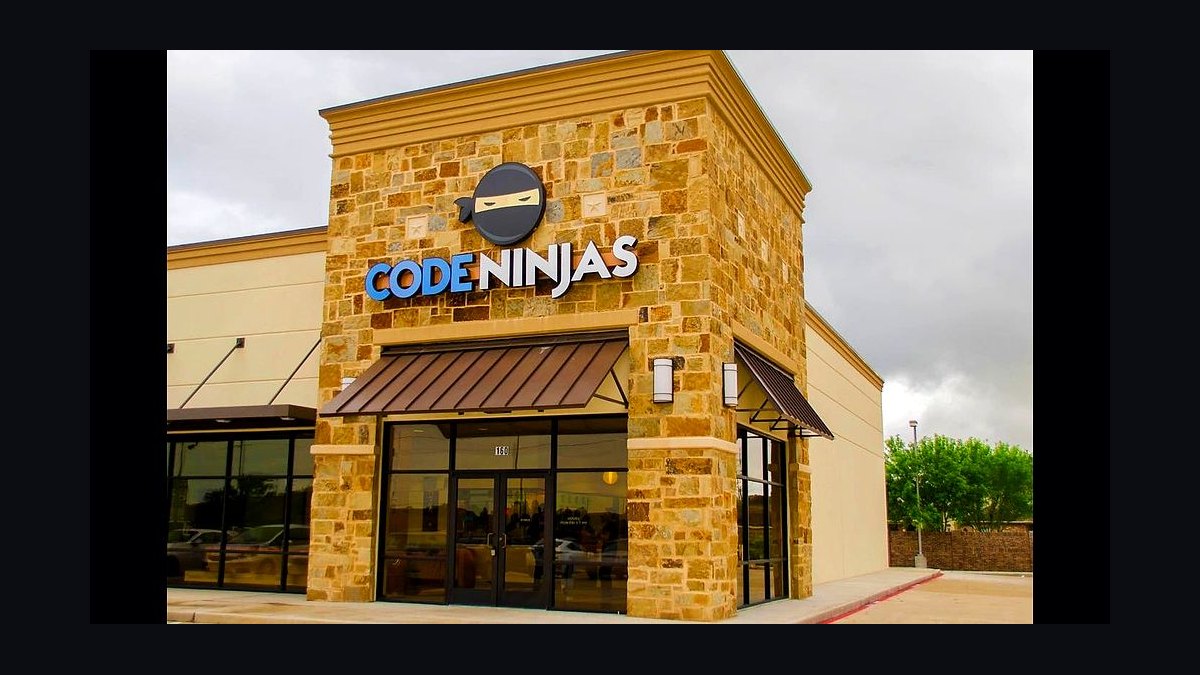
Opening a Code Ninjas franchise in 2027 only makes sense for a hands-on operator who can fund $175,000–$298,000 in initial investment, commit to 18–24 months of active, on-site management, and lock down a trade area with 35,000+ affluent households and light coding-competitor overlap. Passive investors, saturated markets, and anyone banking on a 24-month payback should look at a resale or a lower-fee brand instead.
The two paths: new build, resale, or a different brand entirely
Anyone weighing whether to open or buy a Code Ninjas franchise in 2027 is actually choosing among three distinct entry points, and each carries a meaningfully different risk profile. The first is a ground-up new center: sign the current Franchise Disclosure Document, pay the full $40,000 franchise fee, build out 1,400–1,800 square feet from a cold shell, and spend the first year building enrollment from zero. This is the path the franchisor's development team pushes hardest because it grows total unit count, but it also carries the longest runway to positive cash flow and the highest exposure to construction-cost overruns, permitting delays, and a slow first-year ramp while local parents discover the brand.
The second path is a resale — buying an already-operating Code Ninjas center from a franchisee who wants out. Resale inventory has stayed elevated through 2026 and into 2027 as the system's total unit count has contracted, which hands buyers real negotiating leverage they would not have with a franchisor selling a brand-new territory. A resale typically trades at 30–50% below the cost of a comparable new build, because the seller is discounting for slow growth, franchisee burnout, or a location that never hit its numbers. The upside is a franchisee inherits an enrolled student base, trained part-time staff, and real trailing financials instead of a pro forma; the downside is also inherited — whatever caused the previous owner to sell, whether that is a saturated trade area, an unfavorable lease, deferred equipment maintenance, or a bruised local reputation that takes years to repair.

The third path steps outside the Code Ninjas system entirely: Mathnasium, Snapology, Best Brains, or an independent coding studio built on licensed curriculum such as CodeCombat or a school-facing platform like Tynker. This route gives up Code Ninjas' name recognition but escapes the 6% royalty plus 2% marketing fee stack that compounds to roughly 9% of every dollar of gross revenue before rent, payroll, or curriculum licensing is paid. For an operator whose real priority is maximizing owner cash flow — rather than running a specific, recognized kids'-coding brand — this comparison deserves as much diligence as the buy-new-versus-buy-resale question inside Code Ninjas itself. It is also worth widening the lens even further: some prospective owners in this exact capital range end up comparing a Code Ninjas center against an entirely different youth-enrichment category, such as a music school, a robotics franchise, or a tutoring brand with lower square-footage requirements, because the underlying question — "where does $200,000 of my capital generate the best risk-adjusted return in local services?" — is bigger than any single coding brand.
Each path is really a bet on a different skill set. New-build buyers are betting on their own site-selection instincts and grassroots marketing to build a center from nothing, competing for attention against soccer, piano lessons, and every other after-school activity in a five-mile radius. Resale buyers are betting they can read a set of trailing financials accurately, spot the difference between a temporary dip and a structural problem, and either fix what is broken or simply run a stable, already-profitable location without disturbing what works. Alternative-brand buyers are betting that a lower fee structure, and in some cases a lower total investment, outweighs the brand recognition, national ad spend, and franchisor training infrastructure that come bundled with an established system like Code Ninjas.
How to decide between opening new, buying resale, or switching brands
The decision hinges on three questions, asked in this order: how much capital can actually be deployed, how much local-market hustle the buyer is willing to put in during year one, and how much an established brand is worth compared to lower ongoing fees. An operator with $300,000-plus in liquid capital, genuine comfort managing part-time teen and college-age instructional staff, and access to a genuinely underserved trade area is the best-fit buyer for a new build — that specific combination is what produces the system's top-quartile results. An operator with less appetite for an 18-24 month ramp, or who wants to see real revenue and enrollment numbers before committing capital, should be pricing resale units first, starting with the Item 20 exhibit in the current FDD. An operator who is skeptical of the entire franchise-fee structure, or who already has curriculum development or classroom-teaching experience and does not need the training-wheels support of a franchisor, should seriously price out the independent-studio or lower-royalty-brand path before signing anything.
Trade-area saturation is the fastest disqualifier in this decision tree, and it applies across all three paths equally. A market that already has a Code Ninjas within five miles, or that is crowded with STEM enrichment competitors — a Mathnasium, a robotics club, a coding summer-camp operator — drags down performance for a new build, makes a resale in that same market a far tougher turnaround, and does not magically improve just because the buyer opens under a different brand name instead. The overlap problem is structural, not cosmetic: two coding-adjacent programs pulling from the same 8-to-14-year-old population inside the same school district split a finite pool of interested families and interested marketing dollars.
A useful secondary filter, once the capital and market questions are answered, is asking how the franchise fits the buyer's exit horizon. A buyer planning to own and operate for 10-plus years can absorb a slower new-build ramp because there is time to recoup it; a buyer thinking in a 3-5 year window should weight the resale or lower-fee path more heavily, since a shorter hold leaves less runway to work through a new center's first eighteen months of thin margins.
Concrete numbers behind each option
A new-build Code Ninjas center requires $174,750–$298,250 in total initial investment, breaking down into the $40,000 franchise fee, $50,000–$130,000 for build-out of the leased space, $15,000–$35,000 for furniture and equipment, $12,000–$22,000 for computers and curriculum technology, $5,000–$12,000 for signage, and roughly $36,000–$38,000 in working capital to cover the first three months of operation before enrollment stabilizes. Ongoing costs stack a 6% royalty on gross revenue, a 2% marketing fee, and a technology and software fee running $300–$650 a month depending on center size and enrollment volume.
Revenue performance across the system's centers varies enormously by quartile, and this spread is the single most important number a prospective buyer should internalize. The top 25% of centers average $381,693 in gross sales with an estimated EBITDA margin of 22–26%, translating to roughly $84,000–$99,000 in annual owner cash flow. The second quartile averages $254,750 in gross sales at a 15–18% margin. The third quartile drops to $203,388 with margins compressing to 6–10%. The bottom quartile averages just $125,353 and typically runs at a loss, with estimated owner cash flow of negative $15,000 to negative $35,000 a year. System-wide average gross sales sit around $241,242 with roughly 14% EBITDA, while the median unit runs lower, at $225,536 with about 11% EBITDA — meaning more than half the system underperforms the mean, a detail recruiting materials rarely lead with.
Running the payback math on the average unit is instructive: roughly $241,000 in revenue at a 14% margin generates about $33,000 a year in EBITDA against a $235,000 midpoint investment, which works out to a payback period of roughly seven years at that revenue level. Only top-quartile centers approach the 24-month payback figure sometimes used in franchise-sales conversations — that number describes a best-case outcome, not a typical one, and treating it as typical is the single most common underwriting mistake first-time franchise buyers make in this category.
A resale changes this math meaningfully. Buying an operating center at 30–50% off comparable new-build cost compresses payback substantially, since the buyer is not funding full build-out and is, ideally, buying into revenue that is already at or near a stabilized level rather than starting from zero enrollment. The trade-off is inheriting someone else's trade-area decision, lease terms, and local reputation — all far harder to renegotiate than a line item on a spreadsheet.

For comparison, adjacent brands post different unit economics worth pricing side by side. Mathnasium's typical initial investment runs $120,000–$160,000 against $280,000–$425,000 in average unit volume, with 20–28% EBITDA margins — meaningfully better than Code Ninjas' system average, driven partly by a lighter fee structure and a tutoring model with less capital tied up in computer hardware. Snapology's mobile and pop-up format brings initial investment down to $40,000–$120,000 with $180,000–$250,000 in average revenue, a format worth considering for a buyer who wants to test the category before committing to a fixed lease. An independent studio built on a licensed curriculum eliminates the royalty and marketing fee stack entirely, which on a $240,000-revenue center is worth roughly $20,000–$30,000 a year in retained cash flow, at the cost of losing brand recognition and any corporate lead-generation support.
Implementation details and sequencing
Whichever path is chosen, the due-diligence sequence should run about 90 days and follow the same order regardless of whether the buyer is evaluating a new build, a resale, or a competing brand. Start by pulling the current Franchise Disclosure Document directly from the franchisor and reading Items 3 (litigation history), 7 (initial investment), 19 (financial performance), 20 (outlet and franchisee turnover), and 21 (financial statements) in full — these sections tell a buyer what the brand's own numbers say, not what a broker's pitch deck says.
Next, validate those disclosed numbers against reality by calling 12–15 current and former franchisees pulled from the Item 20 exhibit, which lists contact information for the system's outlets. Ask each one about actual average unit volume, EBITDA, months to breakeven, and whether they would make the same decision again knowing what they know now. Aim for a response rate above 30%, and deliberately mix in both strong performers and recently closed or transferred units — a sample limited to happy franchisees the franchisor points toward will produce a distorted picture of what ownership actually looks like.

With that data in hand, run a proper trade-area analysis using a demographic data service to confirm household income, the population of children in the target age range, and the proximity of existing competitors. Reject any site that does not clear roughly 35,000 households earning $100,000 or more within a 15-minute drive, and stay cautious about any site with more than one or two existing competitors within five miles — that tight an overlap has repeatedly pulled second-mover units well below system average in markets that were already crowded before the second location opened.
Financing should be pre-qualified in parallel with site selection, never after a location is chosen. SBA 7(a) loans are the standard financing vehicle for this category and typically cover 70–80% of total investment, leaving 20–30% as a required owner injection plus roughly six months of operating reserves. Once financing and site are both directionally confirmed, tour at least three operating centers in person, paying close attention to the ratio of staff to enrolled students, how busy the parent waiting area gets during peak after-school hours, and how actively the location books birthday parties and camps — these ancillary revenue streams often make up 30–45% of revenue at top-performing units and are a strong signal of how well a center is actually being marketed locally, not just how well it was built.
The final stage is legal: engage a franchise attorney to redline the FDD and negotiate territory protections, particularly the exclusivity radius, before signing anything. Only after financing, site, franchisee validation, and legal review are all complete should a buyer make the final go or no-go call — ideally with a spouse, a CPA, and an attorney all in the room, since this is a six-figure, multi-year commitment regardless of which of the three paths gets chosen.
Related questions
Should I open or buy a Code Wiz franchise instead?
Code Wiz is a smaller, newer coding-franchise competitor with a lower total investment than Code Ninjas in most markets. Compare royalty structure, territory size, and disclosed Item 19 performance side by side before choosing between the two brands.
How long does it typically take to open a franchise and break even?
Most brick-and-mortar franchises take 3–6 months to open after signing and 12–24 months to reach operating breakeven, with full investment payback often taking considerably longer unless the unit performs in the top quartile of its system.
Is buying a franchise resale generally safer than a new build?
Usually, because a buyer can review real trailing financials instead of a pro forma. A resale also transfers whatever weaknesses caused the original owner to sell, so due diligence still needs to be thorough before closing.
What's the biggest hidden cost in youth-education franchises?
Staffing churn among part-time, hourly instructional staff is consistently the largest margin risk, since scheduling gaps directly reduce class capacity and enrollment lost this way rarely comes back once a family disengages.
FAQ
Is a Code Ninjas franchise profitable in 2027? It can be, but profitability is heavily quartile-dependent. Top-performing centers run 22–26% EBITDA margins, while bottom-quartile locations near $125,000 in revenue typically operate at a loss. The system average sits around 14% EBITDA, so profitability is realistic but far from guaranteed.

How much money do I need to open a Code Ninjas franchise? Total initial investment runs $174,750–$298,250, including a $40,000 franchise fee, and most franchisors expect $200,000–$300,000 in liquid capital to qualify for financing, since SBA loans typically require a 20–30% owner injection plus reserves.
Is a resale a better option than opening a new Code Ninjas center? For many buyers, yes. Resales trade at 30–50% below new-build cost and come with real operating history, though the buyer inherits whatever conditions led the previous owner to sell, so trade-area and lease terms still need scrutiny.
Can I run a Code Ninjas franchise passively? Not successfully. Owner-operator involvement in the first 18–24 months is strongly associated with better performance, and absentee ownership correlates heavily with bottom-quartile results. This is not a set-it-and-forget-it investment.
What location characteristics matter most before I open? A dense, affluent suburb with roughly 35,000 households earning $100,000 or more within a 15-minute drive, and no more than one or two direct competitors within five miles, is the baseline underwriting standard for this category.
Should I consider a different brand entirely instead of Code Ninjas? It is worth pricing out before signing anything. Brands like Mathnasium post stronger average unit economics with a lower royalty burden, and an independent studio avoids the royalty and marketing fee stack entirely, at the cost of brand recognition.
Sources
- International Franchise Association — franchise.org
- U.S. Small Business Administration, SBA 7(a) loan program — sba.gov
- IBISWorld industry research — ibisworld.com
- Entrepreneur Franchise 500 directory — entrepreneur.com/franchises
- 1851 Franchise — 1851franchise.com
- Franchise Gator — franchisegator.com
- PR Newswire — prnewswire.com
Related on PULSE
This page will be disappearing soon. Save it to your device for $1 — or read it free while it is here.
@Kory-White- · if Venmo asks, the last 4 of my number are 2012
This page is gone.
This one is off the shelf now. $1 keeps it on your phone for good — the whole page, pictures and diagrams included.
 franchiseShould I open or buy a Bruster's Real Ice Cream franchise in 2027?
 franchiseShould I open or buy a Hand and Stone Massage franchise in 2027?
 franchiseShould I open or buy a Sonic Drive-In franchise in 2027?
 franchiseShould I open or buy a Servpro franchise in 2027?
 franchiseShould I open or buy a Panera Bread franchise in 2027?
 franchiseShould I open or buy a Crumbl Cookies franchise in 2027?
 franchiseShould I open or buy a Jamba franchise in 2027?
 franchiseShould I open or buy an Orangetheory Fitness franchise in 2027?
 franchiseShould I open or buy a Jiffy Lube franchise in 2027?
 franchiseShould I open or buy a Cold Stone Creamery franchise in 2027?