


Should I open or buy a Primrose Schools franchise in 2027?
Quality
Certified
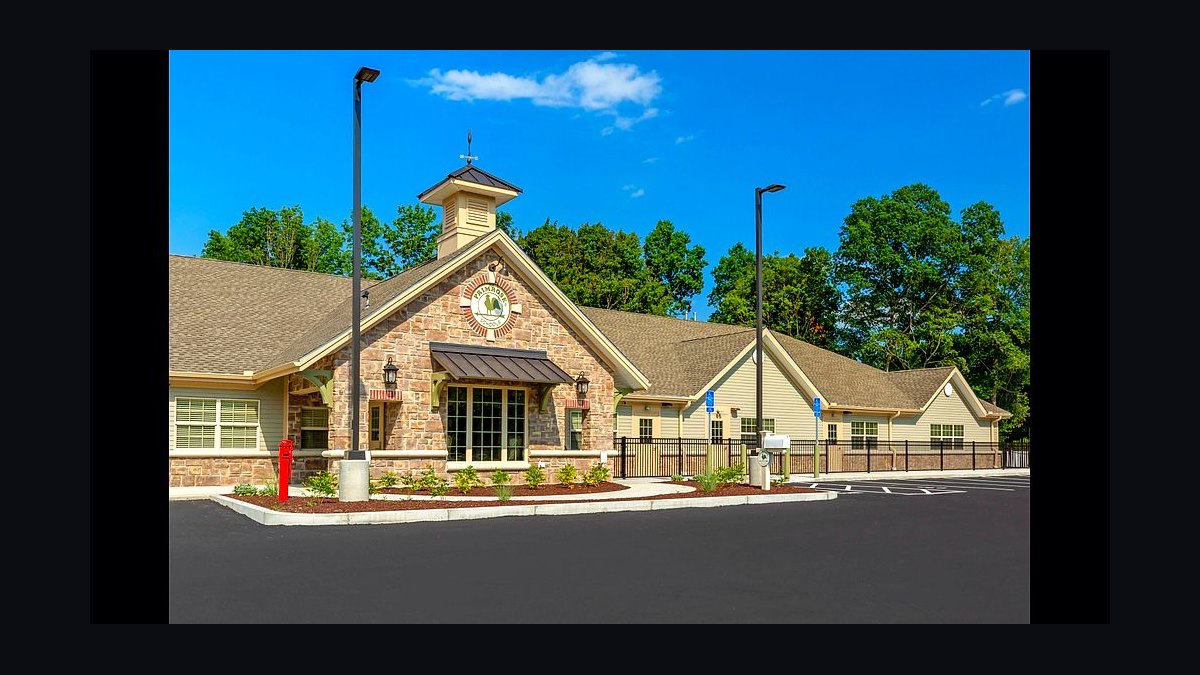
Yes — open a Primrose Schools franchise in 2027 if you have $1.5M+ in liquid net worth, a $6M-$8.6M total investment capacity (cash + SBA + real estate loan), a suburban metro location with 5,000+ households earning $150K+ within a 5-mile radius, and you are comfortable being a hands-on owner-operator for 18-24 months. Probably not — unless you can stomach a 30-36 month breakeven, 7% royalty + 2% brand fund on gross revenue, and a $1.2M-$1.8M working-capital buffer. Year-1 conservative cash flow runs negative $400K to negative $700K; mature units (Year 4+) generate $2.65M AUV with 12-18% EBITDA margins per the 2026 Item 19. Buying an existing unit at 5.5-6.5x EBITDA ($1.8M-$3.2M for a stabilized school) is often the lower-risk play in 2027.
The Real Numbers
The 2026 Primrose Schools Franchise Disclosure Document (filed April 2026, governing 2027 awards) discloses an Item 7 initial investment of $743,200 to $8,595,000 depending on the development program (build-to-suit on leased land vs. owned real estate vs. conversion). Most new franchisees in 2027 will land between $6.19M and $8.6M because Primrose's preferred model is a purpose-built 12,000-15,000 sq ft facility on 1.5-2 acres of owned land. The initial franchise fee is $80,000 for a single school (reduced to $50,000 for multi-unit deals of 3+ schools).
| Cost Bucket | Low | High | Source |
|---|---|---|---|
| Franchise fee | $50,000 | $80,000 | FDD 2026 Item 5 |
| Land acquisition | $400,000 | $2,500,000 | FDD 2026 Item 7 |
| Building construction | $3,800,000 | $4,900,000 | FDD 2026 Item 7 |
| FF&E + curriculum kits | $425,000 | $675,000 | FDD 2026 Item 7 |
| Pre-opening payroll + marketing | $185,000 | $260,000 | FDD 2026 Item 7 |
| Working capital (6 mo) | $1,200,000 | $1,800,000 | FDD 2026 Item 7 |
| Total Investment | $6,192,660 | $8,595,000 | FDD 2026 Item 7 |
| Royalty | 7% of gross | 7% of gross | FDD 2026 Item 6 |
| Brand Fund | 2% of gross | 2% of gross | FDD 2026 Item 6 |
| Mature AUV | $2,653,188 | (median $2.41M) | FDD 2026 Item 19 |
| EBITDA margin (Year 4+) | 12% | 18% | VettedBiz 2026 analysis |
| Payback period | 7 years | 10 years | VettedBiz 2026 |

Item 19 of the 2026 FDD discloses that 499 franchised schools were active for all of calendar 2025, of which 413 reported full-year data. The average gross revenue was $2,653,188, the median was $2,412,000, the bottom-quartile cutoff was $1,840,000, and the top-quartile cutoff was $3,210,000. Top-decile schools cleared $4.1M. Year-1 schools averaged $1.18M in gross revenue — meaning payback is back-loaded and the working-capital buffer is non-negotiable. EBITDA margin on a mature unit, after 7% royalty, 2% brand fund, 38-42% labor cost, and 8-10% occupancy, lands at $320K-$475K per year. Cash-on-cash return in Years 4-7 averages 9-14% on the $1.5M-$2.0M cash equity slice.
Who Wins With This Business
The winning Primrose operator profile in 2027 is remarkably consistent across the top-quartile 100 schools. First, capital depth: $1.5M+ liquid, $3M+ net worth, and SBA 7(a) pre-qualification for the $4M-$5M debt slice. Second, operator commitment: 40-50 hours/week on-site during the first 24 months — Primrose explicitly prefers owner-operators over passive investors and rejects roughly 60% of absentee-owner applications. Third, geographic fit: the sweet spot is a suburban submarket with median household income $150K+, 5,000+ households with kids under 6 within 5 miles, dual-income professional families (consulting, tech, healthcare, finance), and fewer than 2 competing premium childcare brands (Goddard, Kiddie Academy, Bright Horizons) within a 3-mile radius.

Fourth, operational temperament: childcare is a people-management business — the median Primrose school employs 35-45 staff (1 director, 2-3 assistant directors, 28-38 teachers across 12-16 classrooms). Owners who came from operations roles — multi-unit restaurant, healthcare clinic management, K-12 administration, military logistics — outperform first-time operators by 22% on AUV per 1851 Franchise's 2026 deep-dive data. Fifth, brand alignment: Primrose's Balanced Learning curriculum and Christian-rooted-but-secular values framework resonate with family-formation households earning $150K-$400K. Operators who lean into the curriculum story (vs. selling "daycare") convert tours 18-25% better per Primrose's internal 2026 KPI deck cited in 1851 Franchise.
Who Loses With This Business
The failure modes in childcare franchising are predictable and expensive. First, undercapitalization: operators who finance with less than $1.2M working capital routinely run out of cash in Month 9-14, when enrollment is at 55-65% of capacity but payroll obligations are at 90%. Second, wrong location: a $2M land mistake (too far from the income cluster, no left-turn-in, blocked sight lines) cannot be fixed and caps AUV at $1.4M-$1.7M for life. Closed Primrose schools between 2021-2025 (11 total, per FDD 2026 Item 20) almost all share the location-mistake fingerprint.

Third, absentee ownership: investors who hire a director and disappear see 30-40% staff turnover annually (vs. 18-22% for owner-operated schools) and AUV that lags the system by $400K-$650K. Fourth, labor mismanagement: staff-to-child ratios are state-regulated and non-negotiable (Texas: 1:4 infants, 1:11 preschool; California: 1:3 infants, 1:12 preschool). Operators who skimp on lead teacher pay ($18-$24/hour in 2027) lose their best teachers to the local school district in 12-18 months, trigger parent attrition, and enter the death spiral. Fifth, marketing neglect: the 2% brand fund covers national awareness only — local marketing of $35K-$60K/year (Google Ads, community events, pediatrician partnerships) is the operator's job and the most-cut line item in struggling schools.
Sixth, regulatory missteps: licensing violations in state childcare inspections (medication logs, fire-drill records, background-check timing) can suspend enrollment for 30-90 days and erase a full quarter of revenue. Margin killers stack fast — a single $80K wrongful-termination suit, a $120K HVAC replacement in Year 5, or a state-mandated minimum-wage jump can shave 3-5 EBITDA points in a single year.
2027 Market Conditions
The U.S. childcare industry is a $73.4 billion market in 2027 per IBISWorld's March 2027 Daycare Services report (NAICS 624410) — up from $52.6B in 2024 on the back of federal Child Care and Development Block Grant increases, state-level universal pre-K expansions (California TK, New York UPK, Florida VPK), and employer-sponsored childcare benefits that 31% of S&P 500 companies now offer per SHRM's 2027 Benefits Benchmark. Demand outstrips supply — the U.S. has 4.9M children under 5 in licensed care against 5.8M slots needed per Child Care Aware of America's 2027 Price of Care report.

Primrose specifically sits in the premium tier ($1,850-$2,950/month per child in 2027 vs. $1,200-$1,650 national average) and benefits from wage inflation in the professional class that pushes more dual-income families into structured care. 2027 regulatory shifts include federal CCDBG payment-rate parity rules (effective March 2027) that lift state subsidy reimbursements 18-24% in 38 states — mostly relevant for tuition-assistance families that comprise 8-12% of a typical Primrose roster.
Saturation by region: the Southeast (Atlanta, Charlotte, Nashville, Tampa) is mature with 3-5 Primrose schools per major MSA; the Mountain West (Denver, Phoenix, Boise, Salt Lake City) is the 2027 growth corridor with 40+ committed openings per Primrose's March 2026 development pipeline disclosure; the Northeast (Boston, NYC suburbs) is supply-constrained on real estate and conversions dominate; California is regulatorily heavy but AUVs are 25-35% above system average.
AI/automation impact in 2027 is modest but real — enrollment CRMs, tour-scheduling bots, parent-communication apps (Brightwheel, Procare), and AI-assisted lesson planning shave 4-7 administrative hours/week off director workloads. Supply-chain risks are muted post-2024 normalization; playground equipment, classroom furniture, and curriculum materials ship on 6-10 week lead times vs. 18-26 weeks in 2022-2023.

The 90-Day Decision Tree
- Days 1-7: Financial qualification. Pull a personal financial statement, confirm $1.5M+ liquid, $3M+ net worth, and 750+ FICO. Request the 2026 FDD from Primrose franchise development (free, federally mandated). Read Items 5, 6, 7, 19, and 20 first — fees, royalties, investment, financial performance, and turnover.
- Days 8-21: Market screening. Run demographic pulls (Esri Tapestry, ESRI Business Analyst, or Buxton) on 3-5 target submarkets. Require 5,000+ households with kids under 6, $150K+ median income, fewer than 2 premium competitors in 3 miles, and buildable 1.5-2 acre parcels.
- Days 22-35: Validation calls. Call 15-20 existing Primrose franchisees from the FDD Item 20 contact list. Ask: actual AUV vs. proforma, months to breakeven, labor cost % of revenue, biggest regret, would-you-do-it-again.
- Days 36-50: SBA pre-qualification. Submit to 2-3 SBA-preferred lenders (Live Oak Bank, Huntington, Byline Bank — all top childcare lenders). Target $4M-$5M SBA 7(a) at prime + 2.5-3.0%.
- Days 51-65: Discovery Day. Attend Primrose Discovery Day in Atlanta. Tour 3 operating schools, meet the franchise development team, operations support, real estate team, and construction managers.
- Days 66-80: Site control. Sign letter of intent on the lead parcel, commission feasibility study ($15K-$25K), and pull preliminary site plans with Primrose's approved architect network.
- Days 81-90: Decision and signing. Negotiate multi-unit development agreement if pursuing 3+ schools (saves $60K-$90K in franchise fees). Sign Franchise Agreement, wire initial franchise fee, and enter the 14-18 month construction window.
Alternative Plays
If the $6M-$8.6M Primrose price tag is too steep, consider adjacent childcare and education franchise plays with lower capital intensity and comparable demographics.

- Kiddie Academy: $623K-$1.59M total investment, 5% royalty + 2% marketing, $2.19M mature AUV, 300+ units. Lower capital, lower AUV, similar premium-suburban demo.
- The Goddard School: $970K-$1.49M total investment, 10% royalty, 600+ units, strongest brand recognition in the Northeast. Higher royalty bite but leased-real-estate model lowers entry cost.
- The Learning Experience (TLE): $497K-$5.93M range, 7% royalty + 2% brand fund, 400+ units, proprietary curriculum, aggressive 2027 expansion in Texas and Florida.
- Lightbridge Academy: $540K-$5.6M range, 7% royalty, strong Northeast cluster, employer-sponsored childcare focus that wins corporate-park sites.
- Buy an existing Primrose: resale market in 2027 runs 5.5-6.5x EBITDA for a stabilized school ($1.8M-$3.2M cash to close), eliminates the 14-18 month construction risk, and delivers Year-1 cash flow. Franchise Flippers and VR Business Brokers are the active marketplaces.
- Pivot to micro-school or pod model: Acton Academy ($75K-$200K) or Prenda (no franchise fee, revenue-share) for operators who want education without the daycare regulatory burden.
FAQ
What is the minimum net worth required to open a Primrose Schools franchise in 2027? You need at least $1.5 million in liquid net worth. The total investment typically ranges from $6 million to $8.6 million, including cash, SBA financing, and real estate loans.
How long does it take to break even with a new Primrose franchise? Breakeven usually takes 30 to 36 months. Year one often sees negative cash flow of $400,000 to $700,000, so a working-capital buffer of $1.2 million to $1.8 million is recommended.

What are the ongoing royalty and brand fund fees? You pay a 7% royalty on gross revenue plus a 2% brand fund contribution. These fees are standard across the system and apply from the start.
What is the average revenue and profitability of a mature Primrose school? Mature units (Year 4+) generate an average unit volume of around $2.65 million, with EBITDA margins of 12% to 18%, based on the 2026 Item 19 disclosure.
Is buying an existing Primrose franchise less risky than opening a new one? Yes, buying an existing unit at 5.5 to 6.5 times EBITDA (roughly $1.8 million to $3.2 million for a stabilized school) is often considered lower risk, as it avoids the startup cash burn and extended breakeven period.
What location demographics are ideal for a Primrose franchise? You need a suburban metro location with at least 5,000 households earning $150,000 or more within a 5-mile radius. This ensures sufficient demand for the premium early education model.
Bottom Line
Open a new Primrose Schools in 2027 if you have $1.5M+ liquid, an A-tier suburban submarket, owner-operator commitment for 24 months, and a 10-year hold horizon. Buy an existing Primrose if you want Year-1 cash flow and can find inventory at 5.5-6.5x EBITDA. Walk away if you are undercapitalized, planning absentee ownership, or chasing daycare arbitrage without curriculum conviction — the 7% royalty + 2% brand fund demands a premium-positioning operator, not a cost-cutter.
Sources
- Primrose Schools 2026 Franchise Disclosure Document (filed April 2026, Items 5, 6, 7, 19, 20) — primary investment, royalty, AUV, and turnover data
- Franchise Chatter 2025 FDD Talk: Primrose Schools — https://www.franchisechatter.com — $2.63M average sales analysis
- VettedBiz Primrose School Franchise Insights 2026 — https://www.vettedbiz.com/franchises/primrose-school — payback period and EBITDA margin benchmarks
- 1851 Franchise Deep Dive: Primrose Schools Costs and Profit — https://1851franchise.com — operator profile and tour-conversion data
- Franchise Direct Primrose Schools Costs & Fees — https://www.franchisedirect.com/primrose-schools-franchise-costs-fees — Item 7 investment range detail
- PRNewswire / Morningstar: Primrose 2026 FUND TopScore Award — March 2026 — system-health and financial-strength benchmark
- IBISWorld Daycare Services Industry Report (NAICS 624410), March 2027 — $73.4B industry size and growth drivers
- Child Care Aware of America 2027 Price of Care Report — supply/demand gap data (4.9M slots vs. 5.8M needed)
- SHRM 2027 Employee Benefits Benchmark Report — employer-sponsored childcare adoption data
- International Franchise Association (IFA) 2027 Franchise Economic Outlook — childcare-segment growth projections
- Franchise Flippers and VR Business Brokers — 2027 Primrose resale market pricing benchmarks
- ExpansionPoint AI: Daycare Franchise ROI Comparison (Primrose vs. Goddard vs. Kiddie Academy) — https://expansionpoint.ai/blog/daycare-franchise-roi-primrose-vs-goddard-vs-kiddie-academy
Primrose Schools franchise review — Primrose Schools franchise reviews — Primrose Schools franchise rating — Primrose Schools franchise review 2027 — review of Primrose Schools franchise.
Related on PULSE
This page will be disappearing soon. Save it to your device for $1 — or read it free while it is here.
@Kory-White- · if Venmo asks, the last 4 of my number are 2012
This page is gone.
This one is off the shelf now. $1 keeps it on your phone for good — the whole page, pictures and diagrams included.
 franchiseShould I open or buy a Roto-Rooter franchise in 2027?
 franchiseShould I open or buy a Jeremiah's Italian Ice franchise in 2027?
 franchiseShould I open or buy a Jimmy John's franchise in 2027?
 franchiseShould I open or buy a Meineke franchise in 2027?
 franchiseShould I open or buy a Wingstop franchise in 2027?
 franchiseShould I open or buy a Taco Bell franchise in 2027?
 franchiseShould I open or buy a Hand and Stone Massage franchise in 2027?
 franchiseShould I open or buy a Wendy's franchise in 2027?
 franchiseShould I open or buy a Stanley Steemer franchise in 2027?
 franchiseShould I open or buy an F45 Training franchise in 2027?