


Should I open or buy a Stanley Steemer franchise in 2027?
Quality
Certified
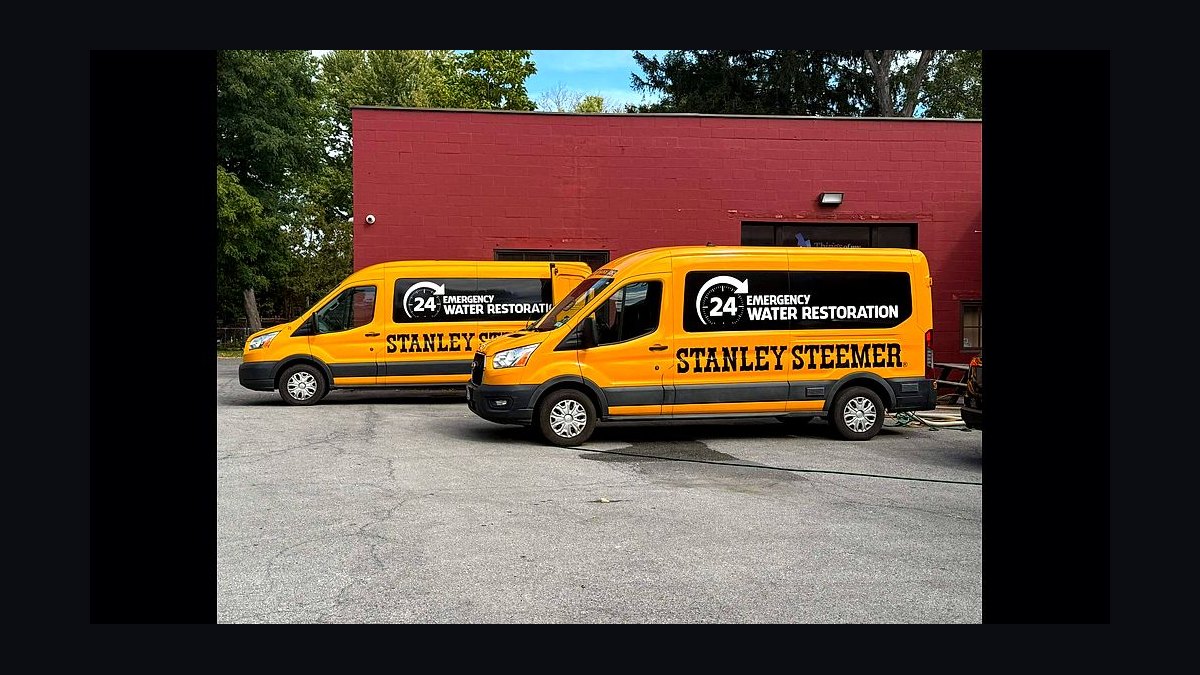
Opening or buying a Stanley Steemer franchise in 2027 makes sense if you can fund the full $158,210–$522,195 Item 7 range plus six to nine months of working capital, you're willing to personally run routes for the first 24 months, and you can secure one of the roughly 27 remaining open territories or a fairly priced resale. Skip it if you want absentee income or lack fleet-operations experience — this is an owner-operator business, not a passive investment.
Buying new territory vs. buying an existing resale
Anyone evaluating Stanley Steemer in 2027 is really choosing between two structurally different purchases, and the word "franchise" hides how different they are. The first path is a greenfield open: you sign a Franchise Agreement for one of the system's remaining unclaimed territories, pay the Item 7 initial investment of roughly $158,210 to $522,195, and build a business from zero revenue. The second path is a resale — buying an existing franchisee's operating territory, book of commercial accounts, trucks, and technician roster, usually priced as a multiple of trailing revenue rather than against the FDD's Item 7 range.
Greenfield has three real advantages. You choose your own territory boundaries rather than inheriting someone else's routing decisions from a decade ago. You start with a clean royalty base and no legacy equipment to replace in Year 1. And you avoid paying goodwill for a customer list that may be stale — plenty of resale sellers are exiting precisely because their commercial accounts dried up or their technicians left en masse. The disadvantage is obvious: you absorb the full ramp curve. Stanley Steemer's system-wide average unit volume sits at $1,739,599 per the 2024 FDD Item 19, but a new single-truck startup typically clears only $40,000 to $90,000 in owner cash flow during Year 1, climbing toward that system average only by Year 3 or Year 4 as local brand awareness compounds and the second and third trucks come online.
Resale flips that math. You buy cash flow on day one instead of building it, which is why resales in healthy markets price at 1.0x to 1.5x trailing revenue — a premium over the hard-asset value of the trucks and equipment, reflecting the commercial contracts, technician continuity, and brand recognition already in place. The risk moves from "can I generate revenue" to "can I diligence what I'm buying." A resale seller who inflated Year-1 numbers with one-time storm or flood restoration work, or who is quietly losing a property-management contract that represents 20% of volume, can hand a buyer a territory that looks like $1.2 million in revenue but is actually heading to $800,000. This is exactly why Item 20 of the FDD — the transfer and turnover data — matters more for a resale buyer than for a greenfield opener: a high transfer rate in a region is a signal that something structural, not just individual-owner fatigue, is suppressing unit economics there.
Geography interacts with both paths differently. In Sun Belt markets (Texas, Florida, Arizona, the Carolinas) where more than 95% of territory is already sold, greenfield simply isn't an option — anyone wanting Stanley Steemer exposure in those metros is buying a resale, like it or not, and competing against other buyers for a scarce asset. In the Pacific Northwest and Mountain West, roughly 15 territories remain open as of the most recent franchising snapshot, so a buyer there has a genuine choice between starting fresh and acquiring an incumbent. The Northeast's dense urban cores (parts of New Jersey, Long Island, Boston) sit in a third category: territory is technically available or resellable, but population density and renter-heavy housing stock make the unit economics weak regardless of path, since carpet cleaning is fundamentally a homeowner expense that renters don't pay for.
How to decide between opening and buying
The decision tree below folds territory availability, population density, and owner commitment into a single sequence, because each gate changes what the "right" answer is. A buyer who skips the population-density check and opens in a renter-heavy core will underperform even with perfect operational execution — the demand ceiling is structural, not fixable with better marketing.
Walking the tree in order: territory availability determines which of the two purchase paths is even on the table, and in most of the country that decision has already been made for you by how saturated the system is. Population density is the next filter and it's non-negotiable — route economics only work when a single truck can hit six to eight stops a day, which requires a dense suburban base of detached single-family homes. Metros like Atlanta, Charlotte, Dallas, Phoenix, and Tampa outperform dense urban cores for exactly this reason: more carpeted square footage per square mile of driving. The final gate is personal commitment. Stanley Steemer's top-quartile units — the ones actually reaching that $1.74 million system average — are run by owners who personally ride routes two to three days a week for the first two years, not owners who hired a manager and checked in monthly. An investor who wants quarterly financial reviews and nothing else should not be in this business, regardless of how good the territory or the price looks on paper.
The money: cost, royalty, and revenue by path
The dollar figures differ meaningfully depending on which path you take, and conflating them is the single most common mistake first-time buyers make when reading the FDD. For a greenfield open, Item 7 of the 2024 FDD puts total initial investment at $158,210 to $522,195, covering the franchise fee (roughly $20,000 per 100,000 population in the territory, typically landing between $20,000 and $100,000), vehicles, extraction equipment, and any build-out. On top of that Item 7 figure, plan on an additional $60,000 to $120,000 in working capital to cover six to nine months of payroll and overhead before the territory reaches breakeven volume — franchisees who treat Item 7 as the entire capital requirement are the ones who run out of payroll cash around Month 8 and are forced to exit at a discount.
Royalty structure is identical whether you open or buy, which is one reason resale pricing tracks revenue rather than some separate formula: 7% of gross sales on Core (carpet) services, 3% on Related services (tile and grout, hardwood, air ducts, and water restoration), plus a 2% national marketing fee on top. That split matters operationally because Related services carry materially better margins — 45% to 60% gross margin versus 35% to 45% on carpet-only work — while costing the franchisee a lower royalty rate. Operators who stay carpet-only are effectively choosing the lower-margin, higher-royalty mix, and the FDD data suggests carpet-only operators leave roughly $300,000 of cumulative revenue on the table by Year 3 compared to those who build out the Related services line from the start.
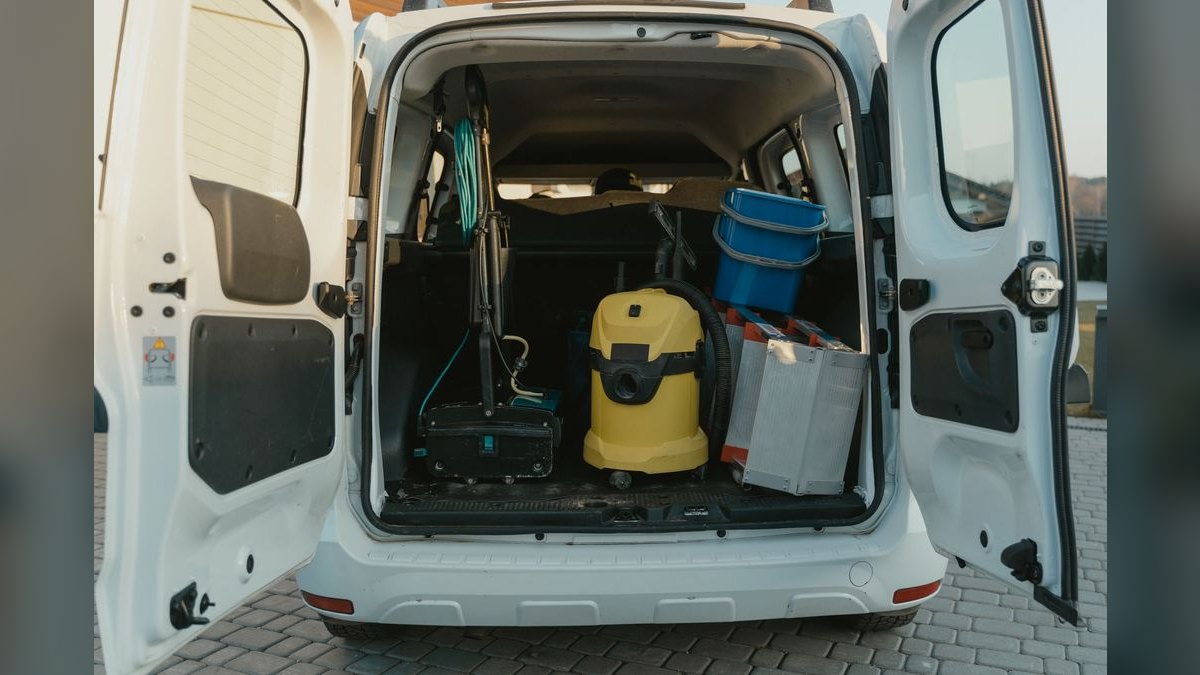
On the revenue side, the system-wide average unit volume of $1,739,599 (2024 FDD Item 19) sits well above independent third-party estimates of median revenue, which cluster closer to $1,196,000 — the gap is mostly multi-unit and long-tenured territories pulling the average up. EBITDA margin on a mature single unit typically runs 10% to 20%, with 12% to 15% being the realistic expectation rather than the ceiling. Run the midpoint math on a single-truck startup at $340,000 total investment reaching $1.2 million in Year-3 revenue at 13% EBITDA: that's $156,000 in EBITDA, minus $24,000 in royalty and $24,000 in marketing fee, leaving $108,000 in pre-debt-service owner cash flow. Against a 10-year, 9.5% SBA 7(a) note on $250,000, annual debt service runs about $38,800, leaving roughly $69,200 net to the owner. Year 1 numbers are far lower than that steady-state figure — $40,000 to $90,000 is the realistic range — because the truck is running below route density until local referrals and commercial accounts compound.
Resale pricing works backward from these same figures. A buyer paying 1.2x revenue for a $1 million-revenue territory is paying $1.2 million for cash flow that, at a 13% EBITDA margin, generates roughly $130,000 before debt service — a payback period that only works if the revenue is durable and the technician base transfers with the sale. This is why a resale priced above 1.2x revenue in a saturated, renter-heavy market (the Northeast examples above) is a worse deal than it looks: the multiple assumes stability that the underlying demand pool doesn't support.
Multi-unit ownership changes the ceiling on both paths. Roughly 30 multi-unit franchisees control the system's 210 franchised territories, and operators running three or more territories routinely cross $3 million in combined revenue with $450,000 to $600,000 in owner earnings — evidence that the operational playbook scales once a franchisee has proven it on one truck and can replicate the training and route-density model elsewhere.
Sequencing the 90-day decision

Whichever path you choose, the diligence sequence is the same, and compressing it to save time is how buyers miss red flags that would have been obvious at a slower pace. The timeline below assumes you're starting from "I requested the FDD" and ending at "I signed or walked."
The first two weeks are about reading, not talking: Item 7 for true all-in cost, Item 19 for revenue claims and how they're calculated, Item 20 for the system's unit count history and transfer rate, and Item 21 for audited financials. A three-year trend of declining unit count in Item 20 is the single clearest red flag the document can hand you, and it's one most buyers skip because they jump straight to the revenue table.
Weeks three and four are phone calls — a minimum of twelve, split roughly evenly between the target region and outside markets, using the same handful of questions every time: actual Year-1 revenue, actual working capital spent versus budgeted, what surprised them about how royalty gets calculated on blended Core/Related revenue, and whether they'd buy again knowing what they know now. Franchisees who bought during a different competitive environment, or who are three years into ownership versus three months, will give very different answers, which is exactly why you call more than two or three.

Weeks five and six add a physical layer: riding routes for a full day with a top-quartile operating unit, and attending a Discovery Day at the company's Dublin, Ohio headquarters. This is where the gap between the FDD's numbers and the day-to-day reality of fleet scheduling, technician management, and customer-facing sales becomes visible in a way no document can convey.
Weeks seven and eight move to financing — SBA 7(a) pre-qualification with lenders experienced in this specific franchise system, targeting 75% to 80% loan-to-cost on a 10-year amortization — run in parallel with finalizing which territory or resale you're actually pursuing, since financing terms shift depending on whether you're funding a startup build-out or an acquisition with existing cash flow to underwrite against.
The final stretch is legal and the go/no-go call. A franchise attorney experienced with this kind of agreement, engaged at a flat fee, should focus specifically on transfer fees (relevant if you ever want to exit or add units), post-term non-compete language, and how territory boundaries are defined and can be adjusted. If, after all of that, the deal shows a three-year IRR above roughly 18%, an Item 20 transfer rate below roughly 8%, and financing is actually locked rather than merely pre-qualified, sign. If any one of those three fails, walk — not because the business is bad, but because that specific territory or resale, at that specific price, doesn't clear the bar.
Related questions
How long does it take to break even after opening a Stanley Steemer franchise?
Most single-truck startups reach system-average volume by Year 3 or Year 4, with full payback on the initial investment landing in the 3-to-5-year range once debt service and working capital draw are factored in.
Is a resale always cheaper than opening a new Stanley Steemer territory?

Not necessarily — resale pricing at 1.0x to 1.5x revenue can exceed the Item 7 range in dollar terms, but it buys immediate cash flow instead of a multi-year ramp, which is a different trade than raw price.
What disqualifies someone from buying a Stanley Steemer franchise?
Wanting absentee ownership, lacking fleet or operations management experience, or being unable to personally guarantee $300,000 or more in SBA debt are the three most common disqualifiers cited by franchise consultants reviewing this system.
Do Related services (tile, hardwood, water restoration) matter if I only care about carpet cleaning?
Yes — they carry better margins than carpet alone and a lower royalty rate, so ignoring them caps both revenue growth and profitability even for an operator focused primarily on residential carpet work.
Can I run a Stanley Steemer franchise alongside another business?
It's possible once the territory matures and a general manager is in place around Month 18 to 24, but the first two years require 40 to 50 hours a week of hands-on involvement, which leaves little room for a concurrent operating role elsewhere.
FAQ
What is the total initial investment for a Stanley Steemer franchise in 2027? Total initial investment under FDD Item 7 ranges from roughly $158,210 to $522,195, covering the franchise fee, equipment, vehicles, and build-out. Budget an additional $60,000 to $120,000 separately for six to nine months of working capital, since Item 7 alone doesn't fund operations until breakeven.
How many territories are still available to open fresh?
Roughly 27 territories remain open across the 267-unit system (210 franchised, 57 company-owned), concentrated mainly in the Pacific Northwest and Mountain West. Most Sun Belt and major metro markets are already sold, pushing buyers in those regions toward resales instead.
What's the typical payback period on either path? Plan on 3 to 5 years to full payback, with Year-1 owner cash flow in the $40,000 to $90,000 range for a new single-truck startup and gradual climb toward the system's $1,739,599 average unit volume by Year 3 or Year 4.
Do I need to work in the business myself, or can I hire a manager from day one? Owner-operator involvement for at least the first 24 months is effectively required — top-performing units are run by owners riding routes two to three days a week during that period. Absentee ownership from the start is a known failure pattern, not just a preference.
How does financing typically work for a purchase this size? Most buyers use SBA 7(a) loans requiring a personal guarantee, generally $300,000 or more, with lenders expecting 20% to 30% of total investment in liquid assets as an equity injection. Target 75% to 80% loan-to-cost on a 10-year amortization when comparing lender terms.
Is buying in a dense urban market a good idea if territory happens to be available? Generally no. Carpet cleaning is a homeowner expense, and renter-heavy, apartment-dense cores (parts of New Jersey, Long Island, Boston) underperform regardless of path because the demand pool skews toward renters who don't pay for the service.
Sources
- Franchise Chatter, "Stanley Steemer Franchise Review" — franchisechatter.com
- Sharpsheets, "Stanley Steemer Franchise FDD, Profits & Costs" — sharpsheets.io
- Franchise Payback, "Stanley Steemer Franchise FDD, Costs & Fees" — franchisepayback.com
- VettedBiz, "Stanley Steemer Franchise Insights" — vettedbiz.com
- 1851 Franchise, "Stanley Steemer Franchise Deep Dive: Units, Costs and Earnings" — 1851franchise.com
- IBISWorld, "Carpet Cleaning in the US" industry report — ibisworld.com
- International Franchise Association, Franchise Economic Outlook — franchise.org
- SBA Franchise Directory — sba.gov
- Floor Covering Weekly, "State of the Flooring Industry Report" — floorcoveringweekly.com
Related on PULSE
This page will be disappearing soon. Save it to your device for $1 — or read it free while it is here.
@Kory-White- · if Venmo asks, the last 4 of my number are 2012
This page is gone.
This one is off the shelf now. $1 keeps it on your phone for good — the whole page, pictures and diagrams included.
 franchiseShould I open or buy a Marco's Pizza franchise in 2027?
 franchiseShould I open or buy a Cinnabon franchise in 2027?
 franchiseShould I open or buy a Dunkin' franchise in 2027?
 franchiseShould I open or buy a Massage Envy franchise in 2027?
 franchiseShould I open or buy a UPS Store franchise in 2027?
 franchiseShould I open or buy a Taco Bell franchise in 2027?
 franchiseShould I open or buy a Sonic Drive-In franchise in 2027?
 franchiseShould I open or buy a Jamba franchise in 2027?
 franchiseShould I open or buy an Anytime Fitness franchise in 2027?
 franchiseShould I open or buy an Orangetheory Fitness franchise in 2027?