


Should I open or buy The Maids franchise in 2027?
Quality
Certified

Yes — open a The Maids franchise in 2027 if you can write a $160K-$200K personal check (or qualify for SBA on $250K total liquid-plus-borrowed), you are willing to manage W-2 cleaning teams of 3-4 people rather than independent contractors, and you can survive a 9-15 month build to breakeven while burning $8K-$14K/month in working capital. Conservative Year-1 cash flow on a single-territory unit lands at negative $30K to positive $40K; Year-2 cash flow on a stabilized territory pencils at $90K-$160K owner earnings on $650K-$1.1M revenue. Probably not — unless you have a manager-operator temperament, treat this as a 5-7 year hold, and have already verified at least 8 existing franchisee P&Ls in your target metro before signing.
The Real Numbers
The Maids' 2026 FDD (issued April 2026, covering fiscal year ending September 30, 2025) is the controlling document any 2027 buyer will sign against. Item 7 ranges have widened modestly versus the 2025 FDD as vehicle, insurance, and chemical input costs reset. Item 19 reflects 90 reporting franchisees operating across 1,298 territories for the full 12 months ending September 30, 2025.
| Line Item | 2026 FDD Range | Notes |
|---|---|---|
| Initial franchise fee | $12,500 base + $0.95 per qualified household in territory | Single-territory total fee typically $30,000-$84,000 |
| Vehicles (lease/buy) | $8,000-$22,000 | 2-3 branded compact SUVs/sedans |
| Equipment, vacuums, supplies | $6,500-$14,000 | HEPA vacs, color-coded mops, EPA-registered chemicals |
| Office build-out + signage | $4,000-$11,000 | 600-900 sqft Class B office sufficient |
| Initial training, travel, lodging | $4,500-$8,000 | 9-day Omaha home-office program |
| Insurance, deposits, licenses | $3,500-$7,500 | Bond + general liability + WC + auto |
| Working capital (3 months) | $14,000-$32,000 | Most franchisees underestimate this line |
| Total Item 7 investment | $82,000 - $160,000 | Single-territory operator-manager model |
| Royalty | 6.9% sliding to 3.9% of gross | Minimum $150-$250/week regardless of sales |
| Brand/marketing fund | 2.0% of gross | National + local digital |
| Local advertising minimum | 3-5% of gross | Franchisee-controlled spend |

Item 19 highlights (2026 FDD): the system-wide average gross revenue per franchisee sits at approximately $1.06M-$1.10M, with the top-quartile average near $2.3M and the bottom-quartile average near $385K. Unit-economic math on the system average — $1.06M revenue × 14-18% EBITDA margin after royalty, brand fund, local marketing, payroll (~52-58% of revenue), vehicles, and rent — implies owner earnings of $148K-$190K on a stabilized single-territory unit. Payback period on a $135K all-in investment runs 2.4-3.8 years for buyers who hit system average within 24 months, and 5+ years for those stuck in the bottom half.
Who Wins With This Business
The Maids rewards a specific operator profile and punishes everyone else. You are likely to succeed if you check most of the following boxes.

- Manager-operator, not technician. You will not be cleaning houses yourself past month 3. You will be hiring, scheduling, routing, retaining, and selling. The owners doing $1.5M+ spend their day in the office, on the phone, or in a customer's living room closing an estimate — not behind a vacuum.
- W-2 payroll comfort. The Maids' model is employee-based teams of 3-4 with full payroll tax, workers' comp, unemployment, and supervision liability. If you have ever run a restaurant, a landscaping crew, or a home-health agency, the rhythm will feel familiar. If you have only ever managed salaried knowledge workers, the 6-12% monthly turnover will gut-punch you.
- Local marketing chops. Google LSA + Google Business Profile + Nextdoor + referral programs drive 60-75% of new bookings for top-quartile units. You need to own the funnel, not just write the check to the brand fund.
- Suburban metro with $90K+ median household income. The Maids' core customer is a dual-income professional household that values vetted-employee model over Craigslist independents. Owners in Plano, Naperville, Bellevue, Cary, Scottsdale, and Wellesley outperform owners in low-MHI markets by 2-3x.
- 5-7 year hold horizon. Years 1-2 build the route density. Years 3-5 are when royalty step-downs, payroll efficiency, and recurring-revenue compounding pay off. Selling at year 2 typically returns less than invested.
Who Loses With This Business
Avoid this franchise if any of the following describe you. The Maids' Item 20 turnover is moderate, but the bottom-quartile units burn through owners with predictable regularity.
- You want a passive or absentee investment. The Maids' FDD Item 15 functionally requires owner-operator involvement for at least the first 36 months. Multi-unit absentee owners without an experienced general manager in place consistently land in the bottom quartile.
- You hate hiring. The single biggest predictor of failure is inability to keep teams staffed. If interviewing 4-6 cleaning candidates per week for the rest of your operating life sounds miserable, walk away now.
- You are under-capitalized. The $82K minimum total investment is the Item 7 floor, not the realistic operating floor. Real-world all-in for a competent launch is $140K-$200K including 6 months of working capital. Owners who launch on $90K and try to bootstrap working capital from week-one cash flow fail at a ~40% rate by month 18.
- You expect a tech-enabled flat organization. The Maids' 22-Step Team Cleaning process is prescriptive and audited. If you want to invent your own SOPs, the franchise agreement will frustrate you for 20 years.
- You live in a market saturated by Molly Maid, Merry Maids, MaidPro, or Two Maids. Verify territory household density per competing branded operator before signing. Sub-3,000 qualified households per branded competitor correlates with bottom-quartile revenue.
2027 Market Conditions
Residential cleaning is in a structural tailwind, but 2027 specifically presents three headwinds and two tailwinds any buyer must price into the model.
Tailwind 1 — Industry growth. IBISWorld pegs the US residential cleaning services market at ~$19.2B for 2026, growing 3-4% annually, with the franchised sub-segment growing faster as independent operators consolidate. Dual-income household formation, aging-in-place demand, and the post-pandemic outsourcing norm continue to expand the addressable customer base.
Tailwind 2 — Insurance and trust premium. Post-2024 viral incidents of uninsured contractor theft and assault have pushed mid-and-upper-income households firmly toward bonded, W-2, background-checked brands. The Maids' positioning here is structurally advantaged versus TaskRabbit, Handy, and independent operators.
Headwind 1 — Wage floor. Federal-contractor minimum wage at $17.75/hour and 22 states with minimums above $15 put cleaning-tech base pay at $18-$24/hour fully loaded in most viable markets. Unit-economic models built on 2022 wage assumptions are 400-700 bps off on EBITDA margin.
Headwind 2 — Vehicle and insurance reset. Commercial auto insurance is up 18-32% versus 2023, and branded-fleet acquisition costs are up 22-28%. Item 7 vehicle and insurance lines are chronically understated in the 2026 FDD relative to current quotes; budget the high end.
Headwind 3 — AI-enabled booking competition. Maid This, Tidy, and venture-backed marketplace plays are using AI dispatch and dynamic pricing to undercut branded franchises on one-time deep cleans. The Maids' moat is recurring, route-densified, employee-model bi-weekly customers — but the one-time-clean lead funnel is becoming a price war.
The 90-Day Decision Tree
Run this 90-day disciplined evaluation before you wire a dime to Omaha. Skipping any step is how owners end up in the bottom quartile.
- Days 1-7 — Pull the 2026 FDD directly. Request it from a Maids development rep and read Items 7, 19, 20, and 21 in full. Do not rely on broker summaries. Cross-reference against FranchiseChatter, Vetted Biz, and Sharpsheets for sanity-checking.
- Days 8-21 — Validate territory. Use Census ACS 5-year data to confirm at least 18,000 qualified households ($85K+ MHI, owner-occupied, single-family) in your proposed territory, with fewer than 3 branded competitors.
- Days 22-45 — Call 12-15 existing franchisees. Item 20 will list every operator. Call the bottom-quartile units first — they will tell you what actually goes wrong. Ask: actual Year-1 revenue, months to breakeven, current EBITDA, real labor cost per labor-hour, turnover rate, owner hours per week.
- Days 46-60 — Build your own pro forma. Three scenarios: bear ($420K Year-1 revenue, -$25K cash flow), base ($620K, +$15K), bull ($840K, +$58K). Hold cash to cover the bear scenario for 18 months.
- Days 61-75 — Get an SBA pre-qual. The Maids is on the SBA Franchise Directory, so financing is straightforward for 640+ FICO, 10-15% down on a $250K-$300K package. Get your term sheet in writing before discovery day.
- Days 76-83 — Discovery Day in Omaha. Two-day program. Bring your spouse or business partner; non-aligned partners are a top-five failure cause. Use the visit to walk the support team's offices, not just sit in conference rooms.
- Days 84-90 — Independent legal review. Hire a franchise attorney (IFA-affiliated, $2,500-$4,500 flat fee) to redline the FA. Negotiate territory development rights and right-of-first-refusal on adjacent territories before signing.
Alternative Plays
If The Maids fails your 90-day filter, three adjacent plays deserve a parallel-track look.
- Molly Maid (Neighborly). Item 7: $115K-$170K, 6.5% royalty, $1.05M system average revenue. Larger system (~480 units), more saturated, but Neighborly cross-brand referral network is genuinely valuable. Best for buyers in markets where The Maids has thin presence.
- MaidPro. Item 7: $86K-$125K, 6.5% royalty stepping to 4.0%, ~$830K system average. Lower royalty floor + better tech stack (proprietary CRM) make this the technocrat's pick. Smaller footprint, more white space.
- Two Maids (Home Franchise Concepts). Item 7: $97K-$163K, 6% royalty, ~$1.2M system average for mature units. Pay-for-Performance pricing model drives higher tip income and review velocity. Aggressive expansion pace introduces some support-quality risk.
- Independent operator with branded marketing. Skip the franchise entirely. $45K-$75K total launch, 0% royalty, but no playbook, no referral network, no SBA-blessed unit economics. Realistic ceiling is $400K-$700K revenue without a brand. Best for experienced cleaning industry operators, terrible for first-timers.
FAQ
What is the total investment needed to open a The Maids franchise in 2027?
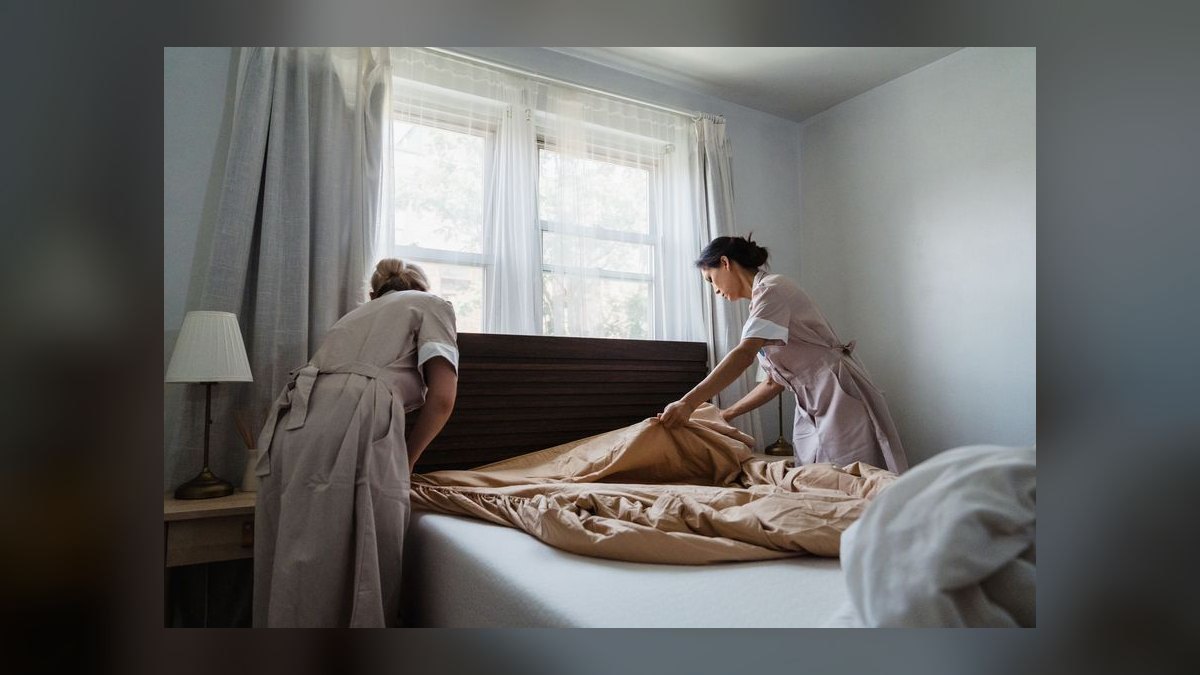
You should expect a total investment range of roughly $160,000 to $250,000, depending on territory size and equipment needs. The initial franchise fee is typically around $30,000 to $40,000, with the rest covering vehicles, cleaning supplies, and working capital. Most franchisees combine personal liquid assets with SBA financing to meet these figures.
How long does it take to become profitable after opening? Most new franchisees experience a 9 to 15 month period before reaching breakeven, with monthly working capital burn between $8,000 and $14,000 during that ramp-up. Year 1 cash flow is often negative $30,000 to positive $40,000, depending on how quickly you build a client base. Profitability usually stabilizes by the second year.
Do I need prior cleaning industry experience to succeed? No, prior cleaning experience is not required, but you do need a manager-operator mindset comfortable overseeing W-2 employee teams. The franchisor provides training on operations, marketing, and systems, so a background in business management or customer service is helpful. The key is willingness to manage staff and follow a proven model.
What is the typical revenue and owner earnings for a single territory unit? A stabilized single-territory franchise typically generates annual revenue between $650,000 and $1.1 million. Owner earnings in Year 2 and beyond usually fall in the $90,000 to $160,000 range, after all operating expenses and your own salary. These figures can vary by market and how efficiently you manage labor and routing.
Can I run this franchise as a semi-absentee owner?
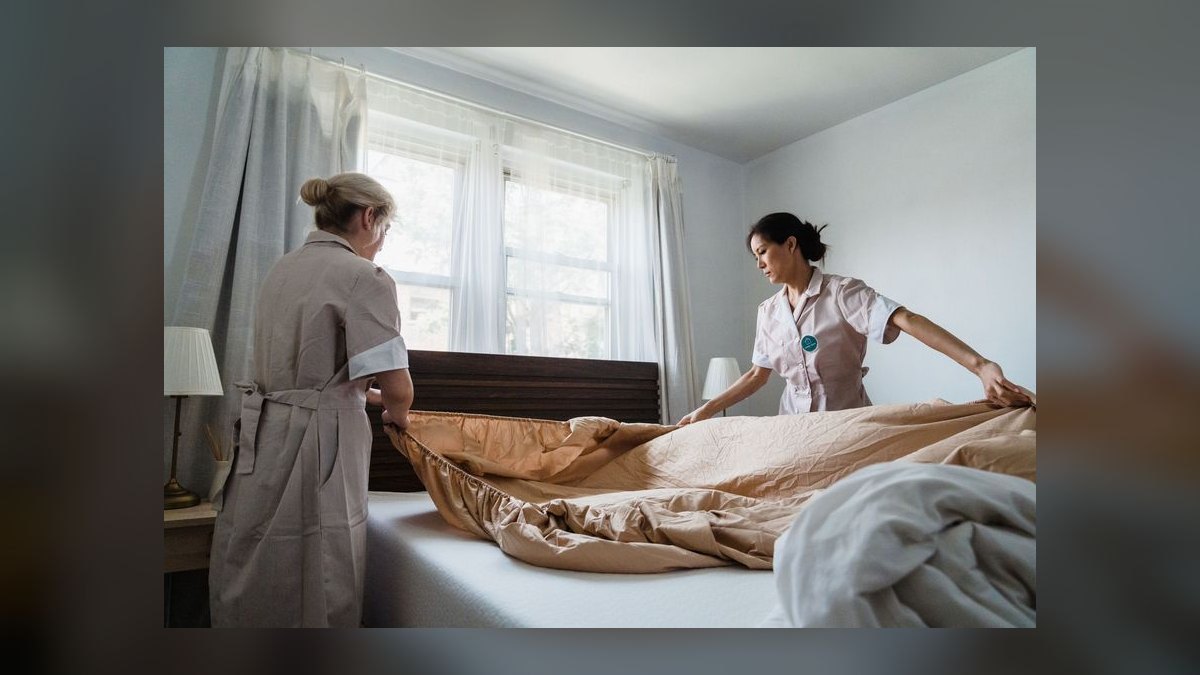
This model generally requires you to be actively involved in day-to-day operations, especially in the first few years. You will need to manage cleaning teams, handle client issues, and oversee scheduling, making it less suited for a fully passive investment. Some franchisees eventually hire a general manager after several years, but that is not typical early on.
How do I evaluate if a specific territory is good for a The Maids franchise? You should verify at least 8 existing franchisee profit-and-loss statements in your target metro area before signing anything. Look for territories with a dense population of single-family homes, average household incomes above $75,000, and limited competition from other cleaning services. The franchisor can provide demographic data, but independent validation from local franchisees is critical.
Bottom Line
The Maids is a legitimately good franchise for the right buyer in 2027 — and a wealth-destroying mistake for the wrong one. The 2026 FDD Item 19 system-average $1.06M AUV is real, the 3.9-6.9% sliding royalty is competitive, and the W-2 employee model is a defensible moat against gig-marketplace competition. But half of all franchisees never reach the system average, the bottom-quartile lives at $385K, and owner-operator engagement is non-negotiable for 36+ months. If you have $160K-$200K of risk capital, manager-operator temperament, suburban high-MHI territory access, and a 5-7 year hold horizon, run the 90-day decision tree and sign. If you are missing any of those four — walk, and either pick a different franchise category or wait until your circumstances align.
Sources
- The Maids Franchise Insights: FDD, Costs & Fees — Vetted Biz
- The Maids Franchise FDD, Profits & Costs (2025) — Sharpsheets
- The Maids Franchise Review 2025: Costs, Fees, News, Average Revenues — Franchise Chatter
- The Maids Franchise FDD, Costs & Fees (2026) — Franchise Payback
- The Maids Franchise Cost, Profit and Fees Breakdown for 2026 — 1851 Franchise
- The Maids Franchise Review — Franchise Decision Radar
- The Maids Franchise (Costs + Fees + FDD) — Franchise Direct
- Residential Cleaning Services in the US Market Size — IBISWorld
- Residential Cleaning Service Franchises — IBISWorld
- SBA Franchise Directory — US Small Business Administration
- International Franchise Association — Economic Outlook Report 2026
Related on PULSE
This page will be disappearing soon. Save it to your device for $1 — or read it free while it is here.
@Kory-White- · if Venmo asks, the last 4 of my number are 2012
This page is gone.
This one is off the shelf now. $1 keeps it on your phone for good — the whole page, pictures and diagrams included.
 franchiseShould I open or buy a Marco's Pizza franchise in 2027?
 franchiseShould I open or buy a Great Clips franchise in 2027?
 franchiseShould I open or buy a Goddard School franchise in 2027?
 franchiseShould I open or buy a Roto-Rooter franchise in 2027?
 franchiseShould I open or buy a Kona Ice franchise in 2027?
 franchiseShould I open or buy a Big O Tires franchise in 2027?
 franchiseShould I open or buy a Domino's franchise in 2027?
 franchiseShould I open or buy a Chipotle franchise in 2027?
 franchiseShould I open or buy an Ace Hardware franchise in 2027?
 franchiseShould I open or buy a Wendy's franchise in 2027?