


Should I open or buy a Snap-on Tools franchise in 2027?
Quality
Certified
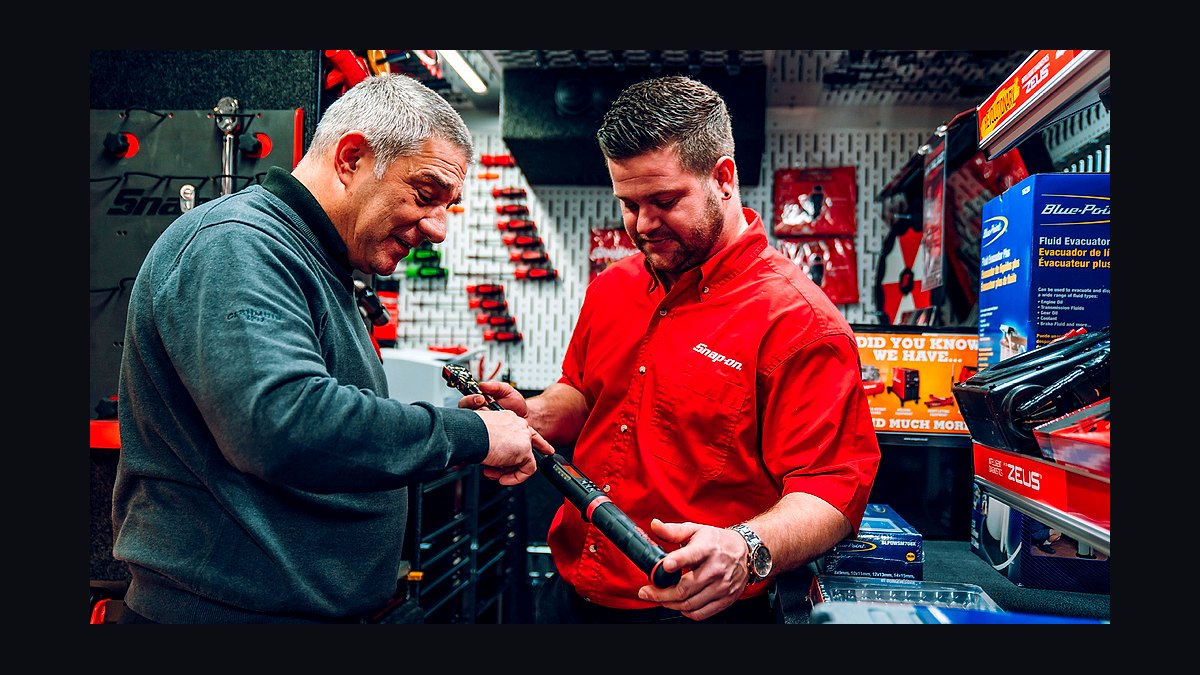
Probably not — unless you bring $80,000+ in liquid capital, a proven sales background (route-based, commission, or B2B field sales), and the stomach to operate a rolling credit business where you personally finance mechanics' tool purchases. Snap-on's 2025 FDD reports total initial investment of $221,751–$500,098, a $16,000 franchise fee, average paid sales of $814,444 (FY2024 Item 19), and a $120–$135/month flat royalty that looks low until you discover the real economics live inside 8% gross profit erosion from extended-terms (EC) financing and inventory carrying costs. Realistic breakeven is 18–30 months, and Year-1 conservative cash flow runs $35,000–$65,000 after debt service. Top-third dealers clear $150K+ owner earnings; bottom-third lose money or exit within 36 months.
The Real Numbers
The 2025 FDD (used for 2026–2027 planning since the 2027 document publishes in Q2 of each year) is the most current public disclosure. Snap-on Tools Company LLC, headquartered in Kenosha, Wisconsin, currently runs roughly 3,400 active US franchisees across the US, Canada, and Puerto Rico. The dealer model is a mobile route: a branded walk-in van with 150–200 weekly stops at independent garages, dealership service bays, fleet shops, and trade schools.
| Line Item | Low | High | Notes |
|---|---|---|---|
| Initial franchise fee | $8,000 | $16,000 | Item 5; $8K for converters, $16K for new dealers |
| Van (mobile showroom) | $65,000 | $195,000 | Item 7; leased or financed via Snap-on Credit |
| Initial inventory | $139,000 | $149,000 | Item 7; tools, diagnostic units, displays |
| Computer / route software (SOLUS, Mitchell1 license) | $4,500 | $9,500 | Item 7 |
| Training (3-week Kenosha + 4-week field) | $0 | $5,500 | Travel + lost wages |
| Working capital (3 months) | $5,174 | $38,705 | Item 7; thin for a credit-extending business |
| Insurance, supplies, signage | $4,500 | $86,000 | Wide spread — owned vs. leased van drives variance |
| TOTAL INITIAL INVESTMENT | $221,751 | $500,098 | Item 7 range |
| Ongoing royalty | $135/mo flat | $135/mo flat | Item 6 — uniquely flat, NOT % of sales |
| National advertising contribution | $50/mo | $50/mo | Item 6 |
| Average paid sales (FY2024) | — | $814,444 | Item 19; paid sales (cash collected), not gross sold |
| Average gross revenue (sold) | — | $832,626 | Item 19 reported figure |
| Top-third median sold sales | — | $1,100,000+ | Franchise Chatter analysis of Item 19 |
| Bottom-third median sold sales | — | $480,000 | Franchise Chatter analysis of Item 19 |
| Realistic owner EBITDA margin | 8% | 18% | After inventory write-downs + bad debt; not GP margin |
| Payback period (conservative) | 36 mo | 60 mo | After-tax, post-debt-service |

Two numbers operators consistently miss. First, Snap-on's flat $135/month royalty is the lowest in mobile tool franchising — Matco runs 0% royalty plus inventory markup, Mac Tools charges a flat ~$84/week, Cornwell runs $165/month flat. Snap-on's economics shift to product margin (35–45% gross) and EC financing income. Second, the bottom-third dealers in Item 19 are not statistical noise — they represent ~1,100 active franchisees doing under $480K/year, many losing money once inventory carrying cost and personal vehicle depreciation hit.
Who Wins With This Business
The dealers who clear $150,000+ owner earnings share four traits. First, prior route or field-sales experience — UPS, FedEx Ground, beer distribution, medical device sales, or industrial B2B. The job is 80% relationship sales, 20% tool knowledge. Second, an existing network of mechanics — former technicians who flip to the truck side dominate the top-third. Third, disciplined credit management — they qualify customers before extending EC terms, write off bad debt monthly instead of letting it pile, and never carry more than $25,000 in receivables per van. Fourth, a non-working spouse or back-office partner running the books, restocking inventory at night, and chasing collections. Top performers run 165+ stops per week with 60%+ conversion, hit $22,000/week in paid sales, and resell their routes for $300,000–$500,000 after 8–12 years — the route equity is the real wealth play, not the weekly P&L.
Who Loses With This Business
The bottom-third profile is brutally consistent. Former W-2 employees with no sales background who believed the "be your own boss" pitch and discovered the job is 60 hours/week of cold-calling mechanics who already buy from a Matco truck. Undercapitalized dealers who exhaust working capital in months 4–9 when EC receivables balloon past $40,000 and the bank stops financing inventory replenishment. Dealers in oversaturated metros — Dallas-Fort Worth, Phoenix, and Atlanta have multiple Snap-on routes competing with Matco, Mac, Cornwell, and two or three independent tool jobbers at every stop. Anyone who hates collections — when a tech buys a $3,200 diagnostic unit on EC terms and stops paying month four, you eat the loss, not Snap-on. The SBA 7(a) loan default rate sits between 4.8% and 12% depending on cohort year (Coleman Report data), but total turnover including buybacks and non-renewals runs 15–20% in saturation markets.

2027 Market Conditions
Three forces define the 2027 mobile tool franchise environment. First, the technician shortage is permanent — the Bureau of Labor Statistics projects 73,300 annual openings for automotive service technicians through 2034 against a shrinking trade school pipeline, which means the techs you sell to have wage leverage and discretionary tool budgets. Good for dealers. Second, diagnostic tools have eaten 40% of dealer revenue mix — a single Snap-on Zeus+ unit retails for $11,500–$13,800 and EC-financed units carry 24-month terms. Diagnostic share is rising as EV and ADAS calibration require subscription updates that lock techs into the Snap-on ecosystem. Third, route saturation has plateaued in tier-1 metros but rural and exurban routes (sub-500K population areas) remain underserved — Snap-on's 2024–2026 expansion focused on secondary markets, and the 2026 FDD Item 20 disclosed 184 new dealer agreements with 57% in markets under 250K population. Used-tool resale via OfferUp and Facebook Marketplace is the biggest 2027 headwind — techs cherry-pick Snap-on torque wrenches and impact guns at 40–55% off retail, compressing new-tool volume. Top dealers respond by leaning harder into diagnostic subscriptions and Snap-on Credit financing income rather than hand-tool volume.
The 90-Day Decision Tree
- Days 1–14: Self-qualification. Pull credit (need 680+ FICO for Snap-on Credit van financing), verify $40,000–$55,000 liquid + $250,000 net worth, and honestly score your sales background. If you've never carried a quota or worked 100% commission, stop here.
- Days 15–30: Territory diligence. Drive your prospective route on a Tuesday and Thursday. Count competing tool trucks (Matco, Mac, Cornwell, MAC, independent jobbers). Visit 25 garages personally, ask how often each tool truck stops, and which dealer they like. If 3+ trucks already serve the route, walk away.
- Days 31–45: FDD deep-read + Item 20 calls. Get the 2027 FDD (legally required 14 days before signing), read Items 7, 19, and 20 line-by-line, and call 8 current dealers from the Item 20 list — randomly, not the ones Snap-on suggests. Ask: *"What's your paid sales last 12 months? What's your write-off rate? Would you do it again?"*
- Days 46–60: Financial model. Build a 36-month cash-flow model using bottom-third Item 19 numbers ($480K paid sales, not $814K average). If you can't survive two years at bottom-third performance, you're undercapitalized.
- Days 61–75: Kenosha visit + ride-along. Spend 3 days at Snap-on HQ training preview, then two full ride-alongs with a current dealer in a similar market. If the dealer can't articulate their EC receivables write-off discipline, that's your warning.
- Days 76–90: Decision + financing. Either sign + secure SBA 7(a) loan via Snap-on Credit's preferred lender list, or walk and consider alternative plays below. Never sign in the first 60 days — Snap-on's sales pressure peaks at FDD-day-14 and you need cooling-off discipline.
Alternative Plays

If Snap-on's gates filter you out, three adjacent plays preserve the route-sales business model with different risk profiles. First, buy a resale Snap-on route instead of opening new — Item 20 typically lists 40–80 routes for resale annually at $120,000–$350,000 (1.5–3x EBITDA). You inherit the customer base, EC receivables (audit them), and existing inventory — slashing the 18-month ramp. Second, Matco Tools at $78,082–$274,327 total investment, $7,000 franchise fee, 0% royalty — lower capital floor, but inventory markup replaces royalty and top-third dealers earn less than Snap-on top-third. Median revenue: $447,053 (middle third). Third, Cornwell Quality Tools at $59,525–$272,825 total investment — smaller brand, 813 US locations vs Snap-on's 3,400, but conversion-friendly for existing dealers with $165/month flat royalty. Fourth alternative outside mobile tool: Mac Tools at $113K–$304K — Stanley Black & Decker-owned, 1,198 locations, lower brand premium than Snap-on. Fifth play: skip franchising entirely — independent tool jobber on a contractor basis with brands like ICON, Husky, or GearWrench keeps you in route sales with $25K startup, no royalty, and no exclusivity restrictions, but you trade Snap-on's brand pull for thinner unit margins.
FAQ
What is the total initial investment for a Snap-on franchise? The 2025 FDD shows a range of $221,751 to $500,098, including a $16,000 franchise fee. Your actual cost depends on territory size, truck inventory, and whether you lease or buy equipment.

How much money do I need in liquid capital? You should have at least $80,000 in liquid capital, though some franchisees start with more to cover early inventory and operating expenses. Lenders typically want to see this before approving financing.
What does a Snap-on franchisee actually earn in the first year? Realistic Year-1 cash flow after debt service is $35,000 to $65,000 for most new dealers. Top performers can exceed $150,000 in owner earnings, but the bottom third often lose money or exit within three years.
Is the royalty really only $120–$135 per month? Yes, the flat monthly royalty is low, but the real cost comes from 8% gross profit erosion due to extended-terms financing (EC) you offer customers. Inventory carrying costs also cut into margins significantly.
How long does it take to break even? Breakeven typically takes 18 to 30 months, depending on territory, sales skill, and how quickly you build a customer base. Some dealers reach it sooner if they have existing relationships.
Do I need a sales background to succeed? A proven track record in route-based sales, commission sales, or B2B field sales is strongly recommended. Snap-on is a rolling credit business where you personally finance mechanics' tool purchases, so comfort with collections and relationship selling is essential.
Bottom Line
Snap-on Tools is a legitimate franchise with real Item 19 numbers — $814,444 average paid sales, $135/month flat royalty, established brand pull, and 100+ years of dealer infrastructure. It is also one of the most demanding small businesses you can buy: a route-sales job with a $250K+ inventory load, EC financing risk that lives on YOUR balance sheet, and 60-hour weeks for 18–30 months before the route matures. If you have route or field-sales experience, $80K+ liquid, a supportive partner, and an unsaturated territory, the top-third $150K+ owner earnings band is realistic. If you don't have all four, you'll join the bottom-third $480K-sales cohort and likely exit within 36 months at a loss. The Snap-on review consensus across operator forums is clear: brand is strong, training is solid, the work is harder than the brochure suggests, and route equity is the real long-term play — not the weekly P&L. Buy a resale route from the Item 20 list if you can; open new only if territory analysis confirms scarcity.
Sources
- Snap-on Tools 2025 FDD Item 7 + Item 19 — Vetted Biz franchise analysis
- Snap-on Franchise Review 2025 — Costs, Fees, Average Revenues — Franchise Chatter
- Snap-on Tools Franchise Cost & FDD ($16K Fee, $222K–$500K Total) 2026 — Peersense
- Snap-on $832K Average Paid Sales vs. $217K-$481K Franchise Cost — Franchise Chatter 2024 FDD Talk
- Snap-on Tools Franchise FDD, Costs & Fees 2026 — Franchise Payback
- Snap-on Tools Franchise Sales, Costs, Profits 2025 — Sharpsheets
- Snap-on Investment Information — Official Snap-on Franchise Portal
- Snap-on Franchise Failure Rate — Real Data Analysis — GoalGuide
- SBA 7(a) Loan Default Rates by Franchise Brand — Coleman Report dataset
- Top Tool Distribution Franchises 2026 Rankings (Matco/Mac/Cornwell comparison) — Franchise Chatter
- Bureau of Labor Statistics — Automotive Service Technicians Occupational Outlook
- Snap-on Incorporated 2024 Annual Report 10-K — Snap-on Credit segment disclosures
*Published 2026-06-04 · Updated 2026-06-04*
*Snap-on Tools franchise review / Snap-on franchise reviews / Snap-on dealer rating / Snap-on franchise review 2027 / review of Snap-on Tools franchise*
Related on PULSE
This page will be disappearing soon. Save it to your device for $1 — or read it free while it is here.
@Kory-White- · if Venmo asks, the last 4 of my number are 2012
This page is gone.
This one is off the shelf now. $1 keeps it on your phone for good — the whole page, pictures and diagrams included.
 franchiseShould I open or buy a Subway franchise in 2027?
 franchiseShould I open or buy a Wendy's franchise in 2027?
 franchiseShould I open or buy a Bruster's Real Ice Cream franchise in 2027?
 franchiseShould I open or buy a Drybar franchise in 2027?
 franchiseShould I open or buy a Take 5 Oil Change franchise in 2027?
 franchiseShould I open or buy a Jamba franchise in 2027?
 franchiseShould I open or buy a Chipotle franchise in 2027?
 franchiseShould I open or buy a Planet Fitness franchise in 2027?
 franchiseShould I open or buy a Mac Tools franchise in 2027?
 franchiseShould I open or buy a Papa John's franchise in 2027?