


Should I open or buy a UPS Store franchise in 2027?
Quality
Certified
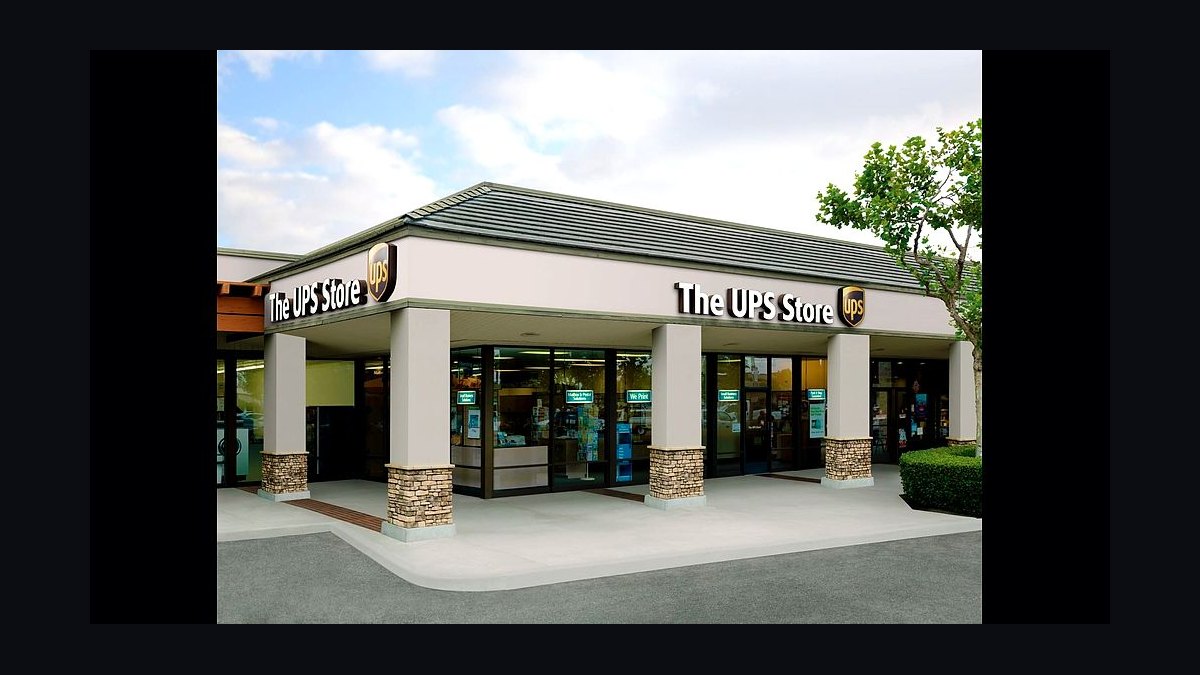
In 2027, buying an existing UPS Store franchise usually beats opening a brand-new one, unless you control a captive building or prime real estate with no competing store nearby. A new build runs $222,368–$606,081 with Year-1 owner cash flow near $40,000–$90,000; resales priced at 2.0–2.5x seller's discretionary earnings skip the ramp-up and reach positive cash flow years sooner.
A Concrete Scenario That Frames The Decision
Imagine a buyer, call her Dana, weighing two paths into the same brand this year. Path one: sign a ten-year lease on a 1,400-square-foot bay in a second-ring suburban strip center next to a regional grocery anchor, at $6,200 a month, and spend roughly $410,000 on build-out, equipment, signage, and working capital to open a brand-new UPS Store. Path two: buy an existing location three towns over from a retiring operator, already running $740,000 a year in volume, priced at $162,800 — a 2.2x multiple on a disclosed $74,000 SDE.
Under the new-build path, Dana spends 14 to 20 months absorbing thin or negative cash flow while the neighborhood learns the address exists, notary and passport-photo traffic climbs from near zero, and B2B mailbox accounts get solicited door to door. Under the resale path, she inherits a customer list, trained part-time staff, signed mailbox contracts, and immediate income, because the prior owner already paid what amounts to a "discovery tax" every new location pays in its first operating year.
This scenario generalizes well beyond pack-and-ship. The same build-versus-buy calculus shows up across nearly every mature, royalty-based retail-service category — tax prep franchises, mailbox and printing competitors, even quick-service restaurant resales — because the economics of a de novo location are structurally different from a seasoned one. A new site has to build awareness, train staff from scratch, and absorb the inevitable early mistakes (wrong signage order, miscalibrated staffing, a lease negotiated before the owner understood true foot-traffic patterns) with none of the offsetting revenue a mature book of business provides. A buyer evaluating a UPS Store franchise in 2027 should treat the new-versus-existing decision the way a private equity analyst treats a greenfield-versus-acquisition decision in any service business: greenfield gives full control of site selection and no legacy baggage, but it is slower and riskier; acquisition is faster and safer but inherits whatever the seller built, good or bad. For most buyers without an extraordinary site advantage, the acquisition math wins, and 2026–2027 has made that math even more favorable, because a wave of Boomer-era owners is retiring and listing inventory, softening resale multiples that used to sit closer to 2.5x down toward 1.8–2.2x in many markets.
How The Mechanism Actually Works
A UPS Store's profitability comes from a layered revenue stack, not a single service line, and understanding that layering is the key to judging any specific location before you open or buy. Shipping and packing sit at the bottom of the stack — the most visible service, the one most people associate with the brand — but they are also the lowest-margin line in the building, because the store is mostly a pass-through conduit for carrier rates and only nets a modest handling fee on each package. Printing and signage sit just above that: business cards, banners, direct mail, and copy work carry healthier margins but face long-term pressure as larger commercial accounts move routine print work in-house or to online order-ahead vendors.
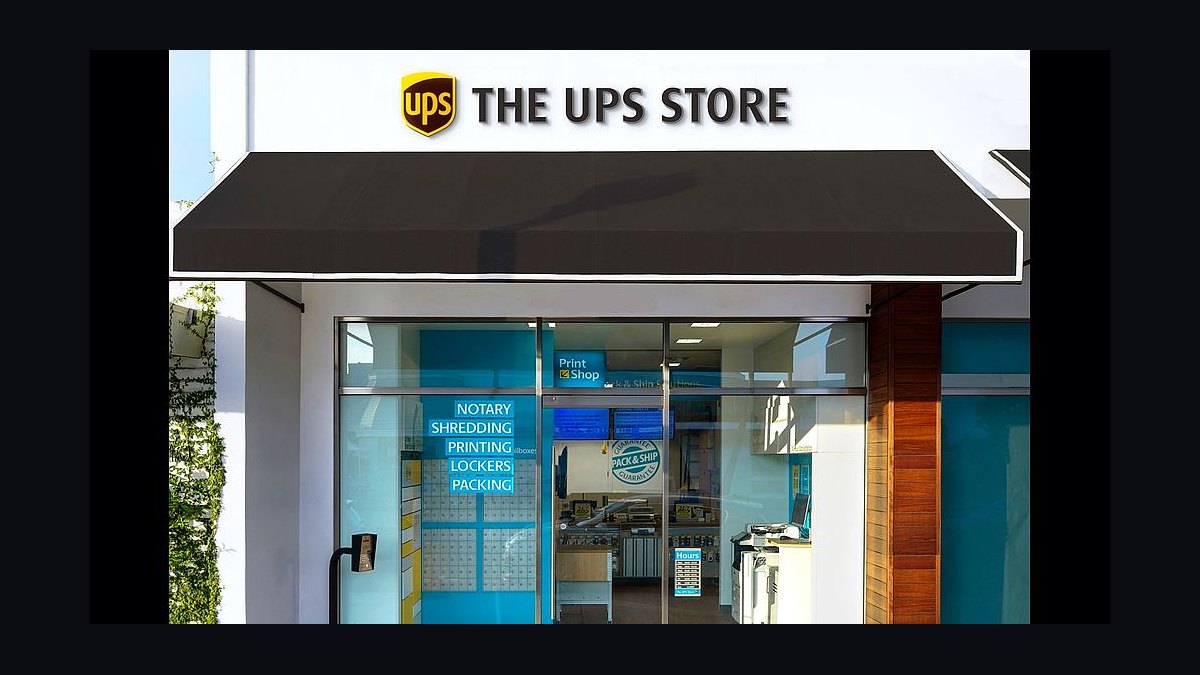
The real profit engine sits higher up the stack: notary services, passport photography, fingerprinting, and mailbox rentals. Each of these runs at close to 100% margin, because the marginal cost of performing them is a few minutes of trained staff time, a stamp, or a camera click — there is no carrier fee, no raw-materials cost, nothing to mark up. At the very top of the stack sits recurring B2B contract revenue: mailbox and shipping arrangements with nearby law firms, property managers, and small businesses, each worth several thousand dollars a month and requiring almost no incremental labor once it is signed. A healthy store is one where these upper-stack services — notary, fingerprinting, mailboxes, B2B contracts — make up a disproportionate share of total revenue relative to their share of counter traffic, because that's where nearly all the profit actually lives.
Every dollar that lands in this stack, regardless of which service generated it, gets taxed the same way before the owner sees a cent: 5% goes to royalty, 1% to local marketing cooperative dues, and 2.5% to the national advertising fund, an 8.5% combined off-the-top burden. What remains then has to clear rent and labor, which typically consume 55–65% of post-royalty revenue, plus supplies and cost of goods at another 12–18%. What survives after all of that — usually a 12–18% net margin, centering near 16% — is the owner's real economic return before any debt service on the initial investment. This is precisely why a store that leans too heavily on shipping and walk-in packing, and under-develops its notary, fingerprinting, and B2B pipeline, struggles to clear its fixed costs even at respectable total revenue: the mix matters as much as the top line.
Real Numbers, Ranges, And Benchmarks
The financial shape of a UPS Store franchise in 2027 is well documented across FDD Item 7 and Item 19 disclosures and independent operator surveys, and the ranges are wide enough that site quality and operating discipline matter at least as much as brand strength. The total initial investment to open a new traditional center runs $222,368 to $606,081, composed of a flat $30,000 franchise fee, $90,000–$220,000 in build-out and leasehold improvements for a typical 1,200–1,800-square-foot space, $45,000–$95,000 in equipment (copiers, packing benches, point-of-sale systems), $8,000–$15,000 in opening inventory of boxes and mailers, $30,000–$80,000 in working capital to cover roughly 90 days of rent and payroll, and $19,000–$46,000 in signage, IT, and miscellaneous branded buildout. Ongoing obligations are the 8.5% combined royalty-and-marketing burden described above, billed weekly against gross revenue rather than net profit — a distinction that matters a great deal to cash-flow planning in a slow month.
Across the system's 5,234-plus U.S. locations, median annual unit volume sits around $692,000, with top-decile stores clearing roughly $1,225,942 and bottom-quartile locations running closer to $400,000. Net margins in a reasonably well-run store fall in the 12–18% band, centering near 15.9%. Translated into cash terms, that means Year-1 owner cash flow of $40,000–$90,000 for a new build — depressed because notary, fingerprinting, and B2B attach rates are still climbing from zero — rising to a median $95,000–$130,000 by Year 3 and beyond once that service mix stabilizes. Payback on a new-build investment typically runs 4–7 years, excluding seller financing, which is really only relevant to resale transactions anyway.
For buyers weighing an existing location, resale pricing clusters at 2.0–2.5x SDE, though the retirement wave moving through the system in 2026–2027 has pushed some negotiated multiples down toward 1.8–2.2x, a meaningful discount against pre-pandemic norms closer to 2.5x. Franchisor minimum qualifications call for $150,000 in net worth and $75,000 in liquid capital, and the standard agreement runs 10 years with a renewal option. For context, SBA 7(a) financing — the typical debt vehicle for both new builds and resales in this category — generally requires 10–20% owner equity injection and amortizes over 10 years for a business acquisition, which materially shapes how much of that $162,800–$606,081 range a buyer actually needs in cash versus financed. A single well-placed SMB mailbox account can be worth $3,500–$6,000 a month in pure recurring revenue, which is why multi-unit operators aggressively chase these contracts across 2–4 stores in a region: spreading one manager's $95,000–$130,000 salary and shared back-office overhead across several P&Ls lifts blended margins well above what any single store achieves alone.
Trade-Offs And Alternatives
The central trade-off in 2027 is speed-to-cash-flow versus control. Opening a brand-new UPS Store franchise means choosing your own site, negotiating a fresh lease on your own terms, and building a customer base with zero legacy baggage — but it also means absorbing 12 to 20 months of thin or negative cash flow while notary, fingerprinting, and B2B attach rates climb off a flat line. Buying an existing store inverts that risk profile: an established location already has stabilized revenue, trained staff, and a customer list, but the buyer inherits every weakness the prior owner built in, from an underpriced lease to an eroding print-and-signage mix to a landlord relationship that has gone cold. A middle path — acquiring 3 to 5 stores in one metro from a single retiring operator at a portfolio discount, often around 1.7–1.9x SDE — captures much of both advantages: near-immediate cash flow plus the margin lift of shared management, at the cost of needing more up-front capital and more operating bandwidth than a single-unit buyer can usually marshal.
It's worth comparing the category more broadly before committing capital, because UPS Store is not the only vehicle into this business model. PostNet runs a similar roughly 5% royalty structure on a smaller footprint, with a $190,000–$280,000 investment range. AIM Mail Centers operates a smaller, West-Coast-concentrated model around $170,000–$240,000. Pak Mail sits at the lower end of the category, roughly $95,000–$190,000, trading a lighter capital requirement for materially weaker brand recognition and foot-traffic pull than UPS carries. In a genuinely underserved rural county with no UPS Store within a 25-mile radius, an independent pack-and-ship shop sidesteps the 8.5% royalty-and-marketing burden entirely and can net 22–28%, though it forfeits brand trust, carrier-account referrals, and the national advertising fund's reach.
For an operator more interested in testing the services side of the business before committing to a full retail lease, a mobile notary-only operation needs just $8,000–$15,000 to launch and can generate $40,000–$90,000 in owner income on its own — a useful proving ground for the exact skill set (licensing, scheduling, client trust) that drives the highest-margin layer of a full UPS Store. And for someone drawn more to B2B logistics than walk-in retail, a small third-party logistics micro-fulfillment operation serving Shopify-scale sellers — typically $120,000–$280,000 all-in — trades walk-in foot-traffic dependency for contracted, recurring B2B revenue, a materially different risk profile than any storefront model, new or resold.
Common Pitfalls And How To Avoid Them

The single most common mistake is treating this as a passive shipping business. It isn't. It's a labor-intensive retail operation where the owner or a strong on-site manager is behind the counter 50 to 60 hours a week handling packing requests, jammed copiers, and notary clients. Absentee owners without a dependable manager routinely bleed cash within 18 months through payroll inefficiency, key-holder turnover, and inconsistent service that drives repeat customers to the next-closest competitor. The fix is non-negotiable: commit to active, on-site ownership for the first 12–18 months, or hire and retain a proven manager before signing the lease, not after.
A second pitfall is overestimating foot traffic from Amazon return drop-offs. UPS has been winding down Amazon volume across its network, and the Amazon-Hub Counter program is being deprioritized at many independent locations, so a business plan leaning on that traffic as a primary driver is building on a shrinking foundation. Validate any candidate location's underlying traffic with your own hourly counts — at least 80 people per hour during peak windows is a reasonable bar — rather than assuming carrier-driven walk-ins will carry the store the way they might have five years ago.
A third pitfall is skipping franchisee reference calls. Item 20 of the FDD lists existing operators, and calling a dozen of them about actual Year-1 volume, notary attach rates, and multi-unit economics surfaces problems that marketing materials never will. Serious buyers routinely walk away from deals after these calls, which is exactly their purpose — a walk-away at this stage is cheap compared to a walk-away after signing a ten-year lease. A fourth pitfall is underestimating build-out inflation: commercial construction costs are running 18–25% above 2023 levels in most metros, so any financial model built on older cost benchmarks will underfund the project and squeeze working capital precisely when the store needs it most to survive its slow first year.
Finally, resale buyers often skip a hard look at lease terms in their haste to close on strong trailing revenue. A store with excellent SDE but only 18 months left on an unrenewable lease is a fundamentally different asset than one with a decade of term remaining, and that distinction belongs in the price negotiation — not discovered after the ink dries. The same scrutiny should extend to the franchise agreement's own renewal window relative to the lease, since a mismatch between the two creates exactly the kind of structural risk that erodes resale value down the line for whoever eventually buys the store from you.
Related questions

How much does it cost to buy an existing UPS Store versus open a new one?
A resale typically runs $162,800–$280,000 at a 1.8–2.5x SDE multiple on a proven location, versus $222,368–$606,081 for a new build — resales usually reach positive cash flow faster because the ramp-up period is already behind them.
What services generate the most profit in a UPS Store?
Notary, passport photos, fingerprinting, and recurring B2B mailbox contracts carry near-100% margins, far above shipping and packing, which are largely carrier pass-through revenue with thin handling fees.
Is the UPS Store franchise still growing in 2027?
The system is mature at over 5,234 U.S. units; growth is concentrated in the B2B and SMB services pivot rather than new unit count, as UPS Corporate shifts brand investment away from pure e-commerce shipping.
What happens to UPS Store economics if Amazon volume keeps declining?
Stores that leaned on Amazon-Hub Counter foot traffic lose a walk-in driver; stores with strong notary, fingerprinting, and B2B mailbox attach rates are more insulated because that revenue doesn't depend on any single carrier relationship.
How long does it take an existing UPS Store franchise to pay back its purchase price?
At a 2.0–2.5x SDE multiple on a stabilized store, payback is often under 4 years, materially faster than the 4–7 year payback typical of a new-build location still ramping its service mix.
FAQ

What is the total investment range to open a new UPS Store franchise? The initial investment for a new traditional center runs roughly $222,368 to $606,081, including the $30,000 franchise fee. Costs vary with location size, build-out scope, and equipment, but this range covers most new openings in 2027.
How much can I realistically expect to earn in the first year? Year-1 owner cash flow typically falls between $40,000 and $90,000, based on median store revenue around $692,000 and net margins near 15.9%. Bottom-quartile stores may earn less; top performers can exceed this range comfortably.
What are the ongoing royalty and marketing fees? You'll pay a 5% royalty, a 1% local marketing fee, and a 2.5% national ad fund — 8.5% of gross revenue combined. These are taken off the top before rent, labor, and other operating expenses are paid.
Is it better to buy an existing UPS Store than open a new one? For most buyers, yes. Resales at 2.0 to 2.5 times seller's discretionary earnings often offer a faster path to positive cash flow and lower risk, especially when the store has proven volume and an established customer base.
What kind of location is most likely to succeed for a new UPS Store? Stores in multi-tenant office towers, college-adjacent areas, or high-traffic retail zones near grocery anchors tend to perform best. A captive, consistent audience meaningfully boosts revenue potential and shortens the ramp to profitability.
How long does it take to pay back the investment in a UPS Store franchise? Payback typically runs 4 to 7 years for a new-build store, depending on revenue mix and cost control. Existing high-volume stores bought at a reasonable SDE multiple often pay back in under 4 years.
Sources
- The UPS Store Franchise Disclosure Document, Item 7 & Item 19 (2026 FDD)
- FranchiseChatter — "The UPS Store Franchise Review: Costs, Fees, News, Average Revenues and/or Profits"
- Vetted Biz — "The UPS Store Traditional Franchise Insights: FDD, Costs & Fees"
- Supply Chain Dive — "UPS' Amazon volume cuts are nearly done. What's next?"
- Supply Chain Dive — "UPS' future is less e-commerce, more SMB, B2B and healthcare"
- Sharpsheets — "The UPS Store Franchise FDD, Profits & Costs"
- 1851 Franchise — "The UPS Store Franchise: Comprehensive Overview of Costs, Fees, Profit"
- The UPS Store Franchise Official Site — theupsstorefranchise.com
- BizBuySell — Active UPS Store franchise listings (resale comp data)
- U.S. Small Business Administration — SBA 7(a) Loan Program overview
Related on PULSE
This page will be disappearing soon. Save it to your device for $1 — or read it free while it is here.
@Kory-White- · if Venmo asks, the last 4 of my number are 2012
This page is gone.
This one is off the shelf now. $1 keeps it on your phone for good — the whole page, pictures and diagrams included.
 franchiseShould I open or buy a Hand and Stone Massage franchise in 2027?
 franchiseShould I open or buy a Goddard School franchise in 2027?
 franchiseShould I open or buy a Taco Bell franchise in 2027?
 franchiseShould I open or buy a Wingstop franchise in 2027?
 franchiseShould I open or buy an Auntie Anne's franchise in 2027?
 franchiseShould I open or buy a Jimmy John's franchise in 2027?
 franchiseShould I open or buy a Sonic Drive-In franchise in 2027?
 franchiseShould I open or buy a Supercuts franchise in 2027?
 franchiseShould I open or buy a Bojangles franchise in 2027?
 franchiseShould I open or buy a Marco's Pizza franchise in 2027?