


Should I open or buy a Midas franchise in 2027?
Quality
Certified
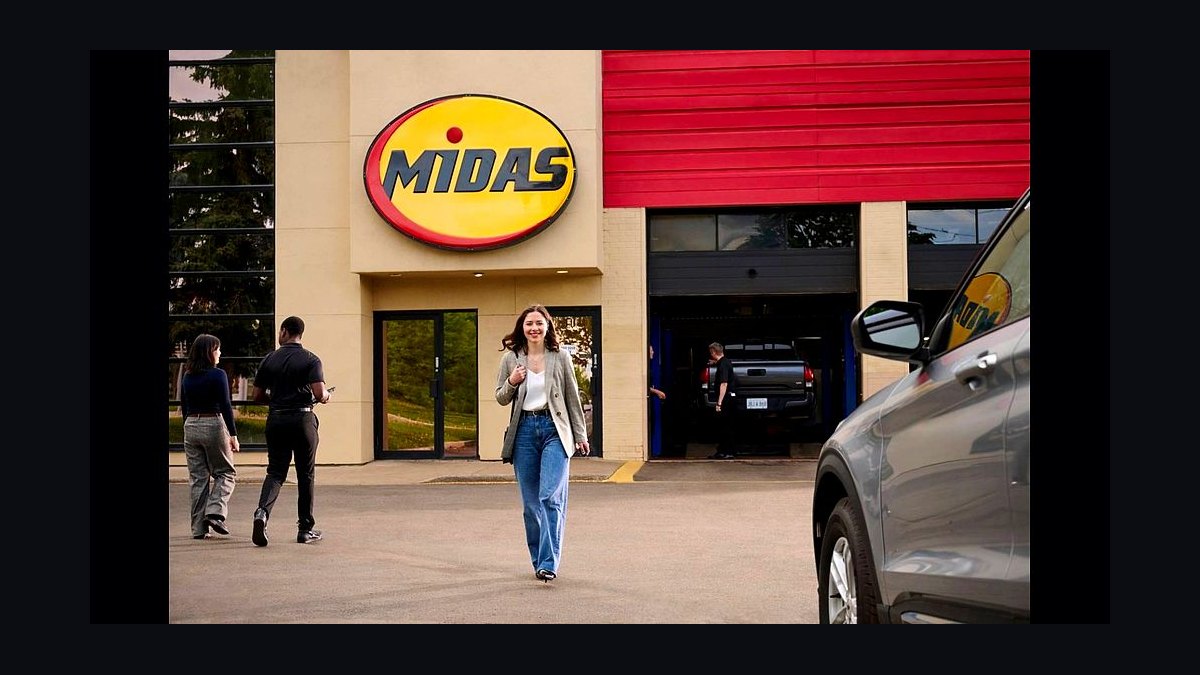
Opening a Midas franchise in 2027 makes sense only if you can self-fund $400,000–$500,000 in liquid capital, already hold automotive operations experience, control your real estate, and commit to a multi-unit plan from the start. A single new Midas location carries a total initial investment of $341,650 to $924,890, a 10% royalty, and a 3-5% marketing fee — a combined drag that punishes underperforming single-shop owners and rewards scaled operators.
The outcome you should expect
Walk into a 2027 Midas franchise decision with a clear-eyed model of what actually happens to your money in year one, because the brand's own disclosure data draws a wide gap between the marketing pitch and the median outcome. The 2026 FDD Item 19 reports average annual gross revenue of $1,234,101 across 941 reporting shops, but only 37.4% of locations actually clear that average — meaning the majority of new franchisees should plan around a number well below the headline figure, somewhere in the $725,000 to $950,000 range for a typical first-generation shop still building its bay-fill rate.
Once you strip out the 10% royalty and 3-5% marketing contribution — a combined 13-15% of gross revenue that leaves before you pay rent, techs, or parts cost — a shop tracking the average lands at $95,000 to $140,000 in owner EBITDA during year one. That is a livable outcome for an owner-operator who is also drawing a working wage from the business, but it is not the outcome an investor comparing this to a passive return would want. The expectation to set going in: your first 9 to 12 months will run at a bay-fill rate around 35%, climbing toward the 65%+ threshold that supports the $1.2M average, and your real cash position will feel tighter than the FDD's rosy top-line numbers suggest until month 15 to 18.
The outcome bifurcates sharply by quartile. Top-quartile shops — often multi-unit operators with prior trade experience and negotiated real estate — see $1.75M+ in gross revenue and 12-16% EBITDA margins, a genuinely attractive small-business return. Bottom-quartile shops average $620,000 to $880,000 in revenue against a breakeven point near $1.05M, meaning roughly a quarter of the system is losing money in any given year. Knowing which group you are likely to land in — based on your capital reserves, trade background, and site quality — is the single most important input into whether opening a Midas in 2027 is a good decision for you specifically, as opposed to a good decision for the franchise system in the abstract.
What drives that outcome
Four structural levers determine whether a given Midas franchise lands in the top quartile or the bottom quartile, and understanding them before you sign is more valuable than any revenue projection corporate hands you during discovery day. The first lever is occupancy cost. Rent above roughly $20 per square foot on a typical 5,500-square-foot, 8-bay shop is the single most common reason new Midas locations fail in years three through five, because the fixed occupancy line does not flex with a slow ramp the way labor hours can. The second lever is the royalty structure itself — at 10% of gross sales, Midas charges meaningfully more than category peers like Meineke (3-7% sliding scale) or Big O Tires (2% plus 3% marketing), so the same revenue produces less bottom-line cash for a Midas owner than it would under a lower-royalty banner.

The third lever is fleet contract access, which is also the brand's best argument for the royalty. Midas's national accounts with companies like Enterprise, Hertz, Element, and Wheels deliver $180,000 to $340,000 in pre-booked annual revenue per shop — volume an independent shop simply cannot access without a national footprint. That pre-booked floor is what makes the 10% royalty defensible for an operator who can actually capture it; a shop in a market without strong fleet penetration is paying the same royalty for a benefit it barely receives. The fourth lever is technician labor cost, now running $24-$29/hour for entry-level techs and $42-$58/hour for master techs in most markets, up sharply from five years ago because of a persistent technician shortage — the Bureau of Labor Statistics projects 4% annual demand growth against a technician pipeline covering only 31% of openings. A four-tech shop's wage line has moved from roughly $72,000 to $95,000-$135,000 in that window, and that shift lands squarely inside your controllable cost structure regardless of the franchise brand on your sign.
Benchmarks and realistic ranges
Use the FDD's own disclosed ranges as your planning benchmark rather than the marketed average, since the average masks how wide the outcome distribution actually is. Total initial investment spans $341,650 to $924,890, with the widest swing coming from real estate and build-out ($185,000 to $510,000 for an 8-bay shop) and equipment including lifts, alignment racks, and scan tools ($95,000 to $215,000). The franchise fee itself is a comparatively small $10,000 to $35,000, and grand-opening marketing runs $20,000 to $25,000. Add three months of rent and working capital ($40,000 to $185,000) and you get a realistic midpoint total investment around $633,000 — the number to anchor your financing conversation to, not the low end of the range.
On the revenue and margin side, benchmark against the quartile breakdown rather than a single average. The average reporting shop generates $1,234,101 in gross revenue with $172,800 in combined royalty and marketing drag, $469,000 in parts and tire cost of goods (roughly 38% of revenue), $295,000 in labor, and $115,000 in occupancy — netting $103,457 to $124,149 in operating income, an 8-10% EBITDA margin. Top-quartile shops push past $1.75M in revenue at 12-16% margins; bottom-quartile shops sit at $620,000-$880,000 with margins ranging from -4% to 5%, meaning a real share of the system is underwater in any given year.
Payback period is the benchmark most franchisees underweight during discovery. At the $633,270 midpoint investment against roughly $115,000 in annual net income, straight-line payback runs 5.5 years — but that ignores financing cost. A typical SBA 7(a) loan at 75-80% loan-to-value, currently pricing around prime plus 2.75% (roughly 11.25%) over 10 years, means your actual equity slice is closer to $150,000-$200,000, and your cash-on-cash return after debt service lands around 18-22% — a solid small-business return, but below the 25%+ threshold that dedicated multi-unit operators typically target when they evaluate whether to open another location versus redeploy capital elsewhere. Vehicle age is the most durable tailwind benchmark: the average U.S. vehicle hit 12.6 years in 2025 and is projected to reach 13.1 years by 2027, which is directly why the average Midas ticket runs $385 against roughly $165 for a quick-lube competitor — older cars need more of the higher-margin work Midas specializes in.
Risks, edge cases, and failure modes
The clearest failure mode is opening in a high-EV-penetration market without a parallel service strategy. In metros where EV penetration already exceeds roughly 28% — much of California, Seattle, Portland, and parts of New York and Massachusetts — the exhaust, muffler, and routine oil-change work that built Midas's brand is precisely the service category EVs eliminate, and EV maintenance revenue per vehicle runs about 40% below comparable ICE service. A franchisee opening in one of these markets without budgeting $45,000-$78,000 for EV certification and diagnostic equipment is building a shop against a shrinking addressable service base from day one.
A second failure mode is signing a long-term ground lease on traffic-count assumptions alone. The bottom 30% of Midas shops average around $58,000 in monthly revenue against $11,000 in monthly occupancy — a rent burden that consumes profitability regardless of how many cars pass the location. A ten-year lease above roughly $22 per square foot, signed because a corporate real estate study showed strong traffic, is a structural liability if the demographic and vehicle-registration data underneath that traffic don't also clear the bar: median household income above $58,000, registered vehicles per capita above 1.4, and daily traffic above 25,000 vehicles. Missing any one of those three thresholds is a documented pattern in shops that later close or transfer.

A third and more subtle risk is treating the 10% royalty as an unavoidable cost of doing business without benchmarking it against the independent alternative. An equivalent independent 8-bay shop, sourcing parts through NAPA AutoCare or Tech-Net affiliate programs at similar wholesale tiers, typically nets 4-6 margin points higher than a Midas franchise at the same revenue, because it pays no royalty and keeps 100% of any fleet contracts it wins on its own. The trade-off is real — no national account pipeline, a slower marketing ramp, no brand recognition on day one — but a franchisee who never runs this comparison is implicitly assuming the royalty buys more than it might for their specific market. Finally, the most common operator-level failure mode is entering with no prior automotive trade background and treating six weeks of corporate training as a substitute for a decade of shop-floor experience; FDD quartile data shows operators with five-plus years in the trade clear top-quartile revenue at more than twice the rate of first-time owners, and undercapitalized first-timers in bottom-quartile shops routinely lose $20,000 to $40,000 a year for two to three years before exiting.
A practical rollout plan
Treat the decision to open as a 90-day, gated process rather than a single go/no-go moment, and build in explicit checkpoints where a bad signal should stop you before you've committed real capital. In the first 10 days, pull the full FDD — Item 7 for investment, Item 19 for performance, Item 20 for franchisee turnover, and Item 21 for TBC Corporation's parent financials — and specifically flag the three-year turnover table; turnover above roughly 7% annually in your target state is a red flag worth pausing on before you spend another dollar on due diligence.
From day 11 through day 25, call at least 15 existing franchisees using the contact list Item 20 discloses, focusing on operators five to fifteen years into ownership in markets comparable to yours. Ask what their bay-fill rate looked like at month 18, what royalty and marketing actually cost as a share of their real bank deposits (not the theoretical percentage), and whether they'd sign again knowing what they know now — a bullish response rate below 60% is a meaningful signal to walk. Days 26 through 45 cover site selection: take corporate's trade-area study and independently verify it with a tool like ESRI Business Analyst or Placer.ai, rejecting any site that fails all three of traffic count, income, and vehicles-per-capita thresholds. Days 46 through 65 are for locking your capital stack — get an SBA prequalification from a preferred lender, confirm your post-close liquidity cushion (aim for at least $50,000 beyond your equity contribution), and get the loan term sheet in writing before moving further. The final 25 days split between a franchise-specialty attorney review (flagging the personal guarantee, non-compete radius, and transfer fee terms) and the ultimate sign-or-walk decision: sign only if franchisee references were bullish, the site cleared all demographic gates, financing landed below roughly 11.5%, and the attorney found nothing structurally disqualifying.
Related questions
Is a Midas franchise resale a better entry than opening a new one?
Yes for most first-time operators — resales trade at 2.5-3.5x EBITDA, so a $120,000 EBITDA shop costs $300,000-$420,000, roughly 35-55% less than a new build, with revenue already proven and no ramp-up period.
How does Midas compare to Meineke or Big O Tires financially?
Meineke charges a 3-7% sliding royalty and Big O Tires charges 2% plus 3% marketing, versus Midas's 13-15% combined drag — meaningfully better unit economics in the same category, though with a narrower service mix.
Should I open two Midas shops instead of one?
Most experienced franchisees recommend a two-shop minimum because regional overhead, group purchasing, and royalty negotiating leverage only start working in your favor at that scale; a single shop absorbs the same fixed costs with no offsetting benefit.
What if my target market has high EV adoption?
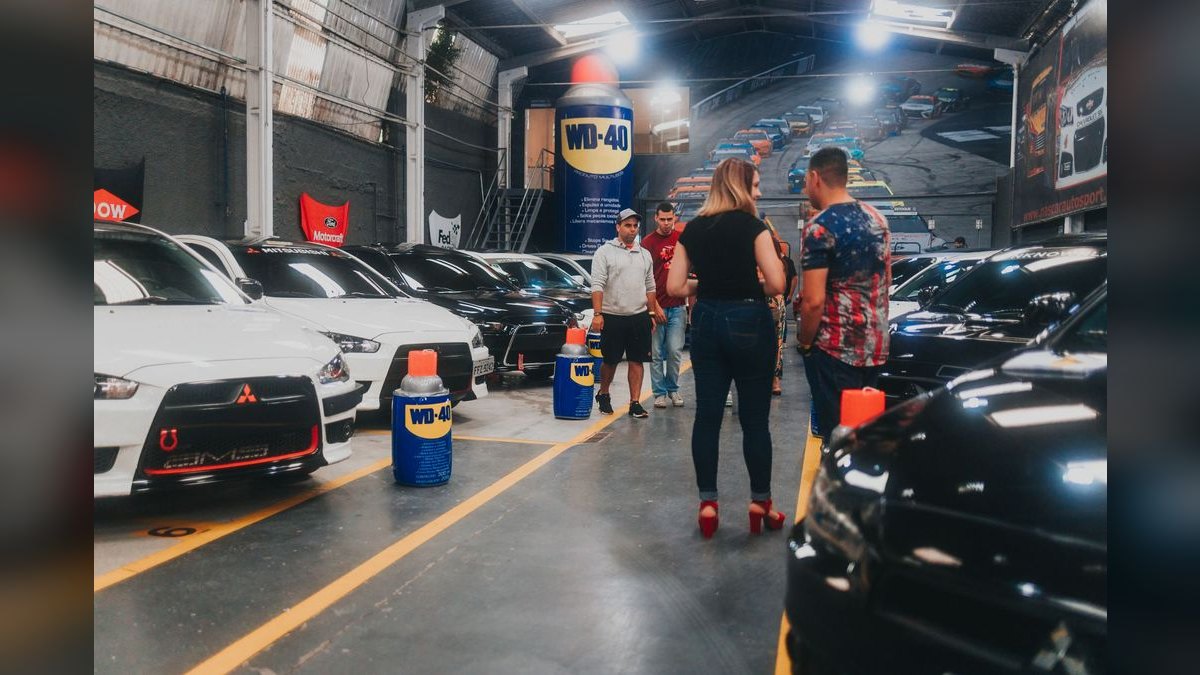
Avoid opening a traditional Midas franchise there without budgeting $45,000-$78,000 for EV certification and diagnostic equipment, since EV service revenue per vehicle runs about 40% below ICE and shrinks the core service categories Midas was built on.
FAQ
What is the total cost to open a Midas franchise in 2027? The total initial investment ranges from roughly $341,650 to $924,890 per the FDD Item 7, including a $10,000-$35,000 franchise fee plus build-out, equipment, and working capital. Plan for $400,000-$500,000 in liquid capital if self-funding.
How much can I expect to earn as a Midas franchise owner? Average annual gross revenue across reporting shops is about $1.23 million, but only 37.4% of locations reach that figure. Realistic owner EBITDA after the 13-15% combined royalty and marketing fee typically runs $95,000-$140,000 in year one.
What ongoing fees does Midas charge franchisees? A 10% royalty on gross sales plus a 3-5% national marketing contribution, for a combined 13-15% of revenue deducted before any other expense — one of the higher combined rates in the automotive repair franchise category.
How long does it take to pay back the investment? At the midpoint investment level, straight-line payback runs about 5.5 to 7 years; SBA financing extends that timeline further since loan payments reduce available cash flow in the early years.
Do I need more than one location to make this work? Most successful operators treat two-plus shops as the realistic minimum, since scale is what unlocks purchasing leverage and dilutes fixed regional overhead across more revenue.
What is the biggest single risk in opening a Midas franchise in 2027? Combining a long-term, high-cost lease with a market that either has weak demographic fundamentals or fast-rising EV penetration — either factor alone can erode the thin 8-10% average EBITDA margin to nothing.
Sources
- https://www.midasfranchise.com
- https://www.sba.gov/funding-programs/loans/7a-loans
- https://www.bls.gov/ooh/installation-maintenance-and-repair/automotive-service-technicians-and-mechanics.htm
- https://www.spglobal.com/mobility
- https://about.bnef.com
- https://ww2.arb.ca.gov/our-work/programs/zero-emission-vehicle-program
- https://www.ibisworld.com
- https://www.franchisechatter.com
- https://www.vettedbiz.com
- https://www.napaautocare.com
Related on PULSE
This page will be disappearing soon. Save it to your device for $1 — or read it free while it is here.
@Kory-White- · if Venmo asks, the last 4 of my number are 2012
This page is gone.
This one is off the shelf now. $1 keeps it on your phone for good — the whole page, pictures and diagrams included.
 franchiseShould I open or buy a Meineke franchise in 2027?
 franchiseShould I open or buy a Kona Ice franchise in 2027?
 franchiseShould I open or buy a Roto-Rooter franchise in 2027?
 franchiseShould I open or buy a Subway franchise in 2027?
 franchiseShould I open or buy a Drybar franchise in 2027?
 franchiseShould I open or buy a Jiffy Lube franchise in 2027?
 franchiseShould I open or buy a Smoothie King franchise in 2027?
 franchiseShould I open or buy a Firehouse Subs franchise in 2027?
 franchiseShould I open or buy a Wendy's franchise in 2027?
 franchiseShould I open or buy a Bojangles franchise in 2027?