


Should I open or buy a Meineke franchise in 2027?
Quality
Certified
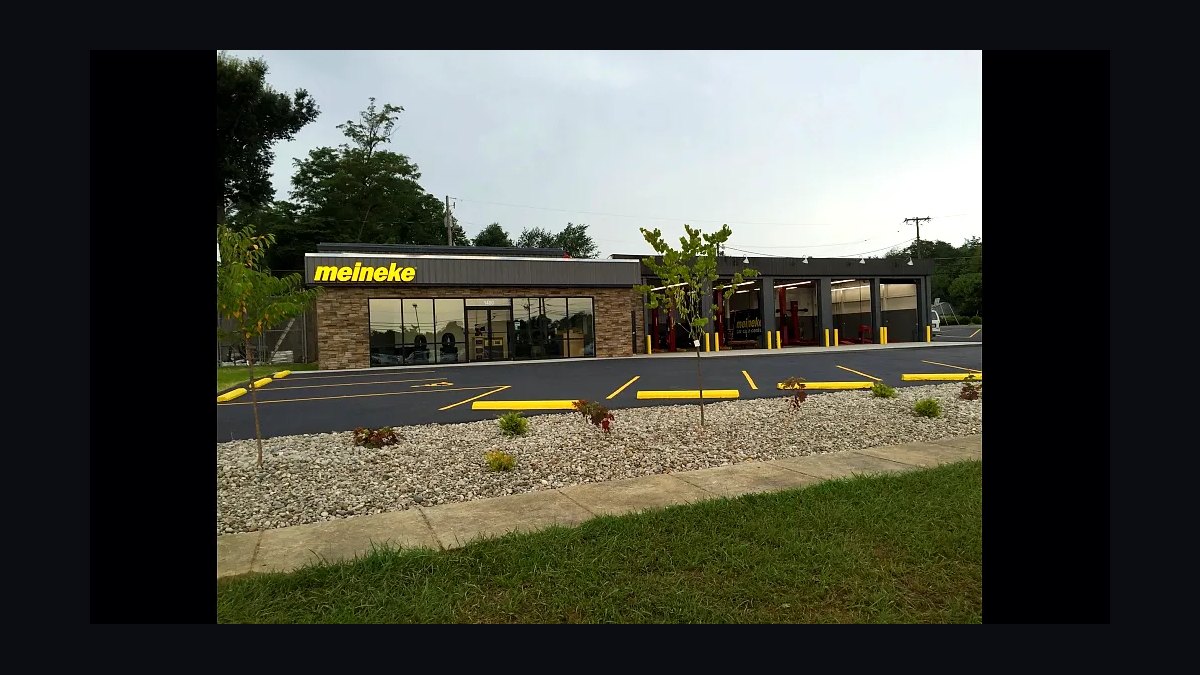
For most operators in 2027, buying an existing cash-flowing Meineke beats building one. A resale at roughly 2.5–3.5x seller's discretionary earnings returns cash in months, not years, while a ground-up build carries a $45,000 franchise fee, a mid-six-figure total investment, and a payback window measured closer to two or three years.
The two operators who show up at the same discovery day
Picture two people on the same Meineke discovery call in early 2027. The first is a 38-year-old regional manager from a tire chain. She has $180,000 liquid, a $400,000 net worth, twelve years of shop-floor experience, and an ASE-certified friend who would follow her as lead tech. The second is a 55-year-old software sales director with $600,000 liquid, no automotive background, and a plan to hire a general manager and check the P&L on Sundays.
The franchisor will happily award a unit to both. The economics will not treat them the same.
The first operator can self-perform the general manager role for eighteen months. That single fact removes roughly $75,000–$95,000 of annual payroll from the Year-1 P&L — which, on a new build ramping through $380,000–$620,000 in first-year gross revenue at single-digit four-wall margins, is frequently the entire difference between positive and negative owner cash flow. She can also read a technician's productivity from the bay: whether a brake job that should bill 1.8 hours is eating 3.2, whether the alignment rack is idle because nobody is upselling it, whether a comeback is a parts-quality problem or a workmanship problem. That diagnostic ability is not a soft skill. It is the primary control lever on gross margin in a labor-heavy repair shop.
The second operator has more capital and less control. He is buying a business where the general manager and the lead technician determine the overwhelming majority of P&L variance, and he cannot evaluate either one. His first bad GM hire costs him six months of ramp and, in a business with a two-to-three-year payback, six months is a meaningful fraction of the whole return. First-time operators without automotive backgrounds routinely underperform system averages in the first two years for exactly this reason.
Here is the useful reframe: the question "should I open or buy a Meineke franchise in 2027" is really three questions stacked on top of each other. Do I want to be in the automotive repair business at all? Do I want a franchise wrapper on that business? And do I want to buy a running one or build one from an empty lease? Most prospective franchisees only consciously answer the second question, because that is the one the franchise development team is organized to answer. The first and third questions determine the outcome.
The same stacking applies to adjacent decisions. A prospective Take 5 Oil Change franchisee, a Big O Tires buyer, a Christian Brothers candidate — all of them face the identical build-versus-buy fork, and all of them face the identical "can I self-perform the operating role" question. The brand is the smallest variable in the equation. What changes across brands is labor complexity, ticket size, and how much of the model survives fleet electrification.
How the franchise wrapper actually changes the P&L
A franchise agreement is not a business model. It is a set of cash flows layered on top of a business model you would otherwise run independently. To decide whether it is worth it, separate the two.
Underneath the wrapper, a multi-bay repair shop is a straightforward operation: you buy technician hours at a wage, you sell those hours at a labor rate, you mark up parts, and you cover fixed rent and overhead with the spread. Meineke's blended labor rate sits in the neighborhood of $129 per hour systemwide, against independent shop rates that generally run $110–$140 and dealer rates that run $175–$220. That gap is the entire consumer value proposition: national-brand warranty and standardized process at independent pricing.
On top of that base business, the franchise adds three cash outflows and four inflows.
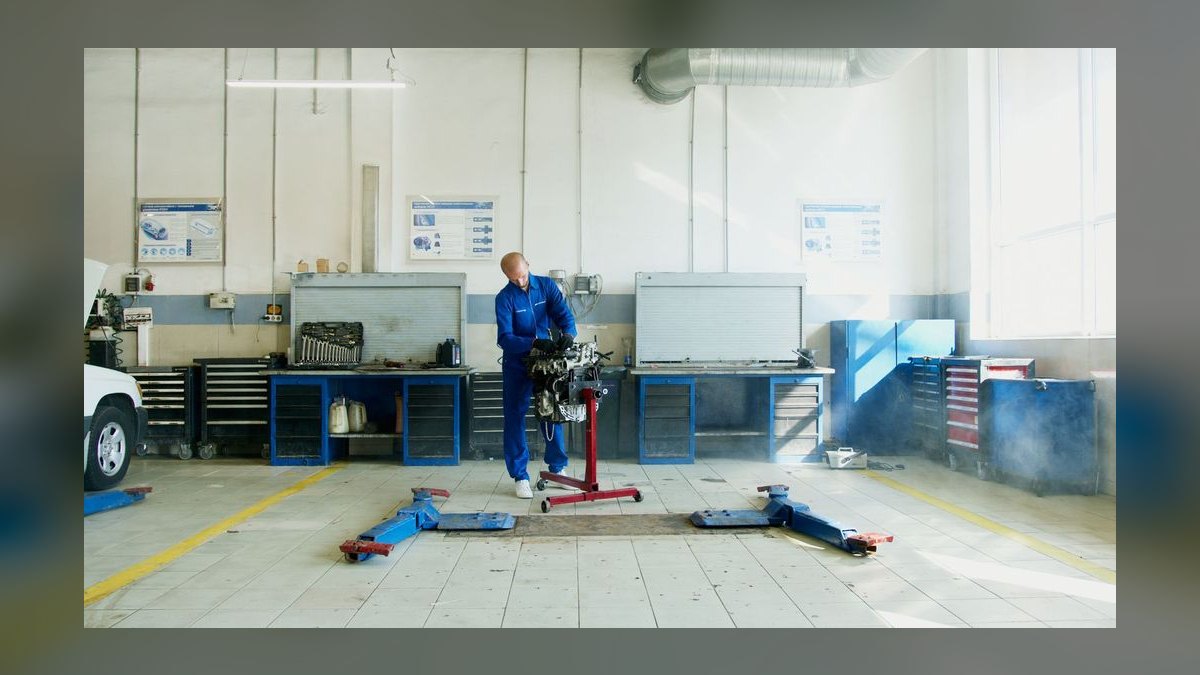
Outflows: a $45,000 initial franchise fee at signing, a 7% royalty on gross sales for the life of the agreement, and a marketing fee that ranges from about 1.5% to 8% of gross sales depending on how much your local cooperative spends. Take the midpoint and you are looking at roughly 10–12% of every dollar of revenue leaving before you pay rent, payroll, or parts. On an $800,000 shop that is $80,000–$96,000 a year — call it one and a half technicians' fully loaded cost, permanently.
Inflows: brand awareness that fills the phone without you buying every lead, parts pricing negotiated at the Driven Brands parent level rather than at your single-shop volume, a mandated point-of-sale and shop management system you did not have to select or integrate, and consumer financing partnerships that let a customer say yes to a $1,400 brake-and-suspension job they would otherwise defer.
The honest test is arithmetic. If the brand and the parts pricing together move your revenue and gross margin by more than the 10–12% royalty-plus-marketing drag, the wrapper is accretive. If they do not, you are paying a premium for a logo.
For a first-time operator with no customer book and no purchasing leverage, the wrapper usually wins. You are buying a customer acquisition engine you could not build. For an established independent shop owner already running $900,000 with a twenty-year customer base and existing jobber relationships, the wrapper often loses on paper — which is why conversions are attractive to franchisors and why converting owners should negotiate hard on fee reduction.
The feedback loop in that diagram is the part people miss. Royalty and marketing dollars are not pure leakage — they fund the awareness that drives car count. The question is never "are the fees high" in isolation. It is whether the fee-funded demand generation produces more incremental gross profit than the fees cost. In a dense suburban trade area with heavy commuter traffic, it usually does. In a thin rural market where nobody is searching for a national brand, it usually does not, because you are paying a percentage of revenue for awareness in a market too small to monetize it.
One operational note that matters more than it sounds: the mandated point-of-sale system is a genuine asset for a first-time owner and a genuine irritation for an experienced one. It standardizes the multi-point inspection, forces consistent estimate presentation, and produces the reporting the franchisor uses to benchmark you against peers. That benchmarking data is arguably worth more than the software. Being able to see that your average repair order is $290 while the system median in comparable markets is $340 is a specific, actionable finding you cannot generate as an independent.
What the money actually looks like
Treat every number below as a range to validate against the current Franchise Disclosure Document for your specific market, not as a promise. The FDD you receive in 2027 will be the current issue, and Item 7 is market-specific.
Getting in. The initial franchise fee is $45,000 for a single unit. Build-out and leasehold improvements on a leased bay typically run somewhere between $80,000 and $310,000 depending on whether you are taking a three-bay or six-bay box and how much of the shell the landlord delivers finished. Equipment — lifts, a tire machine, diagnostic gear — lands roughly $55,000–$135,000, with an alignment rack adding meaningfully to the top of that range. Signage and the mandated POS add another $18,000–$40,000. Opening inventory of parts, fluids and tires runs $15,000–$35,000. Training and grand-opening marketing add $14,000–$26,000.
Working capital is where candidates consistently under-plan. The disclosed floor is typically three months, often in the $40,000–$120,000 band. Your lender will want six. Take the lender's number. A repair shop that runs out of cash in month five cannot buy parts, and a shop that cannot buy parts cannot bill labor.
Add it up and the common leased path lands roughly $267,000–$711,000 all-in. Buying the real estate pushes the top of the range past a million, but it also converts rent into equity and gives you an asset that outlives the franchise agreement. If you already own suitable commercial property on a decent traffic count, that changes the math more than any other single variable in this analysis.
Qualifying. The published financial floors are a net worth around $250,000 and liquid capital around $110,000. Those are screening minimums, not comfort levels. An operator hitting exactly the minimums has no margin for a slow ramp, and slow ramps are the norm, not the exception.
Revenue. The most recently disclosed Item 19 reported average gross revenue in the neighborhood of $913,000 across centers open more than two full years, with a top quartile above $1.4 million and a bottom quartile near $510,000. Read that spread carefully — it is nearly a 3x range between top and bottom quartile in the same brand with the same fee structure. Location quality and operator quality explain almost all of it.
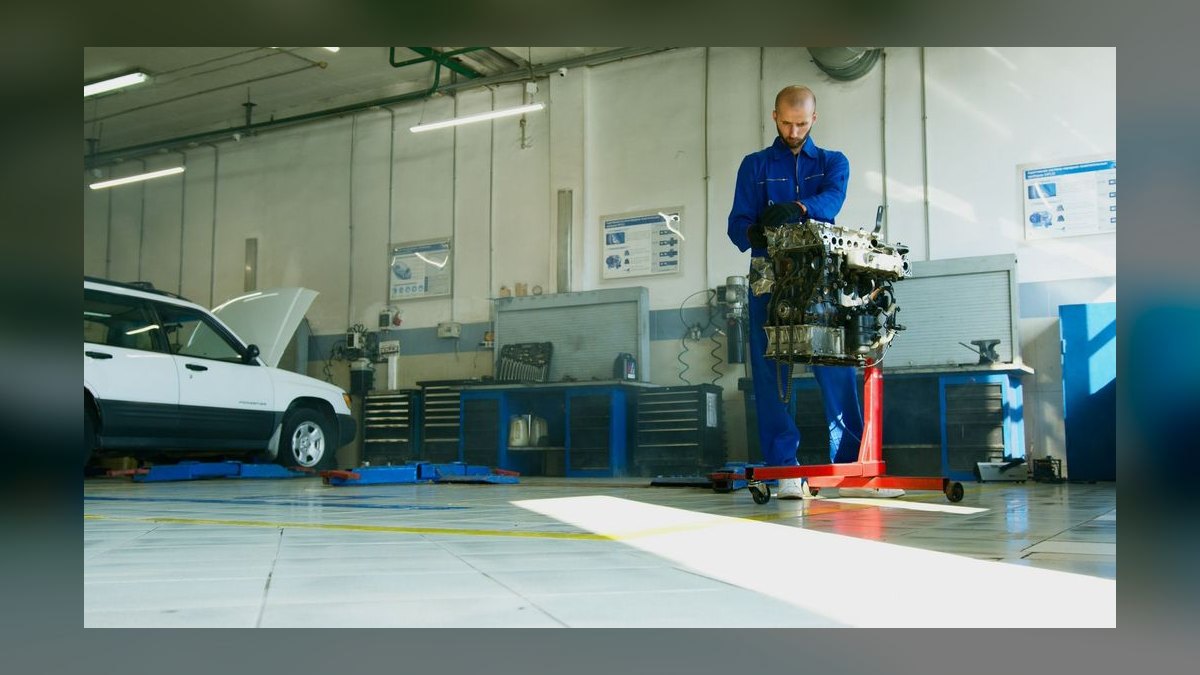
A new build does not open at the average. First-year gross revenue on a ground-up center realistically lands $380,000–$620,000. Year two typically climbs to $620,000–$850,000. Mature performance in year three and beyond is where the Item 19 quartiles apply. That ramp curve is the single most important thing to model, because your debt service does not ramp — it starts at full size in month one.
Margin. Four-wall EBITDA for a mature Meineke generally runs 8%–14% before debt service. That is structurally lower than a quick-lube model, and the reason is labor mix. A ten-minute oil change is a low-labor, high-turn transaction. Brakes, exhaust, and suspension work take real technician hours, and technician hours are the most expensive and most variable input in the shop. Higher complexity means higher revenue per car and lower margin percentage — which is a fine trade if you can manage technicians and a terrible trade if you cannot.
Payback. A ground-up build with typical SBA leverage takes roughly 22–36 months to return the invested capital. A resale purchased at a sane multiple with an existing customer base can return cash in 6–10 months on a cash-on-cash basis, because you are buying earnings that already exist rather than funding the creation of earnings that do not.
Revenue mix, which surprises people. The brand is named for mufflers, but exhaust work is now a small single-digit share of systemwide revenue. Brakes are the largest category, followed by oil changes, tires, and suspension and alignment. If you are evaluating this business on a mental model of exhaust repair, you are evaluating the wrong business. You are buying a general undercar and maintenance shop with a legacy name.
Market conditions going into 2027. The tailwind is fleet age. The average age of a US vehicle has climbed past twelve and a half years — the oldest on record — and old cars are repair-shop cars. Out-of-warranty owners will not pay dealer labor rates, which pushes work toward independents and franchised repair. The aftermarket overall is a several-hundred-billion-dollar industry still growing at a low-single-digit CAGR.
The headwind is electrification and, more immediately, parts cost. EVs are still a low-single-digit share of the *installed* fleet even as they take a much larger share of *new* sales, so the fleet-level impact arrives slowly. But it arrives unevenly: regenerative braking meaningfully extends pad life, and EVs have no exhaust, no oil changes, and no spark plugs. In the highest-adoption metros, that pressure is already visible in comps. Parts inflation on imported brake and exhaust components has been running above general inflation, which compresses gross margin unless you actively reprice.
Trade-offs, and the four other doors in the hallway
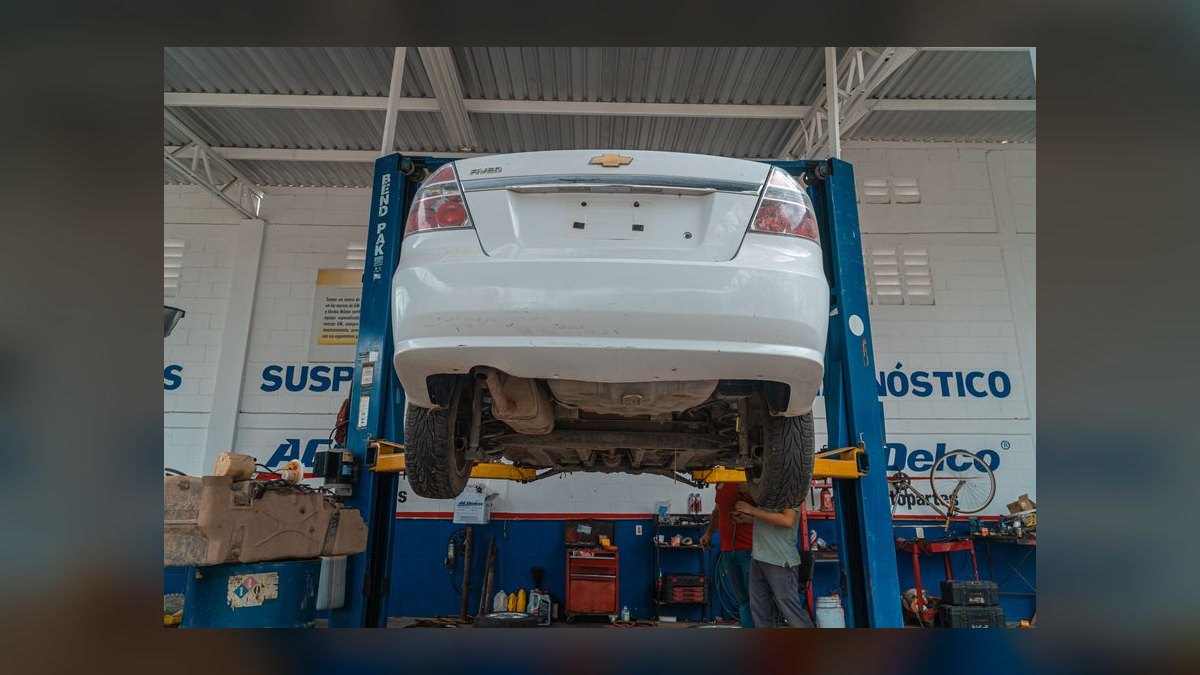
Nobody should evaluate this franchise in isolation. Evaluate it against the specific alternatives a person with $250,000 net worth and automotive interest actually has.
Door one: buy an independent shop instead. Independent multi-bay shops generally trade at lower multiples than branded resales — call it 2.0–2.8x SDE versus 2.5–3.5x. You skip the $45,000 fee entirely and you keep the 7% royalty and the marketing fee. On an $800,000 shop that is roughly $80,000–$96,000 a year of retained cash. What you give up is real: no national warranty to sell, no parent-level parts pricing, no consumer financing partnerships, no brand search volume, and no benchmarking data. For an operator who can generate their own demand — an established local name, a strong fleet-account book, a genuinely good reputation — independent wins on math. For someone starting cold in a market where nobody knows them, it is a slower and lonelier build.
Door two: a higher-ticket repair franchise. Some competing repair brands report substantially higher average unit volumes, in some cases more than double, but come with materially higher all-in investment and, in at least one prominent case, a requirement that the owner be an investor rather than a working operator. That is a fundamentally different deal: more capital, more revenue per unit, less hands-on control, and a hard dependency on hiring a strong general manager from day one. If your edge is capital and management, that trade is good. If your edge is that you can run the shop yourself, you have just paid extra to give up your edge.
Door three: a lower-complexity sibling brand. A quick-lube model inside the same parent company runs meaningfully higher EBITDA margins on lower revenue, with a much simpler labor model — a short service, no complex diagnostics, and critically, almost no comebacks. Comebacks are the hidden tax in full-service repair. A brake job that comes back with a noise costs you the labor twice plus the customer relationship. A model with no complex repairs has no comebacks, which means less variance and less management load. Lower ceiling, higher floor.
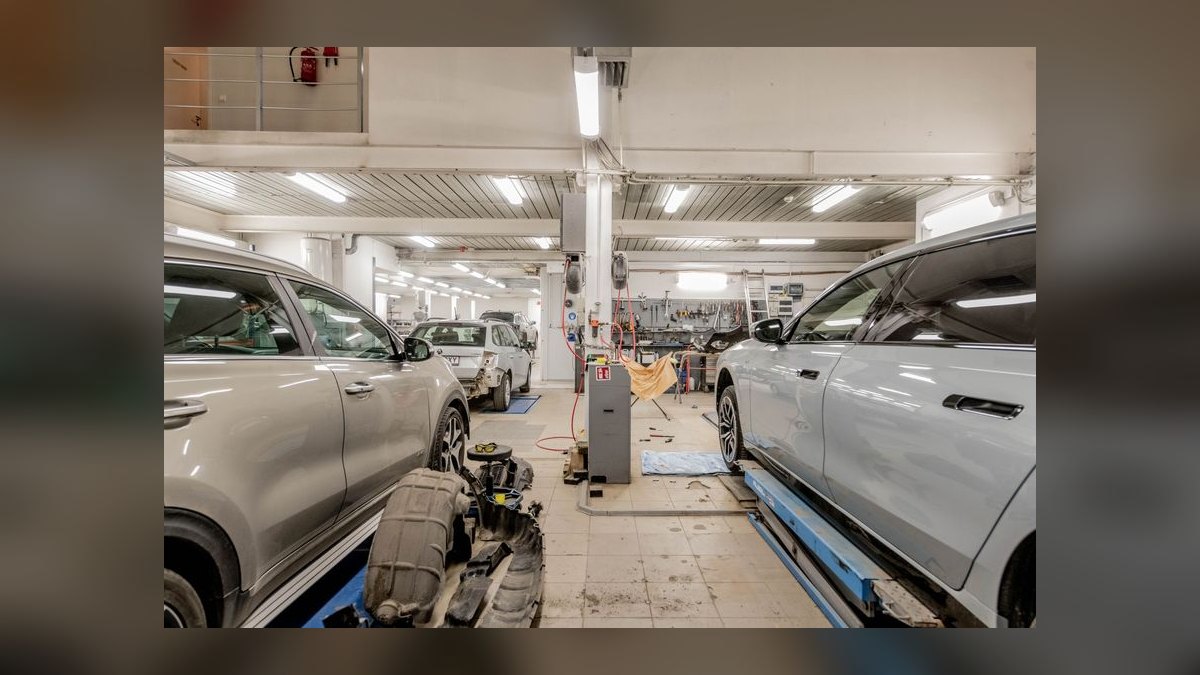
Door four: a tire-weighted model. Tire-heavy concepts carry larger tickets and, notably, better structural protection against electrification, because EVs still need tires and their instant torque and additional battery weight wear them faster than comparable combustion vehicles. If your central worry about 2027 and beyond is fleet electrification, a tire-weighted service mix is the most direct hedge available inside the same broad industry.
The multi-unit consideration that reframes everything. Single-unit economics in this category are merely acceptable. Multi-unit economics are genuinely good, and the inflection generally arrives around the third unit. Three reasons. First, one district manager can cover three shops, so the most expensive layer of management amortizes across three P&Ls instead of sitting on one. Second, parts purchasing crosses volume thresholds that single shops never reach, and a few points of parts margin on a multi-million-dollar combined revenue base is real money. Third, bookkeeping, payroll processing, insurance, and marketing spread across a much larger base.
This is why the largest and most successful franchisees in this system own six, ten, or several dozen units rather than one. If your honest plan is a single shop that you will run until retirement, model single-unit economics and be satisfied with a good owner-operator job. If your plan is a portfolio, the first unit is a training expense and the third is where the business starts.
Adjacent play worth knowing: experienced operators inside this parent company sometimes assemble mixed portfolios in a single trade area — a couple of full-service repair centers plus a quick-lube — and cross-refer between them. The oil change center feeds diagnosed brake and suspension work to the repair centers; the repair centers send routine maintenance back. Shared marketing spend, shared management, complementary labor models. It is a more sophisticated play than a single unit and it demands more capital, but it is the shape that experienced multi-unit franchisees converge on.
Where deals go wrong, and the ninety-day process that prevents it
Most franchise failures are decision failures that happened before the doors opened. Here are the specific traps and a sequenced process that catches them.
Trap one: treating Item 19 as a forecast. The system average is an average of surviving, mature centers in their existing markets. Your market is not the average market and your first year is not a mature year. Model your first year at the bottom of the disclosed range and check whether you still survive. If the deal only works at the average, it does not work.

Trap two: skipping validation calls, or doing them badly. The disclosure document contains a list of current franchisees and, importantly, a list of those who left the system. Call at least fifteen: five you expect are top performers, five you expect are median, and five who exited. The exits are the highest-information calls and the ones everyone skips. Ask specific, checkable questions — actual first-year revenue, what they pay their general manager, four-wall EBITDA before debt service, and the single thing they would do differently. Vague answers are themselves data.
Trap three: ignoring Item 20 turnover. Franchisee turnover is disclosed. Persistently elevated transfers and terminations in a mature system is a signal worth taking seriously, and it is worth understanding whether transfers reflect distressed exits or healthy consolidation into multi-unit hands. Those look similar in a table and mean opposite things.
Trap four: picking a site on rent instead of traffic and demographics. The cheapest lease is usually cheap for a reason. Score candidate sites on daily traffic count, median household income in the trade area, average fleet age, ease of ingress and egress, and competitor density within a two-mile radius. A repair shop on a road nobody turns left onto is a permanently impaired asset, and no amount of marketing spend fixes geometry.
Trap five: hiring the general manager after signing. Reverse this. Identify your GM before you commit, because your ability to attract one is direct evidence about whether you can staff the shop at all. Expect to pay a real base plus a performance component tied to EBITDA above a threshold. The talent pool is district-level people from parts retail, competing service chains, and tire chains — people who already know how to run technician productivity and manage a service advisor.
Trap six: buying a resale without understanding why it is for sale. A retiring owner is a good story. A shop whose lead technician quit six months ago and whose car count has been sliding since is a different story with the same asking price. Pull three years of profit-and-loss statements and the franchisor's own sales reports for the location. Look at the trend, not the trailing twelve months. Ask specifically who the technicians are, how long they have been there, and whether they will stay through a transfer. In a labor business, you are buying people, and people are not in the asset purchase agreement.

Trap seven: underestimating the ramp on a new build. Between signing and soft open you will spend roughly three to five months on site work, permitting, build-out, equipment install, and training. Permitting is the wildcard and it is almost never faster than planned. Budget the working capital for the ramp, not for the opening.
Trap eight: skipping specialized legal review to save a few thousand dollars. A franchise-specialist attorney reviewing the agreement is cheap insurance relative to the total investment. The items genuinely worth negotiating tend to be transfer fee reduction, right of first refusal on adjacent territory, and precise territory protection language. Some of these are negotiable and some are not, but you will not know which without asking, and the development representative is not going to volunteer the list.
The sequence. Days one through ten, request and read the FDD, focusing on the investment range for your market, the fee structure, the revenue table by tenure, and the turnover table. Days eleven through twenty, run validation calls. Days twenty-one through thirty-five, scan the resale market on the business-for-sale listing sites and identify any existing centers available in or near your target geography — target locations with five or more years of operating history, meaningful revenue, and disclosed owner earnings. Days thirty-six through fifty, check territory availability and drive at least six candidate sites, scoring each on the criteria above. Days fifty-one through sixty-five, get two competing SBA term sheets and compare down payment, term, and prepayment terms. Days sixty-six through seventy-five, identify your general manager. Days seventy-six through eighty-five, run legal review and negotiate. Days eighty-six through ninety, sign or walk.
Walk if validation shows median first-year revenue in your demographic below what your model needs to service debt. Sign if multiple validators in comparable demographics reached strong second-year numbers and you have a general manager identified. The discipline is in being genuinely willing to walk at day ninety after spending three months and several thousand dollars on the process. Sunk cost is exactly the trap that closes on people at that moment.
One more thing about veterans. The brand participates in the industry's veteran incentive program, which typically discounts the initial franchise fee by a meaningful percentage. That does not change the fundamental build-versus-buy math — it is a one-time reduction against a multi-year decision — but it is free money and it should be claimed if you qualify.
Related questions

Is a resale always better than a new build?
No. A new build wins when you have first pick of an unclaimed high-quality territory, when no resales exist in your target geography, or when available resales are impaired and priced as though they are healthy. Build for territory quality; buy for immediate cash flow.
How much should I pay for an existing center?
A common range is roughly 2.5–3.5x seller's discretionary earnings, with the top of that band reserved for shops with long operating history, stable technicians, and a clean upward trend. Verify SDE against three years of statements and franchisor sales reports before agreeing to any multiple.
Does electrification make this a bad long-term bet?
Not uniformly. EVs are still a small share of the installed fleet, and the fleet is the oldest on record. Risk concentrates in high-adoption metros and in undercar-heavy revenue mix. Hedge by weighting toward tires and maintenance and by pursuing high-voltage service certification.
Can I finance this with an SBA loan?
Generally yes — automotive service franchises are well-established SBA borrowers. Expect a meaningful down payment, a term matched to the asset type, and full personal guarantee. Get two competing term sheets rather than accepting the first lender the franchisor introduces.
What is the realistic first-year owner income?
On a new build, modest — often tens of thousands after debt service, and sometimes negative if you must hire a general manager. On a profitable resale, first-year owner cash flow can be substantially higher because you inherit existing earnings rather than building them.
FAQ

Can I open a Meineke franchise with no auto repair experience?
Technically yes, and the franchisor will award units to candidates without a mechanical background. Practically, it lengthens your path considerably. Without the ability to evaluate technician productivity, diagnose a comeback, or judge whether a service advisor is presenting estimates well, you are fully dependent on a general manager you also cannot properly evaluate. Candidates in this position should either buy a resale with a proven management team in place or budget for a longer breakeven and a stronger cash reserve.
What is the real cost difference between a new build and buying an existing center?
A leased new build commonly lands somewhere in the $267,000–$711,000 range all-in, including the $45,000 initial fee. An existing center trades at a multiple of its seller's discretionary earnings, so a shop generating $150,000 in SDE might change hands in the mid-to-high six figures. The headline numbers can look similar — the difference is that the resale is producing cash on day one while the new build is consuming it for a year or more.
What ongoing fees can I not avoid?
A 7% royalty on gross sales and a marketing fee ranging from roughly 1.5% to 8% of gross sales depending on your cooperative's spend. Combined, that is a meaningful double-digit percentage of every dollar before rent, payroll, or parts. Model it as a fixed cost of revenue, not a variable you can negotiate down once you are operating.
How long until I break even?
A ground-up build typically takes roughly 22–36 months to recoup the initial investment, assuming standard SBA leverage. A resale with an intact customer base can return cash within 6–10 months on a cash-on-cash basis, provided you do not disrupt operations during the transition. That gap is the single strongest argument for the buy side of the build-versus-buy decision.
What are the minimum financial qualifications?
Roughly $250,000 in net worth and around $110,000 in liquid capital are the published screening floors. Meeting the minimum exactly is not the same as being adequately capitalized — a candidate at the floor has no reserve for a slow ramp, and slow ramps are common. Lenders will typically want to see six months of working capital rather than the three-month figure disclosed as a minimum.
Is the muffler business still the core of the model?
No. Despite the brand's origins in exhaust work, exhaust is now a small single-digit share of systemwide revenue. Brakes are the largest category, with oil changes, tires, and suspension and alignment making up most of the remainder. Evaluate this as a general undercar and maintenance business, because that is what it actually is.
Sources
- https://investors.drivenbrands.com/ — Driven Brands Holdings investor relations, segment financials and franchise disclosures
- https://www.sec.gov/cgi-bin/browse-edgar?action=getcompany&company=driven+brands — SEC EDGAR filings for Driven Brands (10-K, 10-Q)
- https://www.meineke.com/franchise/ — Meineke franchise development, official investment and qualification information
- https://www.autocare.org/ — Auto Care Association, US automotive aftermarket sizing and industry data
- https://www.spglobal.com/mobility/en/ — S&P Global Mobility, average US vehicle age and fleet composition research
- https://www.sba.gov/funding-programs/loans/7a-loans — US Small Business Administration, 7(a) loan program terms and eligibility
- https://www.ftc.gov/business-guidance/resources/consumers-guide-buying-franchise — FTC guide to buying a franchise and reading a Franchise Disclosure Document
- https://www.vetfran.org/ — International Franchise Association VetFran program, veteran franchise fee incentives
- https://www.bizbuysell.com/ — BizBuySell, business-for-sale listings and small business transaction multiples
- https://about.bnef.com/electric-vehicle-outlook/ — BloombergNEF Electric Vehicle Outlook, EV adoption forecasts
Related on PULSE
- How long does it take to open a franchise and break even in 2027?
- Should I open or buy a Take 5 Oil Change franchise in 2027?
- Should I open or buy a Tommy Gun's Original Barbershop franchise in 2027?
- What should I look for in a Franchise Disclosure Document before signing?
- Is an SBA 7(a) loan the right way to finance a franchise purchase?
This page will be disappearing soon. Save it to your device for $1 — or read it free while it is here.
@Kory-White- · if Venmo asks, the last 4 of my number are 2012
This page is gone.
This one is off the shelf now. $1 keeps it on your phone for good — the whole page, pictures and diagrams included.
 franchiseShould I open or buy a Matco Tools franchise in 2027?
 franchiseShould I open or buy a Pizza Hut franchise in 2027?
 franchiseShould I open or buy a Cook Out franchise in 2027?
 franchiseShould I open or buy a Massage Envy franchise in 2027?
 franchiseShould I open or buy a Sonic Drive-In franchise in 2027?
 frShould I open or buy a McDonald's franchise in 2027?
 franchiseShould I open or buy a Kona Ice franchise in 2027?
 franchiseShould I open or buy an Anytime Fitness franchise in 2027?
 franchiseShould I open or buy a Papa John's franchise in 2027?
 franchiseShould I open or buy a KinderCare franchise in 2027?