


Should I open or buy a Valvoline Instant Oil Change franchise in 2027?
Quality
Certified
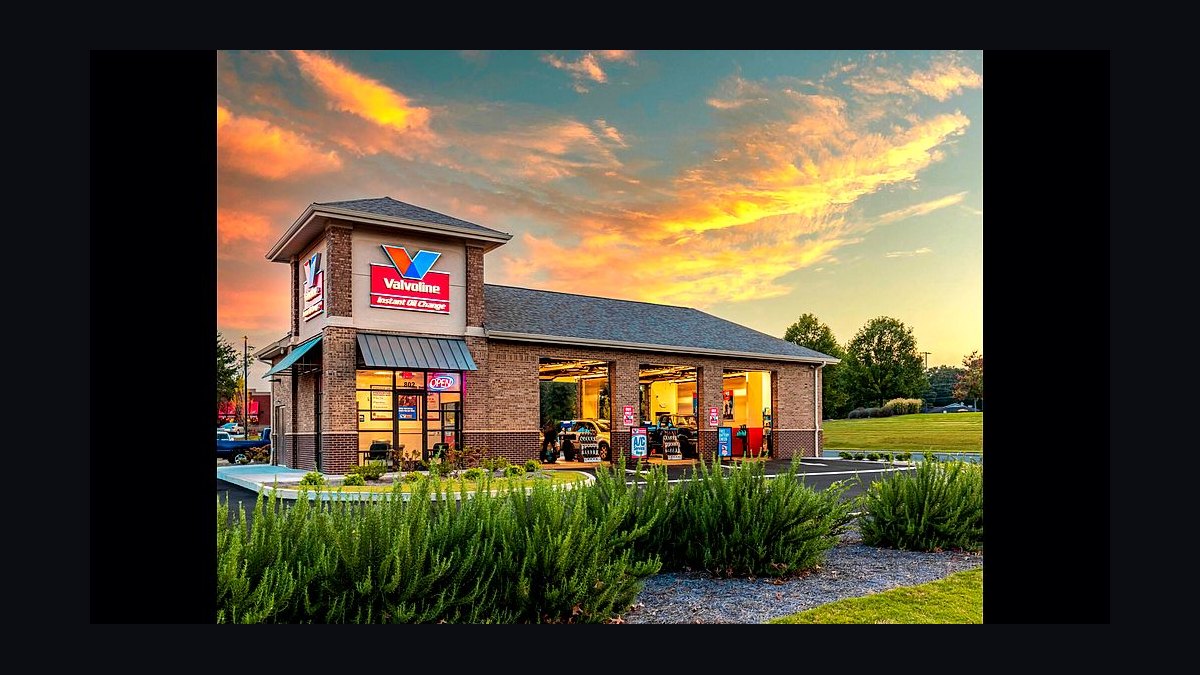
Yes — open or buy a Valvoline Instant Oil Change (VIOC) franchise in 2027 if you can deploy $1.2M–$2.1M in total capital (including a real-estate-secured site or 10-year ground lease), you already operate two or more service businesses (or have a multi-unit ops partner committed), and you can stomach a 24–36 month payback before reaching steady-state cash flow. Probably not — unless you have $500K+ liquid and $1.5M+ net worth per the franchisor minimum, and you accept that VIOC's 6% royalty + 5% ad fund (11% total off the top) is the highest combined burden in the quick-lube category. Conservative Year-1 cash flow on a single new build runs negative $40K to positive $90K; mature units (Year 3+) clear $280K–$420K at a system-average AUV of ~$1.61M and EBITDA margins of 26–32%.
The Real Numbers
VIOC's 2026 FDD (issued April 2026, governs 2027 openings) discloses an Item 7 investment range of $194,375 to $3,485,550 — the spread is driven entirely by real estate (lease vs. land-and-build) and market (rural Midwest vs. coastal metro). VIOC does not publish an Item 19 Financial Performance Representation in its FDD, an unusual choice for a brand of its size; AUV data of ~$1.61M and EBITDA of ~$464K comes from parent Valvoline Inc.'s 10-K disclosures (NYSE: VVV), franchisee surveys aggregated by Franchise Chatter and Vetted Biz, and system-wide retail segment reporting.
| Line item | Low | High | Notes |
|---|---|---|---|
| Initial franchise fee | $30,000 | $30,000 | Per location; multi-unit dev agreement required for 3+ |
| Land acquisition | $0 (lease) | $1,200,000 | 0.5–0.75 acre corner pad in viable market |
| Building build-out | $385,000 | $1,250,000 | 3-bay drive-through, basement pit, canopy |
| Equipment package | $165,000 | $240,000 | Lifts, fluid systems, POS (SuperPro/Valvoline VTAP) |
| Signage + exterior | $45,000 | $95,000 | Pylon, building, drive-through striping |
| Initial inventory | $28,000 | $42,000 | Oils, filters, additives (Valvoline-branded SKUs) |
| Working capital (6 mo) | $120,000 | $220,000 | Payroll, utilities, royalty true-up |
| Training + travel | $8,000 | $15,000 | 4-week Lexington KY + on-site |
| Pre-opening marketing | $15,000 | $35,000 | Grand-opening, geo-fenced digital |
| TOTAL Item 7 | $194,375 | $3,485,550 | Most new builds land $1.2M–$2.1M |
| Royalty | 6.0% of gross revenue | Drops to 4% above $2M AUV per Item 6 | |
| National ad fund | 5.0% of gross revenue | Brand TV, digital, sponsorships | |
| Local marketing min | 2.0% of gross revenue | Franchisee-controlled spend |
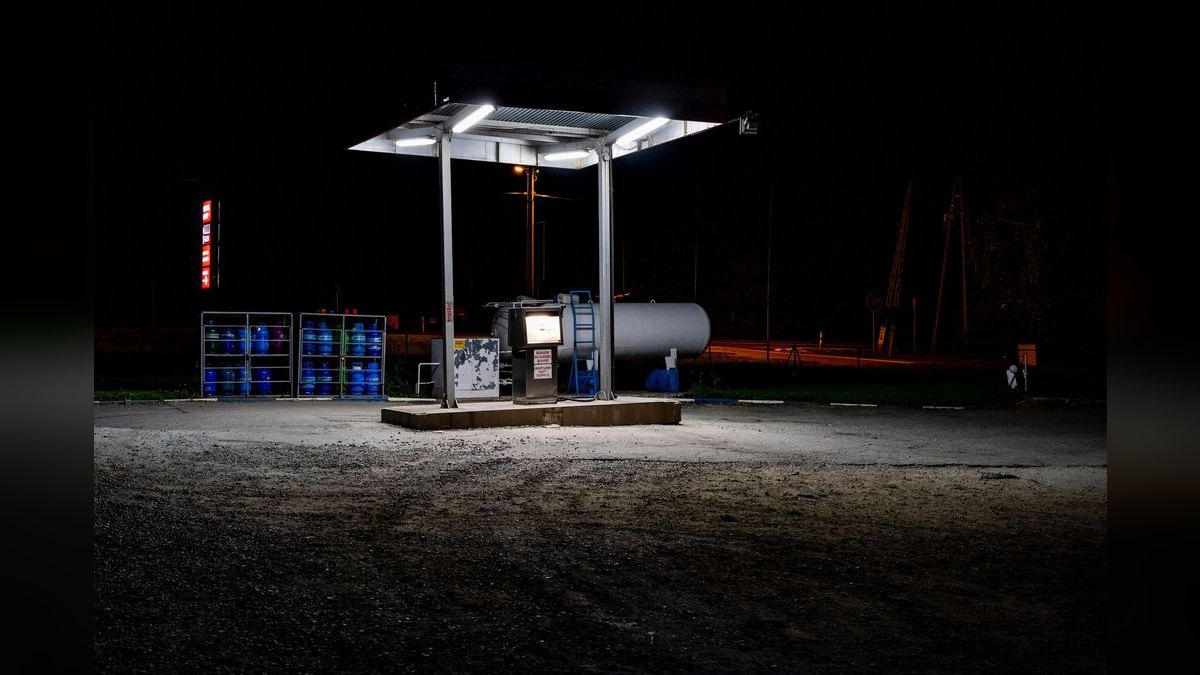
System-average performance (Valvoline Inc. retail segment, FY2026 10-K):
- AUV: $1,609,279
- Tickets per day: 52–68 (mature unit, single-bay throughput ~14 cars/bay/day)
- Average ticket: $78.40 (oil change + ancillary attach)
- Gross margin (parts + labor): 62–66%
- Store-level EBITDA: $464,676 (28.9% of AUV)
- Payback period: 24–36 months from open on a $1.5M build; 48–72 months when including land
Who Wins With This Business
Multi-unit operators with 3+ existing service businesses win the loudest with VIOC. The unit economics demand a GM who can be paid $75K–$95K without crushing the P&L, and a regional ops partner who visits weekly. Operators like Henley Enterprises (200+ VIOC units), Express Oil Change & Tire alumni rolling capital into VIOC, and Sun Auto Tire & Service franchise-converts have the playbook to scale from one to ten units inside five years.
Real-estate-savvy buyers also win. Because roughly 55% of VIOC franchisee profit is real-estate appreciation, operators who own the dirt through a separate LLC charging rent to the OpCo double-dip on cash flow plus property equity. Mike Pratt's group in North Carolina publicly reports 9 owned-real-estate VIOC sites with blended cap rates around 7.2% — the building pays itself off independent of the franchise EBITDA.
Existing automotive operators (independent quick lubes, tire shops, used-car lots) converting to VIOC capture the brand-halo lift — system data shows converted units jump 18–24% in AUV within 12 months of changing the sign, primarily because fleet accounts and AAA referrals flow only to branded chains. The conversion CAPEX is $280K–$520K vs. $1.5M new build, and the ramp is 6 months instead of 24.
Who Loses With This Business
Single-unit, first-time operators lose more often than they win. VIOC's 6% royalty + 5% ad fund + 2% local marketing minimum strips 13% off the top before COGS — versus Take 5's combined ~9%, Jiffy Lube's ~10%, and Grease Monkey's ~8%. On a $1.4M Year-2 AUV, that's $56K–$70K more per year going to corporate, which can be the difference between a take-home of $120K and $180K for an owner-operator with one store.
Passive investors expecting a "franchise that runs itself" lose hard. VIOC requires a working store manager earning $70K–$95K plus bonus, 8–14 hourly technicians at $17–$24/hour, and owner-operator oversight 20+ hours/week in Year 1. Absentee owners report 40–60% higher turnover and AUV drag of $180K–$280K vs. owner-on-site units.

Operators in EV-heavy MSAs (San Francisco Bay, Seattle, Boston, Austin) face structural revenue compression. ICE registrations in those metros are declining 4–7% annually as of Q1 2026, and VIOC's ancillary services (wiper blades, air filters, fluid flushes) don't fully bridge the lost oil-change revenue. Sun Belt + Midwest secondary markets remain the safer geographic bet.
2027 Market Conditions
The U.S. oil change services industry (NAICS 811191) was $11.2B in 2025 and is tracking $12.4B by year-end 2027 at a 5.1% CAGR per IBISWorld. The quick-lube subset (drive-through, no-appointment, sub-15-minute service) is growing faster — 7.0% CAGR 2020–2025, with Valvoline's parent reporting 8.4% same-store-sales growth in Q1 FY2026 (calendar Q1 2026). That outperformance is driven by DIY collapse — only 18% of US drivers now change their own oil, down from 27% in 2018 (BLS Consumer Expenditure Survey).
ICE vehicles remain ~80% of the US car park through 2030 per the EIA Annual Energy Outlook 2026 — even with EV penetration at 22% of new sales in 2027, the installed base of oil-burning vehicles will rise for another 6–8 years before declining. VIOC's average customer vehicle age is 11.4 years, a demographic that shields the brand from the EV transition longer than dealer service bays.
Labor remains the binding constraint. Quick-lube technician wages have risen from $14.20/hour in 2020 to $18.90/hour in Q1 2026 (BLS OES). VIOC franchisees report store-manager turnover of 28% annually and technician turnover of 64%. The brands winning in 2027 are the ones with $3/hour above market + tool allowances + ASE certification reimbursement.

The 90-Day Decision Tree
- Days 1–10: Liquidity stress test. Confirm $500K liquid + $1.5M net worth (VIOC franchisor minimum). Pull a personal financial statement signed by your CPA. Do not call the franchisor before this is true — VIOC's franchise sales team disqualifies under-capitalized applicants in the first phone screen.
- Days 11–25: Read the FDD cover-to-cover. Order the April 2026 FDD via viocfranchise.com. Read Item 6 (fees), Item 7 (investment), Item 11 (franchisor obligations), Item 17 (renewal/transfer), Item 20 (outlets/franchisees), and Item 21 (financial statements) at minimum. VIOC does not publish Item 19 — you must build your pro forma from external sources.
- Days 26–40: Validation call list. VIOC's Item 20 will list 400+ franchisees. Call at least 20 — split evenly across Year-1 openings, Year-3 mature, and Year-5+ veterans. Ask each: real AUV, real EBITDA, hardest hire, biggest surprise expense, would-you-do-it-again. Veterans answer differently from rookies — both data points matter.
- Days 41–55: Territory + real-estate scout. VIOC has ~1,200 franchised units and 800+ corporate units. Pull the store locator and mark every existing VIOC plus every Take 5, Jiffy Lube, Express Oil within 10 miles of your target sites. Target traffic count: 18,000+ vehicles/day on the primary road, 0.5–0.75 acre corner pad, 40-foot setback for canopy.
- Days 56–70: Capital stack assembly. Most VIOC builds use SBA 7(a) up to $5M (banks like Live Oak, Celtic, Wallis Bank specialize in quick-lube). Equity injection typically 20–25%; personal guarantee required; prime + 2.75% to prime + 3.5% is the 2026 norm for franchise loans.
- Days 71–85: Discovery Day in Lexington, KY. VIOC flies qualified candidates to HQ in Lexington for a 2-day immersion. Bring your CPA's pro forma and 3 questions per FDD item. This is also where they decide whether to sell you a single unit or push you toward a 3-unit Area Development Agreement (often a better deal).
- Days 86–90: Sign or walk. If you sign, you'll execute the Franchise Agreement + Development Agreement, wire $30K initial fee per unit + $10K–$25K development fee, and begin 24–36 months of build-out before opening Unit 1. If anything in steps 1–6 felt forced — walk.
Alternative Plays

Take 5 Oil Change (Driven Brands) runs $235K–$1.95M Item 7 with 6% royalty + 4% ad fund, drive-thru-only format, and published Item 19 showing $1.84M median AUV — higher revenue, lower investment, more transparency. Many operators prefer Take 5 if they want transparent unit economics and less land-development overhead.

Express Oil Change & Tire Engineers combines oil change + tire + brake + alignment for a broader service mix that's more EV-resilient. Item 7 runs $215K–$2.1M, royalty 5%, and the diversified revenue carries better through the EV transition.
Independent acquisition is the underrated play. There are ~9,000 independent quick lubes in the US, average asking price 2.8x–3.4x SDE — far below the 5.5x–6.5x multiple for a franchised exit. Buy an independent, run it for 18 months to validate the dirt, then convert to VIOC for an instant 18–24% AUV lift with 6 months of ramp instead of 24.
FAQ
What is the total investment needed to open a Valvoline Instant Oil Change franchise in 2027? You’ll need $1.2M–$2.1M in total capital, which covers a real-estate-secured site or a 10-year ground lease, plus construction, equipment, and initial working capital. The franchisor requires at least $500K liquid and $1.5M net worth.
How long does it take to become profitable?

Most new builds see negative to slightly positive cash flow in Year 1 (negative $40K to positive $90K). Steady-state profitability typically arrives in 24–36 months, with mature units (Year 3+) generating $280K–$420K in cash flow.
What are the ongoing fees? You’ll pay a 6% royalty and a 5% advertising fund fee, totaling 11% of gross revenue off the top. This is the highest combined fee structure in the quick-lube industry.
What are the typical revenues and margins for a mature store? System-average annual unit volume (AUV) is about $1.61 million, with EBITDA margins of 26–32%. Mature stores generally clear $280K–$420K in annual cash flow.
Who is the ideal franchisee for Valvoline Instant Oil Change? The franchisor prefers candidates who already operate two or more service businesses or have a committed multi-unit operations partner. Single-unit owners are rarely approved unless they bring significant multi-unit experience.
Can I buy an existing VIOC franchise instead of building new? Yes, buying an existing unit is an option, but availability is limited and prices vary widely based on location, age, and performance. Expect to pay a premium for mature, profitable locations, often above the cost of a new build.
Bottom Line

VIOC is a legitimate franchise with $1.6M AUV, 29% store-level EBITDA, and decade-plus runway before EV substitution materially compresses revenue. The financial commitment is real — $1.2M–$2.1M typical all-in, 24–36 month payback, and 11–13% of gross revenue routed to corporate before COGS. The operators winning are multi-unit, real-estate-owning, automotive-experienced; the operators losing are single-unit, absentee, capital-constrained, or EV-metro-located. If you're in the first bucket, sign the Area Development Agreement for 3 units, own the dirt, and target Year-5 portfolio EBITDA of $1.2M+. If you're in the second bucket, buy an independent first, then convert to VIOC once you've validated the site economics. Do not sign a single-unit VIOC franchise as your first business — the fee load is too heavy for that risk profile in 2027.
Sources
- Valvoline Instant Oil Change Franchise (Costs + Fees + FDD) — Franchise Direct
- Valvoline Instant Oil Change Franchise Insights: FDD, Costs & Fees — Vetted Biz
- Valvoline Instant Oil Change Franchise FDD, Profits & Costs — Sharpsheets
- Valvoline Inc. Q1 FY2026 Earnings Release — SEC 8-K
- Valvoline Inc. Form 10-Q FY2026 — SEC
- Oil Change Services in the US Industry Analysis 2025 — IBISWorld (NAICS 811191)
- U.S. Oil Change Service Market Size & CAGR — Market.us
- VIOC Initial Franchise Fee, Royalty Fee + 20 Other Fees — Franchise Chatter
- Why VIOC — Valvoline Instant Oil Change Franchise (Official)
- Start a Valvoline Instant Oil Change Franchise — Entrepreneur Franchise 500
- EIA Annual Energy Outlook 2026 — ICE vs EV vehicle stock projections
- BLS Occupational Employment Statistics — Automotive Service Technicians (49-3023)
Related on PULSE
This page will be disappearing soon. Save it to your device for $1 — or read it free while it is here.
@Kory-White- · if Venmo asks, the last 4 of my number are 2012
This page is gone.
This one is off the shelf now. $1 keeps it on your phone for good — the whole page, pictures and diagrams included.
 franchiseShould I open or buy an F45 Training franchise in 2027?
 franchiseShould I open or buy a Domino's franchise in 2027?
 franchiseShould I open or buy a Dairy Queen franchise in 2027?
 franchiseShould I open or buy a Cinnabon franchise in 2027?
 franchiseShould I open or buy a Goddard School franchise in 2027?
 franchiseShould I open or buy a Massage Envy franchise in 2027?
 franchiseShould I open or buy a Take 5 Oil Change franchise in 2027?
 franchiseShould I open or buy a Sonic Drive-In franchise in 2027?
 franchiseShould I open or buy a Kumon franchise in 2027?
 franchiseShould I open or buy a Cook Out franchise in 2027?